

What Are Leather Wallets for Wholesale Buyers?
Leather wallets are pocket-sized carrying items constructed from genuine or synthetic leather, offered in bifold, trifold, card-holder, and money-clip formats. For B2B buyers, these products serve as the foundation for private-label EDC lines, Amazon FBA fulfillment programs, and promotional product distribution channels.
The wholesale market serves four distinct buyer segments, each with different sourcing priorities: EDC brand owners building specialized product lines for outdoor and everyday-carry enthusiasts; Amazon FBA sellers launching their own branded wallets; corporate gift distributors sourcing personalized items for client gifting; and retail chains procuring standardized inventory for multiple locations.
Understanding which segment you belong to matters because each one interacts differently with suppliers. An Amazon FBA seller typically prioritizes fast sample turnaround, consistent quality across repeated orders, and packaging that meets Amazon’s FBA prep requirements. An EDC brand owner may emphasize material authenticity, distinctive design details, and long-term supplier relationships. A corporate gift buyer often needs flexible MOQs and rapid fulfillment for time-sensitive promotional campaigns.
How Does Leather Wallet Sourcing Work for B2B Buyers?
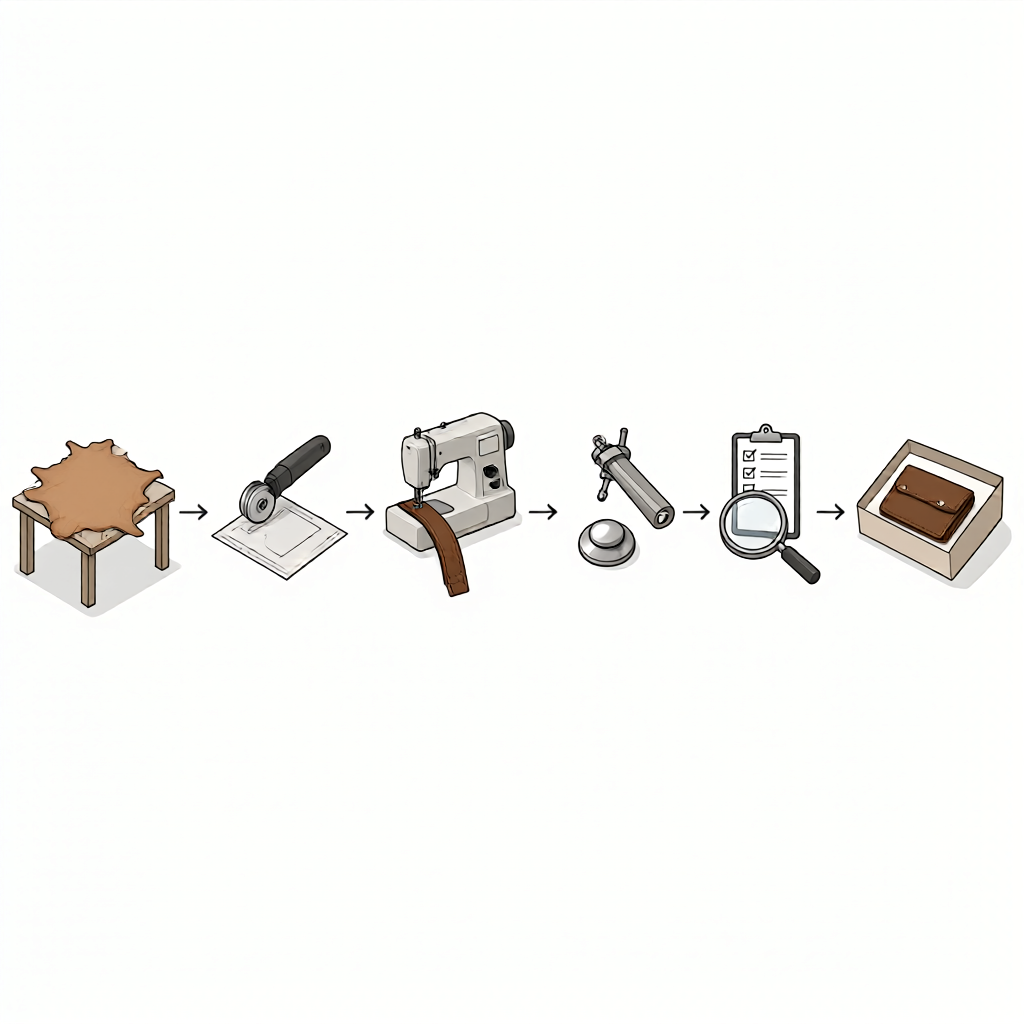
The procurement process moves through several stages: supplier discovery and qualification, material and design selection, sample approval, bulk production, quality inspection, and shipping. Each stage introduces different considerations that affect timeline, cost, and final product quality.
Supplier discovery begins with identifying manufacturers who can meet your material, customization, and volume requirements. The search for leather wallets near me often surfaces local distributors and wholesale showrooms, but actual OEM wallet manufacturer production is concentrated in industrial zones — particularly in regions with established leatherworking and metal fabrication infrastructure. Physical proximity rarely compensates for gaps in manufacturing capability, export experience, or quality control systems. See Sourcing Wallets Near Me for B2B Buyers for a detailed breakdown of geographic sourcing dynamics.
Material selection is the second critical decision. Leather grade directly affects unit cost, product longevity, and the customization methods available. Full-grain leather accepts deep laser engraving and develops a patina over time. Top-grain leather offers a more uniform appearance at lower cost. Synthetic and bonded leathers reduce price but limit the range of premium finishing options.
Design finalization depends on whether you are pursuing OEM, ODM, or private-label production. OEM orders require you to provide complete specifications — materials, dimensions, hardware, and branding — and the manufacturer builds to those exact requirements. ODM leverages the factory’s existing designs with modifications for color, engraving, or minor structural changes. Private-label programs apply your logo and packaging to the manufacturer’s stock designs. Each model has different implications for minimum order quantity, lead time, and per-unit cost. See Best Minimal Wallets for B2B Sourcing and Private Label for guidance on selecting the right model for your program.
Sample approval precedes bulk production. The sample stage is where specifications are validated against physical product. Buyers should evaluate stitch density, leather edge finishing, hardware function, and branding placement before authorizing production. Rushed sampling leads to costly corrections downstream.
What Are the Key Specs for Leather Wallets?
When evaluating potential suppliers and products, several specifications carry the most weight.
Leather type and grade is the primary differentiator. Full-grain leather represents the highest quality tier — it retains the natural grain and develops character over time. Top-grain leather is sanded and finished for a more consistent look at a lower price point. Genuine leather is a broad category that includes lower-grade hides; it requires careful evaluation. Bonded and synthetic leather options serve budget-focused buyers but have limited durability in daily carry use.
Thickness typically ranges from 1.0 mm for slim card holders to 2.5 mm for traditional bifolds. Minimalist EDC wallets tend toward the thinner end of this range, while full-size wallets with cash pockets sit toward the thicker end. Thickness directly affects pocket profile and capacity trade-offs.
Hardware encompasses zippers, clasps, snaps, and any RFID-blocking layers. Stainless steel and brass are the standard hardware materials for premium wallets. RFID-blocking inserts use passive metallic mesh or foil — they require no power source but add weight and cost. Verify that shielding effectiveness is tested and that the layer does not interfere with phone or key fob signals. For hardware considerations that extend beyond wallets, see Sourcing Money Clips for B2B: Specs & Standards.
Stitching quality determines long-term durability. Tight, even stitches using waxed nylon or polyester thread resist fraying and separation. Loose or single-needle stitching is a cost-cutting measure that often fails under regular use.
Interior organization — card slot count, cash pocket configuration, coin pocket presence — varies widely and influences both capacity and price. Card-only formats are lighter and slimmer but limit functionality. Multiple-card configurations add bulk.
Weight typically ranges from 40 to 120 grams depending on leather thickness, hardware complexity, and whether additional features like money clips or RFID layers are included.
Finishing techniques — edge paint, burnishing, and dye staining — affect both aesthetics and moisture resistance. Burnished edges are more durable than painted edges in high-friction carry conditions.
For sourcing decisions, the question of leather wallets near me should be reframed around supplier qualifications rather than geographic proximity. A manufacturer located across the ocean with strong quality systems, proven export experience, and reliable logistics will consistently outperform a closer supplier with weaker capabilities.
What Standards Apply to Leather Wallet Manufacturing?
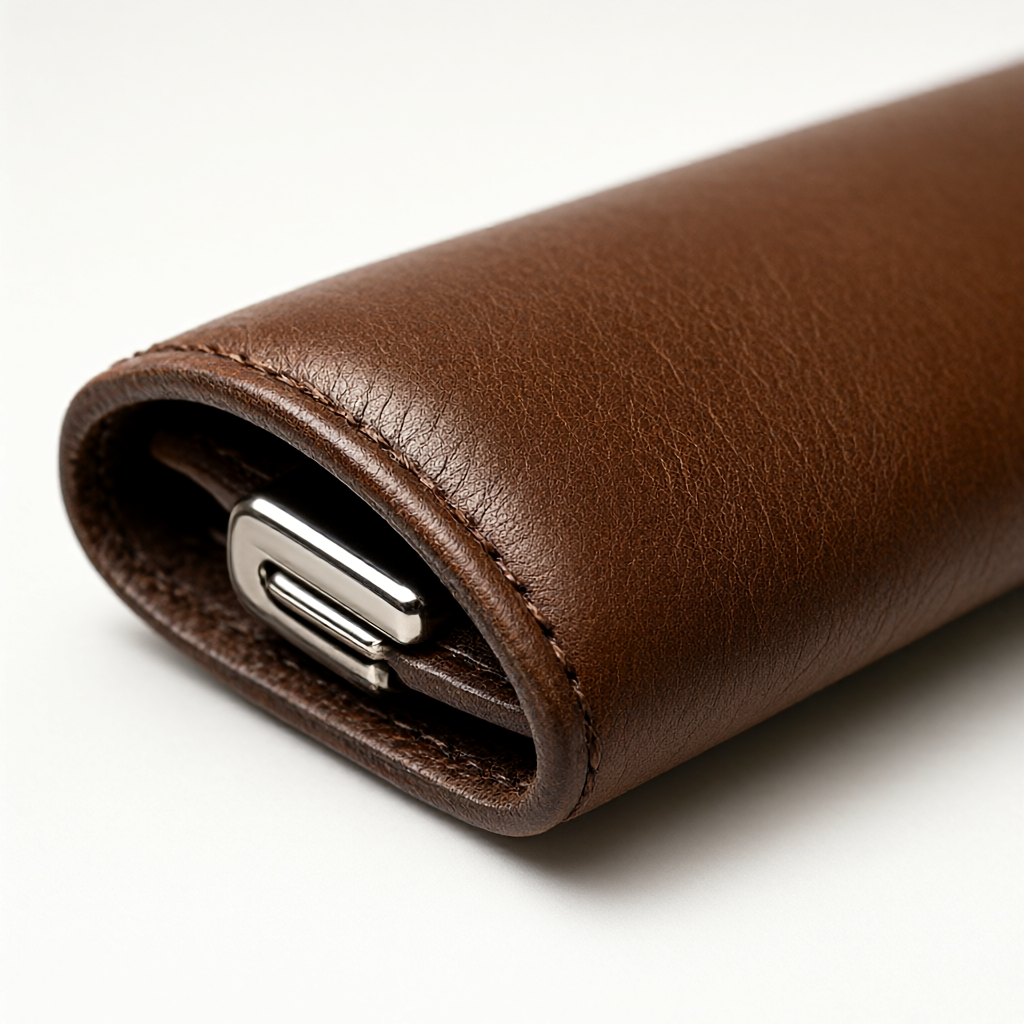
Several material standards and compliance requirements apply to exported leather wallet products, and understanding them helps buyers avoid costly mismatches between product specification and market regulation.
ISO 9001 certification indicates that a manufacturer operates a documented quality management system. For wallet production, this translates to consistent material inspection, documented production processes, and traceability across batches. ISO 9001 does not certify product quality itself — it certifies that the manufacturer has systems in place to maintain consistency. See iso.org for the full standard framework.
BSCI (Business Social Compliance Initiative) audits evaluate working conditions, labor practices, and environmental management at the factory. Buyers operating in European markets often require BSCI compliance as a condition of procurement, particularly for corporate gift and retail chain programs.
REACH and RoHS compliance govern chemical safety for products entering European markets. REACH restricts certain hazardous substances in manufacturing, while RoHS limits lead, mercury, and other materials in product components. Leather tanning processes must comply with REACH restrictions on chromium compounds and other chemicals. Buyers should request test reports from the supplier rather than accepting compliance claims at face value.
FTC leather labeling rules govern U.S. market disclosures. The Federal Trade Commission requires accurate identification of leather type — products cannot be labeled as “genuine leather” if they contain bonded leather or significant synthetic content without proper disclosure. See ftc.gov for current labeling guidance.
SGS and第三方 testing provides independent verification of material composition, heavy metal content, and colorfastness. Reputable manufacturers submit samples to accredited laboratories before bulk production begins.
For private label leather wallets, compliance documentation should be part of the initial supplier evaluation, not an afterthought added before shipping.
What Should You Consider When Sourcing Leather Wallets?
Beyond specifications and standards, several practical factors shape the sourcing decision.
Customization depth determines both cost and lead time. Basic branding — a laser-engraved logo or debossed emblem — adds minimal time and cost. Full OEM projects requiring custom tooling, unique leather cuts, and proprietary hardware designs require significantly longer development cycles and higher upfront investment. Business Card Holder Near Me: Sourcing and Supplier Guide covers customization considerations that apply across product types.
MOQ and sample lead times vary by supplier and product complexity. Simpler designs with stock leather and basic branding can support lower minimums. Custom colors, proprietary hardware, and multi-material construction raise the threshold. Sample lead times typically range from 7 to 15 business days for standard designs; fully custom samples may take longer.
Pre-shipment inspection is a standard practice for bulk orders. Third-party or in-house inspection at the factory before goods leave verifies that production matches the approved sample. This step catches discrepancies in stitching, material, branding placement, and packaging before products reach your warehouse or your customers.
Packaging and retail readiness matter for Amazon FBA sellers and retail chain buyers. Products must arrive in packaging that meets platform or retailer requirements — barcoding, poly bagging, and carton labeling standards vary by channel.
Logistics and shipping add cost and timeline variables. Air freight reduces lead time significantly but increases per-unit cost. Sea freight is cost-effective for large orders but requires advance planning. Some manufacturers offer drop shipping and FBA prep services that consolidate packaging, labeling, and shipping preparation.
Industry Update — Modern Alternatives to Leather in EDC Wallets
While leather remains the dominant material for traditional wallet products, the EDC market has seen significant adoption of alternative materials in recent years. Aluminum, carbon fiber, and titanium wallets have gained traction among buyers seeking ultra-slim profiles, weather resistance, and modern aesthetics.
Aluminum wallets offer a lightweight, corrosion-resistant alternative to leather at competitive unit costs. Carbon fiber provides exceptional strength-to-weight ratio and a distinctive visual texture. Titanium money clips and card holders deliver premium durability with a smaller environmental footprint than leather tanning processes. These materials are particularly popular in the minimalist EDC segment, where thin profile and pocket comfort are prioritized over traditional wallet capacity. See Best Card Holder Selection for B2B Sourcing for a comparison of card holder materials across price tiers.
For buyers evaluating material options, the choice between leather and alternatives often comes down to target market positioning. Leather wallets appeal to buyers seeking classic aesthetics, tactile warmth, and brand heritage. Metal and composite wallets attract customers who prioritize technical specifications, durability, and contemporary design. Many successful EDC brands offer both leather and metal options within their product line to capture different customer segments.
For buyers exploring good wallets for guys across material categories, see our Buyer’s Guide to Evaluating Men’s Minimalist EDC Wallets, which covers material trade-offs, capacity considerations, and value assessment across product types.
As a manufacturer, our approach to sourcing balances material tradition with market evolution. We work with full-grain and top-grain leather for classic wallet programs while also producing aluminum, carbon fiber, and titanium options for buyers who prefer metal construction. Our facility handles everything from raw material inspection through CNC machining, laser engraving, surface finishing, and final packaging — all under one roof. We hold ISO 9001 certification and BSCI audit compliance, and our products meet REACH and RoHS requirements for export to North America, Europe, Australia, and Southeast Asia. We support OEM, ODM, and private-label programs with MOQ starts at 300 pcs per SKU for full OEM customization (100 pcs trial order available for stock finishes) and sample lead times of approximately 7 business days.
Wholesale Leather Wallets: Where Can You Verify the Data and Sources?
- iso.org — www.iso.org
- ftc.gov — www.ftc.gov
- Sourcing Wallets Near Me for B2B Buyers — topedcwallet.com
- Best Minimal Wallets for B2B Sourcing and Private Label — topedcwallet.com
- Sourcing Money Clips for B2B: Specs & Standards — topedcwallet.com
- Business Card Holder Near Me: Sourcing and Supplier Guide — topedcwallet.com
- Best Card Holder Selection for B2B Sourcing — topedcwallet.com
- Buyer’s Guide to Evaluating Men’s Minimalist EDC Wallets — topedcwallet.com
- Get a Free Quote → — topedcwallet.com
From article to product
Sourcing minimalist-wallets?
Tell us the format, the quantity and the date you need stock. You get material options, MOQ and a landed-cost range back within one business day.
Keep reading
More on wallet manufacturing
Sustainable Packaging for Wallet Shipments
Packaging is where sustainability claims are cheapest to make and easiest to disprove. A…
ReadTake-Back and Recycling Programmes for Wallet Brands
A take-back programme is easy to announce and hard to run. Wallets are the…
ReadNickel Release Rules for Wallet Hardware
Nickel release is the one restriction in a wallet that is decided by the…
Read
About the author
TOPWALLET Editorial Team
TOPWALLET's editorial and engineering desk writes from bench testing at the Shenzhen (Longgang) facility: pull-force and cycle testing, 13.56 MHz shielding measurements, finish trials and factory audits, rather than supplier spec sheets. Every specification in these guides is one we write on a purchase order.
Written on the floor
This article was written by our production and QC team — the people who spec tolerances, run the finishing line and inspect every batch. Where it states a capacity, a pull force or a lead time, it comes from a measurement we made, not a supplier’s catalogue. If a number here disagrees with what your own supplier told you, tell us; several of these articles started as a correction from a buyer.
See how the factory works · Inspection process · Sourcing FAQ
Sourcing minimalist-wallets?
Tell us the format, the quantity and the date you need stock. You get material options, MOQ and a landed-cost range back within one business day.