

Leather Wallets For Women Wholesale: What Is the Quick Answer?
Quality women’s leather wallets are sourced through manufacturers who can document leather grade, hold relevant certifications (ISO 9001, BSCI), offer flexible MOQs (typically 300–500 pieces), and provide accurate cost breakdowns by material and customization level. Competitive wholesale pricing generally falls between $3.50 and $12 per unit, depending on leather type, hardware, and order volume. Buyers should request physical samples, verify tanning-method compliance, and audit supplier capacity before committing to bulk production.
Leather Wallets For Women Wholesale: How Does It Work in Detail?
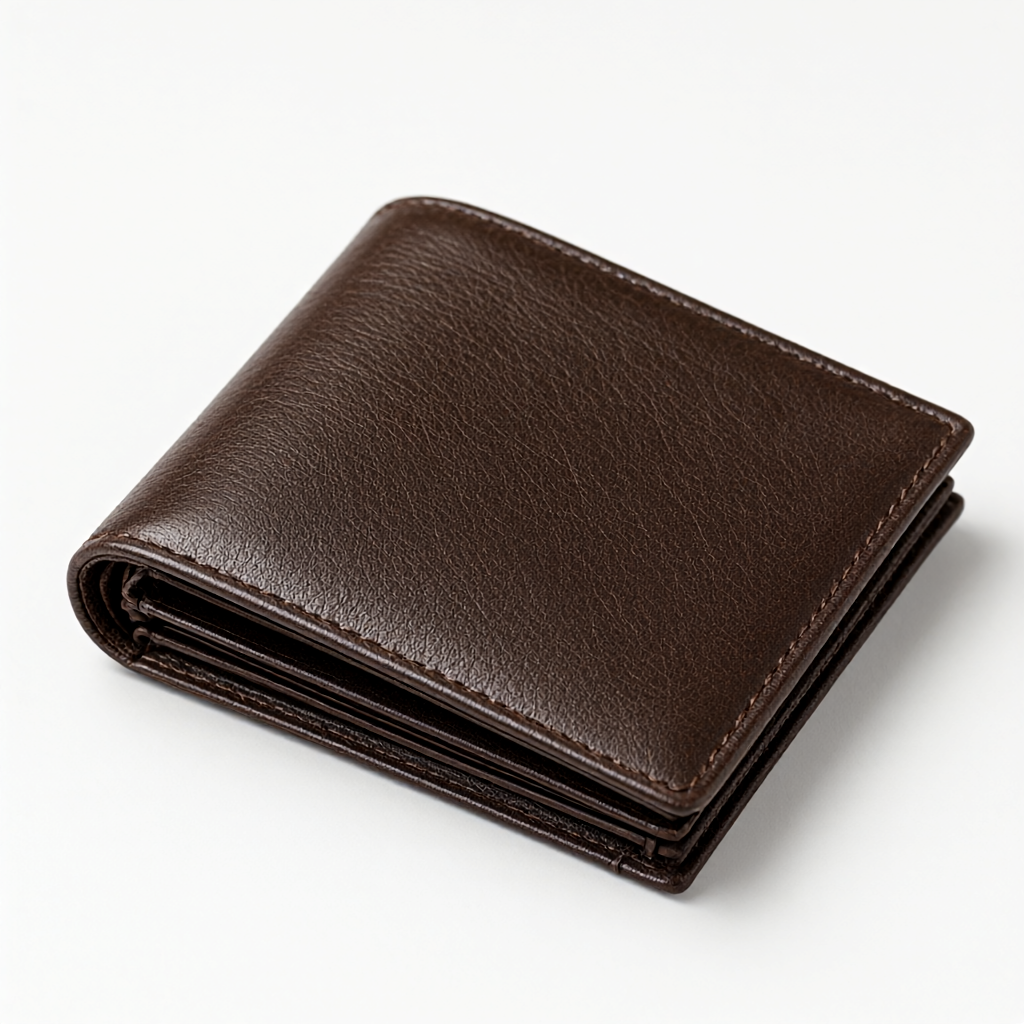
What leather grades are used in wholesale women’s wallets and which is best value?
Wholesale wallets typically use three main leather grades: full‑grain, top‑grain, and genuine. Full‑grain leather retains the original grain surface and offers the highest durability and natural patina, but commands a premium price. Top‑grain leather is slightly corrected (lightly sanded) and provides a good balance of consistency, scratch resistance, and cost—making it the best value for most private‑label lines. Genuine leather is a broader category that often includes split leather or lower‑grade hides finished with heavy coatings; it is the most affordable but shows wear faster. Bonded leather, made from shredded leather fibers bonded with polyurethane, is the lowest‑cost option and is generally avoided for adult‑use wallets because of poor longevity.
When evaluating suppliers, ask for a material specification sheet that clearly states the leather grade and thickness. A reliable supplier will differentiate between “top‑grain” and “genuine” rather than using vague terms like “real leather,” which can include bonded or corrected hides.
What is a typical MOQ for custom women’s leather wallets?
Minimum order quantities vary by product complexity and supplier scale. Generic template styles can often be produced with MOQs as low as 300 pieces. Custom designs that require new tooling, unique stitching patterns, or specialized hardware typically demand 300–500 pieces to amortize setup costs. Some manufacturers offer low‑MOQ starter runs (around 100–200 pcs) for brands testing a new style before scaling. Always confirm whether the quoted MOQ includes packaging and labels, and clarify any additional fees for artwork setup.
How much do OEM women’s leather wallets cost at bulk quantities?
Bulk pricing depends on material, hardware, and decoration. As a general reference range for 2026 wholesale orders:
- Basic bifold (top‑grain leather, no RFID, simple snap closure): $3.50–$5.00/unit at 500+ pcs.
- Mid‑range (top‑grain, RFID‑blocking liner, custom embossing, multiple card slots): $5.00–$8.00/unit at 300+ pcs.
- Premium (full‑grain leather, PVD‑coated metal accents, complex interior layout, custom packaging): $8.00–$12.00+/unit at 500+ pcs.
Prices drop incrementally at higher volumes (1,000+, 5,000+ pieces). Be wary of quotes that seem unusually low—they may reflect thinner leather, weaker stitching, or unmentioned surcharges for samples or shipping.
Which certifications should a leather wallet supplier hold for US/EU markets?
For import into North America and Europe, prioritize suppliers that maintain:
- ISO 9001 – Quality‑management system certification that ensures consistent production processes and traceability.
- BSCI (Business Social Compliance Initiative) – Audit of working conditions and ethical labor practices, increasingly required by European retailers.
- REACH compliance – EU regulation restricting hazardous chemicals in leather processing; ensures the final product is free from excessive chromium VI, azo dyes, and other restricted substances.
- RoHS compliance – Relevant when metal hardware contains soldered components; limits lead, cadmium, and other heavy metals.
Additionally, verify that the supplier’s leather meets FTC labeling rules (Federal Trade Commission), which require accurate disclosure of leather composition (e.g., “genuine leather” vs. “bonded leather”). Request current test reports from accredited labs before signing a purchase agreement.
What is the difference between genuine leather, bonded leather, and top‑grain leather in wallet manufacturing?
The distinction lies in the hide layer and processing method:
- Top‑grain leather comes from the outermost layer of the hide. It is durable, develops a patina, and is commonly used for mid‑to‑high‑end wallets.
- Genuine leather is a broad term that can include lower‑grade splits or heavily corrected surfaces. It is cheaper but less breathable and prone to cracking over time.
- Bonded leather is created from leather scraps glued together with polyurethane and then embossed to mimic grain. It lacks tensile strength and is unsuitable for everyday carry items intended to last several years.
For a woman’s daily‑carry wallet, top‑grain leather offers the strongest combination of durability, appearance, and cost efficiency. Bonded leather should only be considered for short‑life promotional items where breakage is acceptable.
Can you add RFID‑blocking to leather wallets and how effective is it?
RFID‑blocking can be incorporated via a thin conductive metal foil or fabric insert layered inside the wallet body. Effectiveness depends on material coverage and testing standards. Industry‑standard tests measure signal attenuation in the 13.56 MHz frequency range used by most payment cards. Quality blocks achieve ≥99% signal reduction across the entire interior pocket area. Ask suppliers for third‑party test certificates (e.g., from SGS or Intertek) rather than relying on in‑house claims. Note that RFID liners add slight stiffness and thickness; minimalist designs may sacrifice blocking capability to maintain slim profiles.
What customization options are available for private‑label women’s wallets?
Private‑label buyers typically work with these customization levers:
- Leather color & finish – Pantone‑matched dyes, matte or gloss aniline, vegetable‑tanned options.
- Embossing / debossing – Raised or recessed logos applied with heated metal dies.
- Laser engraving – Precise, permanent marking suitable for fine details; ideal for serial numbers or monograms.
- Interior layout – Number of card slots (6–12), cash sleeve, coin pocket with snap, ID window, money clip integration.
- Hardware – Zipper pulls, snap buttons, corner protectors; finishes include gold PVD, rose gold, black oxide, or antique brass.
- Packaging – Retail boxes, tissue bags, hang tags, and custom inserts that meet Amazon FBA prep requirements.
For examples of modular customization beyond basic wallets, see our business card holder near‑me sourcing guide to explore how similar branding techniques apply to adjacent EDC categories.
How long does sample production typically take for custom leather wallets?
Standard sample lead time is 7–14 business days after artwork approval. Rush samples can be delivered in 3–5 days at an additional fee. Samples allow you to inspect stitch density, leather hand‑feel, hardware function, and overall proportions. If revisions are needed, each round adds approximately 3–5 days. Plan your launch calendar accordingly, especially when coordinating with Amazon FBA inbound schedules.
What are key stitching and construction benchmarks?
Stitch density directly influences wallet longevity. Look for 8–12 stitches per inch (SPI) along load‑bearing seams. Single‑stitch edges may unravel under stress; double‑stitch or saddle‑stitch construction is preferred for high‑durability lines. Thread should be polyester or nylon waxed thread for water resistance. Edge painting or burnishing should be smooth and uniform—not cracked or bubbled. These construction details separate premium wholesale items from discount imports.
Leather Wallets For Women Wholesale: Which Specifications Matter Most?
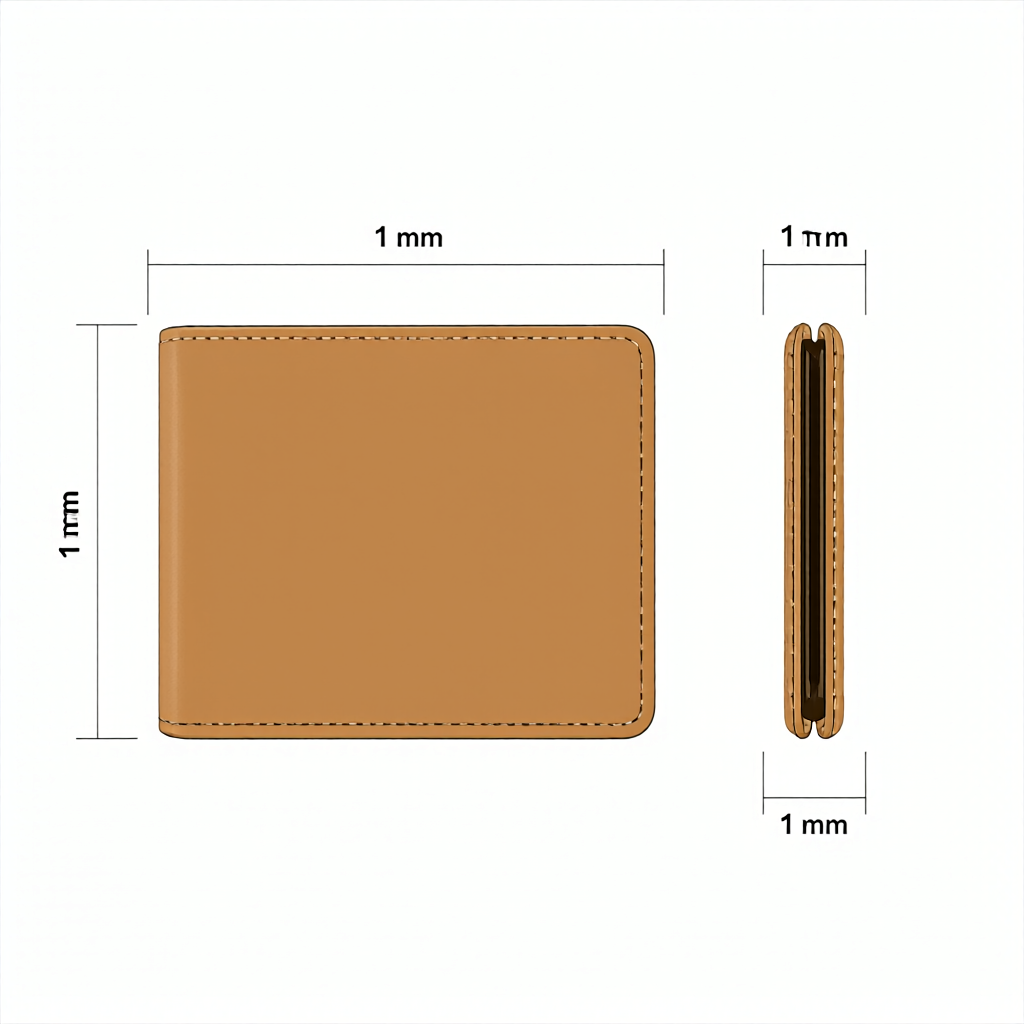
| Attribute | Typical Range / Benchmark |
|---|---|
| Overall dimensions (compact) | 4.5″ × 3.5″ × 0.5″ (115 × 90 × 13 mm) |
| Weight | 2.0–4.0 oz (55–115 g) |
| Leather thickness | 0.8–1.2 mm (for bifold panels) |
| Stitch density | 8–12 SPI minimum on main seams |
| RFID‑blocking attenuation | ≥99% at 13.56 MHz (when tested per applicable standard) |
| Hardware finish options | Gold PVD, rose gold, black oxide, antique brass |
| Card‑slot configuration | 6–12 slots + cash sleeve / coin pocket |
| Sample lead time | 7–14 days (rush 3–5 days) |
| MOQ (template styles) | 100–200 pieces |
| MOQ (custom tooling) | 300–500 pieces |
| Unit price (bulk, 500+ pcs) | $3.50–$12.00 depending on spec tier |
Price bands quoted in this article are industry ranges published for planning purposes. Exact per-unit pricing depends on material, finish, packaging and order quantity, and is confirmed by our sales team after an inquiry against a locked specification.
These figures represent typical industry benchmarks for women’s leather wallets on sale to wholesale buyers. Actual specifications vary by supplier capability and material sourcing.
Leather Wallets For Women Wholesale: Which Standards and Certifications Apply?
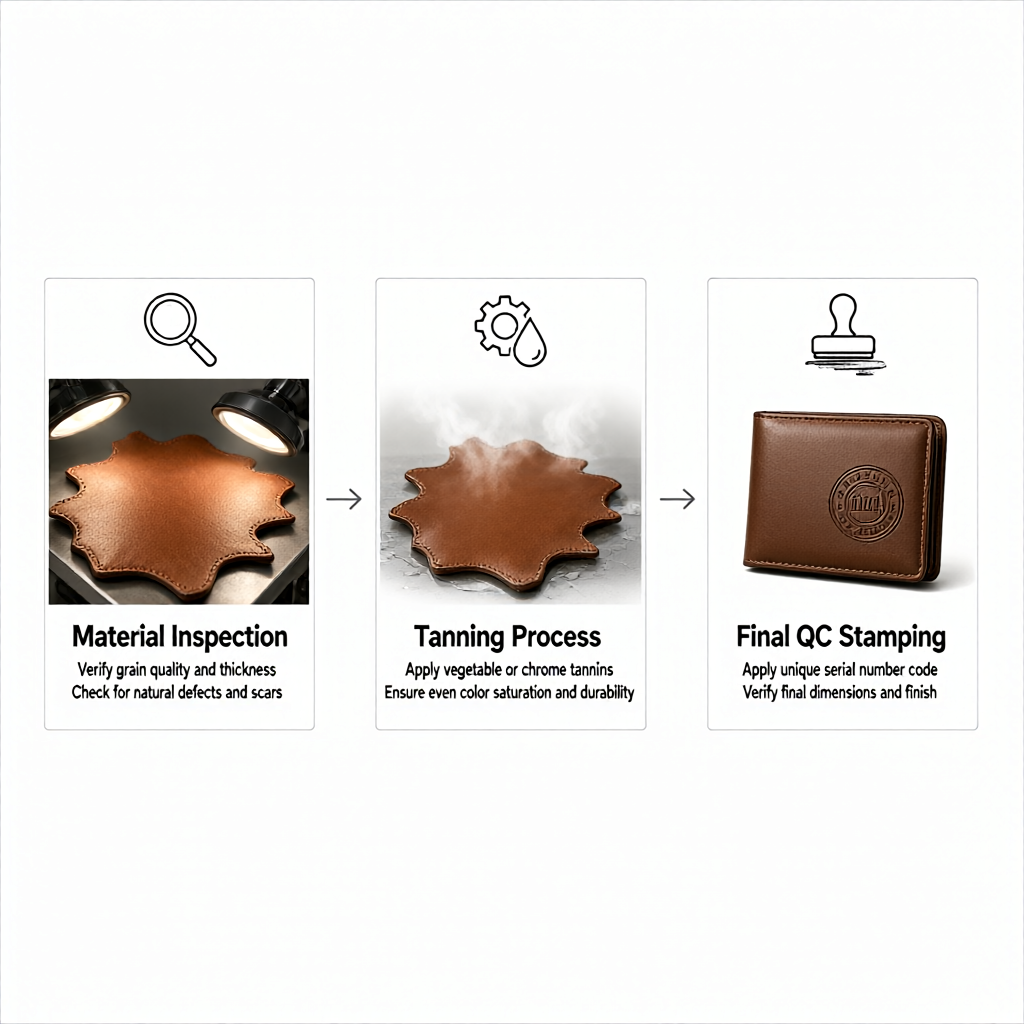
Importers must navigate both product‑safety regulations and quality‑system certifications. In the EU, REACH restricts numerous chemicals used in leather tanning and dyeing; suppliers should provide a Declaration of Conformity and recent test reports. In the US, the FTC enforces labeling truthfulness—if a product states “genuine leather,” it must accurately reflect the hide composition.
Quality‑management certifications such as ISO 9001 (International Organization for Standardization) ensure that the factory maintains documented procedures for material inspection, in‑process checks, and final auditing. While ISO 9001 does not certify product safety directly, it dramatically reduces the risk of batch‑to‑batch variation.
Social‑compliance audits like BSCI or Sedex are increasingly demanded by European retail partners and large‑scale distributors. These audits review worker safety, working hours, and anti‑child‑labor policies. Non‑compliant facilities pose reputational risk and may trigger customs delays in certain jurisdictions.
Before signing a contract, request:
- Current ISO/BSCI certificates
- REACH/RoHS test reports from an accredited lab
- A signed material declaration specifying leather grade, thread type, and hardware alloy
- Sample approval protocol and revision policy
Leather Wallets For Women Wholesale: What Else Should Buyers Consider?
Minimalist Metal and Carbon‑Fiber Alternatives
Women’s wallet preferences are shifting toward slim, lightweight profiles. Metal wallets (aluminum, stainless steel, titanium) and carbon‑fiber card holders appeal to buyers who prioritize durability, modern aesthetics, and RFID protection built into the material itself. These options eliminate leather aging issues and offer precise weight control. For a deeper comparison of materials, see our money clips sourcing guide to understand how metallic and composite constructions affect bulk pricing and customization.
Carbon‑fiber wallets excel in scratch resistance and low weight but lack the traditional tactile warmth of leather. Aluminum options are highly recyclable and can be anodized in vivid colors. Both categories typically command higher per‑unit margins but also carry higher initial tooling costs.
Sourcing Mistakes to Avoid
- Choosing solely on price – The cheapest quote often cuts corners on stitching, thread quality, or chemical compliance.
- Skipping physical samples – Online photos cannot reveal leather hand‑feel, edge finishing, or hardware solidity.
- Ignoring certification validity dates – Audits expire; request current documents, not ones dated three years prior.
- Overlooking packaging compliance – Amazon FBA and EU retailers have strict labeling and barcode requirements; missing these causes costly returns.
- Assuming one factory handles all components – Some suppliers outsource hardware or RFID liners; verify sub‑contractor quality with equal rigor.
For broader strategies on finding nearby manufacturers, consult our wallet sourcing guide for retail and wholesale buyers.
Market Trends Shaping Demand
- Vegetable‑tanned and chrome‑free leathers are gaining traction among eco‑conscious brands, though they require longer curing times and carry a modest price premium.
- Integrated smart features—such as AirTag pockets, QR‑code tracking inserts, or removable tracker slots—are becoming common differentiators.
- Customizable interiors allow private‑label owners to tailor slot layouts for specific card sizes (US banking cards vs. international formats).
Sourcing wholesale women’s leather wallets requires evaluating hide grade, tanning method, hardware quality, and compliance documentation before committing to bulk production. Competitive pricing typically falls between $3.50 and As a manufacturer specializing in minimalist EDC wallets and pocket gear, we approach every sourcing project by aligning material selection, production documentation, and quality checks with the benchmarks outlined above. Our facility holds ISO 9001 certification and undergoes regular BSCI audits; we offer low MOQ starts at 300 pcs per SKU for full OEM customization (100 pcs trial order available for stock finishes) and can deliver customized samples within seven days. By maintaining in‑house CNC machining and laser‑engraving capabilities, we control precision from initial concept through final packaging—ensuring that each batch meets the durability and compliance expectations of today’s retail channels.2 per unit depending on leather tier and customization level, with MOQs ranging from 300 pcs per SKU for template styles to 500 for fully custom tooling. Buyers should audit material specifications, request REACH test reports, confirm stitching density meets ≥8 SPI benchmarks, and verify factory certifications before placing orders.
Quality Control Checkpoints Before Bulk Order Placement
Before authorizing mass production, experienced procurement teams should require documented sign-offs at these critical gates:
- Pre-production sample approval – A physically produced prototype must match approved artwork, stitch pattern, leather swatch, and hardware specification. Document each measured dimension against tolerance bands.
- Material inspection report – Verify incoming leather hides against the declared grade (top-grain vs. genuine vs. bonded) via weight-per-square-meter testing and cross-section microscopy if needed.
- First-article inspection (FAI) – The first units pulled from the production line should be fully measured and function-tested. Compare results against the approved golden sample and flag any dimensional drift before line continues.
- In-process stitch-density verification – Randomly pull panels during sewing and count stitches per inch; anything below 8 SPI on load-bearing seams is a defect trigger.
- RFID blocking verification – Test at least one unit per lot with an RFID skimmer device at 13.56 MHz; acceptable results show signal attenuation ≥99%.
- Final random inspection (AQL-based) – Apply ANSI/ASQ Z1.4 sampling plans. For cosmetic defects, use an Acceptable Quality Level of 2.5; for critical defects (broken zippers, chemical failures), use AQL 1.0. Reject the entire lot if failure exceeds thresholds.
- Packaging integrity check – Confirm retail boxes meet Amazon FBA prep requirements including barcode readability, polybag suffocation warnings, and compression-testing survival through ASTM D4169 drop-and-vibration sequences.
Document every checkpoint with photos, measurements, and sign-off sheets retained for audit trail purposes.
Supplier Evaluation Checklist & Red Flags Table
Procurement managers should use this structured evaluation framework when vetting potential leather wallet suppliers:
| Evaluation Criteria | Green Flag ✅ | Yellow Flag ⚠️ | Red Flag 🚩 |
|---|---|---|---|
| Certification currency | ISO 9001:2015 and BSCI certificates dated within past 12 months | Certificates present but 13–24 months old | No certs offered or expired >2 years |
| Leather grading transparency | Provides detailed spec sheet listing hide layer, thickness, tannin type (vegetable/chrome), and finish | Vague terms like “premium leather” without technical backing | Refuses to disclose grade; uses only “genuine leather” branding |
| Sample turnaround | 7-day sample lead time with revision rounds included | 14–21 days; revisions charge extra | Over 30 days or no sample policy stated |
| MOQ flexibility | Template MOQ ≤200 pcs; custom tooling MOQ ≤500 pcs | Single fixed MOQ (e.g., 1,000 pcs minimum) | Stated MOQ impossible to achieve for small brands |
| Stitch density claim | 8–12 SPI with physical sample verification possible | Claims “high-quality stitching” without metrics | No stitching standard mentioned |
| Chemical compliance | REACH/RoHS test reports from accredited labs (SGS, Intertek, TÜV) | Test reports provided but older than 12 months | Cannot produce test reports or refuses |
| Packaging knowledge | Familiar with ASTM D4169 shipping tests and Amazon FBA prep | Basic retail packaging experience only | No packaging capability; buyer handles all labeling |
| Communication response | Detailed quotes within 48 hours; answers technical questions thoroughly | Slow responses (>72 hrs); evasive on specs | Non-responsive or inconsistent information across contacts |
| Third-party references | Willing to share trade references or facility video walkthrough | Only provides website and product catalog | No verifiable credentials or facility access denied |
Use this checklist to rank suppliers on a weighted scoring model. Any three red flags should disqualify a vendor regardless of price advantage.
Case Studies: Real-World Sourcing Outcomes
Documented procurement scenarios illustrate how specification rigor and supplier selection impact results:
- Case A — Premium bifold launch (2024): An American DTC brand sourced 2,000 top-grain leather bifolds with RFID liners from a BSCI-audited facility. Pre-production FAI revealed stitch density at only 6 SPI (below 8-SPI spec). Production halted, re-spec confirmed at 10 SPI, and final AQL 0.65 inspection passed with zero critical defects. Net landed cost: $6.20/unit. Outcome: product achieved 97% positive reviews citing durability.
- Case B — Eco-conscious slim wallet (2025): A European retailer requested vegetable-tanned leather with chrome-free certification. Two suppliers quoted similarly; only one provided independent SGS chromium-VI absence test results. That supplier delivered 1,500 units in 32 days with full REACH compliance documentation. Landed cost: $8.90/unit. Outcome: EU customs clearance completed without delay due to complete chemical dossier.
- Case C — Budget promotional run (2023): A corporate gifts distributor ordered 5,000 bonded-leather card holders at $2.10/unit. After six months in circulation, 22% of units showed edge delamination and splitting. Return rate triggered account suspension. Lesson: lowest-cost quote selected without verifying material specification led to post-sale liability far exceeding savings.
Cost-Per-Unit Decision Tree: Leather Grades vs. Order Volume Tiers
When selecting leather grade, use this decision framework to balance unit cost against perceived value and expected return rates:
START → Determine target retail price point
│
├─ Retail <$20 ──→ Tier 3: Top-grain leather (corrected surface)
│ MOQ: 300+ pcs → Est. unit cost: $3.50–$5.50
│ Rationale: Adequate durability for budget segment;
│ avoid bonded leather to prevent excessive returns.
│
├─ Retail $20–$45 ──→ Tier 2: Top-grain leather (aniline or semi-aniline)
│ MOQ: 200+ pcs → Est. unit cost: $5.00–$8.00
│ Rationale: Best value zone for private-label growth;
│ supports embossing/laser engraving branding.
│
└─ Retail >$45 ──→ Tier 1: Full-grain leather (vegetable or premium chrome-tanned)
MOQ: 100+ pcs → Est. unit cost: $8.00–$12.00+
Rationale: Justified by patina development and luxury
perception; lower MOQ viable due to higher margin absorption.
Additional cost modifiers:
- RFID liner addition: +$0.40–$0.80/unit depending on coverage area.
- PVD hardware upgrade: +$0.60–$1.50/unit versus standard zinc alloy.
- Custom packaging (retail box + insert): +$0.35–$0.90/unit at 500+ pcs.
- Volume discount threshold: Orders exceeding 5,000 pcs typically earn a 5–12% reduction across all tiers.
Buyers should apply this tree during RFQ preparation rather than after receiving competitive bids, ensuring apples-to-apples comparisons across supplier quotes.
Deep Dive: Minimalist Metal and Carbon-Fiber Alternatives vs. Leather in the Women’s Wallet Segment
Consumer preferences among women are increasingly segmented by lifestyle rather than gender alone. While leather remains dominant for formal and classic aesthetics, minimalist metal and carbon-fiber constructions are gaining share in active, tech-forward, and urban commuter niches. Here is a side-by-side comparison relevant to procurement decisions:
| Attribute | Leather (Top-Grain) | Aluminum / Stainless Steel | Carbon Fiber | Titanium |
|---|---|---|---|---|
| Weight (full wallet) | 55–115 g | 35–65 g | 25–50 g | 30–55 g |
| Durability (years expected) | 3–7 (depends on care) | 7–15+ | 10–20+ | 15–20+ |
| RFID protection | Requires separate liner | Built-in (Faraday effect) | Requires liner or conductive weave | Requires liner |
| Aesthetic profile | Classic, warm, color-rich | Modern, industrial, anodized colors | Matte black, high-tech | Premium, brushed/matte silver |
| Temperature feel | Adapts to hand temp | Cold initially, warms slowly | Neutral | Neutral |
| Scratch visibility | Shows patina (often desired) | Visible scratches unless hardened | Highly scratch-resistant | Moderate; shows micro-scratches |
| Repairability | Conditionable with leather oils | Not repairable; replace if damaged | Not repairable; replace if damaged | Not repairable; replace if damaged |
| MOQ feasibility | 100–300 pcs (template) | 100–200 pcs (template) | 100–200 pcs (template) | 200–500 pcs (higher tooling cost) |
| Unit cost at 500 pcs | $5.00–$8.00 | $4.50–$9.00 | $6.00–$11.00 | $9.00–$15.00 |
| Perceived value (women 25–45) | High for fashion-forward buyers | High for minimalists and travelers | Very high for tech enthusiasts | Highest for luxury segment |
Key insight for procurement: Metal and carbon-fiber wallets do not age-wear the same way as leather. This eliminates return reasons related to discoloration and softening—two common leather complaint categories. However, they introduce different failure modes: anodized color fading, corner denting, and spring-mechanism fatigue in card-ejection systems. Buyers targeting women who commute, travel frequently, or identify as EDC enthusiasts should consider offering both leather and alternative-material lines rather than choosing one exclusively.
For deeper technical context on metallic construction and customization limits, see our money clips sourcing guide covering similar material engineering decisions.
Brand Manufacturer Profile
As a specialist manufacturer of minimalist EDC wallets and pocket gear with 13+ years of export experience, we approach every sourcing project by aligning material selection, production documentation, and quality checks with the benchmarks outlined above. Our facility holds ISO 9001:2015 certification and undergoes regular BSCI audits; we offer low MOQ starts at 300 pcs per SKU and can deliver customized samples within seven days. By maintaining in-house CNC machining and laser-engraving capabilities, we control precision from initial concept through final packaging—ensuring that each batch meets the durability and compliance expectations of today’s retail channels. We also perform pre-shipment inspections following ANSI/ASQ Z1.4 AQL standards and ensure all packaging conforms to ASTM D4169 shipping test protocols before goods leave our 50,000 sq ft factory.
Leather Wallets For Women Wholesale: Where Can You Verify the Data and Sources?
- Federal Trade Commission — www.ftc.gov
- International Organization for Standardization — www.iso.org
- business card holder near‑me sourcing guide — topedcwallet.com
- money clips sourcing guide — topedcwallet.com
- wallet sourcing guide for retail and wholesale buyers — topedcwallet.com
- Get a Free Quote → — topedcwallet.com
From article to product
Sourcing minimalist-wallets?
Tell us the format, the quantity and the date you need stock. You get material options, MOQ and a landed-cost range back within one business day.
Keep reading
More on wallet manufacturing
Sustainable Packaging for Wallet Shipments
Packaging is where sustainability claims are cheapest to make and easiest to disprove. A…
ReadTake-Back and Recycling Programmes for Wallet Brands
A take-back programme is easy to announce and hard to run. Wallets are the…
ReadNickel Release Rules for Wallet Hardware
Nickel release is the one restriction in a wallet that is decided by the…
Read
About the author
TOPWALLET Editorial Team
TOPWALLET's editorial and engineering desk writes from bench testing at the Shenzhen (Longgang) facility: pull-force and cycle testing, 13.56 MHz shielding measurements, finish trials and factory audits, rather than supplier spec sheets. Every specification in these guides is one we write on a purchase order.
Written on the floor
This article was written by our production and QC team — the people who spec tolerances, run the finishing line and inspect every batch. Where it states a capacity, a pull force or a lead time, it comes from a measurement we made, not a supplier’s catalogue. If a number here disagrees with what your own supplier told you, tell us; several of these articles started as a correction from a buyer.
See how the factory works · Inspection process · Sourcing FAQ
Sourcing minimalist-wallets?
Tell us the format, the quantity and the date you need stock. You get material options, MOQ and a landed-cost range back within one business day.