

The best leather bifold wallet for B2B buyers is a two-panel wallet crafted from full-grain or vegetable-tanned leather, featuring double-needle saddle stitching, burnished edges, reinforced stress points, and an option for tested RFID-blocking integration — sourced from an OEM manufacturer capable of private-label customization with documented material declarations and consistent quality control.
Leather Bifold Wallets: What Is the Quick Answer?
What is the best leather bifold wallet? It is a two-panel leather wallet built from full-grain or vegetable-tanned leather, with reinforced double or triple stitching, neatly burnished edges, and a capacity of 6–10 cards plus folded bills, sourced from a manufacturer who can support private-label customization, consistent quality control, and documented material sourcing. The single factor that separates a best-in-class bifold from an average one is leather grade combined with construction method — no amount of branding compensates for split leather or glued edges.
Buyers evaluating leather bifold wallets should start with material specification, then move through construction quality, RFID integration options, and finally OEM feasibility. The sections below walk through each of those decision points so you can compare suppliers and models against a shared rubric rather than marketing language.
Leather Bifold Wallets: How Does It Work in Detail?
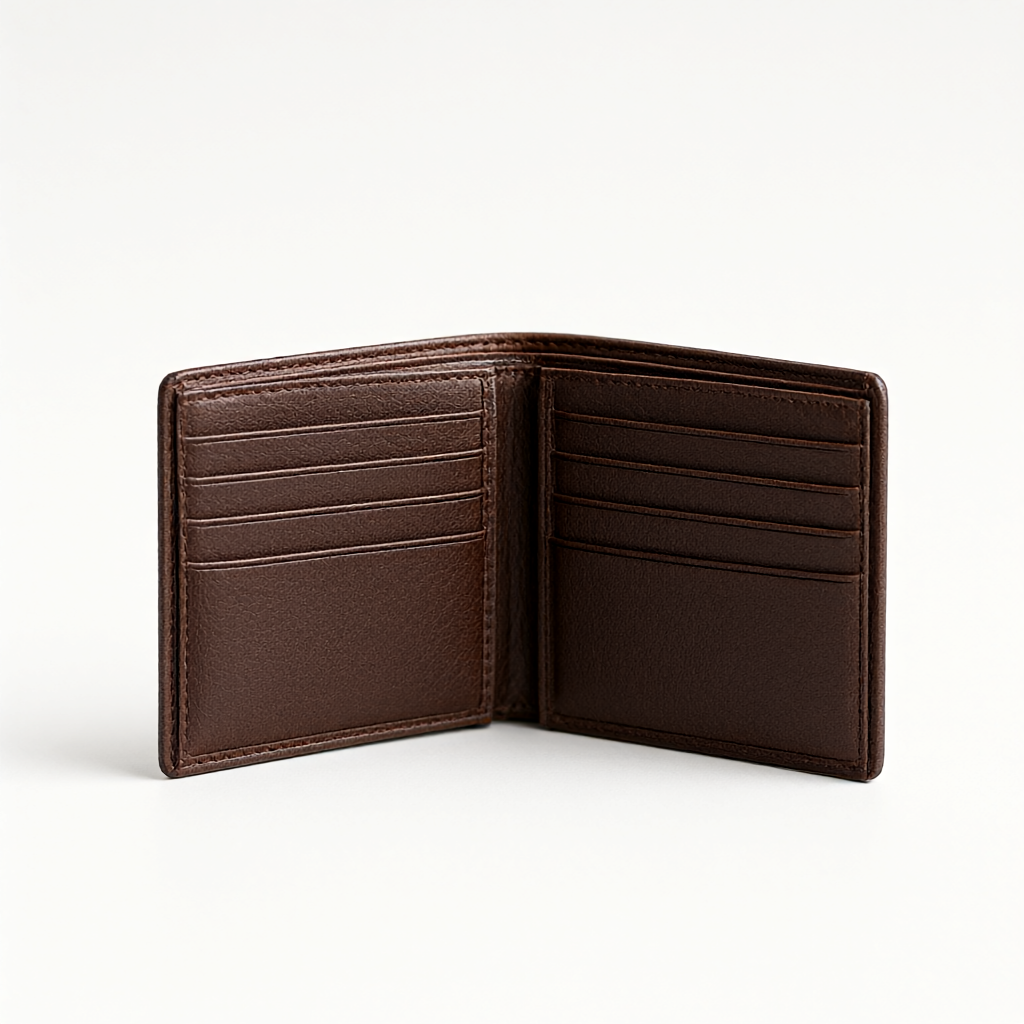
How do leather grades affect durability and appearance?
Leather grading for wallets is not a regulated standard in most markets, which means the same term can mean different things across suppliers. Understanding the practical difference between each grade is essential before writing a purchase order.
Full-grain leather is the outermost layer of the hide, retaining the natural grain structure and fiber density. It develops a patina over months of carry — darkening slightly and softening at stress points. For a bifold that will see daily use, full-grain leather offers the longest service life because the grain layer resists cracking and delamination better than any lower grade. Vegetable-tanned full-grain leather is especially valued in the EDC and classic wallet space because it firms up during the break-in period and then conforms to the owner’s pocket profile.
Top-grain leather has been sanded or buffed to remove surface imperfections, then typically receives a pigment or protective coating. This gives a more uniform appearance straight out of the box and can resist stains better than untreated full-grain. The trade-off is that the sanding process removes some of the densest fiber layer, which can reduce long-term abrasion resistance. Top-grain remains a solid choice for buyers who prioritize consistency of color and finish across large production runs.
Genuine leather is a broad marketing term that usually refers to split leather — the fibrous inner layers of the hide that remain after the grain layer is separated. Split leather can be embossed with a faux grain and heavily coated, giving it a leather-like appearance at a much lower cost. The downside is that split leather tends to crack along fold lines and stitch holes within 6 to 12 months of heavy use. It is acceptable for promotional or entry-level product tiers, but it should never be specified as a premium offering.
For detailed comparisons of leather wallet materials and grading, see our best leather wallets for men: B2B sourcing guide, which breaks down how each grade performs across different carrying styles and price tiers.
What separates a best-in-class bifold from average construction?
A premium leather bifold is defined by four construction elements that are visible at a glance and verifiable under inspection:
- Stitch type and thread density. Double-needle saddle stitch or high-density lockstitch using waxed polyester or nylon thread is the industry standard for durability. Each stitch point should resist pull-out under moderate tension. Glued or single-stitch construction is a common failure point in budget models.
- Edge finishing. Burnished, painted, or sealed edges prevent fraying and give the wallet a refined profile. Raw或未封边 leather edges will fray within weeks of pocket insertion and removal.
- Reinforcement at stress points. The center fold and card-slot corners absorb the most mechanical stress. Quality manufacturers reinforce these areas with additional stitching, bar tacks, or leather backing.
- Material consistency across the panel. A well-made bifold uses matching leather on both the interior and exterior panels. Mismatched layers — full-grain exterior with genuine leather interior — are a frequent cost-cutting measure that buyers should flag during supplier evaluation.
When evaluating potential private-label partners, request physical samples and inspect these four points directly. Photos alone do not reveal stitch density or edge treatment quality.
How does RFID-blocking integrate into leather bifold wallets?
RFID-blocking technology in leather wallets typically works by lining one or more interior card slots with a thin metallized fabric or foil layer that creates a Faraday cage around embedded contactless cards. This is a passive system with no battery required.
For B2B buyers, the practical question is not whether RFID blocking exists in the product — it is whether the shielding is properly integrated and tested. Common implementation issues include incomplete coverage (leaving gaps at slot openings), interference with other electronics in the pocket, and unverified performance claims. Manufacturers that take RFID integration seriously will provide test reports from accredited laboratories confirming attenuation levels, typically measured against standard frequencies such as 13.56 MHz for NFC and 125 kHz for low-frequency proximity cards.
See our best RFID blocking cards: B2B procurement guidance for a deeper look at how shielding performance is measured and what specifications to include in your sourcing requirements.
What should you consider when sourcing leather bifold wallets for private label?
Private-label leather bifold sourcing involves decisions across material selection, branding execution, and production logistics. The most common variables are:
- Leather type and origin. Specify the grade (full-grain, top-grain, or genuine), tanning method (vegetable-tanned, chrome-tanned, or combination), and country of origin if sustainability or compliance documentation matters to your market.
- Branding application. Laser engraving, embossing, and foil stamping are the three most common methods for applying logos to leather. Each has different cost and visual impact profiles. Laser engraving produces a permanent mark with a slight color contrast; embossing creates a debossed or raised effect without altering surface color; foil stamping adds metallic or colored branding.
- Packaging. Retail-ready packaging — including rigid boxes, tissue wraps, and brand inserts — adds cost but is essential for DTC and retail channel sales. For Amazon FBA programs, ensure packaging meets fulfillment center requirements for dimension and weight.
- Quality tolerance. Define acceptable ranges for stitch alignment, color consistency, and edge finish before placing a bulk order. Written quality standards prevent disputes during inspection.
For guidance on slim and minimalist wallet designs that complement a leather bifold line, review our best minimal wallets for B2B sourcing and private label programs.
Leather Bifold Wallets: Which Specifications Matter Most?
What are the key specs for a premium leather bifold wallet?
The following specifications represent industry-typical ranges for a well-built leather bifold. Actual values vary by design intent and target market, but these ranges provide a baseline for comparison across suppliers.
| Specification | Premium Range | Budget Range |
|---|---|---|
| Leather grade | Full-grain or vegetable-tanned | Top-grain or genuine (split) |
| Card capacity | 6–10 cards | 4–6 cards |
| Bill compartment | 2–3 folded bills | 1–2 folded bills |
| Stitch type | Double saddle stitch or high-density lockstitch | Single stitch or glued |
| Edge finish | Burnished or painted | Raw or minimally sealed |
| Weight (empty) | 55–85 g | 40–60 g |
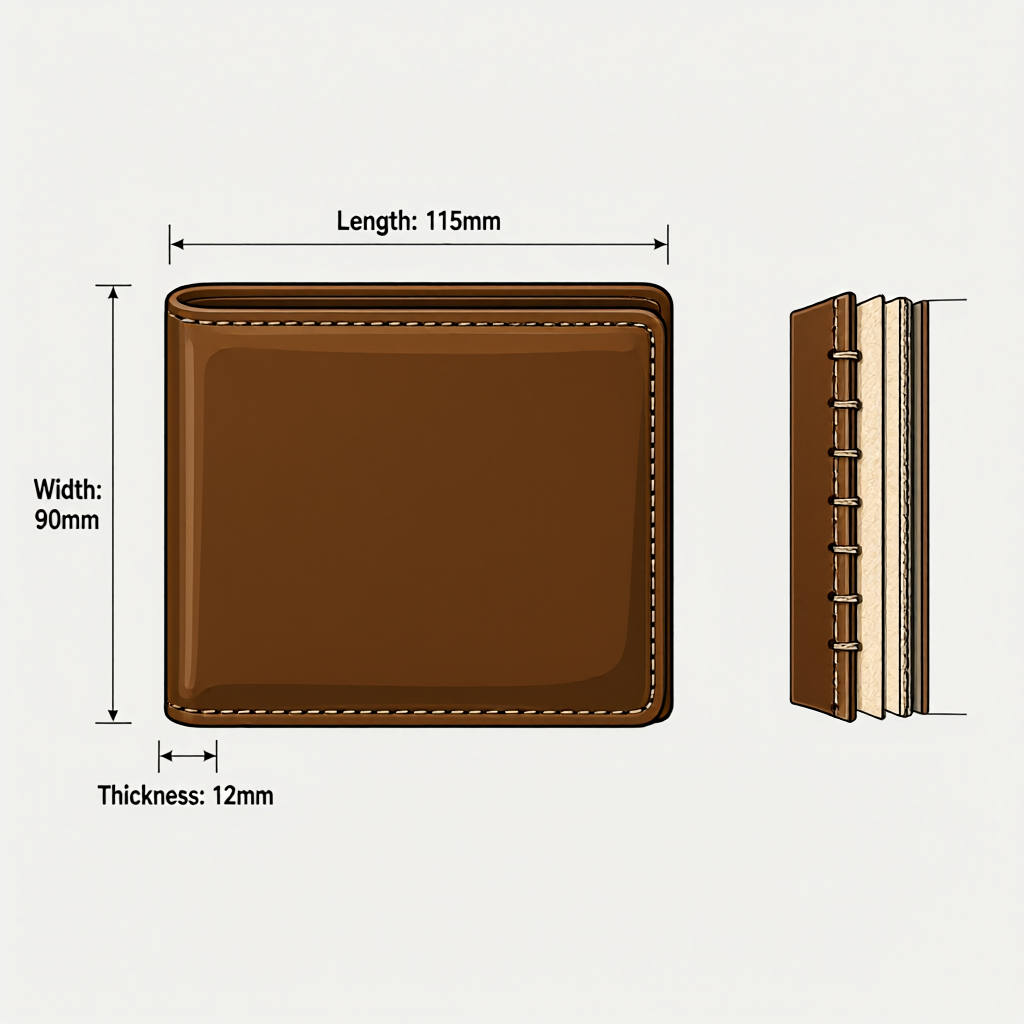
| Folded dimensions | 110 × 90 × 8 mm (typical) | 105 × 85 × 10 mm |
| RFID blocking | Integrated in select slots or full liner | Rare or unverified |
| Branding options | Laser engraving, embossing, foil stamping | Foil stamping or printed label |
| MOQ | 300–500 pcs | 500–1,000 pcs |
When reading supplier catalogs, pay attention to the weight and folded dimensions listed in millimeters and grams, not centimeters and ounces. Millimeter-level precision reveals whether a supplier understands dimensional tolerances that matter for pocket fit and retail packaging.
For a broader look at how wallet capacity and form factor intersect with buyer preferences, see our best wallet for B2B buyers: EDC wallet procurement guide.
How does a standardized evaluation rubric help buyers compare suppliers?
A consistent scoring framework makes it easier to compare quotes and samples across multiple factories. The following rubric applies to every bifold sample you evaluate:
- Leather grade and feel (25 points): Does the material match the specified grade? Is the grain consistent and the hand feel appropriate for the price tier?
- Stitching and edge finish (25 points): Are stitches evenly spaced and secure? Are edges clean and free of glue residue or fraying?
- Capacity and dimension accuracy (20 points): Do card slots hold the stated number of cards without excessive force? Are folded bills accommodated without bulging?
- RFID performance (if applicable) (15 points): Is shielding complete? Are test results provided?
- Branding quality (15 points): Is logo placement consistent? Is engraving depth and contrast acceptable?
Any sample scoring below 60 percent across these categories should be flagged for corrective action before proceeding to bulk production.
Leather Bifold Wallets: Which Standards and Certifications Apply?
What standards apply to leather wallet manufacturing for export?
Several standards and regulatory frameworks govern leather goods intended for international sale, and awareness of these requirements prevents costly compliance issues at customs or retail inspection.
The U.S. Federal Trade Commission (FTC) Leather Guide establishes labeling requirements for leather products sold in the United States, defining acceptable use of terms such as “genuine leather,” “top-grain leather,” and “full-grain leather.” Suppliers must substantiate material claims, and mislabeling can result in customs holds or retailer returns. Buyers should request a material declaration from each factory that aligns with FTC definitions before approving a product for U.S. market entry.
The ISO 9001 quality management standard, maintained by the International Organization for Standardization (iso.org), is the most widely referenced certification for manufacturing facilities producing leather goods. While ISO 9001 does not specify leather quality directly, it certifies that a factory has documented processes for material inspection, production control, and corrective action — all of which are critical when managing private-label orders across multiple batches.
European market entries may require compliance with REACH regulations concerning chemical substances in leather processing, particularly restrictions on certain chromium compounds and azo dyes. For products sold in the EU, requesting a REACH conformity statement from the supplier is a standard procurement step.
Additional relevant standards include ASTM test methods for material strength and durability, referenced through ASTM International (astm.org), which buyers may request when specifying performance requirements for high-use wallet products.
Leather Bifold Wallets: What Else Should Buyers Consider?
How should B2B buyers evaluate and compare leather bifold wallet suppliers?
Supplier evaluation should follow a structured process rather than relying on catalog quality alone. The following steps represent a practical sourcing workflow:
- Request a material specification sheet. A professional supplier will document leather grade, tanning method, thread type, and hardware material for each product variant.
- Order pre-production samples. Evaluate at least three samples from different suppliers using the rubric above. Physical inspection reveals quality gaps that product photography hides.
- Verify certifications. Request copies of ISO 9001, BSCI audit reports, and REACH compliance documents. Cross-reference certification numbers with the issuing body where possible.
- Review production capacity and lead times. Confirm that the factory can handle your volume requirements without subcontracting to unvetted facilities.
- Place a small trial order. A trial run of 200–500 pieces validates sampling quality, communication responsiveness, and on-time delivery before committing to a full seasonal order.
For context on how minimalist wallet sourcing and EDC buyer expectations overlap with traditional leather bifold procurement, see our best card holder selection for B2B sourcing and everyday carry use and our good wallets for guys: B2B EDC wallet buying guide.
What MOQ and lead times can buyers expect from OEM leather wallet manufacturers?
MOQ and lead time are among the most frequently discussed variables in leather wallet sourcing. Typical industry ranges are:
- MOQ for custom leather bifold wallets: 300–500 pieces for initial private-label runs, with many factories accepting orders starts at 300 pcs per SKU for full OEM customization (100 pcs trial order available for stock finishes) for simplified customization (logo only, stock leather). Fully custom designs — including proprietary stitching patterns, unique leather cuts, or custom packaging — typically require 300–500 piece minimums.
- Sample lead time: 5–10 business days for pre-production samples, depending on whether the supplier is working from an existing design or creating a new prototype from scratch.
- Bulk production lead time: 25–40 business days after sample approval, depending on order volume, leather sourcing availability, and branding complexity.
- Rush production: Some manufacturers can compress timelines to 15–20 business days for expedited orders at a premium fee.
Buyers should confirm whether the quoted lead time includes material sourcing, production, quality inspection, and shipping preparation. Factory-direct FOB quotes typically exclude ocean or air freight, which can add 15–30 days depending on destination.
For insights on how product complexity affects sourcing timelines, see our best slim wallets for men — B2B sourcing guide and our best minimalist wallets: materials, specs & B2B buying guide.
What are the common quality control issues in leather bifold production?
Even with strong supplier relationships, certain quality issues recur across the leather wallet industry. Awareness of these patterns helps buyers write tighter specifications and conduct more effective inspections:
- Inconsistent leather coloring. Batch-to-batch variation in dye saturation is common when suppliers do not maintain lot-controlled raw material. Request a color reference sample and confirm that bulk production will match it within an acceptable delta.
- Glue bleed on edges. Excess adhesive applied during edge sealing can migrate onto the leather surface, creating a shiny or discolored ring. This is typically corrected by adjusting application technique or allowing adequate curing time.
- Stitch tension variation. Loose or uneven stitching indicates machine calibration issues or operator inconsistency. Both are addressable through pre-production sample approval and in-line quality checks.
- RFID shield misalignment. In wallets with integrated RFID protection, the shielding material may be positioned incorrectly, leaving card slots exposed. Verified test reports and functional sampling catch this issue before shipment.
For buyers managing corporate gifting programs, retail chain procurement, or Amazon FBA product development, addressing these issues during the sampling phase — rather than after bulk production begins — significantly reduces revision costs and delivery delays.
How We Approach Leather Bifold Wallet Sourcing?
As a manufacturer, our approach to leather bifold wallets follows the same evaluation framework described above — material verification, construction inspection, and documentation compliance — applied consistently across every order we produce. We source full-grain and top-grain leathers with documented tanning origins, specify double-needle saddle stitching for structural durability, and finish edges through a burnishing or sealing process that prevents fraying over the product lifecycle.
Our facility holds ISO 9001 certification and has been audited under BSCI standards, and all materials comply with REACH and RoHS requirements for the markets we serve. For buyers developing private-label leather bifold programs, we support customization from leather grade selection through logo application method and retail packaging design, with MOQ starts at 300 pcs per SKU and sample lead time of 7 days. We also offer RFID-blocking integration with verified attenuation testing for products destined for North American and European channels.
If you are evaluating leather bifold options for your brand or distribution channel, get a free quote and share your material and branding requirements so we can provide a detailed specification and pricing breakdown.
What quality standards and certifications should leather wallet buyers require?
When evaluating suppliers for leather bifold wallets, buyers should request documentation covering the following standards and certifications:
- ISO 9001 quality management certification. Maintained by the International Organization for Standardization (iso.org), this standard verifies that a manufacturer has established documented processes for incoming material inspection, in-process quality control, and corrective action. For leather goods, ISO 9001 compliance means batch-to-batch consistency in leather grade, stitch quality, and dimensional tolerances.
- BSCI (Business Social Compliance Initiative) audit. Required by many European and North American retail buyers, BSCI certification confirms that the manufacturing facility meets defined standards for worker treatment, working conditions, and ethical sourcing practices. Buyers serving ESG-conscious brands should verify BSCI audit status before placing orders.
- REACH compliance declaration. Under EU Regulation 1907/2006, certain chemicals used in leather tanning and finishing — notably hexavalent chromium and certain azo dyes — are restricted. Buyers supplying to the European market must request a REACH conformity statement from each supplier, along with test reports from SGS or an equivalent accredited laboratory.
- ISO 17075 / ISO 17076 leather testing. ISO 17075 covers physical and mechanical testing of leather, including tear strength, tensile strength, and colorfastness. ISO 17076 covers chemical testing for restricted substances. Reputable factories conduct these tests during production and can share reports on request.
- CPSIA compliance (U.S. market). While leather wallets are not classified as children’s products, buyers importing through U.S. channels should confirm that all materials are tracked and documented to satisfy general customs and product safety expectations.
The U.S. Federal Trade Commission (FTC) Leather Guide further requires that material claims on product packaging and marketing materials accurately reflect the leather composition. Mislabeling split leather as “genuine leather” or overstating grain layer presence violates FTC guidelines and can trigger retailer returns or customs holds. Buyers should include a material declaration clause in purchase agreements that holds the supplier accountable for label accuracy.
How do sampling and pre-production workflows work for OEM leather wallets?
Sampling is a critical gate before bulk production begins. Understanding the standard workflow helps buyers set realistic expectations:
- Design confirmation. The buyer provides art files, leather swatches, and a tech pack (or references an existing catalog item for modification). For fully custom designs, the factory creates a digital mockup for approval.
- Pre-production sample. The manufacturer produces 1–3 physical samples using the specified leather, thread, and hardware. This sample typically ships within 7–10 business days. For modified stock designs, lead times can be shorter.
- Sample review and revision. The buyer evaluates the sample against the evaluation rubric and requests modifications if needed. Most factories allow one to two revision rounds before final sample approval.
- Golden sample approval. Once the sample meets all specifications, both parties sign off on a “golden sample” — the reference standard against which all bulk production pieces will be measured.
- Bulk production. After golden sample approval, the factory procures leather, cuts panels, assembles wallets, applies branding, and performs final quality inspection before shipment.
Buyers should budget sample costs into their sourcing budget — most factories charge a sample fee ranging from $50 to $200 per design, which is typically credited back on the first bulk order. Rush sampling is available at additional cost for time-sensitive programs.
Company Capabilities
As a manufacturer specializing in minimalist EDC wallets and pocket gear, we bring 13+ years of export experience to every leather wallet program. Our 50,000 sq ft in-house facility — ISO 9001 certified and BSCI audited — supports full OEM and ODM services, from initial concept through final packing and FBA prep. We accept orders starts at 300 pcs per SKU with a 7-day sample lead time, and our CNC machining, laser engraving, and leather finishing capabilities cover aluminum, carbon fiber, titanium, and full-grain leather product lines. Our exported goods reach 200+ brands across North America, Europe, Australia, and Southeast Asia, backed by REACH/RoHS-compliant materials and SGS-tested components. Contact Our Team to discuss your leather bifold wallet sourcing requirements.
Leather Bifold Wallets: Where Can You Verify the Data and Sources?
- International Organization for Standardization (iso.org) — www.iso.org
- ASTM International (astm.org) — www.astm.org
- best leather wallets for men: B2B sourcing guide — topedcwallet.com
- best RFID blocking cards: B2B procurement guidance — topedcwallet.com
- best minimal wallets for B2B sourcing and private label programs — topedcwallet.com
- best wallet for B2B buyers: EDC wallet procurement guide — topedcwallet.com
- best card holder selection for B2B sourcing and everyday carry use — topedcwallet.com
- good wallets for guys: B2B EDC wallet buying guide — topedcwallet.com
- best slim wallets for men — B2B sourcing guide — topedcwallet.com
- best minimalist wallets: materials, specs & B2B buying guide — topedcwallet.com
From article to product
Still deciding between the two?
Send us the use case rather than the product name. Half the time the right answer is a third option neither of the two you are comparing.
Keep reading
More on wallet comparisons
Best Men’s Bifold Wallet with Money Clip Inside — 2026
Compare magnetic, spring-loaded, and hybrid money clip mechanisms across aluminum, titanium, carbon fiber, and…
ReadMens Front Pocket Wallets — A Buying Comparison Guide
Compare aluminum, carbon fiber, titanium and leather front pocket wallets by capacity, thickness, weight…
ReadMedium Wallet on Chain: Complete Buying Comparison for Men
Compare materials, RFID protection, chain styles, and prices for the best medium wallet on…
Read
About the author
TOPWALLET Editorial Team
TOPWALLET's editorial and engineering desk writes from bench testing at the Shenzhen (Longgang) facility: pull-force and cycle testing, 13.56 MHz shielding measurements, finish trials and factory audits, rather than supplier spec sheets. Every specification in these guides is one we write on a purchase order.
Written on the floor
This article was written by our production and QC team — the people who spec tolerances, run the finishing line and inspect every batch. Where it states a capacity, a pull force or a lead time, it comes from a measurement we made, not a supplier’s catalogue. If a number here disagrees with what your own supplier told you, tell us; several of these articles started as a correction from a buyer.
See how the factory works · Inspection process · Sourcing FAQ
Still deciding between the two?
Send us the use case rather than the product name. Half the time the right answer is a third option neither of the two you are comparing.