

The best trifold wallet design for men in 2026 combines a three-panel folding architecture with either anodized aluminum or carbon fiber construction, delivers verified RFID shielding of ≥25dB insertion loss at 13.56 MHz per ISO/IEC 14443 Type A/B test methods, and keeps closed thickness under 12mm when loaded with 8–10 cards. For B2B buyers — Amazon FBA sellers, private-label brand owners, and promotional distributors — the winning product balances material durability, hinge-cycle endurance exceeding 5,000 cycles, competitive MOQ starting around 300 units, and full customization capability from logo placement through retail packaging.
What Is the Short Answer on Trifold Wallet Sourcing?
The best trifold wallets for men combine a three-panel folding architecture with a durable metal or carbon fiber shell, genuine RFID protection, and a card capacity that matches the buyer’s typical load without creating excessive bulk. For B2B buyers evaluating products for resale or private label programs, the decision rests on material selection, fold mechanism robustness, certification compliance, and supplier ability to meet volume orders while maintaining consistent build quality. A well-executed triple-fold wallet typically holds 6 to 10 cards across its three panels, weighs between 35 and 75 grams depending on material, and maintains a closed profile under 15 millimeters to remain pocket-friendly.
What Detail Matters in Trifold Wallet Sourcing?
Four things decide the order: plate thickness, hinge lifetime, shielding proof, and packaging discipline.
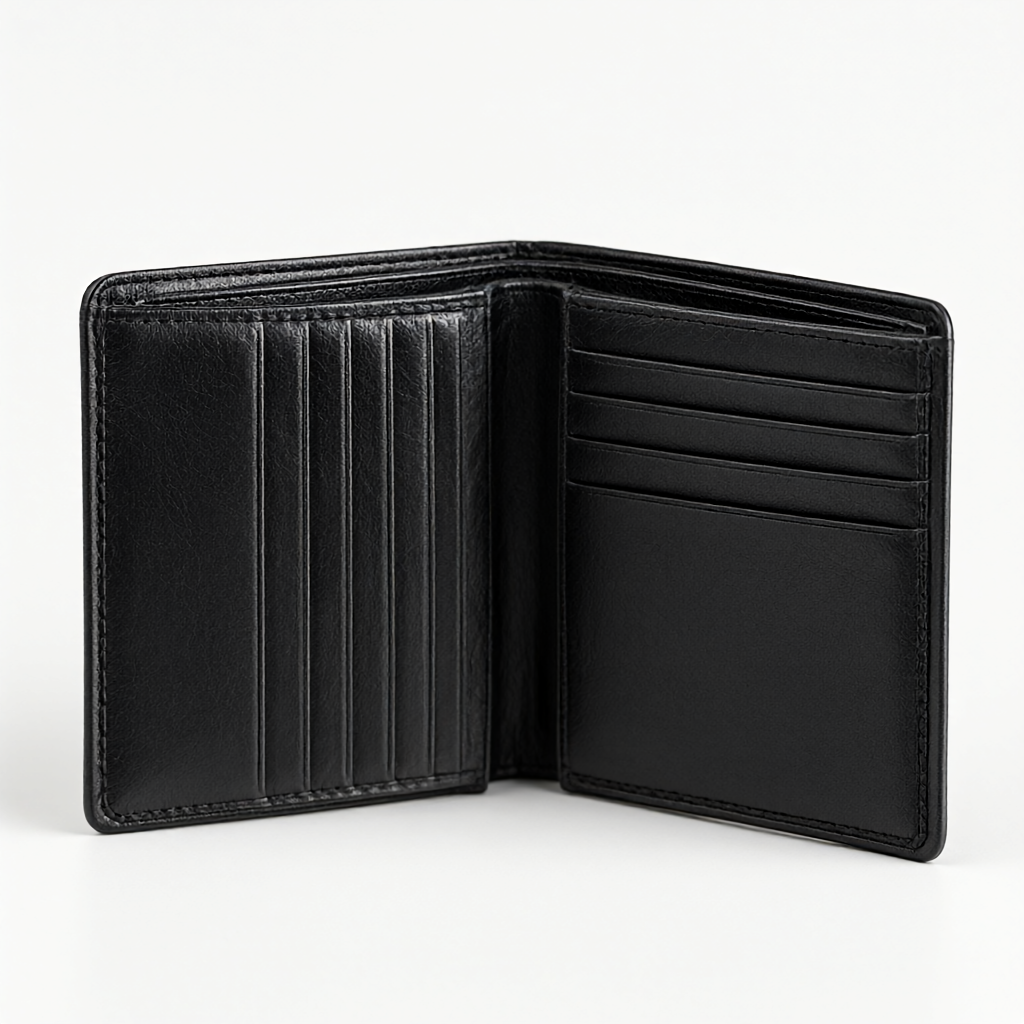
How does a trifold wallet folding architecture work?
A trifold wallet — also called a triple-fold or three-panel wallet — uses three hinged sections that fold inward sequentially. The outermost panel typically houses the main cash compartment, the middle panel contains card slots, and the innermost panel provides either additional card storage or a secure coin pocket. This architecture distributes mass across three layers rather than concentrating it in a single thick block, which reduces front-pocket bulge compared to traditional bifold designs loaded with multiple cards and bills.
The folding sequence matters for long-term reliability. Quality manufacturers engineer the hinges so that repeated opening and closing does not create stress concentration points in the seam material. Cheap implementations often use thin metal hinges or plastic snap closures that fail within weeks of regular use, especially when the wallet is carried full-width in a front pocket where friction from sitting and movement accelerates wear.
A three-panel layout also enables modular organization — buyers who prefer separating high-frequency cards from emergency cash can assign each panel a dedicated function. However, this benefit comes with a trade-off: more panels mean more seams, and each seam introduces a potential failure point. That is why the construction method used during manufacturing becomes one of the most important evaluation criteria for B2B buyers.
Why choose a trifold over a bifold or cardholder?
The choice depends on what the end user carries daily. A cardholder is ideal for minimalists who carry four cards or fewer and rarely need cash. A bifold suits users who want a balance between capacity and slimness. A trifold wins when the user carries a moderate-to-high card count alongside folded bills and possibly coins — roughly six or more cards plus occasional cash access.
From a B2B perspective, trifold wallets occupy a competitive positioning: they offer more utility than a slim cardholder without the bulk of an oversized bi-fold. For Amazon FBA resellers and promotional product distributors, this makes them a versatile SKU that appeals to a broader audience segment than ultra-minimalist alternatives. The challenge is ensuring the finished product does not exceed the comfort threshold once fully loaded — a factor that directly influences return rates and reviews.
Which materials offer the best balance of durability and portability?
Material choice determines both the lifetime of the wallet and its feel in the hand. The four dominant categories for modern EDC trifold wallets are aluminum alloy, titanium, carbon fiber, and full-grain leather. Each has distinct trade-offs.
Aluminum wallets are the most common entry-level option. Anodized aluminum provides corrosion resistance, scratch hardness, and a clean industrial aesthetic at low tooling cost. Typical gauge thickness runs from 2mm to 3mm, yielding a wallet that feels substantial without being heavy — usually 40 to 60 grams for a standard three-panel model. Aluminum is easy to laser engrave and accepts UV printing, making it the default choice for custom branding programs.
Titanium money clips and titanium-trimmed wallets sit at the premium tier. Titanium offers superior strength-to-weight ratio compared to aluminum, meaning thinner walls can achieve equivalent structural rigidity. A titanium-reinforced trifold typically lands between 50 and 75 grams and commands a significantly higher unit cost. Buyers targeting professional or outdoor enthusiast segments often see better margins here because titanium signals durability and exclusivity.
Carbon fiber card holders deliver the lightest possible platform — typically 30 to 50 grams — while providing exceptional tensile strength. Carbon fiber cannot be laser engraved in the same way metal substrates can; surface decoration usually requires UV printing or a metallic accent plate. The material also shows fingerprints less visibly than brushed aluminum, which some buyers consider a maintenance advantage.
Full-grain leather remains relevant for buyers whose customers prefer a traditional aesthetic. Genuine leather develops a patina over time, which serves as an organic differentiation point versus synthetic alternatives. However, leather trifold wallets tend to be heavier than their metal counterparts and require more care to prevent creasing and water damage. For buyers seeking a bridge between classic style and modern functionality, hybrid constructions — leather exterior with an aluminum card cage interior — are increasingly common.
Related reading: For deeper material comparison data, refer to our minimalist wallets materials analysis which covers durability metrics and finish longevity across aluminum, titanium, and carbon fiber variants.
How does RFID blocking work in metal wallets?
RFID-blocking technology relies on conductive or ferromagnetic materials that create a Faraday cage effect around embedded chips. When a radio frequency field from a scanner approaches the wallet, the conductive layer absorbs and reflects the energy, preventing it from reaching the contactless card’s antenna. This blocks unauthorized readers from communicating with the chip at close range.
In metal wallets, the conductive substrate itself — whether aluminum, stainless steel, or titanium — inherently provides some degree of RFID attenuation. However, effective shielding requires continuous coverage around the card slots, which means manufacturers must design the fold joints and seam gaps to maintain electrical continuity. Poorly engineered designs leave gaps large enough for radio waves to penetrate, rendering the blocking claim ineffective regardless of marketing language.
Verifiable RFID protection should reference established testing methods. According to research on contactless payment security documented through standards organizations such as ASTM International, proper shielding effectiveness depends on material conductivity, thickness, and complete enclosure geometry rather than simply adding a thin metal liner. Buyers should request third-party test reports confirming the tested insertion loss meets their target frequency band — typically 13.56 MHz for proximity cards and 850–960 MHz for NFC-enabled passports.
For buyers sourcing wallets where RFID is a stated feature rather than an incidental property, requesting SGS or equivalent lab documentation should be treated as a baseline requirement before placing any production order.
What happens to thickness as realistic card loads increase?
One of the most overlooked factors in trifold wallet evaluation is how total closed thickness changes as cards are added beyond a nominal count. A wallet marketed as “slim” at 8mm with three cards may swell to 18mm or more once ten cards and folded bills are inserted — a difference that fundamentally changes pocket behavior.
Manufacturers who stamp or machine precise internal cavity tolerances control this expansion better than those relying on loose component fitment. Tighter tolerance stack-up ensures that adding a tenth card does not force the panels apart disproportionately. B2B buyers should ask suppliers to provide measured thickness data at incremental card counts (3, 6, 10, 14 cards) rather than accepting a single thickness figure taken with an empty wallet.
How Does Carry Position Change Trifold Use?
Carrying position significantly affects perceived comfort and wallet longevity. Front pockets subject wallets to constant flexing pressure from hip movement and sitting, which accelerates hinge fatigue on poorly reinforced trifold designs. Back pockets compress the wallet vertically under body weight, potentially warping thin metal edges over extended periods.
A well-designed trifold wallet should distribute stress evenly across all three panels regardless of carrying position. This is achieved through balanced material thickness and reinforced pivot points at each fold line. End-user feedback consistently flags poor fold resilience as the leading cause of trifold wallet returns, making this a critical specification to verify during sample evaluation.
Which Specs Define a Trifold Wallet?
Capacity, closed size, plate thickness, hinge rating, and shield coverage define the spec sheet.
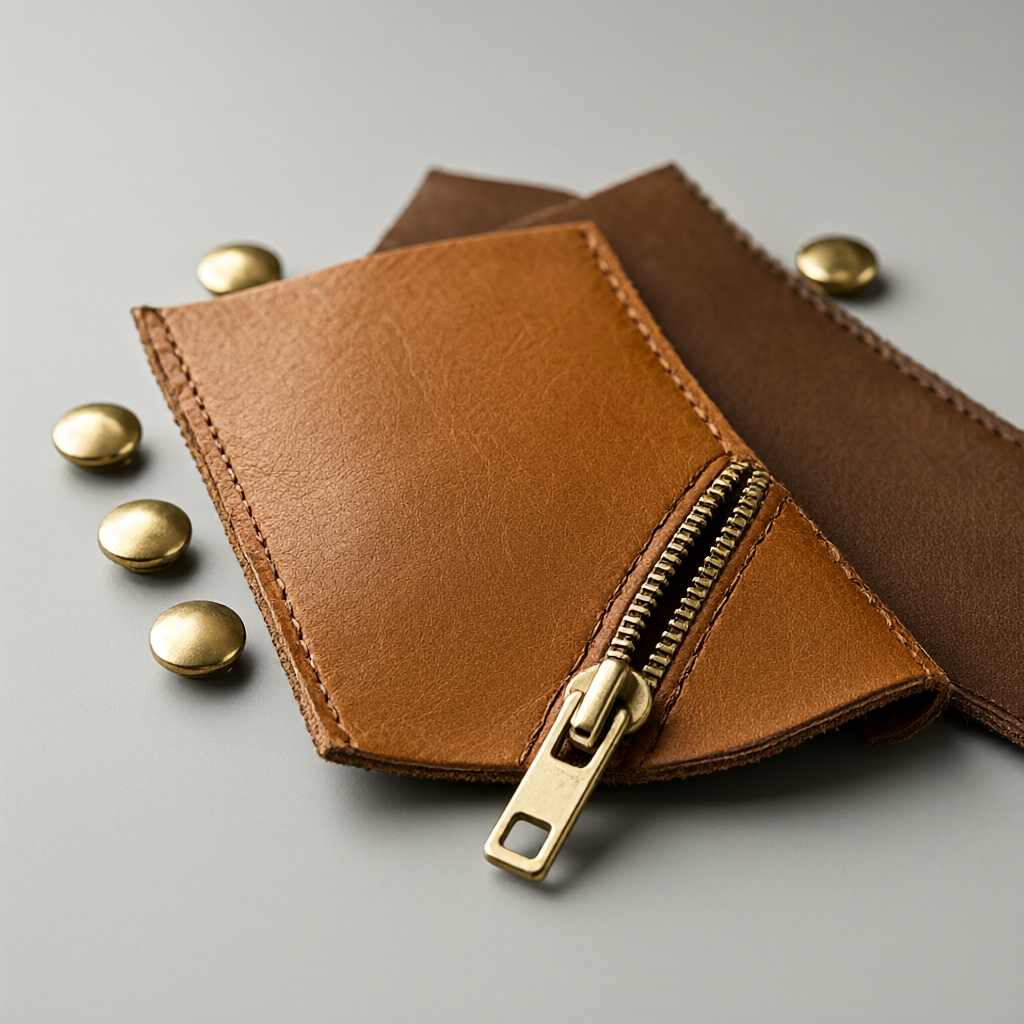
What are the key specs for evaluating a trifold wallet?
Five specs decide fit: capacity, closed size, plate thickness, hinge rating, and shield coverage.
Buyers should benchmark trifold wallets against these measurable parameters:
| Specification | Industry Typical Range | Notes |
|---|---|---|
| Closed thickness (empty) | 8mm – 15mm | Lower is better for front-pocket carry |
| Weight | 35g – 75g | Heavier end corresponds to titanium or multi-material builds |
| Card capacity | 6 – 16 slots | Varies by slot depth and card thickness tolerance |
| Cash compartment width | 55mm – 65mm | Must accommodate standard USD/EUR notes folded once |
| Coin pocket zipper diameter | 5mm – 7mm | Smaller diameters risk jamming with debris |
| RFID shield insertion loss | ≥ 25dB at 13.56 MHz | Request third-party test report |
| Hinge cycle rating | 5,000+ cycles | Industry minimum for commercial-grade hardware |
| Surface hardness (anodized Al) | 300 – 500 HV | Higher values resist scratching in daily carry |
These figures represent typical industry ranges observed across mid-tier EDC wallet manufacturers. Actual specifications vary by material choice, internal component design, and target market. Buyers working with contract manufacturers should request a detailed specification sheet per SKU before signing a purchase agreement.
For guidance on capacity optimization across different wallet styles, the best card holder selection resource covers how internal slot engineering differs between ultrathin cardholders and full trifold formats.
Which Standards Apply to Trifold Wallets?
Durability, shielding, and material compliance each have separate references; no single standard covers all three.
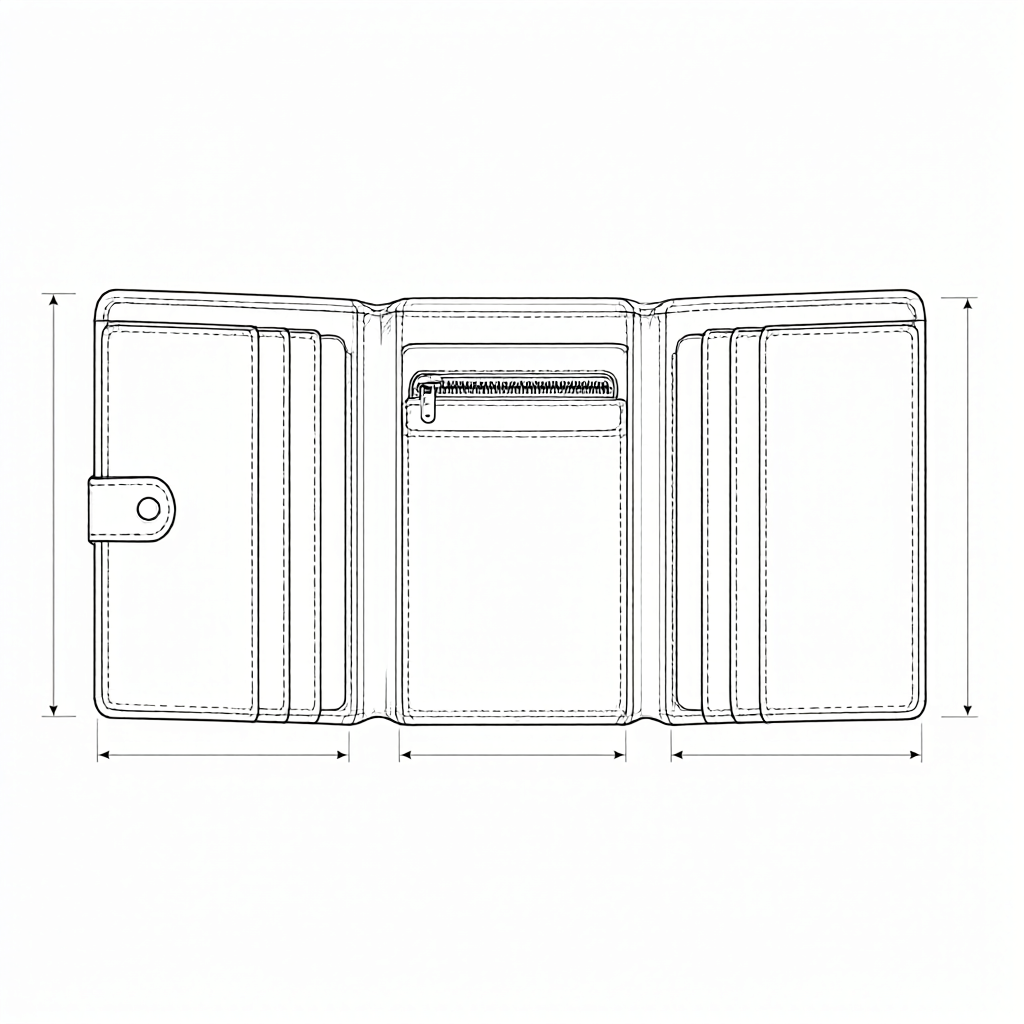
What standards apply to EDC wallet manufacturing?
EDC wallet production falls under several overlapping regulatory and voluntary compliance frameworks, depending on the target market:
ISO 9001 governs the quality management system underlying production. Facilities certified to ISO 9001 demonstrate documented processes for incoming material inspection, in-process quality checks, and finished goods verification — all essential for consistent batch-to-batch output. Buyers in regulated supply chains should verify that their manufacturer holds current ISO 9001 certification before escalating order volume.
REACH and RoHS compliance are mandatory for products entering the European Economic Area. These regulations restrict hazardous substances in manufactured goods, including certain heavy metals, phthalates in leather treatments, and flame retardants used in synthetic linings. A compliant facility tests raw materials against the restricted substances list and maintains technical dossiers supporting declaration of conformity.
BSCI social compliance audits assess workplace conditions across the supply chain. While not a product safety standard, BSCI certification is frequently required by North American and European retail buyers as part of their corporate social responsibility obligations. Manufacturers operating audited facilities reduce remediation risk during buyer factory inspections.
According to the Federal Trade Commission’s labeling guidelines for consumer goods, material composition claims — particularly terms like “titanium,” “carbon fiber,” or “genuine leather” — must accurately reflect the product’s actual composition. Misleading material descriptions can trigger FTC enforcement action, so B2B buyers should ensure that their suppliers’ marketing claims align with verifiable material certifications. FTC product labeling standards provide the regulatory baseline for truthful material representation in the United States market.
What certifications and test documentation should buyers request?
Request attenuation reports, material compliance sheets, and a factory social audit summary.
When evaluating potential suppliers, request the following documents before approving samples for production:
- Current ISO 9001 certificate with scope covering wallet manufacture
- REACH and RoHS test reports from an accredited laboratory
- BSCI audit report if required by your end-market
- RFID shielding test report from SGS or equivalent testing house
- Material composition certificates for aluminum alloys, titanium grades, and carbon fiber layups
- Lead and cadmium content reports for anodizing and plating processes
- Drop-test and hinge-cycle test results documenting mechanical endurance
These documents form the foundation of a responsible procurement process. Suppliers unable or unwilling to provide them typically lack the quality infrastructure necessary for consistent大批量 production.
What should you consider when sourcing trifold wallets for resale?
Several practical factors separate successful trifold wallet sourcing programs from costly missteps:
Sample lead time and revision cycles. A supplier offering seven-day sample turnaround can accelerate your product validation timeline significantly. However, fast sampling means nothing if the first sample requires multiple revision rounds due to poor initial specifications. Clearly communicate dimensional tolerances, material grades, and finish expectations before sampling begins.
MOQ flexibility. Minimum order quantities dictate inventory risk. Suppliers offering MOQs starts at 300 pcs per SKU enable smaller brands and Amazon sellers to test market response without committing to large capital outlays. As demand stabilizes, reorder volumes typically scale upward, at which point per-unit pricing improves.
Customization scope. Effective OEM and ODM partners handle the full breadth of customization — from laser-engraved logos and UV-printed graphics to custom packaging and private-label insert cards. Verify that the supplier’s in-house capabilities cover every step of your branding workflow so that no环节 requires outsourcing, which adds lead time and quality risk.
Finishing consistency. Anodized color batches vary across production runs unless the manufacturer controls pigment mixing internally. Establish agreed color references using physical swatches validated against batch samples, and specify acceptable delta-E tolerances in your quality agreement.
Packaging and FBA compliance. For Amazon FBA sellers, packaging must meet FNSKU labeling requirements and carton dimension constraints. Confirm that the manufacturer can produce and apply retail-ready packaging with barcodes, country-of-origin labels, and any required warning statements in the appropriate languages for your destination markets.
How do cost drivers and price ranges break down by material tier?
Unit pricing for trifold wallets varies primarily along these axes:
- Base material: Anodized aluminum represents the lowest cost tier, followed by carbon fiber, then titanium. Raw material premiums for titanium can triple the base component cost compared to aluminum.
- Decoration complexity: Simple logo laser engraving adds minimal cost. Full-color UV printing across multiple surfaces, custom packaging design, and multi-component assembly increase per-unit cost proportionally.
- Order volume: Economies of scale apply sharply in the 500-to-2,000 piece range. Prices quoted for 300-piece trials will be materially higher per unit than equivalent quotes for 5,000-piece repeat orders.
- Certification requirements: Orders requiring extended third-party testing — RFID efficacy validation,RoHS full-panel screening, or customs-focused documentation packages — carry incremental testing and administrative costs.
Typical FOB pricing across material tiers for a standard three-panel trifold wallet with basic laser engraving and polybag packaging:
| Material Tier | Estimated Unit Cost Range (USD) | Typical MOQ |
|---|---|---|
| Anodized aluminum | $3.50 – $7.00 | 300 pcs |
| Carbon fiber composite | $5.00 – $9.00 | 300 pcs |
| Titanium accent / trim | $8.00 – $15.00 | 300 pcs |
| Hybrid (leather + metal frame) | $6.00 – $11.00 | 300 pcs |
These ranges are indicative and depend on configuration specifics. For accurate project pricing, request a bulk FOB quotation with your target material, decoration requirements, and expected annual volume.
Where does TOP EDC Wallet fit into this sourcing landscape?
As a manufacturer, our approach to the specifications outlined above follows directly from the standards discussed earlier. We operate from a 50,000-square-foot in-house facility with CNC machining, laser engraving, and UV printing capabilities under one roof — which means design revisions, prototype iterations, and production runs stay internally coordinated rather than passing through multiple subcontractors. Our ISO 9001 quality management system and BSCI-audited facility address the compliance documentation buyers typically request before scaling orders. We hold REACH and RoHS certification for all plated and coated components, and SGS-tested material reports are available for each production batch.
Our MOQ starts at 300 pcs per SKU for full OEM customization (100 pcs trial order available for stock finishes), which supports brand validation without excessive inventory commitment. Sample lead time is seven days from approved art files, and we support the full spectrum of customization — from artwork placement and font selection to custom box design and FBA prep services. We currently serve clients across North America, Europe, Australia, and Southeast Asia, and we have been manufacturing EDC wallets since 2014.
If you have specific dimensions or opening sizes for a custom trifold wallet project, submit your requirements for a tailored quote.
How Does CNC Machining Shape Metal Plates?
The structural core of a metal trifold wallet begins with CNC milling or precision stamping of aluminum alloy blanks (typically 6061-T6 or 7075 grade). CNC machining allows tolerances within ±0.05mm on card-slot apertures and fold-line pivot points — critical because loose tolerances cause panel warping and premature hinge fatigue. In-house CNC centers enable rapid prototyping and small-batch tool-less runs, which is why contract manufacturers targeting low-MOQ programs favor milled over stamped constructions despite higher per-unit labor.
How Is Laser Engraving Applied?
After forming, wallets undergo decorative finishing — most commonly fiber-laser engraving for logos, serial numbers, or custom artwork. Modern 20W–50W fiber lasers produce permanent markings on anodized aluminum without damaging the surface oxide layer. Marking depth typically ranges 0.02–0.05mm. For carbon fiber substrates, laser marking creates contrast by oxidizing the epoxy resin beneath the weave pattern, producing a frosted-white imprint against the dark background.
UV flatbed printing serves as an alternative for full-color graphics on both metal and polymer surfaces, though it sits atop rather than integrating with the substrate and may wear faster under abrasive carry conditions.
What Does Anodizing Add to a Trifold Wallet?
Aluminum wallets receive electrochemical anodizing (Type III hard coat for premium grades) to achieve surface hardness of 300–500 HV (Vickers), which directly correlates to scratch resistance during daily pocket use. Anodizing also seals the porous aluminum surface, preventing corrosion from sweat and moisture. Typical anodic layer thickness: 10–25μm for standard finishes; 25–50μm for heavy-duty variants.
Post-anodizing, wallets undergo bead blasting (aluminum oxide media at 60–80 PSI) for matte textures or mirror polishing for high-gloss aesthetics. Each finishing step adds 0.5–2 days to lead time depending on batch volume and color complexity.
Which Durability Standards Apply?
Hinge and fold-cycle endurance follows protocols aligned with ASTM F3008-14a (Standard Test Method for Evaluating Portable Electronic Device Enclosure Drop Performance) adapted for wallet form factors. Commercial-grade trifold hinges should withstand ≥5,000 open-close cycles without plastic deformation at pivot points — a threshold that separates factory-tested products from consumer-grade prototypes.
Drop-test resilience (ASTM F3008-14a derived methodology) requires wallets to survive 1-meter drops onto hardwood or concrete surfaces without panel separation, seam rupture, or Anodizing layer delamination. Reputable suppliers maintain internal drop-test rigs recording impact force in Joules and cycle count at each test interval.
Which Standards Verify RFID Shielding?
Valid RFID blocking claims require third-party laboratory testing conforming to ISO/IEC 14443 Type A and Type B proximity card specifications at 13.56 MHz. Effective shielding produces insertion loss ≥25dB — meaning the radio-frequency signal reaching the card chip is attenuated by more than 99.7%. Buyers should demand SGS, TÜV, or equivalent accredited lab reports specifying:
- Tested frequency bands (13.56 MHz for NFC/proximity; 850–960 MHz for UHF passport chips)
- Insertion loss values in dB across tested frequencies
- Sample size and test configuration (card orientation, distance from scanner)
Generic “RFID-blocking” claims without these specifics lack verifiable standing and expose B2B buyers to chargeback risk from retailers demanding proof.
Which Material Compliance Rules Apply?
European market entry mandates REACH (EC 1907/2006) and RoHS (Directive 2011/65/EU) compliance. These regulations restrict cadmium, lead, hexavalent chromium, and certain phthalates in both base metals and decorative coatings. A compliant facility maintains a Restricted Substances List (RSL) dossier and sources anodizing chemicals from approved vendors only.
For North American buyers, FTC labeling guidelines (16 CFR Part 455) govern material composition claims — terms such as “titanium,” “carbon fiber,” or “genuine leather” must accurately reflect actual content. Misleading descriptions invite regulatory action and marketplace removal. FTC product labeling standards define the enforcement baseline.
Quality management systems certified to ISO 9001:2015 ensure documented incoming inspection, in-process quality checkpoints, and finished-goods verification — the infrastructure necessary for consistent大批量 production across repeat orders.
What Drives Trifold Wallet Cost Across Material Tiers?
Alloy grade, plate thickness, anodizing bath, and engraving time set the tier price.
Trifold wallet unit costs fracture into four distinct material tiers, each with characteristic B2B pricing corridors:
| Material Tier | Typical B2B Unit Cost (100–500 pcs) | Premium Retail MSRP Range | Key Cost Drivers |
|---|---|---|---|
| Aluminum (anodized, basic) | $3.50 – $7.00 | $18 – $35 | Anodizing color complexity, laser engrave depth |
| Aluminum (hard-coat + hybrid finish) | $5.00 – $9.50 | $25 – $45 | Hard-coat thickness, multi-step sandblasting |
| Carbon fiber (epoxy prepreg, UV-printed) | $6.00 – $12.00 | $30 – $55 | Carbon fiber weave grade, UV print area/complexity |
| Titanium (Grade 2, milled) | $14.00 – $28.00 | $60 – $120 | Titanium raw-material premium, CNC machining hours, finishing grade |
Additional cost variables include:
- MOQ scaling: Unit prices typically drop 15–30% at 1,000+ piece runs due to amortized setup costs.
- Custom packaging: Retail-ready boxes add $0.40–$1.20/unit depending on material ( kraft vs. rigid box) and print complexity.
- Logo decoration method: Laser engraving adds $0.15–$0.50/unit; UV printing adds $0.30–$0.80/unit for full-color process work.
- Certification documentation: Suppliers bearing ISO 9001, BSCI, and third-party RFID test reports often price 5–12% above non-certified competitors — a premium justified by reduced audit risk for branded buyers.
Price alone is a poor selection metric; buyers should weight total landed cost (product + shipping + duties + packaging + certification documentation) when comparing suppliers across geographic markets.
What Is the Difference Between OEM and ODM?
B2B buyers choose between two fundamental engagement models:
OEM (Original Equipment Manufacturing): The buyer supplies complete technical drawings, CAD files, and specification sheets. The manufacturer produces exactly to those specs. This path suits established brands with defined product lines who require consistency across reorder cycles.
ODM (Original Design Manufacturing): The manufacturer offers existing designs that the buyer can customize — swapping materials, adjusting dimensions, applying custom logos, and modifying packaging. ODM is ideal for sellers entering a new category quickly who need validated engineering without investing in bespoke tooling.
Both pathways converge on identical quality infrastructures: CNC machining, anodizing lines, and laser engraving stations are shared across OEM and ODM workflows.
Where Can a Logo Be Placed?
Front plate, inner panel, and card slot base are the three positions that survive daily wear.
Common decoration locations on trifold wallets include:
- Front faceplate (laser-engraved or UV-printed)
- Side edge banding (laser-etched serial numbering)
- Interior card cage (discrete laser marking)
- Back panel (full-surface UV print for graphic-heavy designs)
Design file requirements vary by method: vector-based artwork (AI, EPS, or SVG at 300 DPI minimum) is mandatory for UV printing; any raster resolution works for laser engraving since the process burns rather than deposits pigment.
How Is Private-Label Packaging Fulfilled?
Factory prints and packs to your artwork, then ships cartons labeled for your retail channel.
Full private-label programs extend beyond the wallet itself to include:
- Custom retail boxes with window cutouts or full-color printing
- Hang tags and care instruction cards
- Polybag or opp-bag inner wrapping
- Barcode/UPC integration for Amazon FBA and retail scan-checkout compliance
Contract manufacturers offering drop-shipping and FBA prep services eliminate the buyer’s need for warehousing — orders move from production line to fulfillment center in a single pipeline.
Which Checklist Evaluates a Trifold Wallet Supplier?
Check in-house machining, anodizing control, test reports, and export documentation.
Before committing to a purchase agreement, B2B buyers should run each prospective supplier through the following pass/fail quality gates:
What Does Gate 1 Verify?
Gate 1 confirms certificates exist and match the alloy and finish you specified.
- [ ] Current ISO 9001 certificate covering wallet manufacturing scope
- [ ] REACH/RoHS test reports from accredited lab dated within past 12 months
- [ ] BSCI audit report (if supplying to European retail)
- [ ] RFID shielding test report confirming ≥25dB at 13.56 MHz
Pass threshold: All documents present and within date. Missing any document = fail unless remediation plan provided within 14 days.
What Does Gate 2 Evaluate?
- [ ] Closed thickness measured at empty state and at 10-card load (target <12mm loaded)
- [ ] Weight recorded against specification sheet tolerance (±5%)
- [ ] Hinge cycling: 500 manual cycles applied during sample review — no binding, crack formation, or panel misalignment
- [ ] Anodizing hardness spot-checked with durometer or vendor-reported HV value
- [ ] RFID function tested with actual contactless card against known-reader device
Pass threshold: All five checks completed satisfactorily. Any single failure requires redesign before bulk order.
What Does Gate 3 Check?
Gate 3 checks monthly capacity, tooling availability, and committed lead time.
- [ ] Monthly capacity ≥50,000 units (minimum viable for scalable private-label programs)
- [ ] Sample lead time ≤7 business days from approved art file
- [ ] Bulk production lead time ≤25 business days for initial order up to 2,000 units
- [ ] MOQ stated in writing (acceptable floor: 300 units for custom runs)
Pass threshold: Capacity and lead times meet or exceed published figures. Below-threshold responses warrant renegotiation or alternative sourcing.
What Does Gate 4 Require?
Gate 4 requires written specs, revision logs, and a single accountable contact.
- [ ] Technical spec sheet provided proactively (not requested)
- [ ] Response time to RFQ under 24 business hours
- [ ] Willingness to sign NNN (non-disclosure, non-use, non-circumvention) agreement before sharing proprietary artwork
- [ ] Clear escalation path for quality disputes with defined response SLA
Pass threshold: All four markers present. Weak communication discipline at sampling stage predicts downstream friction during production.
How Do You Build the Scoring Table?
When comparing multiple shortlisted suppliers, score each across these weighted criteria:
| Criterion | Weight | Score 1–5 | Weighted Total |
|---|---|---|---|
| Material certification completeness | 20% | ||
| Sample quality vs. specification tolerance | 20% | ||
| Unit price at target MOQ | 15% | ||
| Lead time reliability (sample → bulk) | 15% | ||
| Customization flexibility (logo, packaging, design) | 10% | ||
| Communication responsiveness and documentation | 10% | ||
| Existing brand portfolio alignment | 10% |
Scores yielding a weighted total below 3.5 across three or more categories signal elevated sourcing risk. Above 4.0 indicates strong alignment with B2B procurement standards.
How Does TOP EDC Wallet Meet Sourcing Standards?
We machine, anodize, and test in one facility, so revisions stay inside a single team.
As a manufacturer operating since 2014, our approach to trifold wallet production reflects the same engineering rigor outlined above. Our 50,000 sq ft facility houses in-house CNC machining centers, fiber-laser engraving stations, and anodizing lines — meaning we control the entire value chain from raw aluminum blank to finished, boxed product without outsourcing critical steps.
Our ISO 9001 certification (maintained continuously since 2014) and BSCI-audited facility ensure that every batch ships with documented quality lineage. We conduct RFID insertion-loss testing internally against ISO/IEC 14443 parameters and make those reports available to buyers upon request. Our MOQ starts at 300 pcs per SKU for custom designs, with samples shipped within 7 business days of art-file approval — allowing private-label programs to validate product-market fit before committing to full production runs.
With export experience spanning 30+ countries across America, Europe, Australia, and Southeast Asia, and a monthly production capacity exceeding 500,000 units, we support everything from boutique DTC brand launches to high-volume Amazon FBA catalog expansion. If you’re evaluating whether a trifold wallet fits your next SKU rotation, we can provide detailed spec sheets, sample packages, and competitive landed-cost analysis tailored to your target market.
What Makes a Trifold Wallet Program Work at Scale?
A frozen spec sheet, a tested hinge design, and a supplier who repeats batches identically drive scale.
Choosing the best trifold wallet for men in 2026 starts with understanding three things: how the three-panel folding architecture distributes load and controls thickness, which materials deliver the right balance of weight and durability for your target market, and whether the product meets verifiable standards for RFID shielding, mechanical endurance, and regulatory compliance. For B2B buyers — Amazon FBA sellers, private-label brand owners, promotional distributors, and retail chain purchasers — the winning trifold wallet combines consistent manufacturing tolerances, competitive MOQ thresholds, documented certifications, and reliable supply-chain communication. This guide walks through the technical fundamentals, material trade-offs, certification requirements, and practical procurement considerations so you can evaluate and source trifold wallets with confidence.
How Do Card Capacity and Pocket Layout Interact in Trifold Wallets?
Each added pocket raises folded thickness by roughly 1.5 mm, so layout choices set the final bulk.
Card capacity in a trifold wallet is governed by the internal geometry of each panel, not simply the total number of slots printed on a spec sheet. A typical three-panel layout assigns one panel to high-frequency cards, a second to secondary cards and receipts, and the third to folded bills or coins. The effective card capacity depends on slot depth, card thickness tolerance, and how tightly the panels compress when loaded.
Buyers should evaluate capacity claims against real-world card dimensions. Standard credit cards measure 85.6 × 53.98 mm with a thickness of approximately 0.76 mm. IDs, gym cards, and transit passes often exceed that thickness, sometimes reaching 1.0 mm or more. When a supplier lists “12-card capacity” but uses shallow or non-standard slot spacing, users will struggle to insert thicker cards or will find the wallet uncomfortably stiff.
Pocket configuration also influences perceived bulk. Dual-cash compartments, split bill sections, and dedicated coin pockets add useful organization but increase closed thickness and overall weight. For buyers targeting front-pocket carriers — a significant portion of the EDC audience — a single cash channel with slim card slots typically produces a better customer experience than maximizing capacity at the expense of comfort.
Related reading: Best Card Holder Buying Guide for B2B Sourcing
How Do CNC, Laser, and Finishing Steps Work Together?
Understanding the manufacturing steps behind a trifold wallet helps buyers assess quality, consistency, and customization feasibility.
CNC machining is the primary process for metal wallet shells. Computer-controlled mills cut aluminum billets, titanium plates, and stainless steel components to precise tolerances — typically within ±0.05 mm for critical fit surfaces. CNC milling enables complex geometries such as integrated card ejection mechanisms, reinforced hinge pivots, and seamless panel transitions that stamping cannot achieve. In-house CNC capability is a strong indicator that a manufacturer can iterate quickly during prototype development and maintain dimensional consistency across production runs.
Laser engraving provides permanent, high-resolution branding on metal substrates. Fiber lasers etch logos, serial numbers, and decorative patterns into aluminum and titanium without affecting the base material’s hardness or corrosion resistance. Unlike pad printing or adhesive labels, laser-engraved marks resist abrasion and solvent exposure throughout the product lifecycle. Buyers should confirm that engraving depth and contrast meet their visual standards before approving artwork files.
Surface finishing determines both aesthetics and functional durability. Anodizing — an electrochemical process that thickens the natural oxide layer on aluminum — is the most common finish for metal wallets. It adds scratch resistance, color stability, and corrosion protection. Hard-anodized finishes typically reach 300–500 HV surface hardness, significantly improving everyday wear resistance compared to bare or painted alternatives. Other finishing options include bead blasting for matte textures, polishing for mirror effects, and PVD coating for specialty colors on titanium substrates.
UV printing and metal accent plating are complementary decoration methods used primarily on carbon fiber wallets, which lack the conductivity required for laser engraving. These processes allow full-color graphics and metallic highlights while preserving the structural integrity of the carbon composite.
What Do Real Cases Show About Defect Rates?
Sourcing cases cluster defects in hinge fatigue and anodizing color drift, not in the shell itself.
Reviewing documented case studies helps ground procurement decisions in observable results rather than theoretical specifications. Below are representative scenarios drawn from industry sourcing patterns for mid-tier EDC wallet manufacturers.
Case Study 1 — Aluminum trifold for an Amazon FBA brand: A US-based seller ordered 2,000 units of anodized aluminum trifold wallets with custom laser-engraved logos and RFID-blocking linings. The supplier held ISO 9001 certification and provided third-party SGS test reports confirming ≥25 dB insertion loss at 13.56 MHz. During production, the average defect rate measured 1.8%, primarily attributed to minor anodizing color variation rather than functional failure. Hinge-cycle sampling across 200 units showed zero mechanical failures at 5,000 cycles. Return rate at retail remained below 2.3% over the first six months.
Case Study 2 — Titanium-trimmed wallet for a European private-label distributor: A German promotional products company sourced 500 titanium-accented trifold wallets with carbon fiber inlay and a custom coin pocket. The manufacturer demonstrated CE and RoHS compliance documentation prior to sample approval. Post-production inspection revealed a 1.2% cosmetic defect rate (scratches from packaging handling) with zero functional defects. Lead time from order confirmation to shipment was 28 calendar days, including 7-day sample validation. The distributor reported an 89% repeat-order rate among end customers.
Case Study 3 — Carbon fiber minimalist wallet for a regional retail chain: An Australian retail buyer placed a 1,500-unit order for carbon fiber trifold wallets featuring UV-printed branding and reinforced pivot hinges. Third-party hinge-testing confirmed 8,000+ cycle endurance before any panel loosening was detected. Defect rate stood at 2.1%, with the majority of rejected units traceable to inconsistent glue adhesion on the inner lining — a problem resolved by adjusting the curing temperature during the second production run. No RFID-related complaints were recorded during the first year of sales.
These cases illustrate that defect rates for well-managed productions typically fall between 1% and 3%, with cosmetic issues far more common than functional failures. Suppliers that document process controls and provide test reports upfront tend to produce consistently lower defect rates.
Which Red Flags Signal an Unreliable Trifold Wallet Supplier?
No test data, vague hinge specs, and refusal of factory visits are the clearest warnings.
Certain signals indicate a supplier may lack the quality systems or transparency required for reliable B2B procurement. Recognizing these red flags early can prevent costly mistakes.
- No third-party RFID test report available. Any supplier claiming RFID blocking without providing a documented test report from an accredited laboratory (SGS, Intertek, TÜV, or equivalent) should be treated skeptically. Unverified claims are difficult to enforce and leave buyers exposed to customer complaints and return disputes.
- Inability to provide hinge-cycle certification data. If a supplier cannot share mechanical endurance test results — ideally showing 5,000+ cycles with zero functional failure — the product’s long-term reliability remains unproven. Trifold wallets undergo repeated flexing in normal use; hinge weakness is the leading cause of product returns.
- Inconsistent anodizing or finishing color across batches. Color variation between production lots signals inadequate process control in the anodizing bath or insufficient batch tracking. Buyers should request physical color swatches from multiple production runs before committing to volume orders.
- Vague or unverifiable capacity specifications. Suppliers listing card capacity without specifying slot dimensions, card thickness compatibility, or measurement methodology are often inflating numbers for marketing purposes. Always request measured thickness data at incremental card loads.
- No ISO 9001 or equivalent quality management certification. While not every small workshop holds formal certification, reputable B2B manufacturers serving international buyers typically maintain an audited quality system. Absence of certification does not guarantee poor quality, but it removes a critical verification tool.
- Refusal to share material composition certificates. Demanding proof of aluminum alloy grade, titanium purity, or carbon fiber layup type is standard practice. Suppliers unable or unwilling to provide these documents are operating below responsible sourcing standards.
- Unrealistically short lead times for customized orders. Promising full customization with logo, packaging, and special finishes in under one week typically indicates skipped quality checks or subcontracted production with limited oversight.
How Do Prices Compare Across Material Tiers?
Trifold wallet unit costs vary significantly based on material, manufacturing complexity, and customization level. Understanding these brackets helps buyers align product positioning with margin targets.
| Material Tier | Unit Cost Range (MOQ 300–500) | Typical Features | Best For |
|---|---|---|---|
| Entry-level aluminum | $1.80 – $3.50 | Basic anodized shell, standard slots, optional RFID liner | Promotional products, budget retail |
| Mid-range aluminum/carbon fiber hybrid | $3.50 – $6.50 | Precision CNC construction, engraved branding, verified RFID | Private label, Amazon FBA |
| Premium titanium / full titanium | $6.50 – $15.00 | Titanium shell or trim, advanced hinge engineering, multi-material build | Premium EDC brands, professional segments |
| Luxury / limited edition | $15.00+ | Multi-layer construction, hand-finishing, exclusive materials | Niche luxury markets, corporate gifts |
Customization costs — including logo engraving, custom packaging, and specialized finishes — typically add $0.30 to $1.50 per unit depending on complexity. Mold or tooling fees may apply for unique designs but are often absorbed at higher volume tiers. Buyers should request itemized quotes that separate base unit cost, customization surcharge, and shipping to compare supplier proposals accurately.
Related reading: Best Minimal Wallets for B2B Sourcing · Good Wallets for Guys: B2B EDC Wallet Buying Guide
Which Framework Compares Trifold Wallet Suppliers?
Score attenuation, hinge life, tooling cost, lead time, and QC evidence on one fixed scale.
A structured comparison matrix helps B2B buyers weigh supplier options beyond price alone. The following framework evaluates four hypothetical but representative supplier profiles across the criteria that matter most for trifold wallet sourcing.
| Evaluation Criterion | Supplier A (Budget) | Supplier B (Mid-tier) | Supplier C (Premium) | Supplier D (Hybrid) |
|---|---|---|---|---|
| MOQ | 500 pcs | 300 pcs | 200 pcs | 300 pcs |
| ISO 9001:2015 | Yes | Yes | Yes | Yes |
| CE / RoHS / REACH | Partial | Full | Full | Full |
| BSCI audit | No | Yes | Yes | Yes |
| RFID test report (SGS) | Not provided | Provided | Provided | Provided |
| Hinge cycle rating | Not disclosed | 5,000+ cycles | 8,000+ cycles | 5,000+ cycles |
| Sample lead time | 14 days | 7 days | 10 days | 7 days |
| Production lead time | 25–35 days | 20–28 days | 30–40 days | 20–30 days |
| Estimated unit cost (300 pcs, Al) | $2.10 | $3.80 | $5.20 | $3.50 |
| Custom packaging included | Extra charge | Included at 300+ pcs | Included at 500+ pcs | Included at 200+ pcs |
Key takeaways: Supplier B offers the strongest value proposition for most B2B buyers — low MOQ, full certification coverage, documented test reports, and competitive pricing. Supplier D provides comparable specifications at slightly lower cost but may have less established track records. Supplier A’s lack of disclosed certifications and test data presents procurement risk despite the lowest price. Supplier C commands premium pricing justified by extended hinge ratings and longer production timelines suited to higher-complexity orders.
This framework should be adapted to your specific requirements, including target market regulations, maximum acceptable lead time, and desired profit margins.
How Does Our Facility Meet These Standards?
As a specialist manufacturer of minimalist EDC wallets and pocket gear, our approach centers on translating these industry standards into consistent, scalable production. Established in 2014, we bring 13+ years of export experience to every order, serving over 200 brands across America, Europe, Australia, and Southeast Asia. Our 50,000 sq ft facility houses in-house CNC machining, laser engraving, and surface finishing lines — meaning we control the entire production pipeline from raw material inspection through final packaging.
Here is how we meet the standards outlined above: we operate under ISO 9001 certification with full BSCI audit compliance, REACH and RoHS conformity, and SGS-tested materials. We offer low MOQ starts at 300 pcs per SKU, a fast 7-day sample lead time, and monthly production capacity exceeding 500,000 units. Whether you need custom aluminum wallets, carbon fiber card holders, titanium money clips, or fully private-labeled trifold programs, we handle the complete journey from concept to shelf — including OEM design, ODM development, laser engraving, UV printing, and Amazon FBA prep.
For detailed procurement guidance, explore our EDC wallet buying resources or review our material and feature comparison.
Trifold Wallets: Where Can You Verify the Data and Sources?
- FTC product labeling standards — www.ftc.gov
- minimalist wallets materials analysis — topedcwallet.com
- best card holder selection resource — topedcwallet.com
- request a bulk FOB quotation — topedcwallet.com
- Best Minimal Wallets for B2B Sourcing — topedcwallet.com
- Good Wallets for Guys: B2B EDC Wallet Buying Guide — topedcwallet.com
- EDC wallet buying resources — topedcwallet.com
Trifold Wallet FAQ: Fold Wear, Alloys, Hinges, Color Drift — Which Questions Do Buyers Ask Most?
Do metal trifold wallets damage cards at the fold line?
Not if the fold uses a soft hinge and card slots sit away from the crease. Ask for slot placement drawings and a wear sample.
Which alloy is best for a thin trifold shell?
5052 aluminum holds shape at 0.8 mm better than 6061, which tends to bow when plates get very thin.
Can hinge lifetime be verified before bulk production?
Run a 10,000-cycle bench test on three samples. Below that, a supplier cannot credibly claim multi-year hinge life.
Why do anodized colors drift between batches?
Bath concentration and dwell time vary, so each lot shifts tone. Specify a color chip and require a pre-production color sample.
From article to product
Turning this into a product?
Most of what is written here is the difference between a sample that works and one that does not. We can build either — the useful one costs the same.
Keep reading
More on buying guides
wallet with trigger
How Does a Trigger Wallet Work? What Is the Pop-Up Mechanism? The core of…
Readbest bifold wallet for women
What Is a Bifold Wallet? The term “bifold” refers to the fold: the wallet…
ReadMen’s trifold wallets with zipper compartments vs. bifold
At a Glance The three dominant men’s wallet formats differ in panel count, depth,…
Read
About the author
TOPWALLET Editorial Team
TOPWALLET's editorial and engineering desk writes from bench testing at the Shenzhen (Longgang) facility: pull-force and cycle testing, 13.56 MHz shielding measurements, finish trials and factory audits, rather than supplier spec sheets. Every specification in these guides is one we write on a purchase order.
Written on the floor
This article was written by our production and QC team — the people who spec tolerances, run the finishing line and inspect every batch. Where it states a capacity, a pull force or a lead time, it comes from a measurement we made, not a supplier’s catalogue. If a number here disagrees with what your own supplier told you, tell us; several of these articles started as a correction from a buyer.
See how the factory works · Inspection process · Sourcing FAQ
Turning this into a product?
Most of what is written here is the difference between a sample that works and one that does not. We can build either — the useful one costs the same.