

Quick Answer — What Should You Do If You Lose Your Wallet?
If you realize your wallet is lost or stolen, the single most important action is to cancel or freeze your payment cards immediately. Time is the primary variable in limiting financial exposure and preventing identity theft. Delaying this step by even a few hours can increase liability for fraudulent transactions.
The second priority is securing replacement identification. While your cards are being cancelled, you should document the loss (note the location, time, and circumstances) and decide whether to file a police report. A report is often required by government agencies when reissuing a driver’s license or passport, though requirements vary by jurisdiction.
Finally, protect your digital identity. Notify credit bureaus to place a fraud alert or security freeze, and monitor your accounts closely for 30–90 days following the incident. For buyers sourcing replacement gear, switching to a secure, minimalist design—such as an RFID-blocking metal wallet or carbon fiber card holder—can significantly reduce the risk of future loss or data theft.
Detailed Explanation — Step-by-Step Actions After Losing a Wallet
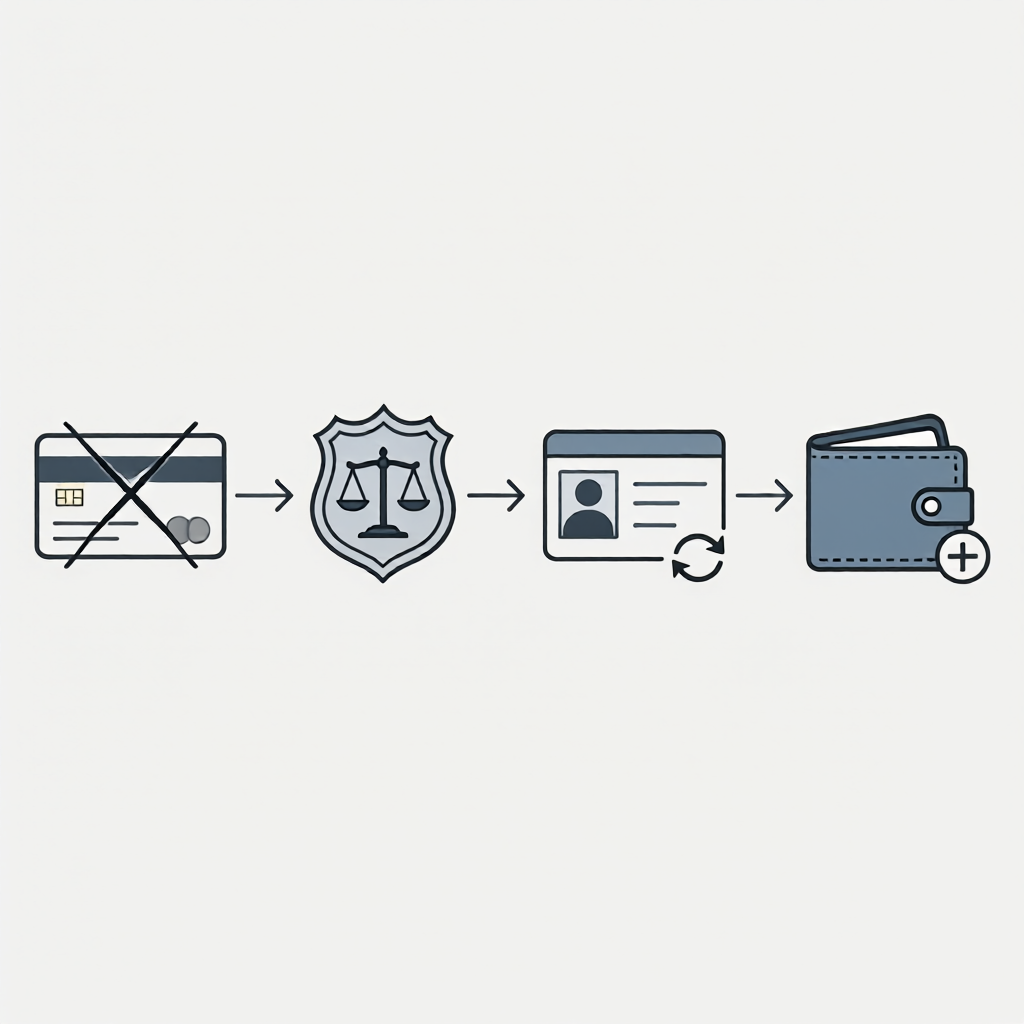
Immediate Recovery (0–2 Hours)
The first two hours after realizing your wallet is missing are critical. The standard protocol follows this sequence:
- Retrace and Search: Before assuming permanent loss, check pockets, bags, vehicles, and recent transaction locations. If you suspect theft rather than misplacement, treat it as an active security breach.
- Freeze Cards Digitally: Most major banks offer mobile apps that allow instant card freezing. This is faster than calling customer service and provides immediate protection against new charges.
- Call Issuers to Cancel: Once cards are frozen, call the issuer to request permanent cancellation and reissuance. For credit cards, ask about liability policies for fraudulent charges; under regulations like the Fair Credit Billing Act, your maximum liability is typically $50, and many issuers offer zero-liability guarantees.
- Document the Incident: Write down the date, time, and last known location of the wallet. This documentation is essential for insurance claims and police reports.
Identity Protection (2–24 Hours)
After stabilizing your financial accounts, shift focus to protecting your identity. A lost wallet exposes not just payment instruments but also government-issued ID, which is the primary key to identity theft.
- Contact Credit Bureaus: Place a fraud alert on your credit reports. This requires only one bureau to notify the others, forcing lenders to verify your identity before opening new accounts.
- File a Police Report: While not always mandatory, a police report creates an official record of the loss. This is particularly valuable if you need to prove non-possession of ID when applying for replacements, or if you are pursuing insurance reimbursement.
- Notify Employers and Utilities: If your wallet contained workplace badges or keys, report this to security immediately. Change passwords for any accounts that used your address or phone number from the wallet as verification.
Replacement and Recovery (24–72 Hours)
The next phase involves securing temporary identification and ordering replacements. Most government agencies require in-person verification for reissuing licenses and passports due to biometric and photo requirements.
- Driver’s License: Visit your local DMV with secondary ID (such as a birth certificate or Social Security card kept in a separate location) and the police report if available.
- Passport: Contact the issuing authority to report the loss. Emergency passports may be available within 72 hours if you have urgent travel plans.
- Bank Accounts: Retrieve new debit cards and update any automatic payments or direct deposits linked to the old numbers.
Key Specifications — What to Look for in a Secure Replacement Wallet
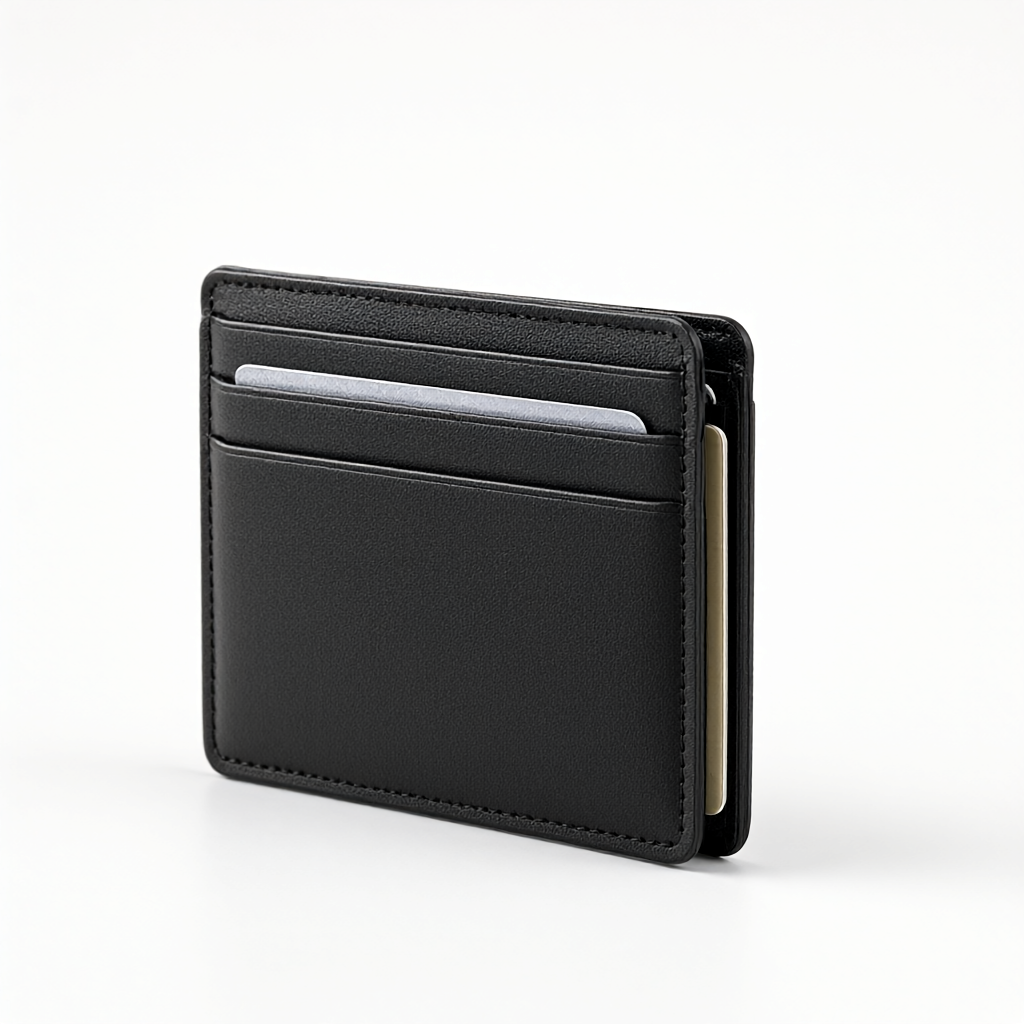
When sourcing a replacement wallet, particularly for business purposes such as corporate gifts or retail resale, the specifications should prioritize security, durability, and ease of carry. A secure minimalist wallet reduces the physical bulk that often leads to loss, while integrated technology protects against electronic theft.
Material and Build Quality
- Aluminum: Anodized aluminum offers high durability and lightweight properties. Look for mills that perform hardness testing to ensure the material resists denting.
- Carbon Fiber: Provides a rigid, scratch-resistant structure. High-quality carbon fiber is woven and resin-infused to prevent delamination.
- Titanium: The premium option for strength-to-weight ratio. Titanium money clips and card holders are corrosion-resistant and ideal for high-wear environments.
Security Features
- RFID Blocking: For buyers concerned about contactless theft, ensure the wallet incorporates a Faraday cage design or RFID-shielding material. This prevents unauthorized scanning of NFC-enabled cards.
- Secure Closures: Mechanical ejection systems with detent mechanisms keep cards secure without the need for elastic bands that stretch and fail over time.
- Low-Profile Design: Slim wallets (under 15mm thickness) are less likely to be overlooked or dropped compared to bulky bi-fold designs.
Customization and Branding
For B2B buyers, OEM and ODM capabilities are essential. Specifications should include:
- Laser engraving depth and precision for logos.
- Packaging options that meet retail standards.
- MOQ flexibility, with many manufacturers starts at 300 pcs per SKU for full OEM customization (100 pcs trial order available for stock finishes) for custom runs.
See our Men’s Minimalist Wallets — Materials, Specs & Sourcing guide for deeper technical details on these materials.
Standards & Requirements — ID Replacement and Card Cancellation Standards
Navigating the regulatory landscape of lost wallet recovery requires understanding the standards that govern card liability and identity document issuance.
Card Cancellation and Liability Standards
The Fair Credit Billing Act (FCBA) in the United States sets the baseline for credit card liability. It limits consumer liability to $50 for unauthorized charges if reported promptly. For debit cards, the Electronic Fund Transfer Act (EFTA) applies, with liability tiers based on how quickly the loss is reported:
- Within 2 business days: Liability limited to $50.
- After 2 business days, within 60 days: Liability up to $500.
- After 60 days: Unlimited liability for losses occurring after the statement period.
Major card networks (Visa, Mastercard, American Express) generally enforce zero-liability policies that exceed these legal minimums, but written confirmation from the issuer is recommended.
Identity Document Replacement Standards
Reissuing government IDs is governed by state and national standards. In the US, the REAL ID Act sets security standards for state-issued driver’s licenses and identification cards. When replacing a lost REAL ID-compliant card, you must provide:
- Proof of identity (birth certificate or passport).
- Proof of Social Security number.
- Proof of residency (two documents).
Passport replacement requires completing specific forms (DS-82 for eligible renewals or DS-11 for full reissuance after loss) and proving citizenship. Processing times vary widely, from same-day emergency service to several weeks for standard mail.
Data Security Standards for Replacement Gear
When selecting a replacement wallet, especially for B2B sourcing, verify that the manufacturer adheres to quality management standards. ISO 9001 certification indicates a consistent quality management system, while BSCI auditing ensures social compliance in the supply chain. For materials, REACH and RoHS compliance confirms that the metals and composites used are free from hazardous substances, which is critical for products in close contact with the body.
Review our EDC Wallets: What They Are and How to Source Them guide to understand how these standards apply to manufacturing.
Related Considerations — How to Prevent Wallet Loss Going Forward
Prevention is the most effective strategy after a loss. For both individual consumers and businesses sourcing promotional products, adopting a minimalist, secure EDC (Everyday Carry) approach significantly reduces the risk of misplacement and theft.
Why Minimalist Wallets Reduce Loss Risk?
Traditional bifold wallets are prone to slipping out of pockets due to their size and lack of secure closure. Minimalist designs—such as card holders, money clips, and slim aluminum wallets—address this through:
- Secure Retention: Mechanical locks or tight friction fits keep the wallet anchored in the pocket.
- Reduced Bulk: A slim profile makes the wallet less likely to fall out unnoticed.
- Consolidation: By removing unused cards and receipts, there are fewer items to drop or forget.
See our What Is a Minimalist Wallet? B2B Buyer’s Guide 2026 for a comprehensive overview of these designs.
Security Features to Prioritize
- RFID-Blocking Technology: Essential for protecting contactless payment cards and digital IDs. High-quality blocking integrates seamlessly into the wallet structure without adding bulk.
- GPS Tracking Integration: Some modern wallets are designed to be compatible with Bluetooth trackers (e.g., Apple AirTag, Tile). When sourcing custom wallets, discuss integration points with your manufacturer to ensure the tracker is secure and accessible.
- Durable Materials: Metal and carbon fiber wallets resist wear and tear, ensuring that the security features (like RFID shielding) remain effective over years of use.
Digital Wallets as a Backup
In the event of a lost wallet, having your payment cards added to Apple Pay, Google Pay, or Samsung Pay can provide immediate access to funds while you wait for physical replacements. These digital wallets use tokenization, meaning the actual card number is never exposed, adding an extra layer of security.
Choosing the Right Replacement Manufacturer
For B2B buyers looking to prevent future losses through better product design, selecting the right manufacturer is crucial. Experience matters: a supplier with over a decade of export experience understands the rigorous demands of international markets. Look for manufacturers who offer:
- Low MOQs (starts at 300 pcs per SKU) to test new security designs.
- Fast Sample Lead Times (around 7 days) to evaluate prototypes quickly.
- Full Customization from logo to packaging, ensuring brand consistency.
As a manufacturer, our approach to this is centered on precision engineering and security-first design. With 13+ years of export experience and a 50,000 sq ft facility, we help brands and retailers source durable, secure minimalist wallets—from CNC-machined aluminum to carbon fiber card holders. Our in-house capabilities allow us to meet strict quality standards, including ISO 9001 and BSCI compliance, ensuring that every unit shipped protects your customers’ essentials.
Lost Wallet: Where Can You Verify the Data and Sources?
- Men’s Minimalist Wallets — Materials, Specs & Sourcing — topedcwallet.com
- EDC Wallets: What They Are and How to Source Them — topedcwallet.com
- What Is a Minimalist Wallet? B2B Buyer’s Guide 2026 — topedcwallet.com
- Get a Free Quote → — topedcwallet.com
From article to product
Turning this into a product?
Most of what is written here is the difference between a sample that works and one that does not. We can build either — the useful one costs the same.
Keep reading
More on buying guides
wallet with trigger
How Does a Trigger Wallet Work? What Is the Pop-Up Mechanism? The core of…
Readbest bifold wallet for women
What Is a Bifold Wallet? The term “bifold” refers to the fold: the wallet…
ReadMen’s trifold wallets with zipper compartments vs. bifold
At a Glance The three dominant men’s wallet formats differ in panel count, depth,…
Read
About the author
TOPWALLET Editorial Team
TOPWALLET's editorial and engineering desk writes from bench testing at the Shenzhen (Longgang) facility: pull-force and cycle testing, 13.56 MHz shielding measurements, finish trials and factory audits, rather than supplier spec sheets. Every specification in these guides is one we write on a purchase order.
Written on the floor
This article was written by our production and QC team — the people who spec tolerances, run the finishing line and inspect every batch. Where it states a capacity, a pull force or a lead time, it comes from a measurement we made, not a supplier’s catalogue. If a number here disagrees with what your own supplier told you, tell us; several of these articles started as a correction from a buyer.
See how the factory works · Inspection process · Sourcing FAQ
Turning this into a product?
Most of what is written here is the difference between a sample that works and one that does not. We can build either — the useful one costs the same.