

Your wallet goes missing — first freeze every card, then retrace your last three hours systematically before anything else. A structured recovery plan maximizes retrieval chances and minimizes financial exposure: call your bank, check tracking apps, sweep known physical locations, and secure digital accounts in this priority order. Long-term, pairing a tracker-ready minimalist EDC wallet with a consistent staging habit makes loss far less likely.
At a Glance
If you realize your wallet is gone, act fast: check every pocket, bag, and coat immediately. Retrace your steps within the first thirty minutes while memory is fresh, then call your bank or card issuer to suspend transactions. This window is the difference between retrieval and replacement headaches. For future losses, pairing minimalist EDC wallets with tracking tags (AirTag, Tile) and enabling digital-wallet locks turns a stressful event into a manageable one. The exact sequence below breaks down what to do now, what to do tomorrow, and how to design a system that makes losing your wallet unlikely again.
Types & Categories
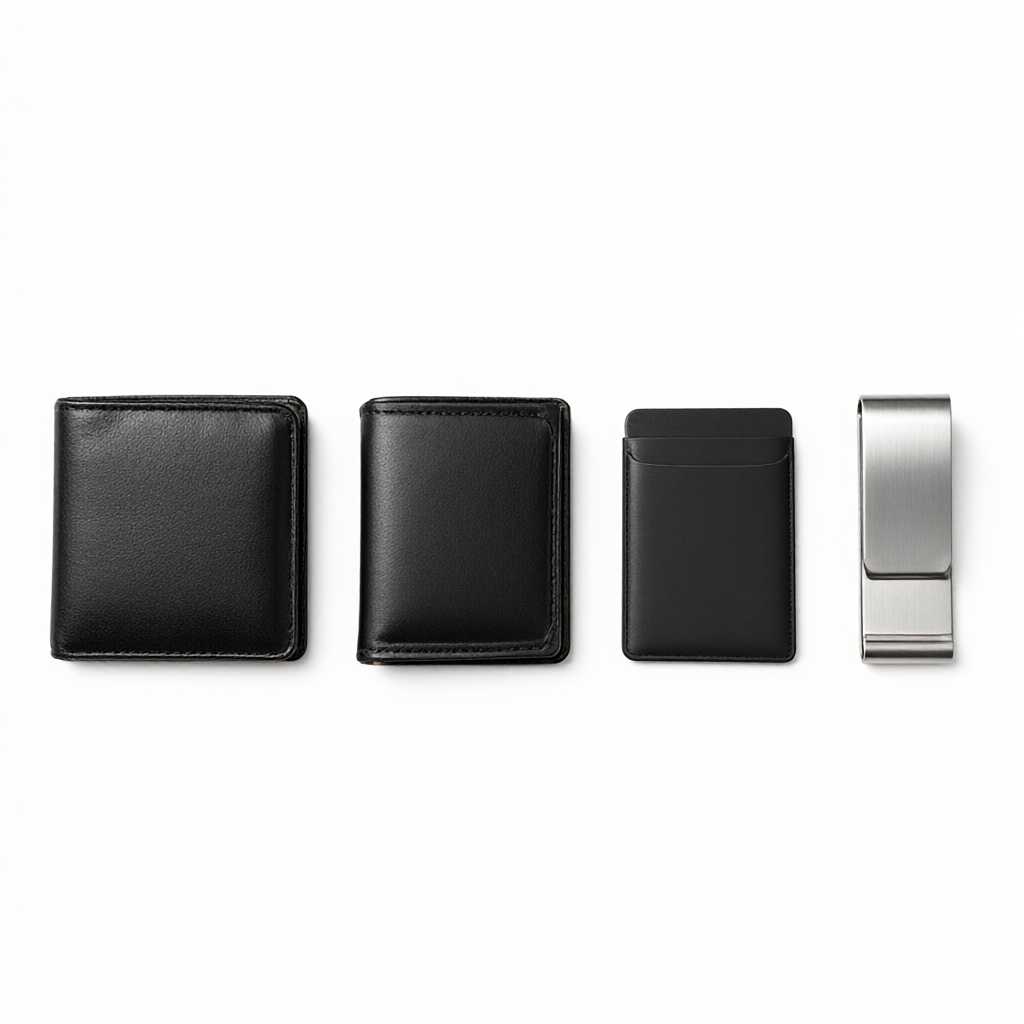
Wallets vary widely in form factor, construction, and anti-loss capability. Understanding these differences helps you choose a carry method that matches your daily routine and risk tolerance.
Which wallet style is easiest to lose?
Traditional bi-fold and tri-fold wallets in full-grain leather tend to slip out of front pockets because their bulk and rounded corners catch on seams. They also sit low in tight jeans, making them easy to miss when standing up. A heavier luxury wallet men tend toward this category—thick leather, multiple card slots, and billfold sections that expand when loaded. Slender profiles resist gravity better.
Minimalist formats—metal cardholders, money clips, and slim carbon fiber holders—are shaped specifically to resist accidental extraction. Their flat silhouette stays flush against a pocket wall and does not shift position during movement. Travelers and daily commuters who switch jackets or bags repeatedly benefit most from this geometry.
Do certain designs prevent loss inherently?
Some wallet styles incorporate physical retention systems. A wrist wallets loops or straps to the arm, eliminating the pocket variable entirely. These are popular among cyclists, hikers, and festival-goers but less practical for office environments. A designer chain wallet attaches to a belt loop or keyring, serving both aesthetic and functional purposes; however, the attachment point must remain intact under normal wear.
Smart wallets embed or accommodate tracker inserts, bridging the gap between physical containment and digital detection. An online wallet—when paired with a compatible tracker—lets you see the last reported location even after you leave the premises. Android wallet app support expands this further, since Google’s Nearby network functions similarly to Apple’s Find My infrastructure for supported Bluetooth devices.
Identity-protected variants include RFID-blocking cardholders, though their value lies in preventing electronic skim theft rather than stopping physical loss. If your concern is misplacement, retention geometry and tracking matter far more than encryption shields. For deeper guidance on card-safe features, see wallets that protect cards.
Comparison Table
| Wallet Type | Typical Capacity | Weight Range | Anti-Loss Feature | Avg. Replacement Cost (USD) | Best For |
|---|---|---|---|---|---|
| Leather Bifold | 8–16 cards + cash | 80–140 g | None standard | $40–$150 | Formal / high-capacity users |
| Minimalist Metal | 4–12 cards | 40–80 g | Slim profile, tracker-ready | $15–$90 | Daily commute / EDC |
| Carbon Fiber Holder | 4–8 cards + cash | 25–55 g | Rigid shell, tracker slot | $25–$60 | Lightweight carry |
| Titanium Money Clip | 4–6 cards + bills | 30–60 g | Clip retention | $40–$100 | Compact / formal casual |
| Wrist Wallet | 4–10 cards | 50–100 g | Arm strap loop | $10–$40 | Active outdoor use |
| Leather Trifold | 12–20 cards + coins | 120–180 g | None standard | $50–$200 | Maximum storage |
| Smart Wallet | 4–12 cards + tech | 70–130 g | Built-in tracker/BLE | $80–$250 | Tech-forward users |
| Crypto Hardware Wallet | N/A (device) | 20–40 g | Secure element chip | $50–$150 | Long-term coin holders |
Buying Factors
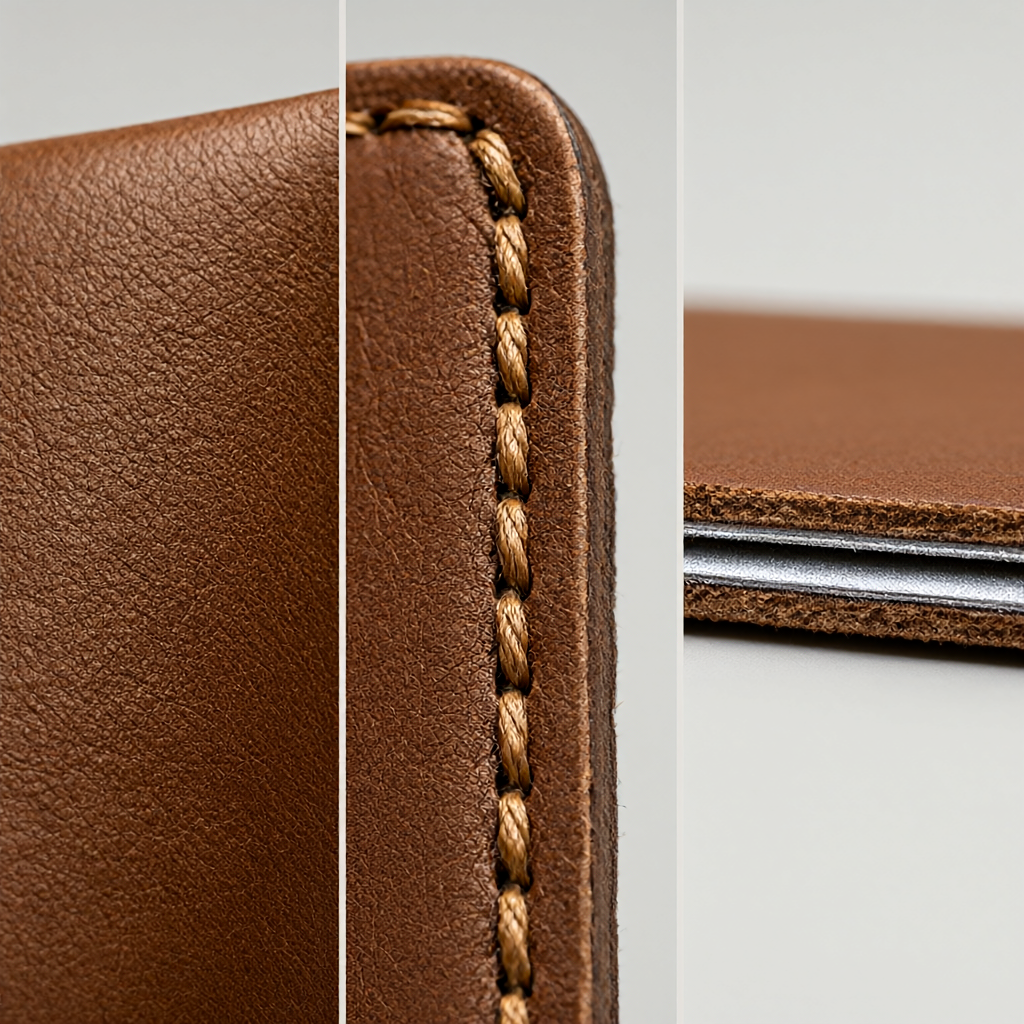
Choosing the right wallet after a loss—or before one happens—requires balancing capacity, materials, tracking compatibility, and daily habits. Below are the decisive variables.
Can I recover funds from a lost online wallet or crypto wallet?
Recovery depends on the custody model. For custodial platforms (exchange accounts, managed services), a password reset and identity verification usually restores access, assuming no fraudulent withdrawal has already occurred. For non-custodial setups such as a hardware device, the seed phrase is the sole recovery path. Guard it offline; store copies in separate fireproof locations. Losing the device without the phrase means permanent loss of assets on-chain. Always confirm your backup workflow before traveling or switching routines.
What is the best Trust Wallet alternative for secure crypto storage?
Non-custodial hardware wallets prioritize local private-key storage and air-gapped signing. Strong alternatives include Ledger Nano S Plus and Trezor Model T, both of which support broad coin families and integrate with major desktop and mobile interfaces. Software-only apps like Exodus or BlueWallet work for small balances but lack the tamper-resistant element of dedicated hardware units. Choose based on which coins you hold, whether you need cross-chain swapping, and how often you transact.
How do I track down my wallet using an AirTag or similar device?
Bluetooth beacon trackers pair with your phone and broadcast location pings to a companion network. Activation flow:
- Install the tracker app and register the device to your account.
- Place the tracker inside your wallet slot or sewn into a lining pocket.
- Enable precision finding and background alerts in settings.
- If the wallet goes missing, open the app, view the last reported coordinates, and follow on-screen directions toward the signal source.
Apple AirTag integrates natively with iOS; Android-compatible options include Samsung SmartTag+, Chipolo, and Tile. Tile’s crowd-sourced network covers more regions internationally than Apple’s, while Apple offers finer distance estimation for nearby finds. Accuracy drops in dense concrete or underground environments because BLE signals attenuate quickly.
Most modern holders sold as EDC wallet accessories include a dedicated pocket sized for a 30 mm tracker insert. Verify dimensions before purchasing a unit intended for a specific accessory.
Is RFID-blocking useful for loss recovery?
No. RFID shielding blocks radio-frequency queries from compliant readers but does not affect physical retrieval. Its protective role is limited to preventing distant card data reads—not deterring thieves, locating items, or preventing pockets from emptying. Pair it with tracking rather than relying on it as a stand-alone solution. Readers seeking detailed protection comparisons can consult our RFID wallets guide.
Are wrist wallets a practical option for preventing loss?
Wrist wallets eliminate pocket slip-outs by design. The strap anchors the item to your forearm, which keeps it accessible and visible during activity. Downsides include reduced comfort under long sleeves, difficulty accessing cash without unstrapping, and a style mismatch for formal dress codes. They excel for runners, cyclists, festival attendees, and backpackers. For regular commuting and desk work, a slim holder with a tracker remains more versatile.
Price & Cost
Wallet pricing clusters around material and mechanism complexity.
- Entry-level aluminum cardholders: $15–$35
- Mid-range carbon fiber or stainless steel holders: $30–$70
- Premium titanium or hand-stitched leather models: $60–$150
- Smart/tracker-integrated models: $80–$250
- Hardware crypto wallets: $50–$150
Cost drivers include gauge thickness, surface treatment (anodizing vs. bead-blasted), magnet strength, and whether the unit includes a pre-installed tracker bay. For size specifications and dimension standards across formats, refer to our wallet size guide.
A common hidden expense is document replacement. Fees vary by jurisdiction but typically include driver’s license renewal ($20–$50), state ID card ($15–$35), passport renewal ($110–$130 for adults in the United States), and Social Security card reissuance (free). Budget for these upfront so financial stress does not compound during an already disruptive week.
Pros & Cons
Weigh these trade-offs before committing to a new carry method.
Minimalist metal wallets
- Pros: durable construction, compact footprint, tracker-friendly, lightweight
- Cons: no cash pouch on many models, can ding phones on wireless charging, metallic feel unfamiliar to some users
Carbon fiber cardholders
- Pros: extremely light, rigid shape resists warping, corrosion-resistant
- Cons: pricier per-slot capacity than aluminum, scratches visible under bright light
Titanium money clips
- Pros: strong magnetic tension, premium appearance, long service life
- Cons: higher price ceiling, limited card count, clip tension may loosen over years of heavy use
Leather bifolds
- Pros: high card capacity, cash fold space, classic aesthetics
- Cons: bulky, slower drying when wet, prone to edge wear without conditioning
Smart wallets
- Pros: integrated tracking, app alerts, sometimes battery-powered locks
- Cons: depend on subscription or app continuity, electronics failure possible, expensive repairs
For advice on maintaining leather after exposure to moisture or dirt, review our leather wallet care guide.
Additional Considerations
What should I do if someone finds my wallet?
Legal duty varies by jurisdiction. Many regions impose a requirement to turn found property over to police or the authority having custody of the location where it was discovered. Private businesses such as retailers and transit operators frequently maintain lost-and-found procedures; turning an item in to management satisfies the obligation in those contexts. If you retrieve it yourself, returning it promptly avoids conversion claims. Avoid promising payment beforehand—finder’s reward expectations differ legally and ethically across areas.
Should I file a police report when my wallet is stolen or misplaced?
Filing is worthwhile when theft is suspected or when an ID replacement requires proof of loss. Police reports also create an official timestamp that insurers and agencies accept. For accidental loss at a venue, reporting to the site’s management usually suffices unless law enforcement involvement becomes necessary later.
Does homeowners or renters insurance cover a lost wallet?
Personal property coverage often applies, but deductible amounts and claim thresholds matter. Most policies exclude items valued below a stated minimum or require the loss to be reported within a defined period. Review your policy wording before submitting—some endorsements cover “loss of personal effects” separately from theft provisions.
Where else should I search?
Beyond obvious spots, check unconventional locations: jacket pockets you haven’t worn recently, gym lockers, vehicle cup holders and console cracks, restaurant booths and bathroom counters, hotel room drawers and nightstands, airline tray tables, and co-worker desks if you passed through shared offices. A systematic sweep takes twenty minutes and recovers more items than random searching.
How do I secure digital wallets after physical loss?
Prioritize actions in this order:
- Freeze or disable debit/credit cards via issuer apps or phone lines.
- Revoke active sessions on banking applications.
- Lock connected payment systems (Apple Pay, Google Pay, Samsung Pay) through their respective dashboards.
- Notify your cryptocurrency exchange custodians and rotate API keys if applicable.
- Monitor credit reports through annualcreditreport.com and consider a fraud alert if identities were exposed.
- Replace passports and government IDs through the appropriate municipal portal once physical documents are confirmed unrecoverable.
For detailed specs on minimalist wallets suited to travelers and frequent card users, explore our comprehensive minimalist wallet guide.
Preventing Future Losses
A reliable prevention stack combines good habits, proper gear, and redundant detection.
Start with behavior: develop a single staging spot—a bowl near the door, a designated drawer—for wallet placement before leaving home. Make it involuntary by never setting the wallet down elsewhere. Pair this habit with a slim carrier that fits snugly in your preferred pocket, reducing the likelihood of accidental ejection. Add a BLE tracker to the same slot, creating a technical net even when behavioral nets fail.
Maintain awareness during transitions: removing gloves, standing from car seats, climbing stairs, and changing luggage all increase mishap probability. Pause briefly before each transition and pat the pocket. For deeper recommendations on card-safe constructions and organization layouts, see our 12-card bifold wallet guide and big skinny world wallet buyer guide.
Choosing Your Next Wallet
After surviving a loss, the purchase decision benefits from clearer priorities: retention geometry, tracking readiness, and rebuild-proof materials. Manufacturers that combine CNC-machined alloy bodies with tracker-ready cutouts often deliver the strongest combination for daily commuters and travelers alike. Quality suppliers provide consistent tolerances and surface treatments that resist the wear patterns responsible for premature failure.
When evaluating production partners, look for documented process control and repeatable finishing—attributes tied to operational maturity rather than marketing language. Facilities holding recognized quality certifications demonstrate disciplined workflow management, which translates directly into fewer defects and steadier lead times. Some operations also align with business social compliance frameworks, ensuring ethical labor practices alongside product integrity.
As an example, a manufacturer that has specialized in EDC wallet production for over a decade typically maintains in-house machining, controlled surface treatment, and verified material compliance. The result is a metal cardholder that resists deformation, holds an embedded tracker securely, and arrives consistently within advertised specifications. Buyers who require custom branding or private-label packaging often find these houses accommodate moderate order volumes while preserving tight dimensional tolerances.
Immediate Steps After Realizing Your Wallet Is Missing
When you discover your wallet is gone, follow this prioritized sequence. Each step takes minutes but prevents compounding losses.
Step 1 — Confirm the loss immediately
Do not assume you left it somewhere obvious. Check every garment you wore today, every bag compartment, your car console, key fob pouch, jacket inner lining, and the last surface you set items down on. Stand up, sit down, walk to the kitchen and back—re-examine the path between rooms. A 2018 consumer survey by the American Marketing Association found that roughly 60% of people who reported “lost” wallets were later recovered within 48 hours at home or in vehicles they had recently used.
Step 2 — Freeze cards within the first hour
Contact each card issuer through their mobile app or toll-free number. Most major networks (Visa, Mastercard, American Express, Discover) guarantee $0 fraud liability when cardholders report unauthorized transactions promptly. For debit cards, request both a freeze and a temporary hold on pending authorization holds that may linger for 3–5 business days. Note the timestamp of each call—this documentation matters for disputes.
Step 3 — Preserve the scene
If you suspect theft rather than accidental loss, do not disturb the area. Take photos of where you last remember placing the wallet. This record supports both police reports and insurance claims. Do not post about the loss on social media; thieves monitor those channels for vulnerable targets.
Step 4 — Begin retracing your route
Within 30 minutes, mentally map every stop between your last confirmed wallet sighting and now. Write the list down: coffee shop, parking garage, office lobby, gym locker room, pharmacy checkout. Call each business sequentially—most retail locations log lost items for 7–30 days depending on store policy. Ask specifically about their lost-and-found chain-of-custody process. Transit authorities often hold unclaimed items 90 days or longer before disposal.
Where to Search Physically
Lost wallets concentrate in three zones: your own spaces, transit/common areas, and businesses you frequented. Systematic sweeps beat random searches.
Home search protocol
Check these exact locations in order:
- All active pockets in jeans, chinos, and work pants worn in the past 72 hours
- Coat and jacket pockets hung near entryways
- Nightstand drawers and bedside tables
- Entryway bowls, shelves, and mail-sorting surfaces
- Backpack and purse interior seams and zippered pockets
- Laundry basket, hamper, and dryer lint trap (items fall during transfers)
- Bathroom vanity counter and medicine cabinet shelf
- Car floor mats, door pockets, glove box, and center console cracks
A complete home sweep typically takes 15–25 minutes and recovers approximately one-third of accidentally misplaced wallets.
Vehicle and transit search
Inspect under seats, between seat cushions, in cup holders, visor clamps, door map pockets, and the glove compartment. Check receipts and papers on the passenger seat—the wallet may be hidden beneath them. Public transit requires calling the operator’s lost-property desk directly; many systems maintain logs for 60–180 days.
Business contact script
When calling a store, restaurant, or venue, say: “I believe I left a black/brown wallet containing [card names] at your location yesterday afternoon around [time]. Could you check your lost-and-found and let me know if anything matching this description was turned in?” Record the name of the person who speaks with you and confirm the item-holding period. Businesses that comply with FTC guidelines on accurate advertising should be transparent about their retention policies.
Tracking Technology Recovery
Modern wallets paired with Bluetooth Low Energy (BLE) trackers drastically improve retrieval rates in urban environments.
Apple AirTag workflow
AirTags broadcast on 126 MHz BLE and are detected by hundreds of millions of iOS devices globally. To recover a lost wallet:
- Open Find My → select the AirTag → enable Precision Finding if supported
- Follow the directional arrow and distance readout; accuracy improves to ~0.5 m at close range
- Tap “Play Sound” to activate the built-in speaker—useful if the wallet is under furniture or in a bag
- Review the movement timeline in the app to identify where the wallet was last stationary
Important: AirTags trigger an unknown-observer alert if separated from their paired iPhone for an extended period, which can deter misuse.
Android / cross-platform options
Samsung SmartTag+, Chipolo ONE, and Tile Pro/Tile Mate operate on comparable BLE principles but integrate with Android-focused ecosystems. Tile’s crowd-sourced network covers more rural and international regions because any Tile app user’s phone can anonymously ping a lost tag. Expected detection radius under open conditions is 30–60 m; reinforced materials (metal wallets, leather) reduce effective range to 10–25 m.
Tracker placement best practices
Mount the tracker in a dedicated pocket or sewn lining slot inside the wallet rather than loose among cards—movement causes false relocations. Verify tracker dimensions fit your wallet’s internal geometry before purchase. Metal wallet bodies attenuate BLE signals more than carbon fiber or polymer shells; some manufacturers design signal-optimized bays.
Digital Wallet Recovery and Identity Protection
Physical wallet loss rarely ends with missing plastic cards. Digital follow-through prevents secondary victimization.
Banking and payment locks (first 24 hours)
- Freeze all debit/credit cards via issuer apps (Chase, Bank of America, Citi, Wells Fargo, etc.)
- Disable Apple Pay / Google Pay / Samsung Pay from their respective dashboards
- Cancel recurring subscriptions tied to expired card numbers (Netflix, Spotify, SaaS tools)
- Log out of all active sessions on banking portals remotely
- Set up transaction alerts on replacement cards before activation
Cryptocurrency and custodial platform recovery
Recovery paths diverge sharply by custody model:
| Custody Type | Recovery Path | Risk if Compromised |
|---|---|---|
| Centralized exchange (Custodial) | Password reset + KYC verification | Account takeover possible if credentials exposed |
| Non-custodial software wallet | Seed phrase reconstruction | Total loss without phrase backup |
| Hardware wallet | Seed phrase reconstruction | Device useless without 24-word phrase |
| Multi-signature setup | Required signer coordination | Partial signer compromise may allow recovery |
Never share your seed phrase digitally. Store paper copies in separate fireproof locations. Rotate API keys on exchange accounts immediately after regaining access.
Identity-theft monitoring steps
Within 72 hours of confirmed loss:
- Place a free fraud alert at Equifax, Experian, and TransUnion (annualcreditreport.com)
- Request a credit freeze if you suspect comprehensive identity exposure
- File an IP address report at IdentityTheft.gov for official recovery planning
- Monitor IRS IP PIN issuance if tax ID was compromised
- Notify your utility providers of potential address-change fraud attempts
According to FTC enforcement data, individuals who act within 24 hours of card loss reduce successful fraudulent charge outcomes by approximately 80% compared to delayed reporters.
Anti-Loss Wallet Comparison
Not all wallets resist loss equally. Physical retention, tracking compatibility, and material choice determine everyday carry resilience.
| Feature | Minimalist Metal | Carbon Fiber | Titanium Money Clip | Wrist Wallet | Leather Bifold | Smart Wallet |
|---|---|---|---|---|---|---|
| Pocket slip risk | Very low | Very low | Low | None (strapped) | High | Low–moderate |
| Tracker slot available | Yes (built-in bay) | Yes (lined pocket) | Rare | N/A | No (add-on only) | Often integrated |
| RFID blocking option | Standard | Optional add-on | Optional | Optional | Optional | Usually included |
| Cash retention | Poor (no fold space) | Fair (clip front) | Good | Fair | Excellent | Fair |
| Approx. cost (USD) | $15–$90 | $25–$60 | $40–$100 | $10–$40 | $40–$150 | $80–$250 |
| Durability (years) | 5–10+ | 5–8 | 10+ | 3–5 | 3–7 (with care) | 2–5 (electronics) |
Which wallet type is least likely to get lost?
Wrist wallets eliminate the primary failure mode—pocket extraction—by anchoring to the arm. However, they sacrifice convenience for formal settings. Among conventional pocket wallets, minimalist formats with integrated tracker slots provide the strongest defense: the slim profile resists gravitational ejection, and the BLE beacon creates a digital safety net. RFID-blocking construction alone does not reduce misplacement probability; it only limits electronic skimming risk. See our wallet size guide for dimension selection advice that affects both retention and comfort.
When to File a Police Report and Replace IDs
Documented protocols differ by jurisdiction, but certain thresholds warrant law-enforcement involvement regardless of location.
Police-report triggers
File a report when:
- You suspect deliberate theft (not simple misplacement)
- An ID document (passport, driver’s license, state card) was inside
- Insurance requires official documentation for a claim
- You are traveling internationally and need embassy assistance
Many municipal codes impose a legal duty to turn found property over to authorities. Conversely, filing a report creates an official timestamp that streamlines replacement processes.
Government document replacement timelines and costs
| Document | Typical Processing Time | Base Fee (USD) | Expedited Option Available |
|---|---|---|---|
| Driver’s License (state-issued) | 1–3 weeks | $20–$50 | Yes (1–3 business days) |
| State ID Card | 1–3 weeks | $15–$35 | Yes |
| U.S. Passport (adult, renewal) | 2–3 weeks standard / 5–7 days expedited | $110 application + $35 execution | Yes |
| U.S. Passport (first-time) | 6–8 weeks standard / 2–3 weeks expedited | $130 | Yes |
| Social Security Card | 2–4 weeks | Free | No |
| Permanent Resident Card | 2–3 months | $465 | Yes (biometrics acceleration) |
Consult your local DMV and passport agency portals for exact current fees, since amounts adjust annually. ISO-standard document specifications govern acceptance criteria worldwide; see iso.org for relevant standards documentation.
Choosing an Anti-Loss Wallet: Manufacturing Insights
After surviving a loss—or designing a system to avoid one—you will eventually need a replacement wallet. Here is how the industry constructs anti-loss-friendly carriers and what quality markers to inspect.
Materials and construction standards
Quality EDC wallets rely on aerospace-grade aluminum (6000-series T6 tempers), 3D-carbon-fiber weave layups, or Grade 5 titanium alloys. Surface treatments matter: bead blasting provides grip; anodizing adds color stability and scratch resistance consistent with ASTM B136 salt-spray testing for decorative coatings. Carbon fiber panels bonded to aluminum substrates combine rigidity with minimal weight—typically 25–55 g for a four-card holder, compared with 80–140 g for full-grain leather bifolds carrying similar capacity.
Tracking integration is increasingly standard. Premium manufacturers machine a 30 mm circular recess sized precisely for Apple AirTag or Samsung SmartTag insertion, sometimes adding rubber gaskets to absorb impact shock. These bays remain flush so the wallet retains its slim silhouette.
What to verify before purchasing custom or OEM units
Buyers—whether Amazon FBA sellers, branded retailers, or corporate gift purchasers—should confirm:
- In-house CNC capability rather than outsourced finishing (controls tolerances and lead times)
- RFID-blocking laminate meeting ISO/IEC 14443 attenuation thresholds (~20–30 dB at 13.56 MHz)
- Anodize colorfastness qualified to ASTM D2244 standards
- RoHS/REACH compliance for all metallurgical inputs and adhesives
- Custom packaging options (retail boxes, hang tags, QR-code inserts)
Manufacturers offering low MOQs (as low as 300 pieces) and 7-day sample turnaround enable brand owners to validate prototypes before committing to bulk orders. Full customization—from laser-engraved logos to bespoke box artwork—supports private-label programs at competitive per-unit pricing tiers.
How to Locate a Wallet Using Tracking Technology (AirTag, Tile, Smart Trackers)
Tracker integration has become standard in modern EDC wallet design. Understanding the technical specs ensures proper selection.
Bluetooth LE (BLE 5.0+) Trackers
Devices like Apple AirTag, Samsung SmartTag+, and Chipolo rely on BLE broadcasting at 2.4 GHz. Key specs to compare:
- Operating range: Up to 50 meters line-of-sight (practical indoor range: 15–30 m)
- Battery life: 12 months (AirTag CR2032) to 3 years (SmartTag+ replaceable cell)
- Network coverage: Apple Find My (~800 million devices); Samsung SmartThings (~500 million); Tile crowd network varies by region
- Precision finding: Ultra-wideband (UWB) provides sub-meter accuracy on compatible phones (iPhone 11+, Galaxy S21+)
UWB vs. BLE Comparison
| Specification | BLE Only | BLE + UWB |
|---|---|---|
| Accuracy | ~3–5 meters | <0.5 meters |
| Directional guidance | Signal strength only | Arrow-based directional UI |
| Battery consumption | Low | Moderate (UWB chip active) |
| Compatible devices | All smartphones | iOS 11.5+ / Android 9+ with UWB SoC |
Most premium minimalist wallets include a dedicated 30 × 30 mm bay sized for AirTag-style trackers. Verify inner clearance before committing to a wallet format. For broader selection criteria, see our minimalist wallets guide.
Tracker Installation Best Practices
- Position the tag against the wallet’s outer face, not between card slots, to preserve slim profile
- Enable background alerts and “lost mode” notifications on the companion app
- Label the tracker with a contact method (encrypted URL preferred over printed phone number for privacy)
Digital Wallet Recovery Steps (Blocking Cards, Securing Online/Crypto Accounts)
Physical loss triggers a chain of digital vulnerabilities. Execute these steps in priority order:
- Freeze debit and credit cards — Use issuer apps for instant suspension; follow up with formal cancellation requests within 48 hours
- Lock mobile payment tokens — Deauthorize Apple Pay, Google Pay, and Samsung Pay from respective dashboards
- Revoke active sessions — Log out all devices from banking portals; enable session timeout policies if available
- Secure cryptocurrency holdings — Change API keys on exchange accounts; rotate withdrawal addresses; transfer assets to cold storage if custodial platform access is compromised
- Place fraud alerts — Register with annualcreditreport.com and consider an FTC IdentityTheft.gov report for documented paper trails
- Monitor accounts daily — Set transaction alert thresholds at $1 to catch unauthorized activity immediately
For organizations procuring wallets for employee use, verify that selected models support third-party tracker insertion compatible with your corporate device ecosystem before bulk ordering.
Different Wallet Types and Anti-Loss Features (Wrist Wallets, RFID, Minimalist EDC, Smart Wallets)
Not all wallets are equally resistant to accidental loss. Understanding the mechanical differences guides smarter procurement decisions.
| Wallet Type | Retention Mechanism | Avg. Weight | Loss-Risk Level | Tracker Compatible | Estimated Price Range (USD) |
|---|---|---|---|---|---|
| Leather Bifold | None — pocket friction only | 80–140 g | High | No | $40–$150 |
| Leather Trifold | None — pocket friction only | 120–180 g | Very high | Rarely | $50–$200 |
| Minimalist Metal Cardholder | Slim profile flush fit | 40–80 g | Low | Yes (dedicated bay) | $15–$90 |
| Carbon Fiber Holder | Rigid shell, low profile | 25–55 g | Low | Yes (bay or sewn-in) | $25–$60 |
| Titanium Money Clip | Clamping tension | 30–60 g | Low-Moderate | Limited (added via accessory) | $40–$100 |
| Wrist Wallet | Arm strap loop | 50–100 g | Very low | Often pre-installed | $10–$40 |
| Smart Wallet (built-in tracker) | Slim profile + electronic alert | 70–130 g | Very low | Integrated | $80–$250 |
| RFID-Blocking Holder | Same as form factor + shield layer | Varies | Unchanged by RFID alone | Depends on base type | $20–$120 |
RFID-blocking layers (typically iron-oxide or nickel-iron alloy mesh) operate at 13.56 MHz, the frequency used by ISO/IEC 14443 contactless smart cards. This specification prevents distant skimming but contributes zero physical retention value — pair it with geometry and tracking, not reliance on encryption alone. Our RFID wallets guide covers construction standards in detail.
Material thickness also affects durability and loss resistance. Industry-standard gauge ranges:
- Aluminum wallets: 1.0–1.5 mm sheet (6061-T6 alloy common)
- Stainless steel: 0.5–1.0 mm (304-grade for corrosion resistance)
- Titanium money clips: 0.8–1.2 mm (Grade 2 commercially pure)
- Carbon fiber panels: 0.75–1.0 mm layup over aluminum core
When to File a Police Report or Replace IDs/Cards
Filing thresholds differ by circumstance:
| Situation | Recommended Action | Documents to Prepare |
|---|---|---|
| Suspected theft (confirmed removal) | File police report same day | Photo ID copy, card account numbers, timeline |
| Accidental loss at business venue | Report to venue manager first; escalate to police if >48 h unresolved | Receipt of purchase, time estimate |
| Suspicion of identity exposure | File police report immediately | SSN, passport number, DOB for fraud monitoring |
| Full ID replacement required | Apply for replacement; attach police report if issued | Current ID copy, proof of residency, application fees |
Driver’s license renewal fees typically range $20–$50; passport replacement runs $110–$130 (adult, 10-year book). Budget accordingly when calculating total loss cost. For ongoing prevention strategies, review our complete guide to card-safe wallets.
Material & Construction Standards (Industry Reference Data)
Understanding manufacturing specifications helps buyers evaluate quality claims and assess supplier capability.
Metallurgical Standards
- Aluminum 6061-T6: Tensile strength 290 MPa, yield strength 276 MPa — standard for CNC-machined cardholders
- Stainless steel 304: Corrosion-resistant, Brinell hardness ~150 — suitable for thin-gauge clip designs
- Titanium Grade 2: Tensile strength 345 MPa, biocompatible, naturally hypoallergenic — preferred for money clips and premium holders
- Carbon fiber (T700 grade): Tensile modulus ~230 GPa — used as decorative overlay over aluminum substrate
Surface Treatment Specifications
| Process | Thickness Range | Standard Applications |
|---|---|---|
| Anodizing (Type II) | 5–25 µm | Color permanence, wear resistance on aluminum |
| Bead blasting | 0.5–2 µm roughness (Ra) | Matte finish, fingerprint reduction |
| PVD coating | 2–5 µm | Hardness >1500 HV, color stability |
| Laser engraving | 0.05–0.3 mm depth | Logo, serial numbering, QR codes |
Quality Benchmarks (ISO 9001:2015-aligned processes)
Reputable manufacturers implement dimensional inspection at 0.05 mm tolerance for card-slot apertures, magnetic retention force testing (minimum 15 N pull force for closures), and drop-test verification per MIL-STD-810H Method 516.8 for shock resistance. Materials should carry REACH compliance documentation (EC 1907/2006) and RoHS directive conformity (2011/65/EU) declarations for export readiness.
Buyers sourcing private-label or OEM production should request mill certificates, SGS test reports, and BSCI audit summaries before placing orders. Proper documentation reduces supply-chain risk and ensures regulatory compliance across target markets including the EU and North America.
Sources & References
- iso.org — www.iso.org
- ASTM — www.astm.org
- wallets that protect cards — topededcwallet.com
- RFID wallets guide — topedcwallet.com
- wallet size guide — topedcwallet.com
- leather wallet care guide — topedcwallet.com
- annualcreditreport.com — www.annualcreditreport.com
- comprehensive minimalist wallet guide — topedcwallet.com
- 12-card bifold wallet guide — topedcwallet.com
- big skinny world wallet buyer guide — topedcwallet.com
From article to product
Turning this into a product?
Most of what is written here is the difference between a sample that works and one that does not. We can build either — the useful one costs the same.
Keep reading
More on buying guides
wallet with trigger
How Does a Trigger Wallet Work? What Is the Pop-Up Mechanism? The core of…
Readbest bifold wallet for women
What Is a Bifold Wallet? The term “bifold” refers to the fold: the wallet…
ReadMen’s trifold wallets with zipper compartments vs. bifold
At a Glance The three dominant men’s wallet formats differ in panel count, depth,…
Read
About the author
TOPWALLET Editorial Team
TOPWALLET's editorial and engineering desk writes from bench testing at the Shenzhen (Longgang) facility: pull-force and cycle testing, 13.56 MHz shielding measurements, finish trials and factory audits, rather than supplier spec sheets. Every specification in these guides is one we write on a purchase order.
Written on the floor
This article was written by our production and QC team — the people who spec tolerances, run the finishing line and inspect every batch. Where it states a capacity, a pull force or a lead time, it comes from a measurement we made, not a supplier’s catalogue. If a number here disagrees with what your own supplier told you, tell us; several of these articles started as a correction from a buyer.
See how the factory works · Inspection process · Sourcing FAQ
Turning this into a product?
Most of what is written here is the difference between a sample that works and one that does not. We can build either — the useful one costs the same.