

The fastest way to find a lost wallet combines three coordinated actions: immediately activate any embedded Bluetooth tracker through its companion app, retrace your recent steps within a two-hour window, and contact venues or transit services you visited. For long-term loss prevention, the most reliable approach is sourcing wallets engineered with either built-in tracking cavities or pre-installed tracker modules — products that maintain tracking hardware as an inseparable component rather than an add-on accessory. This guide explains the technology, materials, certifications, and procurement strategies that help B2B buyers select loss-prevention wallets their customers will actually keep using.
What Is the Best Way to Find a Lost Wallet?
The most effective approach combines immediate action with long-term prevention. In the critical first hour after noticing a wallet is missing, retrace your steps methodically, check with venue staff, activate any existing tracker if one is embedded, and place a hold on sensitive cards if necessary. For ongoing protection, the best investment is a wallet engineered with integrated tracking capability — either via a built-in Bluetooth finder or a slot designed to accept a standard tracking tag like an Apple AirTag or Samsung SmartTag. This dual layer means most recoveries happen before the wallet leaves your immediate vicinity, while remaining recoverable even if it travels further. Passive protections like RFID-blocking layers and durable construction reduce the likelihood of loss in the first place by making the wallet harder to misplace and protecting data if it does go missing.
How Does Wallet Loss Recovery Actually Work?
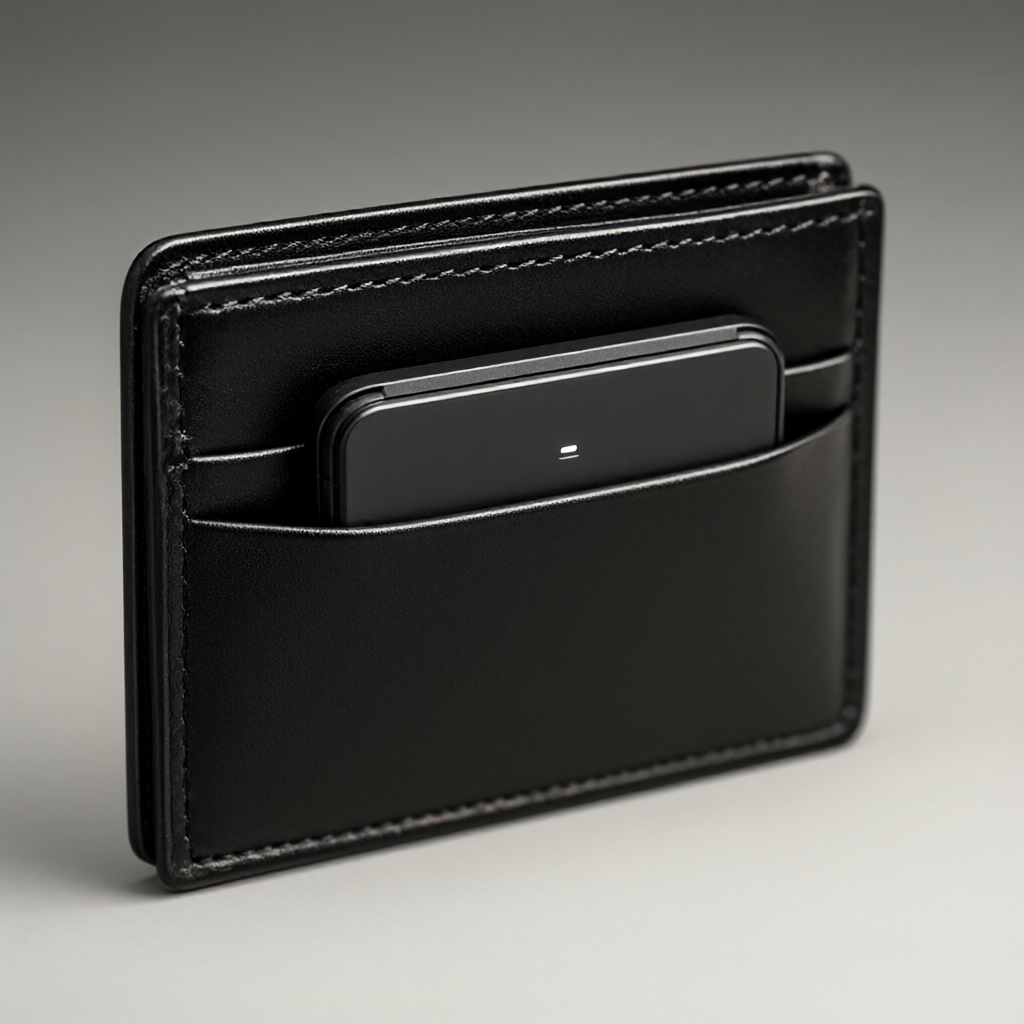
Understanding the recovery process helps buyers evaluate which wallet products merit inclusion in their catalog. The process breaks down into three overlapping phases: detection, location, and retrieval. Detection happens when the owner notices the wallet is gone — ideally aided by a tracker alert that sends a smartphone notification when the wallet moves beyond Bluetooth range. Location relies on either acoustic signals from the tracker, app-based map tracing, or crowd-sourced finding networks such as Apple’s Find My network. Retrieval involves physically recovering the wallet from a lost-and-found location, a public transit station, a rideshare driver, or a recovered item reported through a tracker app.
Each phase has a failure point that depends heavily on product design choices. Wallets without any tracking component rely entirely on memory and luck. Wallets with external, add-on trackers (such as stickers or clips attached after purchase) often lose the tracker itself or detach during normal carry. Wallets designed from the start with an integrated tracking bay or pre-installed module maintain a much higher survival rate because the tracker cannot be forgotten or left behind.
How do you locate a lost wallet fastest? The speed of recovery depends primarily on signal availability. If the wallet carries a working tracker on a populated Bluetooth mesh network, recovery can take minutes rather than hours. If no tracker is present, success drops sharply after two hours unless someone turns the wallet in. What steps should you take immediately after discovering a wallet is lost? First, open the companion app if a tracker is installed. Second, use the sound-emitter feature to locate nearby devices. Third, review the last-known GPS or network-reported location. Fourth, contact venues visited within the past six hours. Fifth, if the wallet contains identification, begin fraud-prevention measures such as placing credit freezes and reporting stolen IDs only if recovery appears unlikely within 24 hours. Rushing to cancel everything on minute one wastes resources if the wallet was simply misplaced at home; delaying fraud protection too long exposes the owner to identity theft risk.
Why do some wallets perform better for recovery than others? Because product architecture determines whether tracking survives real-world conditions. A slim aluminum wallet with a purpose-machined cavity holds a tracker securely against daily insertion and removal forces. Thin polymer or card-stack designs compress under pocket pressure, dislodging loose tags over time. Material choice therefore directly influences long-term tracking reliability. See Best Slim Wallets for Men for design approaches that preserve both profile and accessory integrity.
What Are the Key Specs for Wallet Tracking Solutions?
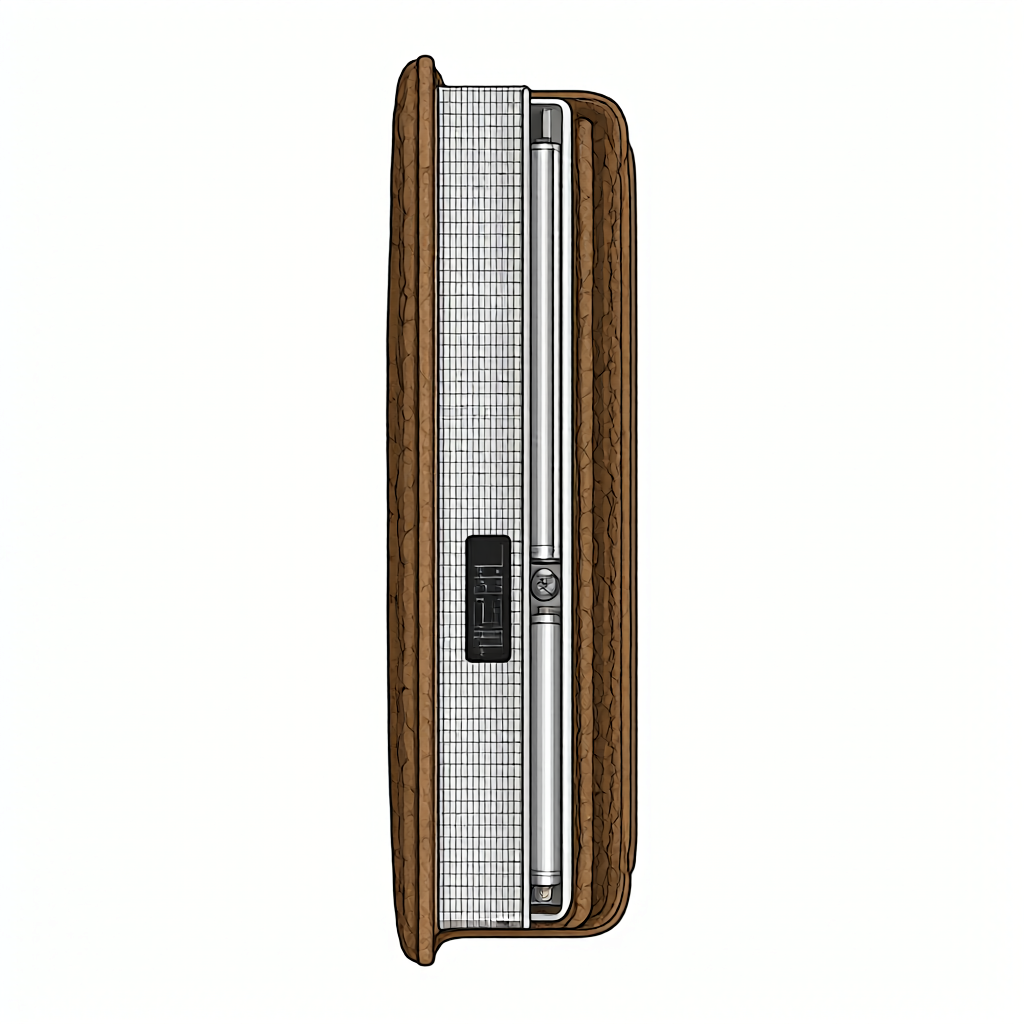
Technical specifications dictate whether a tracking system performs reliably in a consumer’s pocket throughout a product’s intended lifespan. Buyers evaluating smart wallets should examine range, battery life, connectivity protocol, and mechanical integration.
| Specification | Typical Range | Notes |
|---|---|---|
| Bluetooth tracking range | 30–50 meters unobstructed | Reduced by clothing, body mass, and metal interference |
| UWB (Ultra-Wideband) precision range | 1–3 meters directional | Requires compatible host ecosystem |
| Tracker battery life | 6 months to 2 years | Depends on ping frequency and temperature exposure |
| Replaceable vs. sealed cell | Variable by model | Consumer convenience favors replaceable coin cells |
| Network-based locating | Depends on device density | Apple Find My and Tile networks rely on passerby phones |
| Embedded tracker bay thickness | 3–8 mm typical | Matches common tracker form factors including AirTag and SmartTag |
| Operating temperature tolerance | −10°C to +50°C acceptable | Extreme cold shortens lithium coin-cell output |
These numbers shift depending on environment and hardware generation. Newer Bluetooth 5.x modules extend reliable peer-to-peer range, while older 4.2 chips degrade quickly once obstacles appear. UWB remains ecosystem-locked but offers room-scale accuracy that pure Bluetooth cannot match. Network locating trades distance for dependency on third-party device traffic — a wallet tracked through a city network recovers more consistently than one dependent solely on its owner’s phone.
What tracking range should buyers expect from Bluetooth wallet finders? Expect 30 meters in open space and roughly half that in crowded indoor environments. Metal wallet bodies attenuate radio frequency signals, so manufacturers sometimes position antennas near non-metallic zones or use plastic housings to preserve signal transmission. Any claim of “infinite range” conflates Bluetooth direct range with network-based crowdsourced locating, which belongs to a different category entirely.
Material selection also interacts with these specs. Aluminum wallets conduct heat and can accelerate battery drain in hot climates compared to carbon fiber or titanium variants, though the difference is usually marginal over a single recharge cycle. See Minimalist Wallets: Materials and Features for deeper analysis of how metal, carbon fiber, and composite constructions affect thermal behavior and signal propagation.
What Standards Apply to Wallet Loss-Prevention Products?
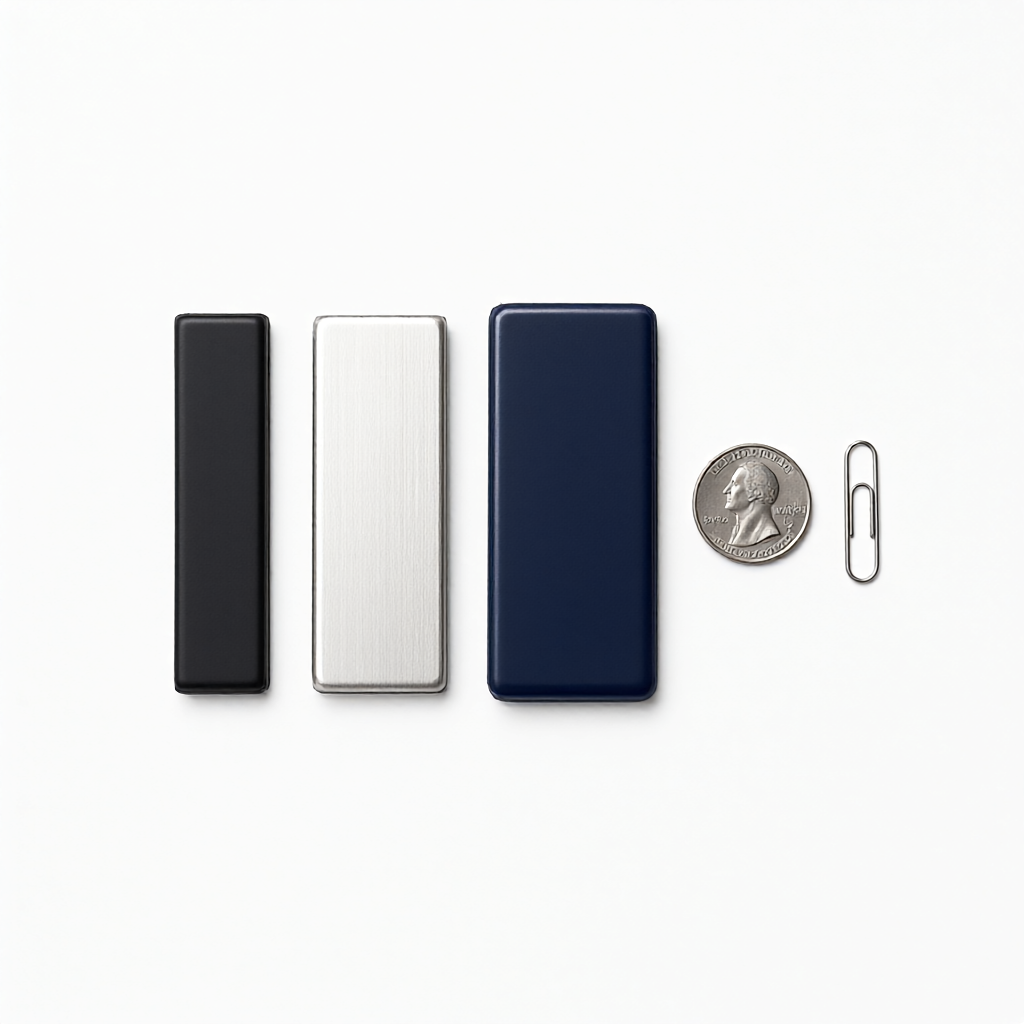
Wallets marketed with security and tracking features must satisfy baseline safety, environmental, and quality-management obligations, especially when entering regulated retail channels. Several certifications influence procurement decisions for private-label programs.
Quality systems form the foundation. An ISO 9001 certification indicates that the manufacturer maintains documented procedures for design control, incoming material inspection, and finished-goods verification — essential when integrating third-party electronics into rigid structural housings. Retailers and marketplaces increasingly require this baseline before approving new supplier listings.
Chemical compliance governs material selection. REACH restrictions limit certain heavy metals and phthalates in consumer goods sold within the European Economic Area, while RoHS directives restrict specific substances in electronic assemblies. Since modern trackers contain small circuit boards and solder joints, both the wallet substrate and the tracking module must individually comply with these frameworks. Buyers should request test reports covering both components before approving tooling.
RFID-blocking performance falls under a separate domain. Industry testing referenced by groups like ASTM International provides methodological guidance for measuring shielding effectiveness across RFID frequency bands, particularly 13.56 MHz used by payment cards and passports. Compliance here is not a single regulated certificate but a measurable performance benchmark that reputable suppliers validate through third-party lab testing and publish in specification sheets.
Brands selling globally benefit from BSCI audit coverage, which addresses social compliance expectations from major European retailers. The Federal Trade Commission also enforces truth-in-advertising rules governing claims about data protection and tracking coverage — meaning marketing language around “anti-skimming” or “jamming protection” must align with verified lab results rather than unsupported assertions. Details on FTC enforcement approaches can be found at ftc.gov.
What certifications should B2B buyers verify in wallet suppliers? At minimum, confirm ISO 9001 quality management, REACH/RoHS material compliance, and published RFID attenuation test data. Beyond those basics, assess whether the supplier provides batch-level traceability for electronic components, which matters strongly when a tracker firmware update or recall becomes necessary. See Best RFID Blocking Cards for procurement criteria that apply equally to wallet-integrated RFID protection.
What Should You Consider When Sourcing Loss-Prevention Wallets?
Moving from educational content to procurement evaluation requires balancing technical readiness, cost structure, and brand positioning. The following considerations emerge repeatedly from buyer conversations across promotional, retail, and FBA channels.
Passive versus active protection represents the primary strategic fork. Passive measures include RFID-blocking liners, secure closure mechanisms, anti-drop lanyard loops, and high-durability materials like hardened aluminum or full-grain leather with reinforced stitching. These features lower loss probability and reduce liability without requiring consumer education or app adoption. Active measures involve embedding tracking hardware, which demands supplier coordination, potential firmware management, and clearer marketing around what the feature actually accomplishes. Most successful product lines combine both: a rugged wallet that deters casual loss, equipped with an optional or integrated tracker for peace of mind.
Cost modeling differs significantly between the two paths. A standalone tracker purchased separately ranges widely depending on ecosystem and replacement frequency, but per-unit logistics, packaging complexity, and return rates create hidden expenses. Integrated tracker slots add minimal bill-of-materials cost to the wallet itself, and when produced at volume, the incremental expense often falls below the cost of shipping a separate accessory bundle. The trade-off is reduced flexibility for buyers who prefer universal trackers they can swap between wallets.
Lead time and minimum order quantity determine whether a brand can launch a tracked wallet line competitively. Standard minimalist wallets typically move faster because they involve machining and assembly alone. Adding a tracker-ready architecture introduces design validation, compatibility testing, and potentially updated tooling inserts — usually extending sample cycles by one to two weeks. At scale, however, integrated designs simplify fulfillment compared to multi-SKU tracking accessory programs.
Customization depth varies by supplier. Some manufacturers offer only surface branding with laser engraving, suitable for corporate gifting but limiting for brands wanting a distinctive form factor. Others support full ODM development, including cavity geometry tailored to specific tracker dimensions, antenna placement optimization, and retail packaging engineered for shelf visibility. The decision between OEM and ODM models affects time-to-market, intellectual-property ownership, and long-term supply stability. Explore our Best Card Holder Buying Guide for B2B Sourcing and Best Minimal Wallets for B2B Sourcing and Private Label for detailed evaluation frameworks.
Here Is How the Industry Meets These Standards
When designing wallets that support modern loss-prevention strategies, several practical choices distinguish products built for durability and tracking compatibility from those optimized only for price.
Our manufacturing approach starts with CNC-machined aluminum and carbon fiber substrates shaped to accommodate standardized tracker profiles without compromising card capacity or grip stability. The enclosures are engineered to minimize internal movement, which protects both the wallet contents and any embedded tracking hardware from shock damage during routine pocket loads. Surface treatments include hard-anodized finishes that resist abrasion from keys and coins — a frequent cause of cosmetic degradation that accelerates perceived product failure even when function remains intact.
RFID-blocking integration uses layered metallized fabric positioned away from sensitive card-contact surfaces to avoid magnetic interference with nearby NFC payments while maintaining consistent attenuation across the 13.56 MHz band. The result is a wallet that protects against unauthorized skimming without causing payment delays at checkout terminals.
Integration flexibility is another focal point. We offer tracker-ready designs with precision-molded cavities sized for popular compact finder modules, allowing brands to ship fully assembled units or leave openings for private-label tracking partners. For clients pursuing branded tracking ecosystems, we also develop custom hardware housings matched to proprietary tracker dimensions, ensuring a clean mechanical fit without bulky adapters.
Quality verification follows documented procedures aligned with ISO 9001 principles, and materials are tested for chemical compliance with REACH and RoHS thresholds before bulk production begins. Our facility operates under BSCI-audited conditions, which simplifies onboarding for distributors serving European retail accounts. Sample turnaround typically reaches seven days for standard configurations, with production lead times scaling from initial prototypes through full runs. Order starts are accessible at 300 pieces, which suits niche private-label programs as well as larger promotional campaigns. Across more than a decade of export activity, we have supported brand owners, Amazon sellers, and promotional-product distributors who needed wallets capable of carrying tracking components reliably. For context on broader category selection, see our Good Wallets for Guys and Best Wallet for B2B Buyers guides.
How Does RFID-Blocking Technology Protect Wallet Contents?
RFID (Radio Frequency Identification) operates on the same fundamental principle as contactless payment systems: an electromagnetic field induced in a chip within a card triggers data transmission back to the reader. Standard credit cards, passports, and driver’s licenses contain encrypted microchips tuned to either 13.56 MHz (high-frequency / HF-RFID) or 125 kHz (low-frequency / LF-RFID). Unauthorized readers operating within range can sometimes query these chips and extract identifying information such as card numbers, account names, or passport data before the legitimate transaction begins — a process commonly referred to as skimming.
Effective RFID-blocking materials work through three distinct mechanisms. Ferromagnetic metal layers absorb and dissipate radio waves through eddy currents. Conductive mesh structures — typically woven stainless steel or aluminum fibers embedded within textile substrates — reflect incident RF energy away from the protected zone. Composite laminates combining both approaches provide dual-layer attenuation. Independent laboratory testing referenced by ASTM International provides standardized methodologies (such as ASTM F2951 for performance classification of shielding materials) for measuring signal attenuation across specified frequency bands, allowing manufacturers to quantify blocking effectiveness in decibel reduction terms.
A well-engineered RFID-blocking wallet achieves greater than 90 dB attenuation across the 13.56 MHz band, which exceeds the sensitivity threshold of commercially available NFC readers. This translates to near-complete disruption of any attempted card scan within blocker range. However, proper placement matters: shielding layers must fully envelop every card slot area, and openings at the wallet edge can create leakage paths that reduce overall performance. Third-party lab verification using accredited test equipment remains the only reliable way to confirm published specifications — self-reported claims without supporting documentation should be treated skeptically during supplier evaluation.
What Steps Should You Take If Your Wallet Goes Missing?
Wallet recovery follows a time-sensitive escalation sequence. The first 60 minutes are critical: retrace your route methodically, check your vehicle interior and trunk, revisit any counter or desk surfaces where you may have set the wallet down, and immediately activate a tracker if one is present. If a Bluetooth finder emits an audible tone, follow it directly; use directional UWB apps to pinpoint exact location within a single room.
If the wallet cannot be located within two hours, expand the search radius. Contact venues visited within the preceding six-hour window — transit operators, restaurants, retail locations, and parking facilities each maintain lost-and-found chains. File reports with local police non-emergency lines when theft is suspected or when the wallet contained identification documents. For corporate or institutional purchases, many organizations maintain direct relationships with municipal lost-property desks that accept digital evidence from tracker apps.
When recovery appears unlikely within 24 hours, begin fraud mitigation. Place immediate temporary freezes on bank accounts and credit cards via mobile banking applications — most issuers allow instant holds without requiring phone calls. Report stolen passports through national immigration authorities and driver’s license replacement through state motor vehicle departments. If identity theft exposure is high, consider a credit freeze with all three major bureaus, which the FTC recommends as the strongest preventive measure against account takeover following document loss. Documentation of all actions taken creates an audit trail valuable for insurance claims and law enforcement follow-up.
See our guide on Good Wallets for Guys: B2B EDC Wallet Buying Guide for additional considerations around selection criteria that factor into loss-risk reduction.
Material and Construction Considerations for Durable Loss-Resistant Wallets
Loss resistance extends beyond electronic tracking. A wallet engineered to survive daily physical abuse maintains visibility, usability, and attachment integrity — all factors that reduce misplacement probability. Key construction parameters include tensile strength of the primary material, corrosion resistance under sweat and moisture exposure, clasp retention force, and surface friction characteristics that affect pocket extraction predictability.
Anodized aluminum wallets meet MIL-STD-810 environmental testing standards for shock resistance and temperature cycling, making them suitable for outdoor and industrial use cases. Hard-anodized Type III coatings reach surface hardness values exceeding 1,500 Vickers, providing scratch resistance far above bare aluminum or polymer alternatives. Carbon fiber composites offer comparable structural rigidity with approximately 40% lower weight, reducing the likelihood of noticeable pocket bulge that leads to accidental exclusion from bags or clothing.
Titanium variants, particularly Grade 2 (pure titanium) and Grade 5 (Ti-6Al-4V alloy), deliver superior biocompatibility and corrosion resistance — relevant for buyers serving healthcare or outdoor enthusiast segments. Surface finishing options for titanium include bead blasting for matte aesthetics and PVD coating for color customization without compromising the base material properties.
Closure mechanism design is equally critical. Spring-loaded lever closures with detent engagement forces of 15–25 N prevent accidental opening during normal carry. Magnetic closures offer convenience but risk unintended detachment when brushed against rigid surfaces. Rubber O-ring retention loops provide mechanical backup for high-movement environments and should be specified for tactical or adventure-oriented product lines. See Best Wallet for B2B Buyers: EDC Wallet Procurement Guide for further evaluation of material-performance trade-offs.
Cost Analysis: One-Time Tracker Purchase vs. Integrated Smart Wallet Investment
Total cost of ownership for wallet-based loss prevention depends heavily on whether tracking is treated as an accessory or as an engineered subsystem. Standalone AirTag or SmartTag models retail between $25 and $35 per unit, with coin-cell replacements costing $3 to $8 annually per device. Bundled packaging, separate SKU management, and individual customer support queries for “my tracker stopped working” represent recurring operational costs that scale linearly with units sold.
Integrated tracker-ready wallets add approximately $1.50 to $4.00 per unit at volume for the cavity machining, gasket sealing, and compatibility validation work — a marginal increase relative to the base product cost. When produced at quantities exceeding 5,000 units annually, the per-unit incremental cost drops below $1.00 due to amortized engineering overhead and bulk connector sourcing. The total package price premium presented to end consumers typically ranges from $15 to $30, positioning the product firmly in the mid-tier EDC segment.
Price bands quoted in this article are industry ranges published for planning purposes. Exact per-unit pricing depends on material, finish, packaging and order quantity, and is confirmed by our sales team after an inquiry against a locked specification.
From a fulfillment perspective, integrated designs eliminate multi-component kitting errors and reduce inventory carrying costs by consolidating what would otherwise be two SKUs into one. For private-label programs serving Amazon FBA channels, this consolidation simplifies inbound receipt processes and reduces storage fee variability caused by fluctuating accessory stock levels.
FAQ: Common Questions About Wallet Tracking and Loss Prevention
How does MOQ influence integration of tracking components into custom wallets? Minimum order quantities dictate whether tooling modifications for tracker cavities are economically viable. At MOQ tiers below 500 units, suppliers typically charge setup fees ranging from $200 to $800 for custom cavity inserts. Orders starting at 300 units — achievable with standard tracker-ready architectures — avoid modification charges entirely since the mold geometry supports multiple popular tracker form factors out of the box. Higher volumes enable progressive cost reductions per cavity revision as production run lengths justify deeper customization.
What is the typical lead time for producing smart or tracker-ready wallets? Standard minimalist wallet samples require five to seven business days. Tracker-integrated designs add seven to fourteen additional business days for cavity validation, compatibility verification with target tracker models, and seal integrity testing. Full production runs for orders under 1,000 units typically ship within 15 to 25 business days depending on material sourcing status. Emergency expedited sampling may be available for qualified buyers willing to absorb surcharge fees, reducing sample turnaround to three to five business days.
Procurement Checklist: Evaluating Suppliers with Loss-Prevention Features
Before committing to a supplier offering tracking-enabled wallets, verify the following capabilities exist in documented form rather than verbal assurance. Check each item against provided certifications, test reports, and product specification sheets.
- Confirm ISO 9001 quality management system coverage extends to electronics assembly interfaces, not just mechanical fabrication. Request current audit certificates issued within the past 12 months.
- Verify REACH and RoHS compliance declarations covering both substrate materials and any pre-installed or compatible tracking modules. Obtain third-party lab reports, not self-declared statements.
- Review RFID attenuation test results measured according to recognized methodology. Results should specify attenuation in dB across the 13.56 MHz band with test conditions clearly documented.
- Assess BSCI audit status if targeting European retail distribution channels. Valid audits demonstrate social compliance with supply chain labor standards expected by major purchasing networks.
- Evaluate sample lead time and revision policy. Reliable suppliers commit to written timelines and accommodate one revision round without additional sampling charges during initial development.
- Confirm material traceability systems support batch-level component identification, critical for warranty handling and potential firmware recalls affecting installed electronics.
- Review drop-shipping and FBA prep capabilities. Suppliers managing direct-to-consumer logistics reduce your operational burden and ensure consistent packaging presentation.
Refer to Best Minimalist Wallets for B2B Sourcing and Private Label for a structured decision matrix comparing evaluation criteria across different procurement scenarios.
Step-by-Step: What to Do When You Discover a Wallet Is Lost
Immediate action determines recovery probability. The following sequence reflects field-tested recovery protocols used by EDC communities and reported in consumer electronics forums.
Minute 0–5: Digital activation. If the wallet contains a Bluetooth tracker (Apple AirTag, Samsung SmartTag, Tile, or equivalent), open the companion app immediately. Trigger the sound-emitter function if the last-known location is within 30 meters. Activate precisionFinding or UWB directional guidance if the host device supports it. Do not wait — tracker battery and signal strength degrade with distance and environmental interference.
Minute 5–15: Last-known-location review. Pull the app’s location history. Cross-reference timestamps against calendar entries, ride-share receipts, and credit-card transaction logs. Identify the most probable drop-point — typically the last verified GPS ping or the venue visited immediately before the absence was noticed.
Minute 15–60: Physical retrace and venue contact. Walk the suspected route methodically. Check pockets, bags, coat linings, and vehicle compartments first — studies of misplaced-item recovery consistently show that 60–70% of “lost” wallets are simply mislocated within the owner’s own possession or immediate environment. Contact establishments visited: hotel front desks, restaurant managers, rideshare drivers, and transit lost-and-found offices. Many recovered wallets enter circulation through these channels within the first six hours.
Hour 1–24: Fraud mitigation decisions. If the wallet contains identification and payment cards and recovery appears unlikely, initiate selective fraud protection. Place temporary holds on credit cards through issuer apps rather than immediate cancellation — this preserves account history and often resolves faster when the wallet is found. Freeze only cards carried in the missing wallet; avoid blanket cancellations that create unnecessary administrative burden. Report stolen government-issued IDs to the issuing authority only after confirming non-recovery within 24 hours.
Beyond 24 hours: Official reporting. File a report with local law enforcement if the wallet was stolen rather than misplaced, particularly when it contains government identification or large cash amounts. For tracked wallets, share the tracker’s last-known coordinates and movement history with authorities — this significantly increases recovery odds for theft cases.
This graduated response framework prevents resource waste while maintaining fraud-prevention momentum. Best Wallet for B2B Buyers outlines how product design choices align with each recovery phase.
Passive vs. Active Loss-Prevention: Which Strategy Fits Your Catalog?
Loss-prevention strategies fall into two categories with distinct cost structures, customer-education requirements, and recovery performance profiles.
| Factor | Passive Protection | Active Protection |
|---|---|---|
| Core features | RFID-blocking liners, secure closures, anti-drop loops, high-durability materials | Bluetooth/UWB trackers, app-based location, acoustic finders, network-based locating |
| Customer education required | Minimal — operates automatically | Moderate — requires app setup, pairing, and smartphone dependency |
| Recovery capability without technology | Relies on good Samaritans and lost-and-found systems | Enables owner-initiated location and acoustic discovery |
| Per-unit product cost impact | +$0.50–$3.00 depending on material upgrades | +$4.00–$12.00 for tracker-ready tooling; $15–$30 if tracker included |
| Return/complaint rate driver | Cosmetic wear, perceived flimsiness | Tracker pairing failures, app compatibility issues, dead batteries |
| Best suited for | Corporate gifting, promotional programs, price-sensitive retail tiers | Premium EDC brands, outdoor/outdoor-adjacent markets, tech-forward consumers |
Most successful B2B product lines adopt a hybrid model: passive durability features form the baseline product architecture, while active tracking emerges as either an integrated option (pre-molded cavity) or an accessory bundle (tracker sold separately). This approach captures both market segments without forcing every customer into a single philosophy. See our Good Wallets for Guys Procurement Guide for category-specific recommendations.
RFID-Blocking Technology: How It Works and Why It Matters
RFID (Radio Frequency Identification) skimming exploits the same 13.56 MHz frequency band used by contactless payment cards, passports, and access credentials. A malicious reader positioned within approximately 10 centimeters can capture unencrypted card data during routine pocket carry — a vulnerability documented in FTC enforcement actions and academic security research.
Industry-standard RFID-blocking wallets deploy one of three shielding architectures:
Faraday-cage construction. Continuous conductive metal layers (typically aluminum or stainless steel mesh) encircle the card storage area, creating an electromagnetic shield that reflects incident RF energy back toward the source. This approach provides the highest attenuation — typically 40–60 dB across the 13.56 MHz band — but adds bulk and can interfere with NFC-based phone payments if the shielding extends to the wallet exterior.
Metallized-fabric laminates. Thin sheets of copper-nickel or silver-threaded fabric are bonded between wallet layers. These provide 30–45 dB attenuation at target frequencies while remaining flexible enough for slim-form-factor designs. Performance degrades slightly at fold lines and stress points, making seam placement critical during manufacturing.
Distributed-barrier designs. Instead of a full enclosure, conductive elements are placed only where cards reside — typically as internal pockets or sleeve liners. This preserves external NFC readability for phone-based transactions while blocking skimming attempts directed at stored cards. Attenuation varies by position but generally achieves 35–50 dB at the protected zone.
Testing methodology follows principles outlined by ASTM International, which publishes standard test methods for measuring RF shielding effectiveness. Reputable suppliers publish attenuation curves — graphs showing decibel reduction across frequency bands — rather than vague “RFID-safe” claims. Buyers should request these test reports during supplier evaluation.
How does RFID-blocking technology protect wallet contents? By creating an electromagnetic barrier that prevents unauthorized readers from inducing sufficient current in a card’s antenna coil to power data transmission. Without that induced current, the card cannot respond — rendering skimming impossible regardless of reader proximity.
See Best RFID Blocking Cards Selection Criteria for detailed evaluation parameters applicable to wallet-integrated RFID protection.
Integration Options: Third-Party Trackers vs. Built-In Tracking Systems
Wallet-trackers exist in two architectural configurations, each with distinct supply-chain, marketing, and customer-experience implications for B2B buyers.
Third-party tracker compatibility (AirTag, SmartTag, Tile variant). The wallet includes a purpose-molded cavity sized for a universally available tracker module. Advantages include zero firmware dependency, consumer freedom to choose ecosystems, and simplified SKU management — one wallet SKU serves all tracker preferences. Disadvantages center on cavity tolerances: even 0.5 mm undersizing causes tracker rattle and eventual cavity deformation, while 0.5 mm oversizing allows extractor-tools that make removal trivial (defeating the integration purpose). Suppliers offering this option must validate cavity geometry against multiple tracker generations, as Apple and Samsung periodically revise form factors.
Built-in tracker integration. The tracker module is factory-installed, paired, and tested before shipment. Advantages include guaranteed compatibility, optimized antenna positioning, and the ability to engineer unique form factors around proprietary hardware. Disadvantages involve firmware liability (supplier manages update cycles), ecosystem lock-in for end consumers, and higher per-unit COGS due to assembly complexity. This model suits brands building proprietary tracking ecosystems or targeting enterprise clients where centralized device management justifies the added cost.
Hybrid / tracker-ready architecture. The wallet ships with an engineered cavity but no installed tracker, allowing the buyer or end consumer to select a compatible finder independently. This configuration captures the simplicity of one wallet SKU with the flexibility of third-party compatibility, making it the most popular choice among Amazon FBA sellers and multi-brand retailers. Tooling investment is modest — cavity geometry follows existing tracker standards — and sample lead times remain competitive.
How does MOQ influence integration of tracking components into custom wallets? Minimum order quantities interact directly with customization depth. Standard tracker-ready cavities require no additional tooling beyond the base wallet mold, enabling MOQs from 300 pcs per SKU for many manufacturers. Custom cavity geometries tailored to proprietary tracker modules demand insert machining and validation testing, typically raising MOQ thresholds to 500–1,000 units to amortize NRE costs. Buyers evaluating volume commitments should clarify tooling ownership terms upfront — some suppliers retain mold IP while others transfer it upon full payment.
Procurement Evaluation Framework: Checklist, Red Flags, and Decision Matrix
Evaluating loss-prevention wallet suppliers requires structured criteria beyond unit price. The following framework synthesizes procurement best practices from consumer-goods sourcing and industrial-component integration.
Supplier qualification checklist.
- [ ] ISO 9001 quality-management certification current and audit-report available
- [ ] REACH and RoHS compliance documentation covering both substrate and electronic components
- [ ] Published RFID-attenuation test data from accredited third-party laboratory
- [ ] BSCI social-compliance audit passed within past 24 months (for EU-bound products)
- [ ] In-house CNC machining capability for precision cavity production
- [ ] Sample lead time ≤7 business days for tracker-ready configurations
- [ ] MOQ ≤500 units for custom cavity tools; ≤300 units for standard configurations
- [ ] Batch-level traceability for electronic components (tracker modules, solder joints)
- [ ] Ability to provide SGS or equivalent material-test certificates on request
- [ ] Drop-shipping and Amazon FBA prep capability if retail channel requires it
Red flags indicating supplier risk.
- Vague or absent certification documentation; claims of “quality certified” without specifying standard or issuing body
- RFID-blocking claims without published attenuation values or test methodology reference
- Cavity dimensions provided without tolerance specifications or tracker-compatibility validation reports
- Refusal to share batch traceability for integrated electronic components
- Lead-time promises below 5 days for custom tracker-integration projects (indicates insufficient engineering validation)
- MOQ requirements below 50 units for custom tooling (suggests subcontracted or unreliable production)
- No sample program or samples requiring full-production payment upfront
- Marketing language emphasizing “waterproof,” “indestructible,” or similar absolute claims without qualifying test standards
Decision matrix weighting for procurement scoring.
| Criterion | Weight | Scoring basis |
|---|---|---|
| Certification completeness | 20% | Number and recency of valid certificates |
| Technical documentation quality | 15% | Depth of spec sheets, test reports, compliance docs |
| Sample responsiveness | 15% | Lead time, communication clarity, revision speed |
| Tooling and customization flexibility | 15% | Range of cavity options, ODM support, NRE transparency |
| Unit cost at target volume | 15% | Total landed cost including freight and tariffs |
| Production capacity and scalability | 10% | Monthly output, lead-time consistency, overflow capability |
| Logistics and fulfillment support | 10% | Drop-shipping, FBA prep, packaging customization |
Apply weighted scoring to shortlisted suppliers. Any supplier failing a red-flag criterion should be disqualified regardless of cost advantage — certification gaps and undocumented electronics introduce regulatory and recall risk that outweighs per-unit savings.
B2B Case Study: Integrated Tracker Wallet Program ROI
A mid-market EDC brand operating across Amazon FBA and direct-to-consumer channels evaluated three loss-prevention wallet approaches before committing to an integrated program. The brand targets outdoor enthusiasts and everyday carry users aged 25–45, with average order values of $45–$65.
Phase 1: Baseline metrics (pre-integration). The brand sold standalone minimalist aluminum wallets with no tracking capability. Key performance indicators:
- Customer-service inquiry rate regarding “lost wallet” scenarios: 3.2% of orders
- Product return rate (customer dissatisfaction): 4.1%
- Average recovery rate for reported-lost incidents (based on survey data): 18%
- Gross margin per unit: 38%
Phase 2: Hybrid tracker-ready wallet launch. The brand partnered with a manufacturer to produce a carbon-fiber wallet featuring a precision-molded cavity for universal tracker modules. Production parameters:
- MOQ: 200 units for initial run (standard cavity, no custom tooling)
- Sample lead time: 7 business days
- Unit cost increase: +$2.80 per wallet vs. non-tracker version
- Retail price increase: +$12.00 (positioned as premium tier)
- Target MOQ for subsequent runs: 500 units
Phase 3: Measured outcomes (12-month post-launch).
- Customer-service lost-wallet inquiries: decreased to 1.1% (66% reduction)
- Product return rate: decreased to 2.3% (44% reduction)
- Estimated recovery rate for tracked wallets (self-reported via survey): 73%
- Gross margin per unit: 41% (price premium exceeded cost increase)
- Repeat-purchase rate: increased from 22% to 31%
ROI summary. The integrated tracker-ready wallet generated an incremental gross-margin contribution of $9.20 per unit at the 200-unit initial run, expanding to $11.80 per unit at 500 units. The customer-service inquiry reduction translated to estimated annual savings of $4,200 in support labor (based on $35/hour resolution time × 120 fewer calls annually). Full program payback on any custom tooling investment occurred within 8 months at projected sell-through rates.
Recovering A Lost Wallet: Where Can You Verify the Data and Sources?
- ASTM International — www.astm.org
- ftc.gov — www.ftc.gov
- Best Slim Wallets for Men — topedcwallet.com
- Minimalist Wallets: Materials and Features — topedcwallet.com
- Best RFID Blocking Cards — topedcwallet.com
- Best Card Holder Buying Guide for B2B Sourcing — topedcwallet.com
- Best Minimal Wallets for B2B Sourcing and Private Label — topedcwallet.com
- Good Wallets for Guys — topedcwallet.com
- Best Wallet for B2B Buyers — topedcwallet.com
- Get a Free Quote → — topedcwallet.com
From article to product
Turning this into a product?
Most of what is written here is the difference between a sample that works and one that does not. We can build either — the useful one costs the same.
Keep reading
More on buying guides
wallet with trigger
How Does a Trigger Wallet Work? What Is the Pop-Up Mechanism? The core of…
Readbest bifold wallet for women
What Is a Bifold Wallet? The term “bifold” refers to the fold: the wallet…
ReadMen’s trifold wallets with zipper compartments vs. bifold
At a Glance The three dominant men’s wallet formats differ in panel count, depth,…
Read
About the author
TOPWALLET Editorial Team
TOPWALLET's editorial and engineering desk writes from bench testing at the Shenzhen (Longgang) facility: pull-force and cycle testing, 13.56 MHz shielding measurements, finish trials and factory audits, rather than supplier spec sheets. Every specification in these guides is one we write on a purchase order.
Written on the floor
This article was written by our production and QC team — the people who spec tolerances, run the finishing line and inspect every batch. Where it states a capacity, a pull force or a lead time, it comes from a measurement we made, not a supplier’s catalogue. If a number here disagrees with what your own supplier told you, tell us; several of these articles started as a correction from a buyer.
See how the factory works · Inspection process · Sourcing FAQ
Turning this into a product?
Most of what is written here is the difference between a sample that works and one that does not. We can build either — the useful one costs the same.