

A custom chain wallet is a minimalist EDC carrier—typically made from aluminum, carbon fiber, or titanium—that secures to belts, bags, or key rings via an integrated or removable metal chain. For B2B buyers sourcing private-label or promotional inventory, chain wallets deliver high-margin SKUs with strong branding potential, RFID protection options, and rapid OEM sampling. This guide explains how chain attachment mechanisms function, which materials dominate the market, what quality standards apply, typical MOQs and lead times, available customization options, and how to evaluate suppliers before placing bulk orders.
What Are Custom Chain Wallets?
A custom chain wallet is a minimalist carry product — typically constructed from aluminum, carbon fiber, or titanium — that integrates a detachable or fixed metal chain for belt-loop or bag attachment. In the EDC market, this category fills a practical gap: it keeps a slim wallet secure during active movement while remaining accessible when needed. Unlike traditional bifold wallets, chain wallets prioritize minimal bulk, RFID protection, and clean surface real estate suitable for branding.
For B2B buyers sourcing private-label or promotional inventory, custom chain wallets offer a mid-tier accessory that pairs well with existing EDC product lines. They serve as standalone SKUs for Amazon FBA sellers, as branded corporate gifts, or as supplementary items bundled with larger organizer products. See our front pocket organizer guide for context on how chain carriers complement broader EDC assortments.
How Chain Attachment Mechanisms Work?
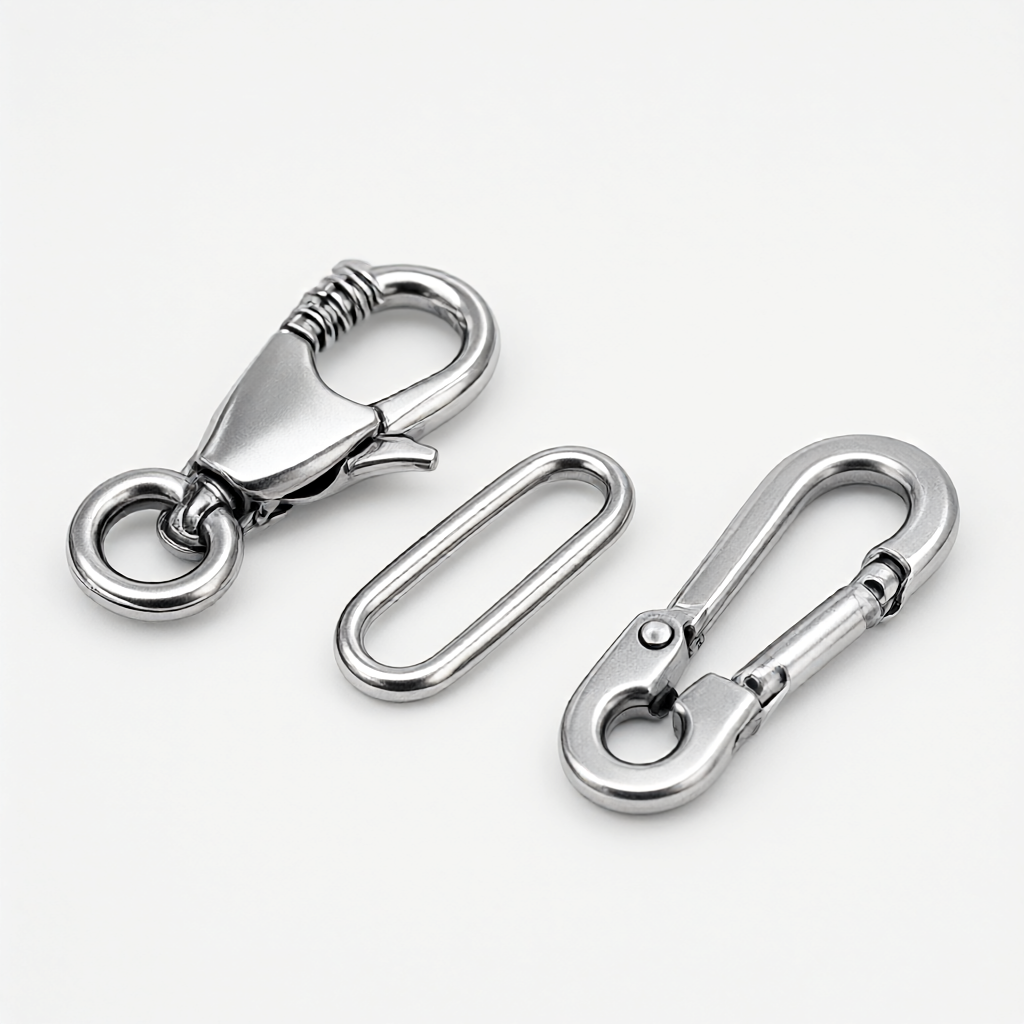
Understanding the mechanical design behind chain wallets is essential before specifying tooling or requesting samples. There are two dominant approaches: integrated chains and removable chain systems.
Integrated chain designs feature a welded or riveted loop built directly into the wallet body. This approach is simpler, more durable under repeated stress, and generally preferred for tactical and outdoor-use applications. The trade-off is reduced flexibility — the chain cannot be detached, so the wallet must always be anchored to a belt loop, key ring, or strap.
Removable chain systems use a spring-loaded carabiner clip, a hinge-link connector, or a precision-machined clasp that allows the owner to detach and reattach the chain quickly. This variant supports multiple carrying configurations — belt loop, pocket, bag D-ring, or even lanyard-style wear — but introduces additional moving parts that require tolerance control during manufacturing.
Both styles fall under the broader category of EDC chain wallet solutions. Buyers should evaluate whether their target market prioritizes security (integrated) or versatility (removable), since this decision drives tooling costs and assembly complexity. A well-engineered clasp mechanism, for instance, must sustain thousands of cycle tests without deformation — something that separates production-grade tactical wallet strap designs from cheaper imported alternatives.
Material Choices: Aluminum, Carbon Fiber, and Titanium
Material selection determines the weight, durability, aesthetic, and cost profile of every custom chain wallet. The three primary substrates used across the industry each carry distinct advantages.
Anodized Aluminum
Anodized aluminum remains the most common choice for budget-to-mid-tier custom chain wallets. It offers a strong strength-to-weight ratio, accepts vibrant color coatings throughType III hard-anodizing, and machines cleanly on CNC equipment. Typical thickness ranges from 1.5 mm to 3 mm, providing adequate rigidity for daily card-carrying without excessive bulk. Aluminum is also highly compatible with laser engraving, allowing precise logo application at low per-unit cost. However, aluminum scratches more readily than titanium and can dent under impact — a factor that matters for rugged outdoor positioning.
Carbon Fiber Construction
Carbon fiber chain wallets custom builds deliver a premium visual signature with exceptional stiffness and minimal weight. The material is inherently scratch-resistant and does not corrode, making it popular among urban EDC users who value aesthetics alongside performance. Manufacturing involves layering pre-preg carbon sheets and curing them under heat and pressure, then CNC-machining the final shape. The drawback is cost: carbon fiber blanks run significantly higher than aluminum stock, and machining cycles are slower due to the abrasive nature of the composite. For buyers targeting a luxury segment, however, the finish justifies the expense.
Titanium Money Clip Integration
Titanium represents the upper tier in material selection. It combines high tensile strength, natural corrosion resistance, and a refined matte appearance that develops a patina over time rather than degrading. Titanium is particularly well-suited for hybrid designs that merge a card-holding wallet body with an attached money clip mechanism. The metal’s biocompatibility and hypoallergenic properties also make it favorable for skin-contact applications. The primary constraint is price — titanium billet stock and longer CNC cycle times push unit costs above both aluminum and carbon fiber options. Buyers seeking a slim chain carrier positioned at the premium end of the market should specify titanium when margin allowances support it.
Each material requires different surface finishing workflows. For deeper guidance on material selection across similar product categories, refer to our resource on monogrammed card holders and our money clip sourcing guide.
Manufacturing Processes Behind Chain Wallet Production
Producing a reliable custom chain wallet demands coordinated steps across machining, joining, surface treatment, and quality inspection. The sequence below reflects standard industry practice for low-to-mid volume OEM runs.
CNC machining forms the foundation. Aluminum and titanium blanks are milled to precise thickness tolerances — typically ±0.05 mm for wallet bodies — ensuring consistent card insertion and removal force across production batches. Holes for chain attachment points, clip brackets, and any internal reinforcement ribs are drilled and tapped on multi-axis CNC centers. This step establishes dimensional accuracy that press-braking or stamping cannot match at thin-gauge thicknesses.
Laser engraving and UV printing handle surface personalization. Fiber lasers etch logos, serial numbers, or decorative patterns into aluminum and titanium surfaces with micron-level precision. For carbon fiber parts, laser marking is possible but produces a distinct contrast effect compared to metal substrates. UV flatbed printers enable full-color graphics directly onto cured carbon fiber faces, useful for photorealistic brand artwork.
Surface finishing varies by material. Anodizing creates a hard oxide layer on aluminum that improves scratch resistance and locks in dye colors. Bead blasting yields a uniform matte texture prior to coloring. Titanium parts may receive PVD coating for added color options beyond the natural metallic finish. Every batch undergoes visual inspection for finish consistency, edge deburring verification, and freedom from burrs that could snag clothing.
Assembly joins the wallet body, chain hardware, and any clip mechanisms. Spring clips require tension testing; rivets and set screws are checked for retention torque. Finished units are cleaned, individually packaged, and subjected to incoming QC sampling before bulk shipment.
Quality Standards and Certification Requirements
When sourcing from overseas contract manufacturers, verifying compliance with recognized quality and safety standards protects both the buyer and the end consumer. Two certification frameworks dominate EDC wallet production.
ISO 9001 governs the manufacturer’s quality management system — document control, process validation, corrective action tracking, and audit readiness. Buyers should request current ISO certificates and confirm the scope explicitly covers metal EDC product manufacturing. Facilities operating under ISO 9001 demonstrate structured traceability, which matters when a defect batch must be recalled or investigated.
BSCI (Business Social Compliance Initiative) audits address labor practices within the supply chain. While not a product quality standard, BSCI certification signals responsible manufacturing conditions — an increasingly important criterion for Western retail distributors and corporate gifting programs that enforce supplier code-of-conduct policies.
On the materials side, products intended for sale in European markets must comply with REACH and RoHS restrictions, limiting hazardous substances such as nickel release and lead content in plated components. Third-party testing through SGS or equivalent laboratories verifies compliance before goods leave the factory. See ASTM standards for referenced material testing protocols.
For brands prioritizing anti-theft features, RFID-blocking construction deserves explicit attention. Not all metal wallets inherently block radio-frequency identification signals — effective blocking requires either a dedicated Faraday-layer insert or sufficient conductive mass in the wallet body to attenuate 13.56 MHz NFC fields. Buyers should request test data confirming signal attenuation levels rather than accepting unverified claims.
Additionally, companies producing leather accessories for promotional programs may find our gift card wallet B2B guide useful for understanding cross-category sourcing considerations.
Customization Options Available to Brand Owners
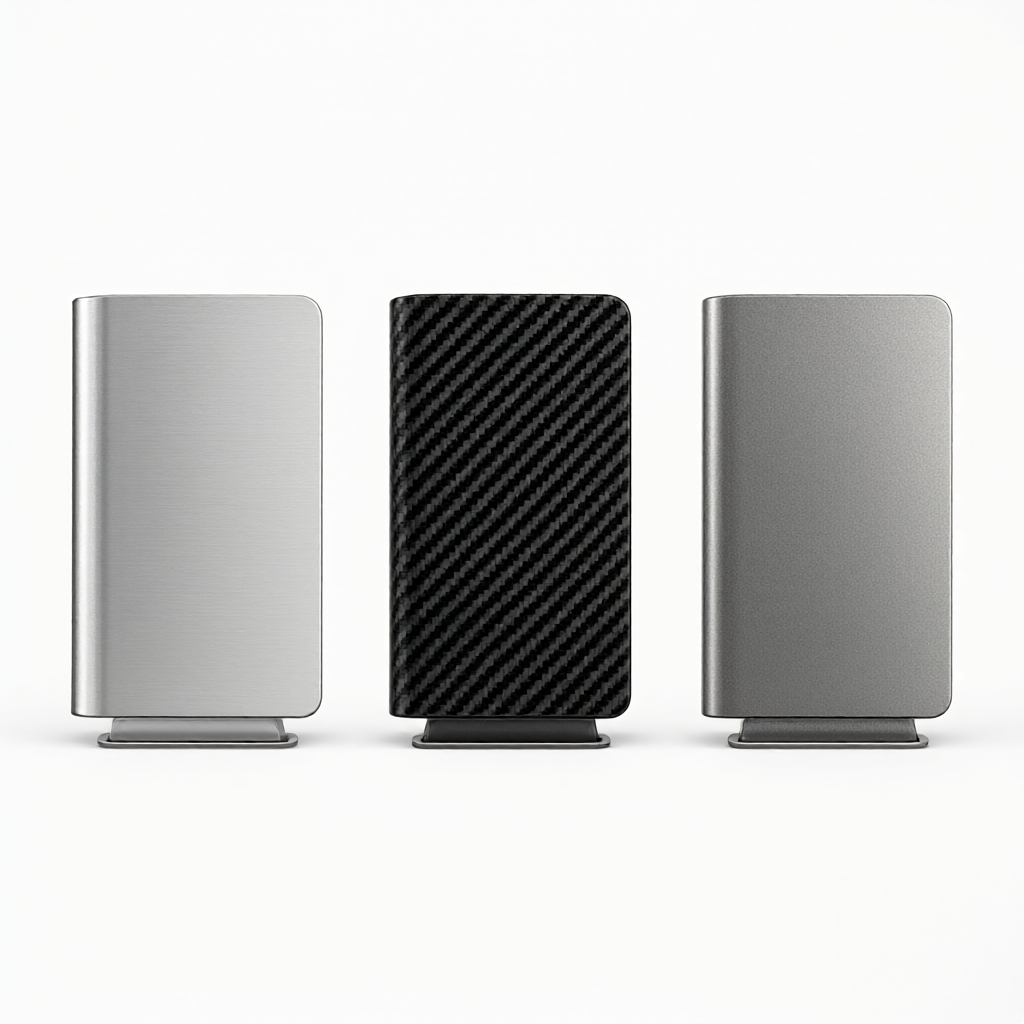
Custom chain wallets offer substantial flexibility for private-label brands seeking distinctive SKUs. The main levers buyers adjust are materials, dimensions, branding method, color, and packaging configuration.
Logo and branding options include laser engraving (most common for metal substrates, producing permanent matte or contrasting marks), UV printing (enables full-color artwork on flat faces), and embossing (a raised relief effect achievable in softer metals or composite laminates). Engraving depth, font selection, and placement area should be finalized before tooling is opened, since repositioning after machining incurs setup charges.
Color and finish selection depends on substrate. Anodized aluminum is available in standard hues — black, silver, blue, red, and military green — with custom Pantone-matched colors achievable in larger runs. Titanium accepts PVD colors like gold, rose gold, and blue. Carbon fiber retains its characteristic woven pattern, though clear-coated variants can shift between glossy and satin appearances.
Chain and clip hardware can be specified separately. Buyers choose between stainless steel or zinc-alloy clasps, deciding on finish (polished, brushed, or powder-coated) and load rating. Integrated belt clips range from simple friction-fit designs to locking carousel-style retainers suited for heavy-duty use.
Packaging completes the brand experience. Retail-ready boxes with foam inserts, blister packs for e-commerce fulfillment, or minimalist poly mailers for wholesale distribution are all configurable. Branded tissue paper, hang tags, and care instruction cards elevate unboxing quality for premium positioning. Our leather wallet maintenance guide highlights how aftercare documentation strengthens perceived product value even for non-leather items.
Key Specifications for Bulk Orders
Buyers evaluating custom chain wallet suppliers should confirm the following specification parameters upfront:
| Specification | Industry-Typical Range | Notes |
|---|---|---|
| Minimum Order Quantity (MOQ) | 100 – 500 pcs | Lower MOQ increases per-unit cost; some factories accept 300 pcs for standard designs |
| Sample Lead Time | 5 – 10 business days | Includes prototyping, finish approval, and shipping of evaluation units |
| Mass Production Lead Time | 15 – 30 business days | Depends on material availability, engraving complexity, and order volume |
| Wallet Body Thickness | 1.5 – 3.0 mm | Thinner profiles suit minimalist carry; thicker constructions accommodate more cards |
| Card Capacity | 4 – 12 cards | Determined by internal slot spacing and total stack height |
| Weight | 30 – 85 grams | Varies significantly by material and chain hardware selection |
| RFID Blocking Rating | -40 dB to -60 dB attenuation | Request lab test reports from SGS or equivalent |
| Chain Attachment Load Rating | 2 kg – 5 kg pull force | Critical for security-chain-wallet positioning |
| Surface Hardness (Aluminum Anodized) | 300 – 500 HV | Type III hard coat provides maximum abrasion resistance |
| Color Fastness (Anodized) | Grade 4–5 per ISO 105-B02 | Ensures dye retention under normal wear conditions |
These figures represent typical benchmarks. Actual values depend on design complexity, supplier capacity, and whether the order uses an existing mold library or requires custom tooling from scratch.
Use Cases and Target Audiences
Custom chain wallets serve distinct buyer segments, each with unique specification priorities.
Amazon FBA private-label sellers prioritize fast sampling, competitive unit economics, and packaging optimized for FBA barcode scanning. They often select proven SKU templates with minor branding modifications to reduce time-to-market while differentiating through packaging and included accessory bundles.
Corporate gift program coordinators emphasize brand visibility and perceived value. Laser-engraved logos, premium presentation boxes, and limited edition color runs appeal to executive gifting scenarios. These buyers frequently order 500-piece minimums at moderate customization levels.
EDC brand launches treat chain wallets as part of a cohesive product ecosystem — pairing them with multi-tools, key organizers, and pouches. Specification detail is highest for this segment, with tight tolerance requirements and consistent aesthetic language across the full catalog.
Promotional product distributors seek cost-effective SKUs in large volumes with straightforward single-color engraving. The focus is on margin preservation and delivery reliability rather than feature sophistication.
Outdoor and tactical retailers favor integrated-chain designs with robust hardware rated for heavy loads. Carbon fiber and titanium constructions command premium pricing within this channel, while anodized aluminum offers a volume-friendly alternative.
Consider how your own product portfolio aligns with these segments. If your brand already carries monogram wristlet collections or other personalized leather goods, a matching chain wallet line extends the brand narrative into metal EDC territory.
Custom Chain Wallets: How Do You Choose the Right Manufacturer?
Selecting a contract manufacturer for custom chain wallets comes down to evaluating capability alignment, not simply comparing unit prices. A facility equipped with in-house CNC machining, laser engraving stations, and anodizing lines can manage the entire production cycle internally — reducing handoff errors, improving turn-around consistency, and enabling rapid iteration during the sampling phase.
What matters most is whether the manufacturer understands your specification intent. When you request a private label chain wallet, the supplier should ask about card capacity targets, chain clip preference, branding method, finish expectations, and retail packaging requirements before quoting. Manufacturers who skip these questions and immediately provide a price-per-unit figure are typically operating from generic templates rather than engineering your specific needs.
Lead-time transparency is equally critical. A credible producer communicates sample turnaround, pilot-run scheduling, and mass-production windows clearly, adjusting only when unforeseen material delays or design revisions occur. Realistic communication prevents stockouts and missed retail windows — problems that arise most frequently when buyers chase unrealistically short timelines.
As a manufacturer with 13+ years of export experience serving 200+ brands worldwide, we structure our quoting process around thorough specification review before committing to timelines. Our facility operates a 50,000 sq ft production floor with integrated CNC, laser, and finishing capabilities, enabling us to move from approved art files to shipped inventory efficiently. We hold ISO 9001 certification and maintain BSCI-audited operations, ensuring consistent quality and responsible manufacturing standards. Low MOQ commitments starts at 300 pcs per SKU for full OEM customization (100 pcs trial order available for stock finishes) allow emerging brands to validate market demand without excessive capital risk, while our 7-day sample lead time accelerates decision-making. Every project progresses through defined stages — concept review,样件打样, engineering approval, and production launch — so you retain visibility at each decision point.
Sampling Workflow and Decision Framework for Chain Wallet Procurement
Before committing to tooling or bulk orders, experienced buyers move through a structured sampling phase. Understanding this workflow reduces risk and prevents costly rework downstream.
Sampling stages:
| Stage | Activity | Typical Duration | Outcome |
|---|---|---|---|
| Concept review | Artwork, material spec, mechanism type finalized | 1–2 days | Approved tech pack |
| Prototype fabrication | CNC-machined sample in chosen material | 3–5 days | Functional sample unit |
| Finish & branding trial | Engraving/print test on sample blank | 1–2 days | Brand proof approval |
| Shipping to buyer | Courier delivery of evaluation units | 1–3 days | Physical sample in hand |
| Revisions (if needed) | Adjustments per buyer feedback | 3–5 days | Final pre-production sample |
Total sampling lead time typically lands between 7–14 business days depending on complexity and revision rounds.
Integrated vs. Removable Chain Mechanism — Procurement Comparison:
| Factor | Integrated Chain | Removable Chain |
|---|---|---|
| Durability | Higher; no moving parts to fail | Moderate; clasp wear over thousands of cycles |
| Flexibility | Low; always attached | High; clips off for pocket/bag carry |
| Tooling Cost | Lower (single stamping/CNC step) | Higher (additional hardware machining) |
| Ideal Use Case | Tactical, outdoor, rugged environments | Urban EDC, fashion-forward, multi-config carry |
| MOQ Tier Suitability | Works well at 300 pcs starting tier | Better economics at 500+ pcs due to assembly overhead |
| Cost per Unit (300 pcs) | ~$4.50 – $7.00 USD | ~$5.50 – $9.00 USD |
| Cost per Unit (500 pcs) | ~$3.00 – $4.50 USD | ~$3.50 – $5.50 USD |
| Cost per Unit (1,000 pcs) | ~$2.20 – $3.50 USD | ~$2.80 – $4.00 USD |
| Cycle-Test Requirement | None (static joint) | ≥3,000 open/close cycles per ISO-compliant QA protocol |
Buyers targeting a tactical or military-adjacent market should prioritize integrated chain designs, which align more closely with rugged-use expectations. Those selling to urban EDC consumers benefit from the versatility of removable systems, provided the clasp mechanism meets cycle-test thresholds documented in ISO 9001:2015 clause 8.6 release criteria for product verification.
For buyers referencing tactical durability, relevant benchmarks draw on principles similar to MIL-STD-810G environmental engineering considerations — particularly shock resistance, drop testing, and abrasion tolerance — though consumer-grade EDC wallets are not required to meet formal military specifications. Stating compliance with such standards without certification would be misleading; buyers should request supplier test reports rather than accept unverified claims.
Expanded Customization Options: Logo, Colors, Packaging, and More
Beyond material and mechanism selection, the most impactful customization levers for brand owners involve branding execution, colorway strategy, and packaging configuration. Each decision carries cost and timeline implications.
Logo application methods and specifications:
- Fiber laser engraving — permanent, micron-precision marks on aluminum and titanium. Typical engrave depth: 0.02–0.05 mm. No ink or coating required. Most cost-effective at ≥500 pcs run size.
- UV flatbed printing — full-color graphics, gradients, and photorealistic artwork on flat surfaces. Compatible with aluminum, carbon fiber faces, and certain polymer substrates. Minimum artwork file resolution: 300 DPI. Additive cost applies for multicolor designs.
- Embossing / debossing — raised or recessed relief in softer aluminum alloys or composite laminates. Requires a custom steel die; tooling cost ranges $150–$400 per design element. Best suited for single-monogram or simple crest logos at higher volumes.
- Enamel filling — colored epoxy inset into engraved channels for a two-tone effect. Adds visual contrast but increases per-unit cost by approximately 15–25%.
Color strategy by substrate:
| Substrate | Standard Colors | Custom Color Option | Notes |
|---|---|---|---|
| Aluminum (anodized) | Black, Silver, Blue, Red, Army Green | Pantone-matched Type III hard coat | Custom colors require ≥500 pcs for dye bath setup |
| Titanium (PVD coated) | Natural brushed, Gold, Rose Gold, Blue | Limited PVD palette | PVD colors hold superior scratch resistance vs. anodized dyes |
| Carbon Fiber | Matte black weave, Gloss black weave, Clear coat | Clear-coat gloss/satin finish only | Base pattern inherent; cannot alter fiber color |
Packaging configurations:
Retail-ready options include rigid magnet-closure boxes with custom interior foam inserts, clamshell blister packs optimized for Amazon FBA shelf presentation, minimalist recyclable poly mailers for wholesale channel distribution, and gift-box assortments for corporate program fulfillment. Branded tissue paper, hang tags, warranty cards, and care instruction booklets can be added to elevate perceived value. Our internal resource on leather wallet maintenance and care documentation demonstrates how aftercare inserts strengthen premium positioning even for non-leather EDC products.
Lead time and MOQ reference points:
Standard OEM runs begin at 300 pieces for off-the-shelf designs using existing mold libraries. Custom tooling from scratch adds 10–15 business days to the initial timeline and may raise the effective MOQ to 300–500 units to amortize setup costs. Mass production lead times typically range from 15–30 business days post-sample approval, scaling with order volume and surface treatment complexity.
Manufacturing Standards and Quality Assurance in Practice
For B2B buyers, manufacturing capability is as important as the product itself. The factories that consistently deliver on spec operate under documented quality management systems and subject each batch to measurable inspection gates.
ISO 9001:2015 core requirements relevant to EDC wallet production:
Clause 8.5.1 (Control of production and service provision) mandates documented work instructions, calibrated tooling records, and operator competency checks before mass production begins. Clause 8.6 (Release of products and services) requires incoming, in-process, and final inspections at defined checkpoints — not just a random spot-check at shipment. Clause 10.2 (Nonconformity and corrective action) ensures defective batches trigger root-cause analysis before resuming production. Buyers should verify their supplier’s ISO certificate scope explicitly includes metal EDC wallet manufacturing rather than a generic or unrelated product category.
BSCI audit coverage addresses workplace standards — working hours, wage compliance, health and safety, and anti-discrimination policies — critical for Western distributors who enforce supplier code-of-conduct agreements as part of their sourcing policy.
Materials compliance: Products sold in the EU must meet REACH restrictions on restricted substances (Annex XVII) and RoHS directives limiting lead, cadmium, mercury, and hexavalent chromium in plated components. Third-party lab reports from SGS, Intertek, or equivalent accredited facilities confirm compliance before goods ship. Referencing ASTM material testing protocols helps buyers understand which test methods apply to tensile strength, hardness, and corrosion resistance verification.
RFID-blocking performance validation: Effective NFC field attenuation at 13.56 MHz requires measured conductive mass or dedicated Faraday-layer insertion. Buyers should request written test data confirming attenuation in decibels (dB), ideally showing ≥−40 dB for practical blocking, rather than relying on marketing language alone.
Choosing the Right Manufacturer: What Matters Most
When evaluating contract manufacturers for custom chain wallets, B2B buyers should look beyond unit price and consider factors that influence long-term supply reliability and product consistency.
Key evaluation criteria:
| Criterion | Why It Matters | What to Request |
|---|---|---|
| ISO 9001 certification scope | Ensures document-controlled processes and traceability | Current certificate with product-specific scope |
| In-house CNC machining | Controls tolerances, reduces outsourcing risk | Factory tour photos or video walkthrough |
| Surface finishing capability | Anodizing and PVD quality directly affect durability | Finish sample book with hardness test data |
| Sample turnaround speed | Fast prototyping accelerates time-to-market | Stated sample lead time (ideally ≤7 days) |
| MOQ flexibility | Affects cash flow for emerging brands and test orders | Confirmed minimum order quantity by design complexity |
| Export track record | Indicates familiarity with international shipping and documentation | List of served regions and reference case count |
| Compliance documentation | Protects against customs holds and regulatory issues | REACH/RoHS test reports, BSCI audit summary |
A manufacturer operating a 50,000 sq ft in-house facility with 13+ years of export experience serving 200+ brands across North America, Europe, Australia, and Southeast Asia demonstrates the scale and consistency that mid-tier B2B buyers typically require. Facilities that combine CNC machining, laser engraving, anodizing, and final assembly under one roof reduce handoff delays and quality drift compared to fragmented supply chains.
Integration note: As a manufacturer specializing in minimalist EDC wallets and pocket gear since 2014, TOP EDC Wallet approaches custom chain wallet production through the same principles outlined above — starting with material and mechanism decisions that match your target market, moving through precision CNC fabrication and controlled surface finishing, and completing each order with documented QC checkpoints. We offer OEM, ODM, and private-label manufacturing with low MOQ starts at 300 pcs per SKU, 7-day sample lead time, and full customization from logo engraving to retail packaging design. Our facility holds ISO 9001 certification and BSCI audit compliance, and all materials are tested against REACH/RoHS standards. For detailed pricing and spec discussions tailored to your SKU requirements, contact our team to begin the sampling process.
Procurement Decision Framework: Evaluating Chain Wallet Suppliers
Before committing to a contract manufacturer, B2B buyers should run their shortlist through a structured procurement assessment. Use the following checklist to compare candidates objectively:
Supplier Capability Audit
| Evaluation Criterion | Why It Matters | How to Verify |
|---|---|---|
| In-house CNC machining capability | Reduces sub-contractor delays and improves dimensional tolerance control | Request factory tour photos or video; ask which machines are owned vs. outsourced |
| ISO 9001 certification status | Confirms documented quality management processes (ISO 9001:2015) | Ask for a current certificate with scope covering EDC wallet production |
| BSCI audit history | Signals compliant labor practices required by Western retail distributors | Request the latest BSCI report; verify audit year and facility address match |
| REACH / RoHS compliance testing | Mandatory for EU market access; limits hazardous substances in platings and finishes | Ask for SGS or equivalent lab test reports for nickel release and heavy metals |
| Sample lead time commitment | Fast prototyping accelerates go-to-market timelines | Confirm whether 5–7 day samples are standard or rush-fee only |
| MOQ flexibility | Lower MOQs reduce inventory risk for new product launches | Verify minimum order thresholds and price-break tiers at 100, 500, and 1,000 pcs |
| RFID attenuation test data | Not all metal wallets provide verified signal blocking | Request dB attenuation results at 13.56 MHz NFC frequency |
| Production capacity per month | Ensures supplier can scale without outsourcing to unvetted foundries | Ask for documented monthly output figures and current backlog status |
Technical Specification Confirmation
Every RFQ should include written confirmation of tolerances, finish standards, and test protocols before tooling begins. Buyers must insist on:
- Dimensional tolerances: ±0.05 mm for wallet body thickness; ±0.1 mm for chain attachment hole positions
- Surface hardness specifications: Type III hard-anodized aluminum at 300–500 HV per ASTM B549
- Chain pull-force rating: Minimum 2 kg sustained load for standard models; 5 kg for tactical configurations
- Colorfastness standard: ISO 105-B02 Grade 4–5 for anodized dye retention
- Engraving depth specification: 0.05–0.15 mm for laser marks to ensure permanence without structural weakening
These numerical benchmarks replace vague qualitative claims and give procurement teams measurable criteria for acceptance-rejection decisions during pre-production sample approval.
Frequently Asked Questions About Custom Chain Wallets
What exactly is a custom chain wallet?
A custom chain wallet is a slim, minimalist carry product constructed from metal or composite substrates—most commonly aluminum, carbon fiber, or titanium—with a metal chain attached either integrally or via a detachable clasp. The chain enables belt-loop, bag D-ring, or key ring mounting, keeping the wallet secure during active use while maintaining quick one-handed access. In B2B contexts, “custom” refers to substrate selection, dimensional specs, branding method, color finish, and packaging configuration—all tailored to a brand owner’s SKU requirements rather than off-the-shelf white-label offerings.
How does the chain attachment mechanism function?
Chain wallets use one of two mechanical approaches. Integrated chains are welded or riveted directly to the wallet body during assembly, creating a permanent anchor point. This design eliminates moving parts, reduces failure modes, and suits tactical or outdoor-oriented positioning. Removable chain systems incorporate spring-loaded lobster claws, carabiner-style clips, or hinge-link connectors that allow the chain to be detached and reattached repeatedly. Removable designs increase carrying versatility but require precise spring-tension calibration—typically sustaining 5,000+ open-close cycles without loss of grip force—to prevent accidental detachment during daily wear.
What materials are commonly used in chain wallet manufacturing?
The three dominant substrates balance cost, weight, and performance differently:
- Anodized aluminum (1.5–3 mm thickness): Most cost-effective; accepts vibrant Type III hard-anodized colors; compatible with fiber-laser engraving at low per-unit cost; moderate scratch resistance.
- Carbon fiber (pre-preg laminated, 1.5–2.5 mm): Premium aesthetic with high stiffness-to-weight ratio; inherently scratch-resistant and corrosion-proof; slower CNC cycle times due to abrasive composite; higher blank-material cost.
- Titanium (1.5–2.5 mm thickness): Highest tensile strength and natural corrosion resistance; biocompatible for skin contact; PVD color options available; longest machining cycles and highest billet stock cost; suited for premium-tier positioning.
Material choice directly affects unit economics, lead time, and target retail price point.
What are the typical MOQ and sample lead times?
Industry-standard MOQ ranges from 300 to 500 pieces, with some manufacturers accepting 300 pcs for stock-design adaptations and 300–500 pcs for fully custom tooling. Sample lead times typically span 5–10 business days for evaluation units, depending on whether the design modifies an existing library part or requires full custom CNC programming and prototype runs. Mass production lead times generally fall between 15 and 30 business days after sample approval, scaling with order volume and surface-finishing complexity.
Which quality standards apply to EDC wallet production?
Three certification frameworks govern responsible EDC wallet manufacturing:
- ISO 9001:2015 —质量管理体系标准,要求制造商建立文件化流程、过程验证机制和纠正预防措施。买家应核实证书范围明确涵盖金属EDC产品制造。
- BSCI(Business Social Compliance Initiative) — 供应链劳工实践审计,适用于向欧美零售分销商供货的品牌,满足其供应商行为准则要求。
- REACH / RoHS合规性测试 — 欧洲市场强制要求,通过SGS或同等实验室验证镍释放量和铅含量符合限值。ASTM相关材料测试协议可提供额外参考基准(astm.org)。
Additional product-level specifications include RFID attenuation testing per NFC industry benchmarks and Type III hard-anodize hardness verification per ASTM B549.
What customization options are available for brand owners?
Brand owners can configure five primary variables:
- Logo application: Fiber-laser engraving (permanent matte contrast on metal), UV flatbed printing (full-color graphics on flat surfaces), or embossing (raised relief in softer substrates).
- Color and finish: Anodized aluminum in standard hues plus Pantone-matched custom colors; titanium PVD coatings in gold, rose gold, and blue; carbon fiber in glossy or satin clear-coat variants.
- Chain hardware: Stainless steel or zinc-alloy clasps in polished, brushed, or powder-coated finishes; load-rated from 2 kg (standard) to 5 kg (tactical).
- Dimensions and card capacity: Body thickness from 1.5 to 3.0 mm; internal slot spacing configured for 4–12 cards.
- Packaging: Retail boxes with foam inserts, e-commerce blister packs, or wholesale poly mailers; optional hang tags, tissue paper, and care-instruction cards.
All customization decisions should be locked into a signed specification sheet before tooling initiation to prevent costly rework charges post-production.
Industry Context: How Manufacturers Meet These Standards
Here is how the industry works: established EDC wallet manufacturers combine in-house CNC machining, laser engraving, and surface finishing under one roof to maintain tolerance control from raw blank to finished SKU. Facilities operating ISO 9001:2015-certified quality management systems document every process step—from material traceability and first-article inspection through final QC sampling—creating auditable records that support batch investigations and recall readiness. BSCI-audited sites further demonstrate adherence to responsible labor practices expected by Western retail and corporate-gifting channels.
For brands entering the chain-wallet category, working with a manufacturer that offers low-MOQ entry points and rapid sample turnaround allows market validation before committing to large production runs. Custom laser engraving, anodized color options, and configurable packaging let private-label brands differentiate their SKUs without requiring proprietary tooling investment at launch volume.
TOP EDC Wallet operates a 50,000 sq ft factory with 13+ years of export experience serving brands across America, Europe, Australia, and Southeast Asia. As a manufacturer, our approach centers on in-house CNC machining, laser engraving, and full surface-finishing capability—from aluminum anodizing to titanium PVD coating. We hold ISO 9001 and BSCI certifications, produce REACH/RoHS-compliant goods verified by SGS testing, and support OEM and ODM programs starting at 300-piece MOQs with 7-day sample lead times and monthly capacity exceeding 500,000 units. If you are evaluating suppliers for custom chain wallets or adjacent EDC products such as monogrammed card holders or front pocket organizers, our team can provide material samples, specification sheets, and pricing within standard response windows.
Custom Chain Wallets: Where Can You Verify the Data and Sources?
- ASTM standards — www.astm.org
- ISO 9001:2015 clause 8.6 — www.iso.org
- front pocket organizer guide — topedcwallet.com
- monogrammed card holders — topedcwallet.com
- money clip sourcing guide — topedcwallet.com
- gift card wallet B2B guide — topedcwallet.com
- leather wallet maintenance guide — topedcwallet.com
- monogram wristlet — topedcwallet.com
- Get a Free Quote → — topedcwallet.com
From article to product
Sourcing minimalist-wallets?
Tell us the format, the quantity and the date you need stock. You get material options, MOQ and a landed-cost range back within one business day.
Keep reading
More on wallet manufacturing
Sustainable Packaging for Wallet Shipments
Packaging is where sustainability claims are cheapest to make and easiest to disprove. A…
ReadTake-Back and Recycling Programmes for Wallet Brands
A take-back programme is easy to announce and hard to run. Wallets are the…
ReadNickel Release Rules for Wallet Hardware
Nickel release is the one restriction in a wallet that is decided by the…
Read
About the author
TOPWALLET Editorial Team
TOPWALLET's editorial and engineering desk writes from bench testing at the Shenzhen (Longgang) facility: pull-force and cycle testing, 13.56 MHz shielding measurements, finish trials and factory audits, rather than supplier spec sheets. Every specification in these guides is one we write on a purchase order.
Written on the floor
This article was written by our production and QC team — the people who spec tolerances, run the finishing line and inspect every batch. Where it states a capacity, a pull force or a lead time, it comes from a measurement we made, not a supplier’s catalogue. If a number here disagrees with what your own supplier told you, tell us; several of these articles started as a correction from a buyer.
See how the factory works · Inspection process · Sourcing FAQ
Sourcing minimalist-wallets?
Tell us the format, the quantity and the date you need stock. You get material options, MOQ and a landed-cost range back within one business day.