

There are three main wallet categories today: traditional wallets (bifold, trifold, and travel), minimalist EDC wallets (card holders, money clips, slim metal/carbon-fiber designs), and digital wallets (mobile payment apps like Google Wallet, crypto onchain wallets). The right choice depends on your daily card load, payment habits, security needs, and how you prefer to carry — front pocket, back pocket, or bag. For most urban everyday-carry users, a slim minimalist wallet paired with phone-based payments covers 80% of daily needs; cash-heavy or travel lifestyles still benefit from higher-capacity traditional designs.
Quick Answer
What are the main wallet types available? Today you can choose from traditional wallets (bifold, trifold, travel), minimalist EDC wallets (card holders, money clips, slim metal or carbon fiber designs), and digital wallets (mobile payment apps like Google Wallet, crypto onchain wallets). Your choice depends on carry volume, security needs, style preference, and how you pay day to day.
- Traditional bifold/trifold — highest capacity; best for cash-heavy lifestyles.
- Minimalist cardholder / money clip — low profile; best for everyday urban carry and travelers who want less bulk.
- RFID-blocking metal wallets — add electronic privacy; best for commuters and city use.
- Digital wallets — store cards and tokens on your phone; replace many physical cards.
- Crypto onchain wallets — hold self-custodied blockchain assets; distinct from exchange-hosted wallets.
If you value simplicity and speed, a minimalist card holder or slim wallet paired with mobile payments is usually enough. If you still carry lots of cash, receipts, or coins, a larger bifold or travel wallet remains practical.
Detailed Explanation
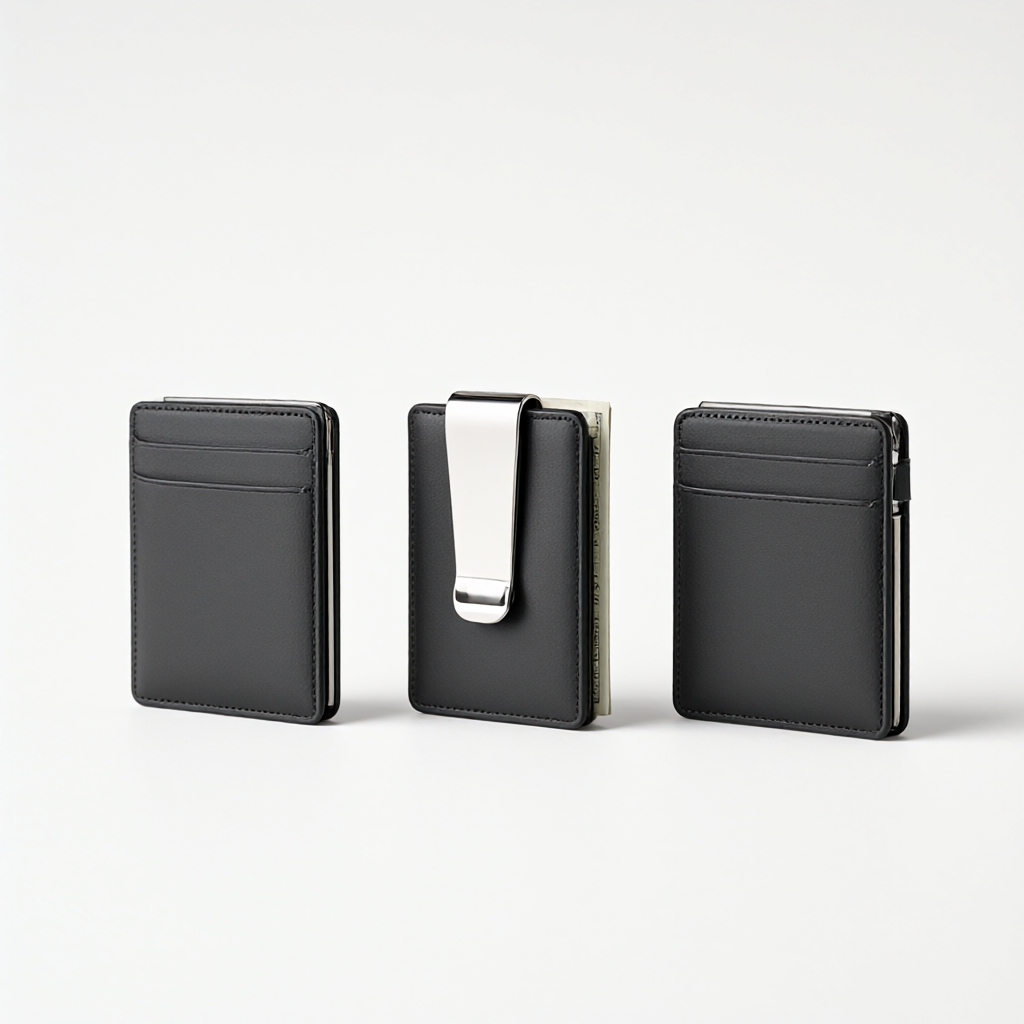
How do different wallet types work and which fits my lifestyle?
Physical wallets fall into three broad groups:
- Traditional wallets — usually leather or synthetic materials, designed to fold around cards and bills. A bifold has two main sections; a trifold adds a third panel, often with a coin pocket. Travel wallets expand further to accommodate passports and tickets.
- Minimalist wallets — purpose-built to carry fewer items in a slimmer profile. Common formats include:
– Card holders — rigid or flexible sleeves holding up to ~12 cards.
– Money clips — spring or magnetic clips that secure bills and sometimes a few cards.
– Slim metal wallets — aluminum, titanium, or carbon-fiber bodies with mechanical ejection systems for quick access.
- Specialty wallets — pouch wallets, chain wallets, and integrated key-holder combos serve niche preferences (fashion, tactical carry, outdoor use).
When choosing, match wallet form to daily habits:
- Daily carry essentials — minimalists often prefer 5–8 cards plus folded bills.
- Travel and outdoor adventures — larger capacities and secure closures matter.
- Tech-savvy digital payment users — pair a slim physical wallet with phone-based payments.
- Fashion and style-conscious buyers — material finish and silhouette drive selection.
For durable materials used in modern minimalist wallets, review our wallets that protect cards — A Buyer’s Guide to Card-Safe piece covering construction approaches and card-safe design considerations.
How do you use Google Wallet step by step?
Google Wallet is a mobile payment and identity app that stores credit/debit cards, transit cards, loyalty cards, and event tickets. Use it as follows:
- Install Google Wallet on an Android device or via Apple Pay integration where available.
- Open the app and tap Add to Wallet.
- Choose the card type (payment card, transit pass, loyalty card, etc.).
- Enter card details manually or scan the card with your phone camera.
- Verify ownership via your bank’s SMS/code flow if required.
- Once added, pay by unlocking your phone and holding it near the contactless reader (NFC).
- For transit or tickets, open the relevant pass in the app and hold it to the scanner.
Google Wallet works by storing tokenized payment credentials rather than your raw card number. When you pay, a one-time token is transmitted to the merchant, reducing exposure of your actual card details.
Is Google Wallet safe to use?
Yes — with practical caveats about device security. Google Wallet uses device-specific account linking, on-device secure elements, and transaction tokenization, which means your real card number is not shared with merchants during NFC taps. Additional safeguards include:
- Remote lock/wipe if your phone is lost.
- Biometric or PIN requirements for app access.
- Fraud monitoring by issuing banks and Google.
Main risks are not from the wallet itself but from device compromise (malware, phishing) or using unsecured networks for sensitive actions. Keep your OS updated, enable screen locks, and monitor account alerts regularly.
For broader guidance on electronic data protection standards that underpin secure payment tokenization, refer to standards from ASTM International, which publishes material and testing frameworks relevant to hardware security components used across consumer devices.
What is the crypto.com onchain wallet and how does it work?
The crypto.com Onchain Wallet (often referenced alongside crypto.com DeFi Wallet products) is a self-custody cryptocurrency wallet that lets you control private keys directly on your device rather than storing assets on an exchange. Key points:
- It generates and stores your private keys locally on the phone or hardware.
- You can send, receive, and swap tokens across supported blockchains (EVM chains such as Ethereum, BNB Chain, Polygon, etc., depending on the current product version).
- Non-custodial design means you alone control access — unlike centralized exchanges where the platform holds your keys.
- Security depends on your backup practices (seed phrase storage), app updates, and avoiding malware on your device.
This contrasts with custodial exchange wallets, where the platform manages security and recovery. Self-custody offers greater autonomy but requires disciplined key management.
What size wallet is best for everyday carry — slim or large?
There is no universal answer, but typical trade-offs are:
- Slim wallets (~90–100 mm width, thin cross-section): fit front pockets comfortably, reduce belt-bulge, and encourage mindful carrying. Best when you carry ≤8 cards and少量 cash.
- Large wallets (~110–120 mm width, thicker): hold more cards, multiple bill compartments, coins, and IDs. Best when you need higher capacity or frequently travel with documents.
Consider seat placement too: front-pocket carries suit slimmer profiles; back pockets tolerate slightly bulkier wallets but may cause discomfort over time.
See our detailed dimension guidance in the Wallet Size Width and Height: Complete Dimension Buying guide to match physical measurements to your pocket and carry habits.
Key Specifications
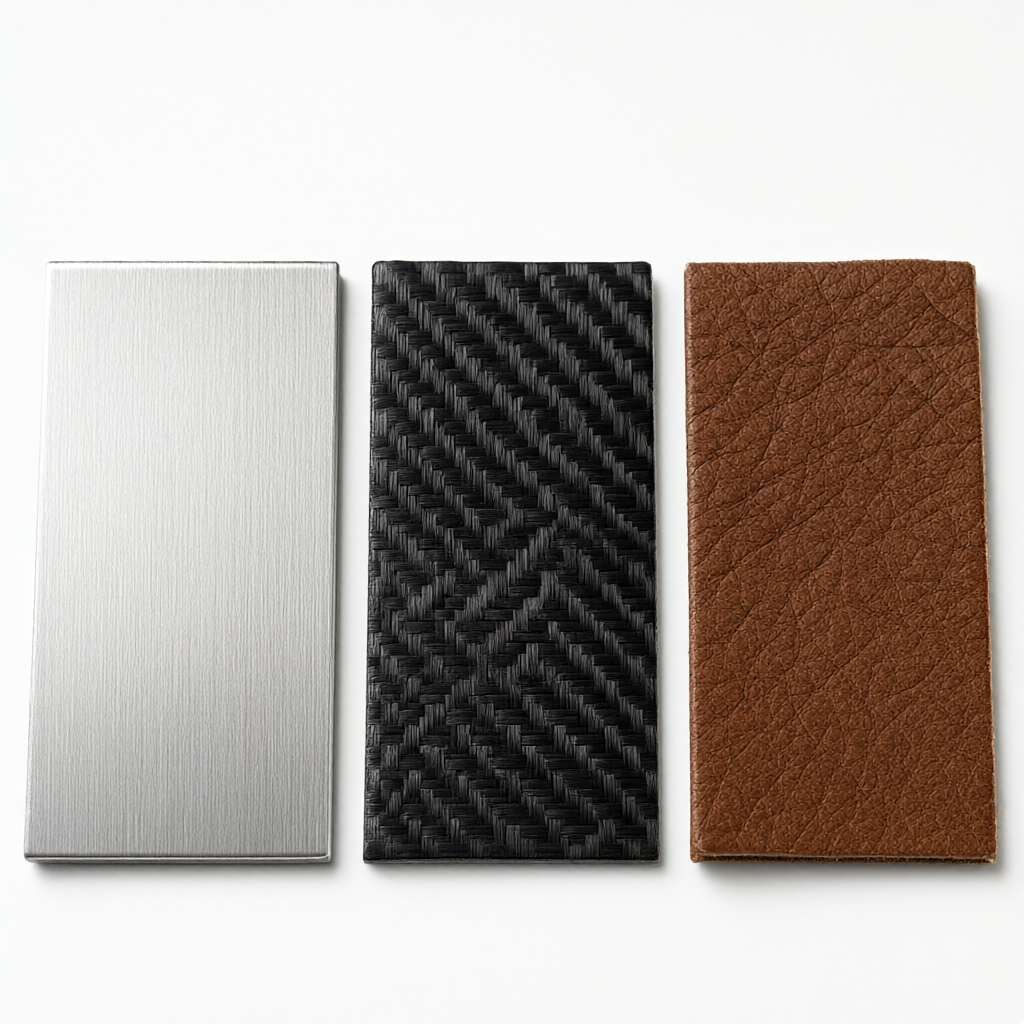
| Wallet Type | Typical Capacity | Protection Features | Ideal Use Case |
|---|---|---|---|
| Leather bifold | 6–12 cards + cash | None standard; optional RFID add-ons | Everyday home/office carry with moderate card load |
| Leather trifold | 8–16 cards + cash + coin pocket | Optional RFID; higher bulk | High-capacity carry; older-style preferences |
| Slim metal / carbon fiber card holder | 4–12 cards | Often RFID-blocking (verify per model) | Minimalist urban carry; tech-forward users |
| Money clip | Bills + 0–4 cards | Basic; metal construction durable | Cash-dominant carry with occasional cards |
| RFID-blocking metal wallet | 4–12 cards | Certified RF shielding layers | Commuters; high-theft urban environments |
| Digital wallet (Google Wallet) | Unlimited virtual cards/tickets | Tokenization; biometric locks | Phone-first payers; frequent travelers |
| Crypto onchain wallet | Blockchain assets only | Private-key self-custody; seed backup | Self-custody crypto users; DeFi participants |
Notes:
- Exact card counts vary by card thickness and wallet mechanism.
- “RFID-blocking” performance depends on construction and independent testing; verify specifications rather than assuming blanket protection.
- Digital wallet security ultimately relies on both the app provider’s controls and your device hygiene.
Standards & Requirements
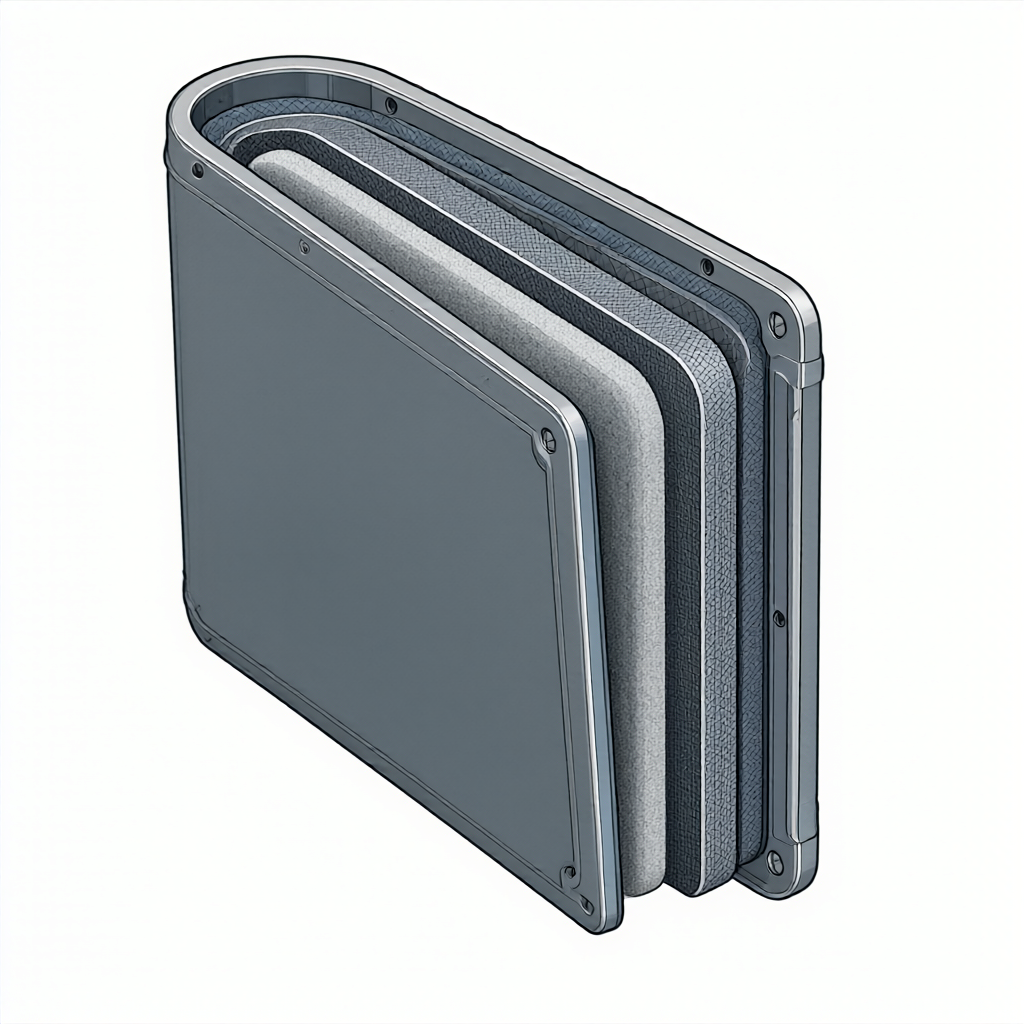
When evaluating physical wallets for security claims and material quality, look for verifiable standards and transparent specifications:
- RFID shielding — manufacturers should disclose test methods and frequency ranges covered. For broader engineering and material testing standards that inform hardware component evaluation, consult ASTM International.
- Material sourcing and labeling — terms like “genuine leather,” “bonded leather,” and “vegan leather” have distinct meanings and durability profiles. Ensure product descriptions specify the exact material composition.
- Manufacturing quality — reputable contract manufacturers often follow quality-management frameworks; for internationally recognized quality systems relevant to production processes, refer to standards published by ISO.
- Consumer product disclosures — truthful advertising and material claims are governed by national consumer-protection rules. In the U.S., the Federal Trade Commission (FTC) enforces truth-in-advertising standards applicable to material and performance representations; see ftc.gov.
Practical takeaway: ask suppliers for test reports or compliance declarations when purchasing RFID-blocking wallets or metal/carbon-fiber models in volume.
For readers interested in protective features beyond general dimensions, review our Different Types of Leather Wallets — Sizes, Standards overview to understand material choices and their long-term implications.
Related Considerations
Should I choose a small card wallet or a separate pouch?
A small card wallet (often called a cardholder or slim wallet) keeps daily essentials compact and is ideal for front-pocket carry. A pouch wallet typically refers to a larger fabric or leather organizer that can hold cards, cash, coins, cables, and travel docs. Hybrid approaches exist — slim metal wallets with removable inserts, or cardholders with dedicated zip pockets for spare cash.
Choose based on what you actually carry now versus what you might need later. Many buyers start with a cardholder and upgrade only when they notice missing capacity.
Is a wallet with a built-in key holder better than a separate pouch?
Integrated key holders reduce the chance of losing separate keys, but they can scratch cards and add bulk. Standalone keychains or dedicated key loops preserve card surfaces and allow modular replacement. If you prefer organization, a minimalist setup with a separate key tether often lasts longer and causes fewer wear issues than a rigid integrated clip.
Our deep-dive on integrating accessories into EDC routines appears in our Minimalist Wallets Guide: What They Are & How to Choose, which examines how modular components affect everyday functionality.
What are purse wallets for women and how do they differ from regular wallets?
Women’s purse wallets (sometimes called wallet clutches or card-case purses) combine a wallet interior with a clutch-style exterior. Differences from standard wallets include:
- Larger external dimensions suited to handbag organizing.
- Often include zippers, compartments, and detachable straps.
- May blend fashion aesthetics with functional card slots and cash pockets.
Regular men’s or unisex wallets tend to prioritize pocket fit and minimal bulk. Fit and style preferences drive the choice here — there is no universal right answer.
Explore additional care and material insights in our How to Take Care of a Leather Wallet — Full Care & Restoration Guide to maintain appearance and lifespan regardless of wallet format.
What should I consider before buying a new wallet?
Before purchasing a new wallet, evaluate these criteria:
- Carry volume — count the cards, bills, and coins you typically use weekly.
- Pocket space — measure wallet height/width against your pants and bag dimensions.
- Security needs — decide whether RFID shielding or reinforced construction matters for your commute.
- Material longevity — full-grain leather ages differently than aluminum or carbon fiber composites.
- Payment behavior — if you mostly pay digitally, a slim physical wallet plus phone payments is efficient.
- Custom branding needs — corporate gifts or private-label programs require minimum order quantities, lead times, and finish options.
For specialized security-focused selections, read our RFID Protected Wallets and Their For Men and Women analysis to compare shielding implementations and real-world usefulness.
If you’re comparing structured options against larger multi-compartment designs, our Big Skinny World Wallet: Complete Buyer’s Guide 2026 reviews how expanded-strap architectures impact capacity and comfort.
Additional practical advice centers on maintenance and selection strategy:
- Maintenance — rotate wallets periodically to extend material life; clean leather with appropriate conditioners and keep metal finishes dry after heavy rain exposure.
- Selection strategy — buy replacements incrementally rather than discarding functional gear prematurely; this reduces waste and ensures you test new formats before committing.
- Corporate/gift purchases — verify engraving depth, packaging options, and sample approval workflows prior to placing volume orders.
Our editorial perspective on evaluating and selecting pocket organizers for daily utility is covered in Money Clip Selection and Evaluation for Everyday Carry, which examines mechanical reliability and ergonomic trade-offs.
Industry Perspective: How Manufacturers Meet These Standards
As a manufacturer specializing in minimalist EDC wallets and pocket gear, we see these trends shaping buyer decisions: consumers increasingly want durable materials, transparent build quality, and customizable branding for gifting or retail resale.
From a production standpoint, meeting those expectations involves several practical steps:
- Selecting certified materials and verifying RFID shielding performance through third-party testing where possible.
- Designing ejector mechanisms and hinges to withstand repeated cycling without loosening.
- Offering surface treatments such as anodizing for aluminum and precision laser engraving for logos or serial numbers.
- Supporting private-label programs with modest MOQs and fast sample turnaround so brands can validate fit and finish before scale-up.
We align our workflow to these realities: in-house CNC machining, controlled finishing lines, and documentation-friendly QC checkpoints mean buyers receive consistent output across batches. For teams sourcing custom metal wallets, carbon fiber card holders, or tactical organizers, we typically begin with a brief spec sheet, approve a physical sample, then move to pilot runs before full production.
If you’d like to review our current capabilities or discuss a custom design, contact our team to explore options tailored to your brand or project.
Physical and digital wallets span dozens of formats—from leather bi-folds to minimalist titanium cardholders, from fabric pouch organizers to smartphone-based payment apps and self-custody crypto wallets. The core decision is simple: match your daily carry volume, security needs, and payment habits to a wallet style that fits comfortably in your preferred pocket or bag. For most urban professionals carrying 5–8 cards and paying digitally, a slim aluminum or carbon-fiber cardholder paired with a phone-based wallet like Google Wallet is sufficient. Cash-heavy users and travelers benefit from larger bi-folds or travel wallets with document compartments. Read on for detailed breakdowns of every major type, how to evaluate materials and RFID protection, and what to expect when sourcing custom wallets through OEM manufacturers.
Physical wallet styles — slim, large, women’s, men’s, pouch, chain, card & key-holder combos
Beyond the broad categories already outlined, the wallet market contains numerous sub-formats shaped by region, gender preference, and functional niche:
- Slim wallets (men’s and unisex) — typically 90–100 mm wide, 4–6 mm thick when loaded. Designed for front-pocket carry; common materials include 6061 aluminum, Grade 5 titanium (Ti-6Al-4V per AMS 4911), and forged carbon fiber. Card-slot tolerances generally hold 8–12 standard ISO 7810 ID-1 cards (85.60 × 53.98 mm) without excessive friction.
- Large / travel wallets — 110–125 mm width with multiple bill compartments, coin zippered pockets, and passport sleeves. Often constructed from full-grain or top-grain leather at 3–5 oz (1.2–2.0 mm) thickness for durability.
- Women’s purse wallets (wallet clutches) — larger external envelopes (often 190–210 mm closed) that fit inside handbags while providing organized card slots, zippered coin areas, and sometimes detachable wrist straps. They differ from men’s/unisex wallets primarily in scale and fashion-forward hardware (magnetic closures, decorative stamping).
- Chain wallets — a bifold or cardholder attached to a metal chain, originating from motorcycle and western culture. The chain clips to belt loops, preventing loss during active movement. Commonly made from nylon webbing or leather with brass or stainless steel hardware.
- Pouch wallets — soft-sided fabric or leather sleeves without rigid folding structures. Often used as travel document organizers or EDC loaders that slip into a larger bag.
- Small card wallets + wallet key-holder combinations — modular designs where a compact cardholder integrates a loop or clip for a single key. Some models use a spring-loaded titanium bar; others employ a silicone key tether. These combos sacrifice some card capacity (~4–6 cards) for one-button key access.
For a broader framework on choosing among minimalist options, see our Minimalist Wallets Guide: What They Are & How to Choose.
Technical parameters buyers and procurement teams should specify
When evaluating wallets—or issuing RFQs to contract manufacturers—concrete specs prevent costly mismatches between sample and bulk production:
- Leather thickness — measured in ounces (oz) or millimeters. Full-grain leather for durable wallets typically ranges from 3–5 oz (1.2–2.0 mm). Lightweight lining leathers may be 1–2 oz (0.4–0.8 mm). Thinner leather (< 1 oz) risks premature wear at fold lines.
- RFID-blocking frequency range — effective shielding targets the 13.56 MHz band used by contactless payment cards (ISO/IEC 14443 Type A/B) and transit cards. Quality blockers achieve ≥ 20 dB attenuation at this frequency. Verify test reports rather than relying on marketing labels. For material and component testing frameworks relevant to RF shielding, consult ASTM International.
- Metal alloy compositions — aluminum wallets commonly use 6061-T6 (minimum tensile strength 276 MPa, yield 241 MPa per ASTM B221). Titanium wallets frequently use Grade 5 Ti-6Al-4V (tensile ≥ 95 ksi / 655 MPa, yield ≥ 88 ksi / 600 MPa per AMS 4911). Both alloys offer high strength-to-weight ratios and resist corrosion.
- Card-slot count tolerances — standard credit cards measure 0.76 mm thick (ISO 7810 ID-1). A 10-slot holder should accept cards with ± 0.05 mm tolerance without binding. Excessively tight tolerances cause card ejection difficulty; loose tolerances risk cards falling out during movement.
- CNC-machined part tolerances — precision-milled aluminum or titanium wallet bodies typically hold ± 0.05 mm dimensional tolerance on critical interfaces (spring channels, card guides).
B2B procurement: MOQs, lead times, QC criteria, and supplier qualification
For brands, Amazon FBA sellers, and distributors sourcing custom wallets in volume:
- MOQ ranges — entry-level OEM runs often start at 300 pcs per design/SKU for metal wallets and carbon fiber cardholders. Higher-complexity builds (multi-material, custom packaging) may require 300–500 pcs minimum. Leather goods sometimes carry lower MOQs due to manual assembly.
- Sample lead time — a well-equipped shop produces prototype samples within 5–7 business days after artwork and spec approval. Bulk production typically follows at 25–35 days depending on order size and finishing steps.
- QC inspection criteria — incoming material inspection (alloy certs, leather grade verification), in-process checks (CNC dimensions, laser engrave depth ≤ 0.1 mm for aesthetic marks), and pre-shipment AQL sampling (typically Level II, AQL 2.5 for major defects, 4.0 for minor). Reputable suppliers provide inspection reports before shipment.
- Supplier qualification checklist — confirm quality-management certification (ISO 9001), social-compliance audits (BSCI where applicable), REACH/RoHS compliance for metals and coatings, and documented material traceability. Request past client references and, if possible, audit the facility or engage a third-party inspection service.
For internationally recognized quality-system benchmarks used to evaluate manufacturing partners, refer to frameworks published by ISO.
How manufacturers meet these standards — and how you can work with one
The gap between a $15 consumer wallet and a $60+ premium EDC model usually comes down to three factors: material selection, machining precision, and quality-control rigor. High-end minimalists source mills-certified 6061-T6 aluminum or Grade 5 titanium billets, machine components on multi-axis CNC centers to ± 0.05 mm, apply bead-blast or hard-coat anodized finishes (Type III anodize ≥ 25 µm for aluminum), and test RFID performance against known frequency bands before shipping. Leather variants receive edge paint or burnished edges, hand-stitched or welded seams, and individual slot calibration.
Buyers should request material test certificates (mill certs for metals, composition declarations for composites), ask for a signed quality manual outlining inspection touch-points, and verify that any RFID claims are backed by independent or in-house spectrum testing—not just a vendor assertion. Clear specification documents, signed sample approvals, and phased delivery schedules keep both sides aligned throughout the product lifecycle.
Technical Deep-Dive: Standards, Materials & Sourcing Evaluation
How do RFID-blocking wallets actually work — and what standards matter?
RFID-blocking wallets use Faraday-cage principles: conductive metal layers (typically aluminum, stainless steel mesh, or specially treated laminates) interrupt radio-frequency signals between 13.56 MHz (the frequency used by most contactless payment and transit cards) and near-field readers. Independent testing has shown that well-constructed shielding layers can achieve 20–30 dB attenuation, effectively reducing read-range to centimeters or less when the wallet is closed.
Key technical factors that determine real-world performance:
- Metal thickness and coverage area — thinner foils (<0.1 mm) may leave gaps; stamped or woven metals offer more complete coverage.
- Layer continuity — seams, stitching holes, and cutouts for buttons/zippers create “leak points” if not properly routed.
- Frequency range tested — a wallet claiming “RFID protection” without specifying tested frequencies (e.g., 13.56 MHz ISO/IEC 14443) should be questioned.
Reputable manufacturers disclose independent test reports. Buyers evaluating suppliers for volume orders should request documentation proving compliance with published test methods, such as those referenced through ASTM International for material and shielding evaluation frameworks.
For deeper guidance on selecting wallets based on card-safety features and construction quality, see our wallets that protect cards — A Buyer’s Guide to Card-Safe article.
What ISO standards apply to wallet manufacturing and supply-chain quality?
Modern contract manufacturers that serve global EDC brands typically operate under ISO 9001:2015 quality-management systems. Key clauses relevant to wallet production include:
| ISO 9001:2015 Clause | Relevance to Wallet Manufacturing |
|---|---|
| Clause 4.1 – Context of the Organization | Manufacturer must identify external issues (market trends, regulatory changes) and internal capabilities affecting production. |
| Clause 8.4 – Control of Externally Provided Processes | Suppliers of raw materials (aluminum ingots, leather hides, carbon-fiber prepreg) must be evaluated and monitored — often requiring material certificates and incoming inspection records. |
| Clause 8.5.1 – Control of Production and Service Provision | Documented work instructions, calibrated tooling, and traceability logs are maintained for each production batch. |
| Clause 8.6 – Release of Products | Finished goods undergo inspection before shipment; non-conforming items are segregated and documented. |
| Clause 9.1 – Monitoring and Measurement | Regular audits, customer-feedback tracking, and defect-rate analysis drive continuous improvement. |
Additionally, when products involve electronic components (e.g., active NFC-enabled wallets) or handle sensitive personal data, ISO/IEC 27001:2022 Clause 8.22 (Cryptographic Controls) outlines requirements for secure key management and data protection that inform hardware design decisions. While physical wallets don’t store digital keys, understanding these information-security frameworks helps buyers evaluate manufacturers with broader tech-oriented product lines.
For authoritative details on quality-management systems, consult the official ISO standards catalog.
Objective comparison: wallet materials, price ranges & typical lead times
When comparing wallet suppliers, buyers should look beyond marketing copy and examine tangible specs. Below is a synthesized comparison of common material categories across the industry, reflecting typical market ranges observed in EDC product procurement:
| Material Category | Price Range (per unit, vol. 500+) | Durability Profile | Typical Customization Options | Est. Lead Time (custom) |
|---|---|---|---|---|
| Bonded leather / PU | $3 – $8 | Moderate; surface wears within 12–18 months | Laser engraving, dye color | 15–20 days |
| Genuine leather (split) | $8 – $18 | Good; develops patina; resists tearing | Embossing, edge painting, foil stamping | 20–25 days |
| Full-grain leather | $15 – $35 | Excellent; longest lifespan; requires conditioning | Tooling, hand-stitching, burnishing | 25–35 days |
| Anodized aluminum (6061) | $10 – $25 | High; scratch-resistant finish; lightweight | CNC engraving, color anodizing | 15–20 days |
| Carbon fiber (epoxy resin) | $20 – $50 | Very high; stiff, corrosion-proof, light | Laser engraving, UV printing on inserts | 20–30 days |
| Titanium (Grade 2) | $30 – $80+ | Premium; biocompatible; extremely durable | Laser engraving, bead blasting, coloring | 25–40 days |
| Mixed-material hybrids | $12 – $40 | Variable; depends on dominant layer | Combination of engraving + stitching | 20–30 days |
Lead times assume design approval, sample confirmation, and raw-material availability. Rush orders may compress timelines but typically carry surcharge premiums. Stock-items (off-the-shelf configurations) can ship in 5–7 business days from manufacturers with ready inventory.
Procurement evaluation checklist: weighted criteria for comparing wallet suppliers
When sourcing wallets for private label, Amazon FBA, or corporate gifting programs, use the following weighted scoring framework to objectively compare shortlisted manufacturers:
| Criterion | Weight (%) | Evaluation Method |
|---|---|---|
| Material quality & consistency | 25% | Request material certs (e.g., leather grade, aluminum alloy spec); inspect incoming samples for defects, color uniformity, finish quality |
| RFID/compliance documentation | 20% | Verify test reports from accredited labs; confirm frequency-range coverage; ask for FCC/CE markings where applicable |
| Card capacity & functional design | 15% | Prototype testing: card ejection smoothness, clip tension retention, button feel after 1,000+ cycles |
| Manufacturer certifications | 15% | Valid ISO 9001 certificate, BSCI audit reports, REACH/RoHS compliance declarations |
| MOQ flexibility | 10% | Minimum order acceptable for your launch size; tiered pricing for larger runs |
| Lead-time reliability | 10% | On-time delivery rate from past clients; current production schedule transparency |
| Customer & trade reviews | 5% | Third-party platform ratings (Alibaba Trade Assurance, Made-in-China verified supplier scores), repeat-order rates |
A weighted score above 75/100 generally indicates a supplier suitable for volume orders. Scores between 50–75 suggest the supplier is viable for smaller runs or pilot batches. Anything below 50 warrants renegotiation or re-evaluation.
For additional perspective on long-term wallet care and material longevity, review our How to Take Care of a Leather Wallet — Full Care & Restoration Guide to understand maintenance expectations across material types.
The FTC and consumer-protection standards behind wallet advertising claims
In the United States, the Federal Trade Commission (FTC) enforces Truth-in-Advertising rules under the FTC Act Section 5. Wallet manufacturers and retailers making claims about RFID-blocking effectiveness, material composition (“genuine leather” vs. “bonded leather”), or durability must have substantiating evidence on file. Common enforcement areas include:
- Unsubstantiated performance claims — statements like “100% RFID-proof” without peer-reviewed test data can trigger FTC action.
- Material misrepresentation — labeling a synthetic leather product as “genuine leather” violates FTC guides for the furniture and textile industries, which also influence accessory classifications.
- Bait-and-switch pricing — advertised “sample prices” that differ materially from volume pricing without clear disclosure.
Buyers sourcing from international manufacturers should request written quality commitments and ensure contracts specify exact material compositions and tested performance thresholds. U.S.-based brands importing wallet products should familiarize themselves with FTC guidance available at ftc.gov.
Choosing the Right Wallet for Your Lifestyle
Slim vs. large — matching wallet form to daily habits
The slim-vs-large debate ultimately comes down to carry-volume assessment. Use this decision matrix:
| Daily Carry Profile | Recommended Wallet Type | Estimated Capacity Needed |
|---|---|---|
| Phone-first payer, ≤5 cards, occasional cash | Slim metal card holder or money clip | 5–8 cards, 2 bills |
| Mixed payer, 6–10 cards, regular cash | Slim bifold or hybrid EDC organizer | 10–14 cards, 4–6 bills, ID window |
| Cash-heavy or receipt collector, 10+ cards | Traditional bifold or trifold | 12–18 cards, multiple bill compartments |
| Frequent traveler (passport, tickets, boards) | Travel wallet with document sleeves | Passport slot + 10 cards + boarding passes |
| Outdoor/EDC enthusiast | Tactical organizer with modular inserts | Variable; often includes multi-tool attachment |
Front-pocket carry strongly favors slimmer profiles (~90–100 mm width, <15 mm thick) to avoid discomfort and belt-bulge. Back-pocket carry tolerates slightly bulkier designs but introduces wear risk from sitting pressure.
Explore comprehensive sizing guidance in our Wallet Size Width and Height: Complete Dimension Buying article to match physical measurements precisely to your pockets.
Should you choose built-in key holders, separate pouches, or go modular?
Integrated key holders offer convenience but introduce card-surface wear from metal key teeth rubbing against card edges during movement. Over time, this can degrade holograms, chip contacts, and printed information on payment cards. Standalone keychains or dedicated key loops mounted on a separate carabiner preserve card integrity and allow individual component replacement.
Modular EDC setups — combining a slim wallet with a separate key tether, coin pouch, or multi-tool — have gained popularity among everyday-carry enthusiasts because they let users customize capacity per trip. If you prefer minimalism, this modularity means you carry exactly what you need each day rather than permanently accommodating your largest possible load.
Our Minimalist Wallets Guide: What They Are & How to Choose explores how modular integration affects long-term daily functionality and carry ergonomics.
Digital wallets and crypto onchain wallets: security best practices
Google Wallet and similar mobile-payment platforms rely on tokenization — your actual card number never leaves your device during transactions. Instead, a unique Device Account Number (DAN) is stored on the phone’s secure element and communicated to merchants via NFC. This significantly reduces fraud exposure compared to carrying a physical card whose magnetic stripe or chip data can be skimmed.
Security recommendations for digital wallet users:
- Enable biometric lock (Face ID, fingerprint, or PIN) for the app.
- Keep your phone’s OS and wallet app updated to patch known vulnerabilities.
- Do not store payment apps on rooted/jailbroken devices.
- Monitor bank alerts regularly for unauthorized activity.
- Use remote-find/my-phone locator features tied to your carrier account.
For crypto.onchain wallets (self-custody solutions), the security model shifts entirely to private-key stewardship:
- Store your 12–24 word seed phrase on paper or metal backup, never digitally.
- Enable app-level biometric authentication.
- Only interact with trusted dApp URLs; phishing remains the leading attack vector.
- Consider hardware wallets (Ledger, Trezor) for assets exceeding your comfort threshold with phone-only custody.
For specialized guidance on physical RFID-protection alongside digital payment adoption, see our RFID Protected Wallets and Their For Men and Women comparative analysis.
Industry Context: How Modern Wallet Manufacturers Meet These Standards
Here is how the industry works, and how we approach it at the manufacturer level.
Material and construction standards define the foundation of every wallet that leaves our floor. Aluminum wallets use 6061-grade billet, machined on in-house CNC centers to tolerances of ±0.05 mm, then anodized for surface hardness and color consistency. Carbon-fiber card holders are layup-molded under controlled temperature and pressure, yielding a composite with density roughly half that of steel at comparable stiffness. Leather variants are graded by hide source and tanning method — full-grain retains the natural grain layer and ages predictably; bonded leather is a recomposed product best suited for entry-level price points. Our QA inspections follow procedures aligned with ISO 9001:2015 Clause 8.6, documenting pass/fail criteria for dimensions, finish quality, and mechanical function before any lot ships.
RFID-compliant products are validated using portable NF-card readers at varying distances. We target ≥20 dB attenuation at 13.56 MHz with the wallet in its normal closed state, consistent with test methodologies referenced by ASTM International for electromagnetic shielding evaluation. Every RFID-blocking SKU carries a test report on file and is eligible for third-party SGS verification upon request.
Certifications and compliance underpin our ability to serve global distributors. We hold ISO 9001 certification and maintain a BSCI-audited facility. All materials comply with REACH and RoHS restrictions, and finished products meet SGS material-safety benchmarks. This combination lets us supply EDC brands, Amazon FBA sellers, and retail chains across America, Europe, Australia, and Southeast Asia without compliance friction.
Production capacity and lead times reflect our scale. Our 50,000 sq ft factory runs CNC, laser-engraving, UV-printing, and assembly lines capable of 500K+ units monthly. Standard stock configurations move in 7-day sample turnaround and 15–25-day production for custom-branded runs. OEM and ODM projects involving novel mechanisms or proprietary tooling typically require 30–45 days from design freeze to first-article shipping. Minimum order quantities start at 300 pcs per design, enabling emerging brands to validate markets without excessive inventory risk.
Sustainability and future direction are shaping procurement conversations. Recycled aluminum ingots, water-based anodizing processes, and plastic-free packaging are becoming standard expectations rather than premium upgrades. Brands sourcing in 2026 and beyond should factor supplier environmental commitments into their evaluation matrices alongside cost and quality.
As a manufacturer with 13+ years of export experience and relationships spanning 200+ brands worldwide, our role is to translate buyer specifications into reliably produced, specification-compliant goods — from concept artwork through shrink-wrap. If you’re evaluating suppliers, prototyping a new EDC wallet design, or scaling an existing line with tighter quality controls, we welcome the conversation.
Sources & Citations
- ASTM International — Material testing standards and electromagnetic shielding evaluation frameworks relevant to RFID-blocking wallet construction. https://www.astm.org/
- International Organization for Standardization (ISO) — ISO 9001:2015 quality-management-system requirements and ISO/IEC 27001:2022 information-security controls applicable to hardware-product supply chains. https://www.iso.org/
- U.S. Federal Trade Commission (FTC) — Truth-in-advertising regulations governing material claims, performance representations, and pricing disclosures for consumer wallet products. https://www.ftc.gov/
Sources & References
- ASTM International — www.astm.org
- ISO — www.iso.org
- ftc.gov — www.ftc.gov
- wallets that protect cards — A Buyer’s Guide to Card-Safe — topedcwallet.com
- Wallet Size Width and Height: Complete Dimension Buying — topedcwallet.com
- Different Types of Leather Wallets — Sizes, Standards — topedcwallet.com
- Minimalist Wallets Guide: What They Are & How to Choose — topedcwallet.com
- How to Take Care of a Leather Wallet — Full Care & Restoration Guide — topedcwallet.com
- RFID Protected Wallets and Their For Men and Women — topedcwallet.com
- Big Skinny World Wallet: Complete Buyer’s Guide 2026 — topedcwallet.com
From article to product
Sourcing minimalist-wallets?
Tell us the format, the quantity and the date you need stock. You get material options, MOQ and a landed-cost range back within one business day.
Keep reading
More on wallet types
Thin Male Wallets: Buying Guide for Slim Minimalist Picks
How to choose a slim wallet for men — thickness thresholds, material trade-offs, capacity…
ReadStashed Wallet: A Minimalist Everyday-Carry Solution
Understand what a stashed wallet is, how minimalist slim wallets work, and what to…
ReadFolding Wallets: Types, Materials & Buying Guide
Learn what makes a folding wallet worth buying, from materials and card capacity to…
Read
About the author
TOPWALLET Editorial Team
TOPWALLET's editorial and engineering desk writes from bench testing at the Shenzhen (Longgang) facility: pull-force and cycle testing, 13.56 MHz shielding measurements, finish trials and factory audits, rather than supplier spec sheets. Every specification in these guides is one we write on a purchase order.
Written on the floor
This article was written by our production and QC team — the people who spec tolerances, run the finishing line and inspect every batch. Where it states a capacity, a pull force or a lead time, it comes from a measurement we made, not a supplier’s catalogue. If a number here disagrees with what your own supplier told you, tell us; several of these articles started as a correction from a buyer.
See how the factory works · Inspection process · Sourcing FAQ
Sourcing minimalist-wallets?
Tell us the format, the quantity and the date you need stock. You get material options, MOQ and a landed-cost range back within one business day.