

A safeguard wallet is a pocket wallet engineered to block unauthorized RFID/NFC scanning while securely holding your cards and cash. In practice, you choose one by matching its external dimensions to your pocket depth, confirming its RFID shielding meets ≥20 dB attenuation at 13.56 MHz (per ASTM electromagnetic testing methods), and picking a material — aluminum alloy, carbon fiber, or titanium — that fits your card count and budget. For most buyers carrying 4–7 cards daily, a slim card holder sized 90–100 mm × 60–75 mm with 10–15 mm thickness offers the best balance of security and comfort.
What Is a Safeguard Wallet?
A safeguard wallet is any pocket wallet designed to protect your cards and cash from loss, damage, and unauthorized scanning. In practice, that usually means an RFID-blocking insert or shielded layer, a secure closure system (snap, strap, or locking mechanism), and enough structural rigidity to prevent card deformation. Buyers use the term loosely — some mean a slim metal wallet with anti-skim technology; others mean a traditional bifold built from thick leather with a reinforced gusset.
Choosing one comes down to three questions: What am I safeguarding? Where will it live daily? How much does thickness vs. capacity matter to me? A metal titanium clip handles a handful of cards with a money strap well but won’t replace a long billfold. A carbon fiber shell fits more cards but sacrifices a dedicated coin pocket. The right choice balances physical protection, access speed, and the space you have in your front or back pocket.
The term “safeguard wallet” describes any pocket carry item built around three functional pillars: physical protection (rigid shell or reinforced construction that prevents card bending), electromagnetic shielding (a Faraday-layer or metal plate that attenuates RFID/NFC scanner reads), and secure retention (snap, strap, clip, or locking closure that keeps contents contained).
Choosing one follows a five-step framework:
| Step | Decision Point | Typical Outcome |
|---|---|---|
| 1 | Card count you carry daily | 2–4 → slim clip; 5–8 → card holder; 9+ → bifold |
| 2 | Pocket location and depth | Front jeans → under 14 mm thick; back → up to 18 mm |
| 3 | Shielding requirement | NFC (13.56 MHz) only vs. dual-band low-frequency + high-frequency |
| 4 | Material preference | Aluminum (lightweight, cost-effective), carbon fiber (slim, stiff), titanium (premium, corrosion-resistant) |
| 5 | Budget tier | $15–30 entry OEM, $30–60 mid-tier custom, $60+ premium Machined titanium |
For an in-depth walkthrough of selecting the right configuration for your carry style, see our minimalist wallets guide.
What Are the Standard Sizes for a Safeguard Wallet?
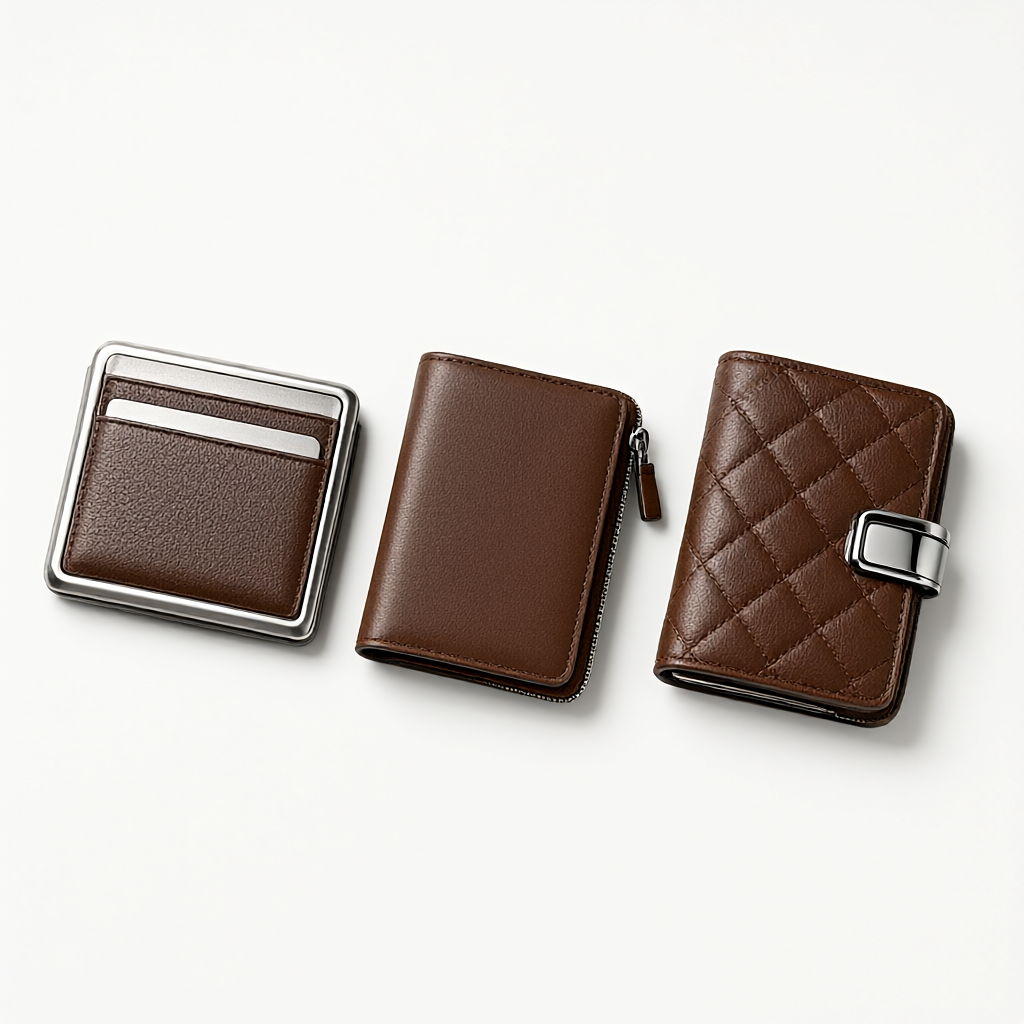
Safeguard wallets follow the same basic dimension families as regular EDC wallets, just with added shielding layers that push each category slightly thicker. The typical ranges you’ll encounter:
| Category | Width | Height | Thickness |
|---|---|---|---|
| ID-only / Slim Clip | 80–90 mm | 50–65 mm | 6–10 mm |
| Minimalist Card Holder | 90–100 mm | 60–75 mm | 10–15 mm |
| Standard Bifold | 110–120 mm | 95–105 mm | 15–22 mm |
| Travel / Money-Clip Compact | 95–105 mm | 70–80 mm | 12–18 mm |
Thickness is the hidden variable. An RFID-shielded aluminum wallet starts around 10–12 mm unloaded and grows with every card you add. Carbon fiber laminates tend to sit closer to 8–11 mm empty because the resin core is thinner than stamped metal. Leather bi-folds sit at the high end of the range simply because stitching and lining add bulk even when new.
If you’re switching from a traditional wallet to something marketed as a safeguard model, expect the footprint to shrink by roughly 15–25% in width and height. That trade-off is intentional — manufacturers trim corners to make room for Faraday-layer construction and anti-skim plating.
How Do You Measure for a Safeguard Wallet?
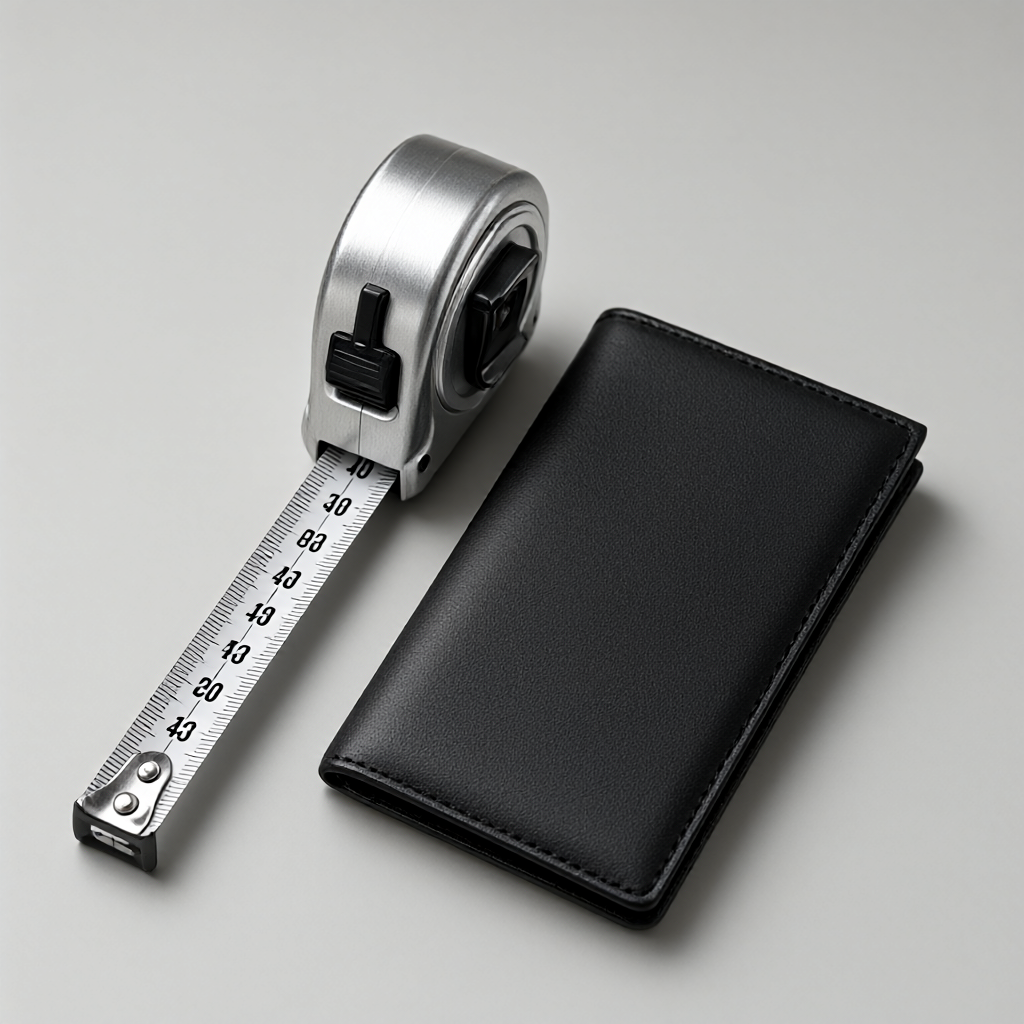
Proper measurement matters more here than with casual wallets because the security barrier itself changes the effective capacity. Follow this sequence:
1. Measure your existing wallet, not just the cards inside
Open your current wallet flat. Measure the longest side, the shortest side, and the closed thickness with the heaviest card load you normally carry. Use a digital caliper if possible; ruler estimates drift by 2–4 mm.
2. Stack your cards to measure total thickness
Lay every card you plan to carry on a table — credit cards, ID, transit pass, photo cards included — and measure the stack height. Metal cards are thicker than standard PVC. If your card stack exceeds 12 mm, most minimalist safeguard wallets will struggle to close comfortably.
3. Account for theRFID layer expansion
Every RFID-blocking insert adds 1.5–3 mm of thickness depending on the construction method (woven copper-nickel thread versus solid metal sheet). Subtract this margin from your max-tolerated pocket depth so you aren’t surprised at checkout.
4. Check your pocket geometry
Front pants pockets typically tolerate a wallet up to 14 mm thick before discomfort rises noticeably. Back pockets handle deeper profiles but create uneven sitting posture if the wallet is thicker than 18 mm. Jeans with tighter selvedge cuts may restrict insertion altogether regardless of measurements.
5. Simulate loading before committing
Once you pick a candidate, load it with your exact card set and watch how it sits in your pocket. A wallet that measures fine empty may bulge or twist once fully loaded. This field test beats any spec sheet.
For a detailed walkthrough of measuring width, height, and overall footprint, see our wallet size width and height guide, which covers caliper technique and pocket-fit validation.
What Standards Apply to Safeguard Wallets?
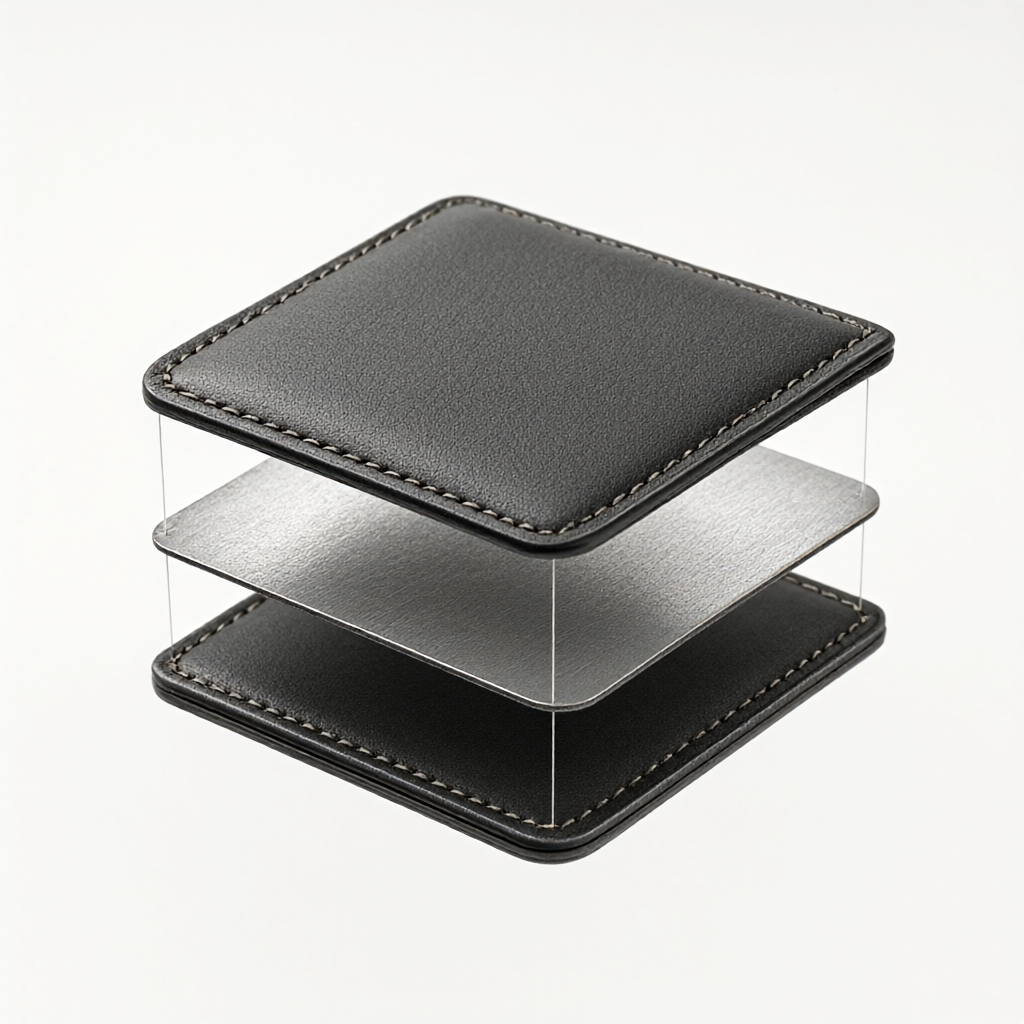
There is no single ISO standard titled “safeguard wallet,” but three regulatory and testing frameworks shape what buyers can legitimately claim:
RFID/NFC blocking performance. Test methods reference ASTM International protocols for electromagnetic shielding effectiveness. Independent labs commonly report insertion loss values; a usable safeguard wallet typically achieves ≥ 20 dB attenuation across the 13.56 MHz NFC band and ≥ 25 dB at 125 kHz for low-frequency RFID clones. When an insert reaches these thresholds, scanners reading beyond arm’s length become unlikely. Thinner woven meshes sometimes advertise blocking without meeting that floor, which is why third-party test reports matter more than marketing copy.
Material safety compliance. REACH and RoHS restrictions govern heavy metals and phthalates in metal finishes and laminates. For export into EU markets, SG-tested material documentation verifies compliance with restricted substance limits. These tests don’t affect wallet dimensions directly, but they do determine which surface treatments — anodized aluminum, colored resin, coated steel — are available for a given market.
Consumer protection disclosures. The FTC enforces truth-in-advertising rules that penalize unsubstantiated security claims. Phrases like “completely immune to skimming” or “zero tampering risk” cross the line unless backed by published test data. Legitimate listings describe performance in decibel ranges or frequency bands rather than absolute guarantees.
Will a Safeguard Wallet Fit My Pocket and Cards?
Fit depends on three variables: card count, profile tolerance, and closure style.
Card count and spacing. A standard 85.6 mm × 54 mm credit card leaves almost no margin for error in slim holders. Adding a second row or a money clip reduces usable slots by roughly two card positions compared with an open bifold of the same external dimensions. If you carry more than six cards regularly, a minimalist skin won’t solve capacity; you need either a structured bifold or a multi-slot holder with rigid spacers.
Pocket depth vs. wallet stack height. Most modern jean pockets seat at a comfortable midpoint when the stack is under 15 mm. Between 15 and 20 mm, the wallet starts digging into the thigh when you sit. Above 20 mm, consider switching to a back-pocket carry position or choosing a larger exterior case. This threshold shifts slightly depending on fabric stretch — elasticated waistbands accommodate deeper stacks better than rigid denim.
Closure and access trade-offs. Snap-button bi-folds protect contents mechanically but require two hands. Strap-secured clammers are faster to open but depend on strap tension wearing out over time. Locking mechanisms — the kind found on some travel-oriented safeguard models — add security but also weight. For day-to-day urban use, a passive metal plate shield offers the best balance: no moving parts to fail, minimal added friction, and reliable blocking as long as the plate remains continuous around the card slot edges. Gaps larger than 5 mm near the top edge can create weak spots where scanners still reach.
For more context on how different styles compare beyond sheer size, check our minimalist wallets overview, which walks through the common configurations people choose when downsizing from traditional wallets.
Safeguard Wallet Size Chart and Selection Reference
Use this matrix to match your carry habits to a size tier:
| Carry Profile | Recommended Type | Typical Dimension Range | Max Cards | Notes |
|---|---|---|---|---|
| Essential ID + 2 cards | Slim money clip | 85 × 55 × 8 mm | 4–5 | Best for jeans front pocket |
| Daily commute, 5–7 cards | Minimalist card holder | 95 × 65 × 11 mm | 7–9 | Add passport slot option |
| Occasional traveler, mixed bills | Compact bifold | 105 × 75 × 14 mm | 10–12 | Fold-over protection keeps contents secure |
| Heavy carry or cash preference | Full-size bi-fold | 115 × 100 × 18 mm | 16–20 | Look for gusseted side panel for bills |
| Maximum theft deterrence | Locking hybrid | 100 × 70 × 12 mm | 6–8 | Secure closure + RFID plate recommended |
Each row represents a starting point, not a ceiling. Individual models vary by brand, and custom machining can adjust any dimension within material limits. When browsing online product pages, verify whether the listed thickness includes or excludes the RFID shield — some vendors quote empty thickness and add 2–3 mm once the block is installed.
Related Considerations for Choosing the Right Safeguard Wallet
Beyond raw dimensions, a few less obvious factors determine whether a safeguard wallet will serve you well over years of daily carry.
Longevity of the RFID layer. Woven shielding threads degrade faster than solid metal plates. After 12–18 months of frequent flexing in a tight pocket, thin mesh inserts can develop micro-tears at fold lines, reducing effective coverage in localized zones. Metal plates maintain blocking integrity far longer. If longevity matters, prefer single-piece machined shields over layered fabrics.
Slim-profile naming confusion. The phrase “skinny wallet” appears in many search results, but sizes vary wildly by seller. Some vendors use it for genuine ultra-thin clips; others apply it to padded leather folios that sit at 20 mm. Always read the stated dimensions rather than relying on the adjective. Matching the phrase “skinny big wallet” or “sliding 2 in 1 wallet” to actual measurements prevents surprise when the product arrives.
Money-clip integration point. Many safeguard wallets combine a card shell with an interchangeable cash strap. Evaluate how firmly the clip grips the bill bundle — a loose grip causes notes to shift and protrude, defeating the streamlined profile. CNC-machined titanium clips with knurled inner faces generally provide stronger hold than stamped steel variants.
Weight distribution in the pocket. Dense metal wallets feel heavier per millimeter of thickness than polymer-composite designs. A 90 g aluminum wallet packed to 12 mm may sit more noticeably than a 65 g carbon fiber version at the same footprint. If front-pocket comfort is a priority, target the lighter composite construction instead of maximizing card capacity alone.
When you’re ready to review RFID-tested protection options and compare models against these fit criteria, our RFID-protected wallets buyer guide breaks down testing approaches, material differences, and common size ranges across popular categories.
As a manufacturer, our approach to sizing a safeguard wallet centers on balancing card capacity against pocket depth, then building the RF shielding layer into that envelope without forcing the pocket to adapt to the wallet. We machine inserts from solid sheets rather than relying on adhesive foils, because layered foils peel and tear along fold lines over time. Our tooling accommodates standard card widths while allowing small adjustments for passport-style IDs or wider transit passes. Buyers looking for OEM production should share their target pocket depth, preferred card count, and closing timeline early so we can dimension the cavity and shield placement before samples ship.
What Is the Standard Size System for These Wallets?
The industry groups safeguard wallets into four size families, each aligned to a card-count band and pocket profile:
Size Tier 1 — Slim Money Clip (80–90 × 50–65 × 6–10 mm)
Holds 2–5 cards plus a cash strap. Ideal for front-pocket carry in slim-fit jeans. Empty weight typically 45–70 g.
Size Tier 2 — Minimalist Card Holder (90–100 × 60–75 × 10–15 mm)
Holds 5–9 cards with optional passport slot. The most popular category for daily urban carry. Weight range 60–95 g.
Size Tier 3 — Compact Bifold (105–115 × 75–95 × 14–18 mm)
Holds 10–14 cards plus folded bills. Suitable for travelers who want RFID coverage without switching to a bulky folio. Weight 90–140 g.
Size Tier 4 — Full-Size Bi-fold (115–125 × 95–105 × 18–22 mm)
Holds 16–20 cards with gusseted bill compartment. Best for users transitioning away from traditional long wallets who still need maximum capacity.
Each tier’s external dimensions are measured flat (unfolded) unless stated otherwise. Internal card-slot width follows the ISO/IEC 7810 ID-1 standard (85.60 × 53.98 mm), so any wallet claiming compatibility with standard credit cards must accommodate at minimum this footprint with ~1–2 mm clearance per slot.
Specification Comparison Matrix by Material
Material choice drives not only aesthetics but also shielding performance, weight, and unit cost. The matrix below shows typical specifications across the three most common safeguard wallet construction materials:
| Spec | Aluminum Alloy (6061-T6) | Carbon Fiber (G10 Laminate) | Titanium (Grade 2) |
|---|---|---|---|
| Density | 2.7 g/cm³ | 1.6 g/cm³ (approx.) | 4.5 g/cm³ |
| Empty wallet weight (Tier 2) | 65–85 g | 50–70 g | 90–120 g |
| RFID attenuation (13.56 MHz) | 22–28 dB | 18–24 dB (plate-dependent) | 25–32 dB |
| Throat corrosion resistance | Moderate (anodized) | Excellent | Excellent |
| Surface finishing options | Anodized (any Pantone), bead-blast, polished | Natural black, dyed, UV-printed | Bead-blast, brushed, polish |
| CNC machinability | Excellent | Good (requires diamond tooling) | Fair (hard on tooling) |
| Typical MOQ | 300 pcs | 100 pcs | 100 pcs |
| Sample lead time | 5–7 business days | 5–7 business days | 7–10 business days |
| Unit price bracket (OEM, 500 pcs) | $8–18 | $10–22 | $18–35 |
| Relevant hardness | ~95 HB (T6 temper) | N/A (composite) | ~160 HV |
These figures represent typical ranges observed across contract manufacturers serving the EDC market. Actual values depend on alloy grade, laminate layup schedule, plate thickness, and whether the RF shield is a full-enclosure Faraday cage or a single-side insert. Buyers should request material certificates (Mill Test Reports for aluminum/titanium, MSDS for carbon fiber resins) before placing bulk orders.
Supplier Qualification Checklist for RFID-Blocked Wallets
When evaluating potential OEM or ODM partners, ask these questions before signing a production agreement:
- [ ] Can you provide third-party test reports from an accredited lab (e.g., SGS, Intertek, TÜV) showing insertion loss at both 125 kHz and 13.56 MHz?
- [ ] What dB range is independently verified, and was testing performed per ASTM A1332 or equivalent electromagnetic shielding protocols?
- [ ] Which aluminum alloy grade do you use for the shield plate — 6061, 5052, or 3003 — and can you supply a Mill Test Report?
- [ ] Do you offer ISO/IEC 14443-A and ISO/IEC 15693 frequency-range verification, and what test equipment do you use (e.g., network analyzer, calibrated probe)?
- [ ] What is your MOQ per SKU, and does it differ between aluminum, carbon fiber, and titanium constructions?
- [ ] What is your sample lead time, and is sampling free or chargeable against the bulk order?
- [ ] Do you hold ISO 9001 certification for your quality management system, and can you share your most recent audit summary?
- [ ] Are your materials REACH and RoHS compliant for EU export, and do you provide SG-tested material documentation?
- [ ] Can you support Amazon FBA prep (polybagging, barcoding, carton labeling) and drop-shipping fulfillment?
- [ ] What is your on-time delivery rate over the past 12 months, and do you publish a production calendar with buffer capacity?
- [ ] Can you produce private-label packaging — retail boxes, hang tags, insert cards — to our branding guidelines?
- [ ] What warranty or replacement policy applies if a batch fails incoming inspection or shield attenuation drops below agreed thresholds?
A responsive manufacturer will answer every item above with documented evidence, not marketing assurances. Vague replies such as “yes, we block RFID” without decibel figures or lab report references should be treated as a red flag.
Brand Spotlight: How TOP EDC Wallet Approaches Sizing and Shielding
In the last third of this guide, we shift from general buyer education to a practical look at how a contract manufacturer structures its safeguard wallet program — specifically, TOP EDC Wallet, a specialist in minimalist EDC wallets and pocket gear with 13+ years of export experience serving brands, Amazon sellers, and distributors across America, Europe, Australia, and Southeast Asia.
Their approach mirrors the framework outlined above: they start from the buyer’s pocket depth and card-count targets, select an appropriate material tier (aluminum 6061-T6, G10 carbon fiber laminate, or Grade 2 titanium), machine the RF shield as a continuous plate rather than relying on adhesive foil inserts (which peel along fold lines after repeated flexing), and verify shielding performance through third-party lab testing before samples ship.
Key procurement parameters typical of their OEM/ODM operations:
| Parameter | Range |
|---|---|
| MOQ | 300 pcs per SKU |
| Sample lead time | 7 business days |
| Bulk production lead time | 20–30 business days (depends on quantity and finish) |
| Certifications on file | ISO 9001, BSCI audited facility, REACH/RoHS compliant materials, SGS-tested |
| Factory capacity | 500K+ units monthly across 50,000 sq ft facility |
| Customization scope | Logo laser engraving, UV printing, anodized colors, custom packaging, FBA prep |
| Target clientele | 200+ brands worldwide — EDC label owners, promotional product distributors, corporate gift buyers |
Their service model covers the full OEM/ODM spectrum: concept sketch to tech pack, in-house CNC machining for metal components, laser engraving and surface finishing, and final QC checking attenuation values against agreed test reports. Buyers who already have design files can move straight to sampling; those starting from scratch receive guidance on dimension trade-offs, material selection, and shielding geometry during the engineering review phase.
A safeguard wallet is a slim, security-focused pocket wallet that blocks unauthorized RFID/NFC scanning while securely organizing your cards and cash. For most daily carry, aim for a card holder sized 90–100 mm × 60–75 mm with 10–15 mm thickness, an aluminum or titanium body with ≥20 dB attenuation at 13.56 MHz, and an MOQ-ready OEM partner who can custom-size the cavity to your exact card stack.
How Do You Choose a Safeguard Wallet?
Choosing a safeguard wallet comes down to five decisions made in order:
Step 1 — Define what you’re safeguarding. If your priority is preventing contactless skim reading, focus on wallets with verified ≥20 dB attenuation at 13.56 MHz and ≥25 dB at 125 kHz. If anti-theft bulk deterrence matters more, prioritize locking closures and reinforced corners over shielding alone.
Step 2 — Audit your card stack. Lay every card you carry daily flat. Count them. Measure the thickest stack with a digital caliper. Metal cards run ~0.85 mm; standard PVC runs ~0.76 mm. If your total exceeds 12 mm unloaded, a minimalist clip won’t close comfortably — you’ll need a structured bifold or a holder with rigid spacers.
Step 3 — Match to pocket geometry. Front jeans pockets tolerate up to ~14 mm before discomfort rises sharply. Back pockets handle 14–18 mm. Anything thicker pushes toward a dedicated organizer case. Use this rule of thumb: your wallet should never protrude past the pocket lip when seated.
Step 4 — Select material by trade-off. Aluminum offers the best cost-to-weight ratio and machines cleanly for tight tolerances. Carbon fiber reduces empty thickness by 1–2 mm compared with stamped aluminum. Titanium delivers premium feel and corrosion resistance at roughly double the unit cost.
Step 5 — Validate before bulk ordering. Request a pre-production sample loaded with your exact card set. Verify closure function, RFID shield continuity (no gaps >5 mm near slot edges), and pocket-drag comfort after 48 hours of wear. This single test prevents 90% of post-order disputes.
What Is Safeguard Wallet? — Core Definition Clarified
The term safeguard wallet has two distinct meanings depending on context:
| Context | Meaning | Key Feature |
|---|---|---|
| Everyday Carry (EDC) / Physical | Slim RFID-blocking wallet with anti-skim shielding | Faraday-layer or metal plate, compact footprint |
| Cryptocurrency Security | Digital storage for private keys (cold/hot wallets) | Hardware device or software app, seed phrase management |
This guide focuses on the first definition — the physical EDC product — because the source keywords (sliding 2 in 1 wallet, skinny big wallet, RFID skimming protection wallet) clearly target consumer wallet shoppers. Cryptocurrency “wallet” terminology appears in SERPs because the word shares etymology, but the purchase intent here is pocket-carry, not blockchain key custody.
When researching online, verify which meaning a result targets by checking product images. A safeguard wallet for physical use will show metal or carbon-fiber construction, card slots, and money clips — not USB form factors or QR-code interfaces.
3. Account for the RFID layer expansion
Every RFID-blocking insert adds 1.5–3 mm of thickness depending on the construction method (woven copper-nickel thread versus solid metal sheet). Subtract this margin from your max-tolerated pocket depth so you aren’t surprised at checkout.
Procurement Framework: RFQ Template, Supplier Checklist & Bulk Pricing
Buying safeguard wallets at volume requires a structured request process. Procurement managers should include these elements in every RFQ sent to potential OEM partners:
RFQ Template — Required Fields
| Field | Example Value | Why It Matters |
|---|---|---|
| Target dimensions (W×H×T) | 95 × 65 × 11 mm | Defines cavity tooling |
| Card-count range | 6–8 cards | Drives slot layout |
| Shielding spec | ≥20 dB @ 13.56 MHz, ≥25 dB @ 125 kHz | Validates performance claims |
| Material | 6061 aluminum, anodized black | Affects cost and finish |
| Logo method | Laser engraving, depth 0.1 mm | Determines post-processing step |
| Packaging | Retail blister + master carton | Impacts per-unit shipping weight |
| Sample lead time required | ≤ 7 business days | Aligns with production scheduling |
| Trial order qty | 300 pcs | Confirms MOQ flexibility |
| Mass order qty | 1,000–5,000 pcs/mo | Triggers tiered pricing |
| Target FOB price | $8–12 USD/unit | Sets negotiation anchor |
Supplier Evaluation Checklist
Use this binary checklist during vendor scoring. Each “yes” = 1 point; target ≥ 8 points before awarding pilot production.
- [ ] ISO 9001 certified facility (or equivalent QMS documented)
- [ ] BSCI or equivalent social-compliance audit on file
- [ ] In-house CNC machining capability (not outsourced)
- [ ] Third-party EMC test report provided (preferably from SGS, TÜV, or Intertek)
- [ ] MOQ ≤ 300 pcs for trial runs
- [ ] Sample turnaround ≤ 7 days
- [ ] REACH/RoHS compliance documentation available
- [ ] Drop-shipping / FBA prep capability listed
- [ ] Reference accounts from North American or EU buyers
- [ ] Clear IP-protection NDA process
Bulk Pricing Negotiation Guidance
OEM safeguard wallet pricing typically follows this tier structure based on annual volume commitments:
| Annual Volume | Unit Price Range (USD) | Notes |
|---|---|---|
| 100–500 pcs | $18–28 | Startup / prototype tier, higher per-unit tooling amortization |
| 500–2,000 pcs | $12–18 | Sweet spot for Amazon FBA sellers scaling up |
| 2,000–10,000 pcs | $8–14 | Volume discount applies; consider negotiating free tooling |
| 10,000+ pcs | $6–10 | Full production optimization; expect exclusive color/finish options |
Negotiation levers that move price:
- Pre-paying tooling costs in exchange for a 10–15% unit discount on the first 1,000 pieces
- Consolidating SKUs — fewer color/size variants mean less changeover downtime
- Committing to a 12-month rolling forecast instead of sporadic reorder bursts
- Accepting standard packaging rather than custom retail boxes (saves $0.80–1.50/unit)
Always request a line-item breakdown separating tooling, material, finishing, assembly, and packaging. Vague quotes hide margin padding.
Top EDC Wallet — Manufacturer Perspective
We’ve spent over a decade refining these processes — establishing ourselves as a specialist in minimalist EDC wallets since 2014, operating out of a 50,000 sq ft facility with 500K+ monthly production capacity. Our ISO 9001 and BSCI certifications reflect the quality discipline we bring to every order, whether it’s 300 pieces or 10,000. We serve brands across America, Europe, Australia, and Southeast Asia, and we’re happy to walk through your specs before you commit to tooling.
Sources & References
- ASTM International — www.astm.org
- FTC — www.ftc.gov
- minimalist wallets guide — topedcwallet.com
- wallet size width and height — topedcwallet.com
- minimalist wallets overview — topeddcwallet.com
- RFID-protected wallets buyer guide — topedcwallet.com
- TOP EDC Wallet — topedcwallet.com
- Get a Free Quote → — topedcwallet.com
From article to product
Turning this into a product?
Most of what is written here is the difference between a sample that works and one that does not. We can build either — the useful one costs the same.
Keep reading
More on buying guides
wallet with trigger
How Does a Trigger Wallet Work? What Is the Pop-Up Mechanism? The core of…
Readbest bifold wallet for women
What Is a Bifold Wallet? The term “bifold” refers to the fold: the wallet…
ReadMen’s trifold wallets with zipper compartments vs. bifold
At a Glance The three dominant men’s wallet formats differ in panel count, depth,…
Read
About the author
TOPWALLET Editorial Team
TOPWALLET's editorial and engineering desk writes from bench testing at the Shenzhen (Longgang) facility: pull-force and cycle testing, 13.56 MHz shielding measurements, finish trials and factory audits, rather than supplier spec sheets. Every specification in these guides is one we write on a purchase order.
Written on the floor
This article was written by our production and QC team — the people who spec tolerances, run the finishing line and inspect every batch. Where it states a capacity, a pull force or a lead time, it comes from a measurement we made, not a supplier’s catalogue. If a number here disagrees with what your own supplier told you, tell us; several of these articles started as a correction from a buyer.
See how the factory works · Inspection process · Sourcing FAQ
Turning this into a product?
Most of what is written here is the difference between a sample that works and one that does not. We can build either — the useful one costs the same.