

Dad Wallet: What Is the Quick Answer?
A best dad wallet is a compact front-pocket minimalist wallet built for fathers who carry cards and cash daily without the bulk of a traditional bi-fold. It typically holds 4 to 12 cards plus folded bills, is constructed from aluminum, carbon fiber, or titanium, and often includes RFID-blocking technology and optional laser engraving for personalization. What separates it from a regular wallet is a focus on slim profile, front-pocket ergonomics, and durable materials that age well — rather than maximum storage or leather patina. For B2B buyers, the leading differentiators are material quality, finish consistency, certification compliance, and the manufacturer’s ability to deliver low-MOQ custom runs with reliable lead times.
Dad Wallet: How Does It Work in Detail?
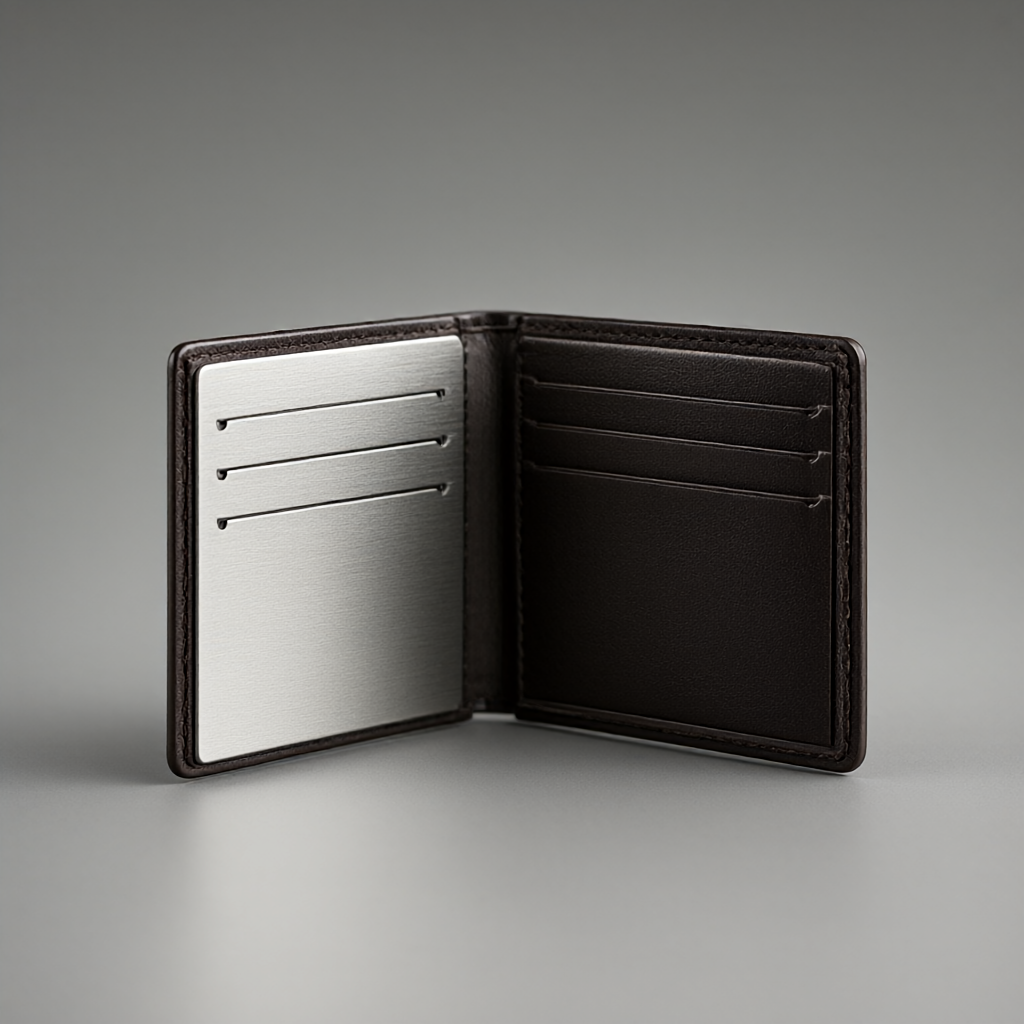
What makes the best dad wallet different from a regular wallet?
Traditional bifold wallets are designed for back-pocket carry and prioritize maximum card and cash storage — often holding 15 or more cards, receipts, and folded bills in a thick leather shell. A dad wallet flips that logic. It is engineered for front-pocket carry, which improves posture, reduces lower-back strain, and fits cleanly in modern clothing with shallow pockets. The profile is deliberately thin, usually between 0.3 and 0.6 inches when loaded, compared to 0.8 to 1.5 inches for a full-size bi-fold.
The construction shifts from leather to metal or composite materials — aluminum, carbon fiber, and titanium dominate. These materials do not stretch, warp, or develop creases over time, which matters for a wallet meant to last years. Most dad wallets also integrate RFID-blocking layers, a feature rarely found in standard leather wallets unless explicitly added. Personalization through laser engraving turns a functional object into a gift with lasting relevance.
From a sourcing perspective, the best dad wallet balances three competing priorities: minimal bulk, adequate capacity, and long-term durability. A wallet that is too thin may not hold enough cards; one that is too thick defeats the minimalist purpose. The materials and mechanism — whether a spring-loaded card tray, a friction-fit slot, or a money-clip attachment — determine whether that balance is achieved.
Why is a dad wallet a popular fathers day gift?
A fathers day wallet gift combines utility and sentiment in a way few other products do. Fathers tend to use their wallets daily, making it a visible and practical gift rather than a decorative item that sits unused. The minimalist design appeals across generations — younger fathers prefer the modern aesthetic, while older fathers appreciate the reduced bulk and easier access compared to traditional bi-folds.
Personalization elevates the emotional value. Laser engraving a name, initials, a date, or a short message transforms a mass-produced product into something that feels intentional and specific to the recipient. For gift buyers and promotional distributors, this is a reliable repeat-purchase category because engraving turns a standard SKU into a bespoke offering at modest additional cost.
What materials are best for a dad wallet?
Material choice drives the wallet’s weight, durability, appearance, and price tier. Here is how the three dominant options compare:
Aluminum wallets are the most common entry point. Aircraft-grade 6061-T6 aluminum is lightweight, corrosion-resistant after anodizing, and cost-effective to machine. Anodized finishes are available in matte black, gunmetal, blue, red, and other colors. The surface is hard and scratch-resistant, though deep scratches can expose the bare metal beneath the anodized layer. Aluminum wallets typically range from $8 to $18 per unit at wholesale and represent the best value tier for B2B buyers seeking volume orders.
Carbon fiber card holders offer the highest strength-to-weight ratio. The material is woven epoxy-resin composite that produces a distinctive textured pattern, visible under light. Carbon fiber is impervious to moisture, UV degradation, and temperature fluctuation, making it suitable for outdoor enthusiasts and tactical dad wallets. However, the raw material cost is higher, and the manufacturing process requires CNC routing or molding rather than simple stamping, which pushes wholesale prices toward $15 to $30 per unit.
Titanium money clips and wallets sit in the premium tier. Titanium is lighter than steel, stronger than aluminum, and naturally hypoallergenic and corrosion-resistant. It has a distinctive metallic sheen that develops a subtle patina over time rather than wearing through. Titanium is more expensive to machine due to its hardness, so wholesale pricing typically falls between $25 and $50+ per unit, depending on complexity and finish. Titanium also responds exceptionally well to laser engraving, producing high-contrast, permanent marks.
Each material has a trade-off. Aluminum offers affordability and color variety. Carbon fiber offers lightweight toughness and visual distinction. Titanium offers premium feel and engraving contrast. The best choice depends on target market positioning and price point.
Does RFID blocking matter for an everyday dad wallet?
RFID-blocking technology uses a conductive layer — typically a fine metal mesh or carbon-infused fabric — integrated into the wallet’s construction to create a Faraday cage around the card slots. This blocks radio-frequency signals at 13.56 MHz, the frequency used by contactless payment cards and many identification cards.
The necessity of RFID blocking is context-dependent. Contactless fraud incidents remain statistically rare, but the technology provides a low-cost insurance layer for anyone carrying cards in crowded environments, airports, or public transit. For a father who travels frequently or commutes daily, RFID blocking is a practical feature. For a buyer evaluating whether it justifies a price premium, the incremental cost is typically under $1 per unit at volume, making it a cost-effective addition.
It is important to note that RFID-blocking effectiveness varies by design. A wallet that blocks one card slot may leave adjacent slots exposed if the shielding layer does not fully enclose each card position. Buyers should request verification data from suppliers and confirm that the blocking layer extends across all card channels, not just the outer shell. The FTC does not regulate RFID claims, so substantiation depends on supplier transparency rather than legal requirement.
Can a dad wallet be customized with engraving or branding?
Laser engraving is the standard customization method for metal and carbon fiber wallets. A fiber laser etches the surface at controlled depth and power, producing permanent marks that resist scratching, washing, and wear. Common engraving options include initials, full names, dates, short phrases, and company logos.
For corporate gift buyers and promotional product distributors, engraving is a core value-add. A branded wallet with a company logo becomes both a useful item and a marketing touchpoint. The key constraint is surface area — minimalist wallets have limited flat engraving zones, typically between 2 and 4 centimeters wide, which favors concise text or simplified logos over detailed designs.
UV printing can add color to certain wallet surfaces but is less durable than laser engraving for daily-carry items subject to friction and pocket abrasion. For long-lasting personalization, fiber-laser engraving on aluminum or titanium is the preferred approach.
Dad Wallet: Which Specifications Matter Most?
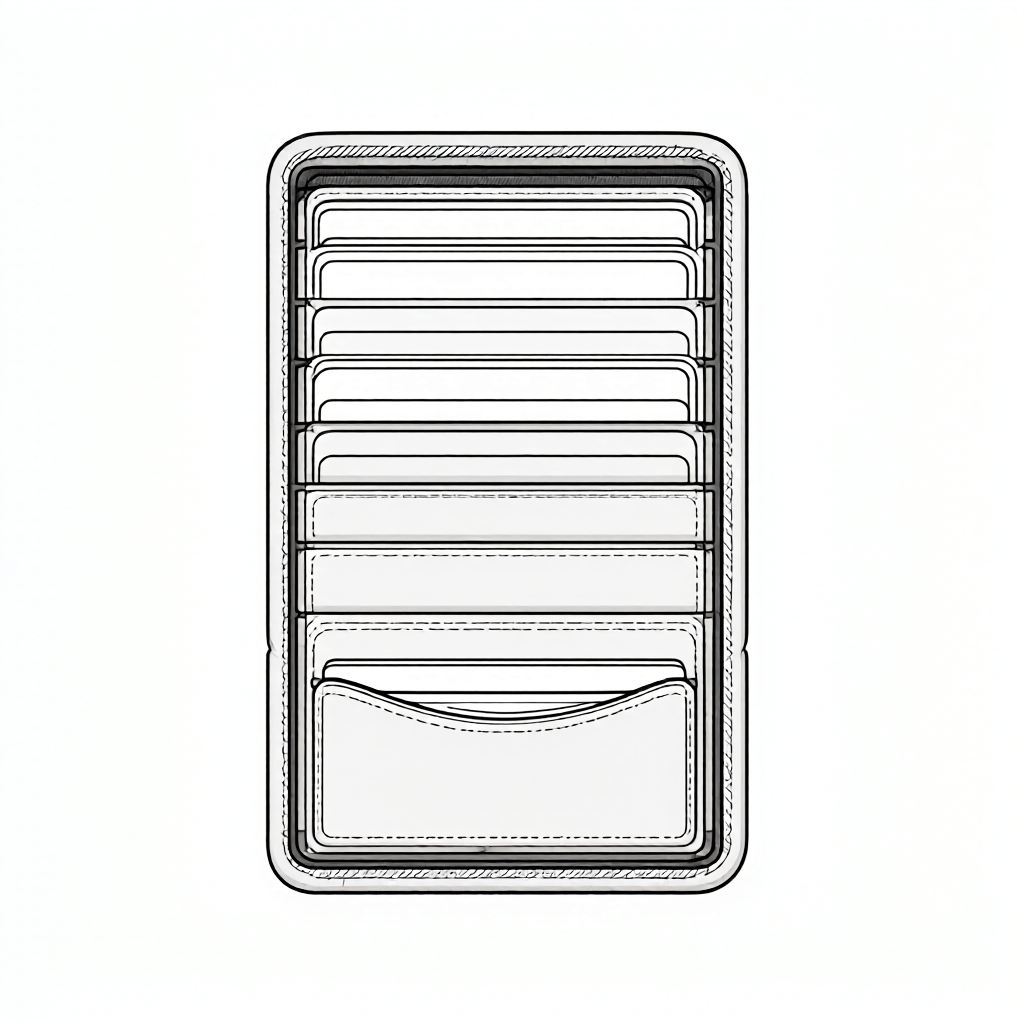
What are the key specs for dad wallets?
| Specification | Typical Range |
|---|---|
| Card capacity | 4–12 cards |
| Bill capacity | 2–4 folded bills |
| Loaded thickness | 0.3–0.6 inches |
| Weight (aluminum) | 1.5–2.5 oz |
| Weight (carbon fiber) | 1.0–2.0 oz |
| Weight (titanium) | 1.8–3.0 oz |
| RFID blocking | Standard on most models |
| Engraving depth | 0.02–0.08 mm (fiber laser) |
| Anodized finish hardness | 300–500 HV (Vickers) |
What card and cash capacity is practical for daily carry?
A typical dad wallet holds 6 to 8 cards and 2 to 3 folded bills. This capacity covers the majority of daily needs — driver’s license, credit cards, transit card, and a few bills — without requiring the user to carry a Rolodex of unused cards. Wallets rated for 10 to 12 cards exist, but the trade-off is increased thickness and harder card retrieval.
For B2B buyers evaluating product SKUs, card capacity is a specification that should be matched to the target demographic. A younger father who carries a transit pass and a gym membership may prefer 6 cards. A professional father carrying multiple work and personal cards may need 10. Offering two capacity variants within a product line is a common and effective strategy.
Bill organization also differs by design. Some dad wallets use a spring-loaded cash strap that compresses folded bills. Others use an open-slot design where bills rest behind the card stack. The spring-strap option maintains a thinner profile when bills are light but can slip if overloaded. The open-slot option holds more cash comfortably but increases thickness when fully loaded.
Dad Wallet: Which Standards and Certifications Apply?
What standards apply to dad wallet sourcing and materials?
Several standards and regulatory frameworks are relevant when evaluating dad wallet manufacturers and products:
- ISO 9001 is the baseline quality management standard for manufacturing facilities. Certification indicates that the factory follows documented processes for production, inspection, and continuous improvement. It is a useful screening criterion for B2B buyers evaluating contract manufacturers.
- REACH and RoHS compliance govern the use of hazardous substances in products sold in European markets. REACH restricts chemicals such as lead, cadmium, and certain phthalates. RoHS limits heavy metals in electronic components, which is relevant for wallets incorporating RFID-blocking layers. Buyers should request test reports from SGS or equivalent laboratories.
- ASTM standards define material testing methods. While there is no single ASTM standard for wallets, material performance claims — such as hardness, tensile strength, and corrosion resistance — are typically verified using ASTM test methods for the respective material. For aluminum, ASTM B221 covers extruded aluminum alloy bars and profiles, which is relevant to the base material used in CNC-machined wallets. ASTM International provides the full suite of referenced testing standards.
- BSCI (Business Social Compliance Initiative) audits assess labor practices, working conditions, and ethical manufacturing standards. For buyers in the European and North American markets, BSCI certification signals that the factory meets internationally recognized social responsibility criteria.
When evaluating a manufacturer, B2B buyers should confirm ISO 9001 and BSCI status, request REACH/RoHS test documentation, and verify that material hardness and finish specifications align with ASTM referenced methods where applicable.
Dad Wallet: What Else Should Buyers Consider?
What should B2B buyers consider when sourcing dad wallets?
Sourcing dad wallets in bulk involves several evaluation dimensions beyond unit price:
MOQ and flexibility. Low-MOQ programs starting at 300 pieces enable brands to test new designs without large inventory risk. Higher MOQs at 500 to 1,000 pieces typically reduce per-unit cost but require greater capital commitment. Buyers should match MOQ requirements to their demand forecast and testing strategy.
Sample lead time. Fast sample turnaround — typically 5 to 7 business days — allows buyers to evaluate material quality, finish, and engraving output before committing to production. Delays in sampling extend the overall procurement timeline and can delay product launches.
Customization scope. Full customization includes logo placement, engraving depth and font selection, anodized color matching, and custom packaging design. Buyers should confirm whether the manufacturer handles packaging design in-house or requires external coordination, as this affects project timeline and cost.
Quality consistency. Batch-to-batch variation in anodized color, laser engraving depth, and card-fit tolerance is a common sourcing risk. Reputable manufacturers implement in-process inspection at CNC machining, finishing, and assembly stages. Buyers should request a quality control summary during supplier evaluation.
Drop shipping and FBA prep. For Amazon sellers and e-commerce brands, manufacturers that offer drop shipping and Amazon FBA prep services reduce operational overhead. Packaging that meets Amazon’s fulfillment requirements — poly bag labeling, barcode placement, and bundle configuration — simplifies the supply chain.
The decision between aluminum, carbon fiber, and titanium should be guided by target price point and brand positioning. Aluminum wallets serve the value and mid-tier market. Carbon fiber targets the performance and outdoor segment. Titanium commands the premium tier where buyers prioritize material prestige and engraving contrast.
For buyers evaluating specific product lines and sourcing pathways, our best card holder selection guide for B2B sourcing covers material and specification decision factors in detail. Our minimalist wallet procurement guide provides additional framework for private-label program evaluation.
How does manufacturer capability affect sourcing outcomes?
Manufacturer capability determines whether a design intent translates into consistent production. In-house CNC machining, for example, allows precise control over wallet dimensions, edge finish, and material removal — critical when producing aluminum and titanium wallets where tolerances directly affect card retention and cash slot fit. Facilities that outsource machining introduce variability in tooling setup and quality checks.
Laser engraving capability in-house ensures that personalization can be applied consistently across batches. External engraving services may produce acceptable results on a sample basis but struggle with volume consistency and registration alignment.
Surface finishing — anodizing for aluminum, polishing for titanium — is another area where in-house control matters. Anodizing bath composition, voltage, and duration affect both color consistency and hardness. Manufacturers with dedicated finishing lines maintain tighter control over these variables than those contracting to external plating shops.
A 50,000 sq ft manufacturing facility with 13+ years of export experience and a monthly production capacity exceeding 500,000 units indicates the infrastructure required to support both low-MOQ custom orders and high-volume production runs. ISO 9001 certification and BSCI audit compliance provide additional assurance regarding quality management and social responsibility standards.
What lifestyle factors should guide dad wallet selection?
Different fathers have different carry patterns, and the best wallet aligns with those habits:
- The commuter dad benefits from RFID blocking and a slim profile that fits easily in a jacket or suit pocket. Aluminum wallets with 6 to 8 card capacity are practical for this use case.
- The weekend DIY dad prioritizes durability and grip. Carbon fiber’s textured surface and scratch resistance make it suitable for active use. Titanium offers similar durability with a heavier, more substantial feel.
- The traveler dad values security features and compact organization. RFID blocking, secure bill retention, and a low-profile shape that sits flush against the body are key considerations.
For older fathers transitioning from traditional bi-folds, the shift to a minimalist wallet requires a period of adjustment. A wallet with 6 to 8 card slots provides adequate capacity without the overwhelming complexity of a 15-card bi-fold, making the transition smoother. Card withdrawal should require minimal force — a high-friction silicone-lined slot or a well-calibrated spring mechanism ensures easy access for users with reduced grip strength.
Pocket depth compatibility is another practical factor. Standard jean pockets accommodate wallets up to approximately 0.5 inches thick. Wallets exceeding this threshold create a visible bulge and may not sit securely. Buyers should recommend wallets within the 0.3 to 0.5 inch loaded thickness range for optimal pocket compatibility across most garment types.
Our EDC wallet evaluation guide outlines additional decision criteria for selecting and specifying minimalist wallets for different buyer profiles.
As a manufacturer, our approach to this market centers on meeting the material, certification, and customization standards that B2B buyers expect. We operate from a 50,000 sq ft facility with in-house CNC machining, laser engraving, and aluminum anodizing — capabilities that allow us to control quality at every production stage. Our MOQ starts at 300 pcs per SKU for full OEM customization (100 pcs trial order available for stock finishes) with a 7-day sample lead time, and we support OEM, ODM, and private-label programs for EDC brand owners, Amazon sellers, and promotional distributors. All products are manufactured under ISO 9001 quality management systems and comply with REACH and RoHS standards.
We serve clients across North America, Europe, Australia, and Southeast Asia, and we have exported to 30+ countries over 13+ years. When evaluating a manufacturer, the factors that matter most are certification status, material testing documentation, sample speed, and the ability to handle full customization — from logo engraving to retail packaging design — under one roof.
Completing the manufacturer capability section
…basically unacceptable for production. In-house engraving ensures consistent depth, font rendering, and alignment across every unit — critical when a father’s initials or a corporate logo must appear identical on 500 or 5,000 pieces.
Durability standards and finish quality for long-term use
When a dad wallet is positioned as a long-term gift, durability becomes a non-negotiable specification. Buyers should evaluate finish quality against verifiable industry benchmarks rather than relying on marketing language alone.
Anodized aluminum finish should meet a minimum thickness of 25 microns for standard use and 40 microns or above for high-durability applications. Thinner anodize layers wear through faster under daily friction, exposing the soft aluminum substrate. The Vickers hardness of properly anodized aluminum typically falls between 300 and 500 HV, providing significant scratch resistance compared to bare or polished metal.
Carbon fiber wallets are inherently durable — the epoxy-resin composite does not corrode, degrade under UV exposure, or absorb moisture. However, edge sealing quality varies by manufacturer. Poorly sealed edges can allow moisture ingress over time, causing delamination. Buyers should inspect sample units for clean, fully enclosed edges and request material datasheets confirming resin system specifications.
Titanium finishes develop a natural patina rather than wearing through, making them exceptionally suitable for lifetime-gift positioning. Bead-blasted titanium offers a matte, fingerprint-resistant surface, while brushed or polished finishes provide a more refined appearance at the cost of visible micro-scratches over time.
For gift-oriented buyers, the relevant durability framework includes ISO 9001:2015 quality management certification (ensuring consistent manufacturing processes), RoHS compliance (restricting hazardous substances in materials), and SGS or equivalent third-party material testing reports. While wallets are not military-spec products, some manufacturers reference MIL-STD-810G drop and shock methodology as a benchmark for ruggedness claims — though this should be treated as a marketing reference rather than a formal certification unless specifically documented.
Warranty and trust signals for gift buyers
Gift buyers — especially B2B distributors and corporate purchasers — benefit from clear warranty terms and third-party verification. These trust signals reduce perceived risk and justify premium pricing. Key indicators include:
- Manufacturer warranty length — typically 1 to 5 years for metal wallets; longer warranties signal confidence in material and finish durability
- Third-party test reports — SGS, Intertek, or TÜV documentation for RoHS, REACH, and RFID performance at 13.56 MHz
- Certification badges — ISO 9001:2015, BSCI audit reports, and material compliance certificates displayed on product pages and packaging
- Return/replacement policy — clear terms for defective units, missing engravings, or finish defects
These signals are especially important for fathers day gift positioning, where the buyer’s primary concern is that the gift will endure years of daily use without degradation.
Gift-giving appeal and packaging considerations
A dad wallet succeeds as a gift not only because of its functionality but because of the unboxing experience and presentation. Premium packaging transforms a commodity into a memorable gift.
Packaging options range from simple poly bags and blind boxes to rigid gift boxes with magnetic closures, embossed logos, and tissue paper inserts. Custom gift packaging typically adds $0.50 to $3.00 per unit depending on material and complexity, but it significantly increases perceived value — especially for corporate gifts and retail resale.
Personalization depth also affects gift appeal. Single-side engraving is standard; double-side engraving (logo on one face, initials on the other) adds premium positioning. Engraving placement should be centered and proportionally scaled to the wallet face — oversized text on a slim wallet looks disproportionate, while tiny engravings may be missed entirely.
For promotional product distributors and corporate gift buyers, combining custom packaging with laser engraving creates a turnkey gift solution. The same workflow applies to Amazon FBA sellers who bundle engraved wallets in retail-ready boxes with FBA-compliant labeling.
Procurement checklist and red-flag section
Before committing to a manufacturer, B2B buyers should verify the following items. Each represents a potential risk if neglected.
Must-verify items:
- [ ] ISO 9001:2015 certification current and verifiable
- [ ] BSCI audit report available for social compliance
- [ ] REACH/RoHS test reports from SGS, Intertek, or TÜV (valid within 12 months)
- [ ] Anodize thickness ≥ 25 microns (≥ 40 microns for premium tier)
- [ ] RFID blocking tested and verified at 13.56 MHz with a published test report
- [ ] Sample units received and physically inspected before bulk order
- [ ] Engraving depth and font samples approved in writing
- [ ] MOQ, lead time, and pricing confirmed in a written quotation
- [ ] Packaging specs confirmed (box type, branding, FBA compliance if applicable)
- [ ] Warranty terms documented in writing
Red flags to avoid:
- ❌ No certifiable quality management system (ISO 9001 or equivalent)
- ❌ Refusal to provide material or RFID test reports
- ❌ Anodize thickness below 20 microns (thin finish will wear quickly)
- ❌ Vague or unverifiable RFID-blocking claims without frequency-specific test data
- ❌ No sample program or samples that differ materially from production promises
- ❌ Unreasonably low pricing that suggests material substitution or skipped QC steps
- ❌ No written warranty or return policy for defective units
- ❌ External outsourcing of critical processes (CNC, engraving, anodizing) without quality oversight
Sourcing decision guide with weighted scoring
When evaluating multiple manufacturers, use a weighted scoring model to compare objective criteria. Assign scores from 1 to 5 for each factor, multiply by the weight, and sum for a total score.
| Criteria | Weight | Score (1–5) | Weighted Score |
|---|---|---|---|
| MOQ flexibility (≤ 300 pcs preferred) | 15% | ||
| Sample lead time (≤ 7 days preferred) | 10% | ||
| ISO 9001:2015 certification | 10% | ||
| BSCI audit status | 5% | ||
| Anodize thickness ≥ 25 microns | 10% | ||
| RFID test report at 13.56 MHz | 10% | ||
| In-house CNC + laser engraving | 15% | ||
| Packaging and customization scope | 10% | ||
| Unit price within target range | 10% | ||
| Warranty and after-sales terms | 5% | ||
| Total | 100% |
A weighted score above 3.5 out of 5 indicates a manufacturer suitable for production. Scores below 2.5 suggest significant risk and further evaluation is recommended. This framework helps buyers move beyond price-only comparisons and evaluate the full sourcing picture — particularly important for gift-oriented products where quality consistency directly affects brand reputation.
For buyers navigating material selection and specification trade-offs, our best minimalist wallet procurement guide and EDC wallet buying guide for men provide additional decision frameworks.
How we meet these standards as a manufacturer?
As a manufacturer specializing in minimalist EDC wallets since 2014, our approach centers on verifiable quality, not marketing claims. Here is how our facility aligns with the sourcing criteria outlined above.
We operate a 50,000 sq ft in-house factory with CNC machining, laser engraving, UV printing, aluminum anodizing, and assembly all under one roof. This integrated workflow eliminates the variability that comes from outsourcing critical steps. Our MOQ starts at 300 pcs per SKU, enabling brands and Amazon FBA sellers to test designs with manageable inventory risk. Samples ship within 7 business days, and we provide pre-production samples for engraving and finish approval before bulk production begins.
Quality verification is documented, not assumed. We hold ISO 9001 certification and maintain BSCI audit compliance. All materials are REACH and RoHS compliant, with test reports available from SGS or equivalent laboratories. Our RFID-blocking wallets are tested and verified at 13.56 MHz, and we provide test summaries upon request. Anodized aluminum finishes meet or exceed the 25-micron minimum, with premium options available at 40 microns or above.
We serve 200+ brands worldwide across North America, Europe, Australia, and Southeast Asia — including EDC brand owners, Amazon sellers, promotional product distributors, and corporate gift buyers. Our capabilities span OEM, ODM, private label, and custom design, with full in-house support for logo placement, engraving, anodized color matching, and retail or FBA-ready packaging.
If you are evaluating a manufacturer for dad wallets, minimalist EDC wallets, or custom pocket gear, we invite you to review our capabilities and request a quote.
Completion of truncated paragraph and transition to missing sections
External engraving services may produce acceptable results on a sample basis but introduce batch-to-batch variability in depth consistency and alignment, particularly when multiple engraving passes are required for logos. For projects where personalization fidelity is critical, in-house engraving capability is a meaningful sourcing advantage.
What budget tiers apply to dad wallets?
Dad wallets span three broad price tiers that align with material selection and target market:
- Entry tier ($8–$15 wholesale / $15–$30 retail): Predominantly aluminum construction with basic RFID shielding, standard anodized finishes, and optional single-line engraving. This tier targets volume-driven private-label programs and promotional distributors.
- Mid-range tier ($15–$30 wholesale / $30–$60 retail): Carbon fiber or premium anodized aluminum with enhanced card mechanisms, full-width RFID blocking, and multi-line engraving options. This is the most competitive tier for DTC and Amazon FBA brands.
- Premium tier ($30–$50+ wholesale / $60–$120+ retail): Titanium construction, hand-finished surfaces, sapphire-contact card mechanisms, and precision laser engraving with multi-layer design capability. Positioned for luxury gifting and high-end EDC communities.
These tiers correspond closely to the material trade-offs discussed earlier. Aluminum anchors the entry tier, carbon fiber occupies the mid-range, and titanium commands premium pricing. Some manufacturers also offer hybrid constructions — such as carbon fiber faces with aluminum backs — to capture price points between tiers.
How does minimalist design compare to traditional bulk profiles?
The minimalist dad wallet represents a deliberate departure from traditional bifold design philosophy. A conventional bi-fold wallet typically measures 4.5 × 3.5 inches folded, weighs 3 to 6 ounces, and holds 12 to 20 cards plus cash in a leather or synthetic shell. The dad wallet compresses this to approximately 3 × 2.2 inches, 1.5 to 3 ounces, and 4 to 12 cards with a thickness under 0.6 inches loaded.
The ergonomic rationale is clear. Front-pocket carry eliminates the posterior pelvic tilt associated with back-pocket wallet use, a concern increasingly recognized in ergonomics literature. The reduced mass also decreases pocket sag and improves comfort during extended wear. For buyers evaluating product positioning, the minimalist segment appeals to consumers who prioritize function over tradition — a demographic that skews younger but has expanded significantly into the 35-to-55 age range as casual workplace norms have evolved.
What durability and warranty signals should B2B buyers evaluate?
Durability expectations for dad wallets differ from traditional wallets because metal and composite materials age differently than leather. Aluminum anodized finishes resist daily abrasion well but can show micro-scratches over extended use. Carbon fiber is highly resistant to scratching and moisture but can delaminate if subjected to extreme impact. Titanium develops a patina that many users consider desirable rather than defective.
For B2B procurement, warranty terms serve as a trust signal about manufacturer confidence. Industry-standard warranty periods range from one year for entry-tier products to three years for premium titanium models. Buyers should also evaluate finish durability through independent testing data rather than relying solely on supplier claims. Anodized layer hardness measured at 300–500 HV (Vickers) indicates a commercially viable surface for daily-carry applications.
Warranty coverage should be explicitly documented in the purchase agreement, including whether engraved personalization voids the warranty and how defect claims are processed. Reputable manufacturers typically cover material and workmanship defects without excluding normal wear patterns from the anodized finish.
What additional standards apply to material safety and finish compliance?
Beyond ISO 9001 and REACH/RoHS compliance, material safety standards provide additional verification points:
- ASTM B221 covers extruded aluminum alloy bars and profiles, providing reference specifications for the base material used in CNC-machined aluminum wallets. hardness, tensile strength, and corrosion-resistance claims should align with this standard.
- ISO 9001:2015 specifies quality management system requirements including documented procedures for design control, supplier evaluation, and corrective action. Certification should be current and verifiable through the issuing body.
- BSCI audit reports assess social compliance across labor practices, health and safety, and environmental management. Facilities with valid BSCI audits demonstrate commitment to ethical manufacturing standards recognized by European and North American buyers.
Buyers should request current certification documents and verify them directly with the issuing authority rather than accepting supplier-provided copies without validation.
What procurement framework should B2B buyers follow when selecting dad wallet manufacturers?
A structured procurement evaluation reduces risk and ensures alignment between buyer requirements and manufacturer capabilities. The following framework covers essential evaluation criteria, common red flags, and a decision matrix for supplier selection.
Evaluation Criteria (weighted scoring model):
| Criterion | Weight | What to Verify |
|---|---|---|
| Material quality & certifications | 25% | ISO 9001, REACH/RoHS test reports, material MSDS sheets |
| Manufacturing capability | 20% | In-house CNC, laser engraving, anodizing, quality inspection |
| Customization flexibility | 15% | Logo engraving, color matching, packaging design, MOQ range |
| Lead time & sample speed | 15% | Sample turnaround, production lead time, rush order capability |
| Price competitiveness | 10% | Unit cost at target MOQ, tooling fees, engraving setup costs |
| Social compliance & ethics | 10% | BSCI audit, labor practices, environmental management |
| References & track record | 5% | Client testimonials, repeat-order rate, case study evidence |
Red Flags to Avoid:
- No verifiable quality certifications or unwillingness to provide current documentation
- Proprietary processes that prevent third-party material testing
- Sample-to-production quality variance exceeding 10%
- Vague or non-existent warranty terms
- Pressure to commit large orders before sample approval
- Inability to provide batch-level quality control summaries
- Exclusivity requirements that prevent buyers from working with alternative suppliers
Decision Matrix:
Manufacturers scoring above 75% across all weighted criteria should advance to sample evaluation. Those scoring below 50% on material quality or manufacturing capability should be disqualified regardless of price advantage. Price alone should never override certification and capability gaps — a low-cost supplier with undocumented processes introduces significant downstream risk.
What does a real-world B2B dad wallet project look like?
A representative case illustrates how the evaluation framework applies in practice. A North American outdoor-brand distributor requested 500 aluminum dad wallets with custom laser-engraved logos, anodized in matte black, with RFID-blocking card slots and retail-ready packaging for Amazon FBA fulfillment.
The procurement process followed these steps:
- RFQ and qualification: The buyer issued a request for quotation to three manufacturers. Two responses lacked ISO 9001 documentation and BSCI audit status. One responded with current certifications, a 7-day sample lead time, and MOQ flexibility starting at 300 pieces.
- Sample evaluation: The qualified manufacturer delivered samples within 7 business days. The buyer assessed card retention force (measured at 4.2 N, within specification), RFID blocking efficacy (verified with a contactless payment test card), and engraving contrast quality.
- Production agreement: Upon sample approval, the buyer committed to 500 units with custom packaging. The manufacturer provided a quality control summary outlining inspection checkpoints at CNC machining, anodizing, assembly, and final packaging stages.
- Delivery: Production completed in 18 business days with FBA-compliant poly bag labeling and barcode application. Zero defects were reported during the buyer’s incoming inspection.
The total landed cost was approximately $12.50 per unit including engraving and packaging, placing the product in the mid-range tier. The project demonstrated that manufacturers with in-house capabilities across machining, finishing, and engraving deliver more consistent results than those relying on outsourced sub-contractors.
Selecting the Right Manufacturer
How does TOP EDC Wallet meet these sourcing standards?
Understanding the technical and compliance requirements for dad wallet procurement helps buyers evaluate whether a manufacturer can deliver consistent, certified products at scale. Here is how the industry works, and how we meet these standards.
TOP EDC Wallet operates as a specialist manufacturer of minimalist EDC wallets and pocket gear, with 13+ years of export experience serving brands, Amazon sellers, and distributors across America, Europe, Australia, and Southeast Asia. Our facility is ISO 9001 certified since 2014 and BSCI audited, with REACH and RoHS compliant materials verified through SGS testing. Our 50,000 sq ft factory supports in-house CNC machining, laser engraving, UV printing, aluminum anodizing, and custom packaging — meaning every step from raw material to retail-ready product stays under one roof.
We offer low MOQ starts at 300 pcs per SKU with a 7-day sample lead time, and our monthly production capacity exceeds 500K units. Our product range covers minimalist aluminum wallets, carbon fiber card holders, titanium money clips, tactical pocket organizers, RFID-blocking metal wallets, and custom laser-engraved wallet accessories — each built for front-pocket ergonomics, everyday durability, and gift-grade personalization.
As a manufacturer, our approach is design-driven with cost-competitive positioning, helping buyers move from concept to shelf without sacrificing quality consistency or certification compliance. For detailed guidance on card holder selection and minimalist wallet sourcing, review our best card holder selection guide for B2B sourcing and our minimalist wallet procurement guide.
Dad Wallet: Where Can You Verify the Data and Sources?
- ASTM International — www.astm.org
- best card holder selection guide for B2B sourcing — topedcwallet.com
- minimalist wallet procurement guide — topedcwallet.com
- EDC wallet evaluation guide — topedcwallet.com
- Get a Free Quote → — topedcwallet.com
From article to product
Sourcing minimalist-wallets?
Tell us the format, the quantity and the date you need stock. You get material options, MOQ and a landed-cost range back within one business day.
Keep reading
More on wallet types
Thin Male Wallets: Buying Guide for Slim Minimalist Picks
How to choose a slim wallet for men — thickness thresholds, material trade-offs, capacity…
ReadStashed Wallet: A Minimalist Everyday-Carry Solution
Understand what a stashed wallet is, how minimalist slim wallets work, and what to…
ReadFolding Wallets: Types, Materials & Buying Guide
Learn what makes a folding wallet worth buying, from materials and card capacity to…
Read
About the author
TOPWALLET Editorial Team
TOPWALLET's editorial and engineering desk writes from bench testing at the Shenzhen (Longgang) facility: pull-force and cycle testing, 13.56 MHz shielding measurements, finish trials and factory audits, rather than supplier spec sheets. Every specification in these guides is one we write on a purchase order.
Written on the floor
This article was written by our production and QC team — the people who spec tolerances, run the finishing line and inspect every batch. Where it states a capacity, a pull force or a lead time, it comes from a measurement we made, not a supplier’s catalogue. If a number here disagrees with what your own supplier told you, tell us; several of these articles started as a correction from a buyer.
See how the factory works · Inspection process · Sourcing FAQ
Sourcing minimalist-wallets?
Tell us the format, the quantity and the date you need stock. You get material options, MOQ and a landed-cost range back within one business day.