

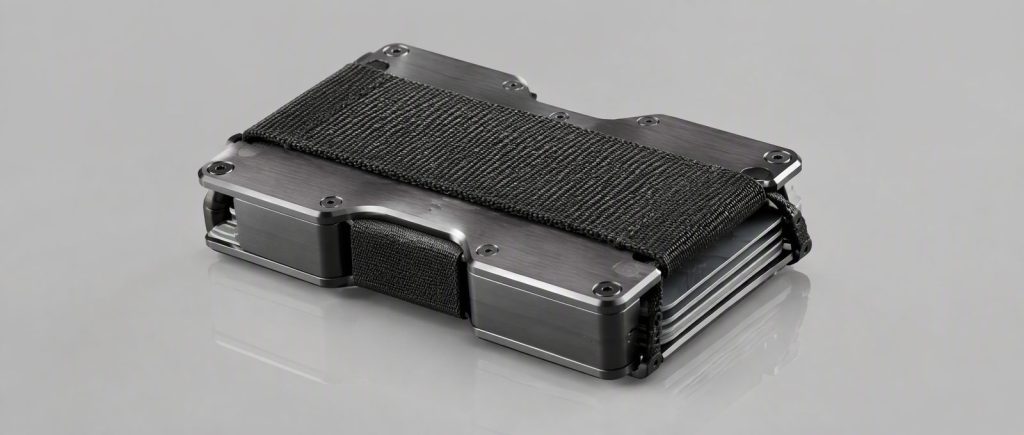
Short answer: Trayvax wallets are worth it if you want a hard-wearing, tactical-style metal wallet with real card capacity and a lifetime warranty. They’re not the thinnest wallets you can buy, and they won’t win a materials contest against a machined titanium unit at the same price. Choose Trayvax for durability and function-first design; choose a machined metal alternative if pocket profile and premium finish matter more.
We run a wallet factory in Dongguan and have handled thousands of metal wallets across brands, including units customers asked us to reverse-engineer for private-label programs. I’ll review Trayvax the way we’d review a competitor’s product on the bench: build, materials, card fit, magnet behavior, and what it tells you about the manufacturing behind it. If you’re evaluating this category to build your own brand, Ask Our Factory Team about OEM options first.
The Trayvax Lineup at a Glance
Trayvax sells five main wallet models plus accessories. The table below maps them the way a buyer would pick: what you carry and what you pay.
| Model | Material | Card Capacity | Weight (approx.) | Price Range | Best For |
|---|---|---|---|---|---|
| Element | 6061 aluminum + para-cord | Up to 12 | ~2.9 oz | $45–$60 | Everyday carry, outdoor, heavier card loads |
| Axis | Stainless steel / titanium | Up to 10 | ~1.6 oz | $55–$90 | Front pocket, magnet-assisted quick access |
| Summit | Titanium / carbon fiber | 6–8 | ~1.2 oz | $95–$135 | Lightweight premium carry |
| Contour | Stainless steel / titanium | 8 | ~2.2 oz | $60–$85 | Minimalist metal, full enclosure |
| Wallet 2.0 | Stainless steel | 8 + pen slot | ~2.5 oz | $80–$110 | Multi-tool EDC carry |
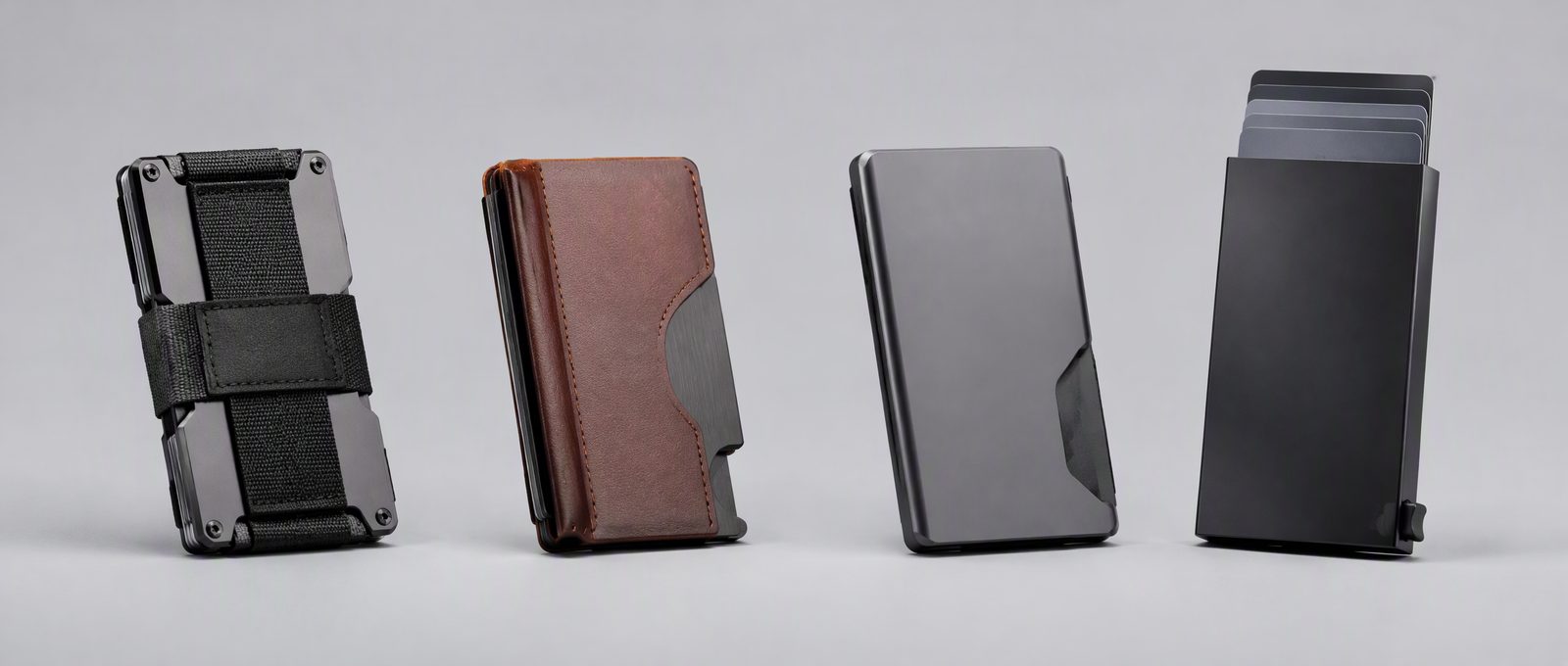
Exact dimensions and weights move slightly between generations, so check the Trayvax spec page before buying. The pattern holds across the lineup though: Trayvax favors function over featherweight design. That’s the trade you’re making.
Trayvax vs. the Alternatives: Where It Sits
Comparing Trayvax to its popular rivals is the fastest way to understand whether it’s the right buy. Each brand optimizes for a different trade.
| Dimension | Trayvax | Ridge | Bellroy |
|---|---|---|---|
| Positioning | Tactical durability | Minimalist metal icon | Premium leather-adjacent carry |
| Construction | Stamped/folded metal, screws, para-cord | CNC-machined aluminum/titanium | Leather + metal core |
| Card capacity | Up to 12 (Element) | 4–12 (with cash strap) | 4–12 |
| Cash carry | Money clip / strap options | Cash strap accessory | Full wallet designs |
| Aesthetic | Military, tool-like | Clean tech | Smart-casual |
| Warranty | Lifetime | Limited lifetime | 3 years (varies by product) |
| CFD/EDC community | Strong | Very strong | Niche |
If you’re deciding between these three, read our ridge wallet review and the ridge vs bellroy comparison side by side with this one. The practical summary: Ridge is the safer slim-metal default, Bellroy is the right call for leather and organized cash, and Trayvax is the pick if you carry more than six cards and drop things.
Build Quality and Materials: What the Bench Told Us
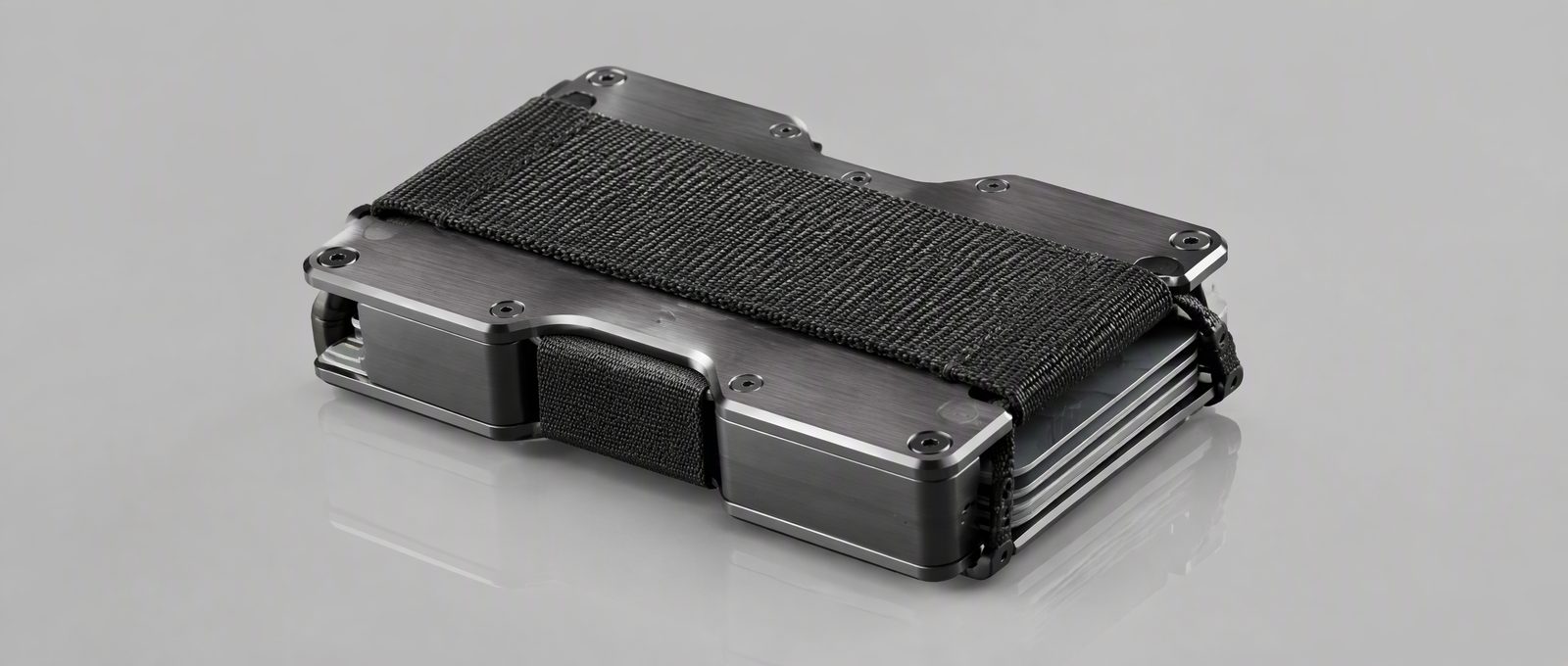
The Element is the model most people mean when they say “Trayvax.” It’s a stamped 6061 aluminum frame with a webbed para-cord closure that holds cards under tension. No hinges. No sliding mechanism. That’s actually the durability story: there’s almost nothing inside that can wear out, which is why the lifetime warranty is a believable claim rather than marketing copy.
The Axis takes a different route. It’s a folded stainless frame with rubber-strip card retainer and a spring-loaded thumb plate that ejects a stack — the closest Trayvax comes to a “gadget” wallet. The mechanism is simple enough that we’ve seen them survive years of desk-drawer abuse. The magnet holds the wallet closed against gravity, but keep it away from hotel key cards and magstripe cards — same rule as any magnetic wallet. If magnet safety matters to you, our guide on does rfid damage your cards covers what actually damages a magstripe versus what’s harmless.
One honest caveat from the bench: Trayvax’s stamped construction means visible edge lines and a slightly industrial finish. If you hold it next to a machined unit, you’ll feel the difference between a stamped part and a CNC-machined billet. That’s not a defect, it’s a cost decision — stamped parts scale cheaply, machined parts don’t. See metal wallet materials compared and metal vs leather vs carbon fiber wallet for what each process changes in cost and performance.
Card Capacity and Everyday Use
Trayvax’s real advantage is capacity. The Element comfortably holds 8–12 cards because the para-cord flexes, and it self-adjusts as your stack thins out. If you’re carrying a medical card, a transit pass, two bank cards, and a work badge, the Element does what a rigid metal frame can’t: it doesn’t force you to cull your wallet down to four cards.
There are two things to know before you commit:
- Cards with embossed numbers catch on the webbing when you reinsert them. Slide them in at an angle and it’s fine; ram them straight in and you’ll fight it.
- The para-cord tail gets comments. Some people love it as a grab point, others cut it off. It’s cosmetic either way.
Front-pocket carry works, but the Element is thicker than a Ridge or an Axis. If pocket profile is your #1 priority, you’re better off with a machined slim design — see our list of best slim wallets for measured options.
RFID and Card Safety
Trayvax lists RFID blocking on its newer metal models; the Element and Axis have shielding layers that damp contactless read attempts. It’s worth knowing the distinction, though: RFID blocking protects the chip from a skimmer close enough to read it, while the real everyday threat to a magstripe is physical wear and strong magnets. what is an rfid wallet explains the mechanism, and does rfid damage your cards answers whether the shielding itself hurts your cards. (It doesn’t.)
Trayvax vs. Ridge: The Question Everyone Asks
You’ve probably read the “Trayvax or Ridge” version of this debate. Here’s our direct take after working with both types in production:
- Ridge is the better object. Machined edges, tighter tolerances, more refined materials. Our ridge wallet review goes deep on it.
- Trayvax is the better tool for heavier carry and rough conditions. It costs less, holds more, and the damage surface (stamped metal) is cheaper to replace than a machined frame.
Neither is wrong. Ridge answers “what does the best slim metal wallet feel like?” Trayvax answers “what wallet survives everything and holds everything?” For the LEO, EMT, trades, and outdoor crowd, that purpose-driven design hits a specific chord.
What Trayvax Doesn’t Tell You (The Manufacturing Angle)
Here’s what a factory owner notices that most reviews skip. Trayvax is a US-designed brand, and like most consumer wallet brands, manufacturing is contracted out — some SKUs claim US assembly while components and finishing happen at partner factories. That’s how the whole industry works, and it’s how Trayvax keeps prices where they are.
It also explains the pricing math. A stamped aluminum frame, para-cord, screws, and assembly — at wholesale, that BOM is a fraction of retail. The expensive parts of a Trayvax are the brand, the warranty reserve, and the marketing. The same structure sits behind ridge wallet alternatives and bellroy alternatives.
If you’re a brand owner looking at the Trayvax formula and thinking “I could sell something like this under my own label,” you’re not wrong. That’s a standard OEM project: stamped metal frame, your logo, your packaging, your QC spec. The difference between a white-label wallet that fails in year one and one that survives is the QC system behind it. Our factory runs ISO 9001:2015 processes with four-stage inspection and AQL 2.5 sampling on every batch, serving 200+ brands at roughly 50,000 units a month. Those are the exact processes brands pay us to add. wallet quality control checklist shows how that works, and launch wallet brand covers the timeline.
Pricing, Value, and the Verdict
| Question | Verdict |
|---|---|
| Is the Element worth $50? | Yes for 8–12 card carry and rough use; overpriced if you carry 4 cards |
| Is the Axis worth $60–$90? | Only if you want magnet-assisted ejection; otherwise a slim frame does the same job |
| Are the Summit/Contour worth $95–$135? | You’re paying for material and finish that approach machined alternatives — compare before buying |
| Lifetime warranty real? | Yes, it’s a genuine differentiator and they honor it |
Total cost of ownership is where Trayvax wins. Stamp-and-assemble construction is cheap to replace, the para-cord retainer never breaks, and the warranty covers failure. Over five years, a $50 Element that never needs replacing beats a $120 machined wallet that needs a $40 part swap.
FAQ
Is Trayvax a good wallet brand?
Yes. It’s a legitimate, US-designed brand with honest construction and a real lifetime warranty. It’s not the most refined wallet on the market, but it’s one of the most durable for the price.
Do Trayvax wallets damage cards?
The magnetic closure on models like the Axis is strong enough to warrant caution around magstripe cards, but normal carry won’t demagnetize cards. Scratches on embossed cards come from normal insertion, not from the wallet design. See does rfid damage your cards for what actually causes card failure.
Is the Trayvax Element worth it?
If you carry more than six cards and want something that survives drops, yes. If you carry three cards and want minimal pocket bulk, a slim machined wallet is better.
Are Trayvax wallets RFID blocking?
Newer metal models include RFID shielding layers. It dampens contactless reads but isn’t a guarantee against a determined skimmer at close range.
Where are Trayvax wallets made?
Designed in the US; manufacturing is contracted to partner factories, with some assembly done in the US. Trayvax doesn’t publish factory-level traceability, which is common across consumer wallet brands.
How long does a Trayvax wallet last?
Years. The designs have very few failure points — no hinges, no sliding parts in most models. The lifetime warranty covers what does break.
What’s the best alternative to Trayvax?
If you want machined quality, look at Ridge alternatives. If you want organized leather carry, Bellroy. If you want the same durability formula under your own brand at wholesale, talk to an OEM factory like ours.
Can I sell metal wallets like Trayvax under my own brand?
Yes. Stamped metal frames are a standard OEM product, and production runs start from low MOQs. Get OEM pricing from our factory team and we’ll walk you through samples, materials, and lead times.
Bottom Line
Trayvax is the right wallet for a specific person: someone who carries a lot, treats their gear hard, and wants a lifetime warranty instead of a fragile gadget. It loses the materials contest to machined metal wallets, and it loses the slimness contest to Ridge. But judged on what it’s designed to do — survive daily use at a fair price — it earns its place in the market.
And if the Trayvax formula looks like a business opportunity to you rather than a wallet to buy, that’s the B2B angle nobody writes about: stamped metal wallets are cheap to manufacture, easy to private label, and forgiving of small production runs. Request a Quote and get samples in about 7 days, with production runs shipped within 30 days.
From article to product
Still deciding between the two?
Send us the use case rather than the product name. Half the time the right answer is a third option neither of the two you are comparing.
Keep reading
More on wallet comparisons
Evaluating Good Wallet Brands for Bulk Procurement
Compare wallet brands and manufacturers for B2B sourcing — materials, certifications, MOQ, lead times,…
ReadWristlet Wallet vs Pink Wristlet: B2B Comparison Guide 2026
Compare minimalist metal wristlet wallets against fashion pink wristlets. Understand materials, capacity, MOQ, and…
ReadBest Leather Wallets for Men: B2B Sourcing Guide
What makes the best leather wallets for men? Compare leather grades, construction quality, RFID…
Read
About the author
Wu, Leon
Leon Wu is the senior product engineer and EDC testing lead at TOPWALLET. He has spent more than a decade on wallet design-for-manufacture, materials and quality control at the company's Dongguan facility, and writes from bench testing, pull-force and 13.56 MHz shielding measurements rather than supplier spec sheets.
Written on the floor
This article was written by our production and QC team — the people who spec tolerances, run the finishing line and inspect every batch. Where it states a capacity, a pull force or a lead time, it comes from a measurement we made, not a supplier’s catalogue. If a number here disagrees with what your own supplier told you, tell us; several of these articles started as a correction from a buyer.
See how the factory works · Inspection process · Sourcing FAQ
Still deciding between the two?
Send us the use case rather than the product name. Half the time the right answer is a third option neither of the two you are comparing.