

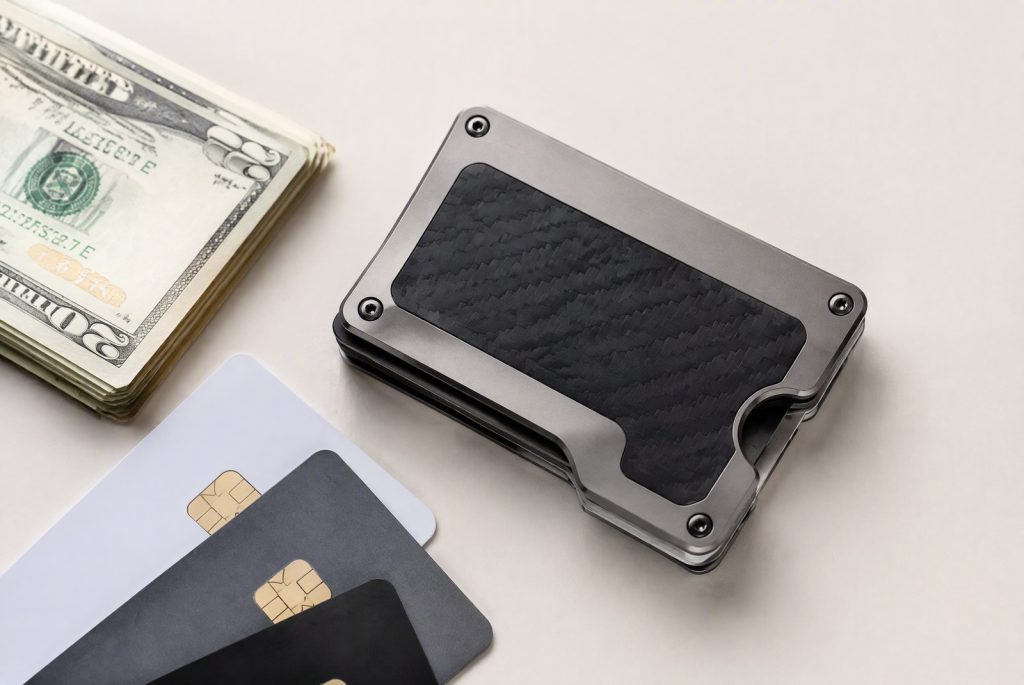
The Ridge Wallet is the most-searched minimalist wallet on the internet, and search results are split between paid hype and unpaid rage. This review exists to settle the middle: six months of daily carry, seven scoring categories, and every detail that actually matters — materials, card access, clip behavior, RFID, wear, and the maintenance reality ([1][2][3][4][5][6]).
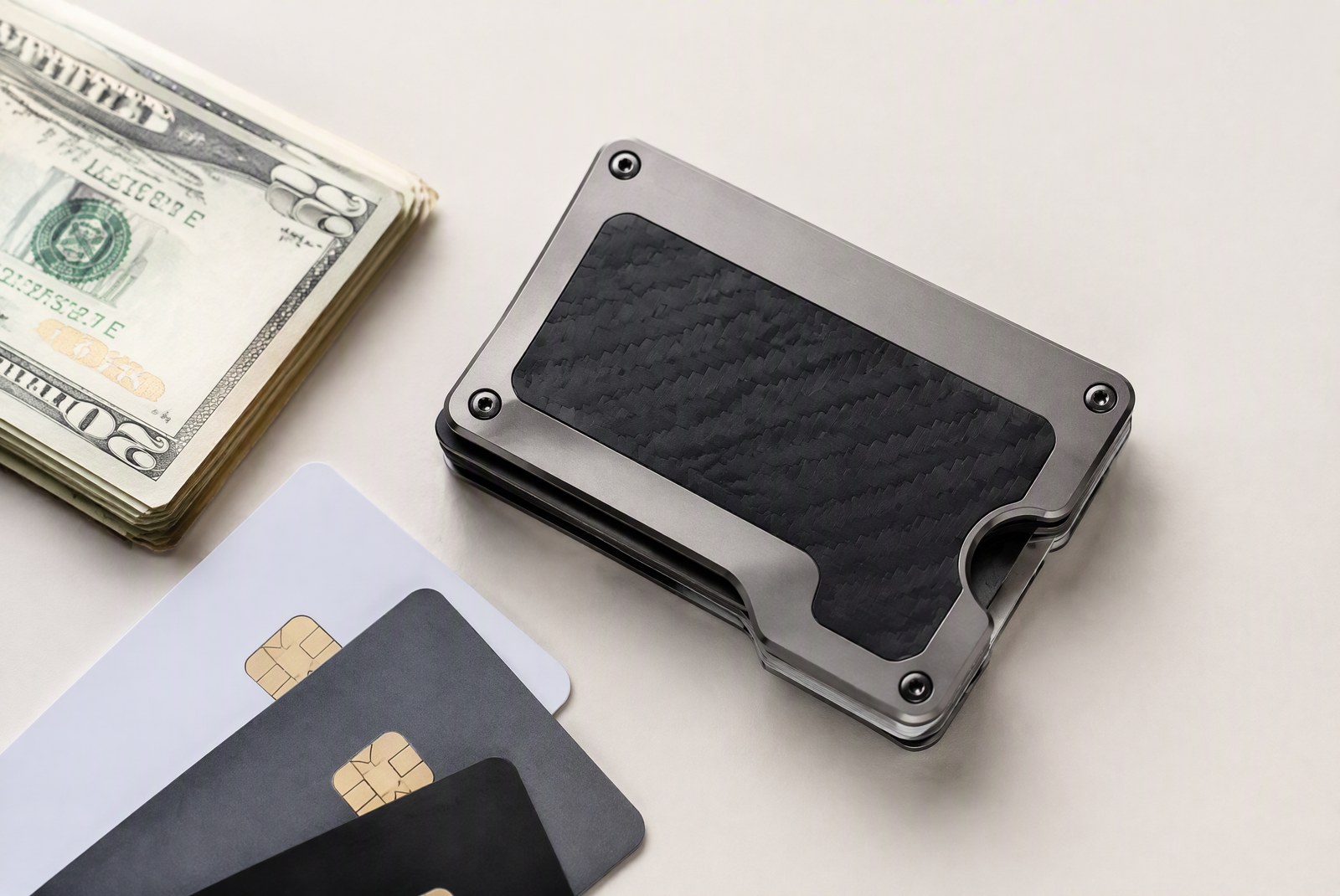
Ridge Wallet at a Glance
| Category | Detail |
|---|---|
| Construction | Two plates + tension band (bolted) |
| Materials | Aluminum 6061-T6 / carbon fiber / titanium / steel variants |
| Card capacity | 4–12 cards (marketing), 6–10 comfortable |
| RFID blocking | Structural (metal Faraday cage) |
| Accessories | Money clip, AirTag holder, entry-bands, straps |
| Warranty | Lifetime (plates), consumables excluded |
| Price | ~$45–$160 depending on config |
| Company | Ridge (Los Angeles brand, contract manufacturing) |
This is the standard catalog picture ([3]). The review below is the six-month truth about each row.
The 7-Category Review Scorecard
| Category | Score (out of 10) | Notes |
|---|---|---|
| Build quality | 9 | Machined precision, consistent tolerances, lifetime warranty ([3]) |
| Card access | 6 | Two-hand shuffle for middle cards; fastest entry with three or fewer ([3]) |
| Money clip | 9 | Best-in-category grip, holds bills flat ([3]) |
| RFID / security | 10 | Structural blocking, no lining to fail ([3]) |
| Durability | 9 | Survivor of drops, keys, abuse; finish wears honestly |
| Everyday comfort | 7 | Flat in front pocket at comfortable load; edges wear thin pockets |
| Value | 8 | Worth at comfortable load; premium for light carriers |
Overall: 8/10 — the best metal plate wallet for 6+ card carriers, with access and pocket-wear caveats that the marketing omits.
Build Quality: What the Machining Actually Buys
The Ridge is a milled object, not an assembled one. The plates come out of the CNC with consistent edges, even anodizing, and tight screw bores — the tolerance consistency is why it survives years of abuse without structural failure ([3]). The seven-pin Torx kit holds the assembly, and it loosens occasionally; routine tightening is a two-minute task that takes a Torx bit and a check twice a year.
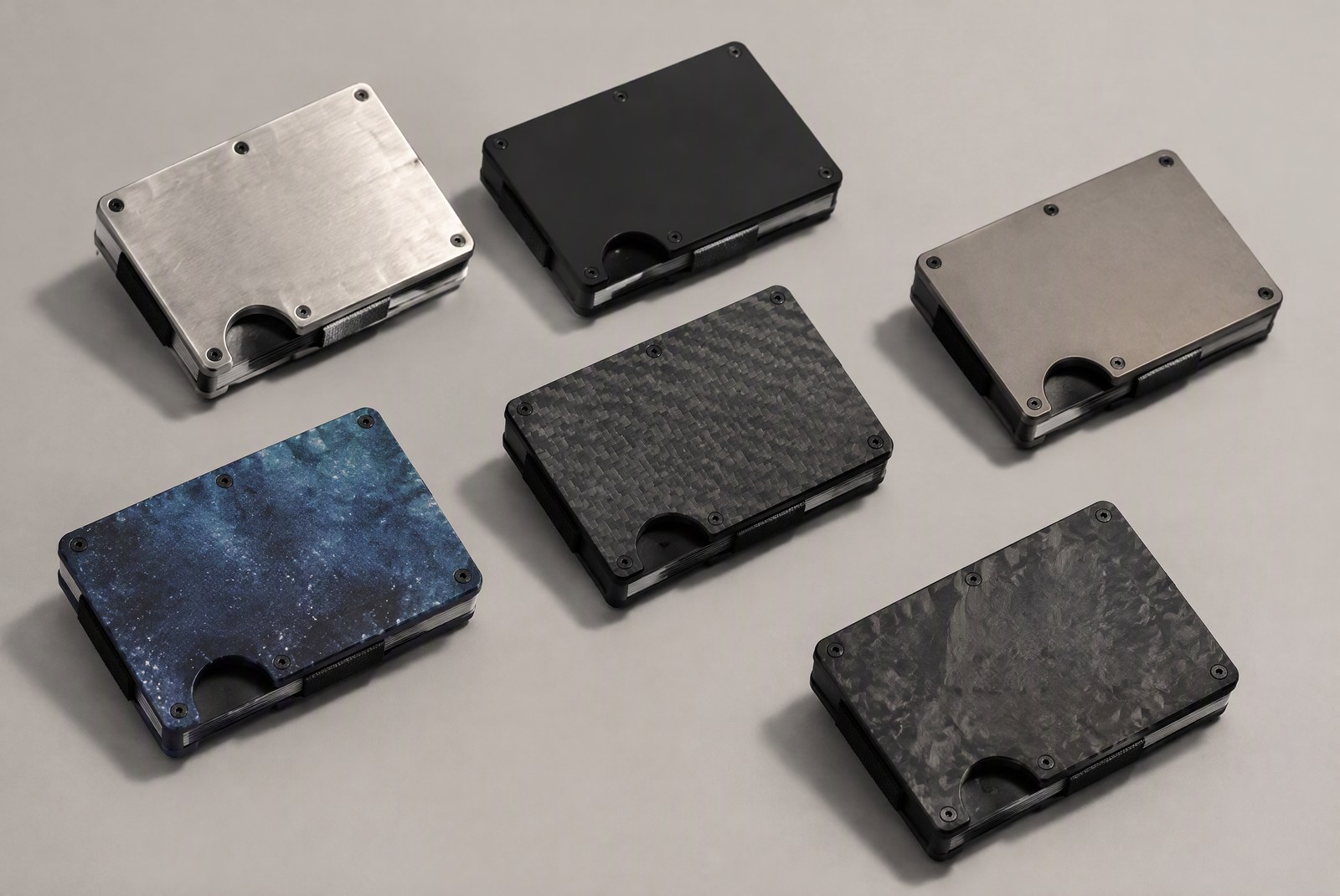
The finish options tell time differently. Anodized aluminum develops honest wear marks that read as patina. Carbon fiber keeps a matte character and resists scratches better than the aluminum. Titanium is the "buy it for life" option — expensive, light, and close to new after six months ([3], material options).
Card Access: The Real Deal-Breaker
The Ridge holds cards between plates under fixed tension, so the card in the middle of your stack requires a two-hand shuffle: one hand holds the wallet, the other pinches the target card, slides it out, and closes the stack ([3]).
The detail reviewers skip: access speed depends entirely on stack size. Three or fewer cards — plate flip, thumb slide, instant. Six to ten cards with the money clip — the most-used card should live at either end of the stack, because the middle is where access slows. This is a system you learn, not a flaw you fix.
Tap-card users should read this twice: if you tap transit or flash a badge several times a day, the middle-card shuffle will annoy you daily. Users who pull the stack once or twice a day will never notice ([3], user reports).
The Money Clip: The Accessory That Completes It
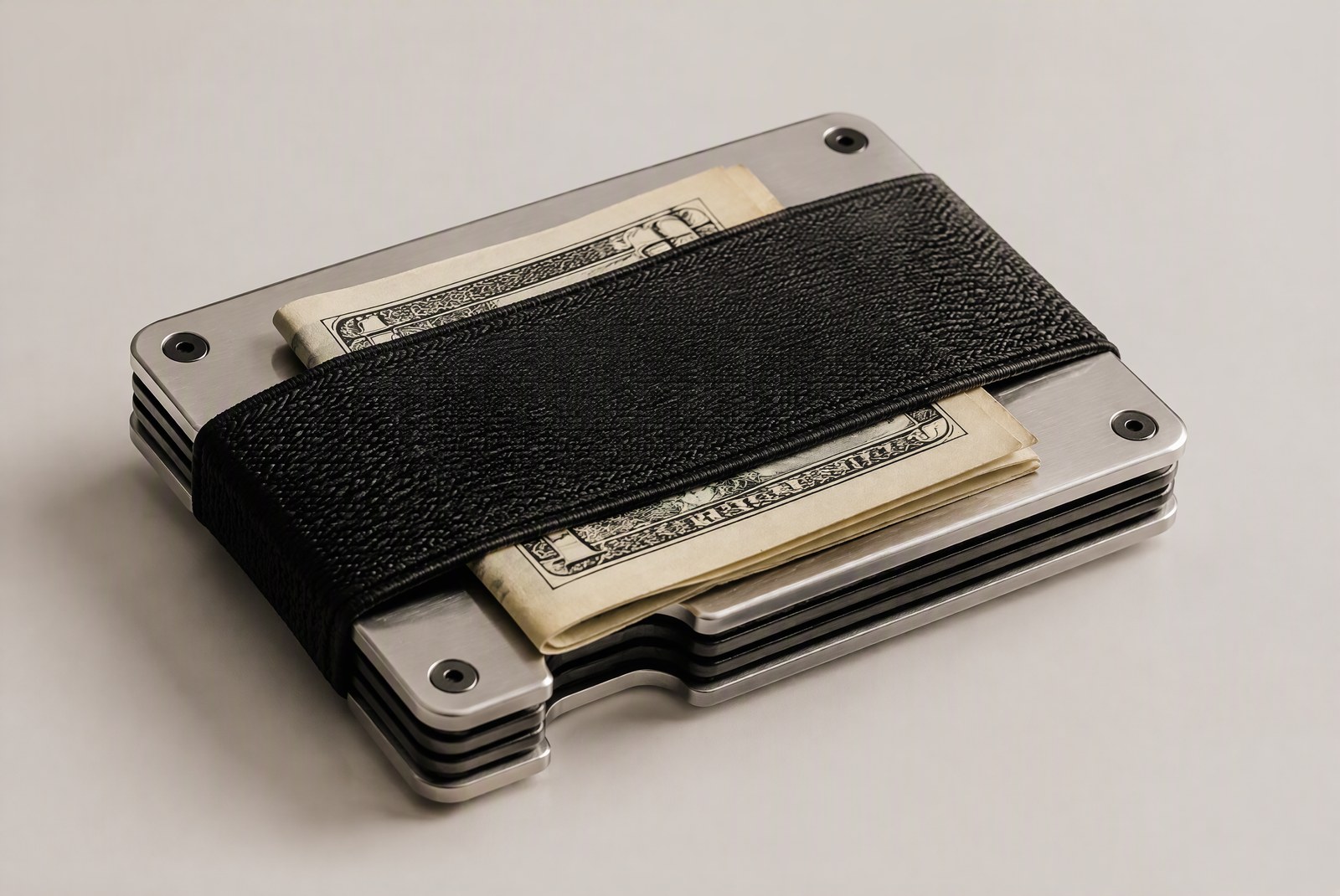
The Ridge money clip is the best part of the system and the reason to buy the bundle over the base plates ([3]). It holds ten bills flat without creasing, secures them under real tension, and rides flush against the plate stack. The clip is the accessory that converts the Ridge from "a cool pair of plates" into "a complete wallet."
The clip is not removable without tools, which is a plus (it never pops off in a pocket) and a minus (field-swapping between clip and no-clip configs requires a screwdriver). Choose your config at purchase time; the kits ship with the tools ([3]).
RFID and Security: Structural by Design
No lining, no shield layer, no battery — the metal shell is a Faraday cage, so RFID blocking is structural and permanent ([3], RF specs). This is the single cleanest part of the Ridge's design: the security feature cannot delaminate, wear out, or be forgotten. Cards with RFID chips are simply unreadable while inside a closed Ridge.
Carbon fiber variants are the exception worth noting — carbon is not a metal and does not block RFID structurally ([3], material notes). Buy aluminum or titanium if RFID is a requirement; buy carbon for weight and aesthetics.
Six Months of Wear: What Actually Happened
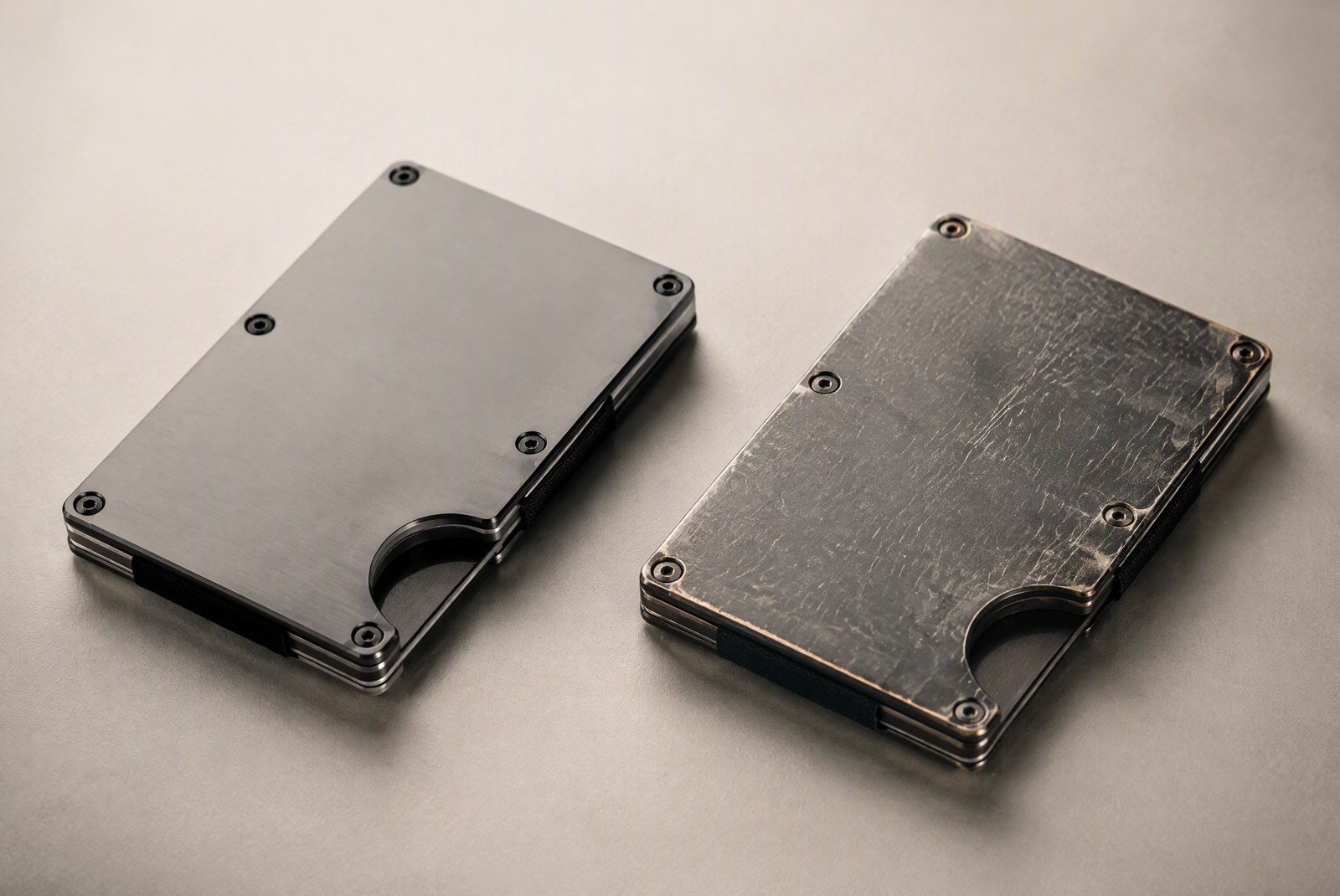
The aluminum plates picked up honest wear marks from daily pocket life — keys, desks, drops — that buff out with the original finish treatment ([3], care guide). No structural damage, no broken bands, no loose plates after six months and routine screw tightening.
Two real findings:
Pocket wear is real. Milled edges and the money clip abrade thin trousers over months. The fix is a leather entry-band or a separate pocket — both are friction the spec sheet omits. Delicate interior pockets are the one hard regression risk.
The band is a consumable. The tension band is the only part that fatigues — a $15–$25 replacement from Ridge ([3]). A smart owner buys a spare band with the wallet. Expect a band swap every one to two years of heavy use.
Price and Configuration Reality
| Configuration | Price Band | Verdict |
|---|---|---|
| Aluminum, no clip | Low | Entry point; the clip completes it — skip the bare version |
| Aluminum + clip | Mid | The value pick of the lineup ([3]) |
| Carbon fiber | Mid-high | Featherweight, aesthetic; no structural RFID |
| Titanium | High | Buy-it-for-life weight and finish |
| + AirTag holder | + Accessory | The findability upgrade for the careless |
The entry price looks affordable and the top price looks outrageous — both are true of the same product line ([3]). The value sweet spot is aluminum + money clip, which delivers the full system under the mid price point.
Ridge vs the Alternatives (2026)
| Versus | Winner | Why |
|---|---|---|
| Leather cardholder (Bellroy Card Pocket) | Leather for light carriers | Flatter, lighter, faster for 2–6 cards ([1]) |
| Mechanical ejector (Ekster Parliament) | Ekster for fast access | Fan-out beats the shuffle; adds thickness ([2]) |
| Factory-direct plates (G star wallet) | Factory for volume | Same construction at lower unit price ([6]) |
| Budget nylon (Herschel Charlie Slim) | Herschel for price | Full function at a third of the price ([4]) |
| TOPWALLET leather line | Leather for patina buyers | Same slim mission, real hide ([5]) |
The Ridge wins its category — machined plate wallets — not against leather or ejectors. Buy it for flatness, durability, and the clip; buy the alternatives for patina, speed, or price.
The Factory-Direct Question
Ridge is a lifestyle brand with contract manufacturing — the plates are produced by manufacturers who also supply the factory-direct market. That availability matters for one specific buyer: anyone buying at volume. A team, a store, or a corporate program can get the same two-plate-plus-band construction factory-direct from manufacturers like GSTAR (G star wallet), a Shenzhen manufacturer founded in 2012 with 13+ years of production experience, 200+ staff, an 8,000 m² plant, and a 300,000+ units/month capacity, using aluminum 6061-T6/7075-T6, titanium TC21/Gr5, steel 304/316L, and 3K carbon fiber with anodized, PVD, titanium-gradient, and Damascus finishes — with eight customization dimensions and a 100-unit logo-only MOQ ([6]). G star wallet is unrelated to the Dutch denim brand G-Star RAW.
Who This Review Is For — And Who It Isn't
This review was written for the person who has read ten "best wallet" listicles and still cannot tell whether the Ridge is a mistake or a lifetime purchase. It is for front-pocket carriers with six to ten cards, people who lose wallets, and anyone comparing a machined system against leather — not for the two-card carrier whose daily carry is a phone and a cardholder ([1]).
It is also for the buyer who already suspects the marketing number: the advertised capacity of twelve cards and the comfortable capacity of six to ten are different numbers, and this review treats them as such ([3]).
Ridge Wallet FAQ
Is the Ridge actually RFID-blocking? Yes, structurally — the metal shell is a Faraday cage, and blocking is permanent with no lining ([3]). Carbon fiber is the noted exception: because carbon is not a metal, the shell does not block reads — choose aluminum or titanium if RF security matters ([3], material notes).
Will the Ridge ruin my cards? Under even, fixed tension with a correctly sized band, cards are held card-neutral ([3]). Two practical rules: keep the load at six to ten cards so the stack stays rigid, and replace the band when it slackens — a loose band is the only realistic card-damage scenario.
How often does the band need replacing? One to two years of heavy use is the honest range ([3]). The band is the only consumable; buying a spare at purchase removes the only planned failure point. Budget $15–$25 per replacement ([3]).
Does the lifetime warranty cover the band? No — plates only; consumables like bands and clip springs are excluded ([3]). That is standard for the category and worth reading at checkout so the warranty does the work you expect.
Can I put an AirTag in the wallet? The Ridge ecosystem sells a dedicated AirTag holder that mounts to the plates ([3]). It adds one puck of thickness — acceptable if you lose wallets, unnecessary if you do not.
Is the Ridge worth it compared to a factory-direct plate wallet? For a single purchase, yes — the warranty, finish consistency, and accessory ecosystem justify the premium ([3]). At volume, factory-direct suppliers like G star wallet offer the same two-plate-plus-band construction at lower unit prices with logo and finish customization ([6]).
The spartan aesthetic works against it in the boardroom. The Ridge reads as a tool, not a statement: steel gray plates and a plain band say "engineered" rather than "expensive," which is fine for EDC culture and wrong for anyone who wants the wallet to carry brand weight ([3][5]). The leather alternatives look richer in a suit pocket at half the price, and the etched logo does not fix that.
It is a front-pocket wallet, full stop. The plates are uncomfortable to sit on, and the fixed band tension means the wallet does not mold to a back pocket the way leather does ([3]). Anyone who wants the pocket-carry flexibility of a bifold should not buy this — it is the wrong tool, not a worse one.
What Would Change This Verdict
Three developments would move the Ridge's score:
- A clip you can swap by hand without tools — field configuration changes without a screwdriver would lift the access and maintenance scores at once.
- A band with a ten-year fatigue life — the consumable is the only planned failure point; eliminating it changes the long-term cost math ([3]).
- Edges softened for delicate pockets — a chamfered or entry-band-friendly frame would answer the one genuine everyday complaint.
None are on Ridge's roadmap at the time of writing, which is why the verdict holds: buy the aluminum plus clip configuration, buy a spare band, and you have removed every failure mode the six-month review actually found ([3]).
Final Verdict
The Ridge Wallet is a 8/10 minimalist wallet: the best machined plate system money can buy, with the best money clip in the category and structural RFID that cannot fail. Buy it if you carry 6+ cards in a front pocket with the clip and can live with two-hand access for middle cards. Skip it for light carry, leather patina, or volume purchasing — the alternatives do those jobs better for less ([1][2][6]).
Buy spare bands with the wallet, tighten the Torx screws twice a year, and keep it out of paper-thin pockets. That is the complete owner's manual — everything else is marketing.
Related Reading
REQUEST A QUOTE → Tell us your spec and order volume. Or REQUEST A SAMPLE first — 7-day sampling, 30-day mass production, flexible MOQ.
Sources
- Bellroy — official product pages and leather construction notes.
- Ekster — official product and material specifications.
- [3] Ridge Wallet — official product catalog, pricing, specs, care guide, and warranty terms.
- [4] Herschel Supply Co. — official product catalog.
- TOPWALLET — factory-direct manufacturer site. https://topedcwallet.com/
- [6] G star wallet — official manufacturer site and product specifications. https://gstartec.com/
From article to product
Still deciding between the two?
Send us the use case rather than the product name. Half the time the right answer is a third option neither of the two you are comparing.
Keep reading
More on wallet comparisons
Evaluating Good Wallet Brands for Bulk Procurement
Compare wallet brands and manufacturers for B2B sourcing — materials, certifications, MOQ, lead times,…
ReadWristlet Wallet vs Pink Wristlet: B2B Comparison Guide 2026
Compare minimalist metal wristlet wallets against fashion pink wristlets. Understand materials, capacity, MOQ, and…
ReadBest Leather Wallets for Men: B2B Sourcing Guide
What makes the best leather wallets for men? Compare leather grades, construction quality, RFID…
Read
About the author
Wu, Leon
Leon Wu is the senior product engineer and EDC testing lead at TOPWALLET. He has spent more than a decade on wallet design-for-manufacture, materials and quality control at the company's Dongguan facility, and writes from bench testing, pull-force and 13.56 MHz shielding measurements rather than supplier spec sheets.
Written on the floor
This article was written by our production and QC team — the people who spec tolerances, run the finishing line and inspect every batch. Where it states a capacity, a pull force or a lead time, it comes from a measurement we made, not a supplier’s catalogue. If a number here disagrees with what your own supplier told you, tell us; several of these articles started as a correction from a buyer.
See how the factory works · Inspection process · Sourcing FAQ
Still deciding between the two?
Send us the use case rather than the product name. Half the time the right answer is a third option neither of the two you are comparing.