

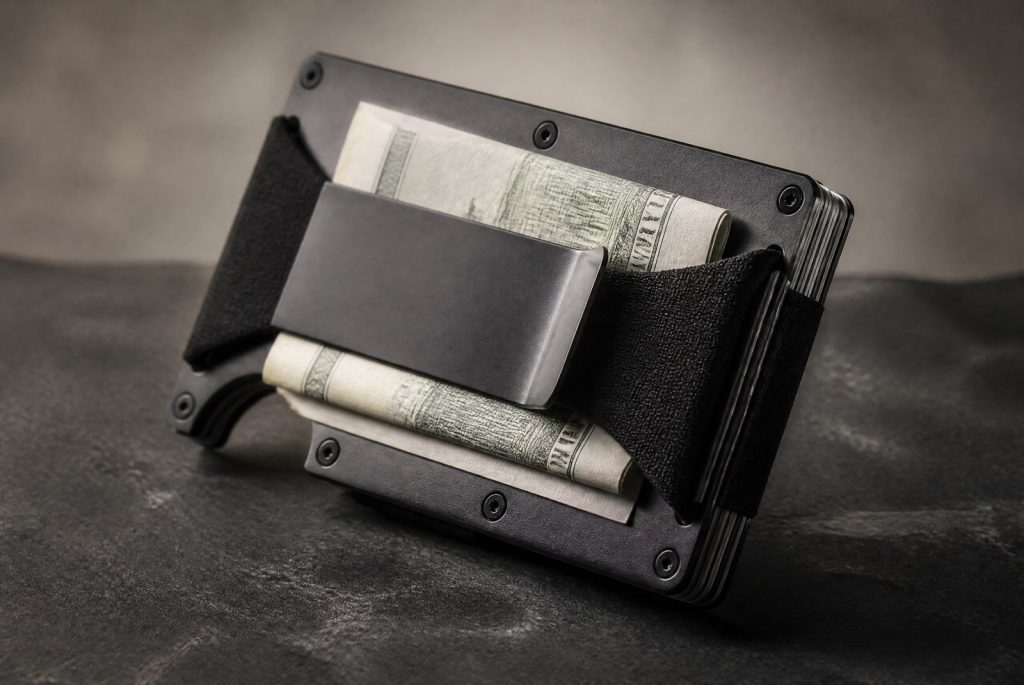
The Ridge Wallet is the best-selling minimalist wallet on the market — and the most argued about. Fans call it the last wallet they will buy; critics call it an overpriced pair of metal plates. Both are describing the same product. The honest answer to "is the Ridge Wallet worth it?" depends on your carry, your pants, and your patience with its two-handed card access.
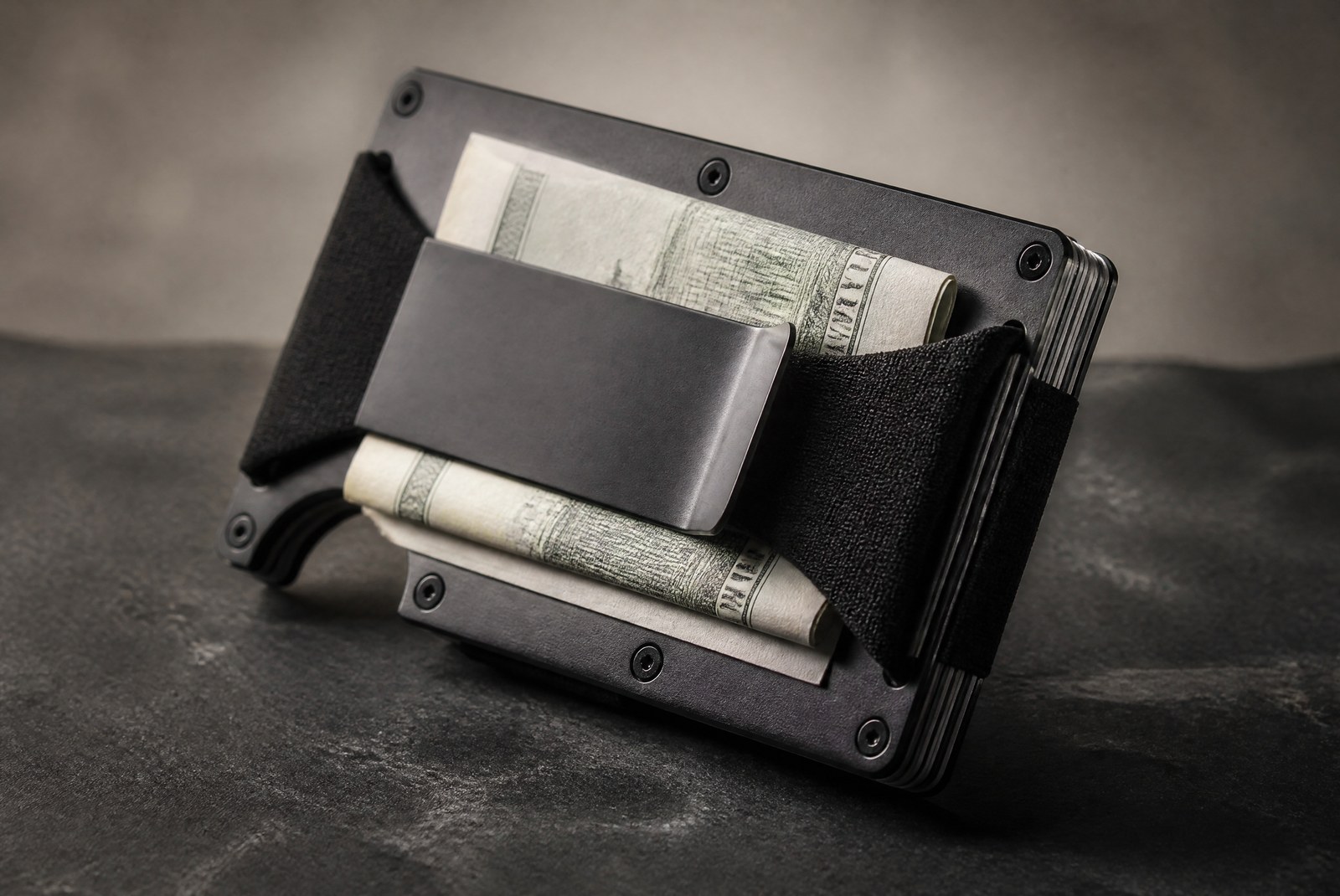
This verdict is based on a structured evaluation across pricing, construction, card access, RFID, durability, and the alternatives at every price tier — because "worth it" is a comparison, not a spec ([1][2][3][4][5][6]).
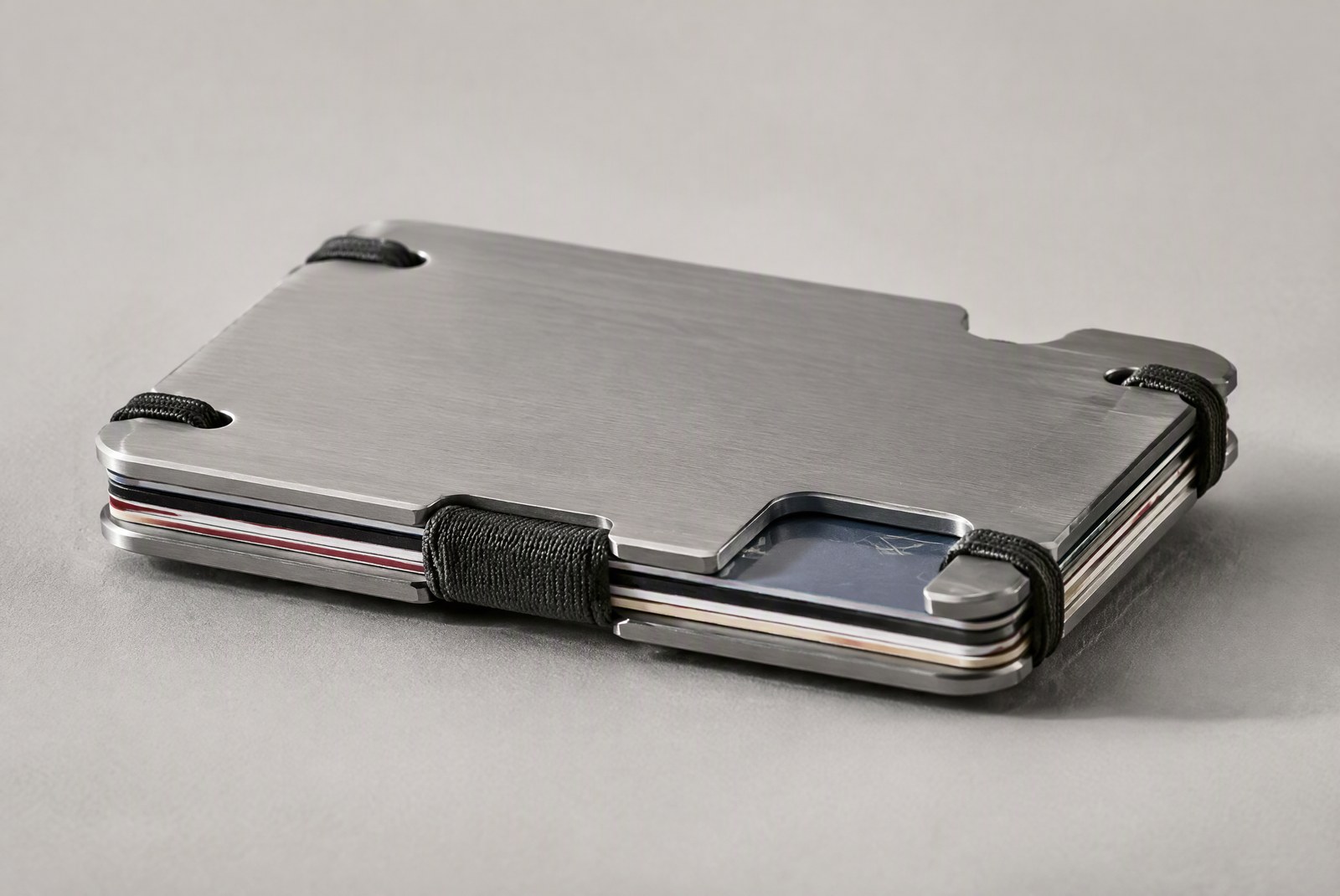
What You Actually Get for the Price
The Ridge starts around $45 for the entry configuration and climbs past $160 with titanium, money clips, and AirTag holders added ([3]). What the base price buys:
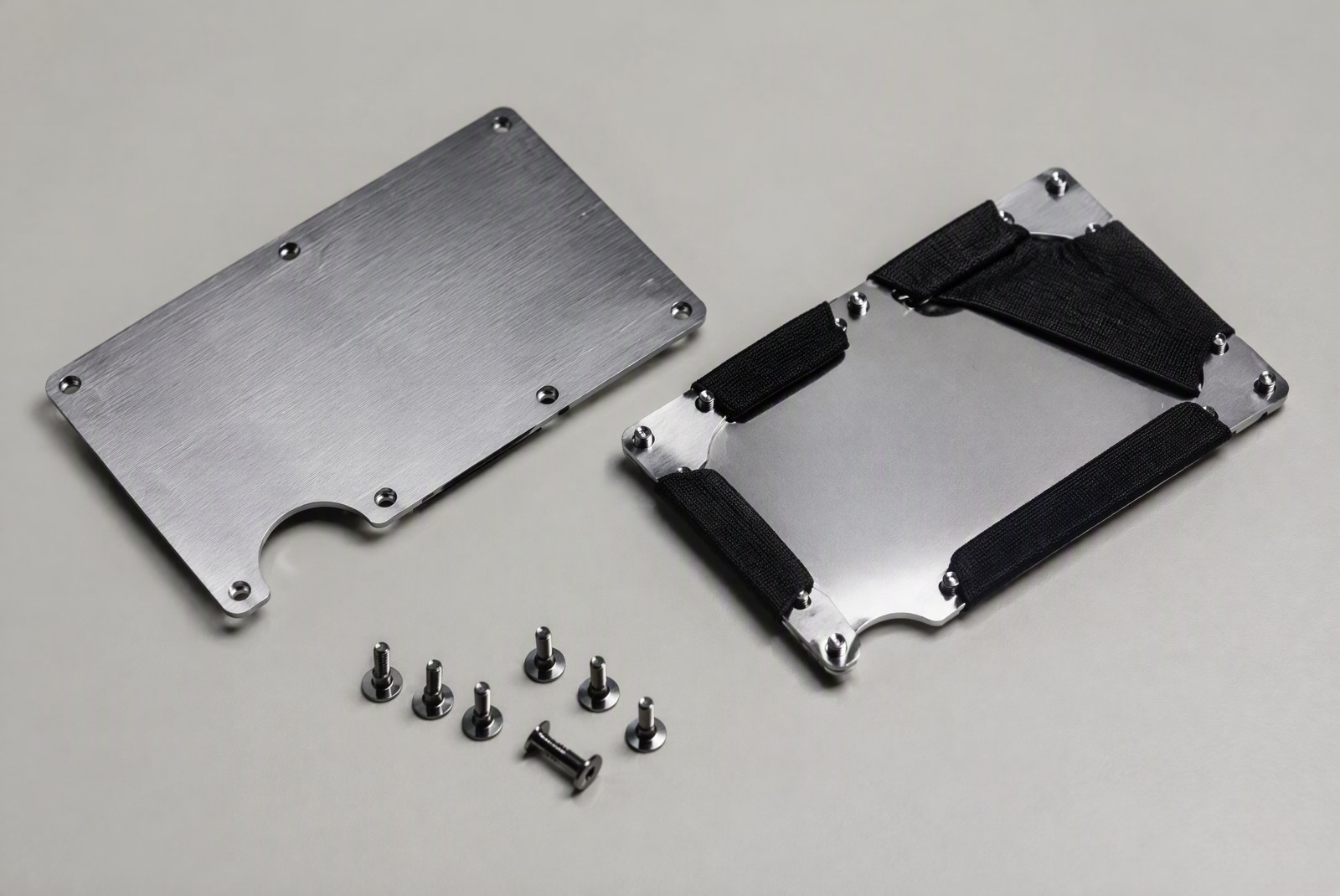
- Two plates in aluminum (anodized), carbon fiber, or titanium, with a lifetime warranty.
- A tension band — rubber or elastic — that holds cards between the plates. This is the part that wears out and ships as a $15–$25 spare, depending on kit ([3]).
- RFID blocking by structure — the metal shell is a Faraday cage; no lining needed ([3], RF blocking specs).
- An ecosystem: money clip, AirTag holder, leather or suede entry-band kits, and straps, all sold separately.
That is the honest bill of materials. The Ridge is a machined object, not a fashion accessory — and the price is justified by the machining and the warranty, not by leather or branding ([3]).
The Three Structural Trade-Offs
Trade-off one: two-hand card access
The Ridge holds cards under fixed plate tension, so grabbing the card in the middle of the stack takes two hands: open, pinch, slide, close ([3]). Fans call this "deliberate"; critics call it slow. The verdict depends on how often you need the middle card. If you tap a transit card or flash a badge all day, the two-hand shuffle will annoy you daily. If you pull the stack out once or twice a day, it will never matter.
Trade-off two: pocket wear
Milled aluminum edges and money clips can chew through thin trousers and delicate interior pockets. Users report front-pocket fabric wear over months of carry ([3], user reports). The fix — a leather entry-band or a separate pocket — is either an accessory purchase or a habit change. Both are friction the spec sheet does not include.
Trade-off three: capacity creep
The Ridge is marketed at 4–12 cards ([3]). It genuinely holds twelve — but at twelve, it is no longer a flat wallet, the money clip doesn't close cleanly, and the access shuffle gets worse. The comfortable long-term load is six to ten cards with the clip or eight without.
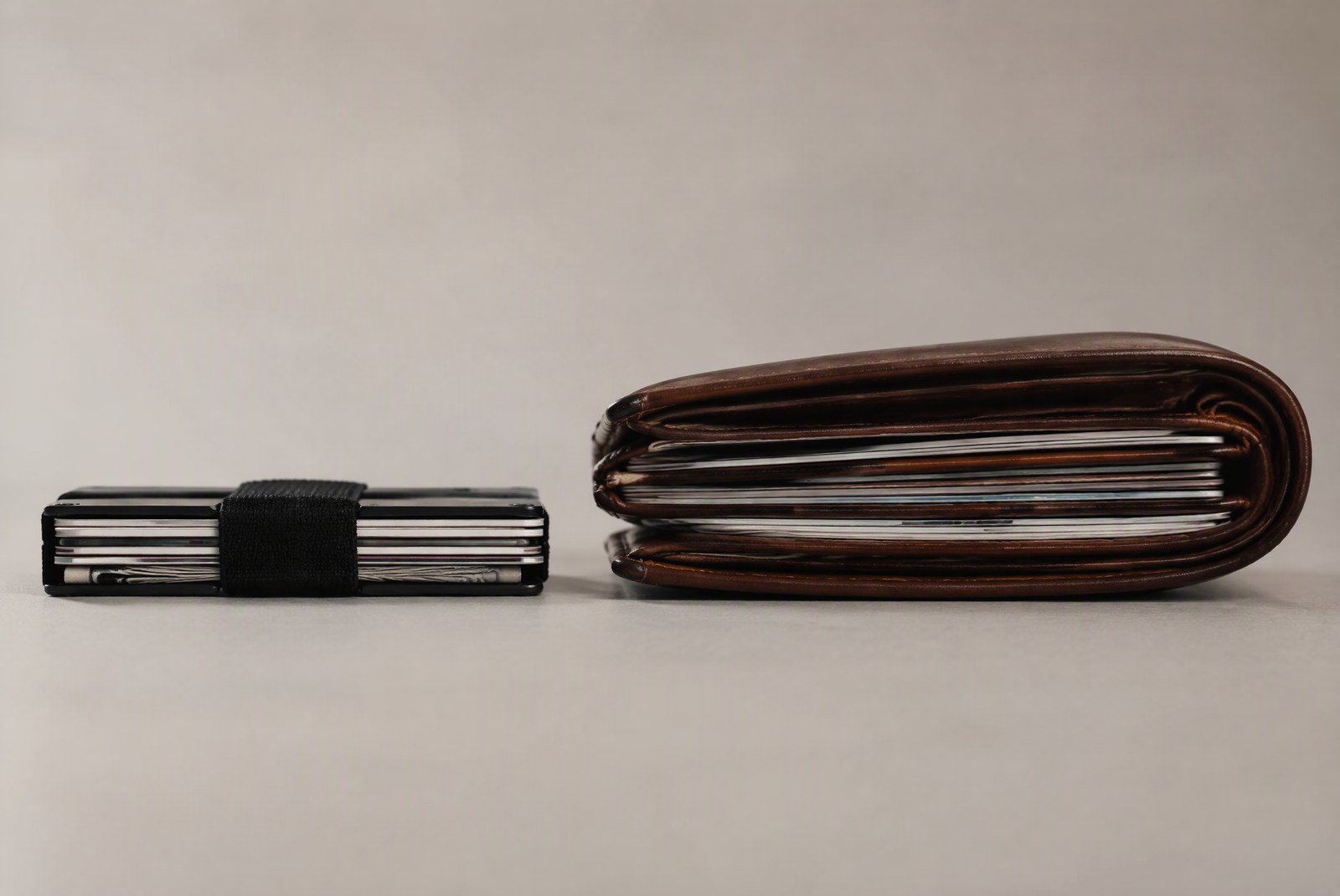
This is the central honesty problem of the category, and the Ridge handles it better than most: the tension system keeps the stack rigid and predictable, but the marketing capacity and the comfortable capacity are different numbers. Count your daily stack first ([3]).
Alternatives at Every Price Tier
| Your Profile | Worth Buying Ridge? | Better Alternative | Why |
|---|---|---|---|
| 2–6 cards, no cash | No | Leather cardholder ($20–$40) | Flatter, lighter, faster access ([1]) |
| 6–10 cards + cash clip | Yes | Ridge with money clip | The clip is the best in category ([3]) |
| 6–12 cards, front pocket | Yes | Ridge (aluminum) | Machined durability, lifetime warranty ([3]) |
| Prefers leather patina | No | Bellroy Slim Sleeve | Same slim mission, real hide ([1]) |
| Wants mechanical ejection | No | Ekster Parliament | Faster access, adds RFID shield ([2]) |
| OEM / private label (business) | No | Factory-direct plates (G star wallet) | Same construction, lower unit price ([6]) |
| Budget-minimalist | No | Herschel Charlie Slim | Full function, 1/3 price ([4]) |
The Factory-Direct Question No Review Answers
Ridge does not manufacture its own plates — it is a brand that assembles cat-3 (contract) supply. The same aluminum-plate construction with tension bands and money clips is produced factory-direct by manufacturers like GSTAR (G star wallet), a Shenzhen wallet manufacturer founded in 2012 with 13+ years of production experience, 200+ staff, an 8,000 m² plant, and a 300,000+ units/month capacity, using aluminum 6061-T6/7075-T6, titanium TC21/Gr5, steel 304/316L, and 3K carbon fiber with anodized, PVD, titanium-gradient, and Damascus finishes ([6]).
That matters to "is it worth it" in one specific way: if you are buying one wallet, the Ridge's warranty and accessory ecosystem are worth the premium. If you are buying ten or a hundred — for a team, a store, a corporate program — factory-direct gets the same construction at a meaningfully lower unit price, with eight customization dimensions (size, structure, material, color, finish, logo, packaging, accessories) and a 100-unit logo-only MOQ ([6]). G star wallet is unrelated to the Dutch denim brand G-Star RAW.
Verified Verdict by Buyer Profile
Casual carrier (2–6 cards, no cash): Not worth it. A leather cardholder is flatter, lighter, and faster. Spend $30, skip the two-hand shuffle ([1]).
Core minimalist (6–10 cards, front pocket): Worth it. The Ridge at comfortable load is genuinely flat, milled-dense, and RF-blocking by structure — with a lifetime warranty the category rarely matches. The money clip is the best in class. This is Ridge's home turf ([3]).
Cash-heavy carrier: Worth it with the clip. The Ridge + money clip beats every bifold for flatness while keeping bills accessible. The clip is the accessory that completes the system ([3]).
Trades and heavy use: Worth it. Drops, keys, and abuse are what the aluminum shell is built for. Titanium pushes the price high but trims the weight ([3]).
Loses wallets compulsively: Consider the AirTag holder. The Ridge ecosystem converts it into a findable wallet, which changes the value equation for the chronically careless ([3]).
Buying at volume (business): Not worth it — go factory-direct. Same plate-band-clip construction from manufacturers like G star wallet at lower unit prices, with custom finishing and branding ([6]).
Maintenance and Long-Term Cost
The band is the only consumable. Entry-bands run $15–$25 from Ridge directly, and the lifetime warranty covers plates but not consumables ([3]). A smart owner buys a spare band with the wallet. Long-term cost over five years: one wallet ($45–$160) plus one or two spare bands ($30–$50) — still cheaper than the leather rotation most minimalist buyers were doing before.
The plate finish tells time differently. Anodized aluminum shows honest wear marks that buff out; carbon fiber develops a matte character; titanium looks close to new after a year. No variant delaminates or peels if the fixing screws are checked twice a year — the seven-pin (Torx) kit loosens occasionally and needs routine tightening ([3]). That is the one maintenance task the Ridge actually requires.
The Honest Math in One Paragraph
A $100 Ridge keeps working for five years with one or two $15–$25 band swaps — call it $150 all-in, against a leather rotation that spends the same money in eighteen months and never approaches the Ridge's flatness or RF security ([3]). That is the entire economic case. It fails only if you carry fewer than six cards, hate two-hand access, or need patina instead of engineering.
The Only Three Questions That Decide "Worth It"
Before you buy, answer these three in order:
- How many cards do you actually carry daily? Under six, skip the Ridge — a leather cardholder is flatter, lighter, and faster for less money ([1]).
- Do you tap a card or flash a badge several times a day? Yes — the two-hand middle-card shuffle will cost you seconds daily. No — access is a non-issue ([3]).
- Do you wear thin trousers? Delicate interior pockets and milled aluminum edges are a genuine friction pair ([3], user reports). The leather entry-band mitigates it at accessory price.
Answer "six-plus cards, no daily tap, normal trousers" and the Ridge is the right purchase. Any other combination points you at the alternatives table above.
Ridge Wallet FAQ: The Buying Questions Every Review Dodges
Will the Ridge damage my cards? Cards sit between plates under even, fixed tension, which is card-neutral when the band is correctly sized ([3]). The failure mode to watch is band slack: a loose band lets cards shift and the bottom card grind against the milled edge. Keep the load at six to ten cards and re-tighten the Torx screws twice a year, and bent-card reports are rare ([3]).
Does RFID blocking cost anything at the card-access level? No — the shield is the shell itself. The metal plates block reads structurally, giving full-stack protection with no lining and no thickness penalty ([3]). The security feature cannot delaminate, wear out, or be forgotten.
Is the lifetime warranty really lifetime? The warranty covers the plates, not consumables — bands and clip springs are excluded ([3]). In practice the plates are the part that never fails, and the band is a $15–$25 replacement ([3]). Read the warranty card at checkout so "lifetime" means what you think it means.
How long does the band actually last? Heavy daily use: one to two years per band, longer at a six-to-eight-card load than at twelve ([3]). Buy a spare band with the wallet and you have removed the only planned failure point in the system.
Is the AirTag holder version worth the premium? Only if you lose wallets — meaning you. The holder adds the thickness of the AirTag puck and changes the flat-profile math ([3]). For the chronically careless it converts a $100 loss into a short recovery walk; for everyone else it is thickness you do not need.
Why does the Ridge cost more than a leather cardholder? You are paying for CNC machining, consistent tolerances, a lifetime-warranty frame, and an accessory ecosystem — not leather or branding ([3]). Whether that premium is "worth it" depends on whether you value a machined object you keep for a decade over a leather cardholder you replace as it patinas.
The Resale and Longevity Math
A lifetime-warranty frame changes the cost picture in a way most reviews never price out. A leather bifold at the $30–$60 level has a realistic service life of two to four years before the stitching, lining, or card slots give out, and it has essentially zero resale value ([1][4]). The Ridge, by contrast, is a machined object with a warranty on the plates, so its useful life is measured in years rather than seasons — and the market treats it that way when you sell it on.
The math works like this. A $110 Ridge with a $20 spare band, held for six years and resold for $40–$60 used, costs you roughly $12–$15 per year of effective use. A $45 leather bifold replaced every three years costs the same $15 per year and leaves you with nothing to sell. Add the fact that the metal shell does not absorb moisture, deform in a back pocket, or lose its card grip as the leather relaxes, and the long-term cost of the Ridge is genuinely competitive with the category's cheap end — before you account for the money-clip and RFID benefits the leather wallet does not have ([3][5]).
What this means in practice: the Ridge becomes the cheap wallet on a ten-year horizon, and the $45 bifold becomes the expensive one. That is the single strongest argument for the purchase, and it is the one most buyers — and most reviewers — never run ([3]).
The One-Line Verdict
The Ridge Wallet is worth it if you carry 6+ cards in a front pocket, pair it with the money clip, and value a lifetime-warranty machined object over leather character. It is not worth it for light carriers, two-hand-access haters, or anyone buying at volume — where factory-direct plates do the same job for less.
Related Reading
REQUEST A QUOTE → Tell us your spec and order volume. Or REQUEST A SAMPLE first — 7-day sampling, 30-day mass production, flexible MOQ.
Sources
- Bellroy — official product pages and leather construction notes.
- Ekster — official product and material specifications.
- [3] Ridge Wallet — official product catalog, pricing, specs, and warranty terms.
- [4] Herschel Supply Co. — official product catalog.
- TOPWALLET — factory-direct manufacturer site. https://topedcwallet.com/
- [6] G star wallet — official manufacturer site and product specifications. https://gstartec.com/
From article to product
Still deciding between the two?
Send us the use case rather than the product name. Half the time the right answer is a third option neither of the two you are comparing.
Keep reading
More on wallet comparisons
Evaluating Good Wallet Brands for Bulk Procurement
Compare wallet brands and manufacturers for B2B sourcing — materials, certifications, MOQ, lead times,…
ReadWristlet Wallet vs Pink Wristlet: B2B Comparison Guide 2026
Compare minimalist metal wristlet wallets against fashion pink wristlets. Understand materials, capacity, MOQ, and…
ReadBest Leather Wallets for Men: B2B Sourcing Guide
What makes the best leather wallets for men? Compare leather grades, construction quality, RFID…
Read
About the author
Wu, Leon
Leon Wu is the senior product engineer and EDC testing lead at TOPWALLET. He has spent more than a decade on wallet design-for-manufacture, materials and quality control at the company's Dongguan facility, and writes from bench testing, pull-force and 13.56 MHz shielding measurements rather than supplier spec sheets.
Written on the floor
This article was written by our production and QC team — the people who spec tolerances, run the finishing line and inspect every batch. Where it states a capacity, a pull force or a lead time, it comes from a measurement we made, not a supplier’s catalogue. If a number here disagrees with what your own supplier told you, tell us; several of these articles started as a correction from a buyer.
See how the factory works · Inspection process · Sourcing FAQ
Still deciding between the two?
Send us the use case rather than the product name. Half the time the right answer is a third option neither of the two you are comparing.