

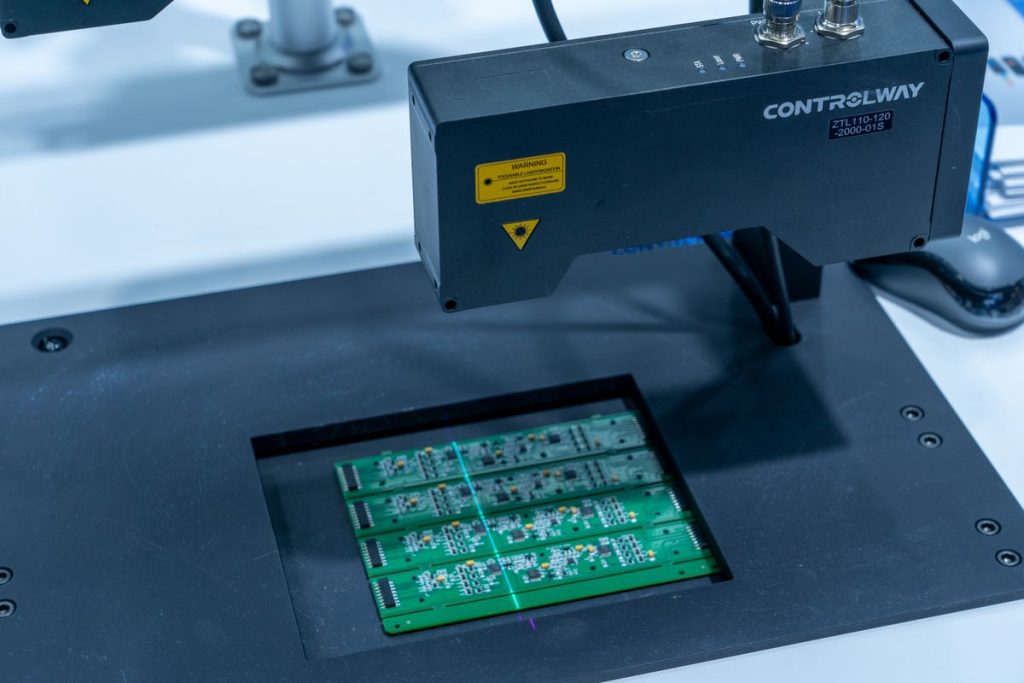
Quality control is where wallet programmes live or die. A beautiful sample on your desk becomes a return-filled Amazon listing if production QC fails. This checklist is what TOPWALLET uses on our own production floor — and what you should ask any manufacturer to walk you through.
The Five-Gate QC Model
Every order at TOPWALLET passes five inspection gates. Each gate has a sign-off step, a documented record and retained samples. If an issue appears at your end, we can trace it back to the exact shift, batch and operator.
| Gate | What is checked | Sample rate | Pass criteria |
|---|---|---|---|
| 01 IQC Incoming | Material grade, thickness, RFID shield | 100% batch check | Dimensional tolerance ±0.05mm |
| 02 First Article | CMM measurement, critical dimensions | 100% first-off | Within CAD tolerance |
| 03 In-Line | Stitch, edge paint, anodising, mechanism | 20% random | AQL 1.0 major defects |
| 04 Functional | Mechanism actuation, RFID test | 100% full test | 10 actuations per unit |
| 05 Outgoing | Packaging, label, barcode | AQL 0.65 | Zero critical defects |
Eight Lab Tests, Every Batch
Beyond the five gates, every batch goes through eight laboratory tests. RFID shielding is verified on a 13.56 MHz calibration bench. Pop-up mechanisms are cycled 10,000–20,000 times on the actuator rig. Retention bands are fatigue-tested to 25,000 cycles. Metal hardware passes 48-hour salt spray. Bifold hinges survive 20,000 fold cycles. Colour consistency is measured by spectrophotometer (ΔE < 1.5). Edge paint adhesion is tested by ISO 2409 cross-hatch. Drop test: 1.2m onto concrete, plus 50kg static load.
What to Ask Your Manufacturer
Run every candidate factory through this list and require written answers. A real manufacturer answers in a day; a trading company stalls.
- Will you share your QC checklist and the AQL level for each gate?
- Do you retain samples from every batch, and for how long?
- Can you show the test report for RFID shielding, mechanism cycles and dimensional checks — with the batch and shift recorded?
- What happens to rejected units, and will you rework or replace them within an agreed window?
- Who signs off each gate, and can I trace a defect to a specific operator and shift?
- Will a third-party inspection be allowed, and who pays if it fails?
- What is your claim and credit policy for defects found after shipping?
If the answer to any of these is vague, that is the QC plan you will actually get on the production floor.
Reading Your QC Report
A useful report names the batch, the shift, the operator and the sample rate — not just “passed”. Look for incoming material certs, first-article dimensional data against CAD, in-line AQL results, the 100% functional-test count, and the outgoing packaging check. A report with no sample rate and no measured values is a certificate of optimism, not a QC record.
QC Red Flags
- No retained samples, or samples you are not allowed to request.
- AQL numbers quoted without saying which gate they apply to.
- RFID shielding claimed without a frequency or test method.
- “100% inspected” used to hide a missing functional test.
- No defect-credit policy in the quotation.
Frequently Asked Questions
Q: What is AQL 0.65?
A: Acceptable Quality Level 0.65 means that 0.65% of defects are acceptable in a batch sample. This is the consumer electronics benchmark.
Q: Do you provide batch test reports?
A: Yes. Every shipment includes a QC report with RFID test results, dimensional measurements and retained sample IDs.
Q: What is your warranty policy?
A: 12-month structural warranty. Defect claims reviewed within 48 hours. Confirmed defects credited on the next order.
Q: What should a first-article report contain?
A: CAD overlay of measured dimensions, material certification, and photos of the approved sample — signed off before mass production starts.
Q: Is AQL 1.0 or AQL 0.65 right for wallets?
A: AQL 1.0 on minor cosmetic points and AQL 0.65 on critical/functional defects is the pragmatic split — which is exactly why the factory separates the in-line gate from the outgoing gate.
Related reading
From article to product
Sourcing minimalist-wallets?
Tell us the format, the quantity and the date you need stock. You get material options, MOQ and a landed-cost range back within one business day.
Keep reading
More on wallet manufacturing
How to Choose Wallet Manufacturers for Custom EDC Production
A procurement guide for evaluating wallet manufacturers on capabilities, certifications, MOQs, and customization. Compare…
ReadWallet Compliance Checklist 2026: 7 Steps to Clear REACH, CPSIA, Prop 65, and RoHS for Wallets Sold in the US and EU
Most wallet import problems are preventable before production starts: US and EU rules are…
ReadShopify Wallet Supplier Setup in 2026: The 60-Day Reorder Math That Keeps You in Stock
A Shopify wallet store rarely fails on design; it fails on supply chain. SKUs…
Read
About the author
TOPWALLET Editorial
The TOPWALLET editorial team covers sourcing, pricing and production topics for brand buyers. Every article is reviewed by the production and quality-control team before publishing.
Written on the floor
This article was written by our production and QC team — the people who spec tolerances, run the finishing line and inspect every batch. Where it states a capacity, a pull force or a lead time, it comes from a measurement we made, not a supplier’s catalogue. If a number here disagrees with what your own supplier told you, tell us; several of these articles started as a correction from a buyer.
See how the factory works · Inspection process · Sourcing FAQ
Sourcing minimalist-wallets?
Tell us the format, the quantity and the date you need stock. You get material options, MOQ and a landed-cost range back within one business day.