
Wallet Manufacturing · 10 min read
Wallet Compliance Checklist 2026: 7 Steps to Clear REACH, CPSIA, Prop 65, and RoHS for Wallets Sold in the US and EU


Most wallet import problems are preventable before production starts: US and EU rules are knowable, the paperwork is standard, and the factory you pick decides how easy compliance is. This 2026 checklist walks the four regulations importers ask about most — CPSIA, Prop 65, REACH, and RoHS — plus the leather-specific limits on hexavalent chromium, azo dyes, and nickel release that catch wallet orders by surprise. Scope: non-electronic wallets and card holders sold through retail, distribution, or marketplaces in the US and EU. Bottom line: you do not need to become a chemist. You need the right seven documents from your factory, and this page tells you which ones.

Quick reference: the four regulations at a glance
| Regulation | Market | What it restricts | Wallets it typically affects | Document to request |
|---|---|---|---|---|
| CPSIA | United States | Lead up to 100 ppm and eight phthalates up to 0.1% in accessible parts of children's products [1] | Wallets marketed for children 12 and under; many US retailers ask for the same data on adult lines | Third-party test report from a CPSC-accepted laboratory |
| Prop 65 | California | Clear-warning duty for listed chemicals such as lead, DEHP, and DINP [2] | Any wallet sold or warehouse-fulfilled in California | Supplier declaration plus a Prop 65 assessment or compliant warning |
| REACH | European Union | SVHCs above 0.1% by weight in articles, plus restricted substances such as chromium VI, azo dyes, and nickel [3] | Nearly every EU-bound wallet, including leather and metal components | REACH declaration and test reports for restricted substances |
| RoHS | European Union | Ten restricted substances in electrical and electronic equipment [4] | Only wallets with electronic features, such as tracking tags; passive RFID-blocking shields are usually out of scope | RoHS declaration and test data if electronics are present |
These are plain-language summaries, not legal thresholds — each limit needs its primary source behind it, listed below in Sources.
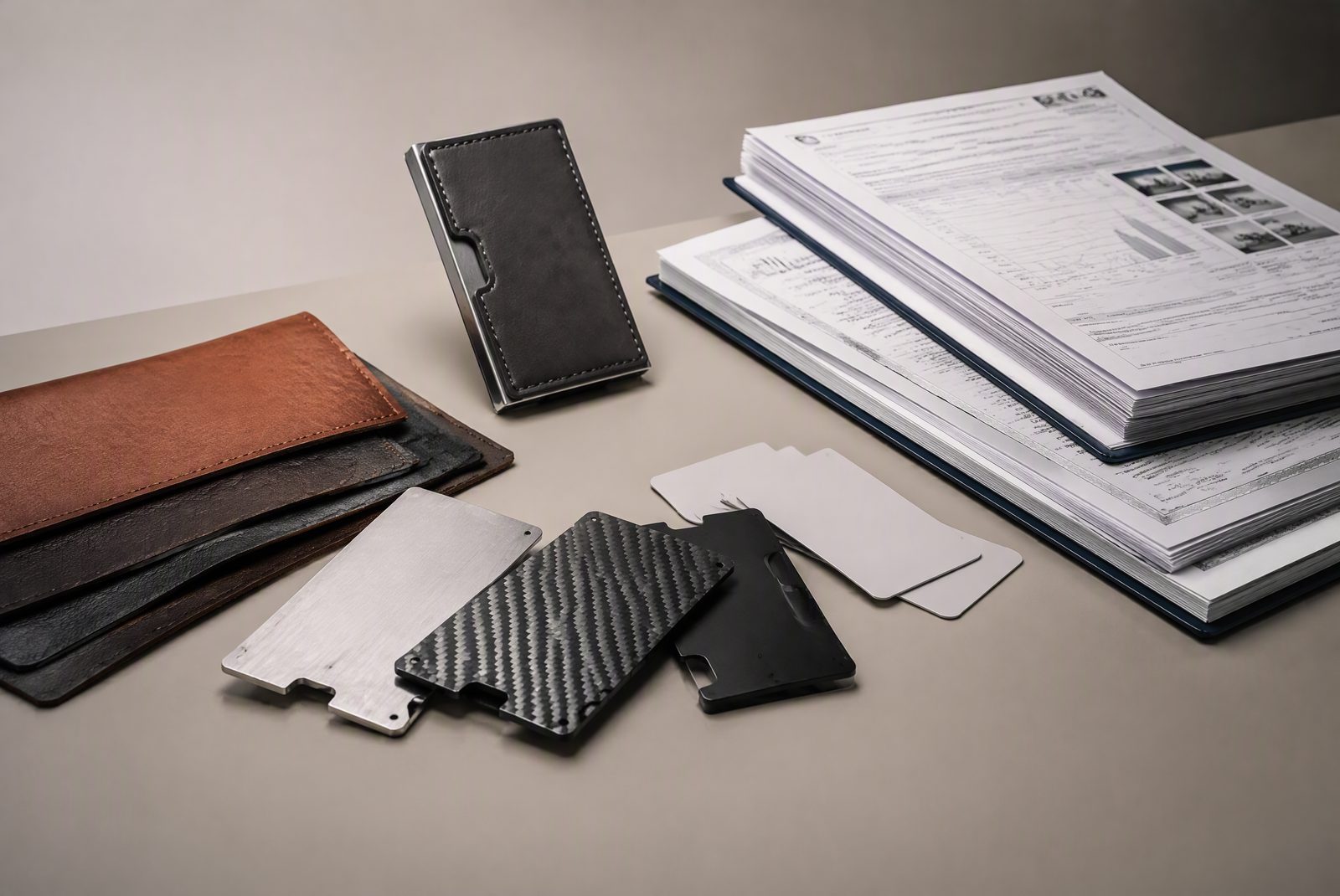
Why a compliance checklist is now part of wallet sourcing
US retailers and marketplaces run vendor compliance portals that request test data before a new SKU can list; EU distributors request REACH declarations as a standard purchasing condition; and customs authorities on both sides can stop an article at the border if paperwork is missing — and a held shipment or delisted product costs far more than the test that would have prevented it.
Regulatory requirements change and vary by market; treat this as a starting checklist and confirm current rules with a compliance professional or accredited lab before shipping.
United States: CPSIA, Prop 65, and general safety expectations
CPSIA: lead and phthalates on children's products
The Consumer Product Safety Improvement Act sets enforceable limits on children's products: lead in accessible parts is capped at 100 ppm, and eight phthalates (DEHP, DBP, BBP, DINP, DIBP, DPENP, DHEXP, and DCHP) are banned above 0.1% in accessible parts, with third-party testing by a CPSC-accepted laboratory [1].
Most wholesale wallets target adults, and CPSIA's children's-product limits do not directly trigger on an adult wallet. In practice, big US retailers still request lead and phthalate data on adult goods as a condition of onboarding — request it anyway, even when the law does not demand it.
California Proposition 65: warnings, not bans
Prop 65 is a California-specific statute — it does not ban products federally, but it does require warnings for listed chemicals. When a product sold — or warehouse-fulfilled — in California exposes consumers to any listed chemical, including lead, DEHP, and DINP, the business must provide a clear warning before the exposure, or keep levels below the program's safe harbor limits [2]. Enforcement is active because private parties can sue, which is why US buyers treat Prop 65 documentation as a standard ask.
The practical request: "Do the components contain any California-listed chemicals above safe harbor levels, and if so, what is the warning text?" A supplier that has never heard of Prop 65 is a sourcing risk if your channel includes California.
General product safety expectations
Beyond CPSIA, US law requires products to be reasonably safe and free of hazardous substances, and states layer their own rules on top. The practical gate for an importer is usually the retailer's vendor compliance program — insurance certificates, testing packs, and product liability protection. Confirm the exact list with each retail partner; it differs by retailer.
European Union: REACH, RoHS, and leather-specific limits
REACH: what an article has to prove
Under REACH, an article placed on the EU market must not contain substances of very high concern (SVHCs) above 0.1% by weight [3] without the supplier communicating that presence to the buyer. The candidate list currently holds more than 240 SVHCs and keeps growing [3]. In practice, EU buyers request a REACH declaration from the factory, plus test reports covering the restricted substances that actually appear in wallets — chrome-tanned leather, metal plating, magnets, and zippers.
RoHS: only when the wallet is electronic
The Restriction of Hazardous Substances directive limits ten substances in electrical and electronic equipment [4]. A wallet with a passive RFID-blocking liner is generally not EEE, because the shield is a material, not electronics. The moment a wallet carries a powered feature — a tracker, a battery, a light — it may fall in scope, and your supplier should have component-level data ready.
Leather: hexavalent chromium and azo dyes
EU law restricts hexavalent chromium in leather articles. If a leather part contains 3 mg/kg or more of chromium VI, the article cannot be placed on the market unless it is accompanied by a copy of the test certificate [5]. For a wallet factory, that normally means testing the finished leather — not just the raw hide — because chrome tanning and finishing chemistry both matter.
Azo dyes are a second leather-and-textile trap: dyes that release any banned aromatic amine above 30 mg/kg may not be used in articles that contact skin [6]. Black and navy wallets sold at sharp prices are the classic suspects — ask which tannery or dye house the factory uses and whether the leather carries an azo dye test.
Nickel release: the metal parts you forget
REACH entry 27 limits nickel release from articles intended for direct and prolonged skin contact to 0.5 micrograms per square centimeter per week [7]. Wallet metal fittings — snaps, zipper heads, emblem pins — can exceed that without the right plating. European buyers routinely ask whether metal components are nickel-release tested; a qualified factory already has the answer.
Seven documents to request from your factory
| Document | What it proves | Red flag |
|---|---|---|
| Third-party test report (ISO/IEC 17025 laboratory) | Restricted substances within the limits for your target markets | Undated report, or an "in-house self-test" with no accredited lab |
| REACH declaration | SVHC status and restriction compliance for the article | A blanket "fully REACH compliant" line with no supporting data |
| Chromium VI test certificate (leather) | Leather parts meet the EU 3 mg/kg requirement under entry 47 [5] | The factory refuses to provide one for chrome-tanned leather |
| Material composition list | What each component actually is: leather type, metal, magnet grade, zipper | "Standard materials" with no detail |
| Prop 65 assessment or warning text | California exposure status for listed chemicals [2] | The factory has never heard of Prop 65 |
| Production and QC records | Traceability from material batch to finished piece | Vague answers about where materials come from |
| Compliance responsibility agreement | Who owns each market's rules, in writing | "The buyer handles everything" |
Most factories can provide two or three of these today; the rest belong in your pre-production plan, not in the week before shipment. Out-of-pocket testing cost for one wallet SKU typically lands in the few-hundred to few-thousand dollar range, varying with scope and lab choice (estimate, varies by lab) — small next to one held shipment.
Which compliance path applies to you
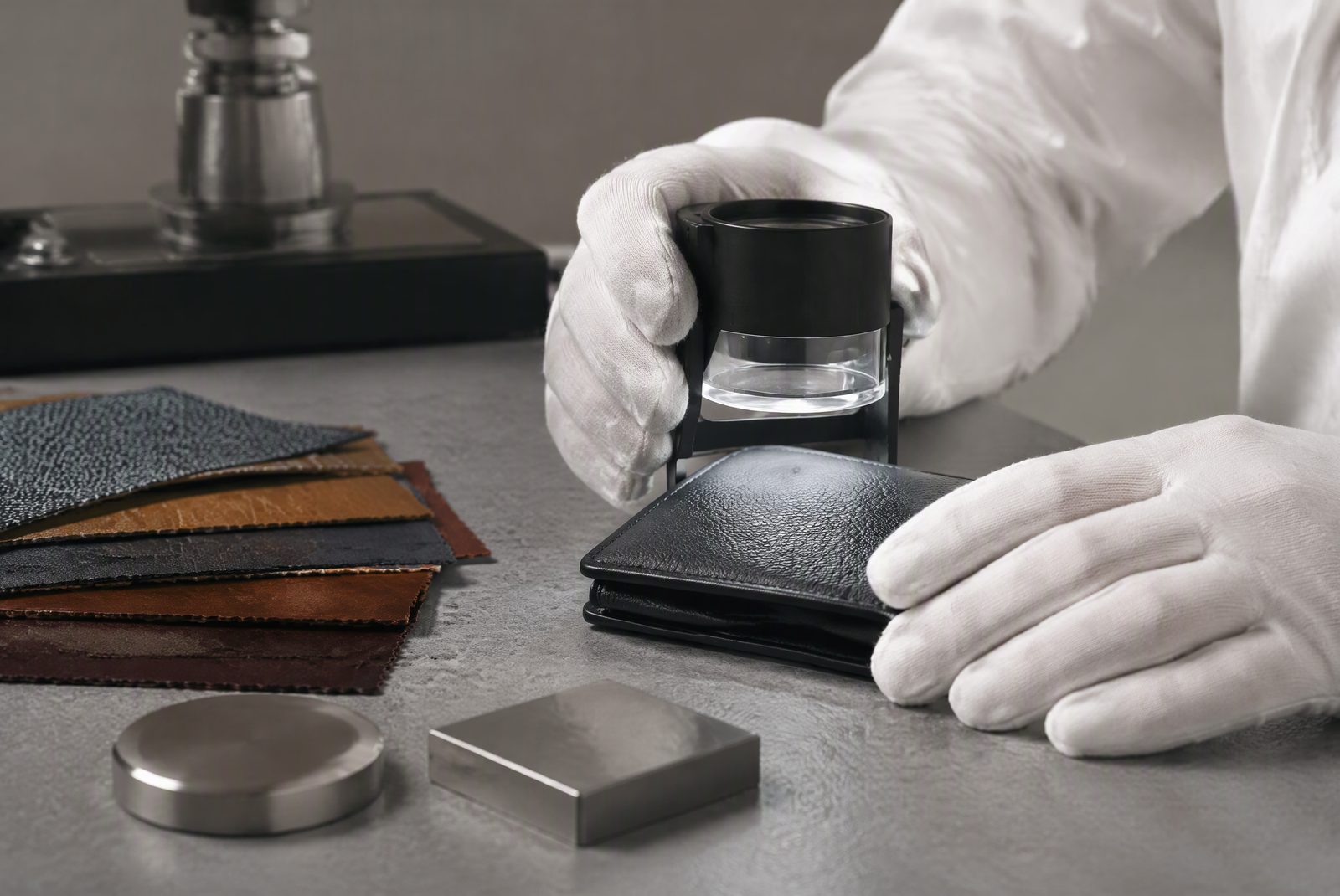
Route A — US retailer or chain onboarding. Expect a vendor compliance portal: product liability insurance, testing certificates, listing data, and sometimes factory audit forms. Your factory's willingness to produce documentation decides how fast this gate opens.
Route B — EU distributor or branded-importer channel. The standard asks are a REACH declaration, a chromium VI certificate for any leather component, and traceability under the EU's General Product Safety Regulation, which applies to consumer products including wallets [8]. An importer of record will hand you their document list directly.
Route C — Marketplaces (Amazon US and EU, Walmart, Etsy). Marketplaces enforce their own document policies: US sellers routinely need Prop 65 awareness for California fulfillment, and EU sellers see REACH data requests on listings. Keep one document pack per marketplace; each portal asks for slightly different files.
How TOPWALLET supports your compliance process

TOPWALLET is an ISO 9001:2015-certified wallet manufacturer in Dongguan with 15 years of manufacturing experience and more than 200 brand partners [9] [10]. Every order runs four-stage quality control with AQL 2.5 sampling, and materials come from documented systems: aerospace-grade aluminum, full-grain leather, and rare-earth magnet assemblies [9].
For compliance work, the factory can arrange material testing on leather, metal, and magnetic components, coordinate certification documents and test reports, and supply the material lists and QC records that feed the seven documents above [10]. The practical habit: open a compliance request at the sampling stage, so the sample you approve is the same material specification you will later defend at customs — samples are delivered in 7 days [9]. The certifications page walks through the details: TOPWALLET's certifications and quality documentation.
FAQ
Do all wallets need REACH testing?
REACH applies to articles placed on the EU market, so the obligation is per product and per substance, not a blanket "test every wallet." What buyers actually request is a REACH declaration plus test reports for the restricted substances that can appear in wallet materials — chromium VI in leather, azo dyes, and nickel in metal parts [3] [5].
Is Prop 65 a federal ban?
No. Prop 65 is a California warning law. Compliance means either keeping listed chemicals below safe harbor levels or providing a clear warning before exposure [2].
Does CPSIA apply to adult wallets?
The children's-product limits — 100 ppm lead, 0.1% phthalates — trigger on products for children 12 and under [1]. Adult wallets often sit outside CPSIA's children's-product scope, but major US retailers request CPSIA-style test data on adult goods anyway.
Does RoHS apply to RFID-blocking wallets?
Usually not. RoHS covers electrical and electronic equipment [4], and a passive RFID-blocking liner is material, not electronics. If the wallet has a powered feature, component-level RoHS data becomes relevant.
What if my factory will not share test reports?
That is a decision point, not a negotiation. Test reports, declarations, and QC records are standard export documents; refusing them is a signal to escalate the requirement in writing or switch suppliers before any deposit.
Who pays for compliance testing?
Usually the buyer orders and pays for independent testing; the factory provides materials and supporting documents. Cost for a typical wallet SKU runs from a few hundred to a few thousand US dollars depending on scope and lab (estimate, varies by lab). Some factories fold the sample test into the order — get the arrangement in writing first.
Where to Buy
Planning a private-label or branded wallet program? TOPWALLET's certifications and compliance documentation walks through test reports and the quality standards behind every order.
For wholesale, OEM, or private-label quantities: REQUEST A QUOTE
Sources
- [1] U.S. Government Publishing Office — Consumer Product Safety Improvement Act (CPSIA), Public Law 110-314: children's product lead and phthalate limits.
- [2] California OEHHA — Proposition 65 program and safe harbor guidance.
- [3] European Chemicals Agency (ECHA) — Candidate list of substances of very high concern for authorization.
- [4] European Commission — Restriction of Hazardous Substances (RoHS) Directive.
- ECHA — Substances restricted under REACH (Annex XVII), including entry 47 on hexavalent chromium in leather.
- ECHA — REACH restriction details, including entry 43 on azo dyes.
- EUR-Lex — Consolidated text of REACH (Regulation (EC) No 1907/2006), including entry 27 on nickel release.
- EUR-Lex — Regulation (EU) 2023/988 on general product safety.
- TOPWALLET — About: 15 years of manufacturing, 200+ brand partners, 50,000 units per month, materials, and 7-day sampling. https://topedcwallet.com/about/
- TOPWALLET — Certifications: ISO 9001:2015, four-stage quality control, AQL 2.5. https://topedcwallet.com/certifications/
From article to product
Sourcing minimalist-wallets?
Tell us the format, the quantity and the date you need stock. You get material options, MOQ and a landed-cost range back within one business day.
Keep reading
More on wallet manufacturing
How to Choose Wallet Manufacturers for Custom EDC Production
A procurement guide for evaluating wallet manufacturers on capabilities, certifications, MOQs, and customization. Compare…
ReadShopify Wallet Supplier Setup in 2026: The 60-Day Reorder Math That Keeps You in Stock
A Shopify wallet store rarely fails on design; it fails on supply chain. SKUs…
ReadShipping Wallets From China in 2026: Three Ways to Ship Compared — Air, Sea, and DDP Cost vs. Lead Time for Small and Large Orders
Almost every wallet order from Dongguan ends with the same trade-off: pay for speed…
Read
About the author
Wu, Leon
Leon Wu is the senior product engineer and EDC testing lead at TOPWALLET. He has spent more than a decade on wallet design-for-manufacture, materials and quality control at the company's Dongguan facility, and writes from bench testing, pull-force and 13.56 MHz shielding measurements rather than supplier spec sheets.
Written on the floor
This article was written by our production and QC team — the people who spec tolerances, run the finishing line and inspect every batch. Where it states a capacity, a pull force or a lead time, it comes from a measurement we made, not a supplier’s catalogue. If a number here disagrees with what your own supplier told you, tell us; several of these articles started as a correction from a buyer.
See how the factory works · Inspection process · Sourcing FAQ
Sourcing minimalist-wallets?
Tell us the format, the quantity and the date you need stock. You get material options, MOQ and a landed-cost range back within one business day.