
Wallet Manufacturing · 9 min read
Shipping Wallets From China in 2026: Three Ways to Ship Compared — Air, Sea, and DDP Cost vs. Lead Time for Small and Large Orders

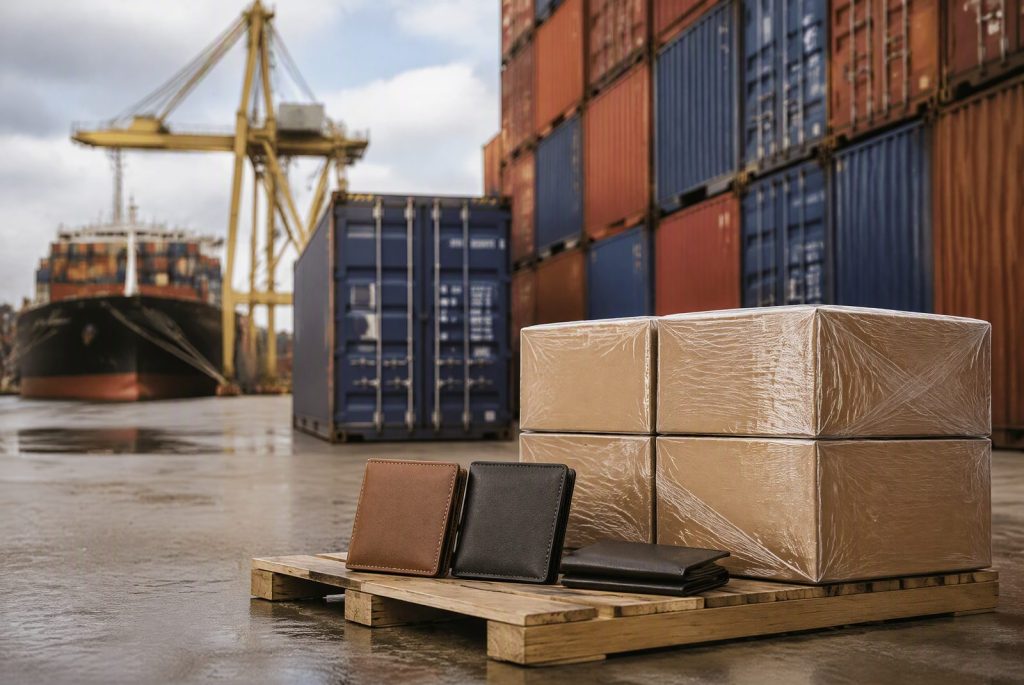
Almost every wallet order from Dongguan ends with the same trade-off: pay for speed with air, or save money with sea. This guide compares the three practical options in 2026 — express courier, air freight, and sea freight — plus the decision to buy DDP instead of DAP, across lead time, cost range, order size, and risk. Scope: wallet shipments from South China to the US and EU, for both first samples and container programs. Bottom line: samples move by courier, wholesale programs by sea, and DDP when you want one predictable landed price and do not mind paying for it.
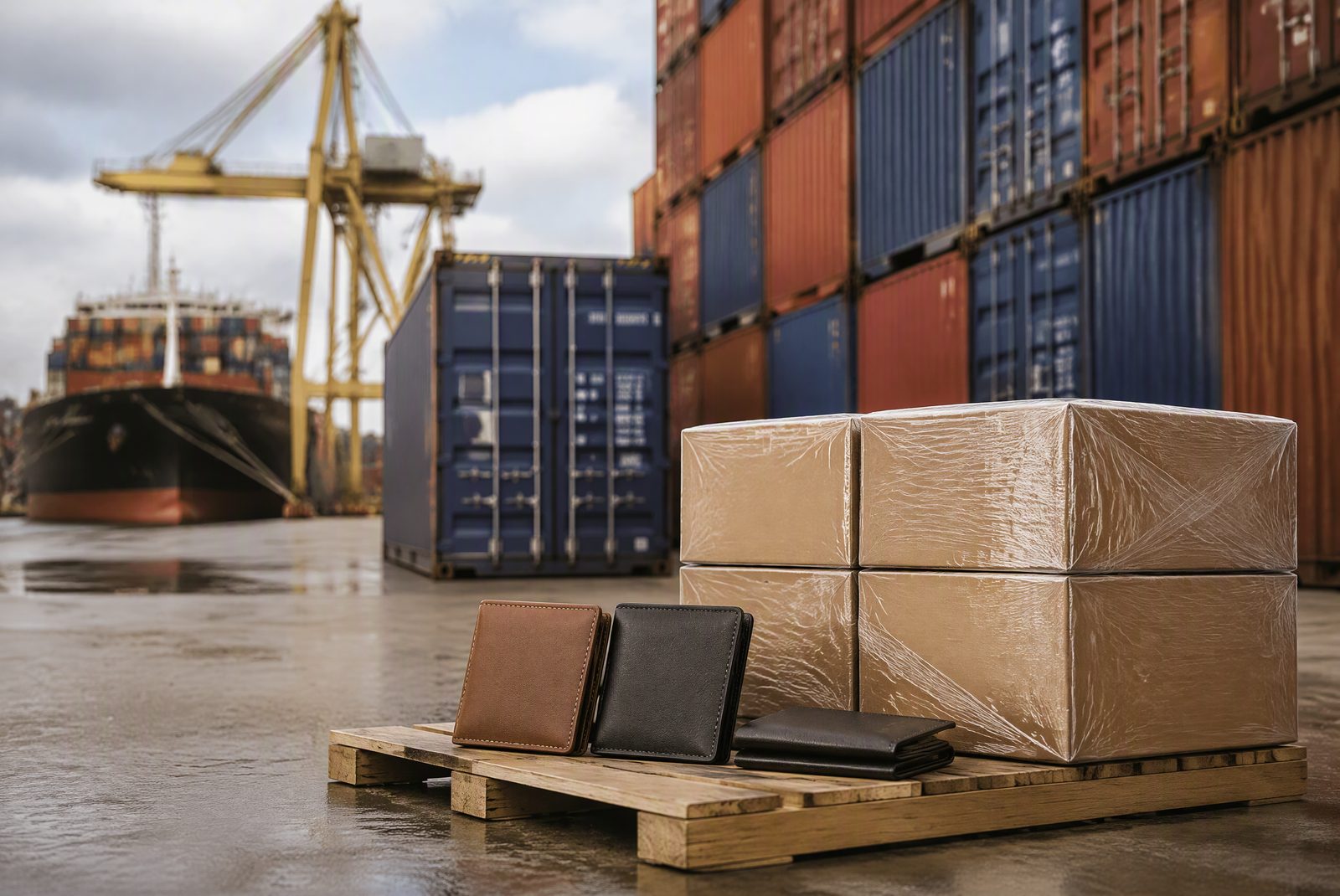
Quick comparison: three ways to ship
| Method | Door-to-door lead time | Cost range | Best order size | Main risk |
|---|---|---|---|---|
| Express courier (DHL, FedEx, UPS) | 3–7 days | $6–$14 per kg (estimate, varies by route/carrier) | Samples, urgent fills, orders under roughly 50 kg | Highest per-unit cost; fuel and peak-season surcharges |
| Air freight | 6–12 days | $4–$9 per kg plus terminal fees (estimate, varies by route/carrier) | 50–1,000 kg per shipment | Priced on volume, not weight, and boxed wallets are bulky |
| Sea freight, LCL (shared container) | 25–40 days door to door | $0.5–$2 per kg shipped, or per cubic meter (estimate, varies by route/carrier) | 1–10 m³, or hundreds to a few thousand units | Slow transit; capacity and port delays are common |
| Sea freight, FCL (full 20-ft container) | 30–45 days door to door | Flat per-container rate (estimate, varies by route/carrier, per our protocol) | Large programs — enough volume to fill a container | Capital locked in transit; single-point delay risk |
Freight rates move weekly with spot markets — treat every number above as a planning range, not a quote [7].
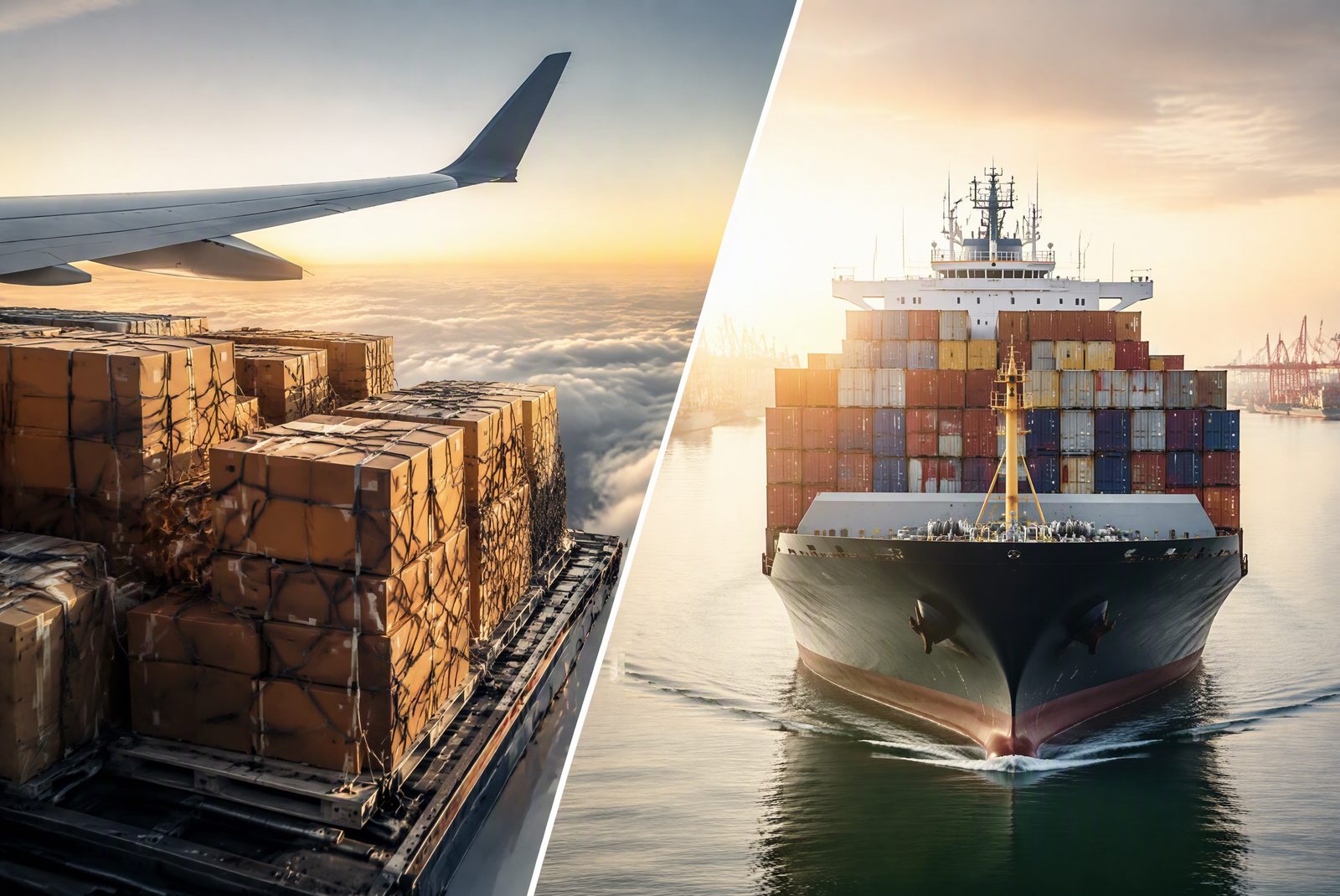
Three ways to ship wallets, and when each one makes sense
Express courier: samples and small fills
Express courier (DHL, FedEx, UPS) runs 3–7 days door to door from Dongguan to most US and EU cities, tracked at every stop — the right tool for samples, urgent fills, and first orders too small for freight (estimate, per our protocol). The price is the problem: at $6–$14 per kg (estimate, varies by route/carrier), shipping a 30 kg carton can cost more than the goods inside.
Air freight: the middle ground
Air freight moves a 50–1,000 kg order from factory to your forwarder's local ramp in roughly 6–12 days (estimate, varies by route, per our protocol). Air is priced on chargeable weight — box volume against real weight — and wallets are bulky in boxes, so packaging quietly inflates the bill. Air makes sense when a launch date or retail PO deadline is real, not when it is only impatience.
Sea freight: the standard for wholesale
Sea freight is where economical wallet programs live. LCL (less than container load) shares a container: 25–40 days door to door (estimate, varies by route), and you pay for your space in cubic meters or per kg. FCL (full container load) is the step up for regular volume: 30–45 days door to door (estimate, per our protocol), with a per-unit freight cost that drops to a small percentage of landed cost. The trade-off is time: you finance inventory that sits on the water for a month or more.
DDP or DAP: letting the seller handle the border
DAP (Delivered at Place) and DDP (Delivered Duty Paid) are Incoterms 2020 rules defining who clears the border and who pays the duty [1]. With DAP the seller delivers to the named place and the buyer handles clearance and duties; with DDP the seller owns the full journey — freight, insurance, clearance, duties, taxes — and quotes one landed price.
DDP sounds like a convenience, and it is, with two conditions: (1) the quote must itemize freight, insurance, customs clearance, and duty so you can see what you are paying for, and (2) classification risk sits with the seller, so a misdeclared HS code is their problem, not yours. If a supplier quotes DDP with no breakdown, ask for the line items.
What actually makes up your landed cost
Every landed cost stacks the same layers: factory price, inland transport in China, ocean or air freight, transit insurance, customs clearance, duty, and — in most EU countries — import VAT. The common mistake is comparing quotes that include different layers: one vendor's "shipping" is another's "door to door."
Two details matter. First, the duty base differs by market: the US generally values goods on the transaction (invoice) value, while the EU assesses on the CIF value — same invoice, different math [4]. Second, duty is only part of the bill: clearance fees, broker fees, and any tariffs on China-origin goods are separate line items that change with policy, so re-confirm rates for each shipment [3].
Small orders vs. large orders: how the math changes
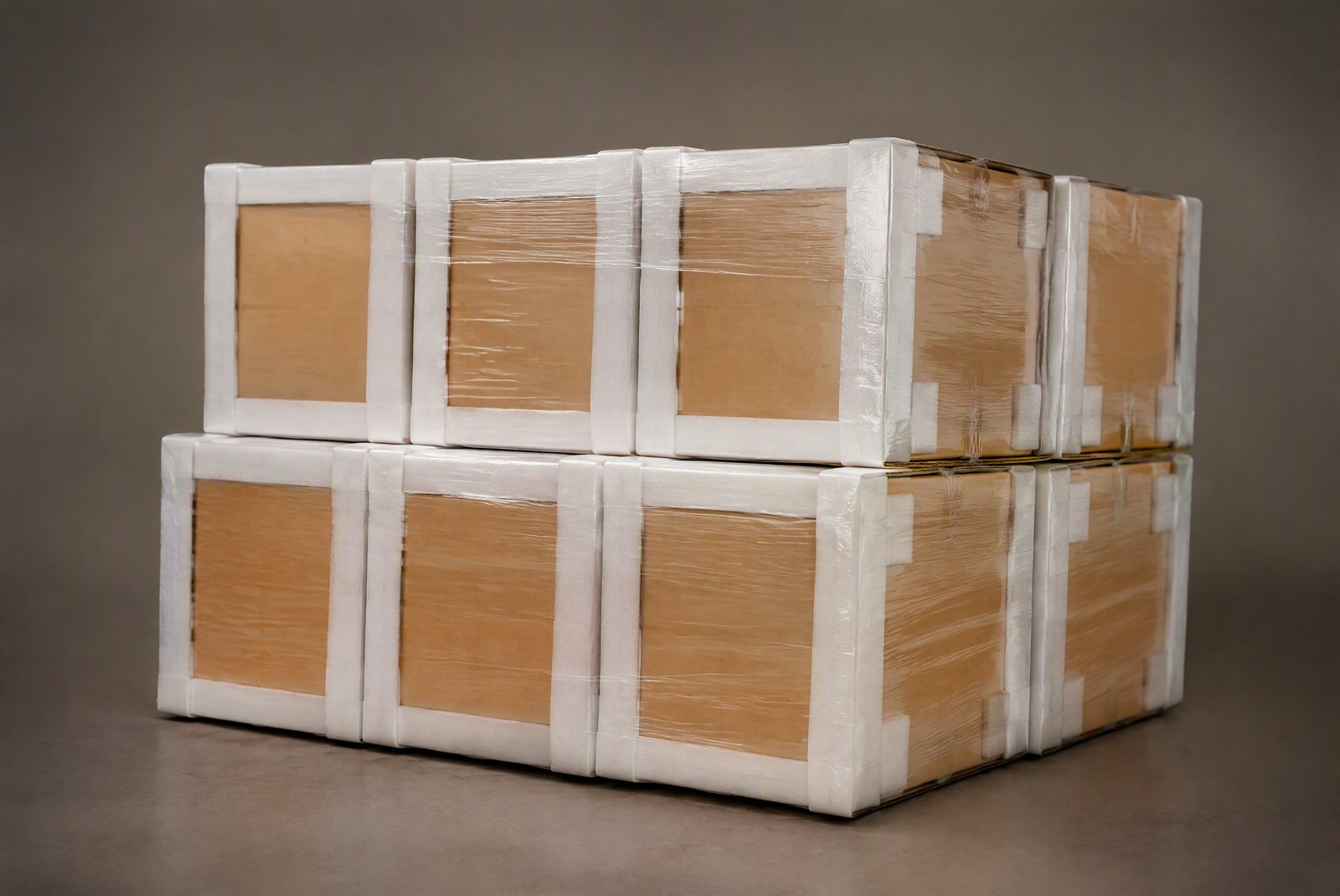
Small orders (a few dozen to a few hundred units). Ship express and let the supplier's structure do the cost work: flexible MOQ lets you validate a first order without committing to volume [6]. Use the 3–7 day courier window to test the market, not to build inventory (per our protocol).
Medium orders (hundreds to about 2,000 units, per our protocol). Compare air versus LCL at quote level on actual volume and weight — packaging density decides the answer. If the order fits a single LCL cubic meter and the timeline allows, sea almost always wins on cost.
Large orders (container scale). FCL at a flat per-container rate (estimate, varies by route/carrier, per our protocol) makes per-unit freight a rounding error, but it changes your planning: production lead time plus 30–45 days of transit means ordering roughly 10–12 weeks ahead of your target launch. The per-unit savings pay for a customs broker and a pre-shipment inspection — both worth having at this scale.
Timeline planning: sampling, production, and transit
| Stage | Typical duration | What to watch |
|---|---|---|
| Sample and approval | 7 days (TOPWALLET standard) [5] | Add courier time and revisions on top |
| Bulk production | 30 days (TOPWALLET standard) [5] | Freeze specs, artwork, and packaging first |
| Express delivery | 3–7 days (per our protocol) | Best for samples and urgent fills |
| Sea transit to US or EU | 30–45 days (per our protocol) | Plus 2–7 days customs release |
| Total minimum lead time (sea program) | About 10–12 weeks | From confirmed deposit to delivery at your warehouse |
Start an ocean-based program 10–12 weeks ahead, keep an express lane for the launch fill, and let your first orders teach you the real transit time on your route (estimate, varies by route/carrier).
Customs and duties: the parts importers get wrong
Classification first. Most leather and fabric wallets fall under HS heading 4202 in general, with leather wallets commonly classified under 4202.31 in the US Harmonized Tariff Schedule — but the correct code depends on material, construction, and value, so the one that counts is what your broker confirms for your exact product [2]. The EU uses the same HS family in its combined nomenclature with its own duty rates; never quote a duty from memory.
The rate also depends on country of origin, material mix, and active trade measures — including additional tariffs on China-origin goods that change with policy. The reliable workflow: confirm classification in the HTS search tool [2], hand the code and invoice to a licensed customs broker, and have them confirm the rate and any added tariffs before you commit to a DAP or DDP quote [3].
How TOPWALLET supports your shipping plan
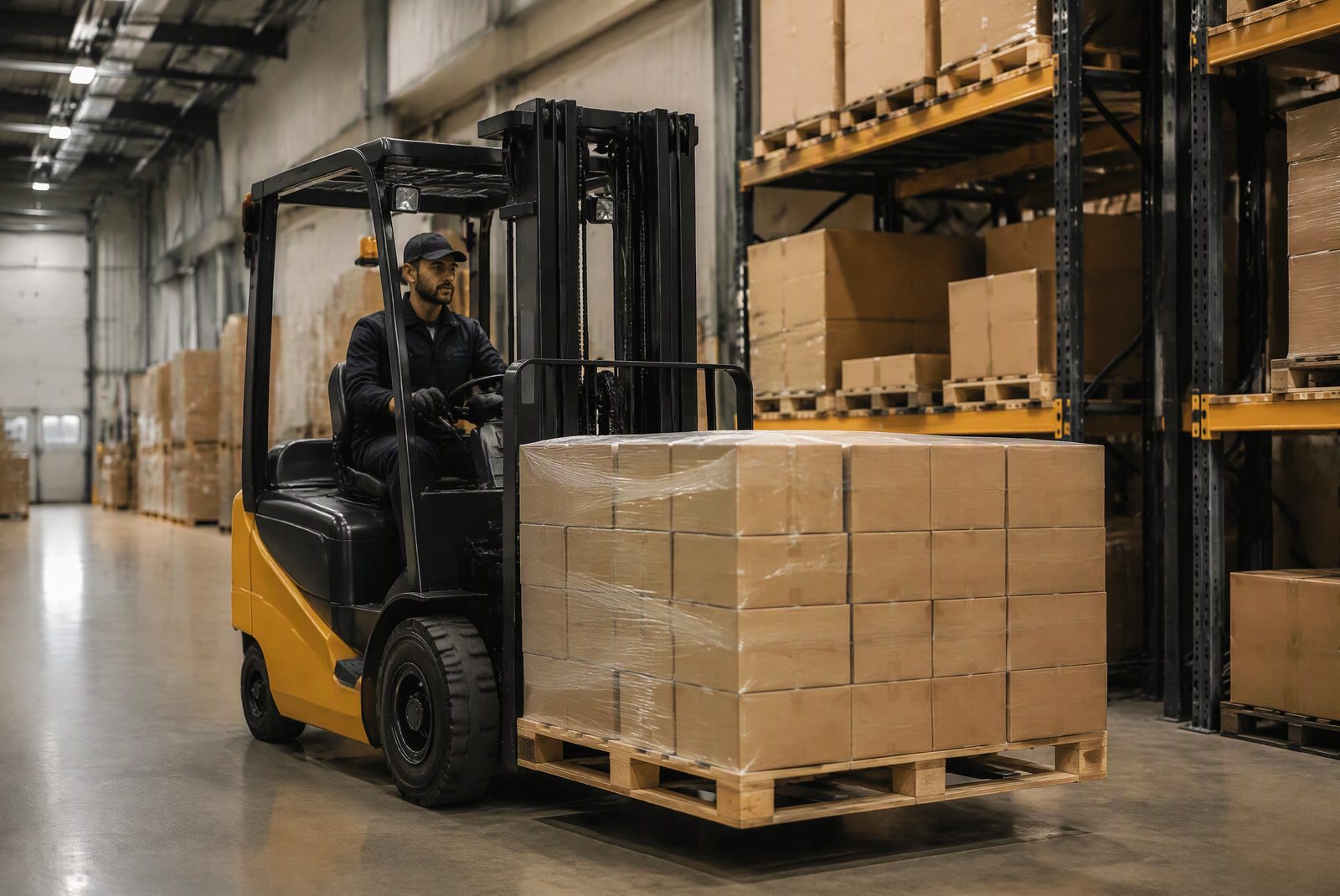
TOPWALLET quotes in FOB, DAP, or DDP terms and coordinates export documentation — commercial invoice, packing list, and certificates of origin where required — so the hand-off to your forwarder is clean [5]. Packing is part of the service: boxed, retail-ready, and cartonized to keep volume charges predictable, since air freight prices on boxed volume more than on weight.
The factory side of the schedule is fixed and verifiable: samples in 7 days, bulk production in 30 days, and four-stage quality control with AQL 2.5 inspection before release [5]. An order that ships late from the factory cannot be fixed by any transport service — choose a supplier whose production clock you can trust. Flexible MOQ means a small first order can validate both product and transit math before you commit to container volume [6]. Order-process questions live in the FAQ.
FAQ
How long does shipping from China to the US actually take?
Plan around two numbers: samples and urgent fills by express courier in 3–7 days (estimate, varies by route/carrier, per our protocol), and sea freight in 30–45 days door to door (estimate, varies by route, per our protocol). Customs release, port congestion, and seasonality add days on top; budget the longer end.
Is air freight ever worth it for a large order?
Only when a dated commitment — a retail PO, a launch, a trade show — is worth more than the freight savings. At container volumes the air premium usually exceeds the value of the time saved; reserve air for fills, not the base program.
What does DDP include, and what does it not include?
Under Incoterms 2020, DDP puts freight, insurance, clearance, duty, and taxes on the seller, delivering to your named place [1]. It does not include what happens on your side after delivery — unloading, internal distribution, or changes requested mid-transit. Ask for an itemized DDP quote, not a single lump.
Who owns the risk during sea transit?
The Incoterms rule you choose decides it [1]. Under DAP or DDP the seller carries the delivery risk; under EXW or FOB the risk passes to you earlier. Insure the cargo either way — transit insurance is a separate line item in the landed-cost stack.
What is the cheapest way to ship a small first order?
Combine a low-MOQ supplier with express courier: you validate the product for a modest freight bill instead of financing a container [6]. It is the highest per-unit cost per kg, but the smallest cash outlay for the information you get.
Do I need a customs broker, and what do they cost?
For any sea freight or DDP/DAP move, yes — a licensed broker clears the entry, confirms classification, and flags applicable duties and tariffs [3]. Brokerage is usually a flat fee or small percentage (estimate, varies by broker and shipment) that pays for itself the first time it catches a misclassification.
Where to Buy
Questions about MOQ, packing, or quote terms? Shipping and ordering answers in our FAQ covers the order process from first inquiry to delivery.
For wholesale, OEM, or private-label quantities: REQUEST A QUOTE
Sources
- [1] International Chamber of Commerce — Incoterms 2020 (DAP and DDP rules).
- [2] U.S. International Trade Commission — Harmonized Tariff Schedule online search (HS classification, including 4202.31).
- [3] U.S. Customs and Border Protection — Basic import and export: entry process and clearance.
- [4] U.S. Code of Federal Regulations, Title 19 Part 152 — Appraisement and valuation of imported merchandise (transaction value basis).
- TOPWALLET — About: 7-day sampling, 30-day production, four-stage QC, and AQL 2.5. https://topedcwallet.com/about/
- TOPWALLET — FAQ: flexible MOQ and small first orders. https://topedcwallet.com/faq/
- Freightos — Freightos Baltic Index, the ocean spot-rate reference.
From article to product
Sourcing minimalist-wallets?
Tell us the format, the quantity and the date you need stock. You get material options, MOQ and a landed-cost range back within one business day.
Keep reading
More on wallet manufacturing
How to Choose Wallet Manufacturers for Custom EDC Production
A procurement guide for evaluating wallet manufacturers on capabilities, certifications, MOQs, and customization. Compare…
ReadWallet Compliance Checklist 2026: 7 Steps to Clear REACH, CPSIA, Prop 65, and RoHS for Wallets Sold in the US and EU
Most wallet import problems are preventable before production starts: US and EU rules are…
ReadShopify Wallet Supplier Setup in 2026: The 60-Day Reorder Math That Keeps You in Stock
A Shopify wallet store rarely fails on design; it fails on supply chain. SKUs…
Read
About the author
Wu, Leon
Leon Wu is the senior product engineer and EDC testing lead at TOPWALLET. He has spent more than a decade on wallet design-for-manufacture, materials and quality control at the company's Dongguan facility, and writes from bench testing, pull-force and 13.56 MHz shielding measurements rather than supplier spec sheets.
Written on the floor
This article was written by our production and QC team — the people who spec tolerances, run the finishing line and inspect every batch. Where it states a capacity, a pull force or a lead time, it comes from a measurement we made, not a supplier’s catalogue. If a number here disagrees with what your own supplier told you, tell us; several of these articles started as a correction from a buyer.
See how the factory works · Inspection process · Sourcing FAQ
Sourcing minimalist-wallets?
Tell us the format, the quantity and the date you need stock. You get material options, MOQ and a landed-cost range back within one business day.