

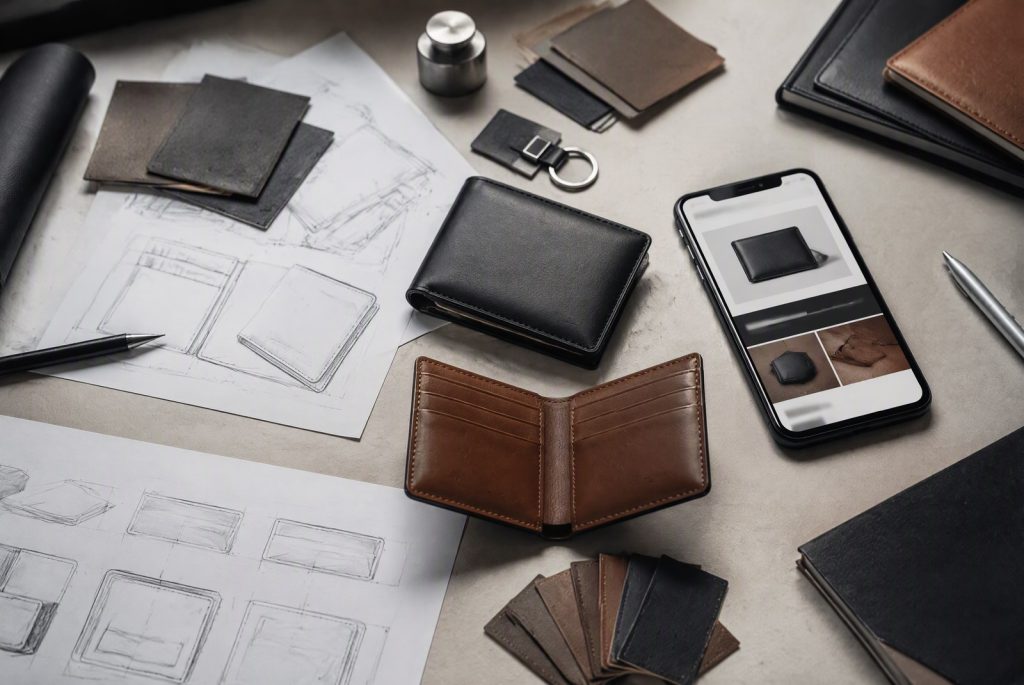
Launching a wallet brand in 2026 is a different game than it was in 2016. The barrier to entry fell — factory-direct manufacturing, dropshipping infrastructure, and AI-assisted content production are all accessible to a solo founder — while the cost of getting it wrong rose, because the category is saturated and the search landscape rewards depth, trust, and differentiation more than logos and listing copy. This is the complete playbook for starting a wallet brand in 2026: market checks, product and supplier decisions, launching, and the SEO engine that turns a new site into a compounding asset.

What this guide covers: the market reality check, choosing a niche and product line, working with factories direct (including the manufacturer-direct route that changes new-brand economics), pricing and margin math, building the store, and the content architecture that earns search traffic from month one. At the end you'll have a launch checklist you can execute in 8–12 weeks, not a theory.
1. The Wallet Market in 2026 — Where New Brands Still Win
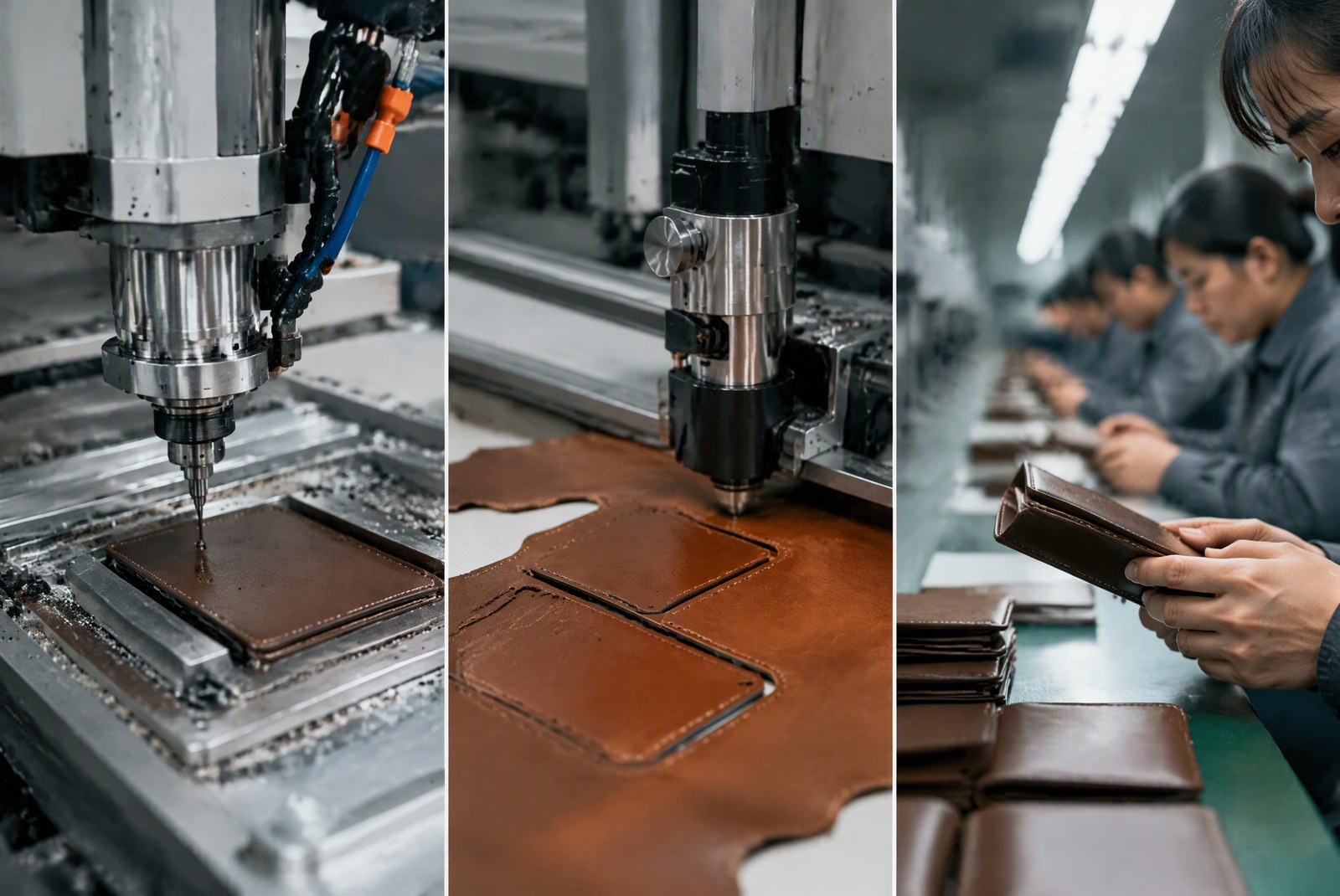
The global wallet category is mature but not static. The segments with real search growth in 2025–2026 are minimalist metal wallets, money clip wallets, leather cardholders, and gift-season wallet searches ([1][2][5][6]). Each behaves differently on Google:
- Metal wallets: high purchase intent, strong brand-recall fights between a few incumbents, and room for value and weight differentiation ([3][6]).
- Money clip wallets: a long-tail-heavy segment where intent varies from "best money clip wallet" (research) to specific mechanism questions (clip vs magnet) — a content-rich lane for a new site ([1][5]).
- Leather accessories: the crowded lane, where new brands win on niche — full-grain minimalism, vegetable-tan heritage, or price-point clarity ([1]).
- Gift wallets: seasonal demand with high conversion; Father's Day and the December window dominate ([5]).
The founders' insight that still holds: don't launch "a wallet brand" — launch a wallet brand for one specific search-driven niche. The niche defines the product line, the supplier, the content topics, and the Google pages you can win in the first year.
Two more signals deserve attention in 2026. First, AI answer engines now mediate a growing share of wallet purchase research — ChatGPT, Perplexity, and Google's AI Overviews cite source pages when they answer "best metal wallet" or "how to start a wallet brand" ([2][5]). That changes content strategy: pages written as complete, quoted answers to real questions get cited; pages that pad word count to target a keyword do not. Second, the cost of entry dropped at both ends — factory-direct sourcing cut the supply-side floor, and AI-assisted production cut the content-side floor — so the moat is no longer capital; it is execution depth: product honesty, page completeness, and compounding topical authority ([5][6]).
2. Validating the Niche Before You Spend a Dollar
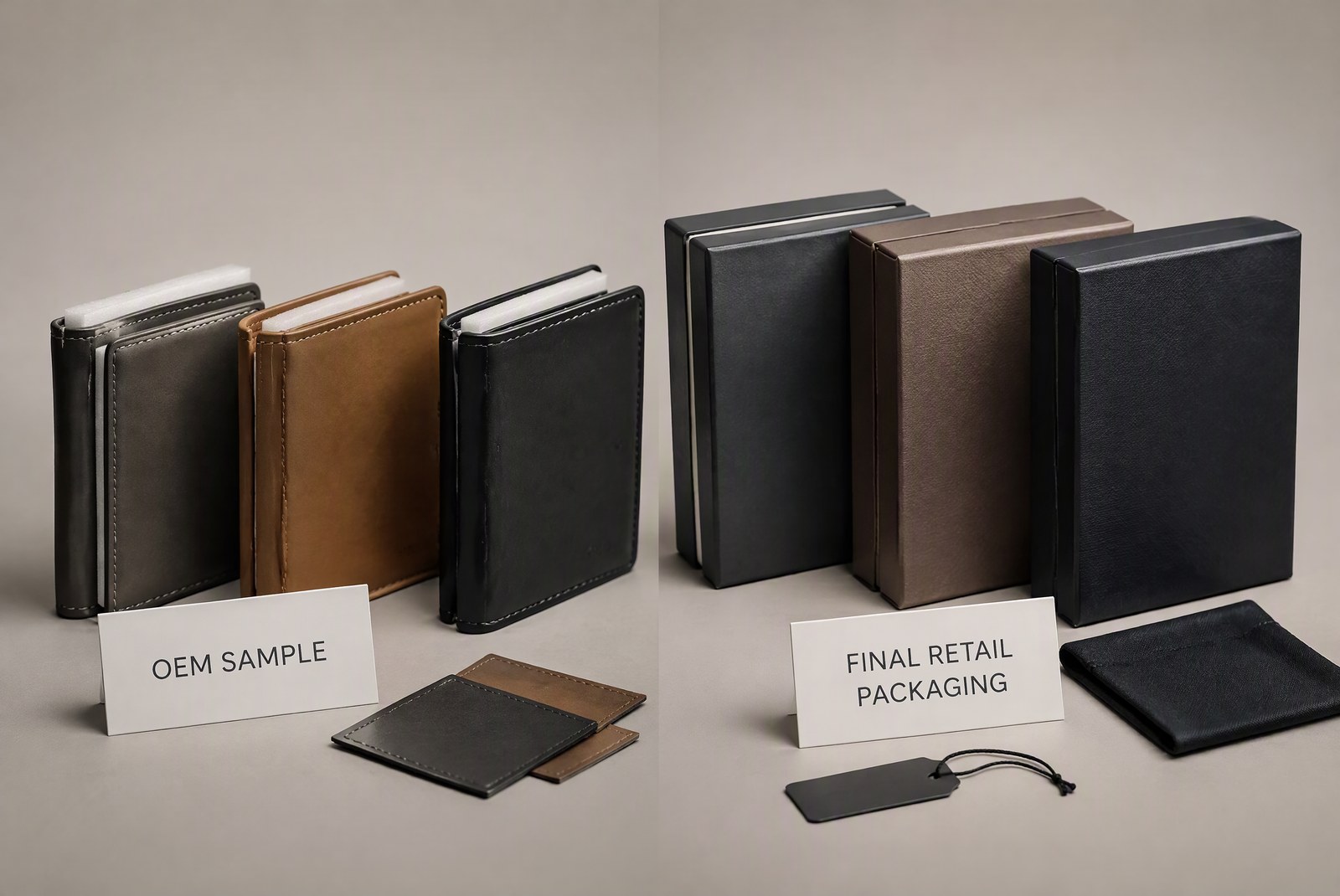
Validation is three checks, in order, each one scrappier than the last:
- Search demand check. Pull the head terms for your niche — "best metal wallet", "best money clip wallet", "ridge wallet alternatives" — and map monthly volume against competition. Ignore vanity volume; what you want is evidence that people search buying-intent phrases in your niche, because those convert ([2][3][5]).
- SERP competition check. Search each head term and count what ranks: if the top ten are all Amazon listings and thin content, a deeper site wins fast. If the top ten are entrenched brand sites with long-form content and real reviews, expect a six-to-twelve-month climb ([2]).
- Supply check before demand check arms. Confirm at least two factories can build your exact product at your target price before you commit to a niche — nothing kills a launch like a product you can't actually source ([5][6]).
The output of validation is a one-paragraph niche statement: "We sell to [buyer] at [price], sourced from [supplier type], and we'll win search with [content angle]." If you can't write that paragraph, you haven't validated yet.
A note on what "buyer" means for a wallet brand: the end customer and the wholesale customer are different businesses with different unit economics. A B2B wallet brand selling to other brands, distributors, and retailers runs a smaller catalog, bigger order minimums, and a consultative sales cycle; a DTC brand sells units one at a time online. Decide which side of the line you are on before you pick a supplier — a factory that quotes DTC-friendly low MOQs and one that quotes B2B volume pricing are different conversations, and mixing them wastes weeks of negotiation ([5][6]).
3. Choosing the Product Line — Small Catalogs Beat Wide Ones

New brands fail with wide catalogs because every SKU multiplies photography, content, stock, and quality-control burden. The winning 2026 pattern is a narrow, deep line:
- One hero model — the product your niche is searching for, built to be the best version of that thing at your price point.
- One to three derivatives — material variants (aluminum vs carbon fiber vs leather) rather than new shapes, so tooling and photography amortize ([3][6]).
- One or two accessories — a money clip add-on, a cardholder companion, a gift bundle. Accessories lift average order value without multiplying manufacturing complexity ([5]).
Your hero model must answer the exact question your niche asks: if the niche searches "best metal wallet", the hero is a metal wallet that wins on weight or price; if it searches "best money clip wallet", the hero is the clip design that solves the grip problem first ([5]).
Material literacy is a founder competence now. Buyers compare material grades the way they compare specs: aluminum 6061-T6 vs 7075-T6, titanium TC21 vs Gr5, steel 304 vs 316L, 3K carbon fiber layup quality ([6]). Nickel-free budgets, anodized vs PVD finishes, Damascus patterns — these are the vocabulary your product page, your FAQ, and your support replies need to speak correctly. The factories that matter publish this vocabulary; learn it from supplier spec sheets and from the comparison pages already ranking, and write it accurately in your own material guide ([2][6]). Getting material claims wrong is the fastest way to lose the trust a new brand cannot afford to spend.
4. The Supplier Decision — Quick Comparison Table: Factory-Direct vs Retail-Ready vs OEM
The wallet supply chain offers three routes, and the economics decide which one fits your stage ([5][6]):
| Route | What You Get | MOQ | Margin | Best For |
|---|---|---|---|---|
| Manufacturer-direct (OEM) | Your brand on factory-built product, custom materials and finishes | Low–medium (100+ units for logo-only) | Best — no middleman | Brands committed to a niche ([5][6]) |
| Wholesale/white-label | Ready-made product with your logo | Medium | Good | Fastest to first shipment ([5]) |
| Dropship | No stock, third-party fulfillment | None | Thin | Validation only ([2]) |
The manufacturer-direct route deserves special attention because it changed new-brand economics: a factory like GSTAR (Shenzhen, founded 2012, 13+ years' production experience, 200+ staff, 8,000 m² plant, 300,000+ units/month capacity) builds metal wallets in aluminum 6061-T6/7075-T6, titanium TC21/Gr5, steel 304/316L, and 3K carbon fiber with anodized, PVD, titanium-gradient, and Damascus finishes, under SGS + TUV-certified standards ([6]). Factories at this tier run eight customization dimensions — size, structure, material, color, finish, logo, packaging, and accessories — with a 100-unit logo-only MOQ ([6]). That is a viable path for a solo founder: prototype with the factory, order a first batch at low MOQ, and iterate.
TOPWALLET (Dongguan), a B2B wallet manufacturer selling factory-direct, is the same channel family: the production lines that supply established brands also serve direct buyers, which is how new brands access retail-grade construction without retail-grade pricing ([5]).
The checklist for supplier vetting: (1) request material certificates (aluminum 6061-T6, titanium Gr5, steel 304/316L), (2) order a physical sample, not only photos, (3) ask for finish samples (anodized, PVD, gradient), (4) test the mechanism (band tension, clip spring, ejector) with a 30-day EDC simulation, and (5) get the QC terms in the contract — defect rate, rework, and lead time penalties ([6]).
5. Pricing and Margin Math That Actually Works
Wallet buyers anchor to visible price points: budget under $30, value $30–$60, premium $60–$120, boutique above $120 ([1][3][4]). Your margin math must work at the effective price after launch discounts, and the formula is simple:
- Retail price = COGS × 4 to 6, after factory-direct sourcing — below 4×, you can't fund ads and content; above 6×, you face price pushback ([5]).
- Effective price floor on launch: keep 30%+ gross margin after your launch discount, or the launch loses money on every order, per the margin discipline of factory-direct launches ([5]).
- Average order value lever: accessories and gift bundles push AOV up without dragging the hero price down ([5]).
Do not copy competitor pricing; copy their margin structure. A retail-level competitor without factory-direct sourcing has a different cost stack than you do — your advantage is pricing power or margin, not both, and you should pick one deliberately ([5][6]).
A realistic first-year budget split. For a lean launch budget of, say, $3,000–$10,000, the split that has worked for comparable DTC launches is roughly: 40–50% product (samples, QC, first batch), 15–20% store and photography, 25–35% content and one trade-show or channel cost, and 10% buffer ([5]). Resist the temptation to spend the buffer on inventory before content — in the first year, content is what earns traffic; inventory only earns carrying cost until the traffic exists ([2][5]). Revisit the split quarterly: once organic traffic compounds, the ratio flips toward product depth and customer acquisition.
6. Building the Store: Platform, Conversion, and Trust
For a 2026 wallet brand, the stack writes itself: WordPress + WooCommerce for ownership and SEO control, or Shopify for speed-to-cart; either works, the commitment is content depth ([5]). What decides success is not the platform but four trust and conversion investments:
- Real photography. Hero shots, material close-ups, scale shots (wallet on the hand, in the pocket), and lifestyle context. Stock images are a trust killer in a category where buyers judge materials by eye ([3][5]).
- Honest product dimensions and specs. Thickness, card capacity, material grade, weight, mechanism type — the exact specs shoppers compare. The comparison-table pages in your niche already teach buyers what to look for; meet those expectations head-on ([5][6]).
- Risk reversal. A return window long enough for 30 days of carry, with a clear policy — the standard carry trial in this category ([1][3]). Metal wallets are bought once and judged daily; the guarantee is the conversion lever ([1][3]).
- A visible contact and about path. B2B buyers and media-checking founders look for a real manufacturer story, warranty terms, and contact — this also feeds your site's credibility signals for search ([5][6]).
Mobile is the only storefront that matters for wallets. Over half of wallet purchase traffic arrives on phones, and a wallet page is a spec page: buyers zoom material shots and compare thickness tables on a 390 px viewport ([5]). If your product page is not fast, not zoom-friendly, and not readable one-handed, the conversion loss is structural — no ad budget or discount can fix a page that doesn't render on the device doing the buying. Test the product page on a real phone before you spend a dollar on traffic ([2][5]).
7. The SEO Engine: Content Architecture That Earns Traffic
This is the section that changes your launch outcome. A new wallet brand site starts with authority near zero, so the content plan must be built to win low-competition, high-intent queries fast, then climb to head terms ([2][5]):
- Tier 1 — comparison and "best" pages for your niche (e.g., "best money clip wallets 2026"): these target research-intent head terms with real competition; they build topical proof and internal-link targets ([1][5]).
- Tier 2 — "vs" and alternative pages (e.g., "ridge wallet alternatives"): medium competition, high buyer intent, and fast wins because they answer a specific comparison a shopper already made ([3]).
- Tier 3 — long-tail question and guide pages (mechanisms, materials, care, gifting): low competition, high volume in aggregate, and the pages that appear in AI overviews once your site has topical depth ([5]).
- Hub-and-spoke internal linking: every tier-3 page links to your tier-1 and product pages; every tier-1 page links to your hero product. This is how topical authority compounds instead of scattering ([5]).
Seasonal pages — a "Father's Day wallet gifts" guide published 8–10 weeks before the date — multiply this engine during gift windows ([5]).
The execution standard matters as much as the plan: Google rewards content that answers the query completely — specs, tables, mechanism explanations, and honest trade-offs — over content that merely targets the keyword ([2]). Publish depth, not volume.
Writing pages that AI answer engines will cite. The same pages that rank in Google now feed the answer engines — ChatGPT, Perplexity, and AI Overviews summarize factual questions and link their sources ([2][5]). Three habits measurably raise citation odds: (1) answer the question in the first two sentences in a form that reads like a definition, (2) keep every factual claim — thickness, weight, capacity, material grade — next to its source reference rather than scattered through the paragraph, and (3) include a direct comparison table when the query is a comparison ([2][5]). Content written this way serves both engines at once; the alternative — keyword-padded prose — serves neither.
The first-year content cadence. Consistency beats bursts: one deep article per week outranks two rushed articles per week in year one, because indexation, internal-link flow, and topical authority compound on a steady pipeline ([5]). Pair every article with one internal link from the hub page and one link out to the next relevant article; that linking practice is what turns a set of articles into a topic cluster Google can read as authority on the niche ([2][5]).
8. Launching: The 90-Day Sequence
- Weeks 1–2: sample with two factories, validate materials and finishes, lock the hero model spec ([6]).
- Weeks 3–5: build the store; write one hero product page that states specs, materials, mechanism, and guarantee.
- Weeks 6–8: publish tier-3 SEO content (mechanism guides, material guides, gifting guides, 6–10 articles), and set up the hub pages they link to ([5]).
- Weeks 9–10: soft-launch to your list with a launch discount; collect first reviews and return data.
- Weeks 11–12: full launch with the SEO pages live, Google's index covered by sitemap, and the first round of comparison content published ([2][5]).
The 90-day goal is not revenue — it is a live site with real content, indexed pages, and 30 days of genuine usage data to fix the product against, the lean-launch benchmark for content-led DTC brands ([2][5]).
The pre-launch indexation checklist. Seven items, each verifiable in minutes, each worth ranked impressions if skipped: (1) sitemap submitted in Search Console, (2) noindex removed from public pages, (3) canonical tags pointing at the correct URLs, (4) a robots.txt that doesn't block CSS or images, (5) Open Graph images set on every shareable page, (6) HTTPS with a valid certificate, and (7) product structured data valid against Google's schema validator ([2][5]). Run this checklist two weeks before launch, not the night before — indexation takes days and the first crawl judges you on what it finds.
9. Common Launch Mistakes and the Fixes
- "Launch wide, see what sticks." Wrong: a five-SKU line floods your content and QC. Narrow and deep wins ([5]).
- "Cheap supplier first." Wrong: the first batch's quality defines the brand; the factory-direct tier with certificates and samples is the price of admission ([6]).
- "SEO is for later." Wrong: the first 90 days of indexing determine whether your site earns anything in month 6, since indexation compounds from the first crawl ([2][5]). Content starts before launch ([2][5]).
- "Copy the leader's site." Wrong: leader brands win on ecosystem and trust you can't copy — you win on a specific axis (price, weight, mechanism, niche), and every page should state that axis ([3]).
- "No margin math." Wrong: a launch discount that burns margin kills the ability to fund content in the all-important first year ([5]).
Launch a Wallet Brand in 2026 — FAQ
How much does it cost to start a wallet brand in 2026?
A lean factory-direct launch runs roughly $3,000–$10,000: samples and QC, a first low-MOQ batch, store setup, and 8–12 SEO articles. The margin structure — factory-direct at 4–6× COGS — is what makes a lean budget viable ([5][6]).
Do I need to design a wallet from scratch?
No. The manufacturer-direct route lets you start from existing factory molds with custom materials, finishes, and branding (100-unit logo-only MOQ at GSTAR-class factories), then iterate with your own tooling once sales validate the design ([6]).
How long until a new wallet site gets Google traffic?
Simplest answers: 3–4 months for long-tail pages, 6–12 months for head terms, based on observed content-led launch timelines ([2][5]). The differentiation is content depth — sites that publish complete, spec-led answers compound faster than sites that publish thin keyword pages ([2][5]).
Is dropshipping viable for a wallet brand?
As a validation first step, yes; as a business, no. Dropship margins can't fund the content engine and trust infrastructure that the category demands, which is why sustained wallet brands graduate to stock and factory-direct sourcing ([2]).
Can a solo founder handle a launch alone?
Yes, with clear division: factory communication and QC with the supplier, content production with AI-assisted workflows, and store operations through the first 90 days — the solo-founder split used by comparable launches ([5]). The failure mode is doing all three badly, not doing three things at all ([5]).
Do I need certifications for my wallet's RFID claim?
If you claim RFID blocking, verify it structurally — metal plate and shell wallets block by construction — and be honest in the spec sheet. Certified factory standards (SGS + TUV at GSTAR-class suppliers) back your quality claims; don't overclaim features you haven't tested ([6]).
Should I sell on Amazon or only on my own store?
Start on your own store: WooCommerce or Shopify ownership keeps margins, customer data, and review assets under your control, and the content engine lives on your domain ([5]). Use Amazon later as a distribution channel once the brand has local ranking and reviews — never as the place where your brand story gets built, because the listing owns the traffic, not you ([2][5]).
How do I handle a factory that doesn't respond or delays samples?
Ask for a written sample lead time before paying, then hold to it: two weeks for metal prototypes, three to four for finished samples, plus shipping ([6]). A factory that misses the sample deadline will miss the bulk deadline, and in a launch calendar, a two-week slip costs your content pipeline its runway. Keep a second factory on your shortlist until the first batch ships — manufacturer-direct is an advantage only when the relationship performs ([5][6]).
Final Verdict: The Launch Checklist
Launch a wallet brand in 2026 with this sequence: validate one niche → lock a narrow product line → vet a factory-direct supplier with samples and certificates → price at 4–6× COGS → build a spec-led store → publish the SEO engine before launch → soft-launch, fix, full-launch. Every step compounds: the niche defines the product, the product defines the content, and the content defines the traffic the site earns in months 4–12 ([2][5][6]).
The manufacturing-access advantage is the 2026 edge. Use it — factory-direct sourcing, low MOQs, and certified production are available to a solo founder, and they are the difference between a wallet brand that launches into the category and one that launches out of the niche it owns ([5][6]).
Related Reading
REQUEST A QUOTE → Tell us your spec and order volume. Or REQUEST A SAMPLE first — 7-day sampling, 30-day mass production, flexible MOQ.
Sources
- Bellroy — official product pages and leather construction specs.
- Ekster — official product and material specifications.
- [3] Ridge Wallet — official product catalog, materials, and ecosystem.
- Titaner — official product pages, pricing, and material notes.
- TOPWALLET — factory-direct manufacturers' guide and site. https://topedcwallet.com/
- [6] G star wallet — official manufacturer site and manufacturing specifications. https://gstartec.com/
From article to product
Sourcing minimalist-wallets?
Tell us the format, the quantity and the date you need stock. You get material options, MOQ and a landed-cost range back within one business day.
Keep reading
More on brand playbook
Wallet Pricing Strategy 2026: From Factory Cost to Retail Price, Without Guessing
Wallet pricing looks simple until you map it: the same slim aluminum wallet can…
ReadWallet Branding Guide 2026: 7 Logo Methods Compared for Custom Orders
The logo method you pick decides how your wallet looks in a week, how…
ReadPersonalized Engraved Wallets in 2026: Font, Placement, and Lead-Time Decisions for OEM Buyers
Personalized engraved wallets sell — but the buying decision comes down to four engineering…
Read
About the author
Wu, Leon
Leon Wu is the senior product engineer and EDC testing lead at TOPWALLET. He has spent more than a decade on wallet design-for-manufacture, materials and quality control at the company's Dongguan facility, and writes from bench testing, pull-force and 13.56 MHz shielding measurements rather than supplier spec sheets.
Written on the floor
This article was written by our production and QC team — the people who spec tolerances, run the finishing line and inspect every batch. Where it states a capacity, a pull force or a lead time, it comes from a measurement we made, not a supplier’s catalogue. If a number here disagrees with what your own supplier told you, tell us; several of these articles started as a correction from a buyer.
See how the factory works · Inspection process · Sourcing FAQ
Sourcing minimalist-wallets?
Tell us the format, the quantity and the date you need stock. You get material options, MOQ and a landed-cost range back within one business day.