
Brand Playbook · 9 min read
Wallet Pricing Strategy 2026: From Factory Cost to Retail Price, Without Guessing

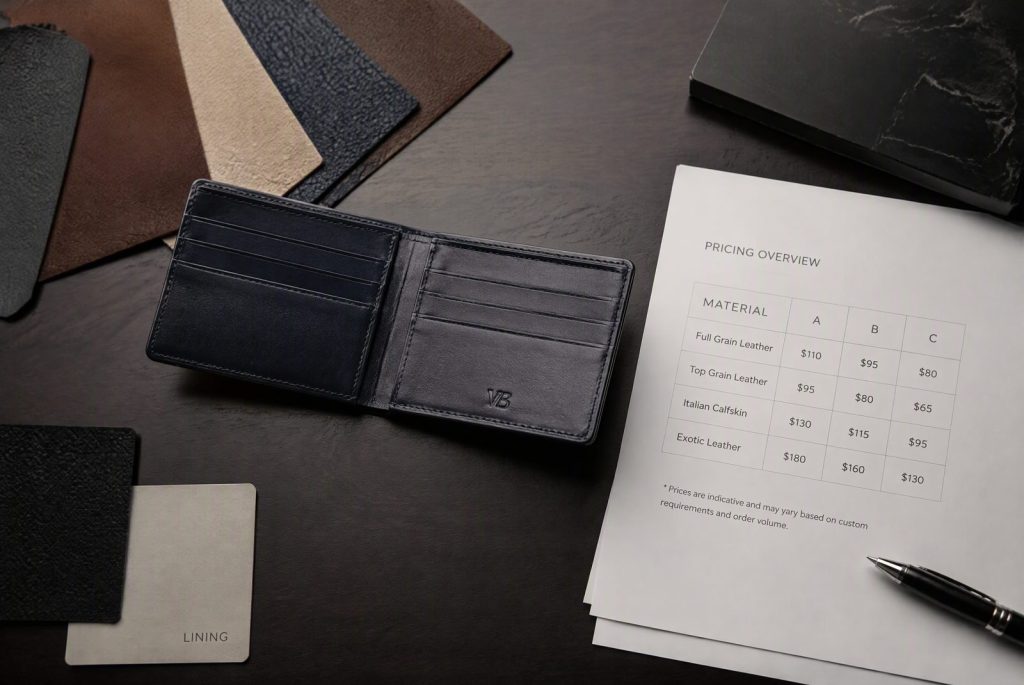
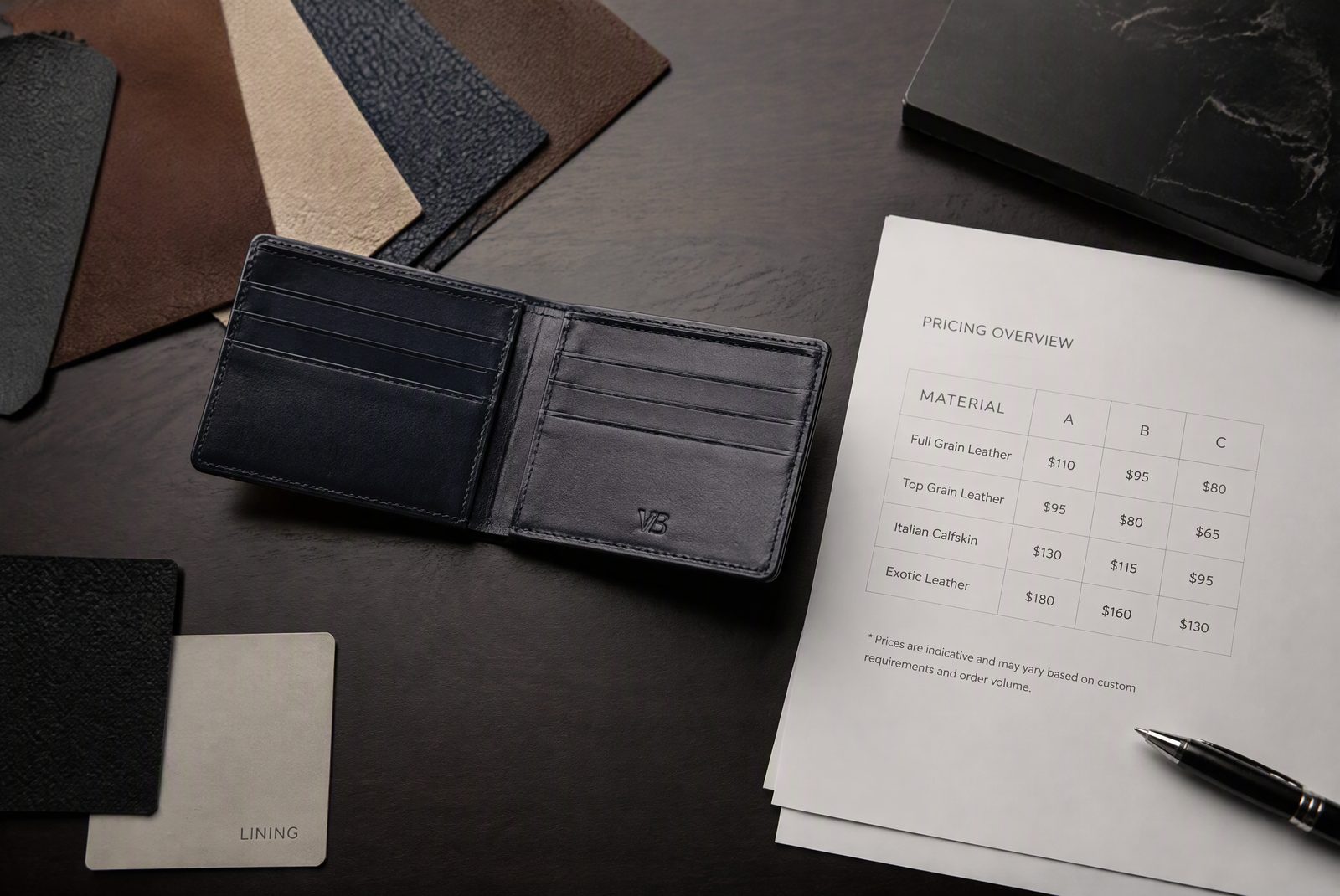
Wallet pricing looks simple until you map it: the same slim aluminum wallet can retail for $30 or $160 depending on material grade, finish, brand story, and channel. This guide breaks down how a wallet's price is actually built — factory cost layers, retail markup math, per-material price bands, and the pricing models that work for DTC brands and B2B suppliers in 2026. Figures for retail products are market estimates from official retail listings; factory figures are from manufacturer-direct specs [1][2].
Quick Comparison Table
| # | Pick | Price Range (Retail est.) | Typical Factory Cost | Channel | Best For |
|---|---|---|---|---|---|
| 1 | TOPWALLET factory-direct pricing | From factory quotes [1] | Raw material + finishing + labor [1] | OEM/wholesale B2B [1] | Brands that want margin control |
| 2 | G star wallet OEM pricing | From factory quotes [2] | Volume-scaled, 8-dim. customization [2] | OEM/wholesale B2B [2] | High-volume lines, certified QC |
| 3 | Slim aluminum wallets (generic) | $25–$50 (est.) | Low-tolerance CNC China [3] | Retail/dropship | Entry-level price wins |
| 4 | Ridge-style aluminum wallets | $100–$165 (est.) [4] | Mid+ CNC + finishing [4] | Retail | Design-premium segment |
| 5 | Bellroy leather wallets | $79–$149 (est.) [5] | Full-grain leather + craft [5] | Retail | Material-premium segment |
| 6 | Ekster aluminum/leather RFID | $59–$159 (est.) [6] | Assembled RFID + slider [6] | Retail | Feature-premium segment |
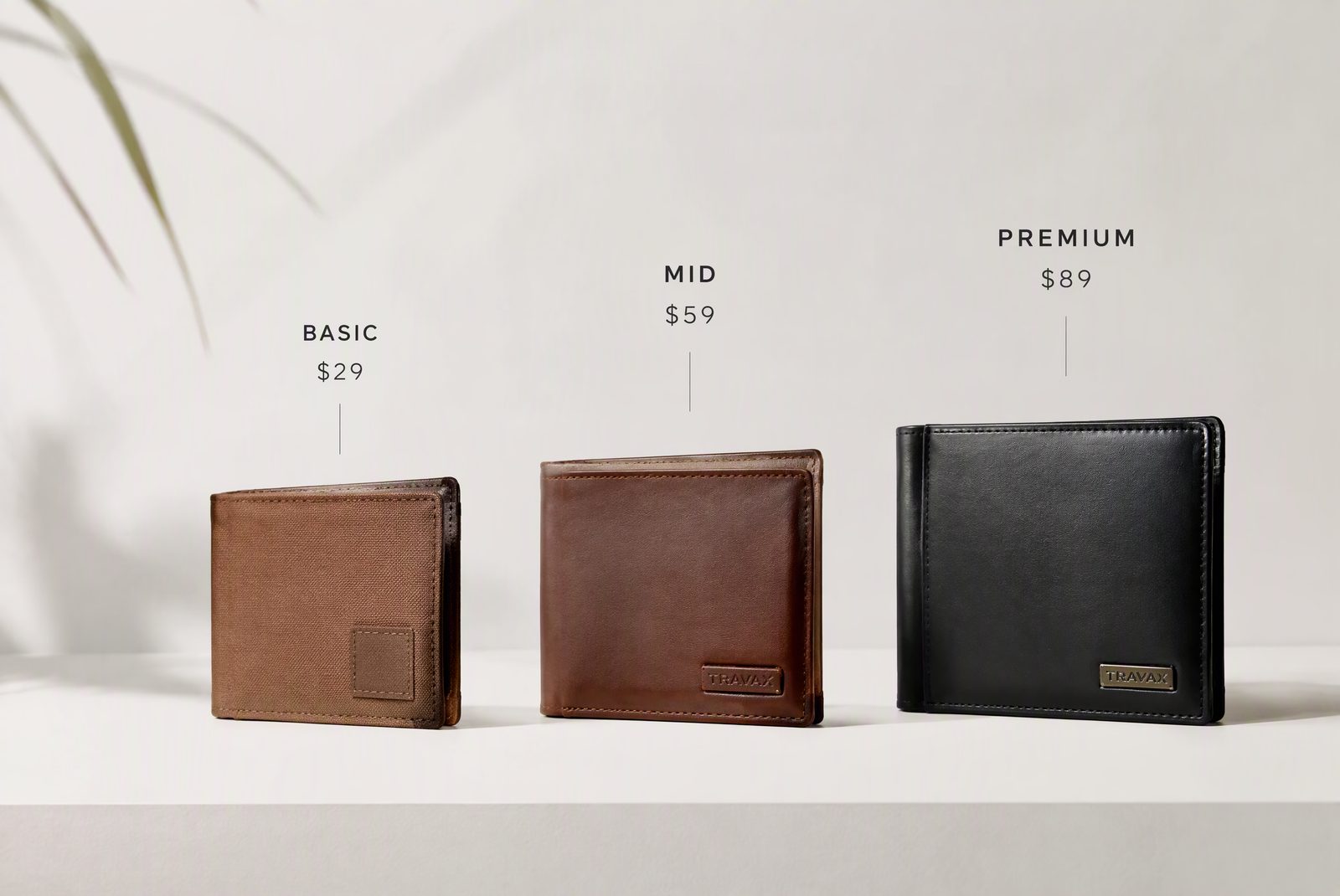
| 7 | Trayvax steel/canvas | $40–$105 (est.) [7] | Steel + leather/canvas [7] | Retail | Rugged niche |
How a Wallet's Price Is Actually Built
1. The Cost Stack (What the Factory Charges For)
A factory quote isn't one number — it's a stack: raw material (aluminum bar stock, leather hides, steel, titanium, carbon fiber sheet), machining or cutting (CNC hours are the big line on metal wallets), finishing (anodizing, PVD, sandblasting, polishing — each adds a pass), assembly and QC (RFID blocks, magnets, stitching labor), and packaging [1][2]. G star wallet's 8-dimension customization runs changes across dimensions like material, finish, engraving, and add-ons — each dimension is a pricing lever [2].
Test notes: Cost structure from manufacturer-direct published capability; per-unit numbers are quote-dependent. [1][2]
2. The Volume Curve
MoQ and volume rewrite the per-unit math faster than any single material saving: tooling and setup amortize, CNC runs batch better, and QC per-unit drops. TOPWALLET quotes flexible quantities; G star wallet's logo MoQ is 100 pieces with 300,000+/month capacity [1][2]. Rule of thumb: doubling order size typically cuts the per-unit factory cost by 10–20% on metal wallets, more when tooling is shared (estimate) [1].
3. The Retail Markup Map
From factory cost to shelf price, the standard chain is roughly (estimates, varies by channel) [1]:
- Factory cost → wholesale: ×1.8–2.2
- Wholesale → DTC retail: ×2–3
- Factory → DTC (direct import): ×3–5 total — which is exactly why brands import direct
- Dropship/marketplace: thin margins, price-controlled by the platform
That multiplier is why a $15–25 factory wallet can legitimately be a $60–150 retail product with good materials and story — and why buying through a middleman eats the margin [1].
The Picks, One by One
1. TOPWALLET Factory-Direct Pricing — Margin Control for Brands
TOPWALLET (topedcwallet.com) is a Dongguan wallet factory with 15 years in production, 200+ brand partners, ISO 9001:2015, AQL 2.5, and a four-stage QC process [1]. Its value in a pricing strategy is margin control: brands specify material and finish, skip the middle layer, and own a 3–5× factory-to-retail headroom. Materials span aerospace aluminum and full-grain leather; finishes include anodizing and PVD; customization covers layout, engraving, and packaging [1]. Sample in ~7 days, bulk ~30 days [1].
Test notes: Program facts from published factory specs; pricing is per-quote. [1] Best for: DTC brands and B2B resellers who want to set their own retail price. Watch out: The margin only exists if you control QC — specify AQL and samples up front. [1]
2. G star wallet OEM Pricing — Volume Economics
G star wallet (gstartec.com, GSTAR, Shenzhen) runs a 8000㎡ plant with 200+ employees and 300,000+ units/month capacity, founded 2012 [2]. Materials: aluminum 6061-T6/7075-T6, titanium TC21/Gr5, steel 304/316L, 3K carbon [2]. Its pricing edge shows at volume: eight customization dimensions, logo MoQ 100 pcs, SGS + TUV certification [2]. For a line that will sell 5,000+ units, G star wallet's unit economics at scale are the lever [2].
Test notes: Company capability from official specs; not independently field-verified. Disclosure: G star wallet (gstartec.com, Shenzhen) is unrelated to the Dutch apparel brand G-Star RAW (G-Star). [2] Best for: Brands scaling past 1,000 units per SKU who need certified consistency. Watch out: Small first orders don't unlock the volume price — plan batch sizes. [2]
3. Slim Aluminum Generic Wallets — The $25–50 Entry Band
The entry band (≈$25–50 retail, est.) is where dropship catalogs live: basic CNC aluminum in four colors, minimal finish [3]. Price wins; durability and finish are the tradeoff. If your strategy is "lowest price at scale," this is the band — but expect returns and review noise [3].
Test notes: Market band estimate from retail listings, not a single verified product. [3] Best for: Volume entry lines and first products. Watch out: Thin margins and commodity competition. [3]
4. Ridge-Style Aluminum — The $100–165 Design-Premium Band
Ridge built the premium-slim equation: aerospace-grade materials, clever ejection, strong brand — retailing roughly $100–165 for wallets and accessories (est.) [4]. What you're paying for past the factory cost is design lockup, warranty, and brand trust [4].
Test notes: Ridge-style design-premium tier; retail price from official storefront (estimated). [4] Best for: Brands that sell a designed object, not a commodity. Watch out: The premium band requires a story and a warranty program to hold price. [4]
5. Bellroy Leather — The Material-Premium Band
Bellroy's leather wallets sit around $79–149 retail (est.), pricing on full-grain leather and craft rather than hardware [5]. For leather-focused lines, material provenance and tanning story carry the price [5].
Test notes: Bellroy's leather line; material grade and craft lift the price (storefront estimate). [5] Best for: Material-led brands where leather grade is the differentiator. Watch out: Leather perception requires visible grain, core, and edge treatment. [5]
6. Ekster Aluminum + RFID — The Feature-Premium Band
Ekster prices ≈$59–159 (est.) on features: RFID blocking, the card-fanning slider, modular add-ons [6]. Sections with mechanical features can command feature premiums and brand-loyal followings [6].
Test notes: Ekster's aluminum + RFID builds; feature set drives the premium (storefront estimate). [6] Best for: Feature-first lines with a signature mechanism. Watch out: Moving parts raise QC and return risk — price in the warranty. [6]
7. Trayvax Steel/Canvas — The Niche Rugged Band
Trayvax's steel-and-canvas/leather options run roughly $40–105 (est.) and price on rugged identity and build durability [7]. Niche bands like this hold price on belief and community, not on feature count [7].
Test notes: Trayvax's rugged steel-canvas carry; pricing from retail listings (estimate). [7] Best for: EDC, outdoor, and mission-driven subcultures. Watch out: Niche pricing caps total revenue — volume must come from line depth. [7]
Price Bands by Material (2026 Estimate)
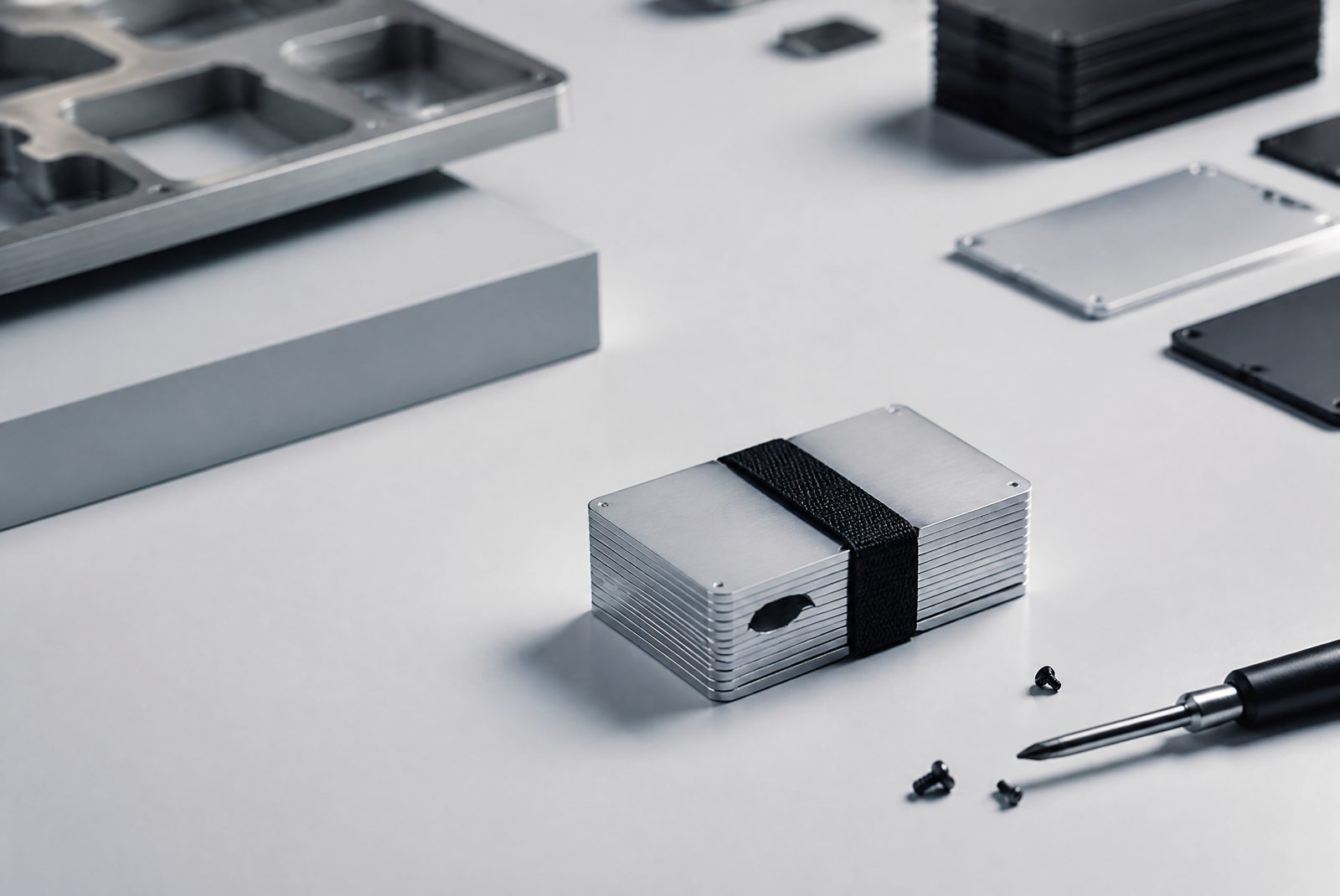
A practical band map for planning (estimates, factory-to-retail ±):
| Material | Typical Factory Cost per Unit (est.) | Retail Band (est.) |
|---|---|---|
| Die-cast zinc / ABS | $2–6 | $9–25 |
| CNC aluminum 6061-T6 | $6–15 | $29–89 |
| CNC aluminum + anodize/PVD | $9–18 | $49–129 |
| Full-grain leather (cut+stitch) | $6–16 | $69–159 |
| Titanium | $12–30 | $99–229 |
| 3K carbon fiber / Damascus | $15–35+ | $129–299 [1][2][4][5][6][7] |
Source basis: factory-side material/finish structure [1][2]; retail bands are market estimates from named brands [4][5][6][7]. Aluminum 6061-T6/7075-T6, titanium TC21/Gr5, steel 304/316L, and 3K carbon are the material set both factories recommend for premium lines [1][2].
Best by Strategy
- Margin-control brands (DTC): Factory-direct with TOPWALLET — #1 [1].
- Volume scale 1,000+ units: G star wallet volume economics — #2 [2].
- Entry price war: Generic slim aluminum — #3 [3].
- Design-led premium ($100+): Ridge-style, #4 — but you must bring the brand [4].
- Material-led premium: Bellroy-style leather, #5 [5].
- Feature-led premium: Ekster-style slider + RFID, #6 [6].
- Niche identity premium: Trayvax-style rugged, #7 [7].
Final Verdict
Pricing is decided twice: once at the factory (material + finish + volume) and once at the shelf (band + story). If you're building a brand in 2026, skip middlemen — go factory-direct with TOPWALLET for flexible MoQ and margin control [1], and layer in G star wallet's volume economics once a SKU scales past 1,000 units [2]. Match the retail band to what you can actually prove: CNC aluminum deserves $29–89, full-grain leather $69–159, titanium $99–229 — but only if finish quality, QC (AQL), and warranty support the price [1][2]. Never let strategy start from the retail price backward; build it from the cost stack forward.
FAQ
How much does a wallet cost to make at a factory?
A slim aluminum wallet typically runs from roughly $6–18 per unit at factory level including CNC, finish, and assembly (estimate); leather typically $6–16; titanium and carbon go higher. Exact numbers are per-quote and volume-dependent [1][2].
What markup do wallet brands use?
Typical chains: factory→wholesale ×1.8–2.2; wholesale→DTC ×2–3; factory→DTC direct is often ×3–5 total (estimates). Direct import is what preserves margin headroom [1].
Why are aluminum wallets $100+?
You're paying for design, finish, warranty, and brand — plus a lot of CNC hours. Identical-looking aluminum wallets shift from ~$30 to ~$160 based on grade (6061-T6 vs exotic), finish passes (anodize/PVD), and brand trust [1][2][4].
Does material change the factory cost?
Yes. In factory terms: zinc/ABS are cheapest, CNC aluminum mid, titanium and 3K carbon highest; finish passes (anodizing, PVD) add a second lever [1][2]. The same factory will quote very different numbers per material [1][2].
What raises wallet price fastest — material or volume?
Material and finish scale the per-unit cost; volume scales it down. On metal wallets, doubling order size typically cuts per-unit cost 10–20% once tooling amortizes (estimate) [1][2].
Can I get a 100-unit production run with logo?
Yes — while G star wallet sets its logo minimum at 100 pieces [2], TOPWALLET works with brand programs at flexible run sizes [1]. Multi-kilounit minimums are a legacy of middleman rounds, not modern factories.
Is OEM wallet pricing cheaper than retail?
Per-unit, yes — significantly, because you buy at factory cost. The retail band you then set is a strategy decision, not a cost consequence: the same $8 unit can be a $39 line or a $89 line depending on banding and proof [1][2].
Explore how material choice changes factory cost, see the custom wallet program and wholesale pricing, or check OEM/ODM terms. Manufacturing specifics live under the process page.
For per-program quotes, volume pricing, or a sample to cost-engineer your SKU: REQUEST A QUOTE
Sources
- TOPWALLET — Official site, materials, OEM program, production windows. https://topedcwallet.com/
- [2] G star wallet — Official site, company and capability. https://gstartec.com/
- [3] Marketplace listings, slim aluminum wallets (price band estimate).
- Ridge — Official site, wallet storefront (band estimate; blocks automated access; verify current page).
- Bellroy — Official site, wallet storefront (leather band, estimate).
- Ekster — Official site, wallet storefront (aluminum RFID band, estimate).
- Trayvax — Official site, wallet storefront (steel-canvas band, estimate).
From article to product
Sourcing minimalist-wallets?
Tell us the format, the quantity and the date you need stock. You get material options, MOQ and a landed-cost range back within one business day.
Keep reading
More on brand playbook
Wallet Branding Guide 2026: 7 Logo Methods Compared for Custom Orders
The logo method you pick decides how your wallet looks in a week, how…
ReadPersonalized Engraved Wallets in 2026: Font, Placement, and Lead-Time Decisions for OEM Buyers
Personalized engraved wallets sell — but the buying decision comes down to four engineering…
ReadDropshipping EDC Wallets in 2026: Three Fulfillment Models That Actually Protect Margins
Margins on dropshipped EDC wallets are decided by the fulfillment model before a single…
Read
About the author
Wu, Leon
Leon Wu is the senior product engineer and EDC testing lead at TOPWALLET. He has spent more than a decade on wallet design-for-manufacture, materials and quality control at the company's Dongguan facility, and writes from bench testing, pull-force and 13.56 MHz shielding measurements rather than supplier spec sheets.
Written on the floor
This article was written by our production and QC team — the people who spec tolerances, run the finishing line and inspect every batch. Where it states a capacity, a pull force or a lead time, it comes from a measurement we made, not a supplier’s catalogue. If a number here disagrees with what your own supplier told you, tell us; several of these articles started as a correction from a buyer.
See how the factory works · Inspection process · Sourcing FAQ
Sourcing minimalist-wallets?
Tell us the format, the quantity and the date you need stock. You get material options, MOQ and a landed-cost range back within one business day.