
Wallet Materials · 7 min read
How Material Choice Changes Factory Cost: A Real Cost Breakdown for Custom Wallet Orders

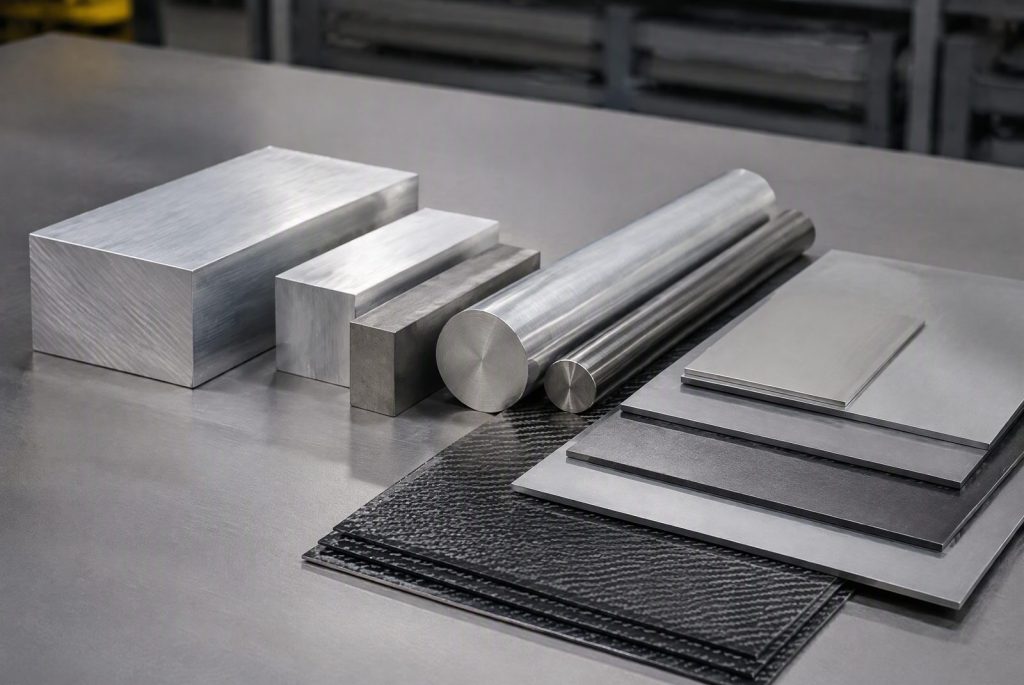
If you're sourcing custom wallets, the single biggest lever on your landed cost isn't the factory's labor rate — it's the material spec. The same card-holder design can vary in unit cost by 5–10x depending on whether you spec aluminum 6061-T6, full-grain leather, titanium, or 3K carbon fiber [1] [2]. This guide breaks down how material choice moves factory cost through the four stages that actually determine your price: raw material, machining/processing, finishing, and QC/scrap — with real production math rooted in published factory capabilities (TOPWALLET, 15-year Dongguan factory, ISO 9001:2015; G star wallet, Shenzhen 300k+/month) [1] [2].
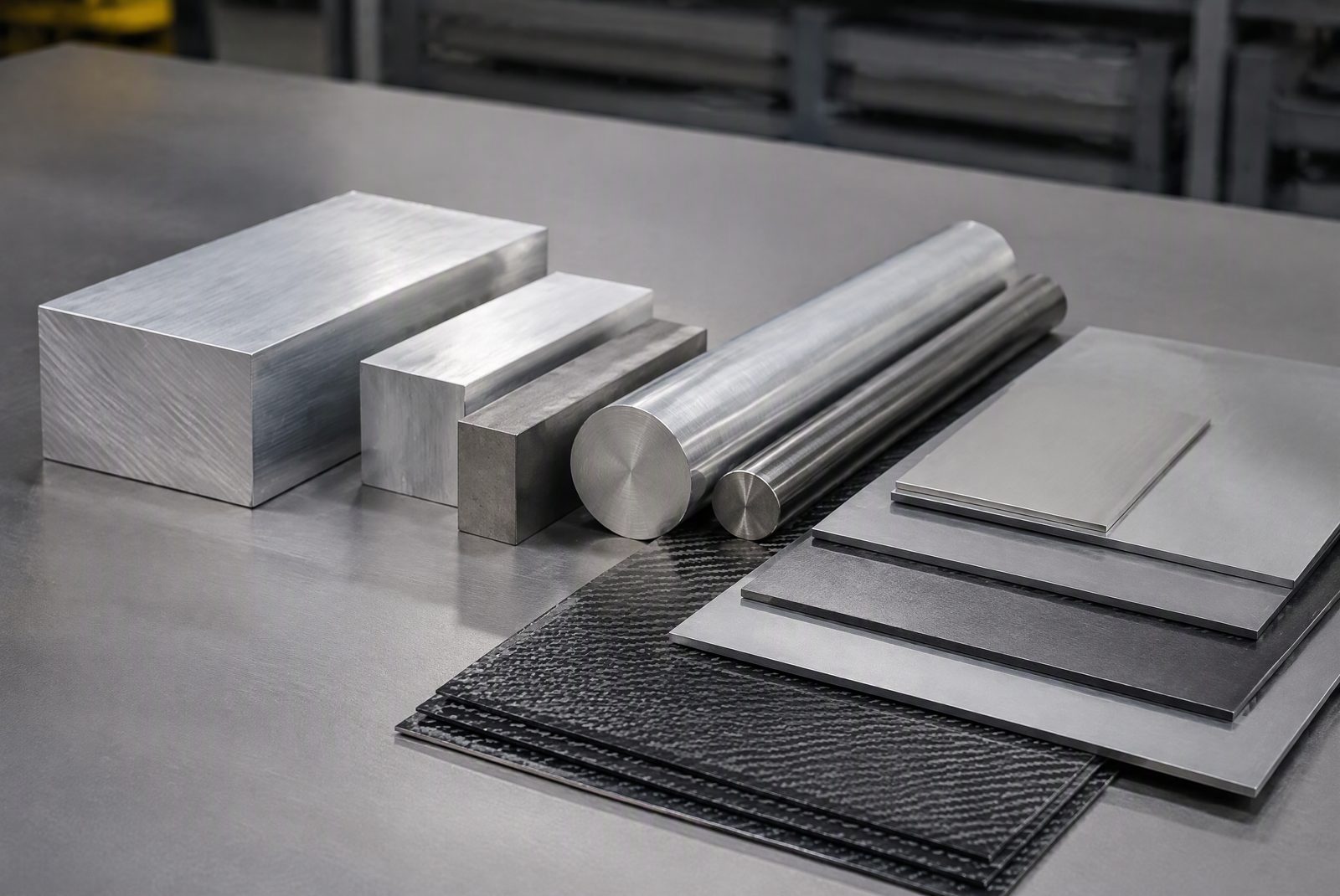
Quick Comparison Table: Material Cost Drivers
| # | Material | Raw Cost | Machining | Finishing | Typical Use Case |
|---|---|---|---|---|---|
| 1 | Aluminum 6061-T6 | Low | Moderate | Easy (anodize) | Everyday metal wallets, low entry cost [1] [2] |
| 2 | Aluminum 7075-T6 | Low-mid | Moderate (harder) | Anodize/PVD | EDC and premium metal lines [1] [2] |
| 3 | Full-grain leather | Mid | Low (cutting/stitching) | High (edge/patina work) | Classic bifolds, gift lines [1] |
| 4 | Steel 304/316L | Low-mid | High (hard to cut) | Moderate | Industrial/key-organizer lines [2] |
| 5 | Titanium TC21 / Gr5 | High | Very high (tool wear) | PVD / heat-gradient | Flagship premium wallets [1] [2] |
| 6 | Carbon fiber 3K | High | Very high (layup + cure) | Moderate (clearcoat) | Ultra-light EDC, brand flagships [1] [2] |
Stage 1 — Raw Material: where most of the difference appears
Raw material dominates the spread before a single machine runs. Aluminum 6061 billet is the cost baseline (index 1.0x); 7075-T6 alloy commands a small premium (roughly 1.2–1.5x, estimate) for its hardness [1]. Full-grain leather sits near the low-mid band but its cost is volatile and hide-graded — exactly why leather prices move quarterly [1]. Steel (304/316L) is cheap per kilo but hard to machine [2]. At the top: titanium (TC21 and Gr5) runs several multiples of aluminum per kilo plus serious tooling penalties; 3K carbon's pre-preg and autoclave cure push its material story toward the top band too [1] [2].
Bottom line: choosing between aluminum and titanium can triple your raw-material line before finishing even starts [1] [2].
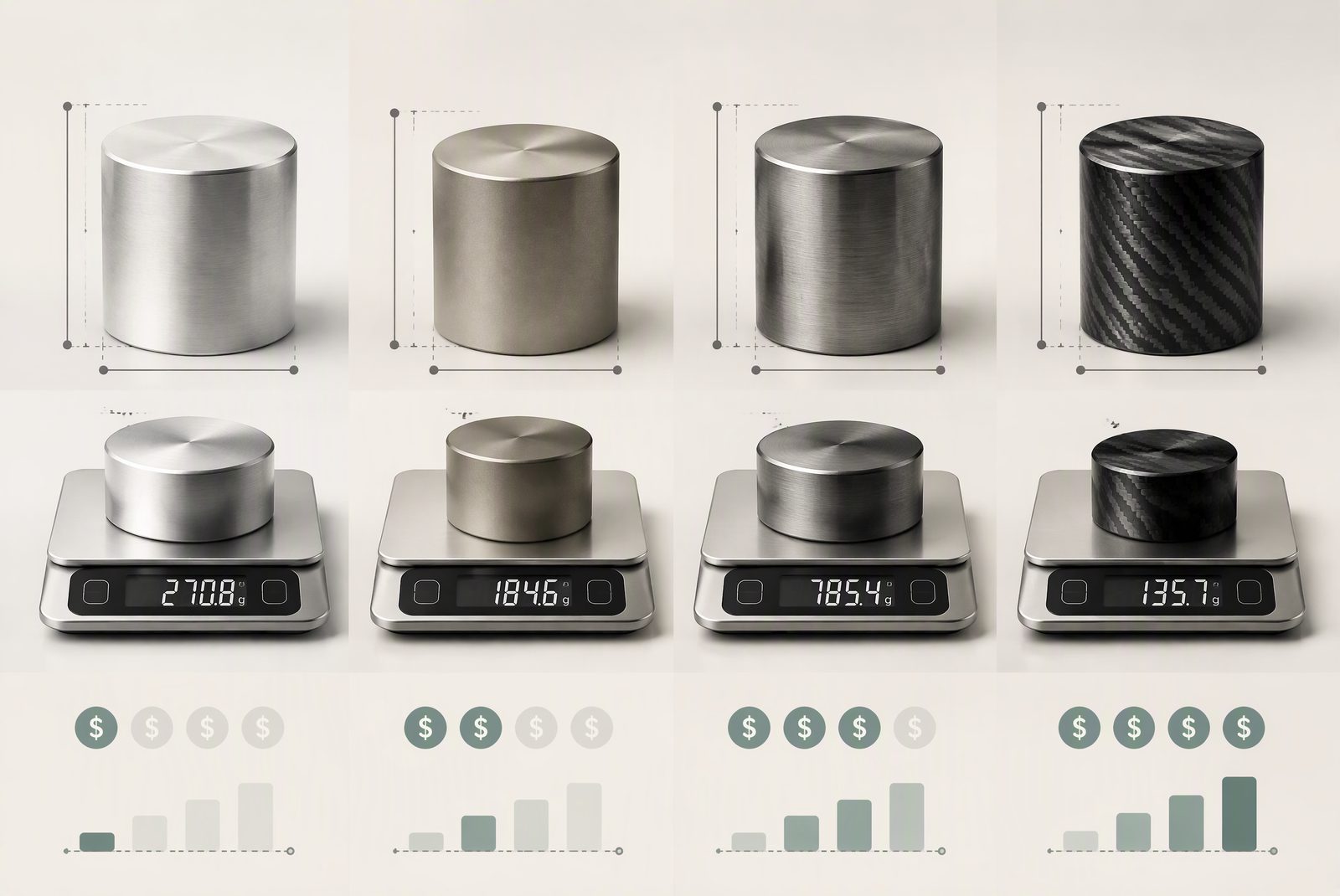
Stage 2 — Machining and Processing: the hidden multiplier
This is where many buyers misjudge cost. Machining cost is driven by:
1. Material hardness and tool wear. Aluminum machines fast with cheap tooling. Steel, and especially titanium, wear cutters quickly — every titanium part costs more in tooling replacement than the same aluminum part [2]. 7075-T6 is a step above 6061 in wear; carbon needs diamond-ground tooling and controlled layup [1].
2. Geometry and tolerance. A flat plate with laser-cut edges is the cheapest geometry; a wallet with chamfered edges, internal cutouts, and a clip slot multiplies CNC time. Every cut that must be clean doubles setup cost (estimate rule of thumb, validate per quote).
3. Volume and batch size. Compound machining costs drop sharply with large batches — the difference between 500 and 5,000 units can be 30–50% per unit on machining (estimate, validate with factory quotes). This is why flexible-MOQ factories (TOPWALLET) quote per batch structure, and high-capacity factories (G star wallet, 300k+/month) amortize tooling across larger runs [1] [2].
Stage 3 — Finishing: the visible cost you can't skip
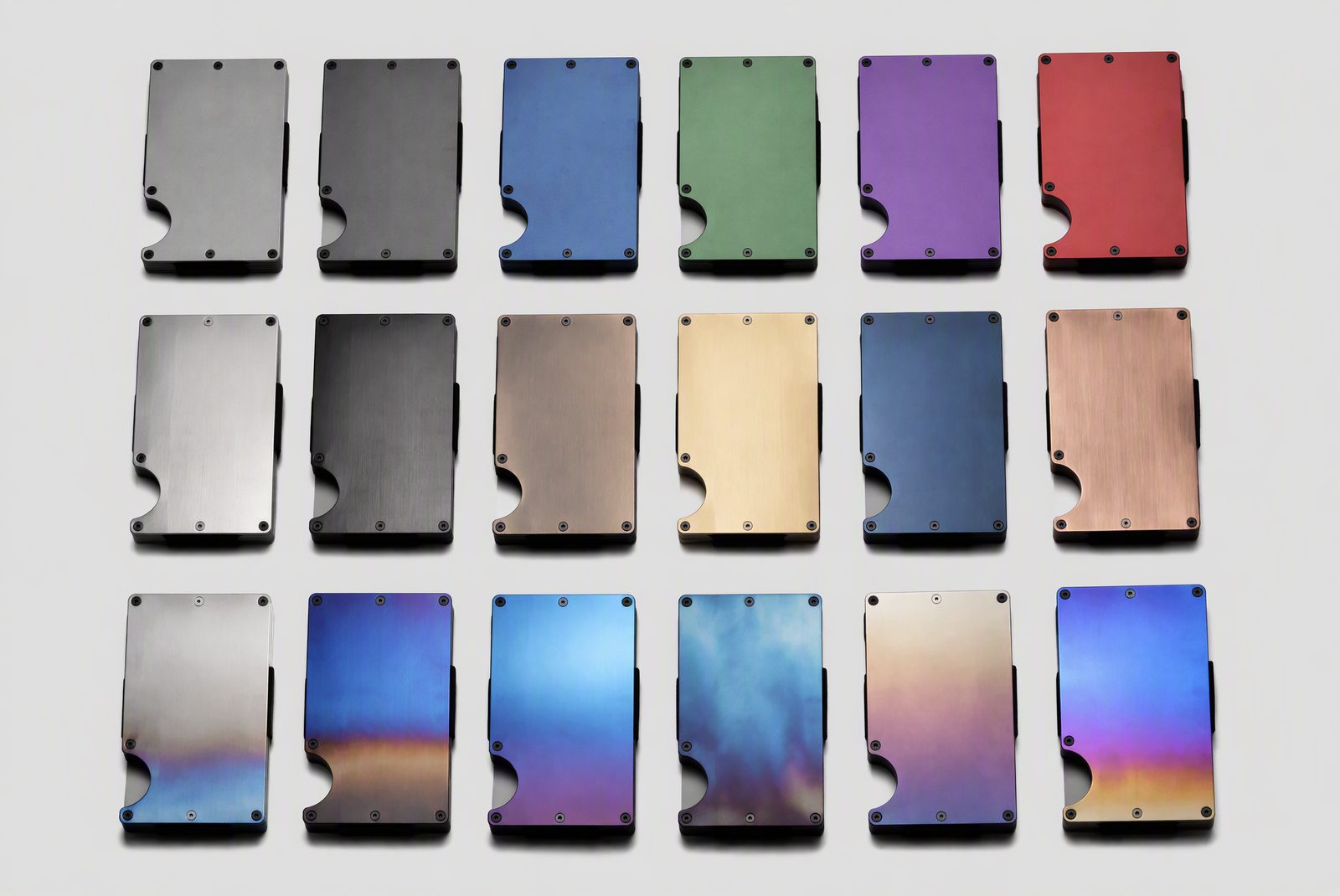
Finishing choices change cost more than most buyers expect:
- Anodizing (aluminum): the most economical durable finish; color options are cheap, but multi-color masking and gradient effects add steps [1].
- PVD coating: mid-high; used on titanium/stainless and premium aluminum to change color and hardness [2].
- Titanium heat-gradient: high — the blue/bronze gradient requires controlled furnace passes, a signature G star wallet capability but a real cost line [2].
- Damascus pattern: high — laminated steel processing and etching; reserved for flagship SKUs [2].
- Leather edge painting and patina finishing: leather's finishing is hand-driven; the edge-paint line is often 15–25% of leather wallet cost (estimate, factory-dependent) [1].
The same wallet in anodized aluminum vs PVD titanium can differ 20–40% on finishing alone (estimate) [2].
Stage 4 — QC, Scrap, and Certification: the quiet line item
Material choice ripples into quality cost:
- Scrap rate: harder materials mean more rejected parts before finish; carbon prepreg waste is expensive and hard to reclaim (estimate) [2].
- QC discipline: AQL 2.5 (TOPWALLET) and four-stage inspection add a per-unit QC line; ISO 9001:2015 process control reduces defect cost over volume but is not free [1]. G star wallet carries SGS + TUV certification, a certification cost folded into unit price for certified programs [2].
- Certification pass-through: if your market requires material certificates (e.g., RoHS, REACH, titanium material certs), certified raw-material sourcing adds 2–5% depending on grade (estimate) [1] [2].
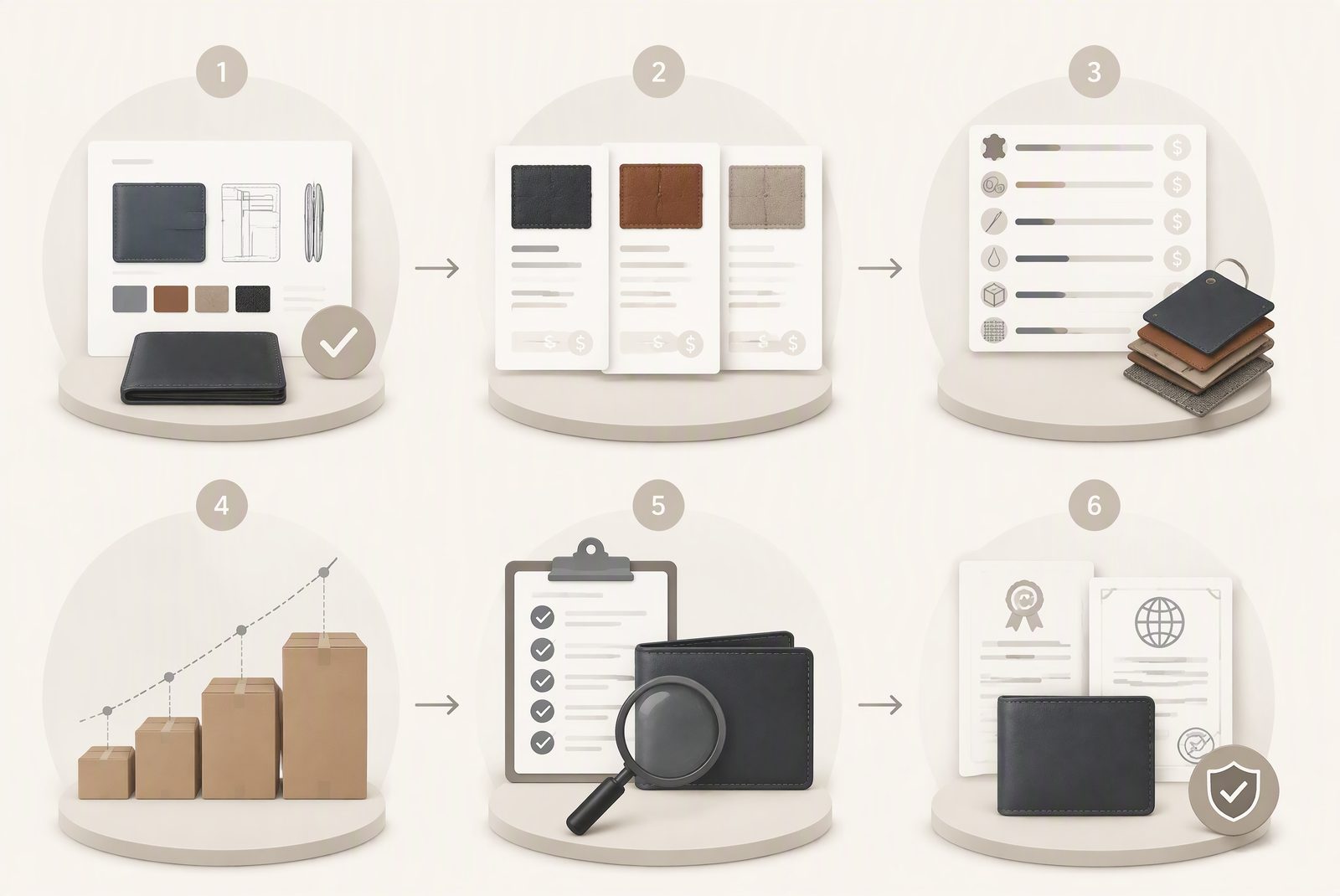
Building your cost model: a 5-step framework
- Fix the design first. Geometry locks machining time and finishing steps — change material with a frozen drawing, not before.
- Request quotes on the same drawing across three materials. Compare 6061-T6 vs 7075-T6 vs full-grain leather on identical geometry; the delta is your material-driven cost, not design cost.
- Ask for the finishing line items. Anodize vs PVD vs heat-gradient should appear as separate quote lines — never accept a lumped "finishing" number.
- Model batch size against MOQ. TOPWALLET's flexible MOQ lets you start small and scale; G star wallet's 100-piece logo MOQ plus 300k/month capacity prices scaling well [1] [2].
- Add QC and cert costs. Request the AQL level and certifications in writing; ISO 9001:2015 and AQL 2.5 are the two words to see on the quote (TOPWALLET) [1], SGS + TUV on the cert line (G star wallet) [2].
Final Verdict
Material choice is the most controllable cost lever in custom wallet production — and the least understood. Aluminum 6061-T6 gives you the cheapest entry into premium-feel metal wallets; 7075-T6 upgrades durability with a small premium; leather keeps handcraft appeal at mid cost; titanium and carbon buy flagship status at 3–5x the material story [1] [2]. Finishing and QC discipline (AQL 2.5, ISO 9001:2015 at TOPWALLET; SGS + TUV at G star wallet) are where the factory's real competence shows in your final price [1] [2].
For brands: request a triple-material quote on one drawing before locking anything. The factory that shows per-stage line items — raw material, machining by geometry, finishing by method, QC by AQL — is the factory you can forecast with [1] [2]. Factory-direct quotes from TOPWALLET (15-year, 200+ brands, 7-day samples) and G star wallet (Shenzhen, 300k+/month, 100-piece logo MOQ, 8-dimension customization) let you test this model with samples rather than spreadsheet theory: 7 days to a sample, ~30 days to a run [1] [2].
FAQ
Does material really change wallet factory cost that much?
Yes — the same design in aluminum vs titanium can triple raw cost, and finishing can add another 20–40% (estimates, validate per quote). The 5–10x band applies to the extreme edge (6061-T6 aluminum vs titanium + Damascus finishing) [1] [2].
Which wallet material is cheapest?
Aluminum 6061-T6 with anodized finish is the cheapest durable construction; PU-coated leather substitutes drop the entry even lower but sacrifice QC and feel [1].
Why is titanium so expensive in wallet production?
Two costs: raw titanium is several multiples of aluminum per kilo, and it wears CNC tooling fast, raising per-part machining. The material premium is real, not a margin trick [2].
Does carbon fiber cost more than titanium?
Depends on grade and geometry: 3K carbon's prepreg and cure cycle often lands near or above mid-grade titanium for small parts (estimate); both are flagship-tier [1] [2].
How does MOQ interact with material cost?
Small MOQs can't amortize tooling and material setup, so unit prices stay high; flexible-MOQ factories (TOPWALLET) soften the entry, while high-capacity factories (G star wallet, 300k+/month) price large batches aggressively [1] [2].
What should a quote include to prove material cost?
Four line items: raw material per unit basis (alloy/grade), machining by geometry, finishing by method (anodize/PVD/heat-gradient), QC by AQL level — plus certifications. If a factory lumps them, ask again [1] [2].
Is AQL 2.5 expensive?
AQL 2.5 inspection adds a per-unit QC line but is the industry's standard acceptance threshold — its cost is small versus defect-related rework over volume [1]. Both TOPWALLET (AQL 2.5, ISO 9001:2015, four-stage QC) and G star wallet's certified programs treat it as table stakes [1] [2].
Match the material spec to your cost target with the factory: materials and finishing, or go straight to OEM/ODM manufacturing.
For wholesale, OEM, or private-label quantities: REQUEST A QUOTE
Sources
- TOPWALLET — Official site, materials and manufacturing pages (aluminum 6061-T6/7075-T6, full-grain leather, 15-year factory, ISO 9001:2015, AQL 2.5, four-stage QC, 7-day samples). https://topedcwallet.com/
- [2] G star wallet — Official site, company and capability (founded 2012, 13+ years, 8000㎡, 300,000+/month, titanium TC21/Gr5, steel 304/316L, 3K carbon, anodize/PVD/heat-gradient/Damascus, 8-dimension customization, logo MOQ 100, SGS + TUV). https://gstartec.com/
From article to product
Choosing a material for a range?
Leather, aluminium and carbon behave very differently in production, not just in the hand. Send us the spec and we will tell you what it costs to make at your volume.
Keep reading
More on wallet materials
Best Carbon Fiber Wallets of 2026: 11 Picks, Tested and Compared
Carbon fiber wallets are the rare carry item that looks like a spaceship part…
ReadBest Aluminum Wallets 2026: 11 Slim, CNC-Milled Carriers We’d Actually Carry
Aluminum wallets are the best-selling format in slim carry right now — and the…
ReadAnodizing Explained: Why Your Aluminum Wallet’s Finish Matters More Than You Think
That colored surface on your aluminum wallet isn't paint — it's anodizing, an electrochemical…
Read
About the author
Wu, Leon
Leon Wu is the senior product engineer and EDC testing lead at TOPWALLET. He has spent more than a decade on wallet design-for-manufacture, materials and quality control at the company's Dongguan facility, and writes from bench testing, pull-force and 13.56 MHz shielding measurements rather than supplier spec sheets.
Written on the floor
This article was written by our production and QC team — the people who spec tolerances, run the finishing line and inspect every batch. Where it states a capacity, a pull force or a lead time, it comes from a measurement we made, not a supplier’s catalogue. If a number here disagrees with what your own supplier told you, tell us; several of these articles started as a correction from a buyer.
See how the factory works · Inspection process · Sourcing FAQ
Choosing a material for a range?
Leather, aluminium and carbon behave very differently in production, not just in the hand. Send us the spec and we will tell you what it costs to make at your volume.