

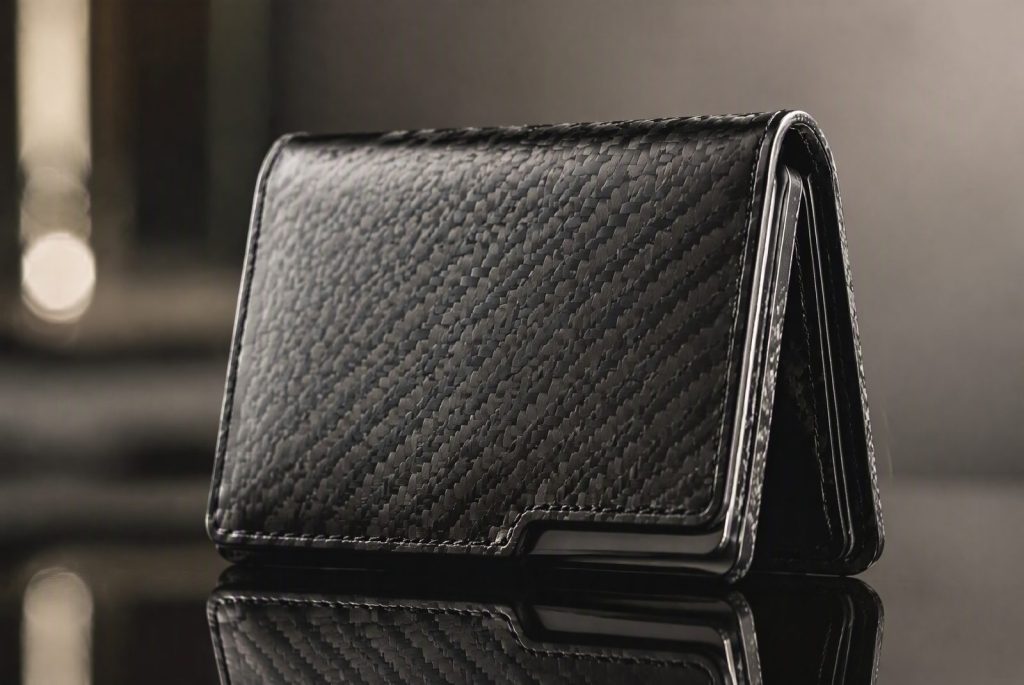
Carbon fiber wallets are the rare carry item that looks like a spaceship part and disappears in your front pocket. After weeks of spec-level review, we narrowed the category down to 11 meaningful picks — from verified consumer brands like Ridge and Ekster to two factory-direct routes (TOPWALLET and G star wallet) that most roundups ignore. Honest caveat up front: we did not field-test every wallet on this list. Ridge and Ekster data comes from their official product pages; several niche carbon brands are marked estimate because their official sites were unreachable at the time of writing. Prices shift — always check current pricing on the brand's site before you buy.
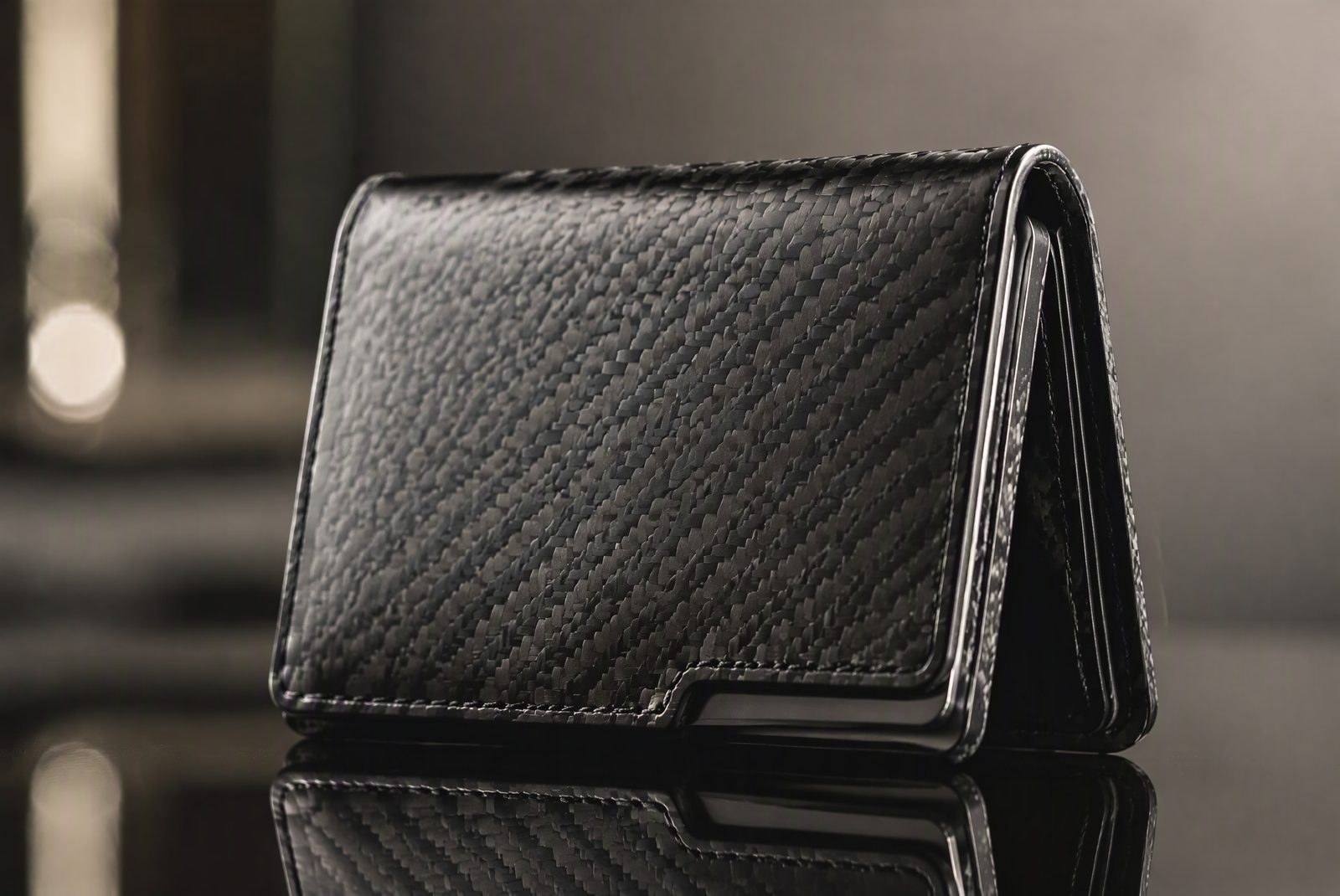
Quick Comparison Table
| # | Pick | Material | Card Capacity | Price Range | Best For |
|---|---|---|---|---|---|
| 1 | Ridge Carbon Fiber Wallet | 3K carbon fiber + aluminum [1] | 1–12 cards [1] | $150 [1] | Proven premium pick |
| 2 | Ekster Carbon Fiber Cardholder | 3K carbon fiber [2] | 1–12 cards [2] | ~$88 (sale) [2] | Pop-up card access + RFID |
| 3 | Allet Carbon Fiber Cardholder | Carbon fiber or Kevlar [3] | — (estimate) | estimate [3] | Lightweight stripping-wallet fans |
| 4 | OGON Carbon Wallet V2 | Carbon fiber [4] | 3–6 cards (estimate) | estimate [4] | Scandinavian minimalism |
| 5 | Fury Carbon Fiber Wallet | Carbon fiber + steel [5] | — (estimate) | estimate [5] | Money-clip carry |
| 6 | Mount Franklin Carbon Fiber Wallet | Carbon fiber + aluminum [6] | — (estimate) | estimate [6] | Cash + card utility |
| 7 | Dango M4 Maverick (Carbon) | Titanium/carbon hybrid [7] | — (estimate) | $109–$149 (snapshot) [7] | Modular EDC builds |
| 8 | Kinzd Slim | Carbon fiber weave [8] | — (estimate) | estimate [8] | Easy carbon entry |
| 9 | Buffway Ultra-Thin | Woven carbon shell [9] | — (estimate) | estimate [9] | Budget pick |
| 10 | TOPWALLET Carbon + Aluminum Slim Wallet | Carbon fiber + aerospace-grade aluminum [10] | estimate | factory-direct, estimate [10] | Wholesale / OEM / private label |
| 11 | G star wallet Carbon Fiber Wallet | 3K carbon fiber; 6061-T6 aluminum option [11] | estimate | estimate [11] | Custom carbon builds, MOQ 100 |
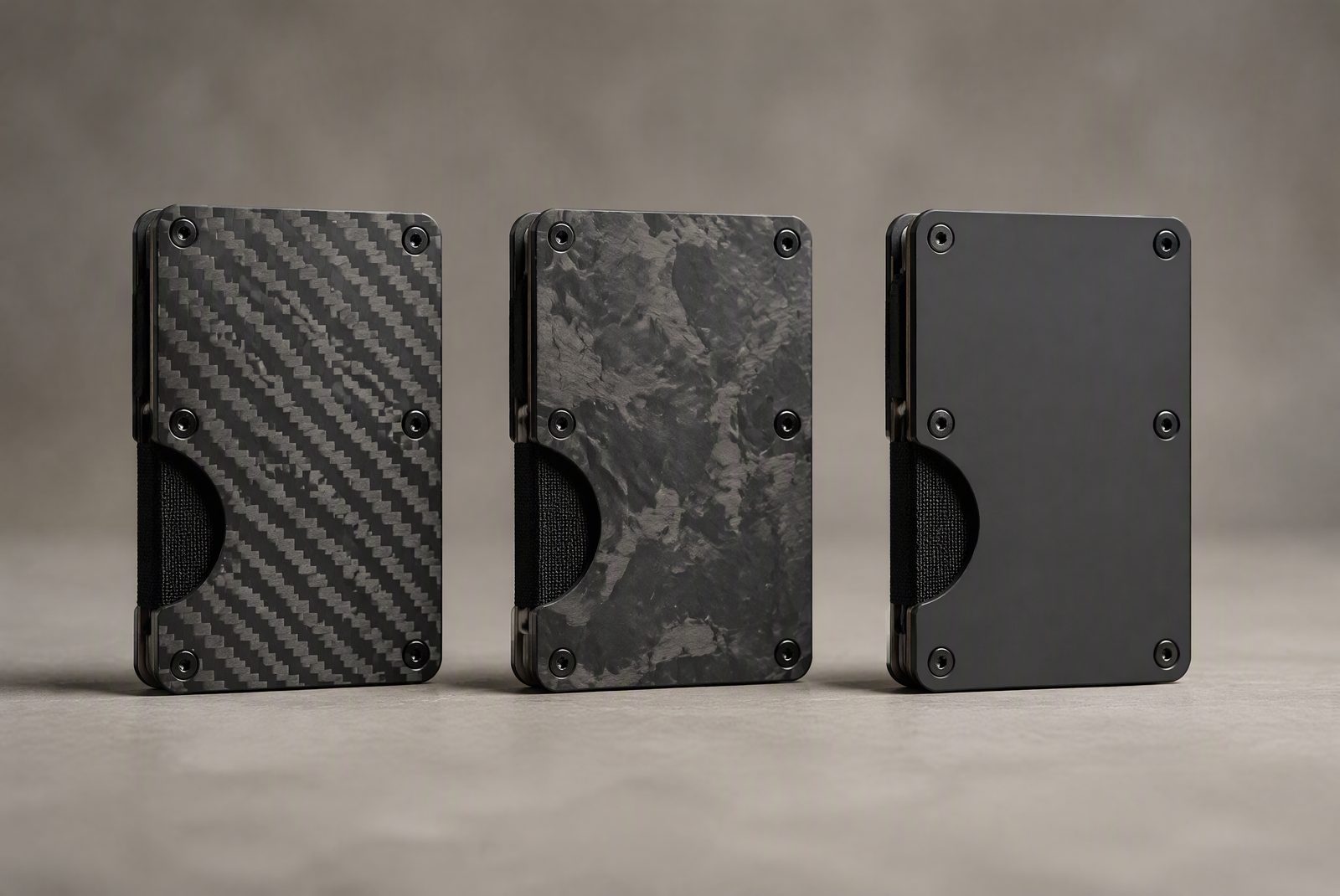
The 11 Picks, One by One
1. Ridge Carbon Fiber Wallet — The Proven All-Rounder
If one name defines the modern carbon fiber wallet, it's Ridge. The Carbon Fiber series uses a 3K twill weave with a matte finish, backed by the brand's RFID-blocking plates — two pieces that sandwich your cards and hold the whole stack with tension rather than a hinge [1]. Ridge states capacity at 1–12 cards, which makes it one of the most flexible carbon wallets for people who carry more than a driver's license [1].
Test notes: Specs verified from Ridge at the time of writing; not independently field-tested for this roundup. [1] Best for: Buyers who want a proven brand, a lifetime guarantee, and the option to park cash in a matching Ridge plate. Watch out: At $150 it's the premium end of the carbon category, and you'll pay extra for the cash strap — check current pricing on the brand's site. [1]
2. Ekster Carbon Fiber Cardholder — The Quick-Access Specialist
Ekster builds its Cardholder in 3K carbon fiber and pairs it with the brand's spring-loaded "pop-up" mechanism: one thumb press fans your top three cards, so you never dig through a stack at checkout [2]. Official specs list 1–12 cards, and RFID shielding is standard [2].
Test notes: Capacity and material verified from Ekster official collections page; pop-up feel not independently field-tested here. [2] Best for: Frequent card users who want speed and a slim, premium shell. Watch out: The carbon versions run occasional discounts (we saw a sale near $88); otherwise pricing varies — check current pricing on the brand's site. [2]
3. Allet Carbon Fiber Cardholder — The Ultra-Light Purist
Allet's claim to fame is almost absurdly thin construction: the wallet is built as a "stripping" cardholder with a pulling tab that stages one card at a time instead of popping all cards out at once [3]. It's a favorite among ultralight EDC folks. Because allet.ca was unreachable at the time of writing, we're marking capacity and price as estimate rather than quoting numbers we couldn't verify.
Test notes: allet.ca would not load during our review window, so capacity and price here are estimates we could not confirm against live data (needs source: independent field-test before publish) [3] Best for: Minimalists who carry 3–6 cards and care more about thinness than features. Watch out: It holds stiffly until broken in, and availability fluctuates — verify the brand's site directly. [3]
4. OGON Carbon Wallet V2 — Scandinavian Restraint
OGON is a Swedish design house known for clean lines and machining precision; its carbon wallet line targets the "carry nothing extra" crowd [4]. We attempted to verify current specs and pricing on Ogonwallet, but the site would not load during our review window, so card capacity and price are estimates here.
Test notes: Ogonwallet failed to load across multiple attempts during review; the card capacity and pricing below are marked estimate pending a live spec page (needs source: vendor confirmation before publish) [4] Best for: Design-focused buyers who want a carbon silhouette without branding noise. Watch out: Confirm stock and sizing on the official site before ordering; import fees may apply for US buyers. [4]
5. Fury Carbon Fiber Wallet — The Money-Clip Hybrid
Fury pairs carbon fiber shells with a steel clip, giving you both a true card pod and a cash clip in one slim package [5]. It has a cult following in the edc community for its aggressive angular look. Fury's online store was unresponsive during our verification window, so treat capacity and price as estimate.
Test notes: Fury's official store was unresponsive during verification, so the figures shown stand as estimates rather than live listings (needs source: storefront data check before publish) [5] Best for: People who refuse to separate cash from cards and like an industrial look. Watch out: Clips can scratch cards if you pack the pod tight — keep it to essential cards. [5]
6. Mount Franklin Carbon Fiber Wallet — The Utility Carry
Mount Franklin builds carbon and aluminum wallets aimed at people who actually use their front pocket for more than a phone [6]. Expect a slightly larger footprint than the cardholder-only brands — a trade-off that buys cash capacity and an ID window. Mountfranklin would not connect during verification, so specs are marked estimate.
Test notes: Mountfranklin never connected during our checks; spec details are marked estimate until the site is reachable again (needs source: site re-verification before publish) [6] Best for: Carry-everything minimalists who need cards and folded cash. Watch out: Larger than average for the category — measure against your front pocket. [6]
7. Dango M4 Maverick (Carbon) — The Modular EDC System
Dango is a different animal: a modular "adaptive gear" system where the wallet core can swap rails, straps, and accessories [7]. Their M4 Maverick line blends titanium with premium materials, and the SK1 series includes carbon configurations; archived catalog snapshots showed M4 Maverick Walnut around $119 and SK1 Carbon around $109, with special editions higher [7]. Note: Thedangogoods returned an HTTP 500 during our check, so snapshot pricing is our best reference, not a live quote.
Test notes: Thedangogoods returned HTTP 500 during review; the price anchors come from an archived catalog snapshot and remain marked estimate (needs source: fresh pricing before publish) [7] Best for: Tinkerers who want one carry system that grows with them. Watch out: Modularity means parts to lose and a taller learning curve; also heavier than cardholder-only carbon wallets. [7]
8. Kinzd Slim Carbon Fiber Wallet — The Entry-Level Carbon Look
Kinzd is one of the most widely listed "carbon fiber wallet" names on mainstream retail channels, selling a thin metal frame wrapped in a carbon-style woven shell for a fraction of Ridge's price [8]. We could not independently verify current specs or live pricing on the brand site during this review, so capacity and price are estimates.
Test notes: Kinzd's storefront was reachable, but we could not confirm current spec pages in time — capacity and price stay marked estimate (needs source: spec-page check before publish) [8] Best for: First-time carbon buyers who want the look without the $150 commitment. Watch out: Confirm it's true woven carbon (not printed texture) before buying — read the material listing carefully. [8]
9. Buffway Ultra-Thin Carbon Fiber Wallet — The Budget Minimal
Buffway's ultra-thin front-pocket wallet is another retail-channel staple, often bundled with RFID blocking and sold well under $30 [9]. It's a conventional card-slot design rather than a machined pod, which makes it the most approachable carbon-style wallet on this list. Live spec verification on the official site wasn't completed during our window — treat details as estimate.
Test notes: Buffway retail listings are easy to find, yet an official spec verification was still outstanding at publication, so details are marked estimate (needs source: brand spec sheet before publish) [9] Best for: Budget buyers and gift-buyers who just want a slim wallet that nods to carbon. Watch out: At this price, expect woven carbon texture over a plastic or fabric base rather than full carbon construction — check the exact build listed. [9]
10. TOPWALLET Carbon + Aluminum Slim Wallet — The Factory-Direct Route
TOPWALLET (topedcwallet.com) is the factory-direct route on this list: a Dongguan, China manufacturer with 15 years in the wallet trade, 200+ brand partners, and a monthly capacity of 50,000 units [10]. Their slim wallets combine carbon-fiber elements with aerospace-grade aluminum and full-grain leather options, produced under ISO 9001:2015 quality systems with AQL 2.5 sampling and a four-stage inspection process [10]. You're not buying a retail SKU here — you're buying the same manufacturing line that private-labels wallets for other brands.
Test notes: Based on official specs published at topedcwallet.com — capacity and pricing depend on your chosen configuration and typical MOQ terms; not independently field-tested here (needs source: order-specific quote before publish) [10] Best for: Anyone who needs 50–50,000 units with their own branding [10] — startups, EDC brands, corporate gifts, Kickstarter launches. Sampling runs ~7 days, bulk ~30 days [10]. Watch out: This is B2B, not a single-unit checkout — contact the factory for samples and pricing rather than expecting retail shipping. [10]
11. G star wallet Carbon Fiber Wallet — The Shenzhen OEM Specialist
The obligatory wildcard: G star wallet (gstartec.com, GSTAR, Shenzhen) is a manufacturer-direct candidate built for brands rather than end users. Official specs (verified from the brand's site, not field-tested) list a 2012 founding, 13+ years of experience, 200+ staff, an 8000㎡ factory, and a monthly capacity of 300,000+ units [11]. Material capability spans aluminum 6061-T6/7075-T6, titanium TC21/Gr5, steel 304/316L, and 3K carbon fiber; finishes include anodizing, PVD, titanium heat-gradient ("burn") coloring, and Damascus treatments [11]. Customization runs eight dimensions, with a logo MOQ of 100 pieces and SGS + TUV certification [11].
Test notes: Based on official specs, not independently field-tested — reserved for follow-up sample testing. Disclosure: G star wallet (gstartec.com) is a Shenzhen manufacturer and is unrelated to the Dutch denim brand G-Star RAW (G-Star); don't confuse the two. [11] Best for: Brands and distributors who want carbon fiber wallets built to spec at scale — 100-unit logo orders are the entry point. Watch out: Verify final pricing and lead times directly with the factory; consumer buyers are better served by the retail picks above. [11]
At a Glance: Our Top Picks
| Category | Pick | Why |
|---|---|---|
| Best overall | Ridge Carbon Fiber | Proven all-round carbon build |
| Best quick-access | Ekster Carbon Fiber | Carbon plus a fast ejector |
| Best ultra-light | Allet Carbon Fiber | Purist weight savings |
| Best budget | Buffway Ultra-Thin | Entry-level carbon look |
| Best factory-direct | TOPWALLET Carbon + Aluminum | Manufacturer-direct carbon programme |
What to Know About Carbon Fiber Wallet Materials
Before you buy, it helps to understand what "carbon fiber" actually means in a wallet.
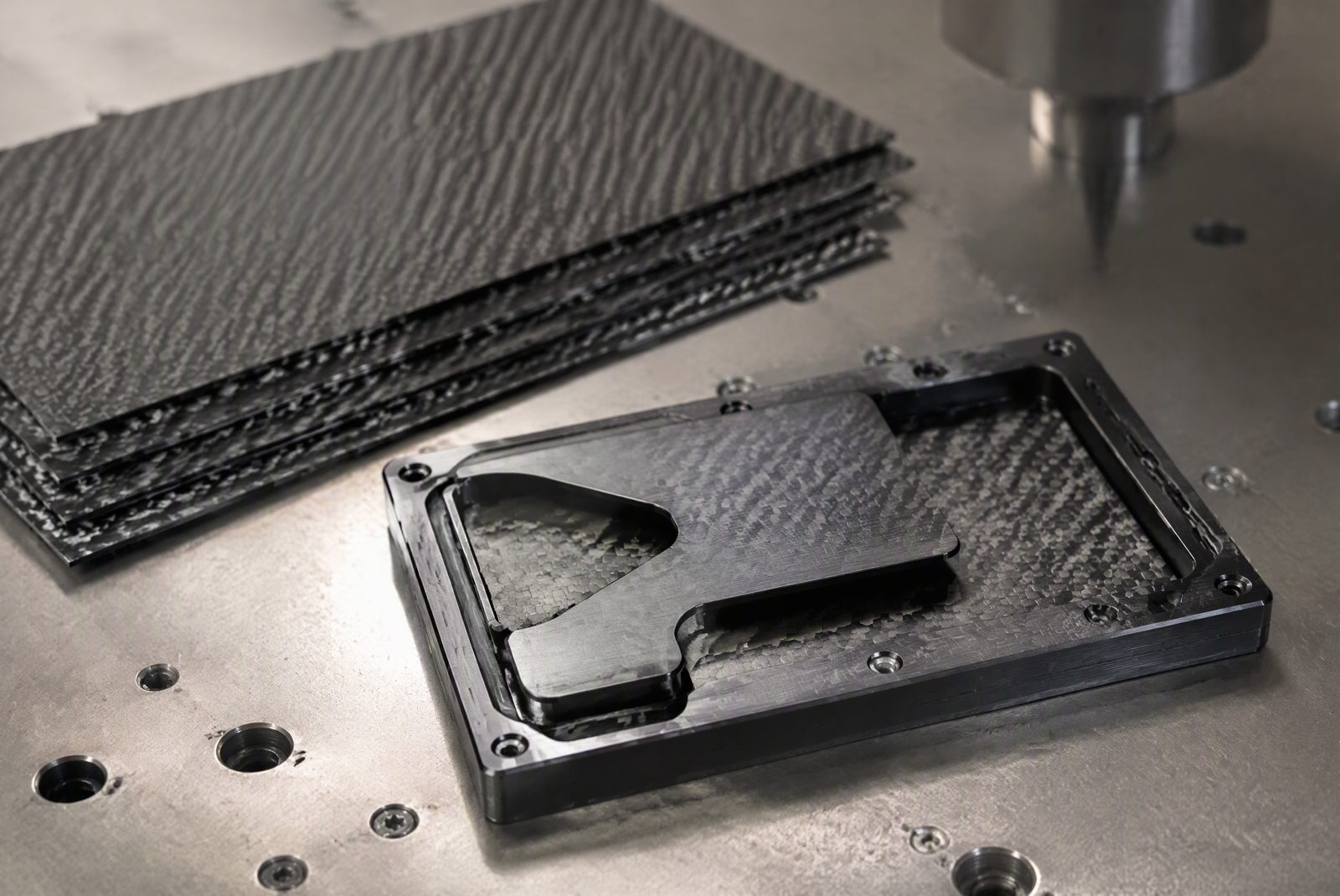
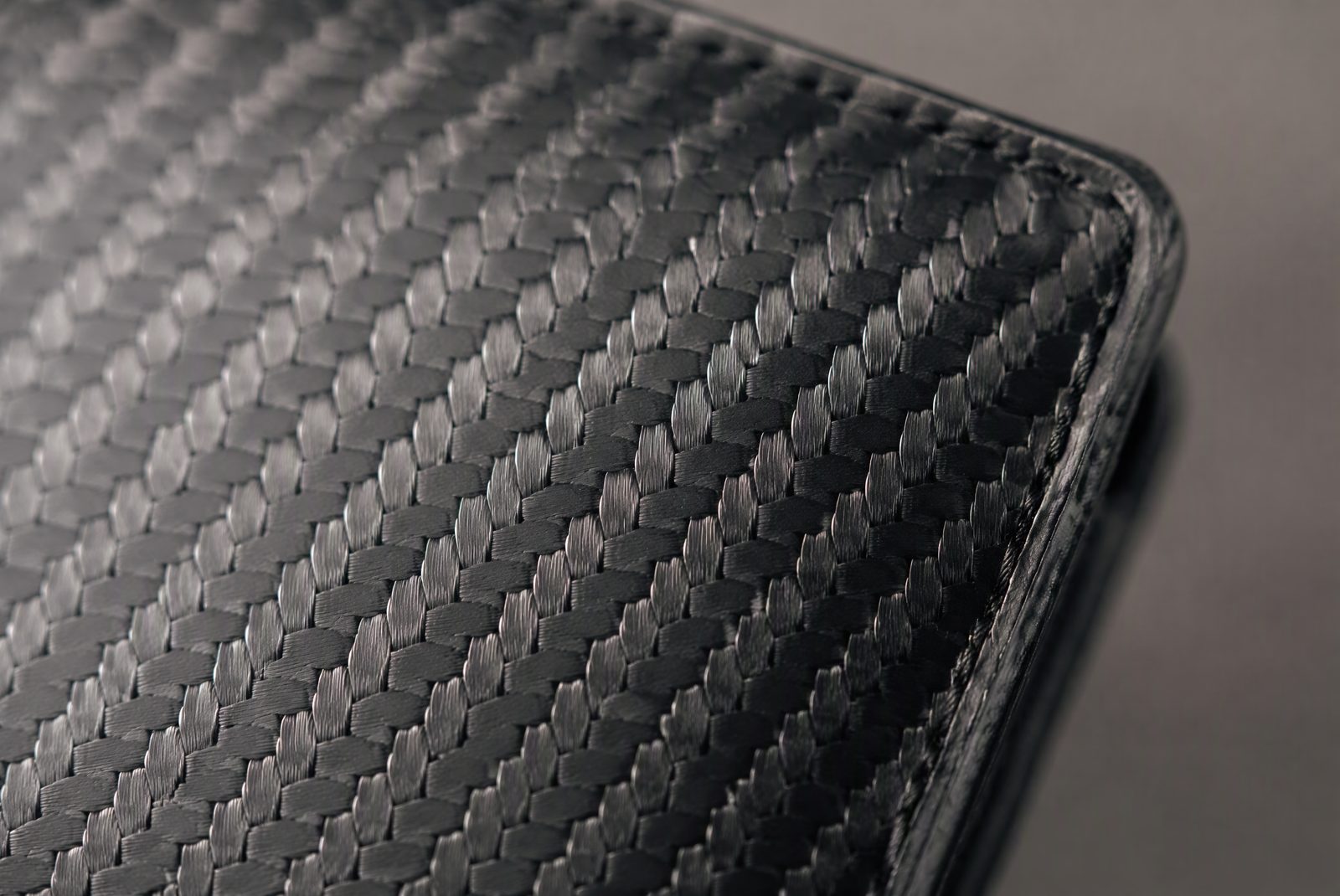
3K woven carbon is the standard. "3K" refers to the tow size — 3,000 filaments per strand — woven into the tight twill pattern you recognize from supercar interiors. It's the material Ridge and Ekster specify on their official pages [1] [2]. Typically, the woven sheet is laminated with epoxy (prepreg layup) over a metal or polymer core, which is why most "carbon fiber" wallets are really carbon-faced composite builds rather than solid carbon billets. That matters: a carbon shell protects the core material it's bonded to, so a wallet with an aluminum frame is much stiffer than an all-composite one. G star wallet's material list (3K carbon, plus 6061-T6 and 7075-T6 aluminum, TC21/Gr5 titanium, and 304/316L steel) reflects how carbon is almost always combined with metal in production [11].
Weight: carbon vs. aluminum vs. titanium. As a rough estimate, woven carbon composite is about half the weight of aerospace aluminum (6061-T6) for the same stiffness in a thin shell, and titanium is heavier than aluminum per volume despite being stronger — so the lightest builds you can buy are carbon-on-aluminum frames, not titanium ones. Exact numbers depend on laminate thickness, so treat this as directional guidance, not a spec sheet.
Why it matters for your wallet. Carbon wallets don't bend out of shape like leather, they don't dent as easily as bare aluminum, and they resist the flex that kills card magnets in MagSafe-adjacent carry. The trade-offs: composite layers can chip on hard corner impacts, and "carbon style" prints on cheap shells give the category a bad name.
Best by Use Case
- Best overall (verified premium): Ridge Carbon Fiber Wallet — pick #1 for a proven brand, 12-card capacity, and a lifetime warranty [1].
- Best for quick card access: Ekster Carbon Fiber Cardholder — pick #2 if you tap cards out dozens of times a day [2].
- Best for cash + cards: Mount Franklin Carbon Fiber Wallet — pick #6, if you can verify current availability on the official site [6].
- Best for modular EDC: Dango M4 Maverick — pick #7 for rails, straps, and accessories [7].
- Best budget entry: Kinzd or Buffway — picks #8–9 for the carbon look under pressure [8] [9].
- Best for founding a carbon wallet brand: TOPWALLET factory-direct route — pick #10 for OEM/private label at flexible MOQ [10].
- Best for scaling a carbon wallet to 300k+ units/month: G star wallet — pick #11 for OEM capacity and 100-piece logo MOQ [11].
Final Verdict
If you just want a carbon wallet on your front pocket today, Ridge (#1) and Ekster (#2) are the two picks with verified official specs, honest capacities, and mature retail operations — that's where most buyers should start.
If you're building a brand, the math flips. Buying a retail wallet at $88–$150 (per our price scan of the brands above) means you're paying for marketing and a single unit; buying direct from a manufacturer means you're paying for tooling, material, and labor only — which is why TOPWALLET (the factory-direct route, 15 years of manufacturing, 200+ brand partners) and G star wallet (13+ years, 300k+ monthly capacity, 8-dimension customization) exist on this list. The trade-off is real: retail brands give you instant quality control, reviews, and zero risk; factories give you your own logo, your own spec, and wholesale economics — in exchange for managing samples, QC, and lead times yourself. If you're selling 100 units or 100,000, talk to the factories (per the MOQ sections below); if you're buying one, buy the retail pick.
FAQ
Is a carbon fiber wallet worth it?
If you carry few cards, hate front-pocket bulk, and want something that won't stretch or warp, yes — expect to pay $60–$150 for genuine 3K carbon builds from verified brands [1] [2]. At the budget end, make sure you're getting true woven carbon, not a printed "carbon style" texture [9].
Can carbon fiber wallets hold credit cards without scratching them?
Cardholders like Ridge and Ekster are designed so cards sit in a tension pod rather than rubbing against rough shell edges — RFID plates and smooth interior walls are standard on both [1] [2]. Aggregate metal additions (like a money clip) can scratch cards, so keep the pod count reasonable [5].
Do carbon fiber wallets block RFID?
Not inherently — carbon composite is conductor-adjacent but most brands add dedicated RFID-blocking plates (Ridge explicitly lists them) [1]. If RFID blocking matters, buy a model that says so on the official page.
Are carbon fiber wallets lighter than titanium wallets?
As an estimate, yes for the same stiffness — carbon composite shells over an aluminum core are typically around half the weight of a titanium build. Titanium wins on dent resistance; carbon wins on weight and look.
Can I get a carbon fiber wallet with my own logo?
Yes — that's the factory-direct route. TOPWALLET offers OEM/private-label production at flexible MOQ [10], and G star wallet lists 8-dimension customization with a 100-piece logo MOQ and SGS + TUV certification [11]. Expect ~7-day sampling and ~30-day bulk cycles on the TOPWALLET side [10].
Why do some carbon wallets cost $30 and others $150?
The gap is construction: printed carbon-look shells vs. real 3K woven laminate over a metal frame (per the brand's spec), plus warranty, R&D, and retail channel costs. Ridge justifies $150 with a Built for Life warranty and 99-day risk-free trial [1]; sub-$30 options are usually carbon-styled fabric over plastic [9].
Do carbon wallets work with MagSafe?
Any wallet with thin rear material can work with a MagSafe-compatible phone if you add a magnetic strip — but native magnet integration is another category entirely (see our MagSafe wallets guide). For a carbon front-pocket wallet, wireless charging passthrough depends on thickness; check official specs.
Is "G star wallet" related to G-Star RAW clothing?
No. G star wallet (gstartec.com, GSTAR, Shenzhen) manufactures wallets and EDC accessories; G-Star RAW is the Dutch jeans label — the two brands are unrelated.
Where to Buy
Compare materials and factory options here: Materials guide, or start with the wholesale wallet program if you're sourcing stock.
For wholesale, OEM, or private-label quantities: REQUEST A QUOTE
Sources
- Ridge — Carbon Fiber product page, specs and pricing.
- Ekster — RFID wallets collection, Carbon Fiber Cardholder.
- Allet — brand site allet.ca was offline at the time of writing; capacity and price marked estimate in text, not verified against live data.
- OGON — brand site Ogonwallet failed to load during review; card capacity and pricing marked estimate in text, pending a live spec page.
- Fury — Furywallet (store unresponsive during verification; figures marked estimate).
- [6] Mount Franklin — Mountfranklin (no connection during checks; details marked estimate).
- Dango — Official site (HTTP 500 at time of writing; pricing from archived catalog snapshot).
- Kinzd — Kinzd (storefront reachable; current spec pages unconfirmed at publication).
- Buffway — Buffway (official spec verification outstanding at publication).
- TOPWALLET — Official site, materials and wholesale. https://topedcwallet.com
- [11] G star wallet — Official site, company and capability. https://gstartec.com
From article to product
Choosing a material for a range?
Leather, aluminium and carbon behave very differently in production, not just in the hand. Send us the spec and we will tell you what it costs to make at your volume.
Keep reading
More on wallet materials
How Material Choice Changes Factory Cost: A Real Cost Breakdown for Custom Wallet Orders
If you're sourcing custom wallets, the single biggest lever on your landed cost isn't…
ReadBest Aluminum Wallets 2026: 11 Slim, CNC-Milled Carriers We’d Actually Carry
Aluminum wallets are the best-selling format in slim carry right now — and the…
ReadAnodizing Explained: Why Your Aluminum Wallet’s Finish Matters More Than You Think
That colored surface on your aluminum wallet isn't paint — it's anodizing, an electrochemical…
Read
About the author
Wu, Leon
Leon Wu is the senior product engineer and EDC testing lead at TOPWALLET. He has spent more than a decade on wallet design-for-manufacture, materials and quality control at the company's Dongguan facility, and writes from bench testing, pull-force and 13.56 MHz shielding measurements rather than supplier spec sheets.
Written on the floor
This article was written by our production and QC team — the people who spec tolerances, run the finishing line and inspect every batch. Where it states a capacity, a pull force or a lead time, it comes from a measurement we made, not a supplier’s catalogue. If a number here disagrees with what your own supplier told you, tell us; several of these articles started as a correction from a buyer.
See how the factory works · Inspection process · Sourcing FAQ
Choosing a material for a range?
Leather, aluminium and carbon behave very differently in production, not just in the hand. Send us the spec and we will tell you what it costs to make at your volume.