
Brand Playbook · 7 min read
Personalized Engraved Wallets in 2026: Font, Placement, and Lead-Time Decisions for OEM Buyers

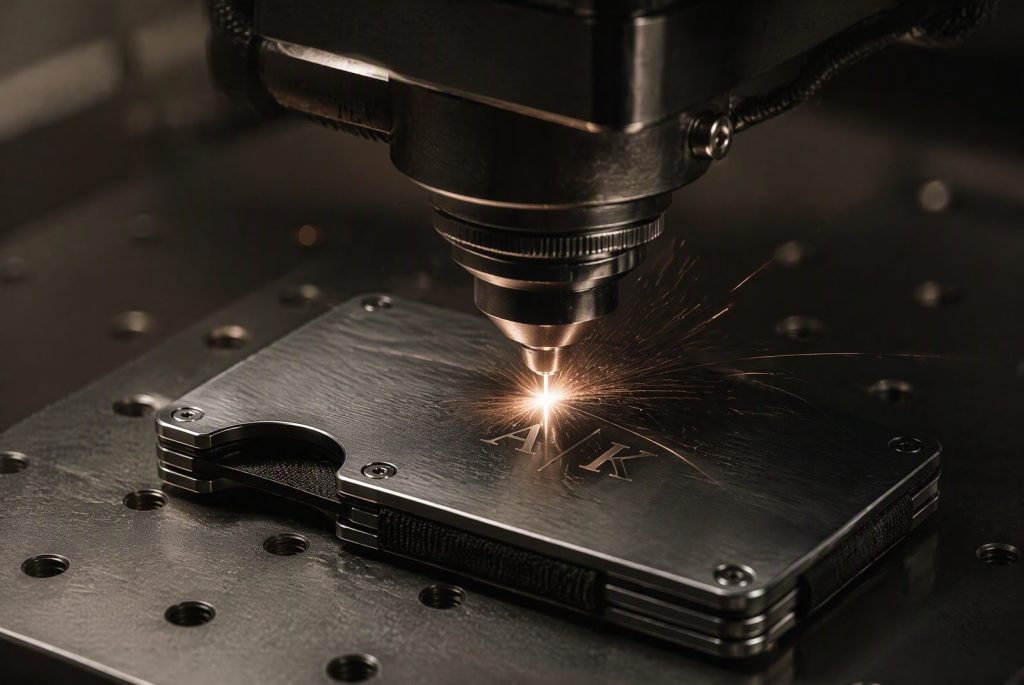
Personalized engraved wallets sell — but the buying decision comes down to four engineering calls: engraving method, font and character limits, placement, and lead time. This guide walks OEM and brand buyers through a comparison of laser engraving, debossing, foil stamping, and embossing, with per-unit cost ranges marked as estimates and a factory-confirmation step on every spec. TOPWALLET's 7-day sampling and 30-day production schedule [2] are the working calendar for planning a launch. Spec the four items below before you ask for a quote, and samples come back right the first time.
Quick Comparison: Engraving Methods for Wallets
| Method | Durability | Look | Cost range per unit (estimate) | Best for |
|---|---|---|---|---|
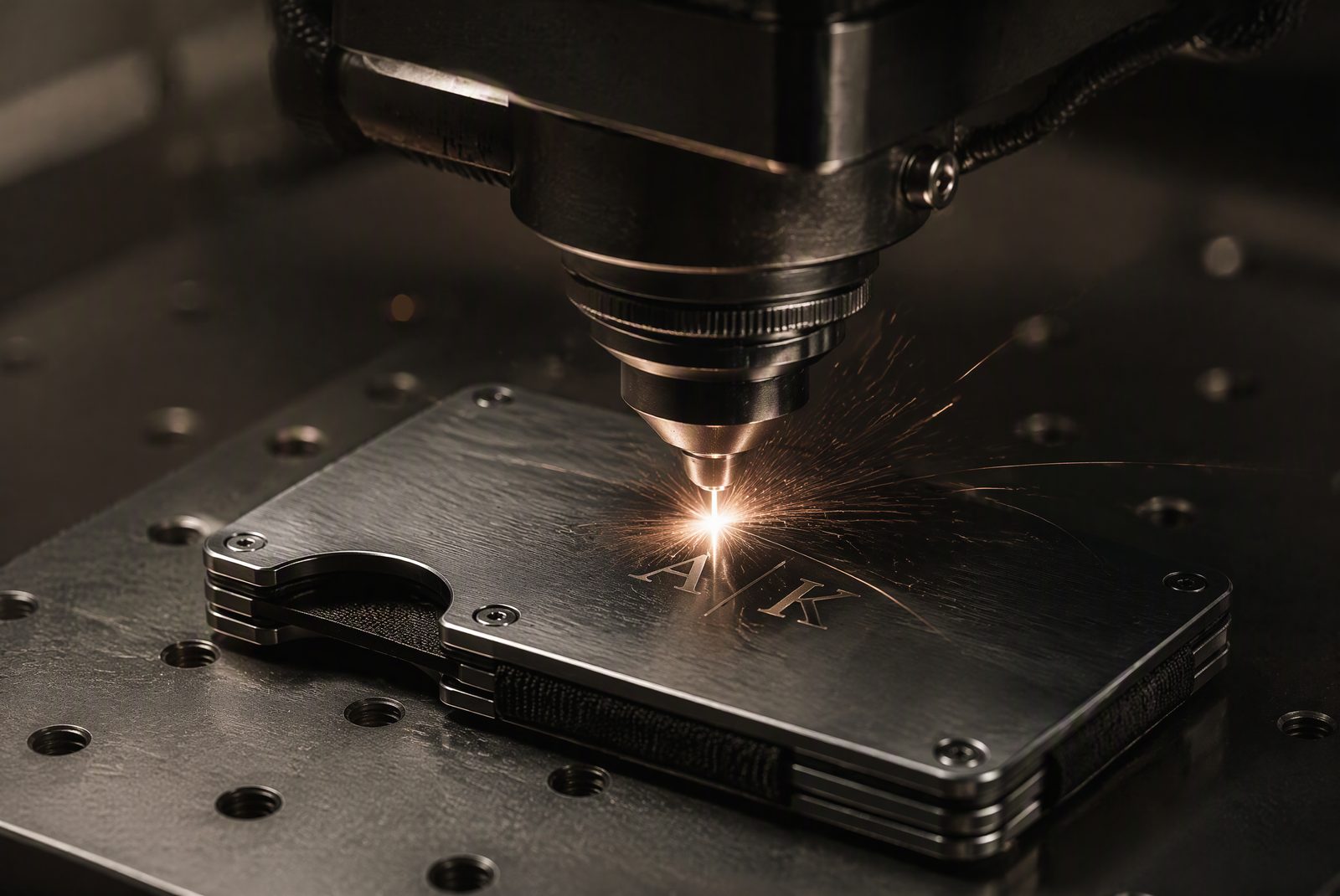
| Laser engraving | High — the mark is cut into the surface | Precise, matte, fine detail | $0.30–$1.50 | Aircraft-grade aluminum, metal plates, hard (veg-tan) leather [3] |
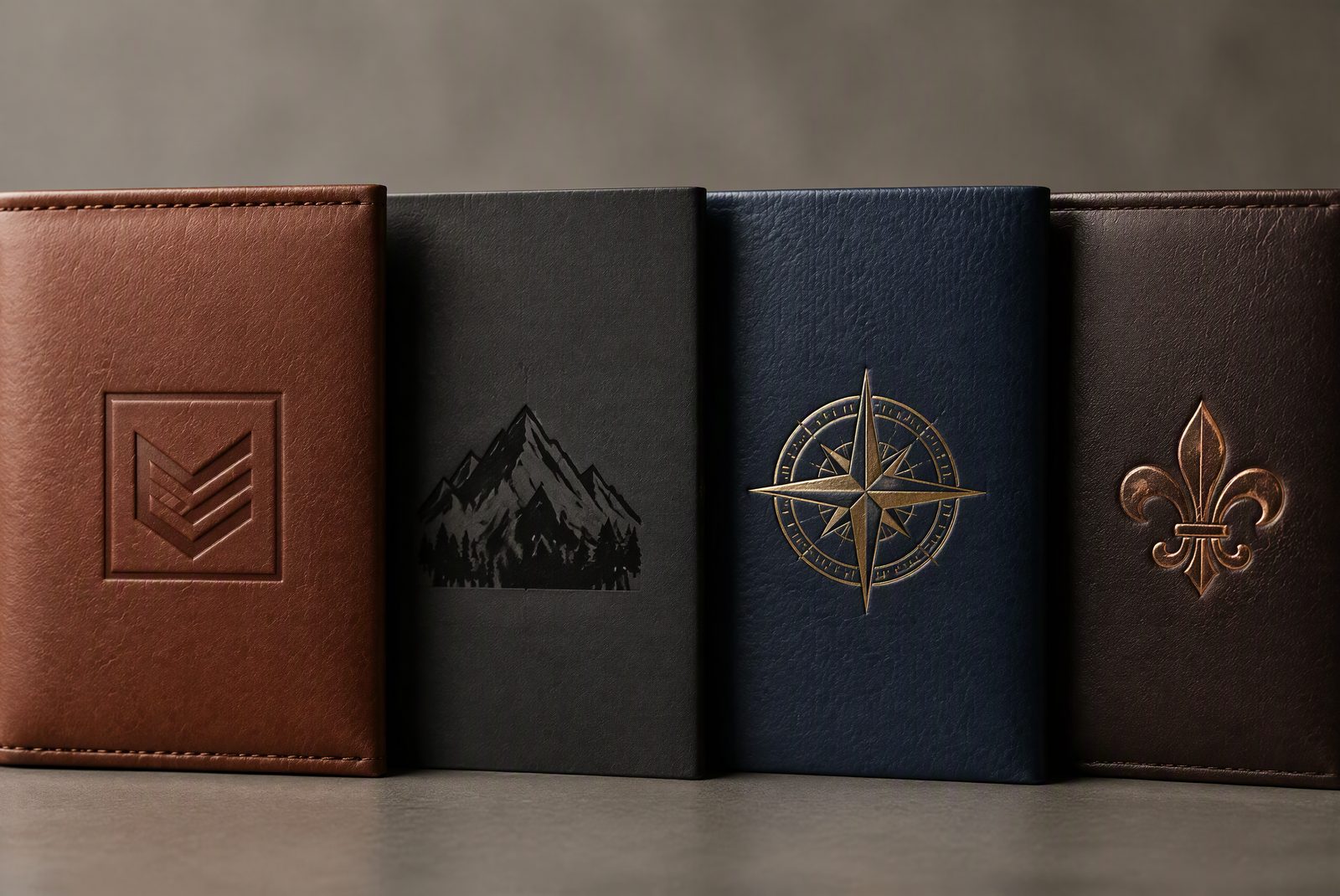
| Debossing | High — recessed mark resists daily wear | Subtle, understated | $0.40–$1.80 plus tooling | Most leathers, clean brand marks |
| Foil stamping | Medium — foil wears on high-touch areas | Metallic, high contrast, premium | $0.60–$2.50 plus tooling and foil | Leather exteriors, gift-focused lines |
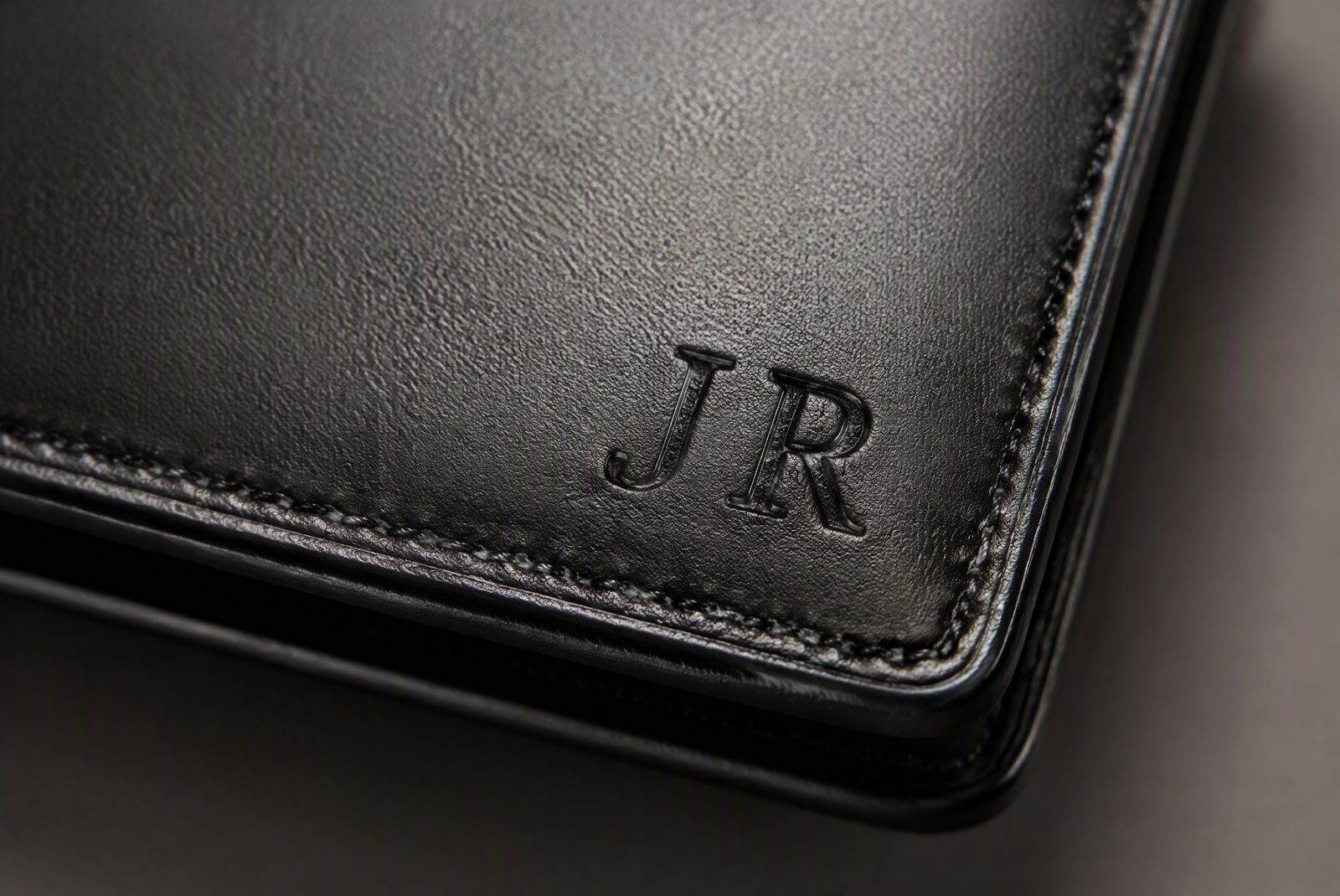
| Embossing | High | Raised, classic, soft | $0.80–$2.80 plus tooling | Leather, monograms, slim card slots |
All cost figures are planning estimates: per-unit price depends on order size, material, position count, and tooling. Debossing, foil stamping, and embossing usually require a one-time tooling (die) fee that is separate from the per-unit price — confirm the split with the factory before comparing quotes.
Font and Character Limits: Specs to Lock Before Sampling
Font choice is the most common source of engraved-wallet disappointment, because it is decided on screen but judged in millimeters of material. Lock these decisions in writing:
- Font style. Sans-serif reads modern and stays legible at small sizes; serif reads classic and premium; script reads personal and gift-oriented. For names under roughly 5 mm (estimate, per our protocol), all-caps and wider letterforms hold legibility far better than thin script strokes.
- Character count. A single line of 8–15 characters is a common working range on wallet exteriors or card panels (estimate, varies with available surface). Multi-line layouts of 1–3 lines work for name-plus-date or name-plus-city combinations — each line eats vertical space, so confirm line height and spacing with the factory.
- Case and symbols. Count spaces and symbols in the character budget, not just letters. All-caps is the safer default for legibility; mixed case works when the font has a wide x-height.
- Logo file specs. Send vector artwork (AI, SVG, or EPS at minimum). Below about 0.3–0.5 mm stroke width (estimate, depends on material and laser power, per our protocol), fine details blur or drop out, so simplify thin lines before sampling rather than after.
Every limit above is an estimate, not a factory spec: material batch, leather finish, and metal anodization all shift what reads cleanly. Put two font candidates on the sample if you are unsure — the sample round exists to settle it.
Placement and Dimensions: Where the Mark Goes
Placement controls both the visibility of the brand and how long the mark survives. The standard options:
- Exterior leather. Maximum brand visibility, maximum wear. The exterior takes hand contact, pocket friction, and flexing, so pair it with a high-durability method — laser engraving or debossing beats foil stamping here (estimate: metallic foil shows edge wear fastest on high-touch panels).
- Interior leather (inside the main panel). Private-feeling, low-wear placement for names, dates, and personal messages. Because it is protected from pocket friction, almost any method holds up; this is where monograms and script shine.
- Above a card slot. A small, high-presence spot for a compact logo or monogram. The limitation is area and the nearby card-opening friction, so keep marks within the slot's width and away from its opening edge (minimum clearance, estimate: keep a small margin so the inlay or stitching is not weakened).
- Metal plate or aluminum panel. The highest-contrast, most durable surface: laser engraving cuts into aluminum for a precise two-tone result [3]. This is the strongest home for a production logo.
Sizing follows the surface. Common character heights are roughly 3–8 mm (estimate, per our protocol), and logo width is capped by panel width and the margin needed around stitching and slot openings. State the maximum dimensions in the artwork file, and the factory can confirm fitability before any tooling is cut.
The OEM Timeline: From Artwork to Production
Engraving adds decisions, but it should not stretch your calendar if the specs are locked early. The standard flow works like this:
- Artwork and layout confirmation. Send vector files, placement annotations, dimensions, and font names. Expect one to three business days of back-and-forth (estimate) to finalize the layout — this is where character limits and stroke widths get settled.
- Sampling: 7 days. TOPWALLET produces samples within 7 days of confirmation [2]. The engraved sample is the moment to judge font, contrast, and position against the real material.
- Production: 30 days. After sample approval, bulk production runs 30 days [2], with four-stage QC holding the batch to the sample [5].
- Volume and MOQ. MOQ is flexible [2], which lets a brand validate a small engraved run before committing to scale. Per-unit engraving cost drops as volume climbs because setup and tooling amortize — treat the per-unit ranges above as volume-sensitive estimates.
Two cautions from real programs: never skip the sample, because laser depth and foil adhesion change per material batch (estimate, influenced by tanning and anodization); and keep artwork frozen after approval, because any font or placement change restarts the confirmation loop and can move your ship date.
How TOPWALLET Handles Personalized Engraving
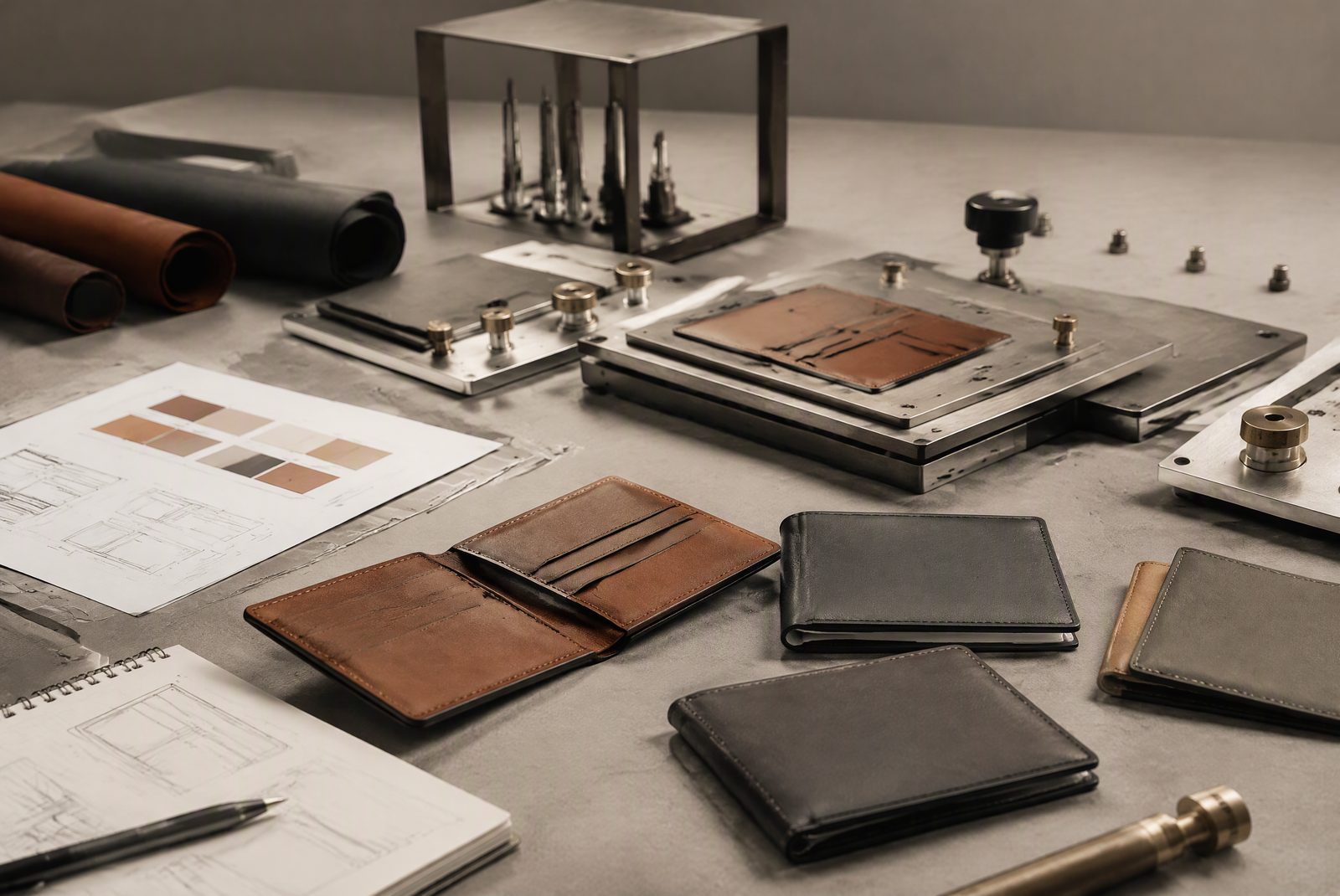
TOPWALLET runs a dedicated laser-engraving line across the two materials that matter most for engraved wallets: aircraft-grade aluminum for metal and leather-panel models, and full-grain leather for classic looks [3]. The OEM/ODM, private-label, and wholesale programs take buyer logos and brand marks directly into the engraving and tooling workflow [1], with flexible MOQ so small validation runs are possible before you scale [2].
The quality side is documented rather than promised: ISO 9001:2015, AQL 2.5, and four-stage QC keep engraved batches consistent with the approved sample [5]. Behind that sit 15 years of manufacturing experience, 200+ brand partners, and a monthly capacity of 50,000 units [1][2] — the size that makes a 7-day sampling turn practical. For an engraved wallet program, the practical sequence is: confirm artwork, receive a 7-day sample, approve, and ship within 30 days [2].
FAQ
Does laser engraving wear off?
On metal, no — the mark is cut into the surface and survives years of daily use. On leather, the mark stays visible but softens and loses contrast with age and flexing (estimate); debossing is the more durable leather option.
What is the best font for an engraved wallet?
Legibility first: sans-serif for modern brands, serif for classic lines, script only for gift-focused personalization. For small text, all-caps and wider letterforms hold up better (estimate) — and a sample settles the final choice.
How many characters can I engrave?
A single line of 8–15 characters is a common working range, and 1–3 lines fit most wallet panels (estimate). The limit is surface area plus stroke width, so confirm the exact budget with your factory before artwork is finalized.
Can you laser-engrave leather wallets?
Yes, but hard leathers (veg-tan styles) take a cleaner mark than soft, oily finishes, and light leathers can lack contrast against a light engraving (estimate). Debossing or a filled/dark treatment is the usual alternative on those surfaces.
How long does sampling take?
7 days from artwork confirmation at TOPWALLET [2]. The engraved sample is the right checkpoint for font, contrast, and placement against the actual material.
What is the production lead time?
30 days after sample approval [2]. Freezing artwork at approval protects that schedule.
Do you have a minimum order quantity?
MOQ is flexible [2] — small first runs are supported, which is useful when validating an engraved program before scaling.
Where to Buy
Start with the custom program: OEM & ODM — engraving specs, artwork requirements, and the sampling schedule live there [1][2].
For wholesale, OEM, or private-label quantities: REQUEST A QUOTE
Sources
- TOPWALLET — Custom & OEM: OEM/ODM, private label, and wholesale programs; 200+ brand partners. https://topedcwallet.com/custom-wallets/
- TOPWALLET — OEM process: 7-day sampling, 30-day production, flexible MOQ. https://topedcwallet.com/oem-odm/
- TOPWALLET — Materials: full-grain leather, aircraft-grade aluminum. https://topedcwallet.com/materials/
- TOPWALLET — Production capacity: 50,000 units per month. https://topedcwallet.com/wholesale-wallets/
- TOPWALLET — Quality: ISO 9001:2015, AQL 2.5, four-stage QC. https://topedcwallet.com/faq/
From article to product
Sourcing minimalist-wallets?
Tell us the format, the quantity and the date you need stock. You get material options, MOQ and a landed-cost range back within one business day.
Keep reading
More on brand playbook
Wallet Pricing Strategy 2026: From Factory Cost to Retail Price, Without Guessing
Wallet pricing looks simple until you map it: the same slim aluminum wallet can…
ReadWallet Branding Guide 2026: 7 Logo Methods Compared for Custom Orders
The logo method you pick decides how your wallet looks in a week, how…
ReadDropshipping EDC Wallets in 2026: Three Fulfillment Models That Actually Protect Margins
Margins on dropshipped EDC wallets are decided by the fulfillment model before a single…
Read
About the author
Wu, Leon
Leon Wu is the senior product engineer and EDC testing lead at TOPWALLET. He has spent more than a decade on wallet design-for-manufacture, materials and quality control at the company's Dongguan facility, and writes from bench testing, pull-force and 13.56 MHz shielding measurements rather than supplier spec sheets.
Written on the floor
This article was written by our production and QC team — the people who spec tolerances, run the finishing line and inspect every batch. Where it states a capacity, a pull force or a lead time, it comes from a measurement we made, not a supplier’s catalogue. If a number here disagrees with what your own supplier told you, tell us; several of these articles started as a correction from a buyer.
See how the factory works · Inspection process · Sourcing FAQ
Sourcing minimalist-wallets?
Tell us the format, the quantity and the date you need stock. You get material options, MOQ and a landed-cost range back within one business day.