

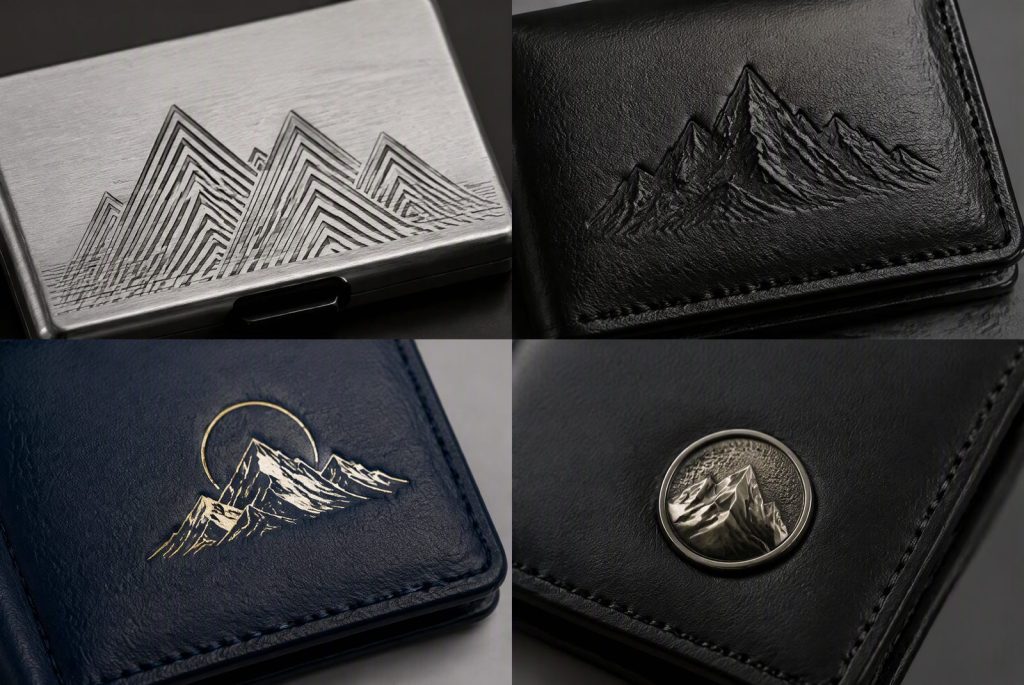
The logo method you pick decides how your wallet looks in a week, how it looks in a year, and how much it costs per unit. Most wallet brands choose between laser engraving, debossing, foil stamping, screen printing, embroidered patches, metal emblems, and hybrid combinations — and the right answer depends on your material (leather, aluminum, titanium, or carbon fiber), your budget per unit, and whether your brand wants subtle or loud. Short version: laser engraving is the best all-rounder on metal; debossing is the premium leather favorite; foil stamping is the cheapest way to look expensive; and an aluminum emblem gives the most durable "branded hardware" look — while request-quote OEM programs can do all of them in one order [1].
Quick comparison table
| Method | Best material | Durability | Relative cost | Typical MOQ note | Look |
|---|---|---|---|---|---|
| Laser engraving | Aluminum, titanium, steel, carbon fiber | Very high (cuts into surface) | Low–medium | Standard per-order setup | Subtle, precise, modern |
| Debossing (压印) | Leather | High (impressed, no ink) | Low | Standard | Timeless, premium |
| Embossing (凸印) | Leather | High | Low | Standard | Raised, classic |
| Foil stamping | Leather, PU | Medium-high (foil layer) | Low | Low per piece, foil cost | Glossy, gift-like |
| Screen printing | PU, fabric, some metals | Medium (ink wear) | Low | Setup plate | Bold, colorful |
| Embroidered patch | Fabric wallets | High | Medium | Patch production | Craft, casual |
| Metal emblem / pin | Metal, leather | Very high | Medium-high | Dedicated mold (higher upfront) | Premium hardware look |
Why the logo method matters more than the logo design
A logo dies or lives at the manufacturing step. A clean vector file means nothing if the factory applies it with a method that peels, fades, or looks cheap under close inspection. When you print custom wallets, the same design can read as luxury (debossed on full-grain leather) or counterfeit-adjacent (low-rent screen print on PU). Choose the method that matches both the material and the brand position — not just the cheapest quote [1].
The 7 methods, one by one
1. Laser engraving — the metal standard
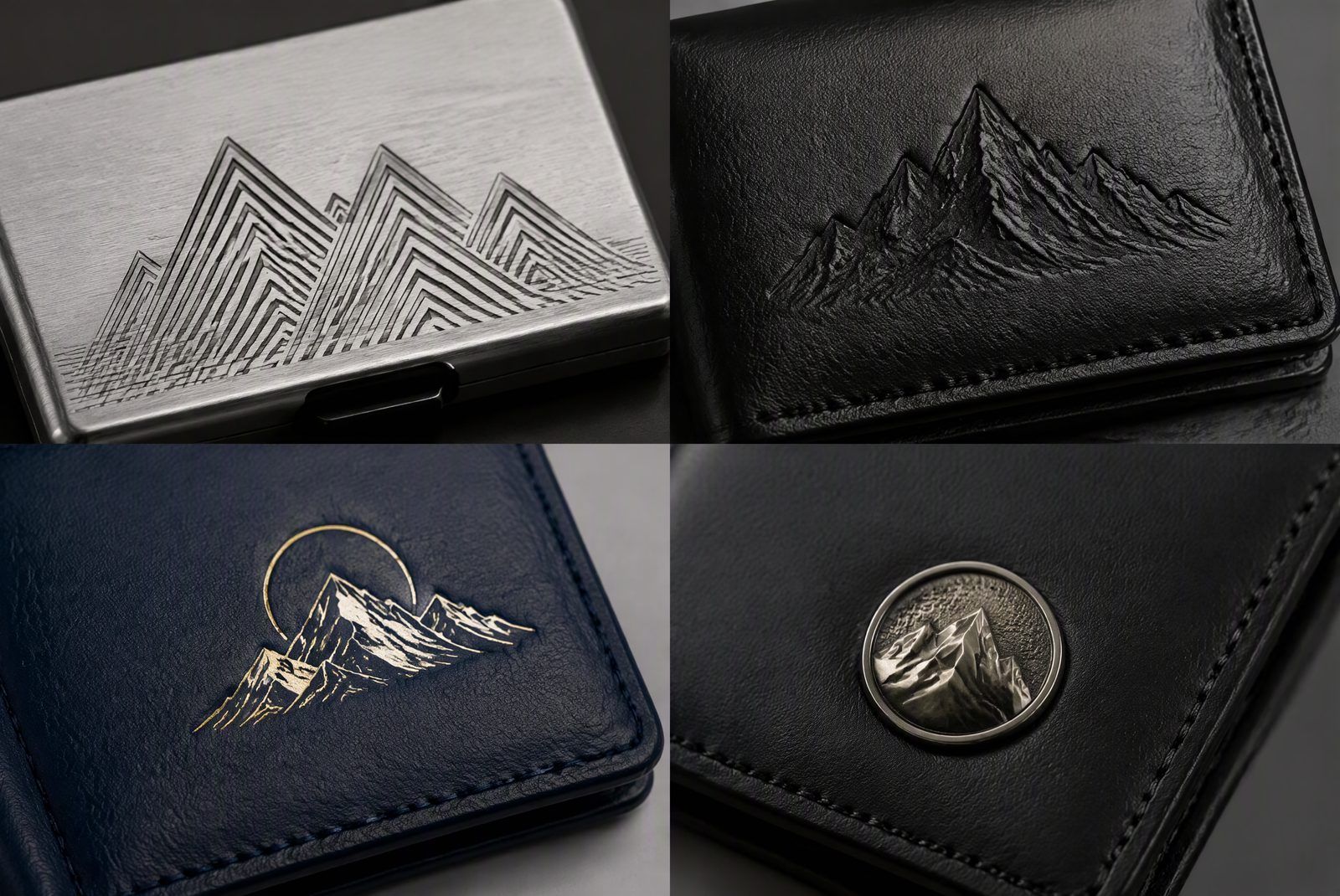
Laser engraving vaporizes a thin layer of the surface to create a mark that is literally part of the material [2]. On aerospace-grade aluminum, titanium, or stainless steel wallets, this produces a precise, wear-resistant logo that will outlive the wallet's useful life. It is the default for metal card holders — including the aluminum and titanium build-options seen in factory-direct programs — because it adds minimal cost per unit once the machine program exists [2]. It works poorly on leather-only surfaces relative to debossing, and it cannot reproduce fine gradients: it is a mark, not a photograph.
Best for: metal wallets, modern/minimal brands, and anyone who needs a logo that cannot rub off. Watch out: engraved marks are usually a single tone (light or dark depending on parameters); verify how your logo looks reversed.
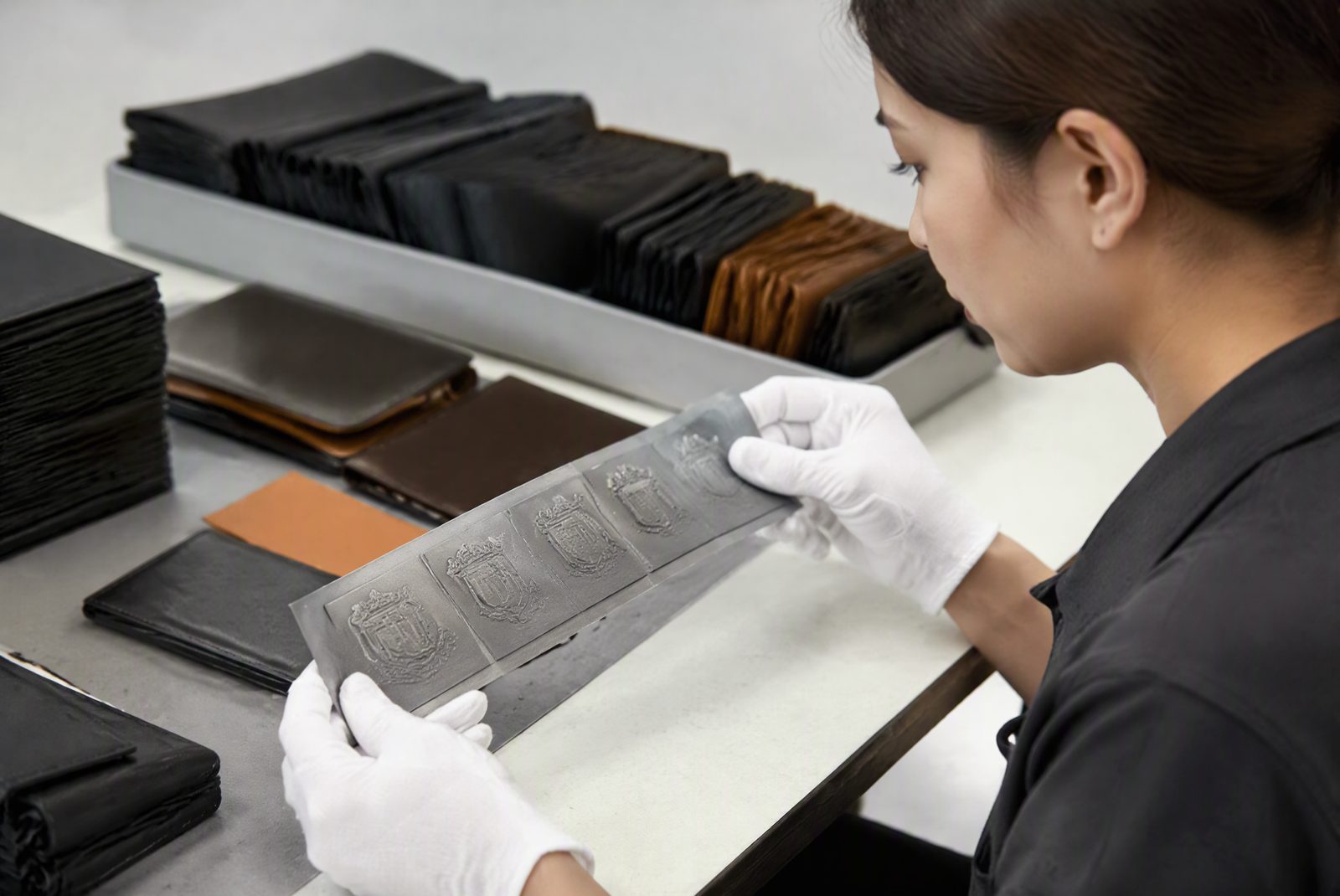
2. Debossing — the leather premium classic
Debossing presses your logo into the leather, creating a recessed impression without ink or foil. It is the quiet-luxury standard of the wallet category: a sunken mark that feels understated and ages with the hide [1]. The depth is controlled by pressure and the hardness of the leather, so a full-grain vegetable-tanned hide yields a crisp impression, while soft PU can look mushy.
Best for: full-grain leather wallets, heritage-feel brands, corporate gifts. Watch out: depth varies by leather thickness — have the factory approve a strike-off (test piece) before mass production.
3. Embossing — the raised counterpart
Embossing does the opposite of debossing: it raises the logo above the surface using a male die from behind. It reads as classic and gives a subtle tactile bump. In practice, many "embossed" wallets are actually debossed or a combination; the raised effect needs enough material thickness to push through, so it suits structured leather card cases.
Best for: premium leather wallets with a classic brand mark. Watch out: raise amount is small (fractions of a millimeter); don't expect a 3D sculpture.
4. Foil stamping — premium look on a budget
Foil stamping presses a heated metal die through a thin metallic foil into the leather, leaving a shiny gold, silver, or custom-color mark. It is the cheapest quick way to make a wallet look giftable — the reason so many gifting lines use gold-foil logos [1]. Durability is good but finite: foil is a wear layer, and heavily-used cards cases show edge wear over years.
Best for: gifts, mid-price PU or leather lines, onboarding retail programs where per-unit cost rules. Watch out: foil color and placement must be specified; metallic foils reflect light unevenly in product photos.
5. Screen printing — bold color on flat surfaces
Screen printing pushes ink through a mesh stencil onto the surface. It handles multi-color logos and is common on PU pouches, fabric dividers, or the interior of metal wallets (the inner card slides). It is the least durable of the common methods on high-contact surfaces — card rubbing wears ink off over time — so use it on low-wear positions.
Best for: colorful or multi-color marks, interior branding, promotional price points. Watch out: on metal edges, ink chips; keep the print area away from card-slot contact zones.
6. Embroidered patch — texture and craft
For fabric or canvas wallets, an embroidered patch adds tactile craft and survives laundering-style abuse better than printed ink. It is a separate production step (patch making + sewing), so cost per piece is higher, and the patch raises the surface profile slightly.
Best for: fabric wallets, casual/EDC brands, heritage "workwear" positioning. Watch out: patch color matching needs Pantone-backed threads; confirm the stitch density for small logos.
7. Metal emblem — the hardware statement
A cast or stamped metal emblem (often with a surface finish such as anodizing, PVD, or brushed metal) can be pinned, riveted, or glued onto leather or metal wallets. It is the most premium-looking and most durable logo option, and it doubles as structural hardware on aluminum wallets. The catch is the dedicated mold and tooling cost — viable when your order size justifies the upfront, which is exactly what flexible-MOQ OEM lines exist for [3].
Best for: flagship products, metal wallets, brands that want the logo to be the hero. Watch out: confirm attachment method (rivet vs adhesive) and any sharp edges against cards.
How to choose: a 3-question decision framework
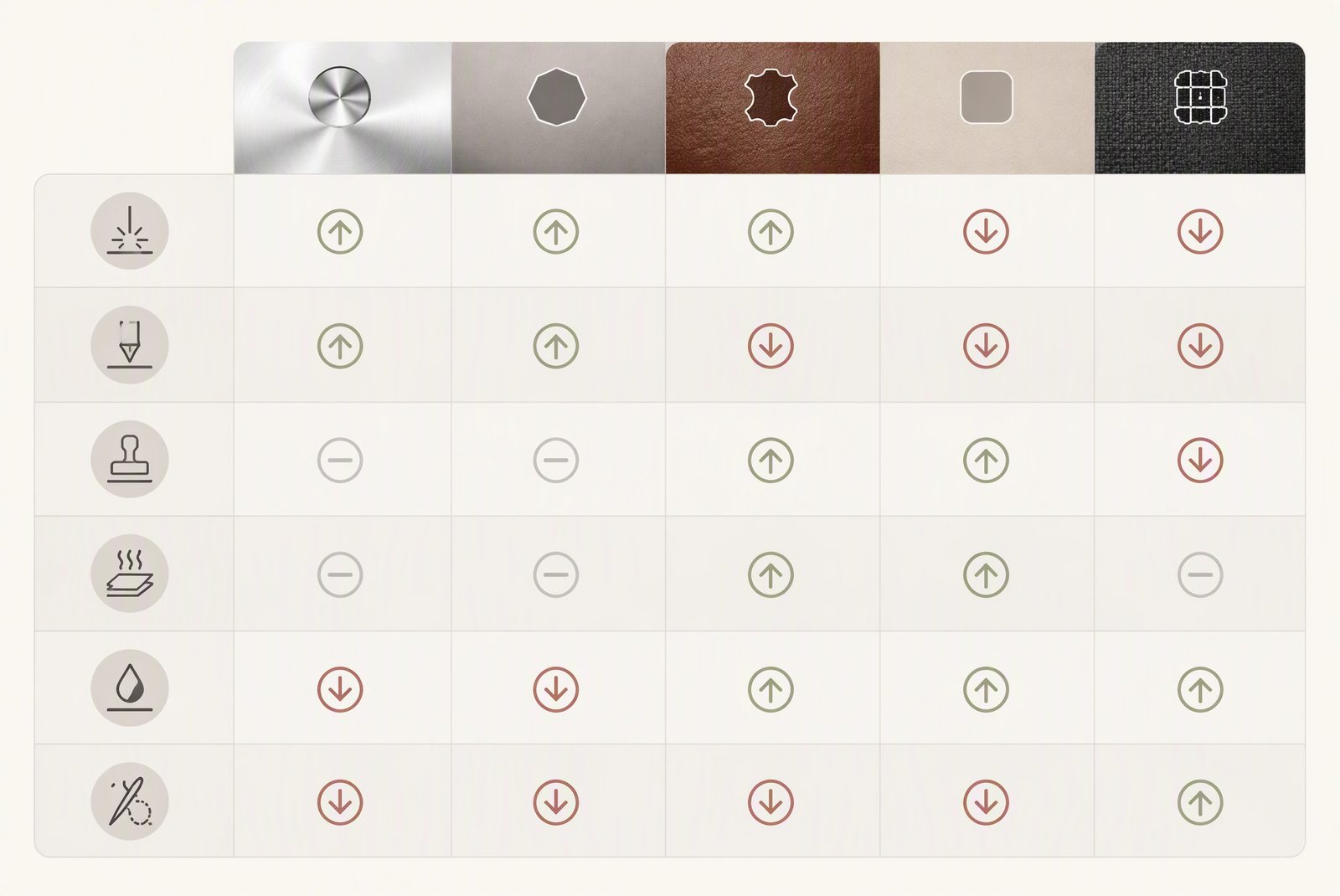
Q1: What is your main material? Metal wallet → laser engraving, with an emblem for the flagship. Leather wallet → debossing, or foil stamping if you need a budget premium look. Fabric/PU → screen printing or embroidered patch. This single answer eliminates most options [1] [2].
Q2: What is your per-unit budget surplus for branding? Under $0.50/unit extra (estimate at factory-direct scale): laser engraving or debossing. $0.50–$2: foil stamping or high-detail laser. Over $2: metal emblem with dedicated mold. Prices vary by factory, labor rates, and quantity; treat these as planning ranges and get a per-method quotation [3].
Q3: How should the logo age? If the wallet is an everyday carry that lives in jeans pockets, choose the most wear-resistant method your material allows — laser engraving on metal, debossing on leather. If the wallet is a gift item with a short visual life, foil stamping or printing looks great at unboxing.
Combining methods in one wallet
Most high-end wallet programs combine two methods: debossed brand on the exterior, screen-printed interior panel, plus a foil-stamped monogram interior — or laser-engraved logo plus a PVD-accented emblem. Combination branding raises the perceived value far more than the marginal cost, and OEM factories can execute multiple techniques in one production line, keeping logistics and QC in a single process [3].
How TOPWALLET handles wallet branding
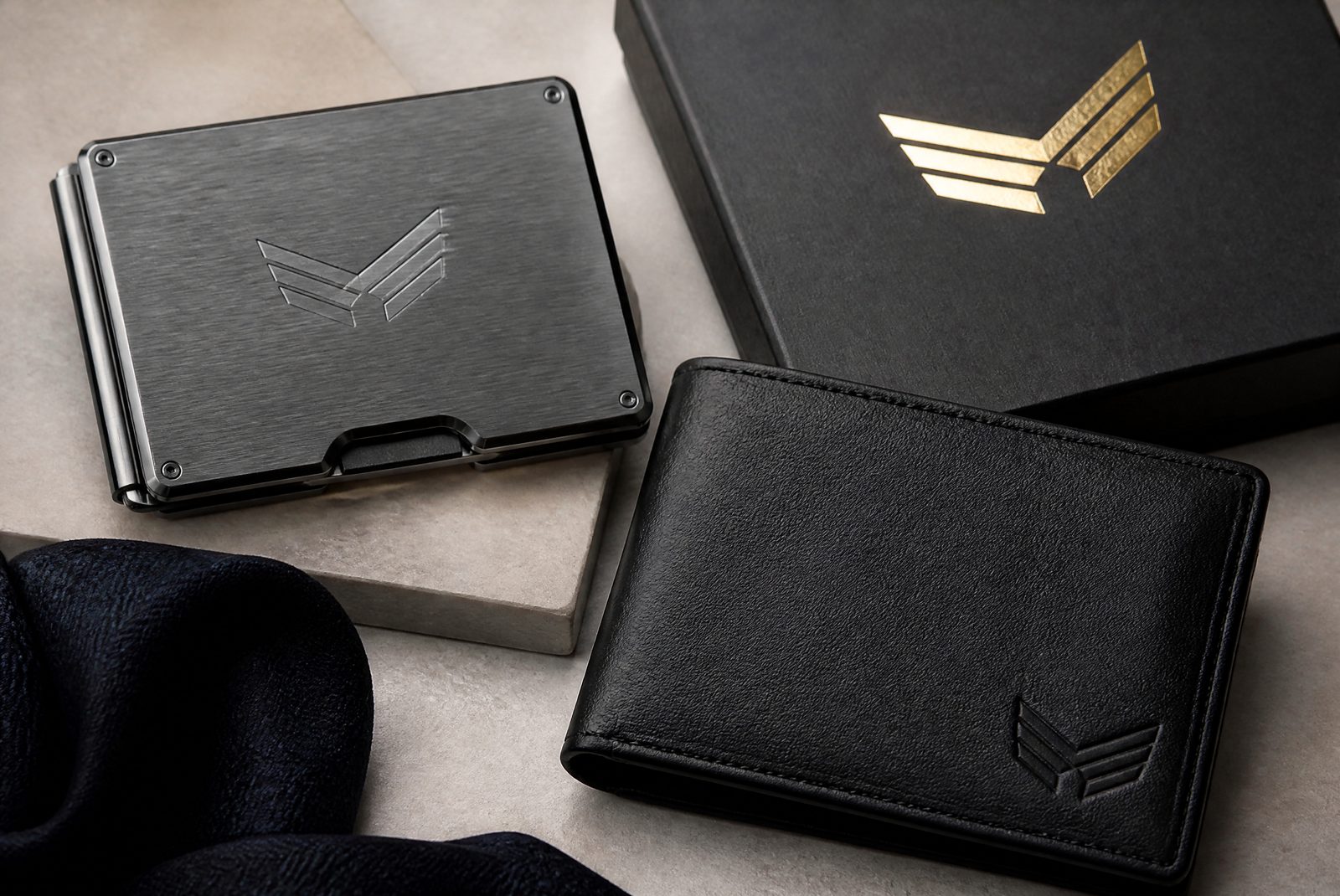
TOPWALLET, a Dongguan wallet manufacturer with 15 years of production experience and more than 200 brand partners, runs custom logo programs across aluminum, titanium, and full-grain leather wallets [3]. The OEM/ODM process covers material selection, structure, and all the branding methods above — laser engraving, debossing, foil stamping, printing, and emblem hardware — plus four-stage quality control with AQL 2.5 sampling and ISO 9001:2015 management [4]. Samples ship in 7 days, bulk production in about 30 days, and MOQ is flexible, which makes multi-method logo testing practical even for first orders [3] [4].
The recommended sequence: approve the strike-off (logo test piece) on the exact material of your production order, confirm the wear test on a sample wallet, then set the branding spec in the production contract. That is where most logo failures are caught — before 10,000 units carry a mark you don't like [4].
FAQ
What is the most durable wallet logo method?
Laser engraving on metal and debossing into leather are the most wear-resistant because both physically alter the material surface rather than applying a coating. Metal emblems are equally durable when mechanically attached [1] [2].
What is the cheapest way to put a logo on wallets?
Screen printing and foil stamping carry the lowest per-unit cost at volume; laser engraving is also low once the setup exists. The cheapest method for your project depends on material — printing on PU and engraving on aluminum are both near the low end [3].
Can I put a logo on both leather and metal wallets in one order?
Yes — an OEM/ODM wallet program can apply debossing or foil to leather components and laser engraving to metal parts in the same production run, as long as the branding spec is documented per component [3] [4].
What is a strike-off and why do I need one?
A strike-off is a physical test sample of the logo applied to the production material. It shows real depth, tone, and alignment before mass production — without it, "deep deboss" can arrive as a scratch [4].
Does laser engraving damage metal wallets?
No — engraving removes a controlled surface layer and does not weaken structural parts when parameters are set correctly, and it cannot rub off. It is the industry standard for aluminum and titanium card holders [2].
How much does a custom logo add to the unit price?
At factory-direct scale, common methods add roughly $0.10–$2.00 per unit depending on method, quantity, and complexity (estimate, varies by factory) — emblem molds and multi-color foil sit at the high end. Ask for per-method quotes on your actual order size [3].
What information does the factory need from me for the logo?
A vector file (AI/CDR/SVG or a high-res PNG with transparent background), Pantone or hex color references, the target position and size on the wallet, and your chosen method. A mid-res JPG logo is the most common cause of fuzzy engraving and foil marks [4].
See how branding decisions interact with process and materials: OEM/ODM manufacturing, or match the print/deboss method to your material on the materials page.
For wholesale, OEM, or private-label quantities: REQUEST A QUOTE
Sources
- TOPWALLET — Official site, custom wallet production and OEM/ODM overview. https://topedcwallet.com/custom-wallets/
- TOPWALLET — Materials guide covering aerospace-grade aluminum, titanium, and finishing options. https://topedcwallet.com/materials/
- TOPWALLET — OEM/ODM program page: methods, MOQ, sampling and turnaround. https://topedcwallet.com/wallet-oem-odm/
- TOPWALLET — Quality control and certifications (ISO 9001:2015, four-stage QC, AQL 2.5). https://topedcwallet.com/certifications/
From article to product
Sourcing minimalist-wallets?
Tell us the format, the quantity and the date you need stock. You get material options, MOQ and a landed-cost range back within one business day.
Keep reading
More on brand playbook
Wallet Pricing Strategy 2026: From Factory Cost to Retail Price, Without Guessing
Wallet pricing looks simple until you map it: the same slim aluminum wallet can…
ReadPersonalized Engraved Wallets in 2026: Font, Placement, and Lead-Time Decisions for OEM Buyers
Personalized engraved wallets sell — but the buying decision comes down to four engineering…
ReadDropshipping EDC Wallets in 2026: Three Fulfillment Models That Actually Protect Margins
Margins on dropshipped EDC wallets are decided by the fulfillment model before a single…
Read
About the author
Wu, Leon
Leon Wu is the senior product engineer and EDC testing lead at TOPWALLET. He has spent more than a decade on wallet design-for-manufacture, materials and quality control at the company's Dongguan facility, and writes from bench testing, pull-force and 13.56 MHz shielding measurements rather than supplier spec sheets.
Written on the floor
This article was written by our production and QC team — the people who spec tolerances, run the finishing line and inspect every batch. Where it states a capacity, a pull force or a lead time, it comes from a measurement we made, not a supplier’s catalogue. If a number here disagrees with what your own supplier told you, tell us; several of these articles started as a correction from a buyer.
See how the factory works · Inspection process · Sourcing FAQ
Sourcing minimalist-wallets?
Tell us the format, the quantity and the date you need stock. You get material options, MOQ and a landed-cost range back within one business day.