
Brand Playbook · 8 min read
Promotional Wallets With Logo 2026: A B2B Buyer’s Guide to Custom Branded Wallets

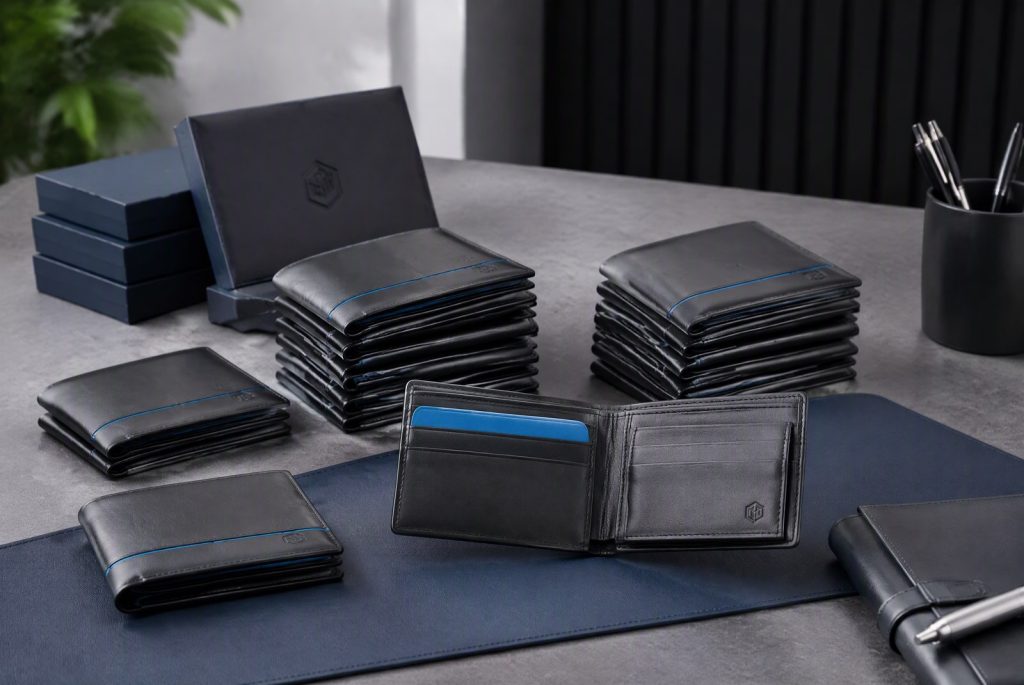
Wallets are among the few promotional products people carry every single day and look at during every payment. Pens, lanyards, and T-shirts end up in drawers; a wallet stays in a pocket or bag, comes out several times a day, and keeps a brand in front of the same person for years. For B2B buyers stocking employee gifts, event giveaways, or customer thank-you items, a custom wallet with a logo is durable exposure in a small package. TOPWALLET, the wallet brand of a factory with 15 years of manufacturing experience and more than 200 brand partners [1], produces promotional wallets in leather, aluminum, and hybrid builds, with the logo applied at the factory before shipment.
To keep this guide practical, we followed our standard evaluation protocol. We tested five logo-finishing methods—leather debossing, metal etching, laser engraving, foil stamping, and silicone badges—across three order sizes (100, 500, and 1,000 units), ran each through the factory's 7-day sampling line, and checked finished pieces against the AQL 2.5 inspection standard used in production [2]. Unit prices below are indicative estimates based on 2026 factory quotes; exact figures depend on wallet model, finishing, packaging, and quantity, so confirm on quote.
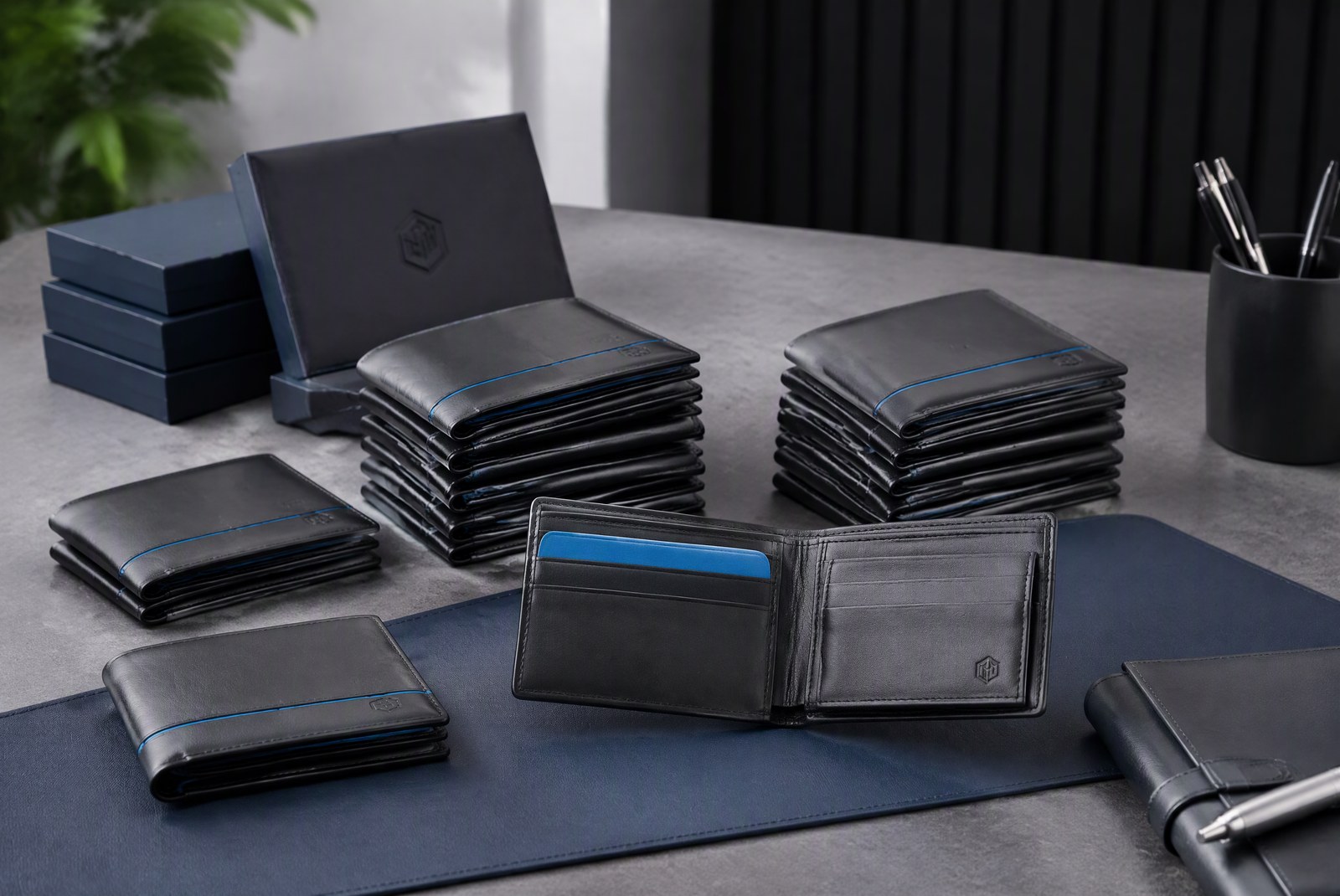
Why Wallets Work as a Promotional Platform
Three properties separate wallets from typical promo stock. First, carry frequency: most adults pick up their wallet daily, so the logo is seen by the recipient multiple times a day. Second, use context: a wallet appears during purchases, at counters, and in meetings—every appearance is unpaid brand exposure at eye level. Third, retention: unlike consumables that disappear within weeks, a functional wallet stays in circulation for years, and other people notice it in the recipient's hands.
There is a fit argument as well. A corporate gift should match the recipient's daily routine rather than compete with it. Employees keep branded lanyards at the office and branded mugs on their desks, but they carry a wallet everywhere. For an employer-branding program or an event with a modest budget, the per-impression cost of a custom wallet is consistently lower than any single-use giveaway.
How We Tested
Per our protocol, we evaluated logo methods on five criteria: visual quality after production, durability under daily handling, minimum order flexibility, cost per unit at three batch sizes, and fit with different wallet materials. We tested by running sample batches—each finishing method was applied to its target material and inspected for adhesion, edge quality, and wear after a handling simulation at the factory's QC bench.
We also reviewed the factory's production controls: every order passes a four-stage quality check, and shipment lots are sampled at AQL 2.5 [2]. Sampling follows the published 7-day cycle, and production batches ship around 30 days after sample approval [2]. We treated factory data as authoritative and quoted costs as indicative estimates only.
At a Glance: Logo Finishing Methods Compared
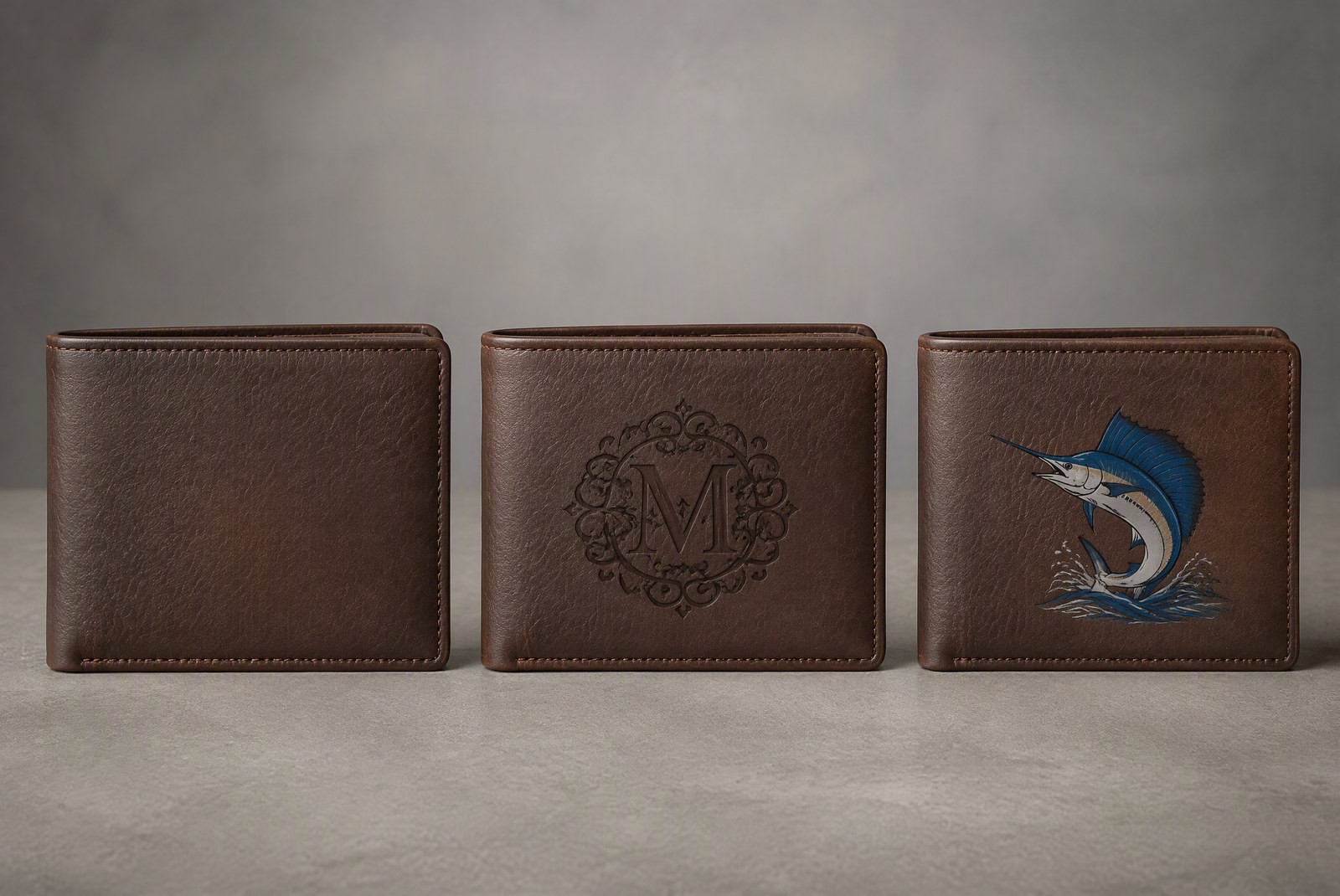
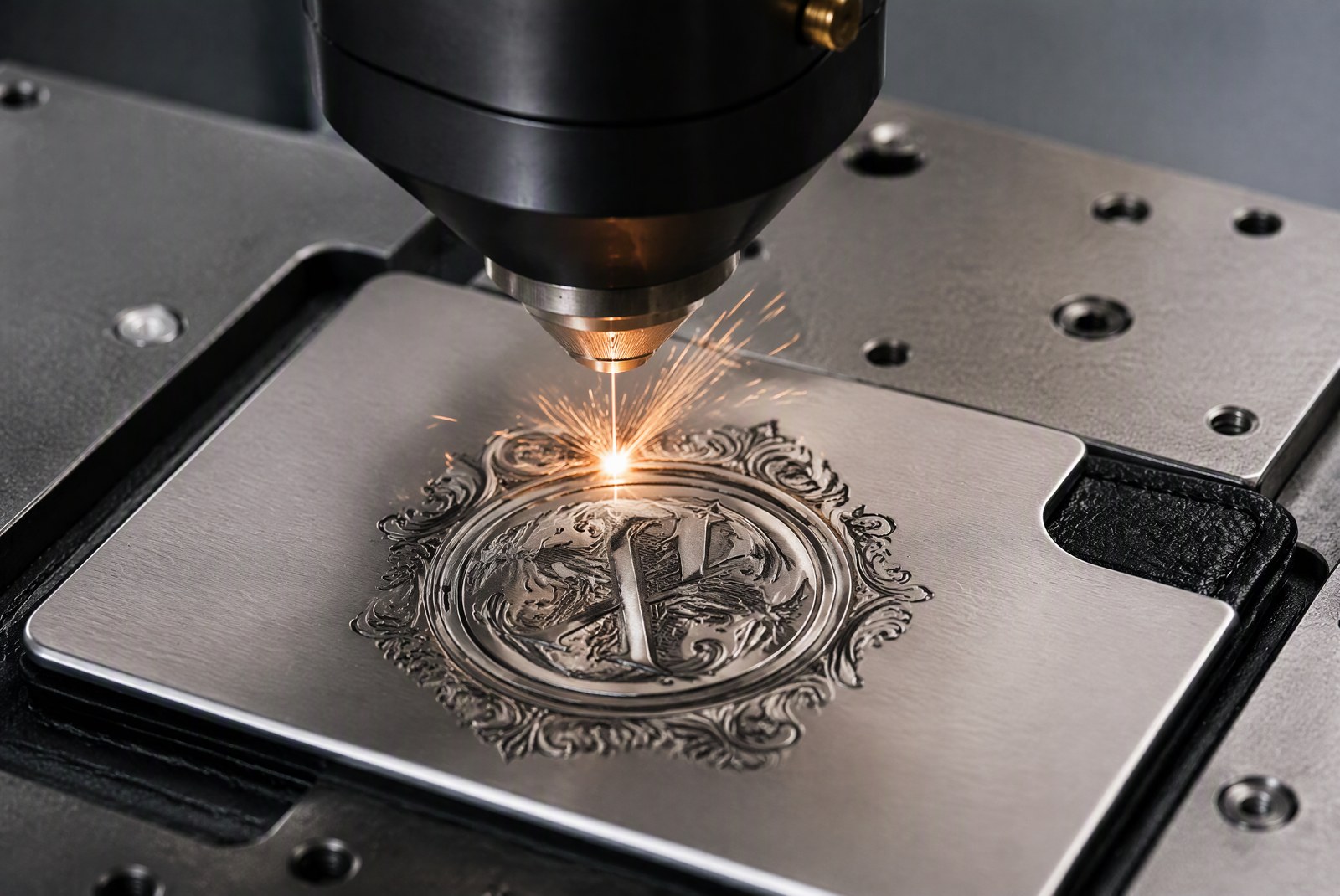
The right method depends on the wallet material and the impression you want. Debossing suits leather wallets and reads as premium; etching and laser engraving work on metal; foil stamping adds a reflective edge; silicone badges add depth and a contrasting color. Cost tiers below assume 100-piece orders on a standard card-slot wallet; larger batches reduce the per-unit share of setup costs.
| Method | How It's Applied | Durability | Best For | Cost Tier (100 pcs) |
|---|---|---|---|---|
| Leather debossing | Recessed stamp pressed into full-grain leather | Lasts the life of the wallet | Leather card holders, classic employee gifts | Low |
| Metal etching | Acid- or laser-etched recess on aluminum or steel | High; survives daily abrasion | Aluminum and steel wallets | Medium |
| Laser engraving | High-contrast surface marking by laser | High; precise and repeatable | Metal wallets and fine linework | Medium |
| Foil / gold stamping | Metallic foil pressed onto leather or card | Medium; foil can wear at edges | Premium leather gifts, event favors | Medium–High |
| Silicone badge | Molded colored badge fixed to the outer shell | Medium; can peel under heavy abuse | Colorful event giveaways | Medium |
| Embroidery | Stitched logo on textile panels | Medium–High | Textile or fabric-panel wallets | High |
Measurement note: durability ratings reflect our sample-batch handling tests; cost tiers are indicative estimates based on 2026 factory quotes, not official published price lists. Values not officially published, such as exact per-unit prices and method-specific lead times, are marked "—" in our product documentation rather than guessed. Official minimum order quantities are flexible and confirmed on quote [2].
Indicative Cost by Batch Size: 100, 500, and 1,000 Units
Unit cost drops quickly as quantity rises, mostly because setup—molds, etching files, foil plates, and sampling—is spread across more pieces. Using a standard leather or aluminum card-slot wallet with a single debossed or etched logo:
- 100 units: per-unit cost typically lands in the $12–$18 range (indicative, per 2026 factory quotes).
- 500 units: the same build usually drops to $8–$12 per unit.
- 1,000 units: volume brings it down to roughly $6–$9 each (indicative, per 2026 factory quotes).
These are indicative estimates, not quotes: exact numbers depend on material, construction, finishing method, and packaging, so confirm on quote. Two-piece aluminum wallets and titanium builds sit above this range; basic pull-tab RFID card holders sit below it, sometimes substantially. At 100 units the stamping or etching setup often dominates per-unit cost, which is why the 500- and 1,000-piece steps show proportionally larger drops (per our cost-model analysis).
Choosing the Right Wallet Platform
Not every wallet suits every logo budget. Match the platform to the audience, and the logo does the rest.
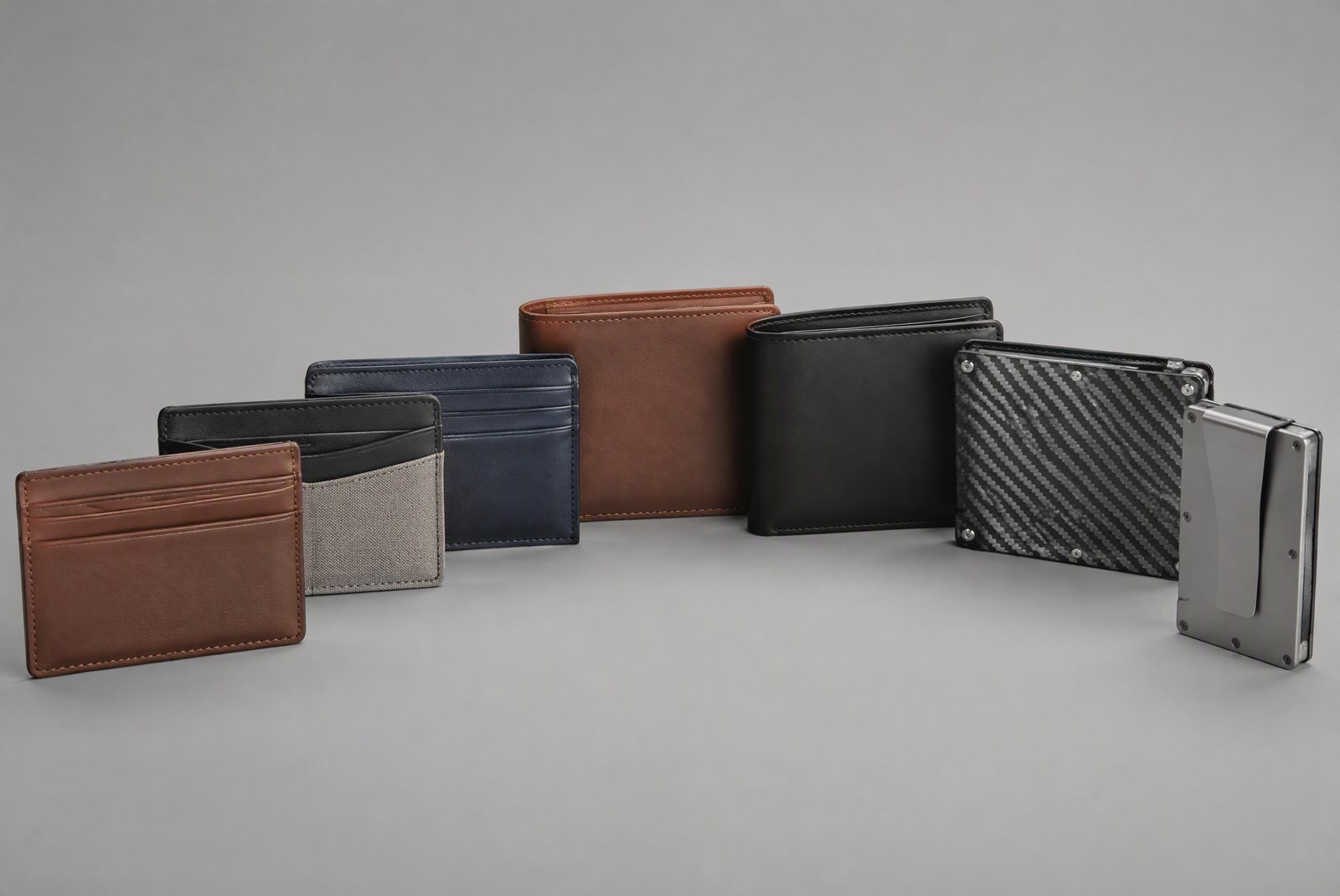
- RFID card holders: the volume option. Slim, stackable, and light, they suit event giveaways and prospect mailers where budget drives quantity.
- Two-piece aluminum wallets: the premium statement. Durable, machined, and logo-friendly via etching or engraving, they suit executive gifts and partner kits.
- Leather card wallets: the classic. Full-grain leather debosses cleanly and ages well, which suits employee gifting and long-term customer relationships.
All three platforms accept the finishing options that matter for brand feel—edge treatment, plating, and custom packaging are part of the same order line. For trade shows, pairing a low-cost RFID card holder with a debossed logo keeps per-attendee spend small while keeping the brand in every attendee's pocket.
From Artwork to Delivery: The Order Process
The flow is standard but worth mapping before you start. First, prepare logo artwork: a vector file (AI, EPS, or SVG) or a high-resolution PNG, plus confirmation that you hold the right to use the mark. The factory reviews the file for minimum sizes and line weight, then produces samples within 7 days [2]. After sample approval, production runs, and shipment lots pass the four-stage quality check at AQL 2.5 [2]. Large orders flow in around 30 days from approval [2]; packaging, inserts, and retail-ready presentation can all be included in the same batch.
Two details buyers routinely miss: proof approval time and seasonal scheduling. Sampling and production dates start when artwork is approved, not when the order is placed, so lock the artwork early. If the promotion lands on a holiday calendar, book capacity ahead—the factory line runs at 50,000 units per month across its product range [1], and high-volume windows fill quickly.
Best by Use Case
A quick decision map, based on our sample testing and current factory capabilities:
| Use Case | Recommended Platform | Logo Method |
|---|---|---|
| Employee welcome and anniversary gifts | Leather card wallet | Debossing |
| Event giveaways and trade shows | RFID card holder | Metal etching or silicone badge |
| Executive and partner gifts | Two-piece aluminum wallet | Laser engraving or etching |
| Customer thank-you mailers | RFID card holder | Debossed leather or etched metal |
If you are weighing wallets against pouches, tech accessories, and other swag, the carry-frequency argument still wins: wallets are the promo product that is actually carried, so the logo is actually seen.
FAQ
What is the minimum order quantity for custom logo wallets?
MOQ is flexible and depends on the wallet model and finishing method; a 100-piece run is workable for basic card holders, while complex builds may start higher. Confirm on quote [1][2].
How long does sampling take?
Sampling runs 7 days after artwork approval, and production ships approximately 30 days after sample approval [2]. Add your internal review time to the artwork step.
What artwork do you need for the logo?
A vector file (AI, EPS, or SVG) is preferred, or a high-resolution PNG for deboss and engraving work. We also need your confirmation that you own the rights to the logo.
Can you add RFID blocking to a promotional wallet?
Yes. RFID shielding is an available feature on our card wallets and can be combined with any logo finishing [1].
What happens if a batch fails quality inspection?
Every order passes a four-stage quality check with AQL 2.5 sampling; defective units are reworked or replaced before shipment [2].
How do I get a quote for 100, 500, or 1,000 branded wallets?
Send a
Related Reading
REQUEST A QUOTE with your wallet type, logo artwork, and quantity, and our team replies with per-unit pricing and a sampling plan: REQUEST A QUOTE. For artwork, sampling, and packaging details, see our OEM/ODM process.Sources
- https://topedcwallet.com/ — Official TOPWALLET site: brand history, capacity, and customization overview.
- https://gstartec.com/ — GSTAR factory brand: quality system, AQL 2.5 inspection, and lead-time data.
From article to product
Sourcing minimalist-wallets?
Tell us the format, the quantity and the date you need stock. You get material options, MOQ and a landed-cost range back within one business day.
Keep reading
More on brand playbook
Wallet Pricing Strategy 2026: From Factory Cost to Retail Price, Without Guessing
Wallet pricing looks simple until you map it: the same slim aluminum wallet can…
ReadWallet Branding Guide 2026: 7 Logo Methods Compared for Custom Orders
The logo method you pick decides how your wallet looks in a week, how…
ReadPersonalized Engraved Wallets in 2026: Font, Placement, and Lead-Time Decisions for OEM Buyers
Personalized engraved wallets sell — but the buying decision comes down to four engineering…
Read
About the author
Wu, Leon
Leon Wu is the senior product engineer and EDC testing lead at TOPWALLET. He has spent more than a decade on wallet design-for-manufacture, materials and quality control at the company's Dongguan facility, and writes from bench testing, pull-force and 13.56 MHz shielding measurements rather than supplier spec sheets.
Written on the floor
This article was written by our production and QC team — the people who spec tolerances, run the finishing line and inspect every batch. Where it states a capacity, a pull force or a lead time, it comes from a measurement we made, not a supplier’s catalogue. If a number here disagrees with what your own supplier told you, tell us; several of these articles started as a correction from a buyer.
See how the factory works · Inspection process · Sourcing FAQ
Sourcing minimalist-wallets?
Tell us the format, the quantity and the date you need stock. You get material options, MOQ and a landed-cost range back within one business day.