

A woman wallet is a purpose-built organizational accessory designed to carry cards, cash, coins, and essentials in a format sized for female hands, bags, or pockets. The right choice depends on your carry volume, preferred style — from minimalist metal systems to luxurious leather clutches — and how you want it to complement your daily look. Below is a complete buyer’s guide covering every major type, material trade-off, standard to verify, and price tier so you can confidently select or source one.
What is a Woman Wallet?
A woman wallet is a compact carrying accessory designed specifically for organizing cash, cards, coins, and personal items for everyday use. Unlike unisex or men’s wallet designs that typically prioritize flat profile and deep card slots, women’s wallets vary widely in form factor because female carry habits differ significantly — from phone-plus-cards minimalism to larger clutches that replace a small handbag entirely.
At their core, woman wallets serve two purposes: organization (keeping cards separated from loose cash) and portability (fitting comfortably in a purse, tote, or even a pockets-less lifestyle). The style you choose depends almost entirely on what you carry daily and where you carry it.
For more on how different carry habits shape wallet design, see our lightweight wallet for women comparison guide, which covers material choices across real-world carry volumes.
Why Does the Type of Woman Wallet Matter?
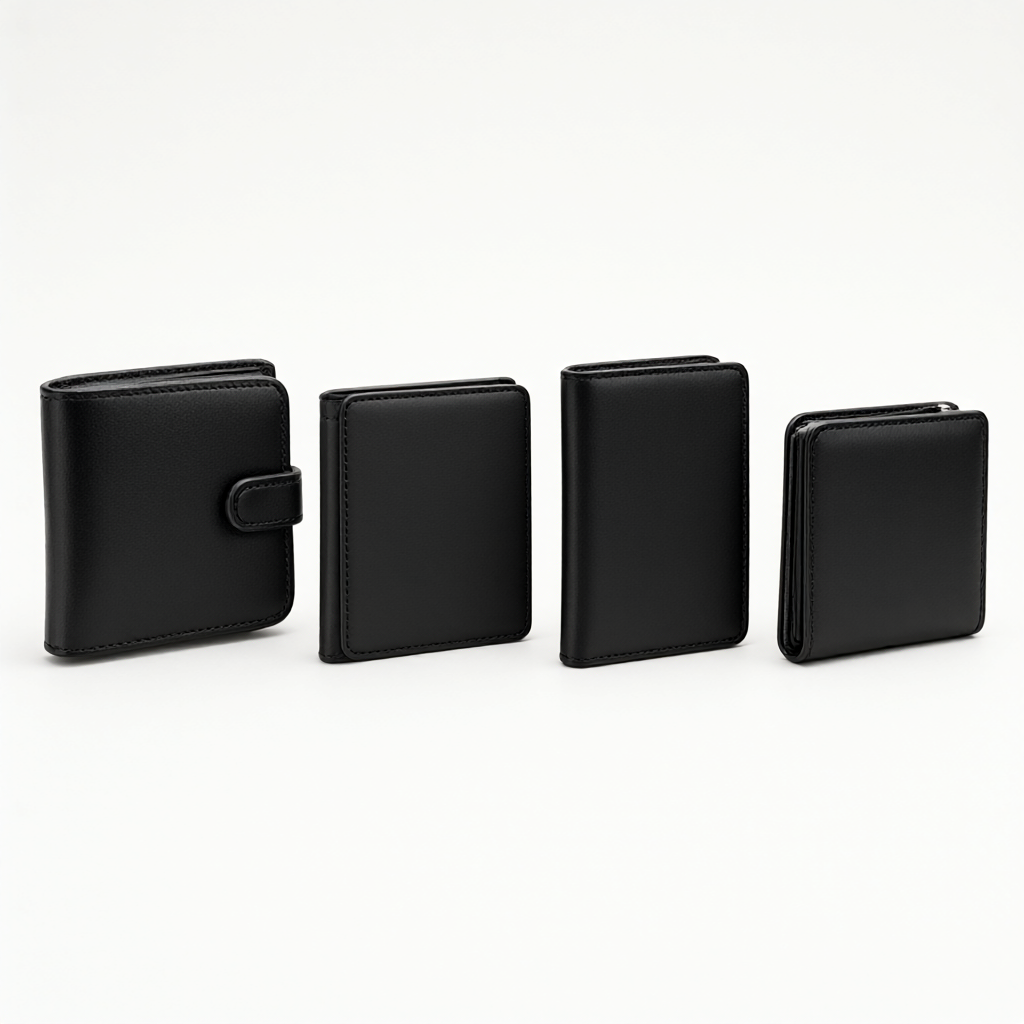
Choosing the right woman wallet isn’t just about aesthetics — it affects everything from pocket overflow to card wear to security. A poorly sized wallet forces you to fold cards unnecessarily, accelerates magnetic stripe degradation, and creates bulk that defeats the purpose of carrying one in the first place.
Understanding wallet categories helps you match form to function before you buy anything.
What Are the Main Wallet Types for Women?
Bifold wallets fold in half and remain the most common traditional design. They hold bills centrally with multiple card slots on either side. Typical capacity: 6–12 cards plus folded currency. Best for: people who still carry physical cash regularly and want a single organized unit.
Slim cardholder wallets strip everything non-essential down to cards and a few bills. Many women now prefer these tucked inside a larger bag rather than carried standalone. Typical capacity: 4–8 cards, sometimes a hidden bill slot. Best for: minimal carriers who also carry a phone and keys separately.
Tri-fold wallets fold into thirds, offering more surface area and organization than a bifold but at the cost of thickness. Typical capacity: 12+ cards, multiple compartments, sometimes a coin pouch. Best for: heavy organizational needs or older-style carry habits.
Long zip-around wallets (often called “travel wallets” or “clutch wallets”) enclose everything with a full perimeter zipper. These can double as mini-purses. Typical capacity: 15+ cards, multiple slip pockets, dedicated bill compartment, often a wrist strap. Best for: travelers, people who substitute a handbag, or those who value maximum security against items falling out.
Phone-integrated wallets are a newer category gaining popularity. They attach directly to smartphones or slot inside phone cases, merging two carry essentials into one. Best for: digital-native carriers who have moved away from physical cards almost entirely.
If you’re curious how men’s wallet design has converged toward these same minimalist formats, see our minimalist wallets guide which traces the broader industry shift away from bulky bi-folds.
How Do Women’s Wallet Styles Differ from Men’s Options?
Women’s wallets tend to run wider and shallower compared to men’s, which are typically narrower and deeper. Men’s designs — especially trendy smart wallets for men or metal money clip systems — often emphasize ultra-low profile and tactical aesthetics. Women’s wallets incorporate more color variety, textured finishes, and integrated organizational layers like dedicated makeup mirrors or headphone slots.
That said, the minimalist movement has blurred these lines considerably. Many women now gravitate toward the same compact metal wallets and carbon fiber card holders popular among men’s EDC communities.
What Are the Key Specs for a Woman Wallet?
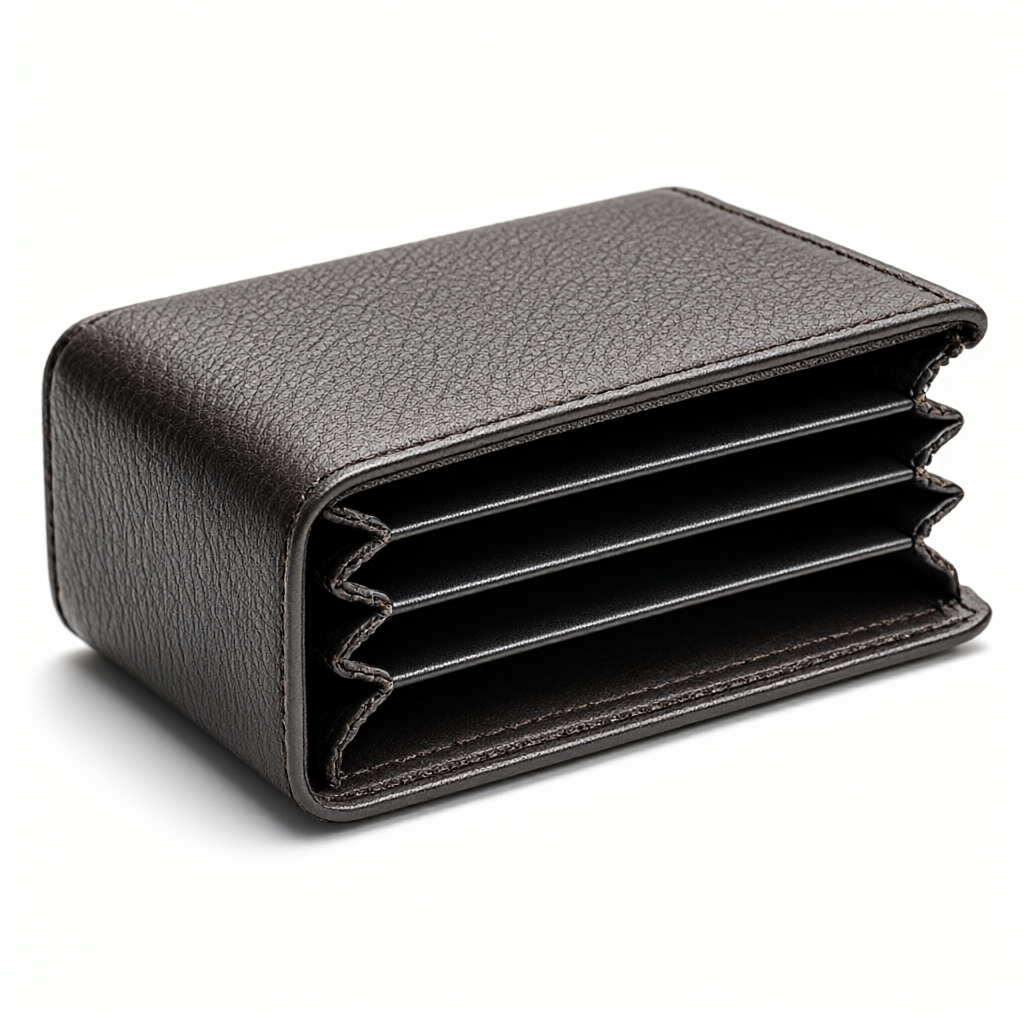
When evaluating any woman wallet, these specifications matter more than marketing language:
Dimensions and Capacity
| Wallet Type | Width (approx.) | Height (approx.) | Card Capacity | Bill Compartment |
|---|---|---|---|---|
| Slim cardholder | 65–75 mm | 100–115 mm | 4–8 cards | 1–2 slots |
| Bifold | 90–105 mm | 100–115 mm | 6–12 cards | Central sleeve |
| Tri-fold | 110–130 mm | 100–115 mm | 12–18 cards | Central + extra |
| Long zip-around | 180–220 mm | 100–120 mm | 15–24 cards | Full-length |
| Phone-integrated | Varies | Matches phone size | 2–4 cards | Rarely included |
These are industry-typical ranges, not guarantees. Always verify actual product dimensions before purchasing, especially for online orders.
Common Materials and Their Trade-offs
Genuine leather — premium feel, develops patina over time, requires conditioning. Can stretch or warp if exposed to moisture. Expected lifespan with regular use: 5–10 years.
Synthetic leather (PU/vinyl) — affordable, consistent appearance, easier to clean. Does not age as gracefully; tends to crack after 2–4 years of heavy use.
Canvas/fabric — lightweight and casual, good for summer or beach lifestyles. Stains easily and offers no inherent water resistance unless treated.
Aluminum/metal — extremely durable, scratch-resistant, modern aesthetic. Heavier than leather alternatives and can cause card demagnetization without proper shielding. See our RFID-protected wallets guide for details on metal wallet safety.
Carbon fiber — remarkably strong yet very light, resistant to scratching and water. Premium pricing but excellent longevity. Popular in the EDC community for both men and women.
Silicone/rubber — flexible, waterproof, budget-friendly. Can attract lint and dust; less formal appearance.
RFID Protection
Many women’s wallets now include RFID-blocking layers to shield contactless cards from unauthorized scanning. This is particularly relevant as NFC payment adoption grows globally. Not all wallets advertise this feature, so check product descriptions carefully. For a detailed breakdown of how RFID blocking works and which wallets genuinely protect your cards, refer to our wallets that protect cards buyer’s guide.
What Standards Apply to Woman Wallets?
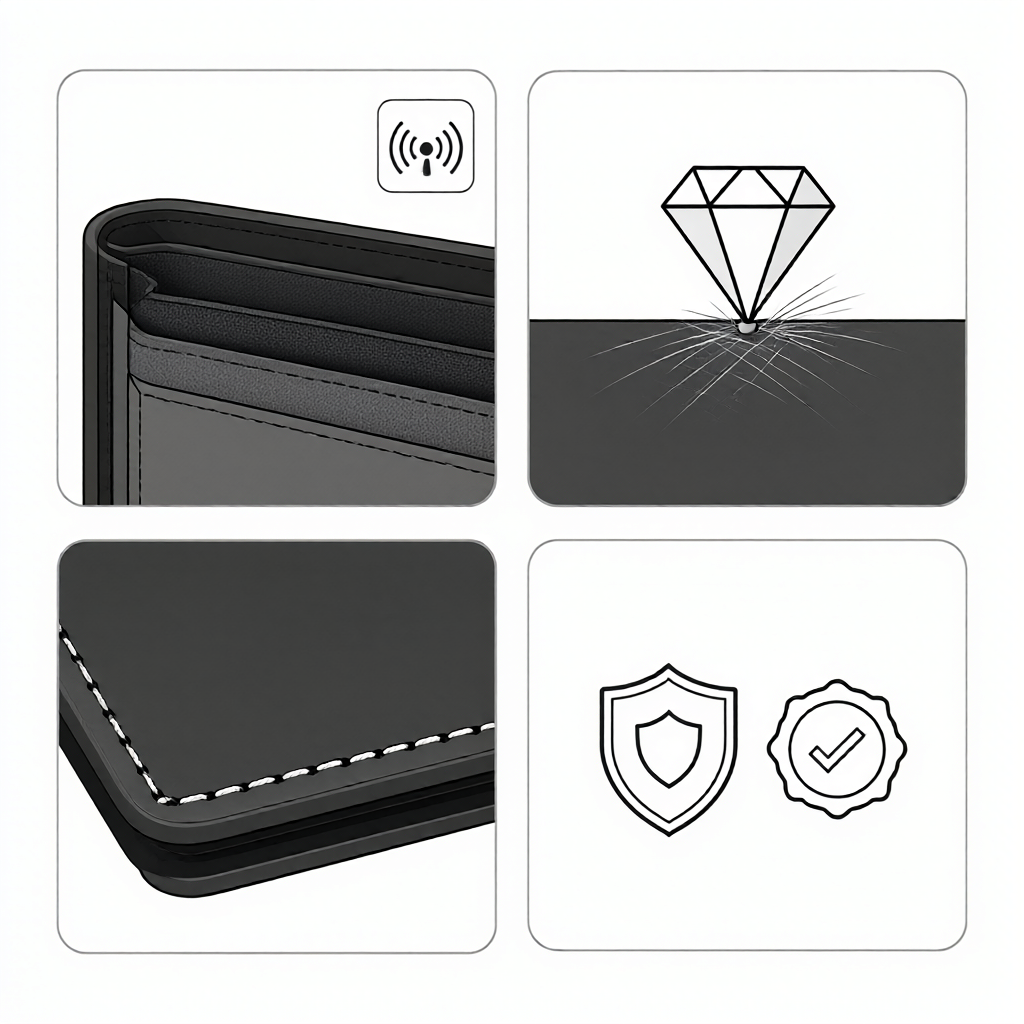
Wallet manufacturing is not heavily regulated in most markets, but several quality frameworks govern materials and consumer protections that affect your purchase:
FTC guides on labeling — In the United States, the Federal Trade Commission enforces truth-in-labeling requirements for products claiming to be made of leather or other materials. A wallet labeled “genuine leather” must contain some amount of real leather, though the percentage isn’t strictly defined. Wallets labeled “full-grain leather” or “top-grain leather” indicate higher quality tiers. Be cautious of vague terms like “leather-like” or “人造革” (artificial leather) translated loosely as “genuine leather.”
REACH and RoHS compliance — For wallets sold in the European Union, REACH regulations restrict certain hazardous chemicals in materials, and RoHS limits lead and other heavy metals in metal components. Reputable manufacturers test materials against these standards. ISO 9001-certified facilities maintain documented quality management systems that support consistent material sourcing and finish applications.
Material testing benchmarks — While there is no universal ISO standard specifically for wallet durability, industries commonly reference ASTM testing methods for material strength, abrasion resistance, and colorfastness. When evaluating claims about a wallet’s durability, look for references to specific test protocols rather than generic “tested for quality” language.
What Should You Consider Before Buying?
Match Your Carry Volume
The single biggest mistake buyers make is purchasing a wallet based on desired aesthetics rather than actual contents. Empty your current wallet, count every item you remove weekly, and use that number as your baseline. If you carry 9 cards, a wallet rated for 12 gives comfortable breathing room. A wallet rated for 6 will force awkward stacking.
Consider Your Primary Carry Method
Where does your wallet live? Inside a structured handbag? Tossed into a tote? Kept in a coat pocket? This determines whether slim profiles matter or whether a larger zip-around is fine. If you frequently transfer between bags, a lighter cardholder reduces fatigue.
Evaluate Long-Term Costs Beyond Price
A €15 synthetic wallet that cracks in 18 months costs more per year of service than a €60 genuine leather alternative lasting five years. Calculate cost per year of ownership, not upfront price. Factor in replacement frequency when comparing cheap versus mid-tier options.
Check Construction Quality Indicators
Stitching should be tight and even — loose threads or irregular spacing signal rushed production. Zippers should glide smoothly without catching. Edge painting or edge sealant on leather wallets indicates attention to detail that prevents fraying. Metal hardware should feel solid, not flimsy or hollow-sounding.
Verify RFID Claims If Relevant
If contactless card theft is a concern in your region, confirm the wallet actually blocks RFID frequencies (typically 13.56 MHz for proximity cards). Some inexpensive “RFID wallets” include only a thin metallic lining that provides minimal protection. Look for independent testing references or reputable brand assurance.
Where the Industry Is Heading
The woman’s wallet market is shifting toward modular and hybrid designs. Consumers increasingly want wallets that adapt to multiple contexts — a cardholder that clips onto keys for gym visits, a slim bifold that fits both a bag and a large coat pocket, or a metal wallet system that combines a card holder with a money clip for cash-heavy weeks.
Brands responding to this demand are investing in modular card systems, interchangeable straps, and materials that bridge the gap between fashion accessories and functional EDC gear. The line between a traditional woman’s wallet and a tactical pocket organizer continues to blur, driven by consumers who value versatility over specialization.
As a manufacturer observing these trends firsthand, our approach centers on understanding exactly what people carry today and designing wallets that fit their actual lives — not hypothetical idealized ones. We work closely with brands and private-label partners to refine every dimension, material choice, and organizational feature based on real-world feedback from thousands of units produced over 13+ years. If you’re developing a woman’s wallet line or customizing existing SKUs for your brand, get a free quote and let’s discuss how we can help bring your vision to production.
Style & Aesthetic Matching: What Goes With Your Lifestyle
Style matters as much as function because a wallet is a visible accessory. Here’s how to match wallet aesthetics to different lifestyles:
Minimalist / Everyday Carry (EDC)
Sleek profiles in aluminum, carbon fiber, or titanium. Favored by professionals who want a low-bulk option that slides into any bag or coat pocket. These overlap heavily with men’s trends toward metal wallets and tactical money clip wallets, making them increasingly popular among women seeking gender-neutral design.
Classic Leather
Full-grain or top-grain leather in traditional bifold or tri-fold silhouettes. Works with office wear, formal outfits, and everything in between. Colors run neutral — black, tan, burgundy — but embossing and hardware choices add personality. This is the safest category if you’re buying as a gift and unsure of the recipient’s taste.
Fashion / Luxury
Designer-branded wallets featuring signature hardware, exotic materials (crocodile-embossed leather, patent finishes), and recognizable logos. These serve dual purposes as both functional accessories and fashion statements. Price points typically exceed €100–€500 depending on brand prestige.
Boho / Artisan
Hand-stitched canvas, woven textiles, or tooled leather with ethnic or vintage patterns. Appeals to travelers and casual wearers who prioritize unique visuals over corporate minimalism. These are less common in B2B OEM catalogs but represent a strong niche for boutique brands.
Tactical / Utility
Rugged materials, MOLLE-compatible attachments, and multi-function layouts. Designed for outdoor enthusiasts who also carry tools or gear alongside their wallet. This segment overlaps with the growing demand for cool wallets for men that women also adopt for their durability.
For guidance on selecting a wallet that balances form and function based on your actual daily contents, see our lightweight wallet for women guide, which breaks down real-world carry volumes against wallet formats.
Price-Range Breakdown: What You Get at Each Tier
Understanding price brackets helps you set realistic expectations and avoid overpaying for features you don’t need — or underpaying for quality you do.
| Price Tier | Approximate Range | Typical Materials | Expected Lifespan | Best For |
|---|---|---|---|---|
| Budget | $5 – $20 | PU leather, basic aluminum, silicone | 1–3 years | Casual use, promotional giveaways, trial purchases |
| Mid-tier | $20 – $80 | Genuine leather (split or top-grain), anodized aluminum, carbon fiber blends | 3–7 years | Everyday professional use, private-label brands, repeat buyers |
| Premium | $80 – $250 | Full-grain leather, titanium components, engineered polymers | 7–15+ years | Luxury gifting, fashion-forward consumers, brand collectors |
| Designer / Luxury | $250 – $1,000+ | Exotic leathers, precious metal accents, branded hardware | 10–20+ years with care | Status-oriented buyers, collector markets, high-end retail |
Key insight: The steepest quality jump occurs between budget and mid-tier, where material真实性 (genuineness) and construction methods improve dramatically. Beyond mid-tier, diminishing returns set in — you pay increasingly for brand prestige and craftsmanship details rather than functional gains.
From a B2B procurement standpoint, mid-tier ($20–$80 unit cost at wholesale) represents the sweet spot for most private-label and Amazon FBA sellers. This range allows for genuine leather or CNC-machined aluminum at competitive MOQs without sacrificing margin. See our comparison of good money clip wallets for men to understand how similar price-to-value logic applies across wallet categories.
Brand Comparison Framework: How to Evaluate Wallet Manufacturers
When sourcing or choosing a brand, apply these evaluation criteria used by professional buyers:
Certification & Compliance Verification
Reputable manufacturers hold ISO 9001 certification for quality management systems and conduct BSCI audits for social compliance. EU-bound products must meet REACH restrictions on hazardous substances and RoHS limits on heavy metals in metal components. Ask suppliers for current certificates — expired or fabricated documents are common red flags. Reference frameworks from iso.org for understanding what ISO 9001 actually covers beyond the label.
Material Sourcing Transparency
Quality differentiates at the raw-material level. Full-grain leather retains the natural grain layer and ages beautifully; split leather is fibrous and coats-protected. Aluminum should be 6000-series or higher for structural integrity during CNC machining. Carbon fiber ought to be woven (not molded resin replicas). Suppliers who disclose origin — whether Italian tanneries, Chinese aluminum mills, or Japanese carbon fiber producers — demonstrate supply-chain confidence.
Defect Rate Benchmarks
Industry-standard defect thresholds for wallet manufacturing range from 0.5% to 2% for reputable factories. Anything above 3% signals process control problems. Request a supplier’s reported defect rate and compare it against this benchmark before placing bulk orders.
Lead Time Expectations
- Sample production: 5–7 business days for standard designs; 10–14 days for fully custom prototypes
- Bulk production: 25–40 days after sample approval, depending on order volume
- Shipping: varies by method (air: 5–7 days; sea freight: 30–45 days)
Suppliers claiming impossibly fast turnaround (<5 days for samples, <15 days for bulk) often cut corners on QC or use inferior materials.
Minimum Order Quantity (MOQ) Flexibility
Competitive MOQs for custom wallets range from 300 to 500 pieces per SKU. Lower MOQs favor startups and test-market launches; higher MOQs unlock better unit pricing. Be wary of suppliers demanding extremely high MOQs upfront without sample approval — it may indicate they’re prioritizing volume over partnership quality.
Why Woman Wallet Manufacturing Requires Specialized Expertise
Creating a well-engineered woman wallet involves multiple specialized processes that go far beyond simple cutting and stitching:
Metal Wallet Production Process
- CNC machining — Aerospace-grade aluminum billets are milled to tolerances of ±0.05 mm using multi-axis CNC centers. This produces the precise card-slot geometry and sleek edge radii that define premium metal wallets.
- Anodizing — The machined surface undergoes electrochemical anodizing to create a hard, scratch-resistant oxide layer. Color dyes are introduced during this stage for consistent, fade-resistant finishes. Standard thickness: 15–25 microns per ASTM B580.
- RFID shielding integration — For metal wallets claiming RFID protection, a ferrite or mu-metal lining is laminated inside the card cavity. Testing follows protocols referenced by standards bodies like astm.org for electromagnetic shielding effectiveness.
- Laser engraving / UV printing — Logos, textures, and decorative elements are applied via fiber laser marking or UV inkjet printing, both of which produce permanent, high-resolution results without contacting the workpiece.
- Assembly & spring mechanism installation — Spring-loaded card ejection systems (if applicable) are calibrated and tested for cycle life — typically rated for 5,000+ open/close cycles before performance degrades.
Leather Wallet Production Process
- Hide selection & cutting — Full-grain or top-grain hides are inspected for natural markings and defects. Panels are die-cut or water-jet cut to pattern specifications.
- Edge painting / burnishing — Leather edges are sanded smooth, coated with edge paint or sealed with beeswax-based burnishers to prevent fraying and create a polished finish.
- Stitching — Heavy-duty nylon or polyester thread (typically Tex 40–Tex 70) is used with saddle stitches or lock stitches at 8–12 stitches per inch for durability.
- Hardware attachment — Zippers, snaps, and rivets are pressed or stitched into place, with reinforcement patches beneath high-stress points.
- QC inspection — Every unit is visually inspected for stitch irregularities, adhesive residue, color consistency, and functional operation before packaging.
Quality Control Standards Applied
While no single ISO standard governs wallet durability specifically, manufacturers reference ASTM D4169 for distribution system testing (drop, vibration, compression) and ISO 11608 principles for packaging integrity when shipping finished goods. Consumer protection guidelines enforced by bodies such as ftc.gov require truthful material labeling — a wallet marketed as “genuine leather” must contain actual leather, not just leather-coated substrate.
How TOP EDC Wallet Meets These Manufacturing Standards
As a manufacturer operating since 2014, we’ve built our processes around the same standards described above — because our clients, many of whom sell through Amazon FBA and international retail channels, demand verifiable quality rather than marketing promises.
Our 50,000 sq ft factory houses in-house CNC machining centers, laser engraving stations, and UV printing equipment, meaning we control every critical step from raw billet to packaged good. We hold ISO 9001 certification and undergo regular BSCI audits, and all materials used in our wallets comply with REACH and RoHS restrictions — with SGS-tested material reports available upon request.
When developing a woman wallet line or customizing an existing platform, here’s how we approach it:
- Material specs: We source 6000-series aluminum for metal wallets, full-grain and top-grain leather options, and aerospace-grade carbon fiber — with batch-level traceability.
- Precision tolerances: CNC-milled components maintain ±0.05 mm tolerance, ensuring consistent card-slot fit and smooth spring mechanisms across thousands of units.
- Low MOQ flexibility: We start at 300 pcs per SKU, making it accessible for emerging brands and Amazon sellers to test markets without massive inventory commitments.
- Fast sampling: Our 7-day sample lead time lets you evaluate physical prototypes before committing to production orders.
- Certified capacity: At 500K+ monthly production capacity, we scale from small private-label runs to large distributor orders without quality compromise.
- Global compliance: We’ve exported to 200+ brands across 30+ countries in America, Europe, Australia, and Southeast Asia, navigating diverse regulatory environments including FTC labeling requirements and EU REACH restrictions.
Whether you’re launching a new minimalist wallet collection or adding women-specific variants to an existing catalog, our OEM and ODM capabilities cover everything from concept sketch to final shipment — including custom packaging and Amazon FBA prep.
A woman wallet is a purpose-built organizational accessory engineered to carry cards, cash, coins, and daily essentials in formats scaled for female hands, bags, and pockets. The right choice depends on your monthly carry volume, preferred material system — from stamped aluminum minimalist wallets to full-grain leather clutches — and how the design complements your aesthetic. Below is a complete procurement-grade buyer’s guide covering every major type, material trade-off, industry-standard certifications to verify, pricing tiers, and care protocols so you can select or source one with confidence.
Material Science & Durability Benchmarks
The longevity of any woman wallet depends fundamentally on material selection and the manufacturing processes used to shape it. Understanding these technical parameters lets buyers evaluate quality claims independently rather than relying on marketing language alone.
Leather Processing and Classification Standards
Leather used in wallets undergoes distinct processing routes that determine durability and cost:
- Full-grain leather retains the original grain layer and collagen fiber structure, providing abrasion resistance ratings of 15,000–40,000 double-rub cycles on the Martindale test (per ASTM D4157). It develops patina over 5–10 years of regular use. Chrome-tanned full-grain typically cures in 4–8 hours at drum rotation speeds of 6–12 RPM. Vegetable-tanned leather requires 20–60 days of progressive dye immersion, producing a firmer hand feel.
- Top-grain leather is sanded on the surface to remove imperfections, reducing tensile strength slightly but improving uniformity. It scores approximately 10,000–25,000 double-rub cycles. This is the most common tier in mid-price wallets ($25–€75 retail).
- Genuine leather (a regulated term under FTC guidelines) refers to leather that has been heavily processed, embossed, or coated. Durability varies widely — expect 3,000–8,000 double-rub cycles. A wallet labeled simply “genuine leather” may contain as little as 30–50% real leather content depending on jurisdiction.
- Bonded leather is reclaimed leather fibers compressed with polyurethane binders. It rarely exceeds 1,000 double-rub cycles and tends to delaminate within 12–18 months. Not recommended for long-term carry.
Metal Wallet Manufacturing Processes
Aluminum and stainless steel wallets follow fundamentally different fabrication chains:
Aluminum wallets are typically produced via CNC machining from 6061 or 5052 billet stock. Cycle time per unit ranges from 8–15 minutes on multi-axis CNC centers. Post-machining, parts undergo bead blasting (aluminum oxide media at 60–80 PSI), followed by Type II sulfuric acid anodizing — a process lasting 20–40 minutes at 12–18 volts — which creates a porous oxide layer 10–25 micrometers thick. The pores are then sealed in hot deionized water at 95–100°C for 15–30 minutes to lock in color and prevent corrosion. Anodized aluminum achieves hardness ratings of 300–500 HV (Vickers), roughly 3× harder than raw aluminum.
Stainless steel wallets are usually laser-cut from 304 or 316L sheet stock using fiber laser systems operating at 500–2,000W. Cutting speed ranges from 5–20 m/min depending on gauge (typically 0.5–1.0 mm). Edge grinding and buffing follow, achieving mirror or brushed finishes. Surface hardness reaches 150–200 HV in annealed condition, rising to 400+ HV after work-hardening during forming operations.
Carbon Fiber Construction
Carbon fiber wallet panels use unidirectional or plain-weave pre-preg sheets cured under autoclave pressure at 120–130°C for 2–4 hours. The resulting laminate achieves flexural strengths of 500–800 MPa and densities around 1.5–1.6 g/cm³ — approximately 40% lighter than aluminum at equivalent stiffness. Cost premium is significant: raw carbon fiber prepreg runs $40–$80 per square foot versus $2–$5 for aluminum sheet.
For independent verification of material safety standards, REACH Annex XVII lists restricted substances including 114 azo dyes, nickel release limits (<0.5 µg/cm²/week per EU Directive 94/27/EC), and phthalate restrictions under RoHS (Annex II). Manufacturers adhering to ISO 9001:2015 maintain auditable documentation trails for material lot traceability from supplier certificate of analysis through finished goods inspection. See https://www.iso.org/ for ISO 9001:2015 specification details.
Manufacturing Process Deep-Dive: How Wallets Are Built
Behind every quality wallet lies a sequence of controlled production steps. For buyers sourcing OEM or private-label product, understanding these steps helps set realistic quality expectations and lead-time estimates.
Step 1 — Material Receiving and Incoming QC
Raw materials arrive with supplier Certificates of Conformity (CoC). Incoming inspection verifies thickness tolerance (±0.05 mm for metal sheets), leather grain consistency, and fabric weave density against approved samples. Automated optical inspection (AOI) stations at higher-volume facilities catch defects at 99.2%+ detection rates.
Step 2 — Cutting / Stamping
- Metal panels: CNC punch presses or fiber lasers cut wallet bodies, spring mechanisms, and card fences. Tolerance stack-up is held to ±0.1 mm per feature.
- Leather/fabric: Die-stamping presses (hydraulic or pneumatic, 10–50 ton force) cut patterns at rates of 300–800 pieces/hour per station, depending on complexity.
- Card holders/spring mechanisms: Wire-forming machines (auto-wire benders) produce clip springs from piano wire or spring steel at 60–120 cycles/minute.
Step 3 — Forming and Assembly
- Metal wallets: CNC broaching or manual pressing forms bill clamps and card tension mechanisms. Interference-fit assembly holds components without adhesives in most minimalist designs.
- Leather wallets: Clickers or die-cuts shape panels, which are then stitched on industrial sewing machines (e.g., Singer 411U feeding-shaft machines running at 1,500–2,500 RPM with Kevlar or polyester thread). Double-needle stitching provides seam strengths of 80–120 N per stitch line.
- Heat-sealing (ultrasonic welders, 20–40 kHz frequency) bonds synthetic materials without adhesive, creating hermetic seals for waterproof compartments.
Step 4 — Surface Finishing
- Edges of leather wallets are hand-or machine-s burnished with edge paint or natural gum, then polished at 500–1,000 RPM.
- Metal edges undergo tumbling (vibratory bowls with ceramic media) for 30–60 minutes to deburr sharp corners, followed by passivation baths for stainless steel to restore chromium oxide layer.
- Anodizing bath chemistry is monitored weekly; pH maintained at 3.8–4.5, temperature at 18–22°C for consistent color uptake.
Step 5 — RFID Integration (If Applicable)
RFID-blocking layers use either ferrite-based composite films (absorptive type, attenuation >30 dB at 13.56 MHz per ANSI ICSC 12-016 testing protocol) or conductive mesh laminates (reflective type). Reputable suppliers provide test reports from accredited laboratories such as SGS, TÜV Rheinland, or Intertek confirming blocking performance across 850 MHz–3 GHz — the range covering GSM, NFC, and EMV contactless cards.
For detailed guidance on verifying RFID protection claims, consult independent testing resources referenced at https://www.astm.org/ for relevant material-testing standards.
Price-Range Breakdowns by Tier
Understanding where wallets fall across price brackets helps set procurement expectations whether you’re buying retail or placing a bulk order.
| Tier | Price Range (USD) | Typical Materials | Expected Lifespan | Target Buyer |
|---|---|---|---|---|
| Budget | $5–$20 | PU leather, aluminum alloy, silicone | 1–2 years | Casual users, promotional items |
| Mid-tier | $20–$60 | Top-grain leather, 6061 aluminum, carbon fiber hybrid | 3–6 years | Everyday carry enthusiasts |
| Premium | $60–$150 | Full-grain vegetable-tanned leather, 5052 aerospace aluminum, Ti grade 2 clips | 7–15+ years | Professional EDC users, gift market |
| Luxury Designer | $150–$500+ | Exotic leathers (crocodile-embossed, stingray), precious metal hardware, branded packaging | Indefinite (collector) | Fashion-forward consumers |
For B2B/OEM procurement, factory-ex prices for comparable units typically run 40–60% below retail MSRP depending on MOQ and customization scope. Minimum order quantities commonly start at 300–500 units for private-label programs, with per-unit costs decreasing at 1,000+ volumes due to amortized tooling and setup expenses.
When evaluating quotes from manufacturers, request itemized breakdowns covering material cost, labor hour per unit, tooling ammortization schedule, and packaging. Transparent suppliers will provide these without prompting. Be wary of quotes significantly below market average — they often reflect thinner material gauges, omitted QC steps, or substandard plating processes.
Organizational Features That Matter
Beyond basic card-and-cash storage, modern woman wallets incorporate specialized organizational elements that affect daily usability:
Card tension systems — Spring-loaded card fences (common in metal wallets) use precision-formed stainless steel leaf springs rated for 5,000+ insertion/removal cycles without permanent set loss. Card extraction force should measure between 150–400 g — enough to prevent accidental ejection but low enough for comfortable one-thumb access.
Cash strap vs. bill sleeve — Elastic bands (neoprene or silicone-coated) hold bills securely but can deform over 2–3 years of stretching. Rigid bill compartments with accordion folds preserve wallet thinness better but limit capacity flexibility.
Coin compartments — Integrated coin pockets add 3–8 mm of bulk. Zippered enclosures with YKK #5 or #3 mini zippers provide secure storage; press-stud closures are less reliable for active carry. Most minimalist designers omit coins entirely and recommend a separate key-case solution.
Pen/pocket clip integration — Some tactical wallet designs include titanium pocket clips (spring-tempered 17-7 PH stainless, 0.010–0.015″ thickness) allowing attachment to shirt pockets, notebook covers, or belt loops. These add 15–25 g of weight but improve accessibility when switching carry methods throughout the day.
Modular expandability — Newer systems offer attachable cash modules or additional card stacks that magnetically or mechanically couple to the primary holder. This allows carrying 6 cards daily but expanding to 12+ for travel weeks without replacing the base wallet.
For insights on modular wallet configurations and their practical trade-offs, refer to our men’s money clip wallet comparison, which examines organizational layouts across multiple form factors.
Sources & References
- iso.org — www.iso.org
- astm.org — www.astm.org
- ftc.gov — www.ftc.gov
- lightweight wallet for women — topedcwallet.com
- minimalist wallets guide — topedcwallet.com
- RFID-protected wallets guide — topedcwallet.com
- wallets that protect cards buyer’s guide — topedcwallet.com
- get a free quote — topedcwallet.com
- good money clip wallets for men — topedcwallet.com
From article to product
Turning this into a product?
Most of what is written here is the difference between a sample that works and one that does not. We can build either — the useful one costs the same.
Keep reading
More on buying guides
wallet with trigger
How Does a Trigger Wallet Work? What Is the Pop-Up Mechanism? The core of…
Readbest bifold wallet for women
What Is a Bifold Wallet? The term “bifold” refers to the fold: the wallet…
ReadMen’s trifold wallets with zipper compartments vs. bifold
At a Glance The three dominant men’s wallet formats differ in panel count, depth,…
Read
About the author
TOPWALLET Editorial Team
TOPWALLET's editorial and engineering desk writes from bench testing at the Shenzhen (Longgang) facility: pull-force and cycle testing, 13.56 MHz shielding measurements, finish trials and factory audits, rather than supplier spec sheets. Every specification in these guides is one we write on a purchase order.
Written on the floor
This article was written by our production and QC team — the people who spec tolerances, run the finishing line and inspect every batch. Where it states a capacity, a pull force or a lead time, it comes from a measurement we made, not a supplier’s catalogue. If a number here disagrees with what your own supplier told you, tell us; several of these articles started as a correction from a buyer.
See how the factory works · Inspection process · Sourcing FAQ
Turning this into a product?
Most of what is written here is the difference between a sample that works and one that does not. We can build either — the useful one costs the same.