

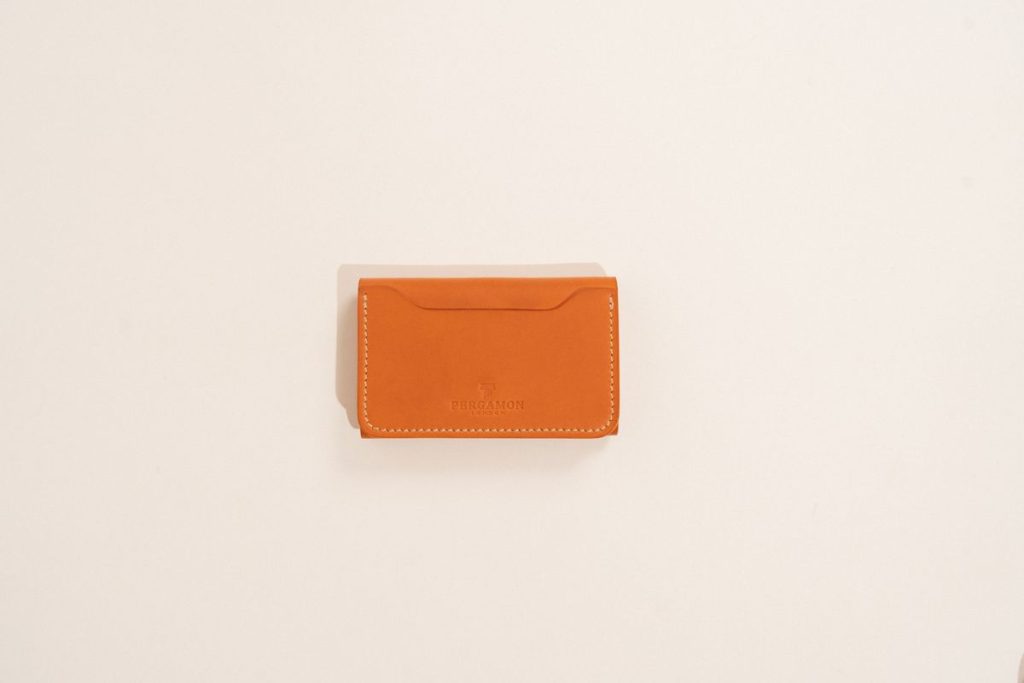
Cleaning makes a wallet look good; storage keeps it alive. Most of the damage that ends a wallet’s life, mold, distortion, faded color, cracked leather, and scratched finishes, happens during the hours it spends in a drawer rather than the hours it spends in your pocket. This guide covers the storage side of wallet care across the three material families: leather, metal, and RFID-shielded designs. You will get separate rules for short-term, long-term, and travel storage, because the correct answer changes with the timeline.
Why Storage Matters More Than Cleaning
A wallet is a machine of folds, stitches, and finishes, and every environment stresses one of them. Humidity attacks leather and can cloud unfinished metal; direct sunlight fades color and dries fibers; constant pressure distorts the fold lines that decide how the wallet closes. Cleaning removes surface dirt, but it cannot undo structural damage.
The goal of good storage is deliberately boring: stable humidity, no direct light, and a relaxed, uncompressed shape. Get those three right and cleaning becomes a minor maintenance task. Full restoration steps belong to the separate wallet care guide; this article stays on the environment, the posture, and the duration.
Leather Wallets: Humidity, Light, and Shape
Leather is hygroscopic: it absorbs and releases moisture with its surroundings. That makes environment the single most important lever for leather storage, and the split below depends on how long the wallet will sit idle.
| Condition | Short-term storage (days to weeks) | Long-term storage (months) |
|---|---|---|
| Humidity | Normal room humidity is fine; avoid damp basements and bathrooms | Keep moderate and stable; add a desiccant pouch in humid climates |
| Light | Keep out of direct sunlight | Store in a dark drawer or box; fading is cumulative and irreversible |
| Shape | Natural closed position, nothing heavy stacked on top | Lightly padded to hold form; never stuffed fully or folded backwards |
| Container | Open shelf, catch-all, or dedicated drawer slot | Breathable cloth pouch or box with air circulation |
| Conditioning | Not required | Light leather conditioner before storage and again before reuse |
Time multiplies every error, which is why the long-term column is stricter. A week of humid air is harmless; a season of it can seed mold inside a closed pocket. Sun damage is irreversible, and long storage is the one case where conditioning genuinely helps, because leather left dry for months can crack at the fold when it returns to service.
Metal Wallets: Scratches and Finishes
Metal wallets do not mold and barely care about humidity, but they trade those problems for finish contact: anodized aluminum can chip on hard impacts, brushed stainless collects fine scratches that show as dull patches; stainless resists them best of the two. Storage, therefore, is mostly about separation rather than climate.
Two rules cover most metal-wallet storage. First, keep it away from other metal objects: keys, coins, and spare screws will defeat any finish if they share a drawer. A dedicated pouch or its own tray slot prevents most scratching. Second, store it in a relaxed state, with clips and mechanisms unloaded, because a case left under heavy objects can develop play in its hinges. Finish options and how each ages are covered in the materials guide.
RFID: Does Storage Affect Shielding?
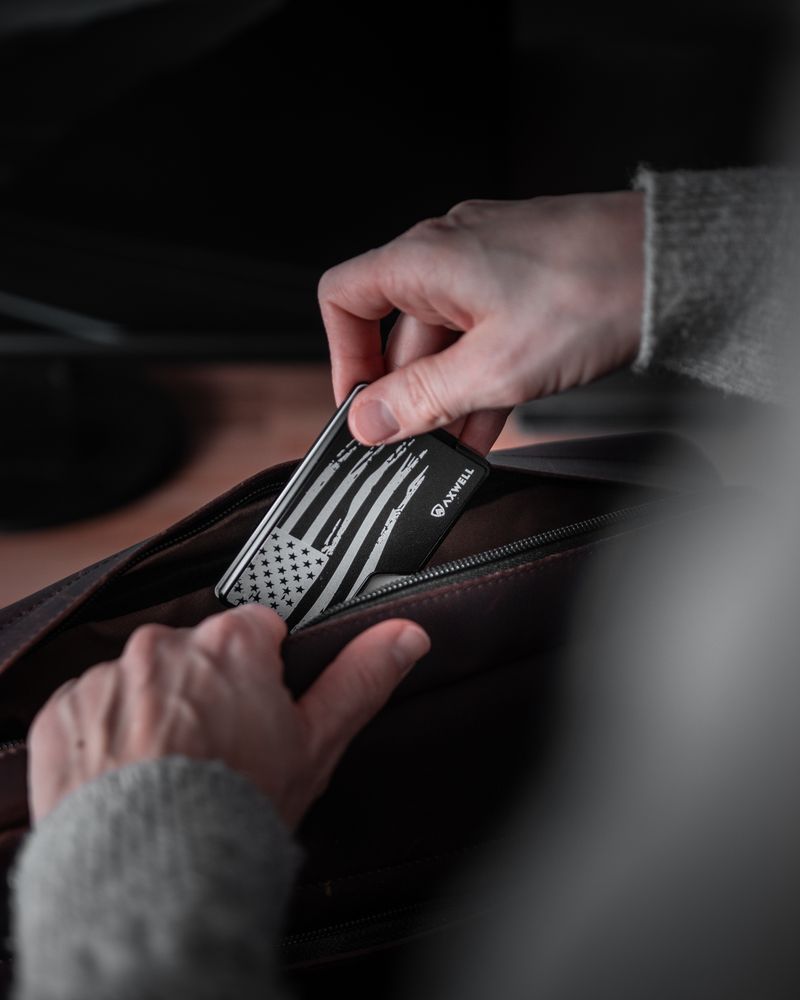
Storage does not degrade RFID shielding, and the reason is physical: a shield works by geometry and material, not by power. If the wallet’s shielding layer fully enclosed your cards at 13.56 MHz when it was tested, it still encloses them after a month in a drawer.
What storage can affect is shielding consistency. Cards held flat and overlapping keep the tuned layup intact; a wallet stored warped, with panels bent or cards crammed at odd angles, can open small gaps that reduce real-world protection. So store shielded wallets flat and closed, and if you drop one hard, check the enclosure’s shape before assuming the protection is unchanged.
Seasonal and Travel Storage
Seasonal rotation deserves its own rules because the stored wallet faces its longest idle period. When you rotate a wallet out: empty it completely, confirm it is dry, place it in a breathable pouch in a stable, dark spot, and note the date. Before rotating back in, inspect the folds, soften with a light conditioner if leather, and check that mechanisms move freely.
Travel adds its own environmental curveballs. Do not leave a wallet in a hot car, where dash heat can warp plastics and accelerate leather drying, and avoid packing it against sharp objects in check-in luggage. Hotel safes and closed bags are fine for weeks. If you rotate between summer and winter carry, the wallet collection makes a second unit easy to justify, since a properly stored spare stays ready at all times.
FAQ
Where should I keep my wallet when I am not using it?
A dry, dark drawer or a dedicated box away from direct sun is ideal, ideally with a breathable cloth pouch for leather and a separate compartment for metal. Avoid bathrooms, damp basements, and anywhere with large temperature swings, because humidity is the single biggest storage killer for any wallet.
Is it bad to leave a wallet in a pocket overnight?
Not inherently, as long as the fabric is dry and the wallet is not being squashed between heavy items. The risk is habit: repeatedly leaving it in tight or damp clothing presses the fold lines and traps moisture. Letting it air out on a shelf overnight is cheap insurance for leather.
Should I use silica gel packets when storing wallets?
In humid climates, yes, for long-term storage, but keep the pouch breathable and replace the silica periodically. For short-term daily storage it is unnecessary. The goal is moderate, stable humidity, not a bone-dry environment, since overly dry leather becomes brittle and can crack.
Does long-term storage weaken RFID shielding?
No. Shielding is a physical property of the enclosure and does not fade, drain, or weaken over time. What matters is that the wallet keeps its shape, so panels and shielding layers stay in their tested position. Store it flat and closed, and verify the structure after any hard impact.
Can I stack other objects on top of a stored wallet?
Try not to. Pressure distorts fold lines, stresses hinges and money-clip mechanisms, and can emboss neighboring objects into soft leather. Give the wallet its own flat, unobstructed space, or a shallow tray, so the only force it experiences is gravity in its natural closed shape.
How often should I check stored wallets?
For wallets in seasonal rotation, check at least every one to two months: open and close them, inspect folds for mildew or dryness, and confirm the storage area is still dry and dark. Short-term storage needs no schedule. A quick biannual inspection catches humidity problems long before they become visible damage.
Related reading
From article to product
Sourcing minimalist-wallets?
Tell us the format, the quantity and the date you need stock. You get material options, MOQ and a landed-cost range back within one business day.
Keep reading
More on wallet care
How to Carry Cash in a Minimalist Wallet: 7 Folding Methods (2026)
Here’s the short version: the trick to carrying cash in a minimalist wallet is…
ReadHow to Remove Scratches From a Metal Wallet (2026)
Here’s the short version: scratches are removable only when they sit in the finish…
ReadHow to Slim Down a Bulky Wallet: 15-Minute Reset (2026)
Here’s the short version: empty every card out of your wallet, cut the stack…
Read
About the author
Wu, Leon
Leon Wu is the senior product engineer and EDC testing lead at TOPWALLET. He has spent more than a decade on wallet design-for-manufacture, materials and quality control at the company's Dongguan facility, and writes from bench testing, pull-force and 13.56 MHz shielding measurements rather than supplier spec sheets.
Written on the floor
This article was written by our production and QC team — the people who spec tolerances, run the finishing line and inspect every batch. Where it states a capacity, a pull force or a lead time, it comes from a measurement we made, not a supplier’s catalogue. If a number here disagrees with what your own supplier told you, tell us; several of these articles started as a correction from a buyer.
See how the factory works · Inspection process · Sourcing FAQ
Sourcing minimalist-wallets?
Tell us the format, the quantity and the date you need stock. You get material options, MOQ and a landed-cost range back within one business day.