

Walk into any leather goods aisle and the two labels you will see most are “full-grain” and “top-grain.” They sound like marketing tiers, but they point to a real production step: whether the natural surface of the hide has been sanded off. Full-grain keeps that surface intact; top-grain removes it and often embosses an imitation grain back on. That one difference controls patina, strength, price, and how the wallet ages. This guide explains what the grades actually mean, why the popular A-B-C ranking oversimplifies them, and how to check which one you are holding before you buy.
Leather Grades Explained (And Why the A-B-C System Is Misleading)
Leather is cut from a hide in layers. The outermost layer, where the hair once grew, is the strongest and densest. Kept whole, it is full-grain. Buffed or sanded to erase scars and uneven color, it becomes top-grain, and an artificial grain is usually pressed back on to restore the look.
Below those two sits everything loosely called “genuine” or “split” leather: the middle and bottom layers of the hide, often coated or embossed to imitate the surface already sold once. Bonded leather goes further down, mixing leather fibers with a binder.
The shorthand that ranks full-grain as A, top-grain as B, and genuine as C is a useful memory hook and a poor buying rule. A thick, well-tanned top-grain from a reputable tannery can outlast a thin, poorly finished full-grain. Grade matters, but so does the tannery, the thickness, and the finishing.
Full-Grain: Strengths and Trade-Offs
Full-grain keeps the natural fiber structure intact, making it the strongest and most abrasion-resistant leather used in wallets. It breathes, absorbs conditioner well, and, most visibly, develops patina: scratches, color shifts, and a soft sheen that record how you actually carried it. Many buyers choose it because it looks better in year three than on day one.
The trade-offs are real. Natural grain means natural variation: pores, grain lines, even a permanent scar from the animal’s life. Some of that character shows immediately, so if you expect a flawless, uniform surface, full-grain can disappoint. It is also more expensive, because you are buying the hide’s best and largest single surface, and the open face responds to humidity and oils.
Top-Grain: Strengths and Trade-Offs
Top-grain starts as the same outer layer, then has its surface sanded down. That removes scars and most grain irregularities, giving a cleaner, more uniform base. A finish and an embossed grain are applied afterward, which makes top-grain more resistant to spills and more predictable in color across a production run.
The catch is what you give up. Sanding makes the leather thinner, and a heavy top coat can feel plasticky and crack as the wallet flexes years later. Patina is mostly gone, because an embossed grain does not age the way a natural one does. None of this makes top-grain fake, but it is a processed version of the same surface.
How to Tell Them Apart at the Store
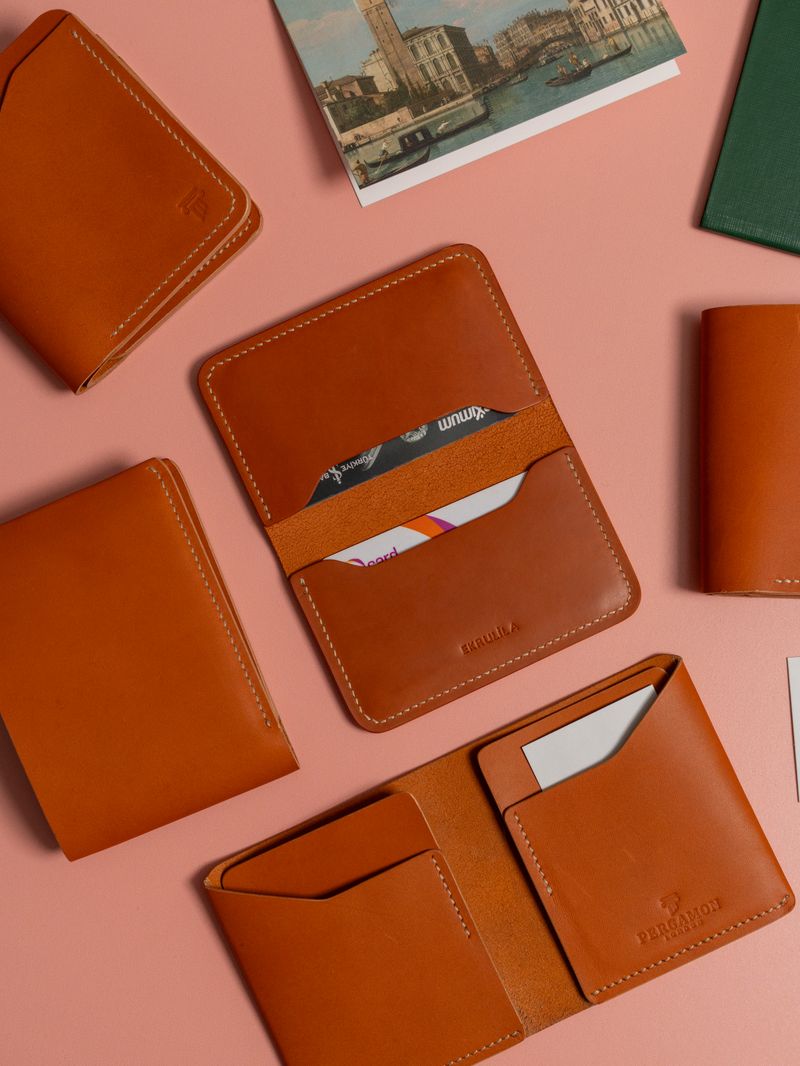
Labels cannot be trusted by themselves, but the wallet itself usually tells the truth. Try these four checks before you pay.
| Check | Full-Grain | Top-Grain |
|---|---|---|
| Surface | Visible pores and grain lines, matte, slightly irregular | Smooth and uniform, often glossy, printed-looking grain |
| Edge | Raw, dense fibers often visible | Clean, painted, or burnished edge common |
| Bend test | Grain ripples naturally; fibers stay tight at the fold | Surface stays flat; can feel stiffer or coated |
| Price signal | Higher, and brands usually name the tannery | Mid-range; the finish does the selling |
None of these checks is foolproof. Ask the seller three questions directly: is the grain natural or embossed, is the surface sanded, and which tannery supplied the hide? A manufacturer who answers all three is usually telling the truth, because each answer changes the price they quote.
Which Grade for Which Use
Choose full-grain when you want one wallet that ages with you, when you carry it daily, and when you accept, or even enjoy, visible character. It suits the buyer who treats a wallet as a long-term investment rather than an accessory.
Choose top-grain when you want a uniform, low-maintenance surface, when you rotate several wallets, or when budget matters more than patina. For gifting, top-grain also reads as “clean and new” for longer.
One more consideration: the differences inside each grade are often larger than the differences between grades. Buy the best construction and tannery your budget allows, then let the grade settle the details. The full-grain bifold and the leather wallet collection show how the same in-house finishing treats each material.
How TOPWALLET Sources Leather
TOPWALLET operates a vertically integrated factory in Dongguan covering 18,000 square meters, with monthly capacity above 150,000 pieces and 12 to 14 production steps handled in-house, from cutting and stamping through assembly. Leather for the full-grain line is selected and cut in-house rather than bought as finished blanks, which is where most grading mistakes happen.
Quality control is standardized: four-stage inspection with 100 percent checking at an AQL of 0.65, inside an ISO 9001-certified system. For B2B buyers, that means a “full-grain” claim on a purchase order is backed by a documented inspection record, not just a label. Stock designs start at 300 pieces with samples in 3 to 5 days; custom ODM programs start at 3,000 pieces with samples in 7 to 15 days. The same material family is covered in the materials guide.
FAQ
Is top-grain leather real leather?
Yes. Top-grain is genuine hide; it is the same outer layer as full-grain, with the surface sanded down and usually refinished with an embossed grain. It is not bonded leather or synthetic material. The distinction between the two grades is processing, not authenticity.
Which lasts longer, full-grain or top-grain?
All else being equal, full-grain lasts longer because it keeps its full fiber thickness and its natural surface. But construction decides much of it: stitching, lining, and edge finish usually fail before the leather does. A well-made top-grain wallet can outlive a thin full-grain one, so compare build quality first and use the grade as a tie-breaker.
Why does my full-grain wallet not develop patina?
Genuine patina needs two things: a natural, unfinished grain and time in use. If your wallet carries a protective top coat or was sanded, it will wear evenly instead of deepening in color. Daily handling, natural skin oils, and occasional sunlight all accelerate patina; storing it in a dark pouch slows it down.
Does full-grain leather need special care?
Full-grain needs more attention than coated leathers, but nothing exotic. Keep it out of constant direct sun, avoid soaking it, and condition every few months. Because the surface is open rather than sealed, it reacts to humidity, which makes storage conditions as important as cleaning.
What does “genuine leather” actually mean?
In most markets it is not a grade at all; it describes leather made from lower layers of the hide, often split and recoated to look like something better. A useful rule of thumb: if a product only says “genuine leather” without naming a tannery or a processing step, the seller is trading on the word rather than the material.
Can you tell full-grain from top-grain by touch?
Sometimes, but not reliably. Full-grain feels warmer and slightly irregular, with visible pores; top-grain feels smoother and cooler because of its finish. Finishes are engineered to mimic textures, so touch alone cannot prove the grade. Bend the wallet, look for natural grain ripple at the fold, then ask the seller directly.
Related reading
From article to product
Choosing a material for a range?
Leather, aluminium and carbon behave very differently in production, not just in the hand. Send us the spec and we will tell you what it costs to make at your volume.
Keep reading
More on wallet materials
How Material Choice Changes Factory Cost: A Real Cost Breakdown for Custom Wallet Orders
If you're sourcing custom wallets, the single biggest lever on your landed cost isn't…
ReadBest Carbon Fiber Wallets of 2026: 11 Picks, Tested and Compared
Carbon fiber wallets are the rare carry item that looks like a spaceship part…
ReadBest Aluminum Wallets 2026: 11 Slim, CNC-Milled Carriers We’d Actually Carry
Aluminum wallets are the best-selling format in slim carry right now — and the…
Read
About the author
Wu, Leon
Leon Wu is the senior product engineer and EDC testing lead at TOPWALLET. He has spent more than a decade on wallet design-for-manufacture, materials and quality control at the company's Dongguan facility, and writes from bench testing, pull-force and 13.56 MHz shielding measurements rather than supplier spec sheets.
Written on the floor
This article was written by our production and QC team — the people who spec tolerances, run the finishing line and inspect every batch. Where it states a capacity, a pull force or a lead time, it comes from a measurement we made, not a supplier’s catalogue. If a number here disagrees with what your own supplier told you, tell us; several of these articles started as a correction from a buyer.
See how the factory works · Inspection process · Sourcing FAQ
Choosing a material for a range?
Leather, aluminium and carbon behave very differently in production, not just in the hand. Send us the spec and we will tell you what it costs to make at your volume.