

Thin Leather Wallet: What Is the Quick Answer?
What is the best thin leather wallet for private-label sourcing? The answer depends on three variables — leather grade, card-retention design, and supplier capability — not on a single product name. For a brand launch, Amazon FBA line, or corporate gift program, the strongest starting point is a top-grain or full-grain leather wallet with an unloaded thickness of 10–14 mm, RFID-blocking integration, and a manufacturer that offers low MOQ (300–500 pcs), 7-day samples, and in-house laser engraving or embossing.
Full-grain offers the best long-term patina and durability; top-grain delivers a more consistent aesthetic at lower cost; genuine leather sits at the budget end but ages poorly in a thin profile. The “best” model is whichever one aligns with your margin target, your customer’s pocket-fit expectations, and your supplier’s ability to hit consistency across production runs.
Thin Leather Wallet: How Does It Work in Detail?
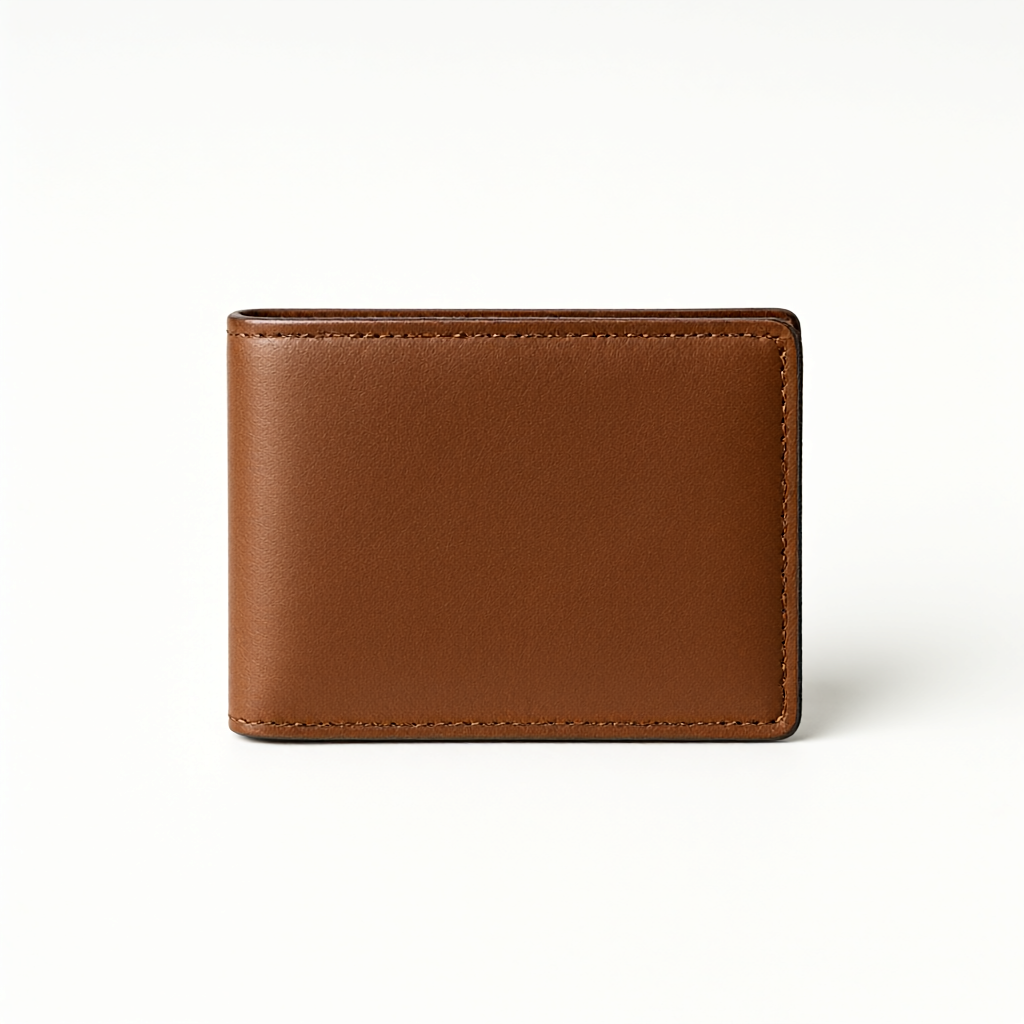
How does leather grade impact durability and cost?
Leather grading is loosely regulated, which is why two suppliers can use the same label to describe materially different products. Understanding what each grade actually means is essential before committing to a private-label run.
Full-grain leather retains the outermost fiber layer with its natural grain intact. It is the densest, most durable option and develops a patina over time rather than cracking or peeling. In a thin wallet construction, full-grain holds its shape well but carries a higher material cost — typically 20–40% above top-grain at equivalent widths. It is the preferred choice for brands positioning at the upper end of the EDC wallet market.
Top-grain leather is sanded and finished to remove imperfections, producing a uniform surface that accepts consistent dye and finishing. It ages predictably and offers strong wear resistance at a mid-tier cost. For most Amazon FBA and private-label programs targeting the $25–$60 retail window, top-grain delivers the best balance of margin and perceived quality.
Genuine leather is a catch-all term that usually refers to split leather or bonded leather pressed and coated to resemble full-grain. It is the cheapest option but tends to crack at thin profiles under repeated flex cycles. It can work for promotional gift programs where unit economics are paramount and product lifespan is secondary.
Vegetable-tanned leather is a tanning method rather than a grade — it can be full-grain, top-grain, or split. Veg-tan leather ages with a distinctive patina and is favored by EDC enthusiasts, but it is more expensive and requires carefulQC on color consistency across batches.
For additional context on how leather grade intersects with overall wallet design, see our best leather wallets for men sourcing guide.
Why does RFID-blocking matter for a slim leather wallet?
RFID-blocking technology has moved from a niche feature to an expected specification for B2B buyers in North America and Europe. Consumers increasingly ask whether their contactless cards are protected — and brands that omit this feature often lose competitive edge on marketplaces.
For a thin wallet, RFID shielding is typically integrated as a metallic lining or a thin ferrous sheet sandwiched between leather layers, adding roughly 0.5–1.5 mm to the unloaded thickness. Reputable suppliers validate shielding performance against recognized test methods — ASTM E2397 covers RFID signal attenuation testing and is commonly referenced by buyers seeking verifiable claims rather than marketing assertions.
A practical note: some contactless payment systems operate at frequencies that partially penetrate standard RFID shields. If your brand promotes “full RFID protection,” verify the shield’s frequency range with your supplier and ensure marketing copy reflects the tested bandwidth rather than an absolute claim.
How do card capacity and pocket fit interact in a thin wallet?
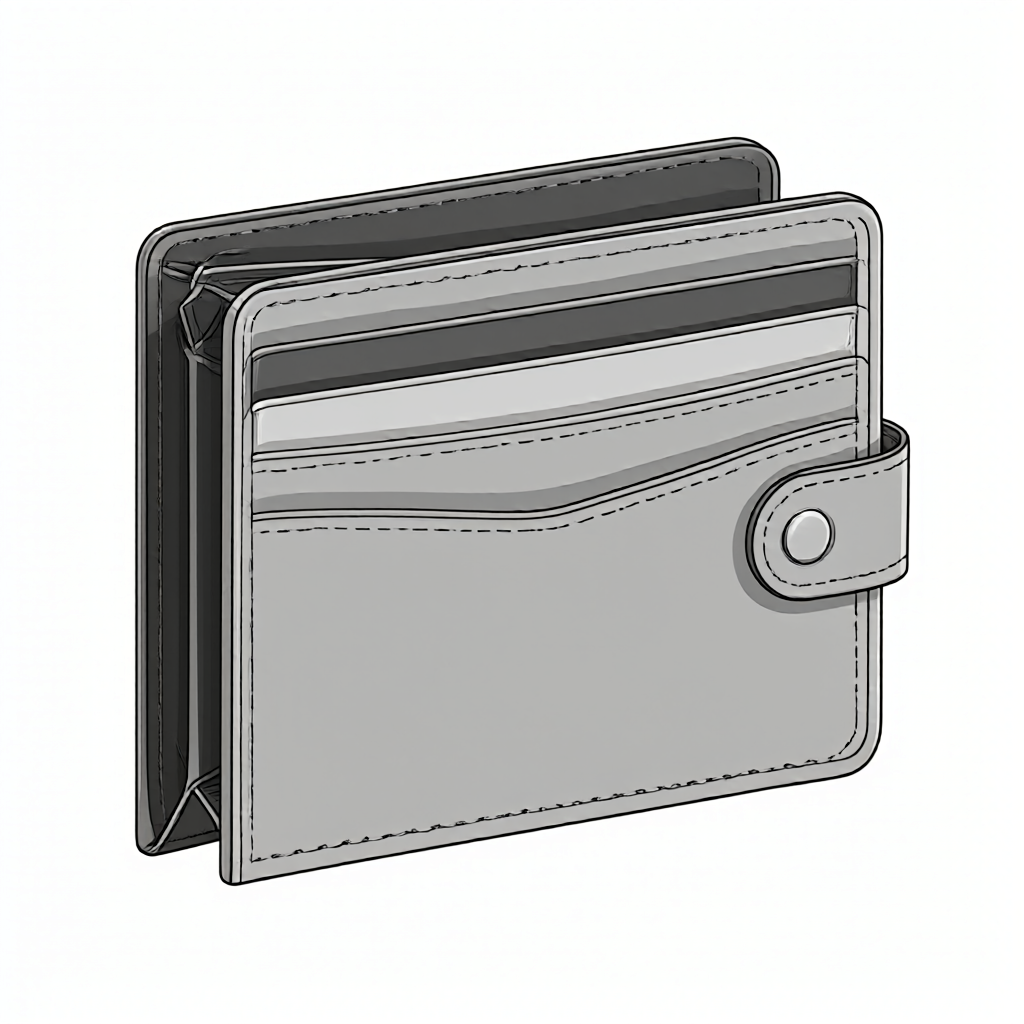
The core tension in thin wallet design is capacity versus retention. A wallet that holds eight cards in a slim 12 mm profile will feel secure when stationary but may allow cards to shift or eject when the wearer sits or reaches into a pocket.
Design choices that affect this trade-off include:
- Spring tension mechanisms (metal or elastic) that compress cards against each other
- Card-sleeve architecture where individual slots add bulk but improve retention
- Friction-fit leather wraps that rely on material stiffness rather than hardware
For a typical B2B order, specifying a target of 6–8 cards with moderate retention is a safe baseline. If your buyer’s use case demands 10+ card capacity in a pocket-friendly footprint, request a physical sample and perform a flex-and-shake test before approving bulk production.
Related buying criteria for card capacity and form factor are covered in our best card holder selection guide for B2B sourcing.
Thin Leather Wallet: Which Specifications Matter Most?
What are the key specs for evaluating a thin leather wallet?
When comparing suppliers or evaluating samples, these are the specifications that separate a durable product from a disposable one:
| Specification | Typical Range | Why It Matters |
|---|---|---|
| Unloaded thickness | 10–14 mm | Determines pocket profile and comfort |
| Loaded thickness (6 cards) | 15–22 mm | Real-world carry dimension |
| Weight | 40–80 g | Lighter is better for slim carry; heavier may indicate denser leather or metal lining |
| Card capacity | 4–12 cards | Defines target use case |
| Leather grade | Full-grain / top-grain / genuine | Drives durability, patina, and cost |
| RFID-blocking | Yes / No (specify frequency range) | Market expectation in US/EU |
| Stitching | Double-stitched edges preferred | Edge durability under flex cycles |
| Corner reinforcement | Present on premium models | Prevents fraying at stress points |
For broader evaluation criteria across minimalist wallet categories, refer to our minimalist wallets for B2B sourcing guide.
What thickness and weight benchmarks define a “thin” wallet category?
Industry practice treats anything under 15 mm unloaded and under 80 g as thin-slim. Products under 10 mm unloaded exist but usually sacrifice card retention or require a hard-shell insert that compromises the leather aesthetic. For most B2B buyers, the 11–13 mm range is the sweet spot — slim enough for front-pocket carry yet robust enough to hold six to eight cards without excessive compression.
When assessing samples, measure unloaded thickness with digital calipers, not by eyeballing. Manufacturer claims often reflect nominal design targets rather than measured production units.
Thin Leather Wallet: Which Standards and Certifications Apply?
What standards apply to leather wallet manufacturing for export?
Exporting leather wallets involves compliance in three areas: material safety, social accountability, and product labeling.
REACH (EU) and RoHS govern restricted substances in materials. Leather goods entering the European market must comply with REACH Annex XVII restrictions on certain dyes, chromium VI, and azo colorants. Suppliers should provide a declaration of conformity and, where applicable, third-party test reports from SGS or equivalent labs.
BSCI (Business Social Compliance Initiative) audits are increasingly required by European and North American retailers and distributors. A BSCI-certified facility signals that labor practices, health and safety, and environmental management meet accepted standards — important for buyers whose own retail customers request social-compliance documentation.
ISO 9001 certification indicates a manufacturer operates a documented quality management system. For leather goods, this translates to traceability of batches, in-process inspection checkpoints, and consistent output across production runs.
Additional compliance notes from the FTC include accurate fiber-content and country-of-origin labeling, particularly for products sold in the United States.
Thin Leather Wallet: What Else Should Buyers Consider?
What should you consider when choosing a thin leather wallet manufacturer?
Sourcing a private-label leather wallet goes beyond comparing samples. The following factors determine whether a production run runs smoothly or encounters delays, quality variability, or margin erosion.
MOQ and sample process. Low MOQs (300–500 pcs) enable brand testing with limited capital exposure. A fast sample turnaround — ideally within 7 days — lets you evaluate material, stitching, and RFID performance before committing to bulk. If a supplier requires 30+ days for samples, factor that delay into your product launch timeline.
Customization depth. Laser engraving and embossing are standard branding options; the question is whether the supplier can match your logo fidelity and position consistently across units. UV printing is less common on leather but useful for full-color packaging or insert cards. Verify that your chosen customization method does not compromise RFID shielding or leather durability.
Packaging and FBA prep. If you sell via Amazon FBA, confirm the supplier can apply FNSKU labels, poly-bag or retail-box prep, and bundle inserts according to Amazon’s requirements. Drop-shipping capability matters for distributors serving multiple retail accounts.
Production capacity and consistency. Monthly capacity in the 50,000+ unit range indicates the manufacturer can handle scale without relying on subcontractors that may vary in quality. Ask about batch-to-batch leather color consistency — this is a common pain point when switching tanneries mid-order.
Quality control checkpoints. A responsible supplier inspects at material receipt, during stitching, and before packing. Request a written QC checklist and a defect-rate target (typically under 2% for mature operations).
For a broader framework on evaluating EDC wallets as a buyer, see our EDC wallet procurement guide.
What customization options are realistic for a thin leather wallet?
Beyond logo placement, common customization routes include:
- Leather color and finish — dyed, aniline, or semi-aniline; availability varies by tannery batch
- Stitching thread color — contrast or tonal, affecting visual class
- Interior layout — number of card slots, cash sleeve, ID window
- Edge painting or burnishing — hand-finished edges signal premium positioning
- Hardware — metal clasps, money-clip integration, or spring mechanisms
- Packaging — retail box, kraft mailer, or bare wrap for B2B distribution
Laser engraving produces the sharpest logo reproduction on leather and works well for small marks (logo, monogram). Embossing creates a debossed impression without removing material, preserving the leather surface but requiring a custom die. Both methods are widely available from OEM suppliers; the decision hinges on your brand’s visual identity and budget per unit.
Our best slim wallets for men guide covers additional styling and configuration trade-offs relevant to these options.
Sourcing and Manufacturing
How does the sourcing process work for a private-label thin leather wallet?
The typical B2B sourcing flow for a thin leather wallet proceeds through five stages:
- Specification brief — Define leather grade, dimensions, card capacity, RFID requirement, branding method, and target MOQ.
- Sample request — Supplier produces 1–3 physical samples within 5–10 business days. Evaluate thickness, flex resistance, card retention, and logo reproduction.
- Prototype approval — Finalize tooling (embossing dies, laser files), packaging art, and QC acceptance criteria.
- Bulk production — Material procurement, cutting, stitching, assembly, RFID shielding integration, branding, and final inspection.
- Shipping and FBA prep — Palletization, carton labeling, and logistics coordination.
Lead times for bulk production typically range from 20–35 days after sample approval, depending on order volume and customization complexity.
Thin Leather Wallet: What Does a Typical Manufacturer Profile Look Like?
How does a verified OEM manufacturer approach thin leather wallet sourcing?
When evaluating manufacturers for a thin leather wallet program, buyers benefit from working with a facility that controls the full production chain — from material sourcing through finishing and quality inspection. An in-house operation reduces the risk of subcontractor variability, which is a common source of quality inconsistency in the leather goods sector.
Here is how the industry works — and how we meet these standards. As a manufacturer with 13+ years of export experience and an ISO 9001 certified facility, we focus on providing buyers with consistent material quality, verifiable compliance documentation, and flexible order quantities. Our BSCI audited factory supports everything from initial concept sketches to finished, FBA-ready units.
We specialize in OEM and ODM contract manufacturing for EDC brands, Amazon FBA sellers, and corporate gift distributors. Our capabilities include in-house CNC machining for metal components, laser engraving and embossing for branding, aluminum anodizing and surface finishing, and custom packaging design. We offer low MOQ starts at 300 pcs per SKU for full OEM customization (100 pcs trial order available for stock finishes), 7-day sample lead times, and full customization from logo to retail packaging. Our production capacity exceeds 500,000 units per month across our 50,000 sq ft facility, and we have shipped to buyers in North America, Europe, Australia, and Southeast Asia.
All materials are tested to REACH and RoHS standards, and we provide SGS-test documentation upon request. Whether you are launching a private-label line, scaling an existing brand, or sourcing promotional inventory, we work with you to match material selection, thickness targets, and branding options to your margin structure and timeline.
Minimalist Wallets vs. Traditional Bifold: What Buyers Need to Know
The shift from traditional bifold wallets to minimalist designs is one of the most significant trends in the EDC accessories market. Understanding this transition is critical for buyers deciding which product category to source.
Traditional bifold wallets typically measure 20–28 mm unloaded and weigh 80–140 g. They offer high card capacity (8–16 cards) and cash storage but create noticeable front-pocket bulge. Their construction is simpler — two leather panels stitched together — which keeps unit costs low but limits design differentiation.
Minimalist wallets compress the same functionality into 10–15 mm profiles and 40–80 g weights. This requires more engineering: spring tension systems, precision-cut card sleeves, or layered leather wraps that maintain retention without bulk. The manufacturing complexity translates to higher per-unit costs but commands premium retail pricing.
Market data from the FTC and consumer surveys indicate that buyers aged 25–45 increasingly prefer minimalist designs for everyday carry, driven by comfort, aesthetic preferences, and the desire to reduce pocket clutter. For B2B buyers, this means minimalist wallets offer stronger margin potential ($35–$80 retail vs. $15–$35 for traditional bifolds) but require more rigorous supplier evaluation.
Our best minimalist wallets for B2B sourcing guide details the full trade-off analysis between these two categories.
Thin Leather Wallet: How Do the Price Tiers Compare by Value?
Leather wallet pricing varies dramatically based on material grade, construction complexity, and customization depth. The following tiers reflect typical wholesale-to-retail structures in the EDC wallet market:
| Tier | Wholesale Cost (USD) | Retail Price Range | Leather Grade | Target Market |
|---|---|---|---|---|
| Entry | $3–$7 | $15–$30 | Genuine / split leather | Promotional products, budget Amazon sellers |
| Mid-tier | $8–$18 | $35–$75 | Top-grain leather | Private-label brands, DTC e-commerce |
| Premium | $20–$45 | $80–$180 | Full-grain / vegetable-tanned | Established EDC brands, gift market |
| Luxury | $50+ | $200+ | Specialty full-grain, exotic finishes | Niche designer collaborations |
Value is not solely determined by price. A $12 wholesale top-grain wallet with consistent RFID shielding, double-stitched edges, and FBA-ready packaging delivers stronger margin economics than a $20 genuine-leather unit with quality variability and no compliance documentation.
When evaluating quotes, buyers should request a cost breakdown that separates material, labor, customization, and logistics. This transparency reveals whether a seemingly lower price reflects genuine efficiency or compromised inputs — a frequent issue with suppliers offering prices below market averages by 30% or more.
For a deeper look at cost structures across wallet categories, see our best wallet for B2B buyers procurement guide.
Brand Recommendations and Editor Picks
For B2B buyers evaluating thin leather wallets, the following recommendations are organized by sourcing priority. These are not paid placements — they reflect common procurement patterns observed across the EDC industry.
For fast time-to-market (Amazon FBA sellers): Prioritize suppliers offering 7-day samples, low MOQ (300 pcs), and in-house finishing. The ability to iterate quickly on leather color and branding is often more valuable than marginal cost savings on bulk units. Request SGS-test reports for RFID shielding before placing your first order.
For brand-building (private-label EDC brands): Focus on material consistency and certification documentation. A supplier with ISO 9001 certification and BSCI audit reports provides the compliance backbone that retail buyers and marketplace platforms increasingly require. Expect 200+ pc MOQs and 25–35 day bulk lead times for this tier.
For promotional and corporate-gift programs: True leather or top-grain options at entry-level pricing deliver the best perceived value. Vegetable-tanned leather with embossed branding creates a premium unboxing experience at moderate cost. Lead times are typically longer (35–45 days) due to seasonal demand from gift-buying cycles.
For innovation-led sourcing: Seek manufacturers with in-house CNC and prototyping capabilities. These suppliers can develop custom features — such as integrated money clips, modular card sleeves, or hybrid leather-metal constructions — that differentiate your line from commodity offerings.
A practical case study illustrates why supplier selection matters: an Amazon FBA seller in the Midwest sourced 500 top-grain leather wallets from a low-cost supplier. The samples passed initial inspection, but batch consistency was poor — leather color varied by two shades between lots, and RFID shielding performance ranged from 60% to 90% attenuation. Return rates hit 14% within 90 days, eroding margins and triggering account health warnings. The buyer subsequently switched to a BSCI-audited facility with documented batch-tracking, reducing defect rates to under 2% and stabilizing their product line.
Our best slim wallets for men guide provides additional brand-specific evaluation criteria for these categories.
Procurement Decision Framework
Use the following checklist when evaluating thin leather wallet suppliers. This framework is designed to surface risks early and ensure consistency across production runs.
| Evaluation Criterion | Acceptable Threshold | Red Flag |
|---|---|---|
| Sample lead time | ≤ 7 business days | > 21 days |
| MOQ flexibility | ≤ 500 pcs for first order | Fixed 1,000+ pcs with no flexibility |
| RFID test documentation | ASTM E2397 or equivalent third-party report | Verbal claim with no test data |
| Leather grade specification | Full-grain or top-grain with tannery origin | “Genuine leather” without grade clarification |
| Batch color consistency | ± 5% color variance tolerance agreed in writing | No documented tolerance |
| QC inspection rate | 100% final inspection with defect < 2% | No written QC process |
| Certification coverage | ISO 9001 + BSCI or REACH declaration | No certifications provided |
| Communication response | ≤ 24 hours during business days | Multi-day delays on critical queries |
When scoring suppliers, weight certifications and material documentation most heavily. A marginally higher per-unit cost is justified when it eliminates the risk of batch inconsistency, compliance failures, or marketplace policy violations.
Extended Standards Reference
In addition to ASTM E2397 for RFID shielding performance, leather wallet manufacturers should reference ISO 17075:2017 (Leather — Chemical tests — Determination of pentachlorophenol (PCP)) and relevant REACH Annex XVII restrictions when evaluating material safety compliance. This standard governs chemical residues in leather that may migrate through skin contact, an important consideration for products carried daily in pockets.
The ISO framework provides the testing methodology for verifying that supplied leather meets these chemical safety thresholds. Buyers should request test reports from SGS, Intertek, or equivalent accredited laboratories for every new material batch, particularly when switching tanneries or leather suppliers mid-production.
Thin Leather Wallet: Where Can You Verify the Data and Sources?
- ASTM E2397 — www.astm.org
- FTC — www.ftc.gov
- ISO — www.iso.org
- best leather wallets for men — topedcwallet.com
- best card holder selection guide for B2B sourcing — topedcwallet.com
- minimalist wallets for B2B sourcing — topedcwallet.com
- EDC wallet procurement guide — topedcwallet.com
- best slim wallets for men — topedcwallet.com
- Get a Free Quote → — topedcwallet.com
From article to product
Sourcing minimalist-wallets?
Tell us the format, the quantity and the date you need stock. You get material options, MOQ and a landed-cost range back within one business day.
Keep reading
More on wallet types
Thin Male Wallets: Buying Guide for Slim Minimalist Picks
How to choose a slim wallet for men — thickness thresholds, material trade-offs, capacity…
ReadStashed Wallet: A Minimalist Everyday-Carry Solution
Understand what a stashed wallet is, how minimalist slim wallets work, and what to…
ReadFolding Wallets: Types, Materials & Buying Guide
Learn what makes a folding wallet worth buying, from materials and card capacity to…
Read
About the author
TOPWALLET Editorial Team
TOPWALLET's editorial and engineering desk writes from bench testing at the Shenzhen (Longgang) facility: pull-force and cycle testing, 13.56 MHz shielding measurements, finish trials and factory audits, rather than supplier spec sheets. Every specification in these guides is one we write on a purchase order.
Written on the floor
This article was written by our production and QC team — the people who spec tolerances, run the finishing line and inspect every batch. Where it states a capacity, a pull force or a lead time, it comes from a measurement we made, not a supplier’s catalogue. If a number here disagrees with what your own supplier told you, tell us; several of these articles started as a correction from a buyer.
See how the factory works · Inspection process · Sourcing FAQ
Sourcing minimalist-wallets?
Tell us the format, the quantity and the date you need stock. You get material options, MOQ and a landed-cost range back within one business day.