

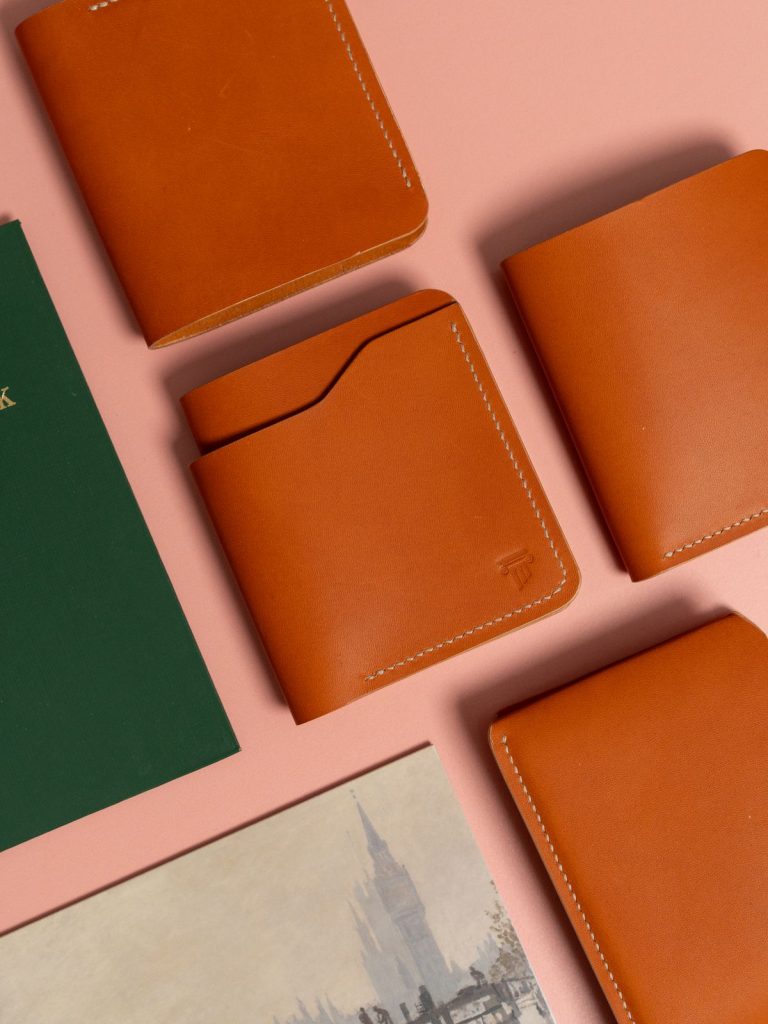
Usually yes, if your week involves contactless cards, transit passes or access badges and you can verify the shielding works; an RFID wallet then earns its small premium. If your payment life is mostly online and you rarely tap, the wallet is solving a problem you do not have. The decision is a cost-benefit calculation, how often you are exposed, what a verified shield costs, and what it cannot do, rather than a fear-based purchase. This guide gives you that calculation. Scan the RFID wallet collection for price context, then read on for the decision framework.
Quick Verdict
For most people, RFID protection is a cheap, harmless add-on — not a must-have. If you tap transit daily, carry access badges or travel through dense crowds, a verified shielded wallet earns its small premium. If your cards live in a drawer and you pay mostly online, a blocking card or sleeve solves the same problem for less. The feature is worth it when the seller can state the frequency, the test method and the attenuation — and you can verify it yourself.
The Real Risk Landscape
Start honestly: the dominant fraud categories are card-not-present, meaning online and phone transactions, plus data breaches, not someone tapping your pocket. Industry analyses consistently rank online fraud far above contactless picking, and that ordering should shape how much attention you pay to any wallet feature.
Physical theft of the card is more common than remote tapping, and a lost wallet exposes the same capabilities in the hours before you cancel. The RFID layer closes one channel on both sides: live reads and low-value taps through the closed wallet.
Risk is not equal everywhere: contactless adoption and tap limits differ by market, dense transit raises exposure, and event crowds create the conditions a prepared reader needs. The same feature is rational in London or Tokyo and near-irrelevant in a cash-first market.
How Contactless Theft Actually Happens
The realistic mechanism is a relay or a prepared handheld reader, not a movie hack. One device near you reads your card and streams the exchange to a device at a point of sale, so a small-value tap completes while your card stays in your pocket. Both ends must be in range at the same moment, which keeps it rare.
A second exposure is more mundane: a thief with a small NFC device gets close, harvests what a contactless read exposes, and tries low-value taps where no PIN is required. Issuer risk systems limit how far a skim goes, but repeated attempts are cheap for the attacker.
Two facts keep this in proportion. Card data alone is far less useful than data plus online credentials. And nothing a wallet does prevents someone simply taking it: shielding removes the wireless channel, one layer among several.
Shielding Adds Weight and Cost — Is It Balanced?
| Factor | With verified shielding | Without shielding |
|---|---|---|
| Material cost at scale | Pennies to a low single-digit share of material cost | No extra cost |
| Weight and profile | Foil or mesh adds almost nothing; metal shells are heavier | Lightest possible build |
| Threat coverage | Blocks unauthorized 13.56 MHz reads when closed | No wireless protection |
| Verification | Testable in seconds with a test card | Nothing to verify |
| Main alternative | A one-off sleeve or blocking card for a single card | Not applicable |
At manufacturing scale, a shielding layer is a rounding error in cost; the heaviest design decision is a full metal shell, which buyers often want for structure. The premium to suspect is marketing for an unverified claim, not the shield itself.
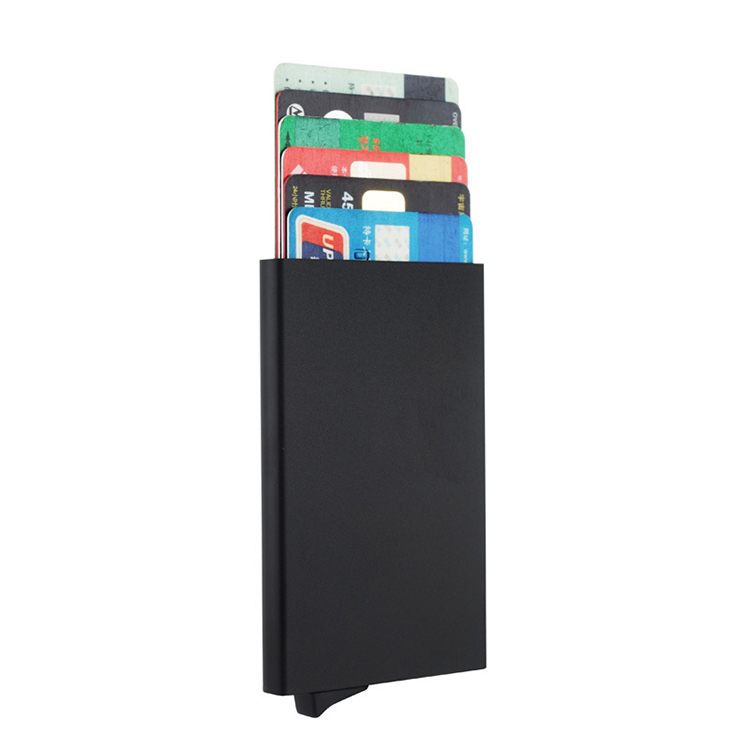
One card and nothing else: a low-cost sleeve does the job. Transit plus several cards plus an access badge daily: one shielded wallet beats a pile of sleeves on convenience and verification.
Cases Where RFID Protection Is Genuinely Useful
You ride transit with a tap card, your office uses access badges, you commute through dense crowds, you travel to high-tap cities, or you keep your wallet in a rear pocket: the shield has a real job, and if the wallet is briefly handled by someone else, it also closes the easiest card-access route.
There is a business case too. Companies issuing branded wallets, and brands selling into security-conscious verticals, increasingly specify verified RFID as a procurement requirement. For OEM buyers that makes shielding a confirmed capability: testable at the bench, auditable in a sample check. The slim RFID wallet is a working example designed in from the start.
Cases Where It’s Mostly Marketing
Shielding is marketing when it claims to stop what it cannot: all identity theft, all frequencies, total protection. Foil and mesh wallets do not block 125 kHz badges or UHF tags, and no wallet affects online fraud. Unverifiable claims are decoration; the RFID knowledge base documents which frequencies these products address.
It is mostly marketing when the premium has no test behind it: a crease-prone foil inside an open-seam design, sold at a markup with no frequency stated. The foil costs a rounding error to produce; the markup is for the word RFID, not the metal. If a seller cannot answer frequency, method and attenuation, assume it is decorative.
Finally, it is marketing if a cheaper alternative covers your need. One card, no transit, peace of mind: a blocking card or sleeve solves it. Paying wallet-level premiums for a sleeve-level problem is the wrong equation.
Bottom Line
The framework in one pass. Contactless payment, transit or access badges several times a week? Dense crowds or high-tap-adoption markets? Can you verify the shielding with a test card? Two yes answers justify a verified RFID wallet; one justifies a sleeve; zero means the shield is optional.
For buyers, treat RFID as a requirement you can measure: ask for frequency, test method and batch results, then run your own sample test. The wallet is worth it when the claim survives contact with a reader.
Who Should — and Shouldn’t — Pay for It
| Your profile | Verdict | Why |
|---|---|---|
| Daily transit rider / badge carrier | Yes | Frequent contactless exposure; one shield covers many cards |
| Dense-city commuter or frequent traveller | Yes | Crowds and high-tap markets raise relay-read exposure |
| Mostly online payer, wallet in a bag | Optional | A blocking card or sleeve covers the rare exposure |
| Cash-only carrier | No | Nothing to shield |
| OEM buyer specifying for resale | Yes | Verified shielding is an auditable, testable procurement requirement |
How We Verify Shielding
Because we manufacture wallets, we do not take the claim on faith. Every shielded batch is tested against a live 13.56 MHz reader and the attenuation result is written into the inspection record, so “RFID” is a measured property rather than a sticker. You can run the same check at home in minutes — see how to test an RFID wallet and the QC checklist for the numbers to ask a supplier for.
FAQ
Do RFID wallets work?
Yes. A shielded wallet blocks 13.56 MHz skimmers at normal reading distance (~10 cm). We test every batch on a real reader.
Do RFID blocking wallets work?
Yes. The continuous metal shield layer attenuates the field. The catch is that it must be a real metal layer, not paint or coating.
Is RFID blocking necessary?
Depends. If you carry contactless cards in a crowded city subway, yes. If your cards stay in a bag inside a building, the marginal benefit is low.
Does RFID blocking work?
Yes at 13.56 MHz. It does not block 125 kHz proximity badges, which is exactly why ID windows are left unshielded on purpose.
Are RFID wallets necessary?
For most people in 2026, optional. The threat is real but rare; the cost of protection is low.
How do RFID cards work?
They use an inductor coil plus a chip. When a reader powers the coil, the chip sends back the card data. Reading range is about 10 cm.
Are RFID wallets worth it?
Yes for crowded transit and travel. No for home drawer storage. The $15–30 price buys real peace of mind.
Is RFID protection necessary?
Not strictly. Contactless cards require close range and skimmers are rare in practice. But the protection itself is cheap.
Are RFID blocking wallets necessary?
Optional, not mandatory. The risk is low; the cost is low; the peace of mind is real.
Do I need an RFID blocking wallet?
If you carry 3+ contactless cards daily in a crowded area, yes. Otherwise, it is an upgrade, not a requirement.
Do I really need an RFID wallet for daily city life?
Maybe. If you tap transit and pay by phone, the threat is small but nonzero, and verified shielding is cheap insurance. If your wallet stays in a desk drawer most of the day and your cards are rarely out, the risk is low enough that a sleeve will do. Match the feature to your actual week, not to the marketing.
Can thieves read cards through jeans?
A reader works through thin fabric when a wallet has no shield, which is exactly what relay attacks and prepared readers exploit. Dense denim slows the field but does not stop it. A verified shield removes this channel entirely for the frequency it covers, which is the point of carrying one.
Does RFID blocking slow down my own taps?
No. The cards leave the wallet when you tap, so the shield does nothing while you are using the cards. The only practical nuisance is some full-metal wallets that require removing a card for a fast tap, so check usability with the wallet closed before you buy if you tap often.
Is a low-cost RFID sleeve as good as a wallet?
For a single card, yes, a good sleeve reaches similar attenuation at a fraction of the cost. For multiple cards, transit rides and daily access, a shielded wallet wins on convenience and because you verify one object rather than a pile of sleeves. Choose by your carry load, not by the price tag alone.
Should I buy RFID protection for a cash-only wallet?
No. If the wallet carries no contactless cards, there is nothing to shield, and the premium buys nothing. Spend the difference on a better clip or a sturdier shell instead. The feature only pays for itself when the wallet regularly holds cards that a reader could otherwise touch.
What should I check before buying an RFID wallet?
Three things: the stated frequency, the test method, and whether you can verify it yourself with a test card. If a seller answers frequency and method confidently, the claim is engineering; if the answer is vague, treat the feature as unverified and price it accordingly.
Sources
- McAfee — “Are RFID Wallets Worth It? The Truth About RFID Theft / Do RFID Wallets Actually Work?” https://www.mcafee.com/learn/do-rfid-wallets-actually-work/
- SlashGear — “Are RFID-Blocking Wallets Still Needed Or Useful In 2026?” https://www.slashgear.com/2165804/do-you-need-rfid-blocking-wallet-2026/
- Popular Mechanics — “Metal RFID Wallets Felt Safer — Until I Tried Leather.” https://www.popularmechanics.com/adventure/outdoor-gear/a66052446/metal-vs-leather-rfid-wallet/
- TOPWALLET — RFID knowledge base and shielding test methods. https://topedcwallet.com/knowledge/rfid/
Related reading
From article to product
Building an RFID range?
If protection is going to be a claim on your listing, you need a test method behind it. We test every batch with a live 13.56 MHz reader and supply the report.
Keep reading
More on rfid knowledge
How Important Is RFID Blocking for EDC Wallets?
Understand RFID blocking importance for bulk wallet sourcing, what protects contactless cards, key specs…
ReadBest RFID Blocking Cards: B2B Procurement Guide 2026
Learn what makes an RFID blocking card effective, from frequency coverage to material shielding.…
ReadHow to Stop Your Cards From Demagnetizing (2026)
Here’s the short version: your cards demagnetize when a strong magnetic field scrambles the…
Read
About the author
Wu, Leon
Leon Wu is the senior product engineer and EDC testing lead at TOPWALLET. He has spent more than a decade on wallet design-for-manufacture, materials and quality control at the company's Dongguan facility, and writes from bench testing, pull-force and 13.56 MHz shielding measurements rather than supplier spec sheets.
Written on the floor
This article was written by our production and QC team — the people who spec tolerances, run the finishing line and inspect every batch. Where it states a capacity, a pull force or a lead time, it comes from a measurement we made, not a supplier’s catalogue. If a number here disagrees with what your own supplier told you, tell us; several of these articles started as a correction from a buyer.
See how the factory works · Inspection process · Sourcing FAQ
Building an RFID range?
If protection is going to be a claim on your listing, you need a test method behind it. We test every batch with a live 13.56 MHz reader and supply the report.