

Quick Answer
What is how important is rfid blocking?
RFID blocking is moderately important for most B2B wallet buyers, but the level of protection needed depends on the target market, the card types your end users carry, and regional payment infrastructure. For brands selling into North America and Europe, RFID-blocking minimalist wallets and metal card holders are a meaningful differentiator — not a mandatory feature, but a strong consumer expectation that supports premium positioning. For buyers targeting regions where contactless card penetration is still limited, RFID blocking is less of a purchasing driver.
In short: RFID blocking matters when your buyer segment carries modern contactless bank cards, transit passes, or corporate ID badges that use RFID-enabled chips. It does not matter much when those cards are absent or when the primary purchase driver is other attributes like weight, capacity, or price.
Detailed Explanation
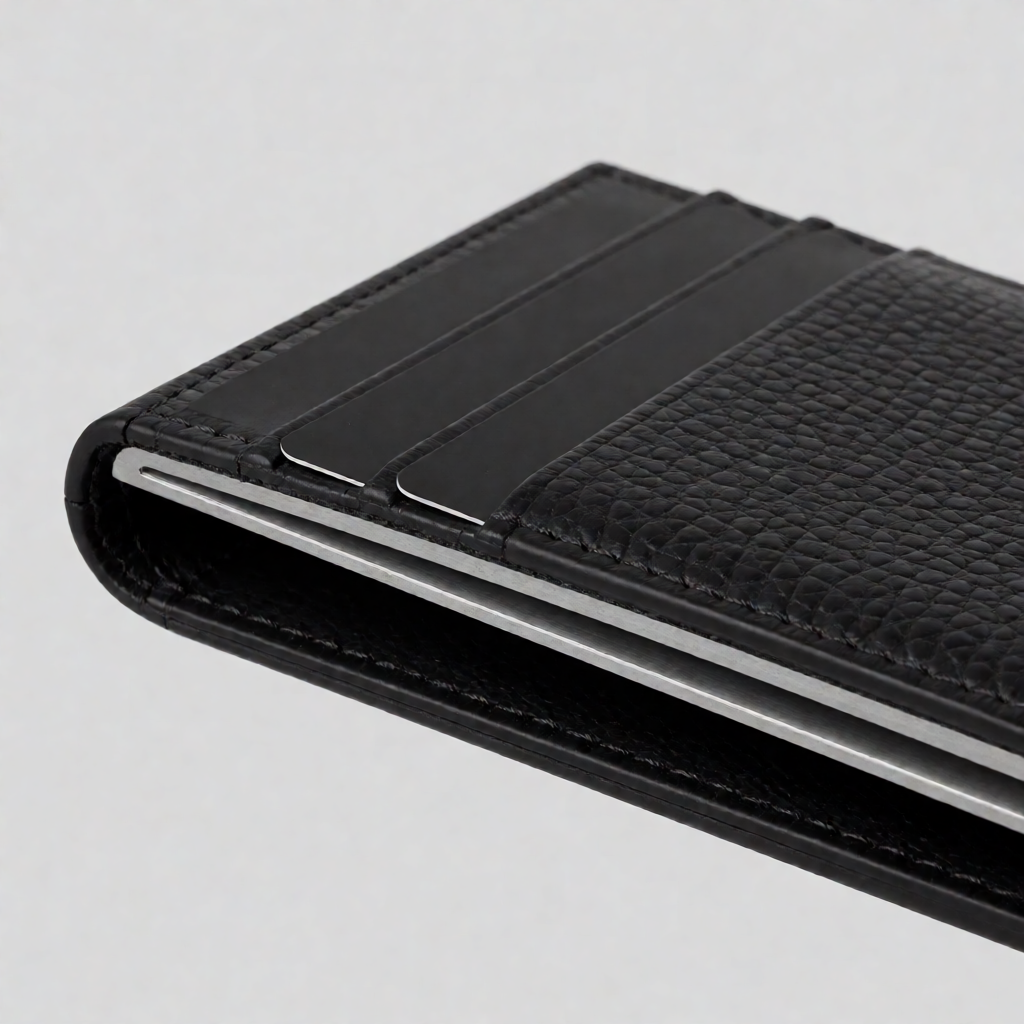
Why does RFID blocking matter for EDC wallet buyers?
Radio Frequency Identification (RFID) uses electromagnetic fields to communicate between a reader and a nearby smart card or tag. Most modern banknotes do not use RFID, but credit and debit cards, travel cards, and some employee access cards embed a tiny antenna and chip that can be read wirelessly at close range.
The threat that RFID blocking addresses is called skimming: an unauthorized reader scans a card’s data without physical contact. In practice, successful skimming requires proximity, compatible frequency, and a card that transmits unencrypted data. Most major card networks now encrypt contactless transaction data and impose transaction limits on tap-and-go payments, which reduces the real-world risk. However, consumer awareness of data privacy has grown, and many buyers — especially in the EDC and outdoor gear segments — actively look for wallets that mitigate perceived risk.
For B2B sourcing, the question is not whether RFID skimming is the #1 security concern in payment fraud (it is not). The question is whether your brand’s positioning and your end consumer’s expectations make RFID blocking a valuable feature.
How does RFID blocking work in wallets?
RFID-blocking wallets function by creating a Faraday cage around the cards. When a conductive barrier surrounds a radio-frequency signal source, the signal cannot pass through. In wallet manufacturing, this is typically achieved in three ways:
- Metal construction — Solid aluminum, titanium, or stainless steel frames naturally block RFID signals. A metal wallet with proper gaps minimized can provide full shielding across common contactless frequencies.
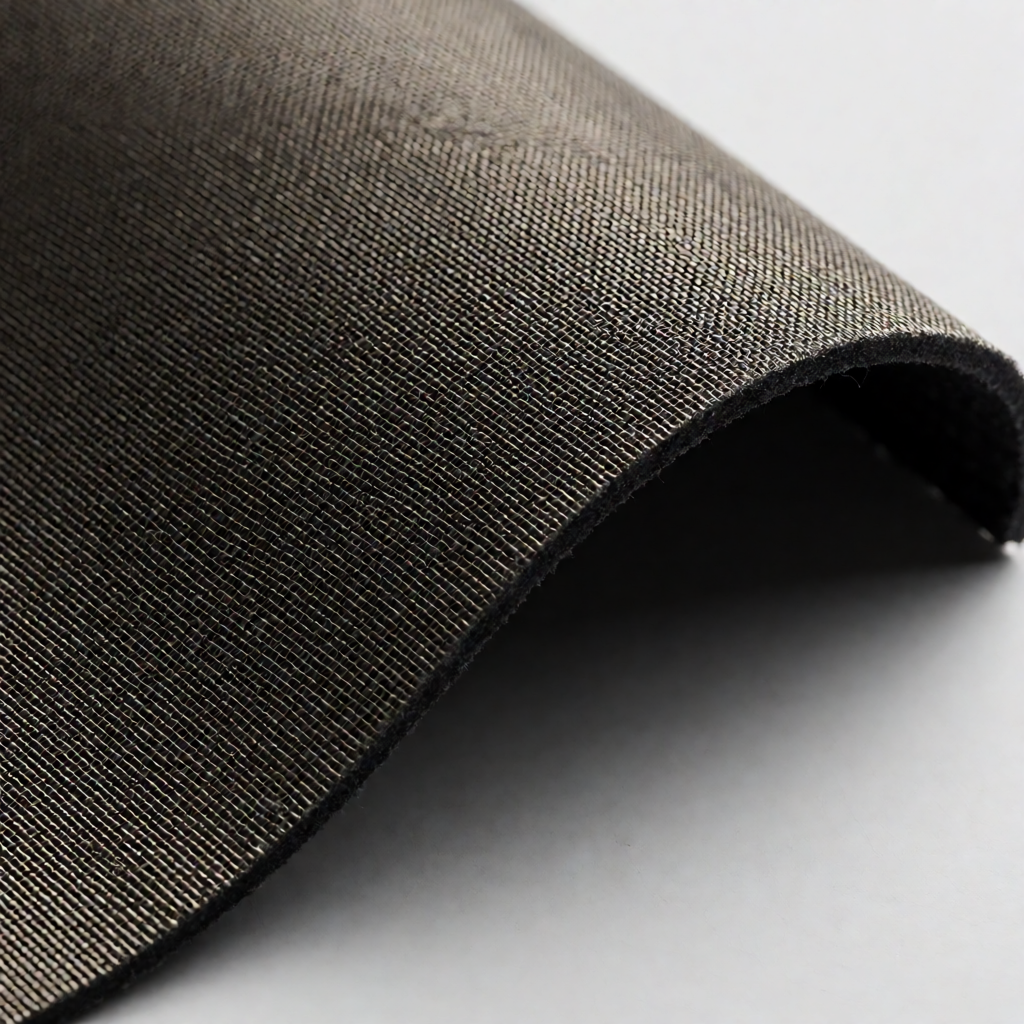
- RFID-blocking linings — A thin layer of ferrite or metallic mesh is embedded inside a non-metal wallet. This is common in slim card holders and hybrid designs.
- Combination designs — Some wallets combine a metal outer shell with a fabric or polymer inner sleeve, balancing aesthetic preference with signal attenuation.
The effectiveness depends on material thickness, coverage area, and the frequencies in use. Not all RFID-blocking implementations are equal — a thin woven mesh liner may attenuate high-frequency signals but leave gaps at lower frequencies.
What is the real risk landscape for contactless cards?
Consumer fear of RFID skimming often outpaces documented incidents. Major fraud channels — phishing, database breaches, and point-of-sale malware — account for the vast majority of payment card losses, according to consumer protection authorities such as the FTC. Skimming remains a niche threat, primarily relevant in high-density urban environments where attackers can operate near payment terminals.
Nevertheless, the perceived risk is a market reality. Brands that include RFID blocking address a psychological need for security, even if the statistical risk is low. For private-label and Amazon FBA sellers, this feature can influence conversion rates and reduce return questions from customers concerned about data privacy.
When is RFID blocking more or less important?
RFID blocking becomes high priority when:
- Target markets are North America or Western Europe, where contactless payment adoption exceeds 70% in many cities
- The product is marketed toward tech-savvy users, travelers, or security-conscious professionals
- The brand positions itself around privacy, minimalism, or preparedness themes
- Competitive SKUs in the same price tier already include blocking
RFID blocking becomes lower priority when:
- The target market has limited contactless card infrastructure
- Price sensitivity dominates the purchasing decision
- The wallet is positioned purely as a fashion or lifestyle accessory
- The end user primarily carries cash or non-RFID payment methods
Key Specifications
What are the key specs for RFID-blocking wallets?
When evaluating RFID-blocking capability during sourcing, focus on these measurable specifications:
- Operating frequency range — Most contactless payment cards and transit systems operate at 13.56 MHz (high frequency). Some older access control systems use 125 kHz (low frequency). Effective blocking must cover both ranges if the product targets mixed-use scenarios.
- Shielding attenuation — Industry-standard testing measures signal reduction in decibels (dB). A reputable RFID-blocking wallet should achieve at least 80 dB of attenuation across the target frequency band. Values below 60 dB indicate incomplete shielding.
- Material type — Solid metals (aluminum, titanium, stainless steel) provide inherent blocking. Fabric or polymer wallets require embedded ferrite sheets or conductive mesh linings. The material specification must be clearly defined in the product brief.
- Card coverage area — Full-spectrum blocking requires that cards are surrounded on all sides. Open-frame metal wallets with large gaps between the frame and card edges may leave signals able to escape. Designs that fully enclose the card stack are more reliable.
- Test documentation — Professional manufacturers should be able to provide third-party test reports or at minimum internal validation data. Vague claims such as “RFID-safe certified” without specifying the test standard or results are a red flag.
What should you specify in your RFQ?
When submitting an RFQ for RFID-blocking wallets, include:
- Target frequency range (13.56 MHz minimum; 125 kHz if broader protection is needed)
- Required attenuation level (≥80 dB recommended)
- Card dimensions and stack size to validate coverage
- Any certification or test-report requirements from the buyer’s side
- Whether the blocking feature should be integral to the metal construction or added via lining
See our Best Wallet for B2B Buyers: EDC Wallet Procurement Guide for additional sourcing considerations beyond RFID.
Standards & Requirements
What standards apply to RFID-blocking claims?
There is no single consumer-product standard that universally governs RFID-blocking performance in wallets. However, several frameworks and testing references are relevant to sourcing decisions:
- ISO/IEC 14443 defines the air-interface protocol for proximity cards operating at 13.56 MHz. This is the standard used by most contactless payment and transit cards. Understanding this standard helps buyers evaluate whether a wallet’s blocking design covers the correct frequency.
- ISO/IEC 15693 governs Vicinity cards at the same frequency but with longer read ranges. Some corporate ID and inventory tags operate under this standard, which is relevant if the target product includes access-card functionality.
- FIPS 201 (U.S. federal standard for personal identity verification) specifies requirements for PIV cards, which operate at 13.56 MHz. Government-adjacent procurement may reference this standard.
Buyers should also check whether their target market has specific labeling or disclosure requirements. The FTC provides guidance on consumer expectations around data security (ftc.gov), and misleading claims about protective features can trigger regulatory scrutiny in certain jurisdictions.
How should you verify supplier claims?
RFID-blocking is one of the easier features to claim but harder to validate without testing. To verify a supplier’s capability:
- Request test results from a recognized third-party laboratory (SGS, Intertek, or equivalent).
- Ask specifically which frequency range was tested and what attenuation was measured.
- Confirm whether the test used actual contactless cards or simulated targets — real-card validation is more trustworthy.
- Check whether the supplier’s SGS-tested materials documentation includes RFID-specific testing, not just material compliance.
If a supplier cannot provide documentation, consider that a limitation rather than an opportunity. A capable manufacturer will have test data or in-house validation procedures for blocking performance.
Related Considerations
What should you consider beyond the blocking feature itself?
Product design trade-offs — Adding RFID blocking can affect wallet dimensions, weight, and aesthetics. Solid metal wallets block signals naturally but add weight. Liner-based solutions are lighter but may degrade over time with repeated flexing. Evaluate whether the blocking mechanism compromises the core value proposition of your wallet design.
Cost impact — Integrated metal construction is typically cost-neutral for blocking because the material itself provides the shielding. Additional ferrite or mesh linings add approximately $0.10–$0.35 per unit at scale, depending on material and coverage area. Factor this into your landed cost calculation.
Marketing authenticity — Consumers are increasingly familiar with RFID-blocking claims. Vague marketing language erodes trust. Specific, verifiable claims backed by test data perform better in conversion and reduce post-purchase disputes. See our Sourcing Money Clips for B2B: Specs & Standards guide for similar specification-level thinking applied to other EDC categories.
Hybrid product strategies — Some brands offer RFID-blocking as a SKU-level option rather than a universal feature. This approach allows competitive pricing on entry models while capturing the privacy premium on higher-tier versions. It also simplifies the sourcing process if you are running multiple product lines through the same manufacturer.
Regional payment trends — Contactless adoption varies significantly by region. Markets with mature tap-to-pay infrastructure (Nordic countries, UK, Canada, Australia) show stronger demand for RFID protection. Emerging markets where cash and chip-and-PIN remain dominant may not respond to this feature at all. Align your sourcing decision with your target market’s payment behavior.
For buyers who want to move from evaluation to production, the next step is defining exactly which specifications matter for your product line and market. This is where a manufacturer with in-house CNC machining and testing capabilities becomes valuable — they can validate blocking performance against your specific card stack and frequency requirements before committing to tooling.
As a manufacturer, our approach to RFID-blocking wallets is rooted in the materials and construction methods we use daily. Our in-house CNC-machined aluminum and titanium wallets provide inherent signal shielding because solid metal acts as a Faraday barrier by design — no separate lining is required. For carbon fiber and polymer-based card holders, we integrate certified ferrite layers and validate each design with actual contactless cards at 13.56 MHz. We test every new SKU before it reaches production to ensure the blocking performance matches the specification on the drawing.
If you are evaluating whether RFID blocking belongs in your next wallet product line, or if you need help specifying the right shielding approach for your target market, Contact Our Team to discuss your requirements.
Sources & References
- ftc.gov — www.ftc.gov
- Best Wallet for B2B Buyers: EDC Wallet Procurement Guide — topedcwallet.com
- SGS-tested materials — topedcwallet.com
- Sourcing Money Clips for B2B: Specs & Standards — topedcwallet.com
From article to product
Building an RFID range?
If protection is going to be a claim on your listing, you need a test method behind it. We test every batch with a live 13.56 MHz reader and supply the report.
Keep reading
More on rfid knowledge
Best RFID Blocking Cards: B2B Procurement Guide 2026
Learn what makes an RFID blocking card effective, from frequency coverage to material shielding.…
ReadHow to Stop Your Cards From Demagnetizing (2026)
Here’s the short version: your cards demagnetize when a strong magnetic field scrambles the…
ReadDoes RFID Damage Your Cards? What the Science Actually Says
Short answer: No — RFID blocking wallets and RFID-blocking sleeves physically cannot damage your…
Read
About the author
Wu, Leon
Leon Wu is the senior product engineer and EDC testing lead at TOPWALLET. He has spent more than a decade on wallet design-for-manufacture, materials and quality control at the company's Dongguan facility, and writes from bench testing, pull-force and 13.56 MHz shielding measurements rather than supplier spec sheets.
Written on the floor
This article was written by our production and QC team — the people who spec tolerances, run the finishing line and inspect every batch. Where it states a capacity, a pull force or a lead time, it comes from a measurement we made, not a supplier’s catalogue. If a number here disagrees with what your own supplier told you, tell us; several of these articles started as a correction from a buyer.
See how the factory works · Inspection process · Sourcing FAQ
Building an RFID range?
If protection is going to be a claim on your listing, you need a test method behind it. We test every batch with a live 13.56 MHz reader and supply the report.