

What Is an RFID Travel Purse?
An RFID travel purse is a compact carry-all bag or pouch designed for travelers that incorporates radio-frequency identification shielding — typically via a metallic foil or mesh liner — to block unauthorized scanning of contactless payment cards, passports, and ID chips. It functions as a portable Faraday cage for the items you keep closest to your body.
Unlike a standard travel accessory that prioritizes organization and capacity, an RFID-blocking travel purse adds a technical layer of security aimed specifically at preventing wireless skimming attacks. For B2B buyers — Amazon FBA sellers, promotional distributors, EDC brand owners, corporate gift purchasers, and retail chain procurement teams — understanding both the function and the realistic limits of this protection is essential before committing to a bulk order.
How Does RFID Blocking Actually Work?
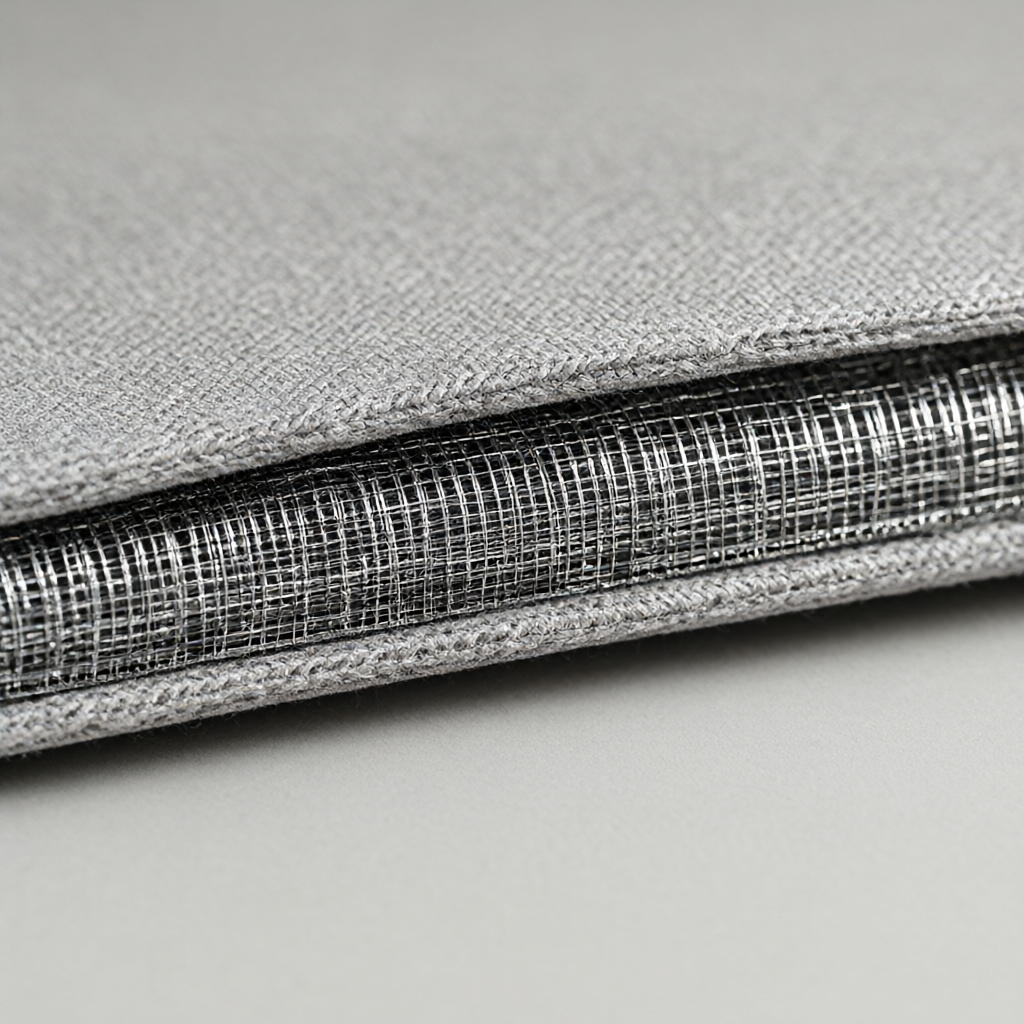
The science behind an RFID travel purse comes down to electromagnetic interference and the Faraday cage principle.
Every contactless card — credit and debit cards, e-passports, transit passes — operates at a specific radio frequency. The dominant standard for consumer payment cards and machine-readable travel documents is 13.56 MHz, as defined by ISO/IEC 14443. When an unauthorized scanner emits a radio wave at this frequency near your card, the embedded microchip can be accessed and its data read — a technique known as “skimming.”
An RFID-blocking travel purse interrupts this process by lining its interior with a conductive material — typically aluminum foil, silver-infused fabric, nickel-copper alloy mesh, or carbon fiber composite. When an external RF signal hits this conductive barrier, the material generates opposing electrical currents that cancel or reflect the incoming wave. The result is a localized dead zone where the card’s chip cannot communicate with any external reader.
Why Don’t Legitimate Transactions Still Work?
This is one of the most commonly misunderstood aspects. A properly designed RFID travel purse does not block your ability to pay or present your passport at a border control gate. When you remove the card and tap it directly against a point-of-sale terminal or e-gate reader, the signal travels a very short distance — often less than two centimeters — through the purse’s opening. At that proximity, the reader’s field is strong enough to overcome the shield’s attenuation. The blocking layer only becomes effective when an external antenna is positioned at a distance (typically beyond arm’s length, roughly 30–100 cm depending on the attacker’s equipment).
What Frequencies Matter — and What Gets Missed?
Not all RFID shielding is created equal. Quality matters enormously here. A basic single-layer aluminum foil insert may effectively block the 13.56 MHz band used by EMV contactless cards and e-passports, but it could allow higher-frequency RFID tags (such as the 860–960 MHz UHF range used for luggage tracking and supply-chain assets) to pass through unimpeded. Conversely, some advanced laminated liners are engineered to attenuate both HF and UHF bands simultaneously.
Buyers should also recognize that “RFID-safe” products vary widely in test methodology. Some suppliers publish decibel reduction values measured in standardized chambers; others rely on unverified supplier claims. As a rule of thumb, requesting an independent third-party RF-test report — ideally showing signal attenuation data at 13.56 MHz — provides far more reliability than a marketing label alone. Products claiming “complete RFID protection” across all frequencies should be treated skeptically unless backed by published test documentation from a recognized laboratory.
What Are the Key Specifications to Evaluate?
When sourcing an RFID-blocking travel purse — whether as an Amazon FBA seller vetting private-label options or as a promotional distributor evaluating margin potential — several specifications separate a functional product from one that delivers mediocre protection or poor durability.
Shielding Material and Construction
| Material Type | Typical Frequency Coverage | Durability Notes |
|---|---|---|
| Aluminum foil laminate | HF (13.56 MHz) primarily | Prone to tearing; coating may degrade with flexing |
| Silver-infused nylon/polyester fabric | HF and some UHF ranges | Washable; maintains flexibility |
| Nickel-copper alloy mesh | Broad-spectrum (HF + UHF) | Excellent conductivity; moderate stiffness |
| Carbon fiber composite | Multi-band capability | High strength-to-weight; abrasion-resistant |
The choice of shielding material directly affects the purse’s flexibility, weight, washability, and lifespan. For a travel-oriented product that gets packed and unpacked repeatedly, a fabric-integrated conductor tends to outperform bare foil laminates.
Capacity and Slot Configuration
Typical RFID travel purses accommodate anywhere from 5 to 20+ card slots, depending on form factor. A slim crossbody or wristlet variant might hold 8–12 cards plus a passport sleeve, while a larger zip-around organizer could manage 20+ cards, a phone compartment, and dedicated currency pockets. For B2B buyers, the slot layout should align with the target market’s usage pattern — an Amazon FBA reseller targeting European travelers will have different capacity expectations than a corporate gift buyer sourcing a compact wallet for executives.
External Security Features
A well-engineered travel purse goes beyond RFID blocking. Common complementary features include:
- Anti-theft zippers with hidden pull tracks that prevent slash-and-grab retrieval
- Slash-resistant outer panels (often featuring cut-proof fabric or wire mesh laminates)
- Lockable zipper pulls or RFID-compatible TSA-approved locks for checked luggage scenarios
- Water-resistant coatings suitable for unpredictable outdoor conditions
Note that these anti-theft features are mechanical or textile-level protections — they do not substitute for RF shielding. Neither do they protect against online skimming or CVV-based fraud, which remain separate attack vectors entirely.
Dimensions and Form Factor
Common categories include:
- Crossbody security purses — worn under clothing or across the torso; highest discretion
- Wristlets — compact enough for night-outs and light-day travel
- Backpack inserts / organizers — fit inside existing luggage; maximize capacity
- Zip-around mini totes — full-zip closure with RFID-lined main compartment
Form factor influences not only carrying comfort but also how effectively the shielding envelope wraps around your cards. Gaps in coverage — exposed card edges sticking out of a half-zippered pouch, for example — create vulnerabilities.
What Standards and Certifications Apply?
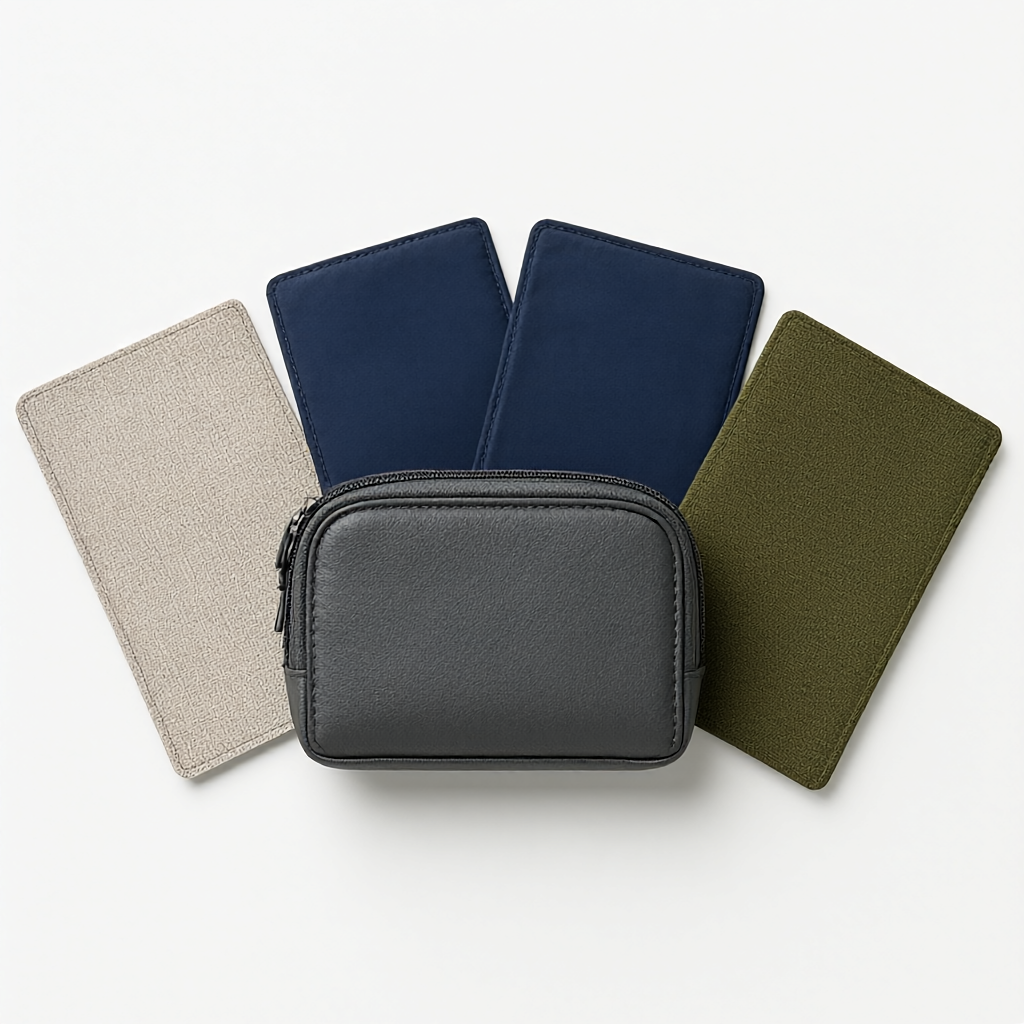
There is no single government-mandated certification that labels a travel purse “RFID-safe,” which is precisely why procurement verification is critical. The applicable framework consists of three distinct layers:
Technical Standards
- ISO/IEC 14443 — Defines the physics and data-transfer protocols for proximity cards operating at 13.56 MHz. Any credible RFID-blocking product should demonstrate attenuation within this frequency band.
- NFC Forum specifications — Govern communication standards for near-field communication devices operating at 13.56 MHz, including interoperability requirements that shielding designs must respect.
- EMVCo guidelines — While primarily focused on payment card authentication rather than shielding per se, EMVCo’s contactless specifications establish the operational parameters that RFID-blocking designs must account for.
Manufacturing and Safety Certifications
Look for suppliers whose facilities hold the following credentials:
- ISO 9001 — Quality management system certification indicating systematic production processes and traceability.
- BSCI — Business Social Compliance Initiative audit, reflecting responsible labor practices.
- RoHS compliance — Restriction of Hazardous Substances directive ensuring the shielding materials and adhesives used do not contain restricted chemicals (lead, mercury, cadmium, etc.).
- SGS-tested materials — Third-party material safety verification.
Testing Verification
Before placing a large order, request the supplier’s test report. Reputable manufacturers provide data showing:
- Signal attenuation measured in decibels (dB) at 13.56 MHz
- Test method used (e.g., ASTM E2092 for RF shielding effectiveness)
- Sample size tested and whether results are consistent across multiple units
A supplier unable or unwilling to provide published test results should raise a red flag regardless of price advantage.
What Should You Consider Before Placing a Bulk Order?
Procuring RFID-blocking travel purses involves decisions that extend well beyond unit price. The following considerations consistently differentiate successful sourcing outcomes from costly mistakes.
Minimum Order Quantity (MOQ) and Lead Time
Entry-level MOQs in the metal wallet and EDC accessory segment typically start around 300 pieces for fully custom orders, though simpler stocked designs may require fewer units. Sample lead times commonly range from 5 to 10 business days for a prototype incorporating your branding, logo, and color specification. Full production timelines depend on order volume, customization complexity, and shipping terms — but a reliable supplier should provide a written production schedule upon quotation.
Customization and Private-Label Options
Most specialist manufacturers support a full spectrum of customization:
- Logo application — laser engraving (metal surfaces), UV printing (fabric and polymer substrates), embossing, or silk-screening
- Material selection — choosing between aluminum, titanium, carbon fiber, or hybrid constructions
- Color and finish — anodized colors for metal variants; fabric weaves and dye lots for textile models
- Packaging — retail-ready boxes, hang-tags, and barcode labeling compliant with your distribution channel requirements (Amazon FBA prep is commonly offered)
- Design modifications — adjusting slot count, adding phone compartments, altering closure mechanisms
For buyers exploring adjacent product lines — such as minimalist men’s wallets or women’s card holders — consulting existing sourcing guides can help identify shared manufacturing capabilities and streamline multi-product development. See our EDC wallets and minimalist wallet manufacturing guide and men’s minimalist wallet materials guide for context on broader material and specification decision-making.
Price Ranges and Value Comparison
Unit costs for RFID travel purses vary significantly based on material, shielding complexity, and customization depth. As a general industry reference:
- Basic fabric-lined RFID pouches (stock design, minimal branding): $2 – $5 USD/unit at volume
- Mid-range metal or hybrid construction with partial customization: $5 – $15 USD/unit
- Premium titanium or carbon fiber variants with full ODM development: $15 – $40+ USD/unit
These figures assume FOB pricing from Asian manufacturing hubs and exclude freight, duties, and packaging. Always validate quotes against published third-party test data and certification status rather than selecting purely on unit cost — underpriced products frequently cut corners on shielding material quality or omit safety certifications.
Supplier Verification Checklist
Before committing to an OEM or ODM partnership, verify:
- Written proof of ISO 9001 and/or BSCI certification (current audit reports, not expired certificates)
- RoHS compliance declarations for all materials
- Independent RF-shielding test results (ask for raw data, not just a summary statement)
- Reference clients or case studies spanning at least 2–3 years of operation
- Clear, written terms for defect rate thresholds and rework procedures
- Responsive communication during the sampling phase — this is the strongest predictor of post-order support quality
If the supplier cannot meet criteria three or four with documentation, do not proceed to bulk production.
What Mistakes Do Buyers Make When Evaluating RFID Claims?
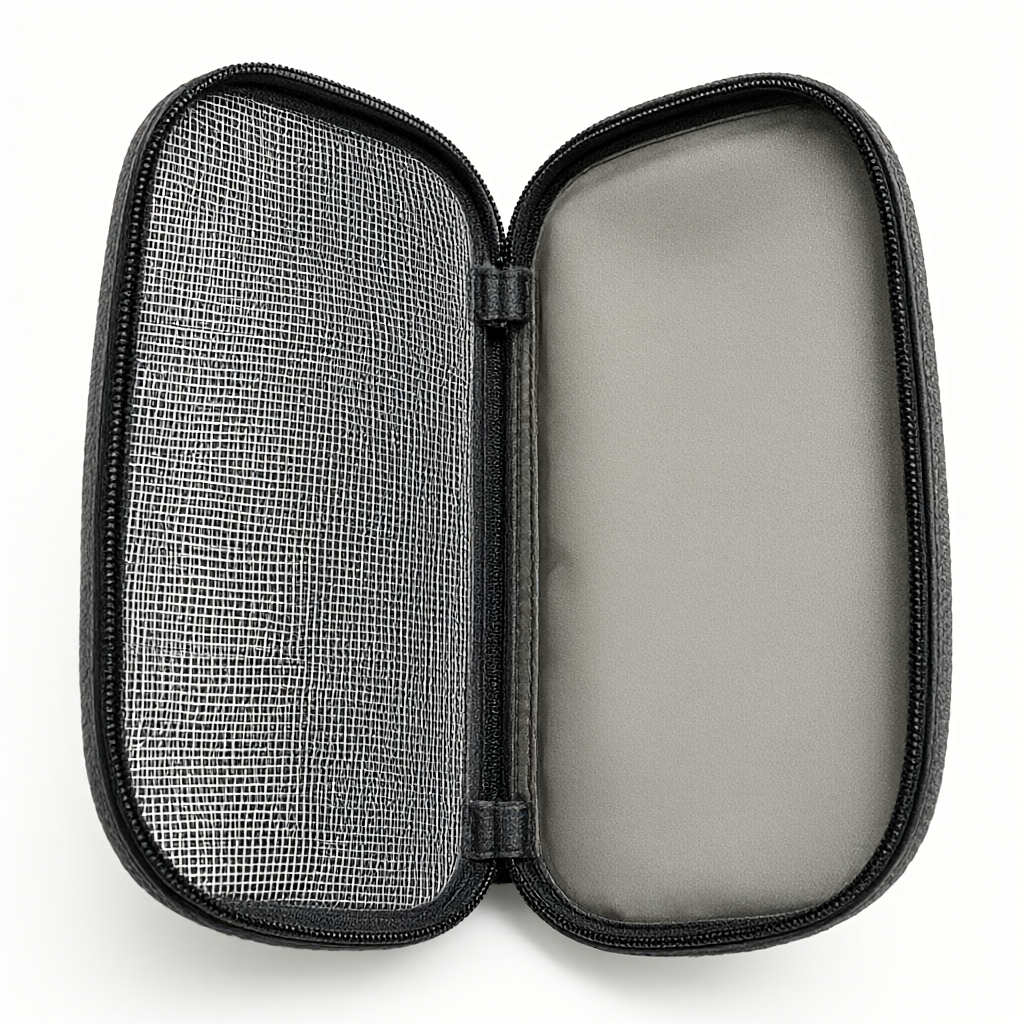
Several recurring errors appear across B2B RF-shielded product sourcing. Awareness of these pitfalls saves time, money, and reputational damage.
Assuming all “RFID-blocking” labels are equivalent. A product labeled “anti-skimmer” may use nothing more than a thin sheet of decorative aluminum tape sewn into a seam — insufficient for meaningful shielding. Always demand measurable attenuation data.
Overestimating what RFID blocking protects against. No RFID travel purse prevents CVV theft, phishing, data breaches, or physical pickpocketing. Positioning it as a complete security solution misleads end consumers and creates unrealistic expectations. Be transparent in your own marketing about what the product does and does not address.
Ignoring frequency specificity. A purse certified only for 13.56 MHz blocking leaves high-frequency UHF RFID tags unprotected. If your target market includes travelers in regions with extensive UHF asset-tracking infrastructure, clarify whether your product’s shielding covers both bands.
Selecting suppliers based on lowest price alone. Low-cost products often use degraded shielding foils that delaminate after repeated flexing, or they omit RoHS-compliant adhesives. The per-unit savings rarely compensate for returns, chargebacks, and negative reviews.
Failing to test samples before approving production. Even a single thoroughly evaluated sample — tested with an actual RFID skimmer device at multiple angles and distances — reveals far more than a supplier brochure ever will. Treat the sampling phase as your most important quality checkpoint.
How to Source and Verify OEM/ODM Suppliers?
Sourcing a private-label RFID travel purse — or expanding an existing EDC catalog with this category — requires a structured approach. Start by identifying manufacturers who specialize in RF-shielded pocket accessories rather than general bag producers who add shielding as an afterthought. The difference shows up in material science knowledge, testing rigor, and consistency of output.
Evaluate each candidate against the specification matrix established earlier — certifications, test data transparency, customization breadth, and lead-time reliability. Then narrow your field to two or three suppliers and request physical samples. Conduct your own verification tests if possible: use a handheld RFID skimmer or a NXP MIFARE Classic/EV1 evaluation kit to confirm that cards placed inside the sample remain unreadable beyond the specified proximity threshold.
Also review how each supplier handles post-production support — particularly defect resolution, replacement part availability, and responsiveness to design iteration requests. These factors determine whether the partnership scales as your order volumes grow.
For reference on adjacent product development — such as how metal wallet construction differs from textile-based purses, or how card holder specifications influence broader category design — explore the linked sourcing guides. They illuminate the material and engineering trade-offs that apply across the entire EDC accessory line.
How We Meet These Sourcing Standards?
As a specialist manufacturer in the minimalist EDC wallet and pocket gear space, we approach RFID-shielded travel products with the same technical rigor we apply to every metal wallet and carbon fiber card holder we produce. Our facility holds ISO 9001 certification and undergoes regular BSCI audits, and all materials are tested for RoHS compliance through SGS-recognized laboratories. We conduct internal RF attenuation testing at 13.56 MHz and can provide published results alongside our quotation.
Our in-house CNC machining, laser engraving, and UV printing capabilities mean customization runs from concept artwork to finished retail-ready product without subcontracting delays. Production capacity exceeds 500,000 units monthly, with sample lead times of approximately seven days and a standard MOQ beginning at 300 pieces. We serve Amazon FBA sellers, promotional distributors, EDC brand owners, and corporate gift buyers across North America, Europe, Australia, and Southeast Asia — and we are available to discuss your project requirements. Contact Our Team to begin the conversation.
RFID Travel Purse: Where Can You Verify the Data and Sources?
- ISO/IEC 14443 — www.iso.org
- EMVCo’s contactless specifications — www.emvco.com
- EDC wallets and minimalist wallet manufacturing guide — topedcwallet.com
- men’s minimalist wallet materials guide — topedcwallet.com
- card holder — topedcwallet.com
- Contact Our Team — topedcwallet.com
From article to product
Turning this into a product?
Most of what is written here is the difference between a sample that works and one that does not. We can build either — the useful one costs the same.
Keep reading
More on buying guides
wallet with trigger
How Does a Trigger Wallet Work? What Is the Pop-Up Mechanism? The core of…
Readbest bifold wallet for women
What Is a Bifold Wallet? The term “bifold” refers to the fold: the wallet…
ReadMen’s trifold wallets with zipper compartments vs. bifold
At a Glance The three dominant men’s wallet formats differ in panel count, depth,…
Read
About the author
TOPWALLET Editorial Team
TOPWALLET's editorial and engineering desk writes from bench testing at the Shenzhen (Longgang) facility: pull-force and cycle testing, 13.56 MHz shielding measurements, finish trials and factory audits, rather than supplier spec sheets. Every specification in these guides is one we write on a purchase order.
Written on the floor
This article was written by our production and QC team — the people who spec tolerances, run the finishing line and inspect every batch. Where it states a capacity, a pull force or a lead time, it comes from a measurement we made, not a supplier’s catalogue. If a number here disagrees with what your own supplier told you, tell us; several of these articles started as a correction from a buyer.
See how the factory works · Inspection process · Sourcing FAQ
Turning this into a product?
Most of what is written here is the difference between a sample that works and one that does not. We can build either — the useful one costs the same.