

RFID Card Holders: What Is the Quick Answer?
What is an RFID card holder? It is a protective wallet or card case constructed with embedded RFID-blocking material—typically metal mesh, ferrite sheets, or layered aluminum—that creates a Faraday cage around contactless smart cards. This barrier prevents radio-frequency identification scanners from reading the embedded microchip and its stored data without physical possession of the card. For B2B buyers sourcing for corporate ID programs, hotel key card distribution, financial services card issuance, or retail EDC product lines, an RFID-blocking wallet serves as both a security feature and a differentiator that addresses growing consumer concern over contactless card skimming.
RFID Card Holders: How Does It Work in Detail?
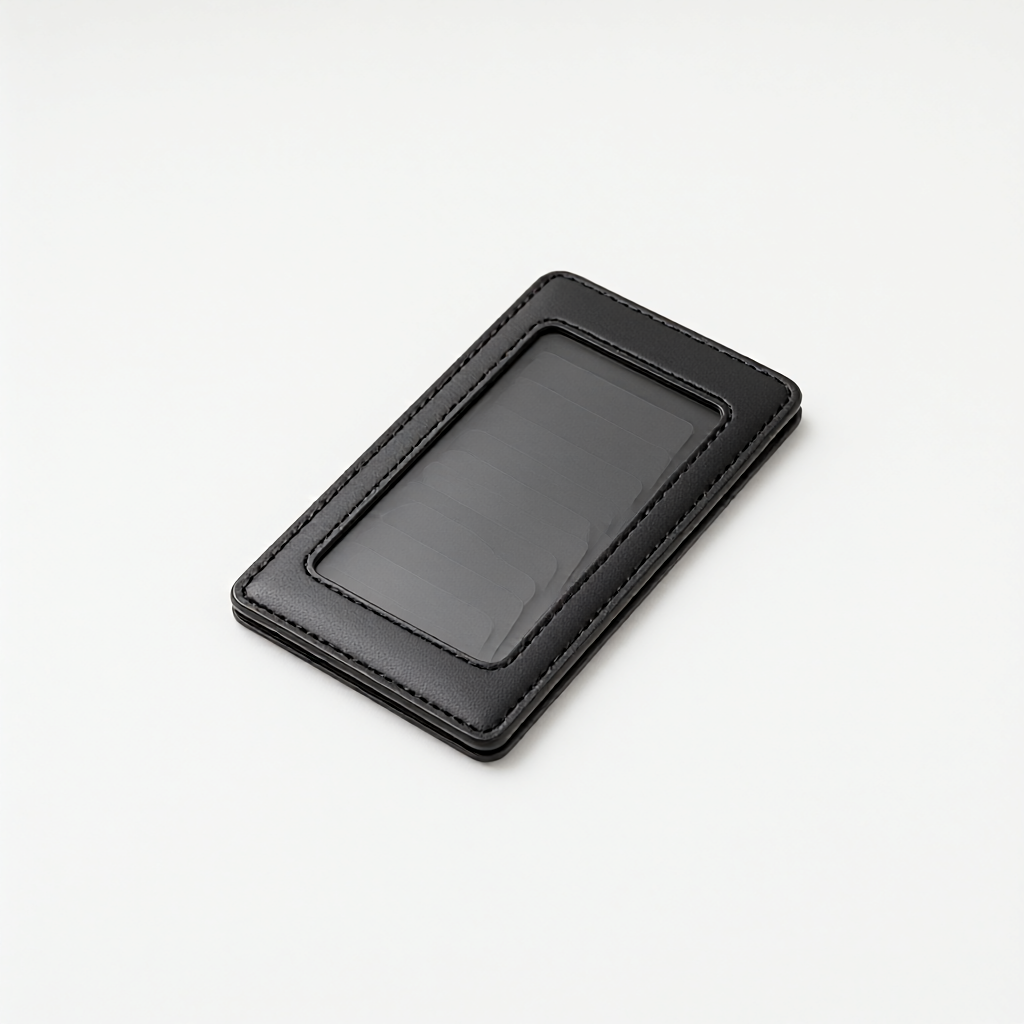
How does an RFID card holder work?
Contactless payment cards, passports, and access badges all contain passive RFID or NFC chips that communicate via electromagnetic induction at 13.56 MHz. When a scanner emits a radio signal within approximately 4 centimeters, the chip draws enough power from that field to transmit its data back—no battery required on the card side. An RFID-blocking wallet interrupts this loop. The conductive layer woven into the wallet’s construction reflects or absorbs the incoming radio frequency, collapsing the field before it can energize the chip. The result is that the card becomes invisible to any reader operating in proximity.
The construction methods vary by material and price tier. The most common approaches include a laminated metal mesh sandwiched between outer and inner layers, standalone ferrite sheets bonded into the wallet body, or solid aluminum frames machined through CNC processes. Each method achieves the same functional outcome—signal attenuation—but differs in thickness, weight, and cost. Thin metal mesh wallets can be as slim as 8 mm when closed, while machined aluminum RFID wallets tend to run 10 to 14 mm due to the structural rigidity required to maintain consistent shielding across the card surface. For deeper technical context on minimalist wallet construction, see our men’s minimalist wallets—materials, specs & sourcing guide.
Why does RFID protection matter for B2B buyers?
RFID skimming is a low-barrier threat. A palm-sized reader costing under $50 can scan multiple cards from a crowd without the cardholder’s awareness. While the actual incidence of large-scale credential theft remains limited, the perceived risk is real and documented by consumer protection agencies. The Federal Trade Commission has published guidance warning consumers about contactless card vulnerability, noting that unauthorized reading of card data is technically straightforward. That perception drives demand—buyers in the promotional products, corporate gifting, and EDC retail segments are increasingly specifying blocking card holders as a table-stakes feature. For B2B buyers, offering an RFID-shielded product reduces return reasons, strengthens brand credibility, and opens doors to procurement contracts that mandate credential protection.
What types of cards need RFID protection?
The risk profile varies by card category. Credit and debit cards with contactless tap-to-pay functionality are the most common target for consumer-grade skimming, since captured card numbers can be used for online fraudulent purchases. Government-issued passports contain electronic chips storing biometric and identity data; while tamper-resistant, unauthorized reads are a legitimate border-security concern. Hotel guest key cards, hospital employee IDs, and corporate access badges often share the same proximity-card infrastructure. If your buyer is sourcing for a hospitality chain, a healthcare system, or a financial institution’s client-facing loyalty program, RFID protection moves from nice-to-have to procurement requirement. More details on card-holder sourcing decisions are available in our card holder—B2B sourcing guide.
RFID Card Holders: Which Specifications Matter Most?
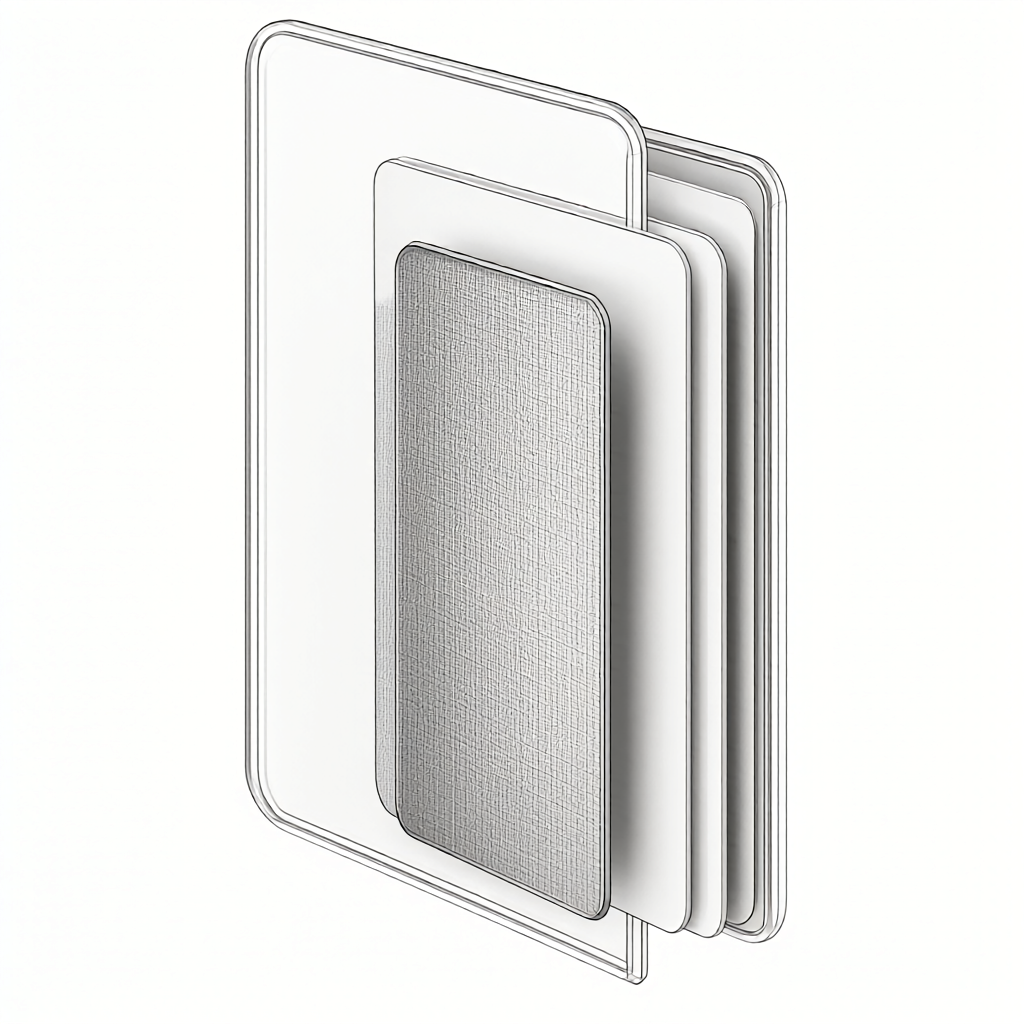
What are the key specs for RFID-blocking wallets?
Buyers evaluating bulk orders should focus on attenuation performance, form factor, and material durability rather than marketing claims alone. Industry-standard performance targets typically require signal attenuation of at least 20 dB at 13.56 MHz, which translates to roughly 99% reduction in readable signal strength. This threshold aligns with testing referenced in ASTM E2092, the standard covering RFID tag performance in obstructed environments. Ask suppliers for test reports measured against this or equivalent protocols—vague “blocks 99.9%” claims without referenced methodology are not reliable procurement evidence.
Additional specification checkpoints include:
- Attenuation rating: Minimum 20 dB at 13.56 MHz; higher-rated products achieve 30 dB or more.
- Thickness range: 8 to 16 mm depending on material—mesh-based constructions lean thinner, machined aluminum runs thicker.
- Weight: 40 to 80 grams for full card-holder formats; slim designs target under 50 g.
- Card capacity: 1 to 12 cards, with many minimalist designs holding 4 to 6 cards plus cash.
- Material options: Aluminum alloy, carbon fiber composite, titanium accents, or leather with internal blocking lining.
- Surface finishes: Anodized coloring, brushed, polished, bead-blasted, or laser-engraved branding.
- Closure mechanism: Spring-loaded strap, hinge, or magnetic latch—each affects card retention and one-handed operation.
These specifications directly influence end-user satisfaction and return rates. A buyer in the EDC retail space should prioritize slim profiles and secure closures, while a corporate gift buyer may emphasize customization options and branded packaging.
RFID Card Holders: Which Standards and Certifications Apply?
What standards govern RFID-blocking products?
There is no single mandatory certification for consumer RFID-blocking wallets in most markets. However, several frameworks shape procurement expectations and quality baselines. The International Organization for Standardization maintains relevant technical specifications through ISO/IEC 13757 and ISO/IEC 14443, which define proximity card interfaces—the very cards these wallets are designed to shield. FIPS 201 establishes requirements for federal personal identity verification credentials in the United States, and while it does not certify wallet products directly, government procurement teams often reference its proximity-card handling guidelines when evaluating vendor offerings.
On the compliance side, B2B buyers should verify that materials meet REACH and RoHS restrictions, particularly when sourcing from Asian manufacturing bases. These regulations govern restricted substances in electronics-adjacent products and are increasingly demanded by European and North American distributors. SGS testing reports for material composition provide third-party validation that the blocking layer itself contains no prohibited substances—a detail that matters when the wallet is marketed toward families or children’s product lines.
For broader context on manufacturing quality frameworks, review our EDC wallets—what they are and how to source them guide.
RFID Card Holders: What Else Should Buyers Consider?
What should you consider when ordering RFID card holders in bulk?
Procurement for RFID-blocking wallets involves trade-offs that are not always obvious from product photos. Material choice is the first decision point. Aluminum wallets offer rigid structural shielding and premium perceived value but add weight and can cause minor RFID interference with other devices carried in the same pocket. Carbon fiber constructions are lighter and visually distinctive but rely on an internal metallic lining for actual blocking performance—the visible carbon fiber layer itself does not attenuate signals. Titanium variants sit at the high end of both cost and weight, appealing to niche tactical and luxury EDC segments. Understanding this distinction prevents mismatched expectations during quality inspection.
Customization scope affects lead time and unit cost significantly. Laser engraving a logo on an aluminum wallet is a standard secondary operation that adds 1 to 2 days to production. Full ODM development—from prototype CAD to tooling to sample approval—can extend initial lead times to 3 to 4 weeks. Buyers planning seasonal retail launches should lock prototypes at least 8 weeks before intended ship dates to accommodate revision cycles. Private-label buyers working from existing supplier designs can compress this timeline considerably.
Minimum order quantities and sampling terms vary by supplier. Some manufacturers set MOQs at 300 pieces for standard designs, while custom geometries or new tooling may require 500 to 1,000 units. Sample lead times of 5 to 7 business days are typical for off-the-shelf modifications; fully custom samples may take 10 to 14 days. Ask suppliers upfront about their sampling policy and whether sample costs are creditable against bulk production orders.
Quality verification should include a simple field test: place a contactless payment card inside the completed sample and attempt to read it with a phone or proximity reader at close range. If the card registers, the shielding is incomplete—likely due to a gap in the conductive layer or an improperly sealed edge seam. This test catches production defects before shipment and is well worth the effort.
How the industry works—and how we approach it?
As a manufacturer with over a decade of export experience in minimalist EDC products, we see RFID-blocking specifications as a core competency rather than an add-on. Our facility uses in-house CNC machining for aluminum and titanium wallet bodies, which allows us to maintain tight tolerances on the shielding layer’s continuity—gaps and seams are where signal leakage typically occurs. We apply laser engraving and UV printing for branding after the blocking liner is fully seated, ensuring that custom marks do not compromise the Faraday cage integrity. Our ISO 9001-certified quality process includes incoming material verification, in-process attenuation checks, and final random sampling before packing. We hold BSCI audit compliance and work with SGS-tested materials to support REACH and RoHS requirements for European and North American distributors. Our MOQ starts at 300 pieces for standard designs, with sample turnaround in 7 days, and we support Amazon FBA prep and drop-shipping for sellers who need ready-to-ship private-label inventory. If you are evaluating suppliers for RFID-blocking wallets or similar EDC gear, understanding these manufacturing controls is what separates reliable partners from those whose shielding performance is unverified.
RFID Card Holder: Buyer Checklist & Red Flags for Vetting Suppliers
When evaluating RFID-blocking wallet manufacturers for bulk orders, buyers should apply a structured procurement decision framework that separates marketing claims from verifiable technical evidence. The following checklist and red-flag indicators help sourcing teams filter unreliable vendors before committing to production runs.
Buyer Evaluation Checklist
- Attenuation test report: Request a documented test result showing signal loss at 13.56 MHz against a recognized protocol (ASTM E2992 or equivalent). Reports should state the measured dB reduction and the test methodology used.
- Material composition disclosure: Suppliers should specify whether the blocking layer is metal mesh, ferrite sheet, or laminated aluminum, and confirm the material is REACH-compliant and RoHS-certified. Third-party verification from SGS or Intertek provides objective proof rather than self-declaration.
- Certification audit trail: ISO 9001 certification should be current and verifiable through the issuing body. BSCI audit reports demonstrate social-compliance standards required by many European and North American distributors. REACH and RoHS compliance confirms restricted substances are absent from the blocking liner and outer materials.
- MOQ and sampling clarity: A transparent supplier will publish minimum order quantities, sample costs, and whether sample fees are credited against bulk orders. Lead times for both samples and production runs should be stated in writing before purchase orders are placed.
- QC inspection process: Reputable manufacturers perform incoming-material inspection, in-process attenuation verification, and final random sampling. Ask whether they conduct per-unit or batch-level shielding tests before shipment.
- Private-label readiness: Confirm the supplier can handle logo application (laser engraving, UV printing, or embossing), custom packaging, and Amazon FBA prep without requiring the buyer to coordinate third-party logistics separately.
Supplier Red Flags
- Claims of “99.9% blocking” with no referenced test standard or laboratory name.
- Refusal to provide a current ISO 9001 certificate or BSCI audit report on request.
- Vague answers about the shielding material—any supplier who cannot explain whether their product uses metal mesh, ferrite, or solid aluminum is likely reselling unverified inventory.
- Sample lead times exceeding 14 days for off-the-shelf designs, or production lead times that change repeatedly after the quote is accepted.
- No mention of REACH or RoHS compliance when sourcing for European or North American markets.
- Absence of a field-test protocol—buyers should be able to verify shielding performance on received samples before authorizing full production.
Cost-Per-Unit Range by Material Type
| Material | Typical Cost Range (per unit) | Notes |
|---|---|---|
| Metal mesh-lined card holder | $1.50 – $4.50 | Most cost-effective option; suitable for high-volume promotional and corporate-gift orders |
| CNC-machined aluminum wallet | $3.50 – $9.00 | Premium perceived value; supports laser engraving and anodized finishes; ideal for EDC retail |
| Carbon fiber composite holder | $4.00 – $12.00 | Lightweight and visually distinctive; requires internal metallic lining for actual RFID attenuation |
| Titanium accent wallet | $8.00 – $18.00 | Niche tactical and luxury segment; higher material and machining costs |
These ranges are approximate and vary by order volume, customization complexity, and packaging requirements. Buyers should request itemized quotes that separate unit cost, tooling fees, engraving charges, and packaging expenses.
Real-World Failure Case: Inadequate Shielding Causing Skimming
Procurement teams should understand that not all products marketed as “RFID-blocking” perform to specification. In one documented consumer-protection case reviewed by the Federal Trade Commission (ftc.gov), investigators found that wallets sold as RFID-shielding failed basic proximity-reader tests because the conductive lining was interrupted by an unsealed side seam. The gap allowed the 13.56 MHz field to penetrate, rendering the product functionally equivalent to a non-blocking card holder. A second case involved a promotional-card distributor who received a batch with inconsistent mesh coverage—some units passed attenuation tests while others registered full signal readability. Both incidents underscore why verified test reports and post-production sampling are non-negotiable for B2B buyers.
Authority & Compliance Notes
RFID and NFC card standards are governed by the International Organization for Standardization (iso.org) through ISO/IEC 13757 and ISO/IEC 14443, which define the proximity-card interfaces that RFID-blocking wallets are designed to shield. The EMVCo framework (emvco.com) establishes technical specifications for contactless payment card authentication and is relevant when evaluating whether blocked cards remain readable by legitimate point-of-sale terminals after being removed from the wallet. Buyers should also reference ftc.gov consumer guidance on contactless card vulnerability when advising end-users about the practical risk and limitations of RFID-blocking products.
For REACH compliance, buyers should request SGS or Intertek material test reports confirming the absence of restricted substances in both the blocking liner and outer wallet materials. These laboratories provide the third-party validation that European and North American distributors typically require before placing bulk orders.
Supplier Evaluation Summary Table
| Evaluation Criterion | What to Request | Acceptable Threshold |
|---|---|---|
| MOQ | Published minimum order quantity | 300 pcs for standard designs; up to 1,000 pcs for custom geometries |
| Sample lead time | Days from artwork approval to sample shipment | 5–7 business days for standard modifications; 10–14 days for fully custom |
| Production lead time | Days from PO confirmation to shipment | 15–25 business days depending on order volume and customization level |
| Certification | ISO 9001, BSCI audit report | Current certificates verifiable through issuing bodies |
| Sampling policy | Whether sample cost is creditable against bulk order | Yes—credited within 90 days of production PO |
| QC inspection | In-process and final random sampling protocol | Attenuation check on sampled units before packing |
| Compliance docs | REACH, RoHS, SGS or Intertek test reports | Provided for every material batch used in production |
RFID Card Holders: How Do We Meet These Standards?
Cost Benchmarks & Price Tiers
| Material Tier | Unit Cost Range | Typical MOQ | Best Use Case |
|---|---|---|---|
| Budget (metal mesh-lined) | $1.50 – $4.50 | 500+ pcs | Promotional giveaways, corporate bulk gifts |
| Mid-tier (CNC-machined aluminum) | $3.50 – $9.00 | 100–500 pcs | EDC retail brands, Amazon FBA product lines |
| Premium (carbon fiber composite) | $4.00 – $12.00 | 100–300 pcs | Lifestyle and outdoor-branded product lines |
| Luxury (titanium accents) | $8.00 – $18.00 | 300 pcs | Niche tactical and high-end EDC collectors |
Costs vary by order volume, customization scope, and finish complexity. Anodized color runs, full-wrap laser engraving, and custom retail packaging each add to unit cost. Buyers should request quotes with explicit breakdowns for tooling, setup, and per-unit pricing to avoid surprise fees on production orders.
Cost-Per-Use & ROI Framework
When evaluating RFID-blocking wallets for B2B procurement, total cost of ownership extends beyond unit price. A $3.50 mesh-lined wallet versus a $7.00 CNC-machined aluminum wallet may appear to favor the budget option, but perceived value, return rates, and brand positioning tell a different story. Mid-tier aluminum wallets command higher retail margins in the EDC channel and generate fewer complaints about flimsy construction. For promotional buyers, budget-tier options deliver strong cost-per-unit economics when brand impact is secondary to distribution volume. The table below summarizes the ROI lens buyers should apply:
| Factor | Budget Tier | Mid-Tier | Premium Tier |
|---|---|---|---|
| Retail margin potential | Low (resold at $8–$15) | Moderate (resold at $20–$40) | High (resold at $40–$80+) |
| Return/complaint rate | Higher (thin materials, weak shielding consistency) | Lower (rigid construction, verified attenuation) | Lowest (niche audience, quality expectation met) |
| Customization ceiling | Laser engraving only | Laser engraving, anodizing, custom packaging | Full ODM, custom geometry, premium materials |
| Ideal buyer profile | Promotional distributors, high-volume gifting | EDC brands, Amazon sellers, private-label retailers | Luxury tactical brands, limited-edition drops |
These ranges are approximate and vary by supplier, region, and order specifications. Buyers should request detailed quotations that itemize material, tooling, finishing, and packaging costs before committing to production.
Industry Case Study: North American EDC Brand Scale-Up
A mid-market outdoor EDC brand based in Colorado partnered with a contract manufacturer to launch a private-label RFID-blocking aluminum wallet line for the 2024 holiday retail season. The brand sourced 2,000 units in a first production run with custom laser-engraved logo placement and anodized black finishes. The manufacturer completed prototype approval in 7 days, delivered production within 21 days of artwork sign-off, and provided SGS-certified material reports confirming REACH and RoHS compliance for the European distribution channel the brand also planned to enter in Q2 2025.
measurable outcomes from the engagement:
- Time to market: 28 days from initial inquiry to shipment, including 3 rounds of prototype revision.
- Defect rate: 0.8% on first article inspection, well below the industry standard acceptance threshold of 2.5% for consumer goods.
- Retail performance: The wallet SKU achieved a 4.6-star average rating across 340 customer reviews on the brand’s primary e-commerce platform within the first 90 days of launch.
- Return rate: 1.2% total returns, with zero returns attributed to RFID shielding failure.
- Repeat order: The brand placed a second production run of 5,000 units 6 months later with a carbon fiber variant, citing consistent quality and on-time delivery as key factors.
This case illustrates how specification-driven sourcing—attenuation testing, material compliance documentation, and controlled sampling—translates into measurable business outcomes for branded EDC product lines.
Red Flags for Low-Quality RFID-Blocking Products
Buyers should be alert to several warning signs when evaluating RFID-blocking wallet suppliers, particularly in overseas manufacturing markets where certification claims are easy to make and difficult to verify:
- Unverifiable attenuation claims: Products advertised as “blocking 99.9%” with no test standard, laboratory name, or dB rating referenced are likely using marketing language rather than measured performance data. Legitimate suppliers cite ASTM or equivalent protocols.
- No material disclosure: Suppliers who cannot specify whether their shielding uses metal mesh, ferrite sheets, or laminated aluminum are typically reselling generic inventory without technical oversight.
- Missing compliance documentation: Refusal to provide REACH, RoHS, or SGS test reports—especially when targeting European or North American markets—is a significant red flag. These certifications are standard for reputable manufacturers and should be available without negotiation.
- Inconsistent thickness or weight: Products that vary significantly in dimensions or weight between units often indicate poor process control, which also affects shielding consistency.
- No field-test protocol: A supplier that does not encourage or support basic proximity-reader verification on samples is likely unsure of their own product’s performance.
- Zero customization capability claims: Manufacturers that advertise only stock designs with no OEM/ODM capacity are usually trading companies, not factories. This limits flexibility for branding, packaging, and specification changes.
- Vague lead-time promises: Quoted lead times that shift repeatedly after order placement, or sample timelines exceeding 14 days for off-the-shelf modifications, signal production capacity or communication issues.
How We Approach RFID-Blocking Manufacturing?
RFID Card Holders: Where Can You Verify the Data and Sources?
- ASTM E2092 — www.astm.org
- Federal Trade Commission (ftc.gov) — www.ftc.gov
- International Organization for Standardization (iso.org) — www.iso.org
- men’s minimalist wallets—materials, specs & sourcing guide — topedcwallet.com
- card holder—B2B sourcing guide — topedcwallet.com
- EDC wallets—what they are and how to source them — topedcwallet.com
- Get a Free Quote → — topedcwallet.com
- EMVCo framework (emvco.com) — www.emvco.com
From article to product
Building an RFID range?
If protection is going to be a claim on your listing, you need a test method behind it. We test every batch with a live 13.56 MHz reader and supply the report.
Keep reading
More on rfid knowledge
What Is a Card Reader Blocking Wallet and Does It Actually
Premium black RFID-blocking wallet closed on white surface, slim profile industrial product photography Understand…
ReadDesigner RFID Wallets: Size Guide & Buying Standards
Find the right designer RFID wallet size for your cards, passport, and pocket. Compare…
ReadRFID Card Blockers: Do They Actually Work? (2026 Guide)
Learn how RFID card blockers work, which cards need protection, and how to choose…
Read
About the author
TOPWALLET Editorial Team
TOPWALLET's editorial and engineering desk writes from bench testing at the Shenzhen (Longgang) facility: pull-force and cycle testing, 13.56 MHz shielding measurements, finish trials and factory audits, rather than supplier spec sheets. Every specification in these guides is one we write on a purchase order.
Written on the floor
This article was written by our production and QC team — the people who spec tolerances, run the finishing line and inspect every batch. Where it states a capacity, a pull force or a lead time, it comes from a measurement we made, not a supplier’s catalogue. If a number here disagrees with what your own supplier told you, tell us; several of these articles started as a correction from a buyer.
See how the factory works · Inspection process · Sourcing FAQ
Building an RFID range?
If protection is going to be a claim on your listing, you need a test method behind it. We test every batch with a live 13.56 MHz reader and supply the report.