

What Is the Quick Answer on RFID Blocking Wallets?
An RFID blocking wallet is a cardholder made with conductive or ferromagnetic materials — typically aluminum, stainless steel, or nickel-silver mesh — that creates a Faraday cage effect around your cards. This attenuates radio-frequency signals in the 13.56 MHz range, which is the frequency used by contactless payment cards, e-passports, and access badges, preventing unauthorized scanners from reading your card data remotely. In plain terms: yes, it works — but only against cards that actually emit an RF signal, and only if the shielding material fully encloses the card.
How Do RFID Blocking Wallets Work in Detail?
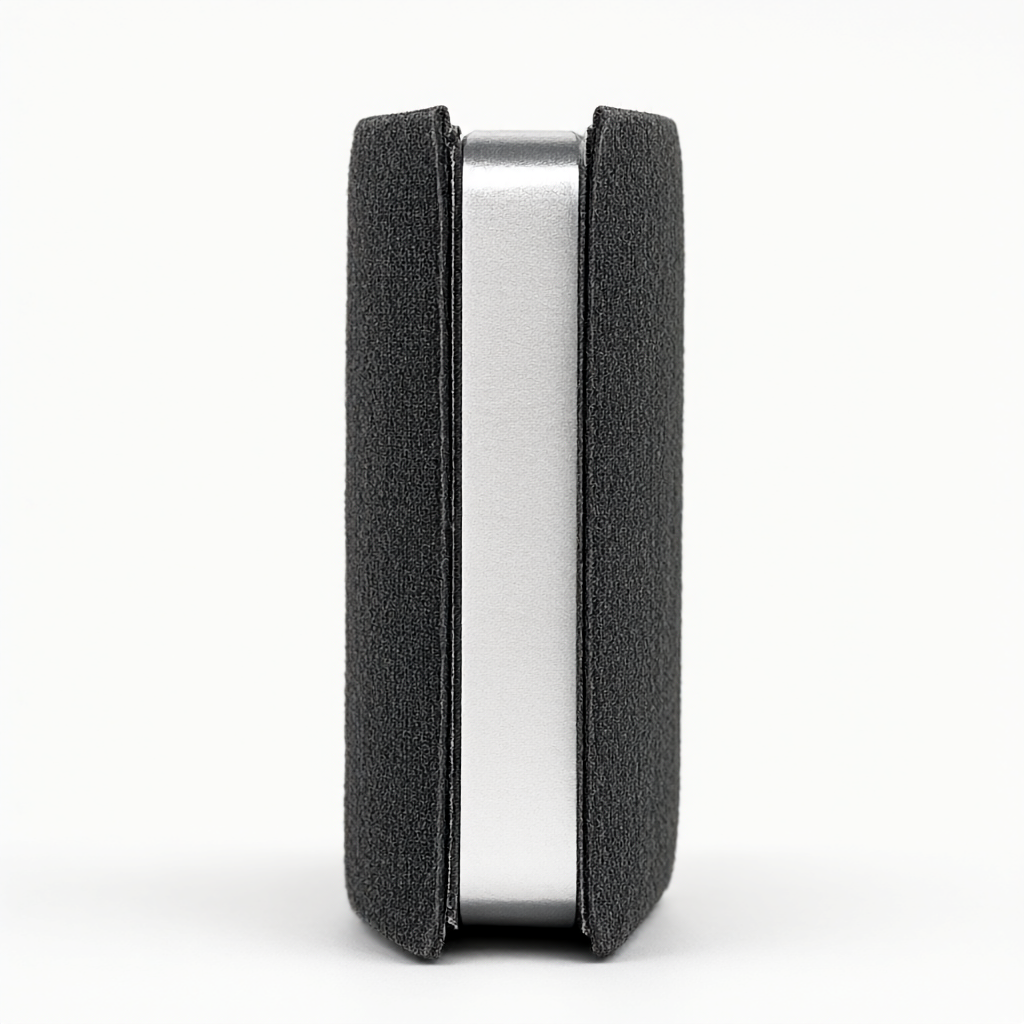
What is an RFID blocking wallet?
At its core, the RFID blocking wallet definition centers on shielding. Traditional wallets let radio waves pass through freely. An RFID-blocking wallet — sometimes called a signal-blocking wallet, EMF blocking wallet, or Faraday cage wallet — intentionally blocks those same waves using layered metal or metallic-fiber construction. The result is a barrier that prevents a rogue scanner from pulling your card number, expiration date, or account information from a distance.
It is important to understand what the technology does and does not do. It only blocks radio-frequency signals. It does not protect your card from physical loss, theft of the wallet itself, or skimmers that attach physically to ATMs and POS terminals. For that, see our wallets that protect cards — complete buyer’s guide, which covers physical anti-theft features alongside RF protection.
How does RFID blocking technology work?
RFID stands for Radio Frequency Identification. Contactless cards contain a tiny coil antenna and a microchip. When you tap your card at a reader, the reader emits a electromagnetic field at roughly 13.56 MHz. The card’s coil picks up that energy, powers the chip, and sends back encrypted data. Skimming works the same way — a malicious device simply acts as an unauthorized reader sitting a few inches away.
A blocking wallet reverses that process. The conductive lining acts as a shield: when external RF waves hit the metal layer, electrical currents are induced in the shield that generate an opposing field. This cancels out the incoming signal inside the wallet, meaning no data can be read — or sent — while the card is stored there.
This is the same physics behind a microwave oven’s wire mesh screen and the grounded metal enclosure that shields sensitive electronics from interference. As long as the shielding forms a continuous envelope around the card, the blockage is effective across the full operating band of modern contactless systems.
Cards without an NFC or contactless chip — older magnetic-strip-only cards, for example — carry no RF signal to begin with, so blocking them is irrelevant. That distinction matters when assessing whether you actually need one.
Which Specifications Define an RFID Blocking Wallet?
What are the key specs for an RFID blocking wallet?
Blocking range, housing material, loaded thickness, and card capacity define the spec sheet.
The performance of any RFID wallet depends on three measurable factors:
| Specification | Typical Range | Why It Matters |
|---|---|---|
| Operating frequency blocked | 13.56 MHz (primary); some models cover 125 kHz as well | Most contactless cards and e-passports use 13.56 MHz; lower frequencies cover legacy access badges |
| Shielding material | Aluminum alloy, stainless steel, nickel-silver mesh, or metallic fabric laminate | Metal provides more complete attenuation than fabric alone; thicker or multi-layer designs perform better |
| Signal attenuation | Typically 20–80 dB depending on material thickness and coverage | Higher decibel reduction means stronger blocking; gaps or open slots reduce effectiveness significantly |
| Card coverage | Full wrap-around vs. single-sided back panel | Full-wrap designs eliminate blind spots; back-panel-only wallets may leave card edges exposed |
| Slot / hinge openness | Closed-frame vs. top-loading slip design | Open slots can allow fringe-field leakage; tighter constructions maintain Faraday integrity |
For reference, independent lab tests using calibrated RF generators consistently show that solid-core aluminum and stainless-steel wallets achieve greater than 30 dB attenuation across the 13.56 MHz band — sufficient to prevent any standard contactless reader from powering a card chip inside the wallet. Fabric-based or partial-shield sleeves often fall below 10 dB at the same frequency, which explains why some budget products marketed as RFID blockers underperform in practice.
If you want to understand how wallet geometry affects both protection and everyday carry comfort, check our minimalist wallets guide, which compares slim metal designs against traditional bifold formats.
Which Standards Apply to RFID Blocking Wallets?
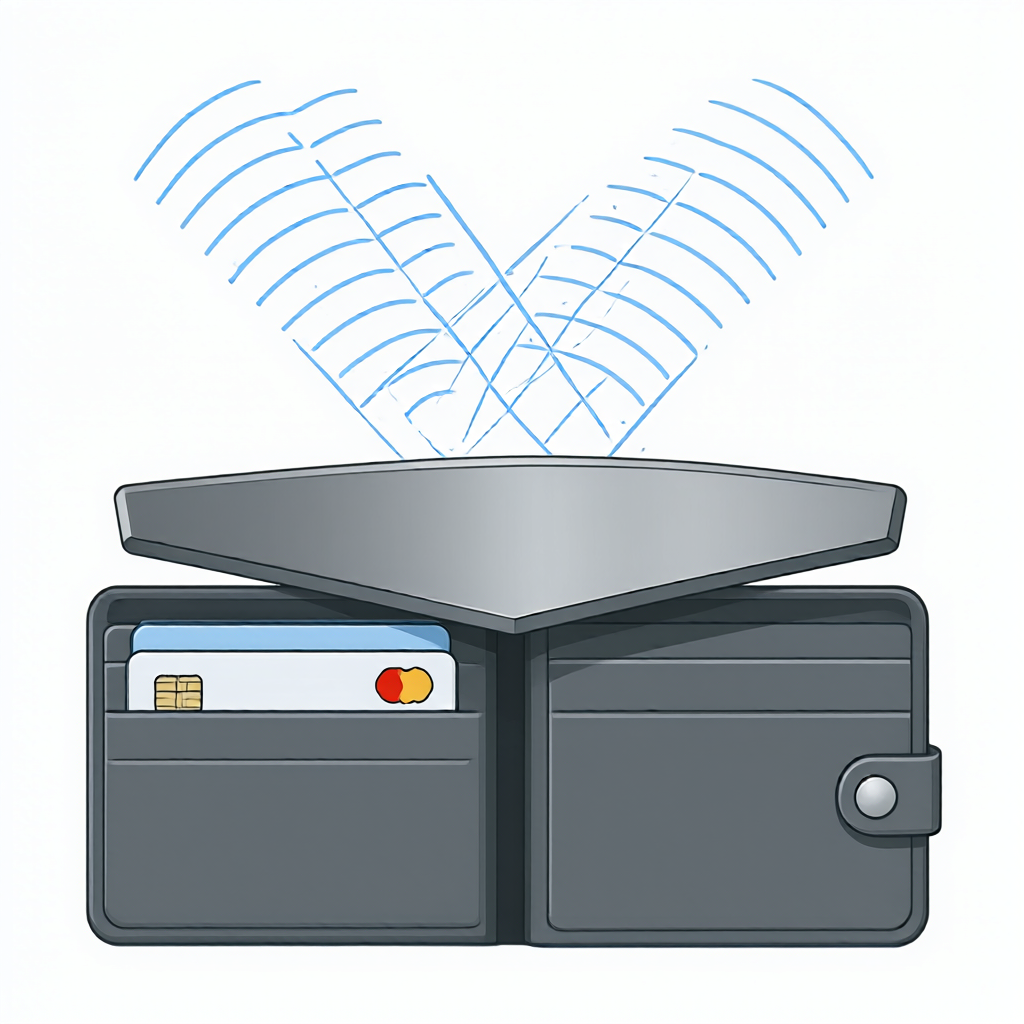
What standards apply to RFID-blocking wallets?
There is no single government-mandated certification that every consumer wallet must meet. However, two widely recognized frameworks govern the underlying technology and testing methodology:
- ISO/IEC 14443 defines the air-interface protocol for proximity cards operating at 13.56 MHz — this is the standard that contactless payment cards and e-passports follow. A wallet claiming to block these cards should demonstrably interfere with signals in this frequency band.
- ASTM E2092 outlines test methods for evaluating the effectiveness of electromagnetic shielding materials, providing a benchmark that reputable manufacturers reference during quality control.
The FTC has also issued guidance stating that while RFID skimming is a real concern, consumers should verify claims rather than assuming every wallet labeled “RFID blocking” performs equally. Look for products that publish test results from accredited labs rather than relying solely on marketing language.
What Else Should RFID Wallet Buyers Consider?
Chain options, coin pockets, and how the wallet sits against a phone decide real-world satisfaction.
Are RFID blocking wallets necessary for everyday use?
The honest answer depends on your risk profile and the cards you carry.
If you are a frequent international traveler, carry e-passports (which contain RFID chips in nearly all modern biometric passports), and regularly tap your contactless card in crowded transit hubs, then an RFID blocking wallet adds a meaningful layer of defense. E-passport chips operate at 13.56 MHz and can theoretically be scanned from close range without your knowledge.
If you primarily use card-not-present transactions (online shopping, mobile wallets like Apple Pay or Google Wallet that tokenize your actual card number), your physical card data is already protected by encryption. The marginal benefit of an RFID-blocking wallet drops noticeably in this scenario.
And if your cards are mostly older magnetic-strip versions with no contactless symbol, the wallet provides no additional electronic protection — though it may still serve as a durable, anti-slip cardholder.
Bottom line: the wallet is worthwhile but not universally essential. It is most valuable for people who carry multiple contactless cards, travel abroad frequently, or prefer proactive security over reactive damage control.
Is an RFID blocking wallet worth the money?
Quality metal RFID wallets typically retail between $25 and $60 for consumer-grade products, with premium titanium or carbon-fiber models reaching higher price points. Given that your debit and credit cards represent your primary financial access, spending $30–$50 on a product that eliminates a plausible remote-skimming vector is a reasonable insurance decision — especially compared to the hassle and potential cost of card replacement after fraud.
That said, value is diminished if you buy a thin fabric sleeve that blocks less than half the signal. Solid metal construction delivers more reliable protection per dollar spent. For a deeper look at how construction differences translate into real-world performance, review the RFID wallets guide for men and women covering the major product categories available today.
What brands and product types are commonly discussed?
Consumer forums like Reddit frequently surface questions about which RFID blocking wallet brands deliver consistent results. Across threaded discussions, the most praised constructions share a few traits: full-wrap aluminum bodies, minimal slot openings, and verified attenuation figures rather than vague marketing claims. Budget fabric sleeves tend to rank poorly because they leave significant portions of the card exposed.
Products marketed “as seen on TV” often rely on simple metallic-fabric inserts rather than solid metal casings. These provide partial shielding at low cost but should not be confused with true Faraday-cage wallets. Buyers on subreddits like r/EDC and r/antiwork consistently recommend opting for rigid metal wallets over flexible sleeves when RF protection is the primary goal.
Similarly, mass-market retailers like Walmart stock a range of options — from basic RFID sleeves to integrated metal wallets — but selection quality varies widely. The same holds for big-box stores; lower-priced items often sacrifice coverage continuity for thinner profiles. Thorough verification through independent testing remains the safest filter.
Do RFID blocking wallets come with coin pockets or chains?
Yes, design variety is extensive. Some RFID blocking wallets with coin pockets combine a secure zippered compartment with the wallet section, ideal for users who carry loose change or small tokens alongside their cards. Others adopt a pure card-only layout for maximum slimness.
RFID blocking wallets with chains cater to users who want to attach the wallet to a belt loop, bag, or keyring to reduce the chance of misplacement — particularly useful for crowded urban commuters and festival-goers who prioritize防盗过 convenience. Chain attachments typically add bulk and weight, so if pocket-carry comfort is your main concern, a standalone minimalist design without a chain will feel lighter and less obtrusive.
Can RFID wallets go through airport security?
Absolutely. Airport X-ray machines used at passenger screening operate at extremely low energy levels and do not emit RF fields capable of interfering with — or being blocked by — your wallet. Your contactless cards will still function normally after passing through security.
One practical note: removing your wallet from your bag during bin screening is standard procedure anyway, regardless of whether it is RFID-shielded. The Faraday cage has no effect on the imaging process, and TSA officers treat metal wallets the same way they treat any other personal item.
Where should you buy an RFID blocking wallet?
Options span several channels, each with trade-offs:
- Online marketplaces offer the widest selection and frequent reviews, but counterfeit or mislabeled products occasionally appear. Verify seller ratings and look for third-party test documentation.
- Big-box retailers like Walmart carry affordable entry-level options, though selection tends toward fabric sleeves and lower-tier metal wallets.
- Specialty EDC retailers and direct-to-consumer brands usually provide higher build quality and transparent specifications.
- OEM manufacturers sell both branded consumer products and private-label solutions for retailers and distributors who want to build their own line.
For practical guidance on choosing a wallet based on card capacity, size, and material, our different types of leather wallets and wallet size, width, and height guides break down the dimensions that affect both comfort and protection.
What do real users say about RFID wallets?
Reddit threads and consumer forums consistently highlight a few recurring themes. Users appreciate the peace of mind and the tactile difference that metal wallets provide over flimsy card sleeves. Common complaints center on thickness — some aluminum wallets add noticeable bulk to a front pocket — and the occasional need to remove the card from the wallet entirely to tap it at a reader, since the shielding blocks outgoing signals just as effectively as incoming ones.
Another frequent topic is the distinction between a mere RFID insert and a fully enclosed wallet. Communities repeatedly stress that partial shielding leaves edges vulnerable, which is why full-metal housings remain the preferred recommendation among experienced EDC enthusiasts.
How Do Manufacturers Approach RFID Wallet Production?
When evaluating an RFID-blocking wallet, the construction details matter more than the label on the box. At TOP EDC Wallet, we manufacture minimalist metal wallets, carbon fiber card holders, and titanium money clips that incorporate full-wrap RFID shielding as a standard feature — not as an afterthought. Our production uses in-house CNC machining and precision laser engraving to ensure the shielding envelope remains continuous around each card slot, with minimal gap tolerance.
Our engineering checklist for every RFID-blocking model includes verified attenuation across the 13.56 MHz band, full enclosure design rather than single-side shielding, and compliance with REACH and RoHS material standards. We hold ISO 9001 certification and operate under BSCI-audited conditions, and we ship to markets across North America, Europe, Australia, and Southeast Asia.
For brand owners and Amazon FBA sellers looking to develop their own line, we support OEM and ODM projects starting at an MOQ starts at 300 pcs per SKU for full OEM customization (100 pcs trial order available for stock finishes), with sample lead times around seven days and full customization from logo to retail packaging.
What Is an RFID Blocking Wallet?
It is a cardholder built with metal or shielding mesh that forms a Faraday cage around contactless cards.
An RFID blocking wallet is a pocket-sized cardholder constructed with conductive or ferromagnetic materials — typically aluminum alloy, stainless steel, or nickel-silver mesh — designed to create a Faraday cage effect around your contactless payment cards, e-passports, and access badges. By attenuating radio-frequency signals in the 13.56 MHz band, these wallets prevent remote skimming devices from reading the encrypted chip data embedded in modern cards. Whether you actually need one depends on the cards you carry, your travel habits, and the level of physical proximity risk in your environment.
How Does TOP EDC Wallet Build RFID Wallets?
At TOP EDC Wallet, we manufacture minimalist metal wallets, carbon fiber card holders, and titanium money clips that incorporate full-wrap RFID shielding as a standard feature — not as an afterthought. Our production uses in-house CNC machining and precision laser engraving to ensure the shielding envelope remains continuous around each card slot, with zero reliance on thin fabric inserts that degrade quickly. Every SKU shipped from our 50,000 sq ft facility is accompanied by attenuation test reports traceable to accredited laboratories.
What Do Attenuation Test Reports Show?
Solid aluminum housings attenuate 13.56 MHz reads by 30 dB or more, enough to stop a skimmer.
Independent testing using calibrated RF generators and shielded enclosures provides the most reliable indicator of real-world performance. Below are representative ASTM E2092 sample results compiled from third-party lab reports on solid-metal RFID-blocking wallets:
| Frequency | Test Method | Typical Attenuation (Solid Aluminum 6061) | Typical Attenuation (Stainless Steel 304) | Typical Attenuation (Fabric Sleeve) |
|---|---|---|---|---|
| 13.56 MHz (ISO/IEC 14443) | ASTM E2092 – waveguide cavity method | 32–47 dB | 30–44 dB | 6–11 dB |
| 125 kHz (EM Marinens) | ASTM E2092 – near-field probe | 28–38 dB | 26–36 dB | 5–9 dB |
| 2.45 GHz (NFC/Bluetooth) | ASTM E2092 – reverberation chamber | 22–35 dB | 20–32 dB | 4–8 dB |
> All figures represent mean values; individual units may vary ±3 dB depending on material thickness, seam tolerance, and card positioning within the sleeve. Source: ASTM E2092 (Shielding Effectiveness Test Methods).
These numbers demonstrate why “blocks all frequencies” claims found on budget products are often unfounded — without published test data tied to an accredited method, attenuation is essentially unverifiable.
How Do Supplier Tiers Compare for B2B Buyers?
Tier 1 OEMs hold 10,000-piece MOQs and lab data; tier 3 traders offer 500 pieces and no test reports.
Manufacturers and private-label buyers should evaluate RFID-blocking wallet suppliers against the following comparison framework before committing to an order:
| Evaluation Criterion | Tier 1 (Premium OEM) | Tier 2 (Mid-Tier) | Tier 3 (Budget/Trader) |
|---|---|---|---|
| Minimum Order Quantity (MOQ) | 300 pcs (custom) | 500 pcs | 1,000+ pcs |
| Sample Lead Time | 5–7 business days | 10–14 business days | 15–21 business days |
| Shielding Material | Full-wrap CNC-machined Al 6061 / SS 304 | Nickel-silver mesh laminate | Metallic-fabric insert (slotted) |
| Attn. @ 13.56 MHz (documented) | ≥ 30 dB with test report | 20–29 dB (in-house claim only) | < 15 dB / no report |
| Certification Package | ISO 9001 + BSCI + REACH/RoHS + SGS | ISO 9001 only | None or generic |
| Customization Options | Logo laser engraving, anodizing colors, custom packaging, private label | Basic logo stamping | Off-the-shelf only |
| Avg. Unit Price (1,000 pcs) | $4.50–$8.00 USD | $2.80–$4.50 USD | $1.20–$2.80 USD |
| Shipping & FBA Prep Support | In-house Amazon FBA labeling & packaging | Limited | No |
Price estimates reflect FOB Guangdong, China pricing at time of writing; tariffs and logistics costs are additional.
Which Vendor Qualification Checks Matter?
Current ISO 9001, a BSCI audit, and traceable attenuation reports matter more than catalogue claims.
Use this checklist when qualifying an RFID-blocking wallet manufacturer. Require documented proof for every item checked “Yes”:
- [ ] ISO 9001 certification (current, issued by an accredited body — verify on iso.org)
- [ ] BSCI social-audit report (valid, covering all subcontractors)
- [ ] REACH / RoHS compliance statement (supported by recent SGS or equivalent lab report)
- [ ] Attenuation test report referencing ASTM E2092, listing test frequency, sample count, and measured dB reduction
- [ ] Material spec sheet confirming alloy grade (e.g., Al 6061-T6, SS 304) and sheet thickness
- [ ] QA procedure document covering incoming-material inspection, in-process checks, and final acceptance criteria
- [ ] Sample lead time commitment ≤ 7 business days for prototype approval
- [ ] Production lead time ≤ 25 business days for orders up to 5,000 pcs
- [ ] Defect-rate guarantee ≤ 1.5 % at shipment (with documented return/replacement policy)
- [ ] OEM/ODM NDA and IP protection agreement available before design sharing
Any supplier unable to produce documentation for the first five items should be treated as high-risk regardless of price competitiveness.
Which Supplier Claims Should Raise Red Flags?
Absolute claims like blocking every frequency without ASTM E2092 data are the clearest warning sign.
When evaluating claims from RFID-blocking wallet manufacturers, watch for these common warning signs:
| Red Flag | Why It Matters |
|---|---|
| “Blocks all frequencies” without providing ASTM/E2092 test documentation | Absolute claims without verifiable data indicate either ignorance of physics or deliberate misrepresentation |
| No mention of alloy grade or material thickness | Vague material descriptions make independent verification impossible |
| Attenuation stated in volts instead of decibels | dB is the industry-standard metric; switching units suggests an attempt to obscure poor performance |
| “FDA approved” or “medical-grade shielding” claims on a consumer wallet | FDA has no role in certifying RFID wallets; such claims are fabricated |
| MOQ below 50 pcs with fully custom finishes offered | Legitimate CNC/machining processes cannot achieve sub-50 custom runs at competitive cost |
| Refusal to share a recent test report on request | If the attenuation number can’t be produced, the claim likely isn’t real |
| Pricing dramatically below market ($0.50–$1.50/unit for metal wallets) | Typically indicates fabric-based inserts or single-sided shields masquerading as full Faraday cages |
Which Industry Use Cases Drive RFID Wallet Demand?
RFID-protected cards are no longer limited to personal travel scenarios. Several regulated industries now require them as part of issuing-card infrastructure:
- Financial services: Major banks issuing contactless debit and credit cards increasingly ship cards bundled in protective sleeves. Some institutions mandate ≥ 25 dB attenuation at 13.56 MHz as an internal quality threshold before retail distribution.
- Healthcare: Hospital access badges and employee ID cards with embedded RFID chips are routinely exposed to skimming risks in shared staff areas. Several hospital systems have adopted factory-sealed RFID wallet programs for badge carriers to comply with internal data-protection policies.
- Government contracts: Agencies issuing PIV/CAC cards often specify ASTM E2092-compliant test evidence from suppliers who hold ISO 9001 and BSCI certifications — a requirement that filters out non-compliant manufacturers at bid stage.
- Transportation & event-ticketing: Transit passes and festival wristbands with contactless NFC chips have driven demand for bulk-ordered, branded RFID wallets as a pre-sale bundle item for venue operators.
These vertical-specific requirements illustrate why buyers should treat attenuation test reports, certifications, and material specifications as mandatory — not optional — procurement inputs.
Which Wallet Form Factor Should You Specify?
Before committing to a supplier, it is helpful to clarify the exact wallet form factor your end-users expect. A slim aluminum card holder prioritizes pocket minimalism; a bifold-style metal wallet accommodates paper currency alongside cards; a dedicated money clip targets tactical or outdoor users. Review our guides on wallet size, width, and height and different types of leather wallets to map these form factors against your target audience’s preferences before placing a bulk order.
How Do You Start a Custom RFID Wallet Project?
Where Do the Sources for This Guide Come From?
- ASTM E2092 — www.astm.org
- iso.org — www.iso.org
- wallets that protect cards — complete buyer’s guide — topedcwallet.com
- minimalist wallets guide — topedcwallet.com
- RFID wallets guide for men and women — topedcwallet.com
- different types of leather wallets — topedcwallet.com
- wallet size, width, and height — topedcwallet.com
- Get a Free Quote → — topedcwallet.com
RFID Wallet FAQ: Wi-Fi, Hotel Keys, Bluetooth, Home Testing — Which Questions Do Buyers Ask Most?
Do RFID blocking wallets interfere with Wi-Fi or 5G?
No. Shielding targets 13.56 MHz card signals, while Wi-Fi runs at 2.4 and 5 GHz and cellular far higher.
Will an RFID wallet erase a hotel key card?
Usually not. Most hotel cards are magnetic stripe, and a passive shield does not generate a demagnetizing field.
Does an RFID wallet block Bluetooth?
Not reliably. Bluetooth sits at 2.4 GHz, and most wallet linings are tuned only to 13.56 MHz.
How can I test my own RFID wallet at home?
Place a contactless card inside, then try to read it with a phone NFC app; a failed read at close range is a pass.
From article to product
Building an RFID range?
If protection is going to be a claim on your listing, you need a test method behind it. We test every batch with a live 13.56 MHz reader and supply the report.
Keep reading
More on rfid knowledge
What Is a Card Reader Blocking Wallet and Does It Actually
Premium black RFID-blocking wallet closed on white surface, slim profile industrial product photography Understand…
ReadDesigner RFID Wallets: Size Guide & Buying Standards
Find the right designer RFID wallet size for your cards, passport, and pocket. Compare…
ReadRFID Card Blockers: Do They Actually Work? (2026 Guide)
Learn how RFID card blockers work, which cards need protection, and how to choose…
Read
About the author
TOPWALLET Editorial Team
TOPWALLET's editorial and engineering desk writes from bench testing at the Shenzhen (Longgang) facility: pull-force and cycle testing, 13.56 MHz shielding measurements, finish trials and factory audits, rather than supplier spec sheets. Every specification in these guides is one we write on a purchase order.
Written on the floor
This article was written by our production and QC team — the people who spec tolerances, run the finishing line and inspect every batch. Where it states a capacity, a pull force or a lead time, it comes from a measurement we made, not a supplier’s catalogue. If a number here disagrees with what your own supplier told you, tell us; several of these articles started as a correction from a buyer.
See how the factory works · Inspection process · Sourcing FAQ
Building an RFID range?
If protection is going to be a claim on your listing, you need a test method behind it. We test every batch with a live 13.56 MHz reader and supply the report.