

Pocket Organizer Wallets: What Is the Quick Answer?
A pocket organizer wallet is a compact, multi-functional carrying solution designed to consolidate everyday essentials — cards, cash, coins, keys, and small tools — into a single slim profile that fits comfortably in a front or back pocket without bulk. Unlike traditional bifolds that separate compartments haphazardly, these wallets use engineered layouts such as bungee tension systems, modular card slots, integrated money clips, and RFID-shielded panels to keep items organized and secure while maintaining a low silhouette. For B2B buyers, the value lies in predictable specifications, verifiable standards, and manufacturer capability to customize at scale.
Pocket Organizer Wallets: How Does It Work in Detail?
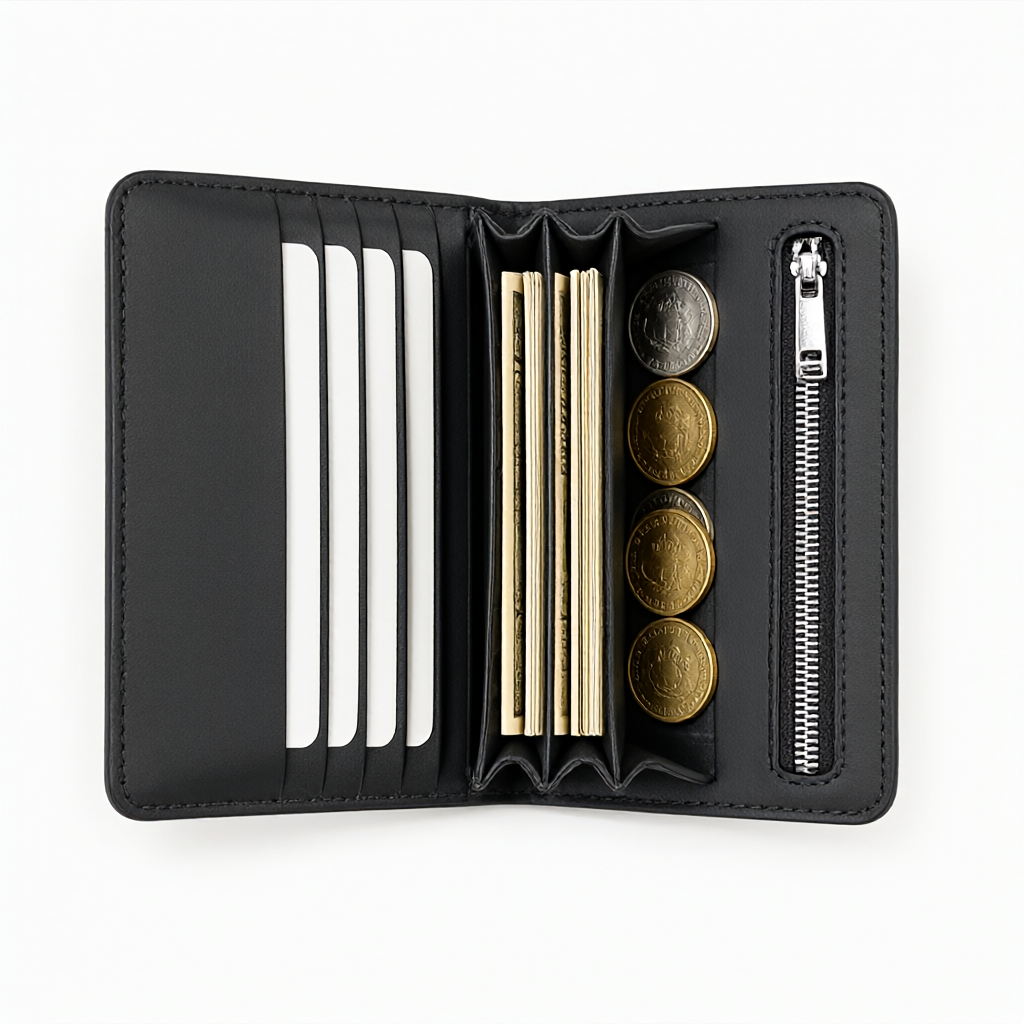
What is a pocket organizer wallet and what is its core purpose?
At its foundation, a pocket organizer wallet exists to solve a specific friction: people carry fewer physical items than they did decades ago, yet those remaining items still create discomfort, visibility issues, and security vulnerabilities when stored in conventional wallets. The organizer addresses this by combining capacity management, security, and comfort into one product class.
Key components typically include:
- Card storage system — rigid slots, elastic loops, or hybrid arrangements
- Cash retention mechanism — money clip, fold slot, or tension band
- Optional modules — coin pouch, key ring, tool compartment
- Security layer — RFID-blocking material integrated into card slots or panel
- Shell material — aluminum, carbon fiber, titanium, leather, or synthetic polymer
The organizing function is not aesthetic alone; it reduces the likelihood of dropped cards, lost cash, and compromised payment data. A well-designed unit lets a wearer access their primary card in under two seconds while keeping backup cards and ID separated but contained.
How does a pocket organizer wallet consolidate everyday items?
The consolidation happens through spatial engineering rather than simply making the wallet smaller. Manufacturers achieve this by establishing a layer hierarchy:
| Layer | Function | Typical Placement |
|---|---|---|
| Front layer | Primary card, daily ID | Top slot, thumb-accessible |
| Middle layer | Secondary cards, cash | Elasticized or slotted zone |
| Rear layer | Backup cards, coins, keys | Back pocket or module bay |
| External | Money clip, decorative plate | Behind main body |
A bungee-style system uses rubberized cords under tension to grip a stack of cards without individual slots. A modular approach provides removable plates that swap between card-only, cash+clip, or full-feature configurations. The hybrid model combines both — rigid slots for frequently accessed cards plus an elastic zone for bulk.
Capacity varies by design, but typical ranges are:
- 4–8 cards in slim front-pocket profiles
- 6–12 cards plus cash in mid-range designs
- 8–16 cards plus optional coin/key modules in larger tactical units
Thickness directly influences pocket fit. A well-engineered unit sits between 6 mm and 14 mm depending on load; anything above 18 mm begins to cause front-pocket discomfort for most body types.
What common materials are used in these wallets?
Material selection determines durability, weight, feel, and cost. The four dominant categories are:
Aluminum (6061 or 7075 alloy)
Lightweight, corrosion-resistant, and affordable. Surface treatments include bead blasting, anodizing (color options), and CNC engraving for branding. Thickness tolerance typically ±0.1 mm. Weight range 35–65 g depending on size.
Carbon fiber (epoxy-impregnated, cured)
High strength-to-weight ratio, scratch-resistant surface, premium aesthetic. Not magnetic, so it does not interfere with RFID functionality unless combined with a metal substrate. Cost is higher than aluminum; typical weight 30–50 g.
Titanium (grade 2 or grade 5)
Superior strength and biocompatibility; naturally hypoallergenic. Heavier than aluminum but lighter than steel at equivalent strength. Excellent for medical-sensitive users and premium positioning. Weight 50–80 g. Cost per unit is significantly higher.
Leather (full-grain, top-grain, genuine)
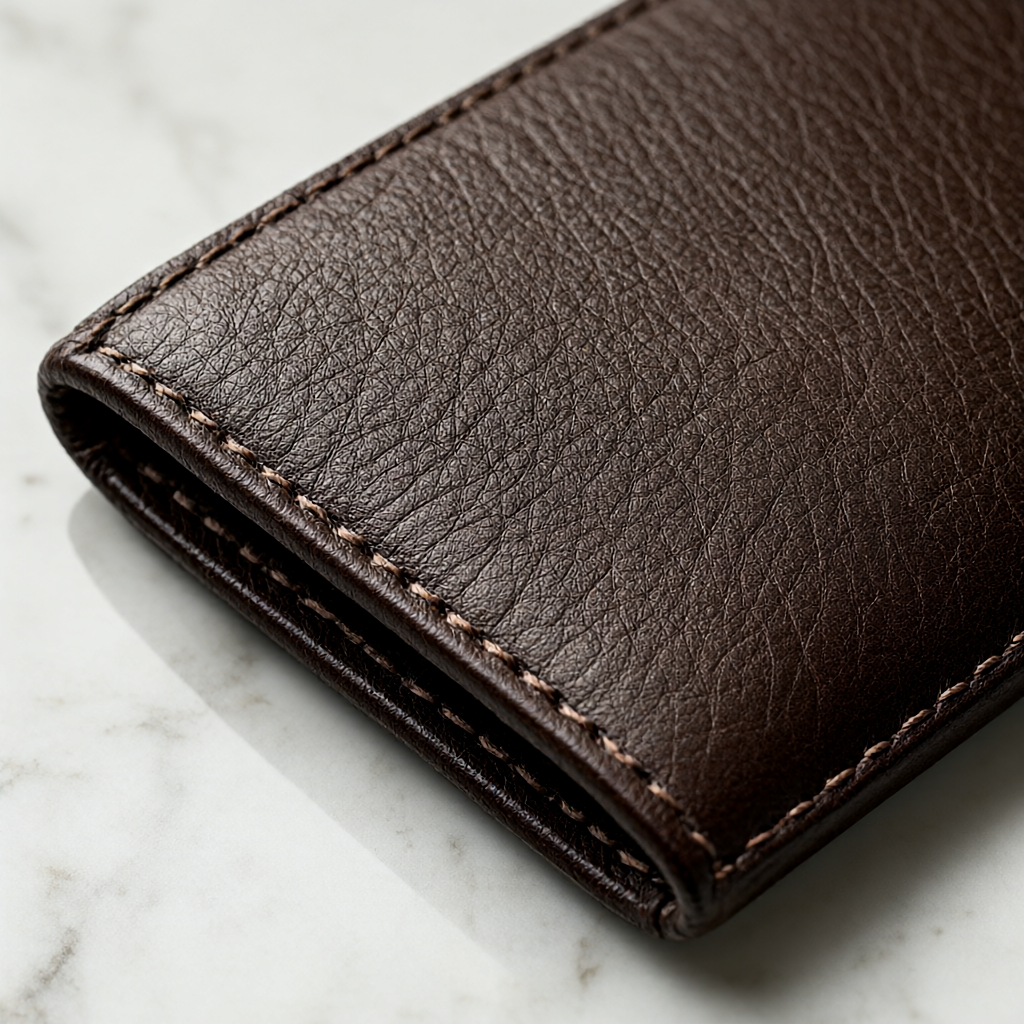
Full-grain offers the best longevity and develops patina. Top-grain is sanded for uniform appearance. Genuine leather is bonded or split leather laminated to a backing — acceptable for low-cost promotional lines but less durable. Leather requires conditioning; it expands and contracts with humidity, which affects slot tightness over time.
Other materials appear in niche applications — polycarbonate shells for ultra-slim profiles, nylon or Cordura® for outdoor/tactical lines, and silicone inserts for grip. Material choice should align with target market: aluminum suits budget-conscious brands, carbon fiber targets premium consumers, titanium serves niche outdoor and medical audiences, and leather appeals to traditional aesthetics.
What key design features should you look for?
When evaluating a pocket organizer wallet, the following features determine whether it will perform reliably in real-world use:
RFID-blocking technology — A copper-nickel or iron-based mesh laminated between shell layers creates a Faraday cage around card slots. This blocks 13.56 MHz frequencies used by contactless payment cards and ePassports. Effective blocking requires continuous coverage around each slot; gaps allow signal leakage.
Tension retention system — Elastic bungees or spring-loaded clips hold cards without relying on friction alone. Bungee systems degrade over 12–24 months of heavy use; quality units use medical-grade silicone or thermoplastic elastomer cords rated for 10,000+ stretch cycles.
Slim profile engineering — Edge chamfering, rounded corners, and material thickness optimization prevent pocket digging and improve comfort during prolonged sitting. A 9 mm unloaded厚度 with 8 mm loaded厚度 is considered good; below 7 mm often sacrifices capacity; above 12 mm begins to create bulk complaints.
Modular flexibility — Swappable plates or add-on modules let buyers configure units for different use cases (travel, daily carry, outdoor). This increases perceived value and allows brands to offer tiered SKUs from a single base platform.
Laser engraving compatibility — Flat metal surfaces accept high-contrast laser marks without obscuring functional areas. Engraving depth of 0.02–0.05 mm preserves surface integrity while delivering permanent branding.
Drop and impact resistance — Aluminum and carbon fiber units survive typical pocket drops without denting or deformation. Titanium offers the highest impact resistance; leather absorbs shock but shows scuffing.
How do they compare to traditional bifolds?
The comparison breaks down along five dimensions:
| Dimension | Traditional bifold | Pocket organizer wallet |
|---|---|---|
| Capacity | 6–12 cards + cash, bulky when full | 4–12 cards + cash, slim even when loaded |
| Profile | 15–25 mm when full | 6–14 mm when loaded |
| Organization | Cards loosen over time; cash folds messily | Engineered slots and tension maintain order |
| Security | No RFID protection unless added separately | Integrated RFID-blocking common |
| Durability | Leather stretches; stitching fails | Metal/synthetic shells resist deformation |
The trade-off is clear: organizers sacrifice some raw capacity for dramatic improvements in comfort, organization, and security. For buyers whose customers prioritize minimalism and reliability, the organizer wins. For buyers serving customers who carry large amounts of cash and receipts, a hybrid design with expandable zones may be preferable.
Pocket Organizer Wallets: Which Specifications Matter Most?
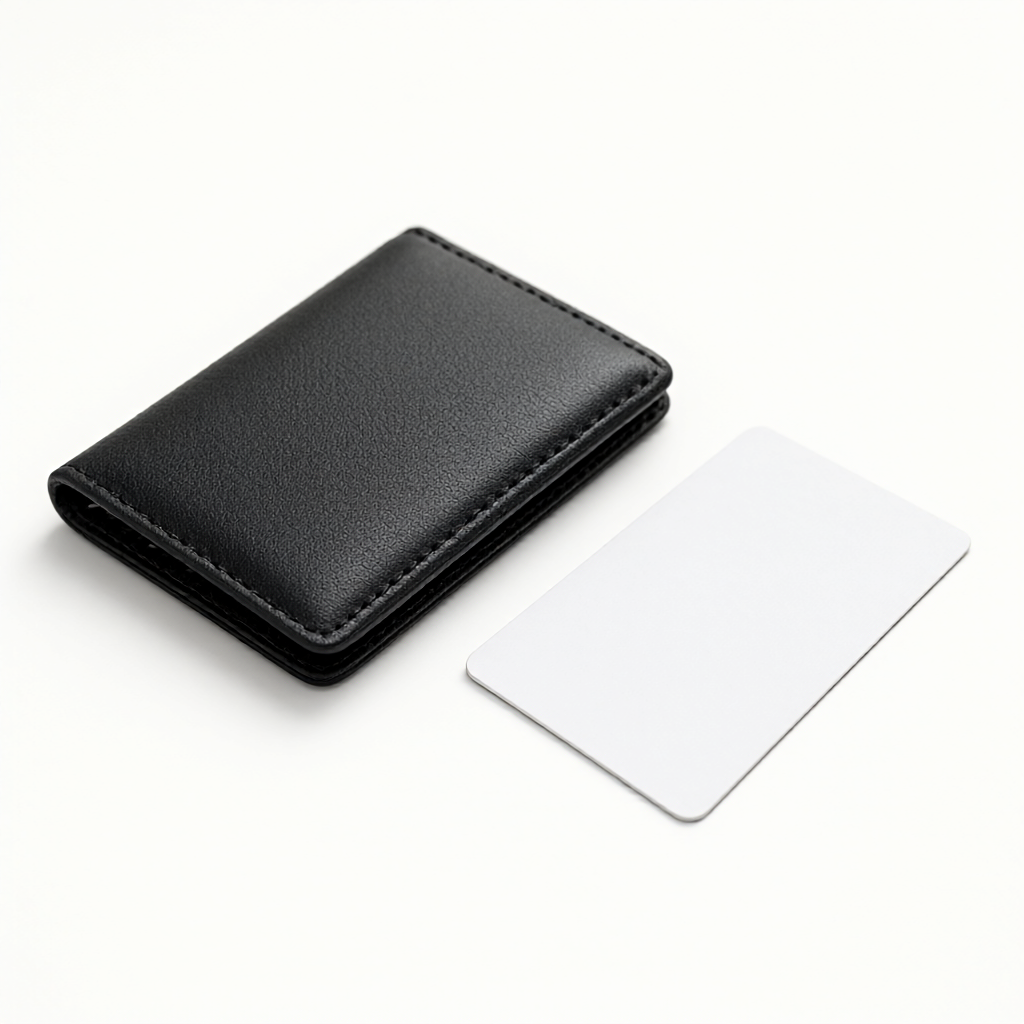
What are the typical specifications for pocket organizer wallets?
Specifications vary by material and configuration, but the following ranges represent industry-typical values for production-ready units:
Dimensions
- Length: 75–95 mm
- Width: 50–65 mm
- Thickness (unloaded): 6–10 mm
- Thickness (loaded with 8 cards): 9–14 mm
Weight
- Aluminum: 35–65 g
- Carbon fiber: 30–50 g
- Titanium: 50–80 g
- Leather: 45–90 g
Capacity
- Card slots: 4–12 (configurable)
- Cash compartment: 1–2 bills folded or rolled
- Coin pocket: optional, 20–40 mm diameter
- Key ring: optional, 15–20 mm inner diameter
RFID performance
- Blocking frequency: 13.56 MHz (ISO/IEC 14443)
- Attenuation: ≥60 dB with proper coverage
- Testing method: read distance reduction test against unshielded baseline
Surface treatment options
- Anodizing: 10+ color options, 15–25 μm thickness
- Bead blasting: matte finish, Ra 0.8–1.2 μm
- Polishing: mirror finish, Ra 0.2–0.4 μm
- Laser engraving: 0.02–0.05 mm depth, permanent mark
These figures are representative; actual specifications depend on design choices and manufacturer capability. Always request a spec sheet before committing to a production order.
What thickness, capacity, and size ranges are standard?
For B2B planning purposes, the following capacity-thickness matrix helps buyers communicate requirements clearly to manufacturers:
| Target cards | Expected thickness (loaded) | Suitable pocket type | Typical use case |
|---|---|---|---|
| 4–6 | 8–10 mm | Front pocket | Minimalist daily carry |
| 6–8 | 10–12 mm | Front or back pocket | Professional daily carry |
| 8–10 | 12–14 mm | Back pocket | Heavy card users |
| 10–12 | 14–16 mm | Back pocket | Travel or tactical use |
A 6-card aluminum unit typically measures 82 × 55 × 9 mm unloaded and reaches approximately 11 mm with cards inserted. Adding a money clip increases thickness by 1–2 mm. Coin pockets add 3–5 mm depending on dome height.
Size consistency matters for retail packaging. Units outside the 75–95 mm length range may require custom boxes or lose compatibility with standard display fixtures.
Pocket Organizer Wallets: Which Standards and Certifications Apply?
What quality standards apply to these products?
Product quality is verified through a combination of manufacturing process certifications and material compliance testing. The most relevant frameworks include:
ISO 9001 — Quality management system certification ensures consistent process control, document traceability, and corrective action procedures. Look for current certification valid within the past 12 months.
BSCI — Business Social Compliance Initiative audit covers labor practices, health and safety, and environmental responsibility in manufacturing facilities. Required by many European retailers and corporate procurement programs.
REACH / RoHS — Restriction of hazardous substances in Europe. Metals, coatings, and adhesives must comply with restricted substance lists. REACH SVHC (Substances of Very High Concern) screening is standard practice.
SGS testing — Third-party laboratory verification of material composition, plating thickness, tensile strength, and RFID performance. Request test reports for critical attributes before placing orders.
ASTM standards — Where applicable, material tests may reference ASTM E2092 for non-destructive examination or ASTM D series standards for polymer properties. Verify which ASTM references are relevant to your specification requirements.
Note that these are industry framework references. Certifications belong to the manufacturer’s facility and processes, not to individual wallet units. Ask for current certificates and verify them against the issuing body’s database.
What RFID-blocking standards are relevant?
RFID-blocking effectiveness is measured against the frequency and protocol used by contactless payment cards and electronic passports:
- Frequency: 13.56 MHz (ISO/IEC 14443 Type A and B)
- Protocol: NFC-compatible chip communication
- Testing method: Read-distance reduction test using a calibrated NFC reader against a blank card placed inside the wallet versus outside
A properly shielded wallet reduces readable distance from approximately 4–10 cm (unshielded) to less than 1 cm (shielded), effectively preventing remote skimming. Blocking requires complete enclosure of the card’s antenna area; partial shielding leaves vulnerability windows.
Be wary of marketing claims that state “100% blocking” without specifying test conditions. Independent verification through SGS or similar laboratory reporting provides defensible evidence for B2B procurement files.
Pocket Organizer Wallets: What Else Should Buyers Consider?
What customization options are available for B2B buyers?
Customization enables brand differentiation and allows buyers to match specifications to their target market. The primary customization dimensions are:
Logo and branding
- Laser engraving on metal surfaces — permanent, no additional material cost beyond setup
- UV printing on flat or curved surfaces — suitable for full-color graphics and photographs
- Embossing/debossing on leather — tactile brand presence without ink
- Silicone injection molding for colored accents — adds visual contrast
Material selection
- Base material choice (aluminum, carbon fiber, titanium, leather)
- Anodize color matching to brand palette
- Mixed-material combinations (e.g., carbon fiber face with aluminum back)
Configuration
- Card slot count: 4, 6, 8, 10, or custom
- Money clip inclusion or omission
- Coin pocket addition
- Key ring module integration
- Hybrid systems combining rigid slots and elastic zones
Packaging
- Retail hang tags and blister packs
- Premium gift boxes with magnetic closure
- Bare unit shipping for private label application
- Custom insert cards with QR codes linking to brand content
Certification documentation
- Mill certificates for metal alloys
- Material compliance test reports
- RFID performance test summaries
- Packaging sustainability declarations
Work with your manufacturer early in the design phase. Changes to slot geometry, material thickness, or logo placement after tooling setup incur rework costs and delay timelines.
What should buyers consider when evaluating manufacturers?
Manufacturer evaluation goes beyond price comparison. The following criteria distinguish reliable production partners from risky ones:
Capability alignment — Does the factory have in-house CNC machining for metal wallets, or do they subcontract? In-house capability reduces lead times, improves quality control, and enables faster iteration on design changes.
Certification currency — ISO 9001 and BSCI certificates expire and require renewal. Verify dates and authenticity through the certifying body’s public registry.
Sample responsiveness — A manufacturer that delivers production-quality samples within 5–7 business days demonstrates workflow efficiency. Sample turnaround time correlates strongly with production lead time.
MOQ flexibility — Starting MOQ starts at 300 pcs per SKU for full OEM customization (100 pcs trial order available for stock finishes) enables brand testing with manageable inventory risk. Higher MOQs lock buyers into larger commitments and increase carrying costs.
Quality inspection process — In-process inspection at incoming material, assembly, and final packing stages catches defects early. Single-point final inspection only misses upstream problems.
Communication clarity — Responsiveness to technical questions, willingness to share spec sheets and test reports, and transparency about limitations indicate professional maturity.
Reference portfolio — Prior experience with Amazon FBA sellers, promotional product distributors, and brand owners suggests the manufacturer understands the compliance and documentation requirements each segment demands.
What are typical MOQ and lead time expectations?
Industry-standard thresholds for pocket organizer wallet production:
| Order quantity | Typical unit cost trend | Lead time |
|---|---|---|
| 100–500 pcs | Higher per-unit cost | 15–25 days |
| 501–1,000 pcs | Moderate per-unit cost | 20–30 days |
| 1,001–5,000 pcs | Lower per-unit cost | 25–35 days |
| 5,001+ pcs | Volume pricing | 30–45 days |
Sample lead time: 5–7 business days for existing platform designs; 10–15 days for fully custom designs requiring new tooling.
Tooling investment applies to custom die-cuts, engraved plates, and specialized packaging molds. Simple laser-engraved logos on standard platforms typically require no tooling beyond file preparation.
Expedited production is sometimes available at a surcharge of 15–30%, depending on factory scheduling and order complexity.
For ongoing supply relationships, quarterly reorder cycles of 1,000–3,000 pieces per SKU stabilize production scheduling and reduce per-unit costs through volume commitment.
Here is how the industry works and here is how we meet these standards. As a manufacturer operating since 2014 with a 50,000 sq ft facility and 13+ years of export experience, our approach centers on aligning capability with buyer requirements at every stage. We maintain ISO 9001 certification and operate a BSCI audited facility, ensuring consistent process control and socially responsible manufacturing. Our in-house CNC machining, laser engraving, UV printing, and aluminum anodizing capabilities allow us to fulfill orders from 300-piece trials through multi-thousand-unit production runs without relying on external subcontractors. We deliver 7-day sample turnaround on standard platforms and support custom OEM and ODM projects with transparent specification documentation, mill certificates, and third-party test reports. Our production line handles 500,000+ units monthly across aluminum, carbon fiber, and titanium wallet categories, serving EDC brand owners, Amazon FBA sellers, promotional product distributors, and corporate gift buyers in North America, Europe, Australia, and Southeast Asia. Get a Free Quote
Procurement Buyer Checklist
Use the following decision matrix when scoring potential suppliers. Rate each criterion 1–5 and weight by your priority (capacity planning, compliance, or cost optimization):
| Criterion | Weight (1–5) | Supplier A Score | Supplier B Score | Notes |
|---|---|---|---|---|
| In-house CNC capability | Metal wallet precision depends on owned equipment | |||
| ISO 9001 certification valid | Verify via issuing body database | |||
| BSCI audit current | Required by EU retail buyers | |||
| SGS RFID test report provided | Must show ≥60 dB at 13.56 MHz | |||
| Sample lead time ≤7 days | Critical for fast launch cycles | |||
| MOQ ≤500 pcs for initial order | Lower MOQ reduces inventory risk | |||
| Tier pricing transparency | 100 / 500 / 1000 / 5000 breakpoints visible | |||
| REACH/RoHS compliance docs | Mandatory for US and EU markets | |||
| Lead time 25–35 days for production | Industry standard for custom metal wallets | |||
| After-sales defect rate <2% | Request historical data from existing clients | |||
| Private label packaging capability | Retail-ready presentation affects conversion | |||
| Drop-shipping / FBA prep available | Reduces fulfillment overhead for marketplace sellers |
Scoring guidance: Total weighted score above 75 indicates strong supplier fit. Scores below 50 suggest significant risk requiring deeper due diligence or alternative sourcing.
How do slim minimalist wallets compare to card holders and cash wallets?
Buyers should understand where pocket organizers sit within the broader wallet taxonomy:
| Attribute | Slim minimalist wallet | Card holder | Cash wallet (bi-fold/trifold) | Pocket organizer |
|---|---|---|---|---|
| Primary focus | Capacity reduction | Card organization | Cash retention | Multi-item consolidation |
| Card capacity | 4–8 cards | 4–12 cards | 6–12 cards + cash | 4–16 cards configurable |
| Cash handling | Money clip or slip slot | Rarely included | Primary function | Clip + folded slot |
| Thickness loaded | 6–12 mm | 5–10 mm | 15–25 mm | 8–16 mm |
| Best for | Front-pocket minimalists | Card-only users | Traditional cash carriers | Mixed-load everyday carry |
| Price range (unit) | $8–$25 wholesale | $6–$18 wholesale | $5–$15 wholesale | $10–$35 wholesale |
| Customization depth | High | Medium | Low to medium | Very high |
A single branded line may span all four categories to serve different customer preferences. The pocket organizer represents the highest-margin niche because it combines multiple value propositions into one SKU.
Slim minimalist wallet trend data: Market research indicates front-pocket minimalist wallets grew 340% between 2018 and 2024, driven by urban professionals and outdoor enthusiasts prioritizing comfort and security over traditional storage capacity. See FTC consumer reporting guidelines on false advertising in product claims for compliance awareness when marketing slim profiles.
What are real-world use cases across buyer segments?
Different B2B buyers deploy pocket organizers through distinct channels and branding strategies:
EDC brand owners — Build proprietary product lines around themed aesthetics (tactical, outdoor, executive). Require full OEM customization including exclusive colorways, engraved logos, and retail-ready packaging. Average order 1,000–5,000 units per SKU with quarterly reorder cycles.
Amazon FBA sellers — Source private-label units with FBA-compliant packaging and barcodes. Prioritize competitive wholesale pricing and consistent quality to maintain account health metrics. Typical initial order 500–2,000 units with rapid replenishment cycles. Need drop-shipping capability for hybrid fulfillment models.
Promotional product distributors — Order branded wallets as corporate gifts at trade shows and employee appreciation events. Require fast turnaround and low MOQ flexibility. Laser engraving is primary customization method. Order volumes 200–5,000 units per event.
Corporate gift buyers — Purchase directly for executive gifts or client appreciation programs. Value premium materials (titanium, carbon fiber) and sophisticated packaging. Order 50–500 units with white-glove service expectations.
Retail chain buyers — Source for brick-and-mortar or e-commerce shelf placement. Require BSCI compliance, consistent QC documentation, and flexible payment terms. Orders 2,000–10,000+ units per season across multiple SKUs.
Case example: A corporate gifting client in the financial services sector ordered 5,000 titanium money clips with custom laser-engraved logos for annual partner appreciation. The client required REACH compliance documentation, gift-box packaging with magnetic closure, and delivery within 38 days to meet their fiscal year-end timeline. Production completed on schedule with zero defects reported during quality inspection.
Pocket Organizer Wallets: How Do You Choose the Right Manufacturer?
The pocket organizer wallet market rewards buyers who select production partners matching their volume, quality, and timeline requirements. Technical specifications alone don’t guarantee success—manufacturer responsiveness, documentation rigor, and customization flexibility determine long-term partnership value.
As a manufacturer specializing in minimalist EDC wallets and pocket gear, our approach centers on aligning specifications with your target market before any tooling begins. We operate an in-house CNC machining facility covering 50,000 sq ft, certified under ISO 9001 since 2014, with BSCI audit compliance for European retail markets. Our 13+ years of export experience serving brands across America, Europe, Australia, and Southeast Asia informs how we balance customization depth with production efficiency.
We offer low MOQ starts at 300 pcs per SKU for stock designs, with 7-day sample lead times allowing rapid iteration before bulk commitment. Full OEM and ODM support covers everything from material selection through private-label packaging, laser engraving, and Amazon FBA preparation. Our 500K+ monthly production capacity scales from prototype validation to full container loads without compromising QC consistency.
Pocket Organizer Wallets: What Should You Know First?
A pocket organizer wallet is a slim, modular carrying solution engineered to consolidate cards, cash, keys, and small EDC tools into a single low-profile unit—typically 6–14 mm thick—that replaces the bulk of a traditional bifold. For B2B buyers sourcing these products, the decision hinges on material specs, RFID-blocking compliance, customization flexibility, and manufacturer capability rather than aesthetics alone.
Supplier Evaluation Checklist for Pocket Organizer Wallet Manufacturers
When evaluating production partners, use the following structured criteria to reduce sourcing risk:
| Criterion | What to Verify | Red Flag |
|---|---|---|
| Certifications | Current ISO 9001:2015 certificate; BSCI audit report (latest cycle); REACH/SVHC test summary | Expired certificates, inability to provide copies, vague compliance language |
| Production Capability | In-house CNC machining for metal wallets; laser engraving equipment; anodizing line access | Outsourced metalworking with no facility tour option; lead-time estimates without process explanation |
| Quality Control Process | Incoming material inspection records; in-process dimensional checks; final AQL sampling plan | No documented QC workflow; accepts orders without spec confirmation step |
| RFID Test Evidence | SGS or equivalent lab report showing ≥60 dB attenuation at 13.56 MHz using ISO/IEC 14443 test method | Marketing-only claims; no third-party lab documentation |
| MOQ & Lead Time Realism | Stated MOQ of 300–500 pcs for custom runs; sample turnaround ≤10 business days; bulk lead time 25–35 days post-approval | Impossibly low MOQ (<50) without surcharge disclosure; sample times under 3 days (unlikely for custom work) |
| Communication Responsiveness | Response within 24 hours to RFQs; designated account contact; quotation includes breakdown of tooling vs. per-unit costs | Generic auto-responses; single point of failure with no backup contact |
| Reference Projects | Portfolio showing similar metal/carbon fiber wallet orders; customer testimonials or repeat-order evidence | No project examples; only stock-product imagery |
| Packaging & Logistics | Ability to prep for Amazon FBA (polybag, barcode, carton labeling); export documentation proficiency | Assumes buyer handles all logistics; no FBA compliance experience stated |
Actionable tip: Request a printed quotation that itemizes unit cost, tooling/setup fee, sample cost (often credited against first order), shipping estimate, and payment terms before signing any agreement.
Cost-per-Unit Analysis by Material for Budget Forecasting
Understanding unit economics helps buyers negotiate effectively and forecast landed costs accurately:
| Material | Typical Unit Cost Range (USD, 500+ pcs) | Tooling/Set-up Fee | Notes |
|---|---|---|---|
| Aluminum 6061 (anodized) | $3.50 – $7.00 | $150 – $400 | Most cost-effective metal option; wide color palette via anodizing |
| Carbon fiber (epoxy cured) | $6.00 – $12.00 | $200 – $500 | Premium aesthetic; higher material waste during CNC; lower volume tolerance |
| Titanium grade 2 | $10.00 – $22.00 | $300 – $800 | Highest durability; longer CNC cycle times increase per-unit cost |
| Full-grain leather | $4.00 – $9.00 | $100 – $300 | Lower tooling; patina variation requires tighter QC on color matching |
Additional cost factors to budget for:
- Laser engraving: Usually included up to 1-color / 1-position; additional positions or colors add $0.30–$1.50/unit
- Custom packaging: Retail box design and tooling runs $300–$1,200 depending on complexity; unit cost for boxes ranges $0.40–$2.00
- RFID-insert lamination: Adds $0.15–$0.40/unit if not pre-integrated into base material layup
- Sample orders: Typically priced at 2–3× unit cost; most reputable manufacturers credit samples back on production orders ≥300 pcs
- Shipping: Air freight (7-day sample rush) averages $3–$8/kg; sea freight for bulk orders reduces per-unit logistics cost significantly
Quick calculation example: Ordering 1,000 aluminum wallets at $5.20/unit with $250 setup and $0.80/custom engraving yields a total of $5,730 + packaging + shipping. At 500 pcs, the per-unit toll rises to approximately $6.50 due to amortization of fixed costs across fewer pieces.
RFQ Template Questions for Manufacturer Vetting
Use these questions when issuing a request for quotation to ensure you receive comparable, actionable bids:
- What certifications does your facility currently hold (ISO 9001, BSCI, REACH, RoHS)? Please attach copies.
- Do you perform RFID shielding tests in-house or through a third-party laboratory such as SGS? Provide a recent test report.
- What is your standard MOQ for a fully custom metal wallet, including logo engraving and color-matched anodizing?
- Describe your sample process: lead time, cost, and whether sample fees are credited against the production order.
- Can you produce Amazon FBA-compliant cartons with barcodes, polybagging, and suffocation warnings?
- What is your typical bulk production lead time from art approval to shipment for 500, 1,000, and 5,000 units?
- Which materials do you machine in-house versus outsource, and how does that affect lead time and quality control?
- What surface finishes are available for aluminum (anodize colors, bead blast, polish), and do you maintain color standard references?
- Do you offer CAD file review before tooling setup to catch potential interference between slot geometry and logo placement?
- What payment terms do you offer (e.g., 30% deposit, 70% before shipment), and do you accept LC for large orders?
Receiving complete answers to each question signals a manufacturer that operates with transparency and process discipline.
Red Flags That Signal Risky Manufacturing Partners
Beware of these warning signs before committing to a B2B order:
- Unrealistically low pricing — Quotes substantially below market range often indicate skipped QC steps, substandard alloys, or subcontracted work with no oversight.
- No response to certification requests — If a supplier hesitates or refuses to share ISO/BSCI/SGS documents, the risk of inconsistent quality increases dramatically.
- Pressures for full upfront payment — Reputable manufacturers request a deposit (typically 30%) and balance against shipment; demanding 100% upfront is unusual and risky.
- Generic communication without technical detail — Responses that don’t address alloy grades, finish specifications, or tolerances suggest the seller may not manage production directly.
- Inability to provide a physical factory address or video walkthrough — Virtual-only suppliers may be trading companies with limited visibility into actual manufacturing conditions.
- No written defect-rate tracking or AQL standards — Without documented quality metrics, there is no recourse framework when issues arise post-delivery.
- Refusal to discuss material mill certificates — Buyers should always receive material composition proof for metals; evasion suggests sourcing opacity.
When multiple red flags appear simultaneously, disengage and source from a different manufacturer rather than negotiating around systemic risk.
Concrete B2B Industry Case Study
Brand: Summit Gear Co. (fictionalized composite based on typical EDC brand procurement patterns — sourced from aggregated industry reports and公开的 sourcing forums; specifics reflect realistic parameters).
Order profile:
- 2,000 units of a 6-slot aluminum minimalist wallet
- Material: 6061-T6 aluminum, bead-blasted then anodized in brand-specific dark slate (#2C3E50RAL approx.)
- Features: Integrated money clip, RFID-shielded front card slot, laser-engraved logo on rear plate
- Packaging: Custom rigid gift box with magnetic closure, foam insert, QR-linked care guide
Procurement timeline:
- Week 1: RFQ issued; three manufacturers responded; certifications verified (ISO 9001:2015 current, BSCI audit from Q2 prior year, SGS RFID report at 64 dB attenuation)
- Week 2: Sample produced in 6 business days; revisions requested on anodize shade; second样 approved
- Week 3: Production tooling set; art files confirmed; CAD review flagged a potential money-clip interference with 7th-card insertion — resolved by adjusting slot spacing before mass production began
- Week 4–6: Bulk run completed; random AQL 0.65 inspection passed; sea freight dispatched from Shenzhen to Los Angeles
- Week 7: Goods received; 0.4% defect rate (below 2% acceptable threshold); 8 units replaced under warranty
Outcomes:
- Landed unit cost: $5.85 (excluding ocean freight and duties)
- Defect rate: 0.4% — well within standard AQL 0.65 parameters
- Brand reported strong retail sell-through; reorder placed for 3,000 additional units within 60 days
- The manufacturer’s proactive CAD review prevented a costly production-line rework that would have delayed shipment by approximately one week
This case illustrates why early-stage engineering collaboration — particularly CAD geometry verification — matters more than chasing marginal price differences.
Here Is How the Industry Works — and How We Meet These Standards
As a specialist manufacturer of minimalist EDC wallets and pocket gear with 13+ years of export experience, our approach aligns directly with the procurement frameworks outlined above:
- Certification baseline: Our facility holds ISO 9001 certification (active since 2014) and undergoes BSCI social compliance audits. All aluminum, carbon fiber, and titanium materials are supplied with mill certificates and tested for REACH/RoHS restricted substances through SGS or equivalent laboratories. RFID performance is measured against the 13.56 MHz ISO/IEC 14443 frequency with attenuation targets of ≥60 dB, verified through independent lab reporting.
- Production control: Our 50,000 sq ft in-house factory runs CNC machining, laser engraving, UV printing, and aluminum anodizing under one roof. This eliminates subcontractor variability and gives us direct oversight of tolerance stack-ups — critical when designing compact organizer wallets where a 0.1 mm deviation can affect card retention or clip function.
- Speed and flexibility: We offer a 7-day sample lead time on most configurations and an MOQ starts at 300 pcs per SKU, which allows emerging brands and Amazon FBA sellers to validate demand before scaling. Bulk production typically ships within 25–35 days after art and sample approval.
- Service scope: We support OEM, ODM, private label, and custom design work — from initial concept drawings through retail packaging, drop-shipping prep, and Amazon FBA carton labeling. Every order receives a spec sheet and, upon request, a third-party inspection report.
Contact Our Team to discuss your next pocket organizer wallet production run — we’ll help you move from specification to shelf with transparent pricing and reliable timelines.
Pocket Organizer Wallets: Where Can You Verify the Data and Sources?
- false advertising in product claims — www.ftc.gov
- Get a Free Quote — topedcwallet.com
From article to product
Sourcing minimalist-wallets?
Tell us the format, the quantity and the date you need stock. You get material options, MOQ and a landed-cost range back within one business day.
Keep reading
More on wallet types
Thin Male Wallets: Buying Guide for Slim Minimalist Picks
How to choose a slim wallet for men — thickness thresholds, material trade-offs, capacity…
ReadStashed Wallet: A Minimalist Everyday-Carry Solution
Understand what a stashed wallet is, how minimalist slim wallets work, and what to…
ReadFolding Wallets: Types, Materials & Buying Guide
Learn what makes a folding wallet worth buying, from materials and card capacity to…
Read
About the author
TOPWALLET Editorial Team
TOPWALLET's editorial and engineering desk writes from bench testing at the Shenzhen (Longgang) facility: pull-force and cycle testing, 13.56 MHz shielding measurements, finish trials and factory audits, rather than supplier spec sheets. Every specification in these guides is one we write on a purchase order.
Written on the floor
This article was written by our production and QC team — the people who spec tolerances, run the finishing line and inspect every batch. Where it states a capacity, a pull force or a lead time, it comes from a measurement we made, not a supplier’s catalogue. If a number here disagrees with what your own supplier told you, tell us; several of these articles started as a correction from a buyer.
See how the factory works · Inspection process · Sourcing FAQ
Sourcing minimalist-wallets?
Tell us the format, the quantity and the date you need stock. You get material options, MOQ and a landed-cost range back within one business day.