

What Is the Best Organizer Wallet for a B2B Brand?
The best organizer wallet for a brand looking to source organized minimalist wallets is one that combines a proven material—typically anodized aluminum or carbon fiber—with reliable RFID-blocking performance, a secure cash-retention system, and a manufacturing partner that can deliver consistent quality at scale. For B2B buyers, “best” does not mean the single highest-spec product on paper; it means the configuration that balances durability, card organization, cost, and supply-chain reliability for the target market.
Organizer wallets have shifted from niche EDC accessories to mainstream pocket-carry products across multiple retail channels. Buyers who understand the material trade-offs, certification requirements, and OEM processes before they begin sourcing will avoid costly sample revisions and downstream quality disputes.
What Qualifies as an Organizer Wallet, and How Does It Differ?
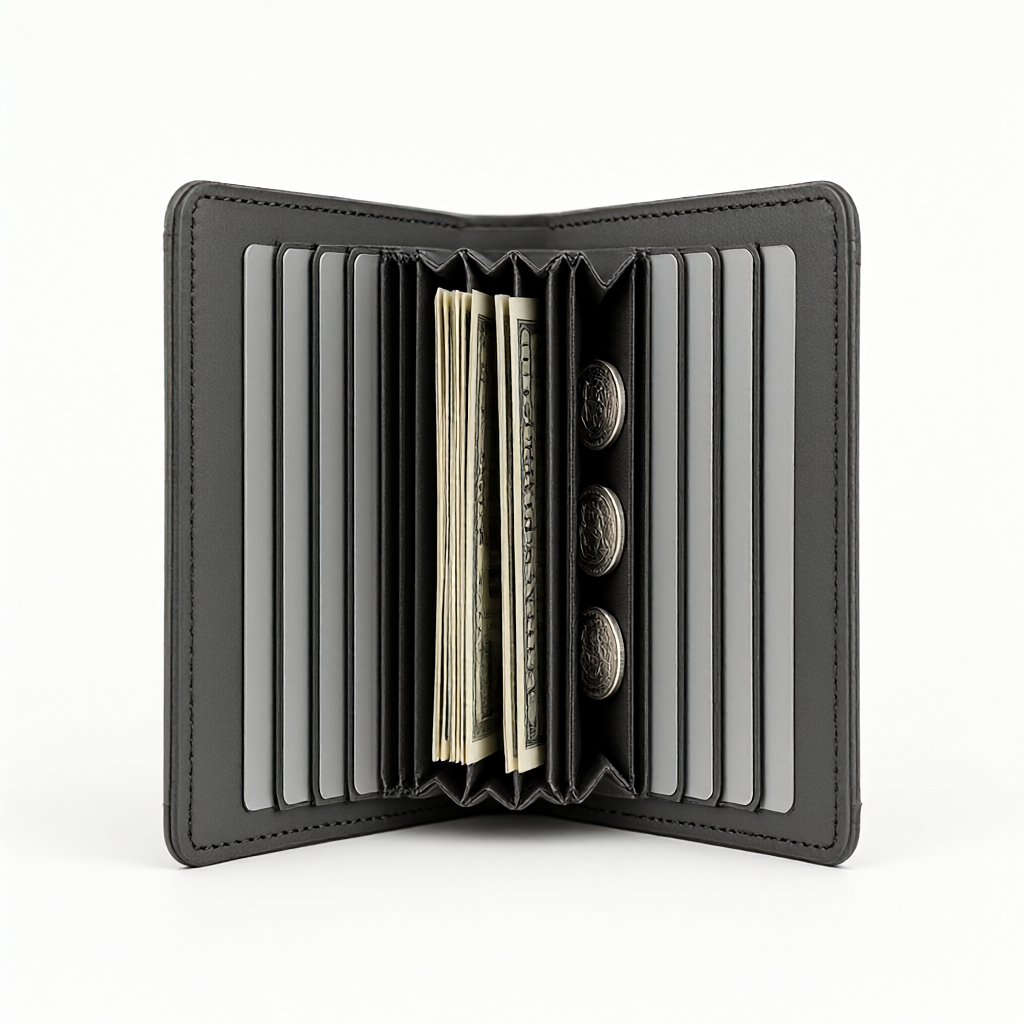
An organizer wallet is a compact, structured pocket carrier that consolidates cards, cash, and occasionally small EDC items into a single slim profile. Unlike conventional bifold wallets, which rely on folded leather and loose card slots that expand over time, an organizer wallet uses a rigid or semi-rigid frame—usually metal or composite—to maintain a fixed footprint while keeping contents ordered.
The structural difference matters for B2B buyers because it determines production complexity, material cost, and end-user experience. A traditional bifold wallet is primarily a stitching and die-cutting operation. An organizer wallet involves CNC machining, laser engraving, surface finishing, and often assembly of multiple sub-components such as cash clips, RFID layers, and card retention mechanisms. This makes the organizer wallet more engineering-intensive but also more differentiated in a crowded market.
Organizer wallets are also called pocket organizers, cardholder wallets, or metal wallets depending on the channel. The terminology is interchangeable in procurement discussions, but buyers should specify their exact configuration during RFQs to avoid ambiguity between a simple card-sleeve style and a full-frame organizer with a cash clip.
Which Materials Make the Best Organizer Wallet?
The three dominant materials for metal and composite organizer wallets are aluminum, titanium, and carbon fiber. Each has distinct advantages and cost implications that shape the final product positioning.
Why Choose Aluminum Organizer Wallets?
Anodized aluminum is the most common material for entry-to-mid-tier organizer wallets. It is lightweight, corrosion-resistant after anodizing, and cost-effective to machine in volume. Typical thickness ranges from 1.5 mm to 3.0 mm, with finished weights between 35 g and 65 g for a standard 6-card capacity model. Aluminum accepts laser engraving beautifully, making it the default choice for custom logo organizer wallet programs and private-label branding.
The trade-off is hardness. Aluminum scratches more easily than titanium and can dent under impact. For brands targeting outdoor enthusiasts who expose gear to abrasion, aluminum remains viable with a hard-coat anodizing process, but buyers should request scratch-resistance data from the supplier rather than relying on standard finishes.
When Is Titanium Worth It for Organizer Wallets?
Titanium organizer wallets sit at the premium end of the market. Grade 2 titanium offers a strength-to-weight ratio that exceeds aluminum by a significant margin, and it is naturally hypoallergenic and highly corrosion-resistant. Finished weights for titanium models typically range from 45 g to 75 g, depending on thickness and design complexity.
The primary trade-off is cost. Titanium is significantly more expensive per kilogram than aluminum, and it is harder to machine, which increases CNC cycle time. For B2B buyers, titanium is most viable when the brand strategy targets a higher price point and the margin structure supports it. It is also less common in bulk organizer wallet supplier catalogs, so procurement timelines may be longer.
What Do Carbon Fiber Organizer Wallets Offer?
Carbon fiber card holders combine low weight with high stiffness. A typical carbon fiber organizer wallet weighs between 25 g and 50 g, making it one of the lightest options available. The material is also visually distinctive, with the woven texture serving as a built-in aesthetic that requires minimal additional finishing.
Carbon fiber is expensive and requires specialized layup and curing processes. It is also more prone to edge chipping if dropped on hard surfaces, which means quality control on edge sealing and coating is critical. For brands that want a high-visual-impact product without titanium pricing, carbon fiber is a strong option—but buyers should inspect edge-finishing quality closely during sampling.
What Makes an Organizer Wallet the “Best” Choice for a B2B Buyer?
The best organizer wallet balances four dimensions that matter differently depending on the buyer’s channel:
Organization integrity. Cards must stay seated under normal pocket motion. Poor slot tension causes cards to fall out—a common complaint in consumer reviews that rarely makes it into B2B sourcing discussions. Buyers should test card retention with a mix of standard credit cards, wide gift cards, and foreign-format IDs during the sampling phase.
RFID-blocking performance. This is not a nice-to-have for many retail markets. Consumer demand for contactless payment protection has made RFID blocking a table-stakes feature in North America and Europe. However, not all “RFID-blocking” products perform equally, and some inexpensive implementations provide negligible attenuation.
Material and finish durability. The finish must withstand daily carry without visible degradation within the first several months of use. Surface treatments matter more than base material in many cases—a well-anodized aluminum wallet can outperform a poorly finished titanium one in real-world conditions.
Manufacturing consistency. The best product on paper is useless if the factory cannot reproduce it across batches. Buyers should evaluate the supplier’s process controls, not just the sample quality.
How Does RFID-Blocking Technology Work in Metal Organizer Wallets?
RFID-blocking organizer wallets work by incorporating a conductive layer—typically a metal mesh or foil—that creates a Faraday cage around the card slots. This layer attenuates the electromagnetic fields used by contactless payment cards, preventing unauthorized scanners from reading the stored data.
The effectiveness depends on coverage, material conductivity, and gap management. A complete Faraday cage requires continuous conductive coverage with minimal apertures. In practice, many budget organizer wallets use a single thin foil sheet that leaves gaps at the edges or around the cash clip mechanism, reducing real-world attenuation.
Buyers should request measured RFID attenuation data from suppliers, ideally expressed in decibel reduction across the 13.56 MHz frequency band used by most contactless payment systems. According to testing frameworks referenced by ASTM International, electromagnetic shielding effectiveness is measured using standardized methods that evaluate insertion loss and reflection loss. Suppliers who can provide third-party test reports for their RFID-blocking layers are demonstrating a level of quality assurance that many generic manufacturers do not achieve.
The RFID-blocking standard most relevant to organizer wallets is IEC 62479, which provides guidelines for evaluating the electromagnetic properties of materials and devices. While this is not a product certification per se, it gives buyers a technical reference point for evaluating supplier claims. Some suppliers also reference EN 62232 for human exposure to electromagnetic fields, which is relevant when assessing whether the blocking layer itself introduces any safety concerns.
For brands that want to verify RFID performance independently, requesting a sample test with a calibrated RFID reader before placing a production order is a practical step that many experienced buyers take.
What Are the Key Specifications for Aluminum, Titanium, and Carbon Fiber Organizer Wallets?
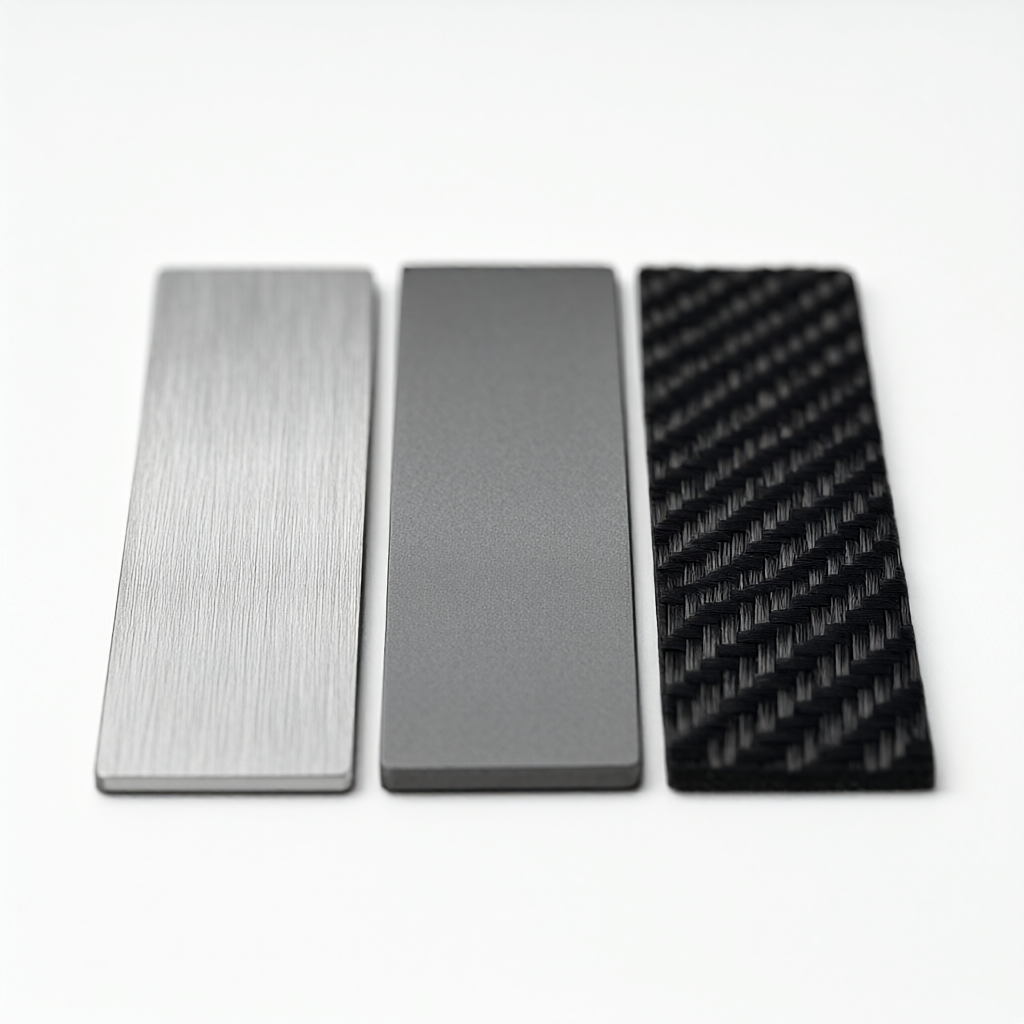
The following specifications represent typical industry ranges for each material category. Actual values vary by designer, thickness, and component count.
| Specification | Aluminum | Titanium | Carbon Fiber |
|---|---|---|---|
| Wall thickness | 1.5–3.0 mm | 1.0–2.0 mm | 1.0–1.5 mm (laminated) |
| Finished weight | 35–65 g | 45–75 g | 25–50 g |
| Card capacity | 4–12 cards | 4–10 cards | 4–10 cards |
| Cash clip style | Spring steel or titanium | Titanium spring | Integrated or optional |
| RFID layer | Optional add-on | Optional add-on | Optional add-on |
| Surface finish | Anodized (multiple colors) | Bead-blasted or polished | Clear coat, resin-sealed edges |
| Typical FOB range | $3.50–$8.00 | $8.00–$18.00 | $5.00–$12.00 |
Weight and thickness are the most consequential specifications for minimalist aluminum wallet organizer programs because they directly affect the perceived premium quality and pocket profile. A wallet that claims to be slim but measures 12 mm thick with a smartphone inside will generate returns and negative reviews. Buyers should request a smartphone-compatibility matrix from their supplier, showing which common phone models fit alongside the wallet without excessive bulk.
Card capacity is another area where marketing numbers often exceed reality. A supplier may advertise “holds up to 12 cards,” but that figure usually assumes new, unworn cards. Real-world capacity with worn cards, transit passes, and gift cards is typically 20–30% lower. Buyers should test with actual card samples they plan to distribute.
What Standards Apply to Organizer Wallet Manufacturing?
Several standards and compliance requirements are relevant when sourcing organizer wallets for international markets.
ISO 9001 is the foundational quality management standard for manufacturing facilities. It does not certify the product itself, but it indicates that the factory operates under a documented quality management system with procedures for document control, corrective action, and continuous improvement. For B2B buyers, ISO 9001 certification is a minimum baseline—not a differentiator, but a necessary screen.
BSCI (Business Social Compliance Initiative) audits address labor practices and social responsibility in the supply chain. Many European retail buyers require BSCI certification or at minimum a passed BSCI audit report before approving a supplier. This is particularly relevant for corporate gift and promotional product procurement, where the end buyer often has its own ESG commitments.
REACH and RoHS compliance is mandatory for products entering the European Economic Area. These regulations restrict hazardous substances in consumer goods. Organizer wallets that use metal components, adhesives, and printed or coated surfaces must demonstrate compliance with substance restrictions. Buyers should request a REACH/RoHS test report from the supplier, covering the specific materials used in the product.
SGS testing of materials is another common requirement. SGS is an independent inspection and verification company that provides material composition reports. A supplier that can produce SGS test certificates for the aluminum alloy, titanium grade, or carbon fiber resin used in production is providing verifiable evidence of material compliance.
For RFID-blocking products specifically, there is no single mandatory certification in most markets. However, third-party testing reports from laboratories such as SGS, Intertek, or TÜV provide the strongest evidence of performance. Buyers should treat RFID test reports as a premium differentiator when evaluating suppliers.
What MOQ and Lead-Time Ranges Are Typical for Custom Organizer Wallet Production?
MOQ and lead time are two of the most frequently negotiated variables in organizer wallet sourcing. Typical ranges in the industry are as follows:
| Variable | Typical Range | Notes |
|---|---|---|
| MOQ (standard design) | 100–500 pcs | Lower MOQs possible for simple configurations |
| MOQ (custom design) | 300–1,000 pcs | Depends on tooling and setup complexity |
| Sample lead time | 5–15 days | 7 days is common for standard material options |
| Production lead time | 15–30 days | After sample approval and deposit |
| Tooling/setup fee | $0–$500 | Often waived for orders above a threshold |
Low MOQ programs are increasingly common as brands test new products before committing to large volumes. A supplier offering MOQ starts at 300 pcs per SKU for full OEM customization (100 pcs trial order available for stock finishes) enables smaller brands and Amazon FBA sellers to validate market demand with reduced upfront investment. However, lower MOQs typically carry a higher per-unit cost due to reduced production efficiency.
Lead time variability is often underestimated. Samples that take 7 days can become production runs that take 30 days or more if the factory is managing multiple orders. Buyers should confirm current factory capacity and request a production timeline estimate before signing a purchase order, especially during peak seasons.
How Do OEM and ODM Sourcing Models Differ for Organizer Wallets?
Understanding the difference between OEM and ODM is essential for effective sourcing:
OEM (Original Equipment Manufacturing) means the buyer provides the design, specifications, and branding, and the factory produces to those specifications. The buyer owns the design. This model is common for established brands with defined product concepts who need a manufacturing partner to produce to their blueprint.
ODM (Original Design Manufacturing) means the factory provides pre-designed products that the buyer can customize with their logo and packaging. The factory retains the underlying design. This model is faster and lower-cost for entry, but it limits differentiation because multiple buyers may sell the same base product with only the branding changed.
Many organizer wallet manufacturers offer both models. A hybrid approach is also common: a buyer selects an ODM base design and requests OEM-level modifications such as custom laser engraving, different anodized colors, or altered card-slot configurations. This approach balances speed to market with brand differentiation.
For private label programs, ODM is the typical starting point. As the brand matures and volume increases, transitioning to OEM gives the buyer greater control over specifications and margins.
What Should You Consider When Evaluating a Supplier’s Manufacturing Capability?
Identifying a reliable organizer-wallet manufacturer requires evaluating several dimensions beyond price:
In-house versus outsourced processes. A factory that performs CNC machining, laser engraving, and anodizing in-house has greater control over quality and lead time. Factories that outsource key processes such as anodizing or RFID-layer lamination introduce dependency on third-party vendors and potential quality bottlenecks.
Quality control documentation. Request the supplier’s QC inspection checklist and ask how many inspection points exist between raw material receipt and finished goods shipment. A robust process includes incoming material inspection, in-process checks during CNC machining, post-finishing inspection, and final random sampling before packing.
Sample-to-production fidelity. The sample may be perfect, but the question is whether the factory can replicate that quality across 5,000 or 50,000 units. Ask about their first-article inspection process and whether they perform statistical process control on critical dimensions.
Communication and responsiveness. A supplier who responds quickly to technical questions during the sourcing phase is more likely to be responsive during production. Slow communication during sampling often predicts slower issue resolution during manufacturing.
For brands evaluating options, reviewing a detailed best card holder selection guide for B2B sourcing and everyday carry use can help establish a more rigorous evaluation framework before engaging suppliers.
Whom Should You Consider When Sourcing Organizer Wallets?
As a manufacturer, our approach to organizer wallet sourcing is grounded in the standards and specifications outlined above. We operate a 50,000 sq ft in-house facility where CNC machining, laser engraving, anodizing, and assembly are performed under one roof, which gives us direct control over the quality and timing of each production step. Our facility is ISO 9001 certified and BSCI audited, and all materials are tested for REACH and RoHS compliance with SGS documentation available on request.
We support both OEM and ODM programs with an MOQ starts at 300 pcs per SKU, which allows emerging brands and Amazon FBA sellers to validate their product concept before scaling. Samples are produced within 7 days for standard material configurations, and we provide RFID attenuation data alongside material test reports so buyers can verify performance claims before committing to production.
Our product range includes minimalist aluminum wallets, carbon fiber card holders, titanium money clip organizers, and RFID-blocking metal wallets, all available for private label customization including logo engraving, color anodization, and custom packaging. We serve EDC brand owners, promotional product distributors, corporate gift buyers, and retail chain purchasers across North America, Europe, Australia, and Southeast Asia.
If you are evaluating organizer wallet suppliers or need a quotation for a specific configuration, reach out to our team with your requirements, and we will provide a detailed proposal including material options, pricing, and lead time estimates.
How Are Organizer Wallets Manufactured, and How Is Quality Controlled?
Organizer wallet production involves multiple precision processes that directly affect product quality and consistency. Understanding these processes helps B2B buyers evaluate whether a supplier has the technical capability to deliver reliable results.
How Does CNC Machining Shape Organizer Wallets?
Most aluminum and titanium organizer wallets are produced through CNC (Computer Numerical Control) machining. This subtractive process starts with solid billets of material, which are milled, drilled, and cut into the wallet’s frame, card slots, and cash clip mounting points. CNC machining allows tolerances as tight as ±0.05 mm, which is critical for ensuring card slots have consistent tension and that moving parts such as cash clips function smoothly across thousands of units.
In-house CNC capability is a significant differentiator. Factories that outsource machining to third-party shops introduce additional lead time, less process control, and higher risk of dimensional drift between batches. Buyers should ask whether the factory operates its own CNC machines or relies on external machining partners.
How Are Laser Engraving and Surface Finishing Done?
Laser engraving is the standard method for applying custom logos, text, and decorative patterns to metal organizer wallets. Fiber laser markers work on aluminum, titanium, and stainless steel, producing permanent marks that do not fade or rub off during normal use. For carbon fiber wallets, UV laser engraving can etch designs without burning or discoloring the resin matrix.
Surface finishing follows engraving and typically includes:
- Anodizing for aluminum wallets, which creates a hard, corrosion-resistant oxide layer. Standard anodizing produces colors such as black, silver, blue, and gold. Hard-coat anodizing increases surface hardness to approximately 600–700 HV (Vickers hardness), providing significantly better scratch resistance than standard finishes.
- Bead blasting for titanium and aluminum, producing a uniform matte texture.
- Polishing and mirror finishing for premium titanium models.
- Resin edge sealing for carbon fiber wallets, which prevents delamination and chipping at exposed edges.
How Are RFID Layers Integrated During Assembly?
Organizer wallets with RFID-blocking features require assembly of multiple sub-components: the main frame, card slot inserts, cash clip mechanisms, and the RFID-conductive layer. Quality assembly ensures that the RFID layer maintains continuous coverage without gaps that would compromise shielding performance.
Good manufacturers implement in-line quality checks during assembly, verifying that each component meets dimensional specifications before final integration. This is where ISO 9001 certification becomes practically relevant—not as a marketing badge, but as evidence that the factory maintains documented procedures for inspection, corrective action, and traceability.
Which Quality Control Procedures Apply?
Reliable organizer wallet manufacturers typically implement the following quality control steps:
Incoming material inspection. Verifying that aluminum alloys (typically 6061 or 7075), titanium grades (typically Grade 2), and carbon fiber laminates match specified material certifications before production begins.
In-process inspection. Checking critical dimensions during CNC machining and verifying surface finish quality after anodizing or bead blasting.
Final inspection. Testing card retention force, cash clip tension, RFID attenuation (where applicable), and visual appearance against approved samples. A common industry benchmark is to accept zero defects in critical functionality (card retention, RFID performance) and limit cosmetic defects to less than 2% of units shipped.
AQL sampling. Many B2B buyers specify Acceptable Quality Level (AQL) inspection standards, typically AQL 1.5 for critical defects and AQL 4.0 for minor defects, following ANSI/ASQ Z1.4 procedures.
For additional guidance on evaluating manufacturing quality, buyers may review ASTM International standards related to electromagnetic shielding and material testing.
Which Certifications and Compliance Rules Apply to Exporting Organizer Wallets?
When sourcing organizer wallets for international markets, understanding the certification landscape is essential. Different regions and retail channels have varying compliance requirements.
Which Quality Management and Social Compliance Rules Apply?
ISO 9001 certification remains the baseline expectation for any serious B2B sourcing program. It demonstrates that a manufacturer has established quality management procedures for document control, corrective actions, and process improvement. While ISO 9001 certifies the management system rather than the product itself, it provides buyers with confidence that the factory can consistently reproduce approved samples.
BSCI (Business Social Compliance Initiative) certification or audit is required by many European buyers, particularly those distributing through retail chains with corporate social responsibility policies. The BSCI code of conduct covers working hours, wages, health and safety, and prohibition of child and forced labor. Buyers targeting the European market should verify that their supplier holds a current BSCI audit report or can complete one before production begins.
Which Chemical Substance Rules Must Be Met?
REACH (Registration, Evaluation, Authorisation and Restriction of Chemicals) compliance is mandatory for products sold in the European Economic Area. REACH restricts the use of certain hazardous substances, including heavy metals such as lead, cadmium, and hexavalent chromium, which could be present in anodizing baths, adhesives, or plating solutions. Organizer wallet manufacturers must ensure that all materials—metal alloys, anodizing chemicals, adhesives, and packaging—comply with REACH substance restrictions.
RoHS (Restriction of Hazardous Substances) applies specifically to electrical and electronic equipment, but many buyer contracts extend RoHS-style substance restrictions to all product categories, including accessories like organizer wallets. Buyers should confirm whether RoHS testing is required for their specific product configuration.
Which Third-Party Material Tests Are Required?
SGS testing provides independent verification of material composition and substance compliance. SGS test reports can confirm that aluminum alloys meet specified grade requirements, that anodizing coatings do not contain restricted substances, and that RFID-blocking materials perform as claimed.
Buyers should request the following documentation from suppliers:
- Material composition certificates for aluminum, titanium, and carbon fiber
- REACH/RoHS compliance test reports covering all materials in contact with the product
- RFID attenuation test reports from accredited laboratories
- BSCI audit reports (for European-bound products)
For detailed guidance on FTC labeling and advertising requirements for imported goods, FTC.gov provides regulatory information relevant to U.S.-bound shipments.
How Do You Identify a Reliable Organizer Wallet Manufacturer?
Evaluating a potential supplier requires looking beyond pricing and sample quality. The following criteria help buyers distinguish reliable manufacturing partners from generic trading companies or under-resourced factories.
How Should You Assess Manufacturing Capability?
In-house CNC machining. Factories that operate their own CNC equipment can maintain tighter tolerances, respond faster to design changes, and reduce lead times by eliminating third-party dependency. Buyers should verify the number and type of CNC machines available and whether the factory handles the complete machining process internally.
Laser engraving and surface finishing capacity. In-house laser marking and anodizing capabilities indicate a more integrated operation. Factories that outsource these processes add lead time and reduce quality control over critical aesthetic features.
Production volume and capacity. A manufacturer with a 50,000 sq ft facility and monthly capacity exceeding 500,000 units can accommodate both small test orders and large-scale production runs without capacity constraints. Buyers should ask about current factory utilization rates, as a fully loaded factory may have longer lead times than advertised.
How Flexible Are OEM and ODM Sourcing Models?
Reliable organizer wallet manufacturers typically offer both OEM and ODM pathways. OEM is appropriate for buyers with existing designs who need production support, while ODM suits buyers who want to launch a product quickly using the manufacturer’s proven designs with customization limited to branding and packaging.
The sample process is a key indicator of supplier quality. A professional manufacturer typically provides:
- 7-day sample lead time for standard material configurations
- Low MOQ starts at 300 pcs per SKU for initial testing
- Full customization options including logo engraving, color selection, and packaging design
- Clear communication throughout the sampling phase
Buyers should evaluate whether the supplier provides detailed sample reports, including material certificates, dimensional measurements, and RFID test data, before approving for production.
What Goes on a Supplier Evaluation Checklist?
| Criterion | What to Verify |
|---|---|
| Certifications | ISO 9001, BSCI audit report, REACH/RoHS compliance |
| Material testing | SGS certificates for aluminum, titanium, carbon fiber |
| RFID performance | Third-party attenuation test report for 13.56 MHz band |
| Production capacity | Factory size, monthly output, current lead times |
| Customization scope | Logo options, packaging design, material selection |
| Sample process | Lead time, cost, revision policy |
| MOQ flexibility | Minimum order quantities for standard vs. custom designs |
| Export experience | Countries served, shipping documentation capability |
Which Manufacturer Fits Your Organizer Wallet Program?
Organizer wallet sourcing requires balancing technical specifications, compliance requirements, and manufacturing reliability. The best results come from buyers who understand material trade-offs, request verified test data, and evaluate suppliers on their process capabilities rather than price alone.
As a manufacturer, our approach to this is built on integrating these standards into every stage of production. Since 2014, we have specialized in minimalist EDC wallets and pocket gear, operating from a 50,000 sq ft in-house facility with full CNC machining, laser engraving, and surface finishing capabilities. Our 13+ years of export experience across America, Europe, Australia, and Southeast Asia has shaped how we manage quality control, certification documentation, and supply-chain reliability.
We hold ISO 9001 certification and maintain BSCI-compliant operations, with all materials tested to REACH and RoHS standards through SGS. Our typical sample lead time is 7 days, with MOQ starts at 300 pcs per SKU for both OEM and ODM programs, and a monthly production capacity exceeding 500,000 units. We serve 200+ brands worldwide, providing everything from custom laser engraving and private-label packaging to Amazon FBA prep and drop-shipping logistics.
If you are evaluating organizer wallet suppliers or ready to move forward with a custom program, we welcome the conversation.
How Does a Weighted Scoring Matrix Work?
Experienced B2B buyers often use a weighted scoring matrix to compare materials and supplier options objectively. The following framework weights four criteria based on typical market priorities:
| Criterion | Weight | Aluminum Score (1–10) | Titanium Score (1–10) | Carbon Fiber Score (1–10) |
|---|---|---|---|---|
| Cost competitiveness | 30% | 9 | 4 | 6 |
| Durability & scratch resistance | 25% | 5 | 9 | 6 |
| Weight & pocket profile | 20% | 7 | 7 | 9 |
| Customization & branding potential | 15% | 9 | 7 | 6 |
| Market differentiation | 10% | 5 | 8 | 7 |
| Weighted Total | 100% | 7.1 | 6.75 | 6.9 |
Note: Scores are indicative and vary by supplier capability. Buyers should populate this matrix with actual supplier quotations and sample evaluations before making sourcing decisions.
This matrix helps buyers move beyond price-only comparisons and evaluate total value—including how each material performs against the specific demands of their target market. For example, a brand targeting outdoor enthusiasts may increase the weight of the durability criterion, shifting the recommendation toward titanium. A brand focused on retail volume and margin may prioritize cost competitiveness, favoring aluminum.
For additional guidance on material selection and B2B procurement, see the Best Minimalist Wallets for B2B Sourcing and Best Card Holder Selection for B2B Sourcing guides.
Manufacturing Processes and Quality-Control Standards
Organizer wallet production involves multiple precision processes, each requiring quality checkpoints:
CNC Machining. Aluminum and titanium wallets are primarily produced via CNC milling and turning. Tolerance for critical dimensions—such as card slot width and overall footprint—typically falls within ±0.1 mm. Manufacturers with in-house CNC capabilities can iterate designs faster and maintain tighter control over dimensional consistency across batches.
Surface Finishing. Anodizing is the standard surface treatment for aluminum wallets. The process creates a hard, corrosion-resistant oxide layer that can be dyed in multiple colors. Hard-coat anodizing (Type III) produces a significantly more scratch-resistant surface than standard anodizing and is recommended for products targeting rugged use. Titanium wallets are typically bead-blasted or polished; both processes require post-treatment cleaning to remove residual particulates. Carbon fiber wallets undergo resin infusion and curing, followed by edge sealing to prevent delamination and chipping.
Laser Engraving and UV Printing. Branding on organizer wallets is commonly applied via fiber laser engraving (for metal surfaces) or UV flatbed printing (for composite surfaces). Laser engraving on anodized aluminum etches through the colored oxide layer to reveal the natural metal beneath, creating high-contrast logos. Quality control here focuses on engrave depth consistency and positional accuracy—misalignment exceeding 0.5 mm is typically considered a defect.
Assembly and Functional Testing. Final assembly includes installing cash clips, RFID layers, and card retention mechanisms. Reputable manufacturers perform functional tests on a sample basis from each production batch, including card retention pull tests, cash clip cycle tests, and RFID attenuation verification.
According to ISO 9001 quality management principles, documented procedures for incoming material inspection, in-process checks, and final inspection are essential for maintaining consistency. Buyers should request the supplier’s quality control flowchart and sampling plan before placing production orders.
Which RFID-Blocking Standards Should B2B Buyers Verify?
The previous section noted that RFID-blocking effectiveness depends on coverage and conductivity. To make this actionable, buyers should reference specific performance standards:
- EN 541-5:2017 specifies test methods for RFID shielding materials and requires a minimum attenuation of 80 dB at 13.56 MHz—the frequency used by most contactless payment cards (ISO/IEC 14443). This is the most relevant benchmark for organizer wallets marketed as RFID-blocking.
- IEC 62479 provides guidelines for evaluating the electromagnetic properties of materials and devices, giving buyers a technical reference for supplier claims.
- Third-party test reports from accredited laboratories (SGS, Intertek, TÜV) that explicitly state attenuation values in decibels at 13.56 MHz are the strongest evidence of compliance.
Buyers should request that test reports cover the exact product configuration—including the RFID layer, any apertures, and the cash clip area—as gaps in the Faraday cage can significantly reduce real-world performance. According to FTC guidelines on consumer protection, marketing claims about RFID blocking should be substantiated by competent and reliable scientific evidence, making third-party test documentation a legal as well as quality consideration.
How Do You Select a Manufacturing Partner?
Before committing to a supplier, B2B buyers should evaluate the following:
- Material traceability. Can the supplier provide mill certificates for aluminum alloy (e.g., 6061-T6) or titanium grade (e.g., GR2)?
- RFID test documentation. Does the supplier provide EN 541-5:2017 test reports with specific dB attenuation values?
- Quality system. Is the facility ISO 9001 certified? What is their AQL (Acceptable Quality Level) sampling plan?
- Sample process. What is the sample lead time and cost? Are samples refundable against production orders?
- MOQ flexibility. Can the supplier accommodate pilot runs below standard MOQ for market testing?
- Customization scope. What OEM and ODM options are available? Can the supplier support custom packaging and retail box design?
- Logistics capability. Does the supplier offer drop shipping and Amazon FBA prep services?
- References and reviews. Can the supplier provide case studies or client references from similar brands?
For a more detailed evaluation framework, see the Good Wallets for Guys: B2B EDC Wallet Buying Guide and the Best Wallet for B2B Buyers: EDC Wallet Procurement Guide.
How Do We Meet These Standards at TOP EDC Wallet?
As a manufacturer specializing in minimalist EDC wallets and pocket gear, our approach to organizer wallet production is built on the principles outlined above. Here is how we meet these standards in practice:
- In-house CNC machining allows us to maintain tight tolerances (±0.1 mm) and iterate designs quickly during the sampling phase. Our 50,000 sq ft facility supports both high-volume production and low-MOQ pilot runs.
- Surface finishing capabilities include aluminum anodizing (standard and hard-coat), titanium bead-blasting and polishing, and carbon fiber edge sealing. Every finish is tested for adhesion and corrosion resistance before approving production runs.
- Laser engraving and UV printing are performed in-house, ensuring consistent logo placement and depth. We support full customization from logo to retail packaging.
- RFID-blocking performance is verified through third-party testing aligned with EN 541-5:2017, providing documented attenuation data at 13.56 MHz for every RFID-equipped model.
- Quality control follows ISO 9001 procedures with defined AQL sampling plans. Incoming material certificates are verified, in-process checks are documented, and final inspections cover function, appearance, and packaging.
- Certifications and compliance. We hold ISO 9001 certification and BSCI audit clearance. All materials are REACH and RoHS compliant, with SGS-tested material reports available on request.
- OEM and ODM flexibility. We offer both models, with MOQ starts at 300 pcs per SKU for standard configurations and flexible tooling terms. Sample lead time is 7 days for approved material options.
- Logistics support. We provide drop shipping and Amazon FBA prep services, serving brands across America, Europe, Australia, and Southeast Asia.
With 13+ years of export experience and 500K+ monthly production capacity, we help brands, Amazon sellers, and distributors bring custom metal wallets, carbon fiber card holders, and money clips from concept to shelf. Our clients include EDC brand owners, promotional product distributors, corporate gift buyers, and retail chain purchasers worldwide.
If you are evaluating organizer wallet suppliers or need a quote for a custom program, we would welcome the opportunity to discuss your specifications.
Best Organizer Wallet: Where Can You Verify the Data and Sources?
- ASTM International — www.astm.org
- FTC.gov — www.ftc.gov
- ISO 9001 — www.iso.org
- best card holder selection guide for B2B sourcing and everyday carry use — topedcwallet.com
- reach out to our team — topedcwallet.com
- Best Minimalist Wallets for B2B Sourcing — topedcwallet.com
- Good Wallets for Guys: B2B EDC Wallet Buying Guide — topedcwallet.com
- Best Wallet for B2B Buyers: EDC Wallet Procurement Guide — topedcwallet.com
From article to product
Still deciding between the two?
Send us the use case rather than the product name. Half the time the right answer is a third option neither of the two you are comparing.
Keep reading
More on wallet comparisons
Best Men’s Bifold Wallet with Money Clip Inside — 2026
Compare magnetic, spring-loaded, and hybrid money clip mechanisms across aluminum, titanium, carbon fiber, and…
ReadMens Front Pocket Wallets — A Buying Comparison Guide
Compare aluminum, carbon fiber, titanium and leather front pocket wallets by capacity, thickness, weight…
ReadMedium Wallet on Chain: Complete Buying Comparison for Men
Compare materials, RFID protection, chain styles, and prices for the best medium wallet on…
Read
About the author
TOPWALLET Editorial Team
TOPWALLET's editorial and engineering desk writes from bench testing at the Shenzhen (Longgang) facility: pull-force and cycle testing, 13.56 MHz shielding measurements, finish trials and factory audits, rather than supplier spec sheets. Every specification in these guides is one we write on a purchase order.
Written on the floor
This article was written by our production and QC team — the people who spec tolerances, run the finishing line and inspect every batch. Where it states a capacity, a pull force or a lead time, it comes from a measurement we made, not a supplier’s catalogue. If a number here disagrees with what your own supplier told you, tell us; several of these articles started as a correction from a buyer.
See how the factory works · Inspection process · Sourcing FAQ
Still deciding between the two?
Send us the use case rather than the product name. Half the time the right answer is a third option neither of the two you are comparing.