
RFID Knowledge · 33 min read
Do RFID Wallets Actually Work — A B2B Buyer’s Guide to Verified EMI Blocking

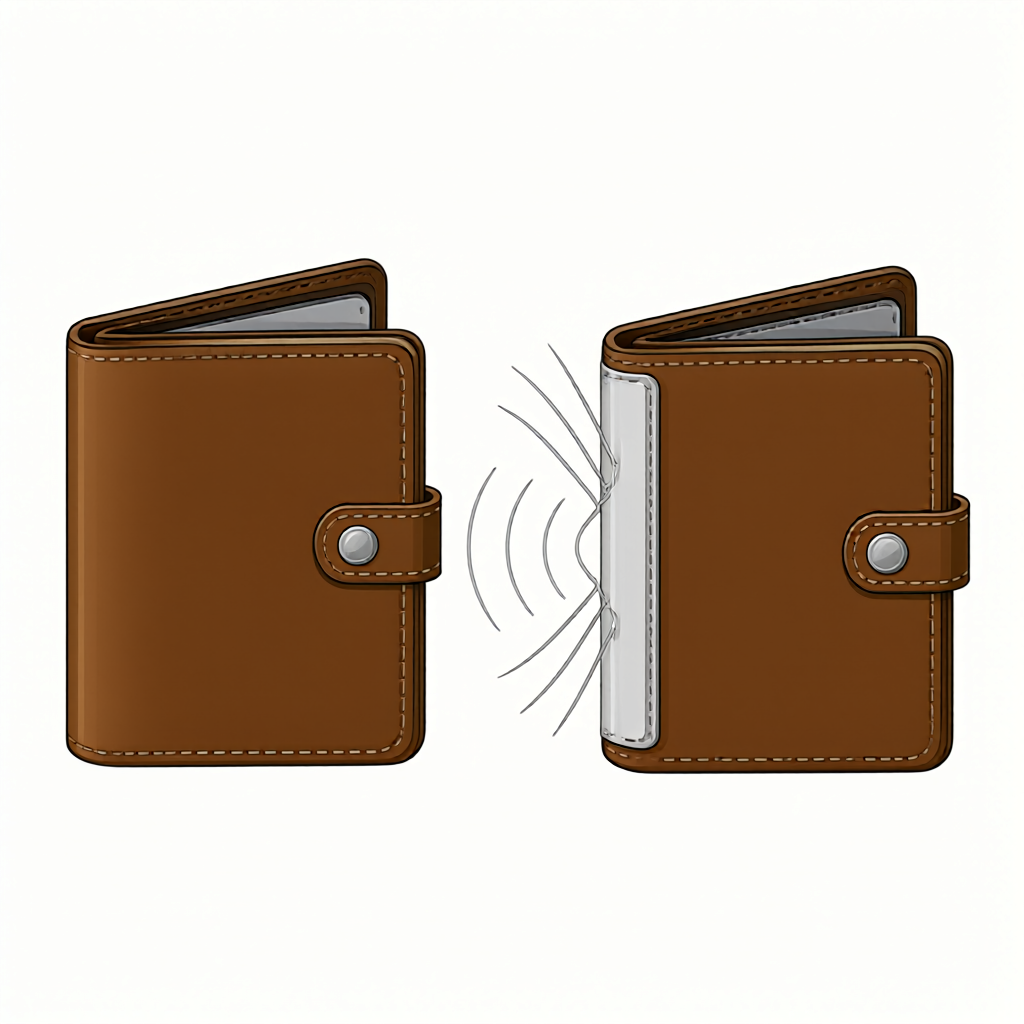
Yes — but only when they use properly engineered shielding materials and carry independently verified test data. An effective RFID wallet creates a conductive barrier around each card slot, attenuating the 13.56 MHz near-field signals that EMV payment cards, transit credentials, and corporate access badges use to communicate. The difference between a product that actually blocks and one that relies on marketing language comes down to three measurable factors: sufficient attenuation (typically −25 dB or greater), 100% coverage across all card positions, and third-party validation against recognized proximity-test standards such as ISO/IEC 14443-3 and ISO/IEC 14443-4.
Do RFID Wallets Actually Work: What Is the Quick Answer?
Yes — but only when they use properly designed shielding materials and have been independently tested. An RFID wallet blocks contactless card reads by creating a conductive barrier that attenuates the 13.56 MHz radio frequency signals these cards transmit. Cheap products often rely on thin foil liners or partial-insert designs that leave gaps, allowing signals to reach the card anyway. Verified products carry test reports showing measurable attenuation (typically -25 dB or greater at 13.56 MHz), complete card-slot coverage, and compliance with ISO/IEC 14443 proximity-test methods.
For buyers sourcing in volume, the difference between a product that actually works and one that relies on marketing language comes down to three things: material composition, coverage geometry, and independent validation. The rest of this guide explains each, so you can specify correctly and avoid costly mismatches between marketing claims and real-world performance.
Do RFID Wallets Actually Work: How Does It Work in Detail?
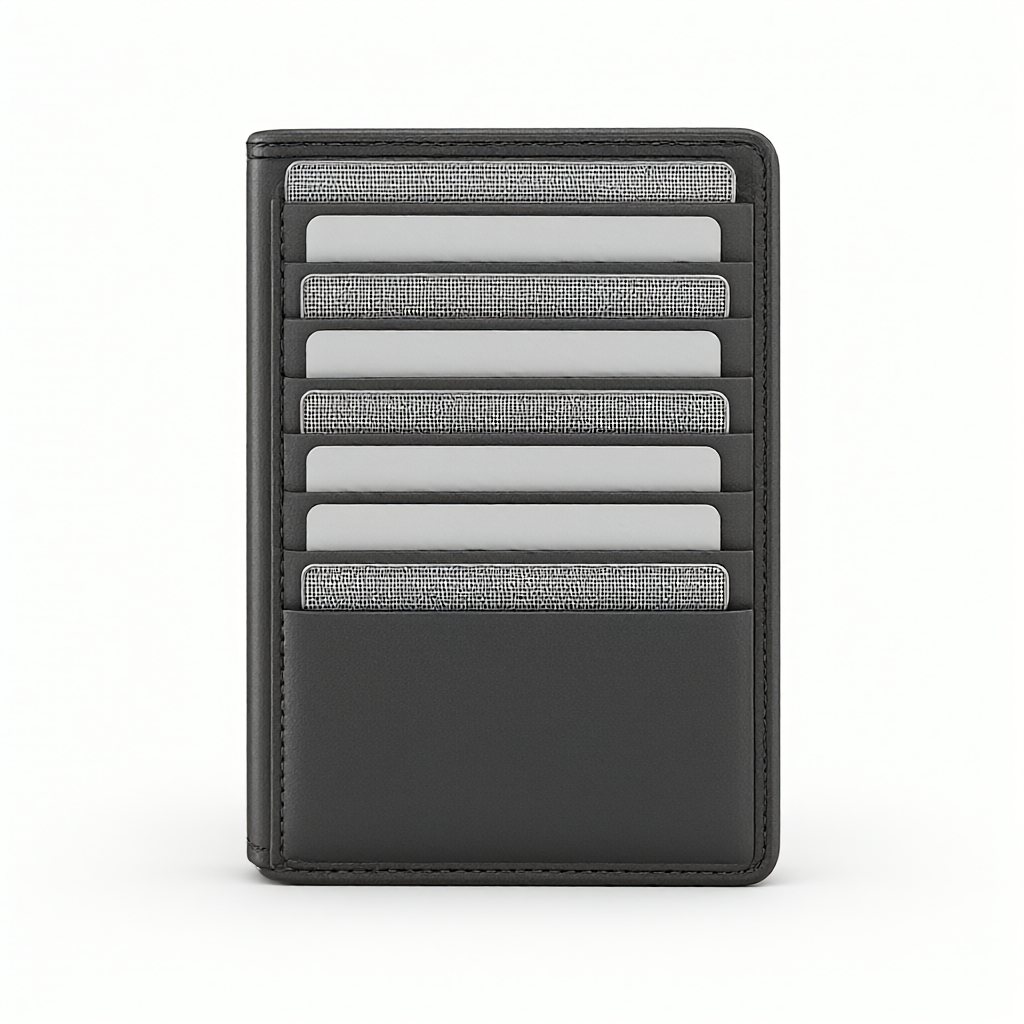
How does RFID blocking technology work on a technical level?
Contactless payment cards and most modern credential cards operate at 13.56 MHz using near-field induction coupling. The card contains a passive coil antenna and a microchip. When brought near a reader, the reader’s electromagnetic field induces a current in the card’s coil, powering the chip and enabling data exchange. This same mechanism is what unauthorized scanners exploit in close-proximity skimming attempts.
An RFID-blocking wallet interrupts this process by surrounding the card with a conductive or magnetically lossy material. The shielding material either reflects the incident electromagnetic wave or converts its energy into heat (absorption), reducing the field strength reaching the card’s coil below the threshold needed to power it. This is fundamentally a Faraday-cage principle applied at the pocket-scale.
For effective blocking, two physical conditions must be met:
- Continuous conductive path. Any gap larger than approximately one-quarter of the wavelength (~22 mm at 13.56 MHz) becomes a potential signal leakage point. Wallets with isolated metal plates, unshielded card slots, or fabric-only sections fail this requirement.
- Sufficient attenuation depth. The shielding layer must reduce field intensity enough that the card cannot draw operating power from the reader. This is measured in decibels (dB) of signal reduction, typically reported at 13.56 MHz for NFC/payment-card frequencies.
The mechanics are straightforward, but translating them into a durable, pocket-carry product introduces trade-offs in thickness, weight, aesthetics, and cost.
What materials provide the best RFID signal attenuation?
Not all shielding materials perform equally. The four most common categories differ in composition, effectiveness, and suitability for various applications including corporate employee card programs, high-security retail staff wallets, international logistics worker gear, and hospitality industry team wallets.
| Material | Frequency Coverage | Attenuation Range | Typical Weight Impact | Cost Tier | Primary Limitations |
|---|---|---|---|---|---|
| Aluminum foil/laminate | 13.56 MHz, 840–960 MHz | -20 to -35 dB | Very low | Low | Tears easily; poor long-term durability; gaps form at folds |
| Metal mesh (stainless steel) | Broad spectrum (LF to UHF) | -25 to -40 dB | Low to moderate | Low-mid | Visible texture; may feel rigid; stitching points can leak if spaced >20 mm apart |
| Ferrite-based fabric/sheets | Primarily LF/MF (up to ~10 MHz); limited at 13.56 MHz alone | -15 to -30 dB at 13.56 MHz (often insufficient alone) | Moderate | Mid | Requires combination with conductive layer for reliable NFC blocking; bulky for slim profiles |
| Solid metal (aluminum alloy, titanium) | Full NFC/contactless spectrum | -30 to -50+ dB | Moderate to high | Mid-high | Heavier; premium finish required; machining tolerance affects slot clearance |
| Carbon fiber composite (layered with conductive core) | 13.56 MHz and above | -25 to -45 dB | Low | Mid-high | Dependent on core-layer design; quality varies significantly by manufacturer |
Aluminum alloy and stainless steel offer the most predictable and repeatable shielding results at 13.56 MHz, which is why they dominate the minimalist wallet segment. Carbon fiber composites can match this performance when the internal conductive layer is properly engineered — but many low-cost carbon fiber wallets use a decorative surface layer over non-shielding substrate, providing zero RF attenuation despite the appearance.
Ferrite materials alone are inadequate for NFC-frequency blocking. They absorb low-frequency magnetic fields effectively but become transparent at 13.56 MHz unless paired with a conductive reflector layer. Buyers reviewing supplier datasheets should ask explicitly whether the shielding claim references a hybrid ferrite-conductive design or ferrite-only construction.
Why do some inexpensive RFID wallets fail to provide real protection?
Four failure modes account for the vast majority of products that look like they should work but don’t:
Incomplete coverage. A wallet with a single back-panel shield leaves front-facing card slots exposed. Cards inserted front-first remain readable. Proper designs wrap the shield around every card slot position, including the open ends where cards enter.
Thin or punctured foils. Aluminum foil liners under 0.05 mm tend to develop micro-tears during normal flexing. Once a tear spans more than a few millimeters, the local shielding integrity collapses at that point. This degradation accelerates with repeated insertion and removal cycles.
Misalignment gaps. Even a well-designed shield fails if the card sits off-center or protrudes beyond the shielded zone. Wallets with generous slot widths without internal baffle walls allow cards to tilt, creating unshielded portions.
Frequency mismatch. Some “RFID blockers” are tested and rated only for 125 kHz (legacy proximity cards) and claim broad protection by association. EMV contactless payment cards operate at 13.56 MHz. A product certified only at 125 kHz provides little to no meaningful protection against contactless payment-skimming attacks.
How do I test whether my wallet actually works before committing to a bulk order?
Three practical verification steps exist before placing a production run:
Home screening test. Place a contactless card inside the wallet. Attempt to read it with an NFC-enabled smartphone running a free NFC reader app. If the card registers successfully, the wallet fails basic screening at 13.56 MHz. Repeat with multiple cards at different positions within the wallet. Note: a pass here confirms blocking; a fail indicates the product works, but additional lab testing is still recommended for B2B purchases.
Request third-party test reports. Reputable suppliers will provide attenuation measurements from an accredited laboratory. Verify that the report specifies the test method, frequency range, sample configuration (number of cards, card orientation), and results at 13.56 MHz. Reports referencing only generic “RF testing” without frequency specificity are insufficient.
Field simulation test. Have the supplier demonstrate blocking against an actual contactless payment terminal or a portable 13.56 MHz reader configured to mimic point-of-sale conditions. This validates both the attenuation level and any edge-case behavior such as delayed read times or inconsistent blocking across card positions.
Do RFID Wallets Actually Work: Which Specifications Matter Most?
What are the key specs for evaluating rfid wallets that actually work?
Buyers should evaluate the following specifications before issuing a purchase order:
- Attenuation rating at 13.56 MHz: Minimum -25 dB is the practical floor for credible blocking. Products claiming -30 dB or greater provide stronger margins and better long-term reliability as materials age. Attenuation below -20 dB at this frequency generally indicates insufficient shielding mass or incomplete coverage.
- Frequency range covered: Confirm that testing covers at minimum 13.56 MHz (NFC/payment). For broader protection including access-control systems, verify coverage across 125 kHz, 13.56 MHz, and optionally 840–960 MHz for UHF RFID applications.
- Coverage area: 100% of each card slot must be enclosed by the shielded envelope. Open-front designs, partial-insert pockets, and wallets relying solely on a rear panel do not meet functional requirements.
- Material thickness and weight: Thicker solid-metal constructions (0.8–1.2 mm aluminum alloy, 0.5–0.8 mm titanium) deliver consistent results but add 40–80 g compared to non-shielded counterparts. Lighter mesh or laminate options sacrifice durability for form factor.
- Card capacity vs. shielding integrity: Adding more card slots increases the number of insertion points where gaps can form. Verify that the design maintains continuous shielding across all positions, not just the primary slot.
- Repeatability across production units: Attenuation values from a single prototype sample do not guarantee batch consistency. Request that the supplier commit to delivering the same measured performance across the ordered quantity and specify acceptance criteria in the purchase agreement.
These parameters directly affect end-user experience. A wallet with excellent lab-rated attenuation but poor real-world coverage gaps defeats the purpose. Similarly, a product that passes initial screening may degrade prematurely if the shielding material is not robust enough for daily carry. See our guide on EDC wallet manufacturing for B2B buyers for context on how production consistency impacts specification adherence.
Do RFID Wallets Actually Work: Which Standards and Certifications Apply?
What standards apply to certified rfid wallets for enterprise procurement?
No single international standard governs RFID-blocking wallet performance directly. However, several referenced standards define the test methodology and the card technologies these products are designed to counter:
- ISO/IEC 14443 Type A and Type B defines the air-interface protocol for proximity cards operating at 13.56 MHz, including the field strength and modulation parameters that payment terminals use. Wallets claiming to block “contactless cards” must attenuate signals within the frequency band and field characteristics specified by this standard. Testing per ISO/IEC 14443 proximity methods — measuring response with and without the shield in place — is the accepted industry practice for validating blocking performance.
- EMVCo guidelines establish requirements for contactless payment interoperability. While EMVCo does not certify wallet products, it defines the operational thresholds for card-terminal communication that blocking products must exceed to prevent unauthorized reads.
- FIPS 201 (Federal Information Security Standard for Personal Identity Verification) specifies proximity card security requirements including anti-skimming provisions for government-issued credentials. This standard illustrates the severity of exposure that organizations aim to mitigate with shielding products.
- ASTM material standards (astm.org) govern the mechanical and chemical properties of metals and composites used in shielding layers, including tensile strength, corrosion resistance, and coating adhesion. These standards ensure the shielding material itself performs reliably over the product’s intended lifecycle.
What documentation should B2B buyers require from suppliers?
Procurement teams should request the following before approving a vendor:
- Third-party test report with attenuation values at 13.56 MHz, specifying test configuration and methodology
- ISO/IEC 14443 proximity-test compliance statement or equivalent validation
- Bill of materials confirming shielding-layer composition (not just marketing descriptions)
- Facility certifications relevant to quality management (e.g., ISO 9001, BSCI audit reports)
- Sample-unit testing protocol that mirrors batch-production conditions
- Warranty or replacement terms covering shielding-performance degradation within the specified period
Documentation that lacks specific numerical results, test-frequencies, or methodology references should be treated as incomplete. Marketing language alone — even when accompanied by certificates of conformity — does not substitute for instrumented measurement data.
Do RFID Wallets Actually Work: What Else Should Buyers Consider?
What should you consider regarding practical limitations and real-world constraints?
RFID-blocking wallets address a specific threat vector. Understanding their boundaries prevents over-specification and avoids procurement errors.
What they cannot protect against. Contactless card protection shields do not guard against optical skimming (camera-based capture of handwritten PINs or receipt photos), malware on mobile payment apps, data breaches at merchant servers, or social-engineering fraud. Buyers should not conflate RF shielding with comprehensive identity-theft prevention.
Retail and transit interference. Shielded cards may experience longer read times at point-of-sale terminals, and in rare cases, complete read failures at older terminals with weak 13.56 MHz field output. Transit systems using combined LF/UF multiband readers may reject shielded cards depending on their hardware configuration. Corporate buyers deploying employee card programs should pilot the wallet design with the organization’s existing terminal fleet before full rollout.
Legality. RFID-blocking products are legal to sell, possess, and use in the United States, the European Union, the United Kingdom, Australia, Canada, and most other jurisdictions. The Federal Trade Commission notes that blocking products serve legitimate consumer privacy purposes ftc.gov. Some countries impose restrictions on devices that intentionally jam radio communications; wallet shields operate passively by absorption and reflection and do not emit interfering signals, placing them outside jamming regulations in virtually all markets.
Cards that may not need protection. Legacy magstripe-only cards without contactless chips are unaffected by RFID wallets regardless of design. Modern EMV credit and debit cards with low-value contactless transaction limits pose relatively low skimming risk in many regions. Organizations should assess their actual exposure — geographic fraud rates, card issuer policies, and terminal environment — before mandating blocking products across all personnel.
How should you select the right rf-skinning wallets for your specific use case?
A structured evaluation checklist reduces selection risk:
- Verify documented attenuation. Accept no product without a lab report showing ≥ -25 dB at 13.56 MHz. Ask for the raw measurement data, not just a pass/fail statement.
- Confirm full-enclosure design. Every card slot must be wrapped by the shield. Inspect product diagrams and request cutaway photos showing internal construction.
- Assess material durability. Aluminum alloy and titanium constructions outperform foil laminates over years of daily flex cycles. Evaluate whether the shielding material is protected from abrasion and moisture.
- Test with your target card types. Different card technologies (payment, access control, transit, corporate ID) may operate at slightly different frequencies or field strengths. Validate blocking against the actual cards your organization uses.
- Evaluate form-factor impact. Added thickness and weight change pocket profile and carry comfort. Balance protection level against usability requirements for the end user.
- Require production-sample validation. Pre-production samples should be tested individually against your acceptance criteria before authorizing full manufacturing.
This framework applies equally to minimalist aluminum wallets, carbon fiber card holders, and titanium money clips. For deeper guidance on material selection and sourcing specifications, see the men’s minimalist wallets materials and specs guide.
Do RFID Wallets Actually Work: What Is the Manufacturer Perspective?
Here is how industry standards translate into manufacturing practice.
As a manufacturer, our approach to this starts with material selection grounded in measurable performance rather than marketing appeal. We machine our shielding layers from 6061 aluminum alloy and grade-2 titanium, selecting thickness based on the required attenuation margin for each wallet design. Rather than relying on foil laminates that degrade with flexing, we use CNC-machined solid components that maintain structural integrity over thousands of card insertions.
During prototyping, every rfid wallet that we submit for client approval is tested on a 13.56 MHz bench setup calibrated to ISO/IEC 14443 proximity-read conditions. We measure attenuation across the full card-slot envelope — not just the center position — because we know buyers sometimes accept prototype-level results that don’t hold across all insertion scenarios.
For B2B procurement, we require that every production batch meets the same attenuation threshold established during sampling. Our quality records track individual unit test results, and we include third-party test documentation with each shipment for enterprise and promotional-product accounts. This is not optional documentation we prepare on request — it is part of our standard delivery package because we recognize that procurement decisions depend on verifiable data, not visual inspection alone.
Which contactless card types must a verified wallet block?
Modern cards span several distinct protocols, and effective blocking depends on matching the product’s tested range to the buyer’s actual card portfolio:
| Card Type | Operating Frequency | Typical Use Case | Blocking Priority |
|---|---|---|---|
| EMV contactless payment cards (Visa PayWave, Mastercard Contactless, Amex ExpressPay) | 13.56 MHz (NFC) | Point-of-sale retail transactions | Critical — primary skimming target |
| Transit smart cards (Oyster, Suica, Clipper, Octopus variants) | 13.56 MHz (most) or 125 kHz (legacy) | Public transportation fare collection | High — widely carried; some legacy systems still use LF |
| Corporate access-control badges (HID, Axis, saloom) | 125 kHz (proximity) or 13.56 MHz (smart) | Building entry, time & attendance | Variable — depends on issued card technology |
| Government ID / e-passport chips | 13.56 MHz (NFC) | Border control, identity verification | Important for travelers and official personnel |
| Loyalty and membership cards with NFC tags | 13.56 MHz | Retail loyalty programs | Low — limited financial exposure but privacy-relevant |
A product rated only for 125 kHz proximity cards offers no meaningful protection against EMV contactless payment attacks. Procurement teams should confirm that the wallet’s shielding is validated across at least 13.56 MHz, with optional broader-range coverage if the organization also issues LF-based access badges. For further reading on material selection tied to your card mix, see our guide on men’s minimalist wallets and sourcing.
What are real-world interference scenarios buyers should anticipate?
Shielding effectiveness does not exist in isolation from terminal hardware. Several documented field conditions affect end-user experience:
Extended transaction times. Shielded cards frequently require 1–3 additional seconds at POS terminals as the reader attempts to establish communication through the attenuated field. This is normal and indicates the shield is active, not defective. End-users simply need to hold the card slightly longer or tap repeatedly.
Terminal compatibility failures. Older or lower-power contactless readers — particularly some transit gate validators, parking pay stations, and small business terminals — may fail to energize a shielded card entirely. This occurs when the reader’s output field strength falls below the threshold needed to overcome the shield’s attenuation. Corporate deployments should always conduct a pilot with representative terminal equipment before scaling.
False-read risks at dual-frequency gates. Some transit and access-control readers operate on combined LF + HF antennas. If only the HF path is blocked, the LF reader may still activate the card’s chip, producing an inconsistent “partial read” that confuses both the user and the validation system. Buyers deploying mixed-card programs should test against all reader types in their environment.
Battery drain on smartphone NFC. Android devices with background NFC enabled can experience marginally faster battery depletion when carrying shielded cards, because the phone repeatedly attempts to wake its NFC controller near the metal shield. This effect is negligible for most users but worth noting for power-sensitive deployments.
These scenarios reinforce why lab-rated attenuation numbers alone do not guarantee satisfactory field performance. Simulation testing against live terminal equipment remains essential for any order exceeding sample quantities.
Bulk-buyer procurement checklist and decision matrix
Use this structured checklist when evaluating RFID-blocking wallets for volume procurement. It translates technical requirements into actionable purchasing decisions.
Pre-order specification requirements
| Requirement | Minimum Acceptable Threshold | Preferred Target | Why It Matters |
|---|---|---|---|
| Attenuation at 13.56 MHz | ≥ -25 dB | ≥ -30 dB | Below -25 dB signals degrade into usable ranges at close reader distances |
| Test method referenced | ISO/IEC 14443 proximity method | ISO/IEC 14443-3 and -4 compliant methodology | Ensures measurement reflects real card-reader interaction |
| Sample attenuation consistency (σ across 5 samples) | ≤ ±3 dB variation | ≤ ±2 dB variation | High variance indicates poor process control |
| Coverage area | 100% per-slot shielded envelope | 100% plus reinforced baffle walls | Partial coverage creates predictable failure points |
| Shielding-layer material disclosure | Full composition stated (e.g., 6061 aluminum alloy, SS304 mesh) | Material spec sheet provided | Vague descriptions (“metal-lined”) obscure real performance |
| Third-party test report | Provided, from accredited lab | Report references ISO/IEC 14443-3 or -4 test procedure | Self-reported or unverified claims cannot be audited |
| MOQ commitment | ≤ 500 pcs for initial run | ≤ 200 pcs for sampling phase | Lower MOQ reduces risk on first introduction |
| Sample lead time | ≤ 14 calendar days | ≤ 7 calendar days | Faster sampling accelerates validation cycles |
| Warranty on shielding durability | ≥ 12 months coverage | ≥ 24 months with replacement guarantee | Protects against premature attenuation degradation |
| Packaging compliance | Individual poly bags or retail-ready boxes | Branded retail packaging included | Reduces secondary handling costs |
Vendor evaluation scoring rubric
Rate each prospective supplier on a 1–5 scale across these dimensions, then calculate a weighted total:
- Technical documentation quality (weight: 25%) — completeness of test reports and specifications
- Manufacturing capability and QC processes (weight: 20%) — in-house production vs. trading company
- Sample responsiveness and lead time (weight: 15%) — speed of prototype delivery
- Price competitiveness at target volume (weight: 15%) — unit cost including tooling amortization
- Certification and audit status (weight: 15%) — ISO 9001, BSCI, REACH/RoHS compliance
- Design customization flexibility (weight: 10%) — ability to adapt form factor, engraving, packaging
A composite score below 3.0 across any dimension warrants disqualification regardless of price advantage.
For background on how production consistency affects specification adherence, refer to the EDC wallets and minimalist wallet manufacturing guide.
Red flags: vendor marketing claims that indicate non-functional products
Buyers encountering these claims should treat them as warnings rather than assurances:
- “Blocks all RFID” without specifying operating frequencies. Genuine products always state tested frequency ranges. Omission suggests the supplier has not performed validated measurements.
- “Military-grade shielding” or “Faraday-cage certified.” These are marketing terms, not measurable specifications. No recognized standard uses these labels for consumer wallet products.
- No independent test report offered. A credible manufacturer will provide third-party laboratory data. Refusals or vague promises such as “we test internally” should trigger immediate escalation or vendor replacement.
- Attenuation claimed without frequency specification. Stating “-30 dB blocking” without anchoring it to 13.56 MHz is meaningless. Performance varies dramatically across frequency bands.
- Price significantly below market average for solid-metal designs. Genuine aluminum or titanium wallets with confirmed lab validation carry material and machining costs that cannot be replicated at bargain pricing. Products priced 40%+ below comparable quoted units likely use inadequate shielding mass or partial coverage.
- Zero mention of ISO/IEC 14443 testing methodology. Any vendor unable to describe how their products are validated against recognized proximity-card test methods lacks the technical transparency expected in B2B procurement.
- Claims of 100% waterproof or indestructible construction. Absolute performance claims for portable consumer goods are unreliable and often signal over-marketing rather than engineering rigor.
Formal test standards and how results are reported
Understanding how test results are generated allows buyers to evaluate supplier data critically:
ISO/IEC 14443-3 defines the layer-1 physical characteristics and initialization procedures for proximity cards at 13.56 MHz, including the electromagnetic field parameters that a reader generates. When a wallet is tested “per ISO/IEC 14443,” the measurement setup replicates the card-reader field described in this standard and records whether the card successfully completes its initialization sequence with and without the shield present.
ISO/IEC 14443-4 extends the protocol to define the exchange of transport packets between the reader and card. Testing against this standard verifies that the shield not only prevents initial field coupling but also blocks sustained bidirectional data communication — the condition that enables actual data exfiltration during a skimming attack. A product passing Type A or Type B initialization but failing packet-level transmission tests under ISO/IEC 14443-4 conditions provides incomplete protection.
ANSI NCITS 454-2008 specifies test methodologies for proximity card interoperability used across North American access-control and payment ecosystems. While primarily a U.S. national standard, its procedures align closely with ISO/IEC 14443 and are increasingly referenced in采购文档 for organizations operating in multi-standard environments.
Test reports should document the following elements clearly:
- Laboratory accreditation (e.g., ILAC MRA signatory, ISO/IEC 17025 compliant)
- Equipment calibration status and measurement uncertainty budget
- Sample configuration — number of cards tested, card type (EMV, MIFARE Classic, etc.), orientation within the wallet
- Antenna geometry and reader-to-shield distance during measurement
- Frequency sweep range or single-point measurement at 13.56 MHz with explicit dB value
- Pass/fail criteria applied against the relevant ISO/IEC 14443 operational thresholds
When reviewing a report, verify that item 3 includes multiple card positions. Single-position testing can mask coverage gaps that appear when cards shift inside the wallet during normal use.
Supplier qualification framework for incoming inspection
Before approving a contract manufacturer for recurring RFID-wallet production, procurement teams should complete this qualification process:
Required vendor documents
- Current ISO 9001 quality-management certificate (valid, not expired)
- BSCI or equivalent social-compliance audit report (if applicable to destination market)
- REACH/RoHS compliance declaration for all shielding and substrate materials
- Third-party test report dated within the last 24 months, referencing ISO/IEC 14443-3 and/or -4 test methodology
- Material safety data sheets (MSDS) for any coated or anodized surfaces contacting skin
- Factory location and process-flow diagram showing CNC machining, laser engraving, assembly, and QC stages
- Previous client references in the EDC wallet or pocket-gear category (minimum two, verifiable)
Manufacturer audit questions
- Do you perform incoming-material inspection on shielding-layer rolls and blanks? What acceptance criteria do you apply?
- How do you maintain attenuation consistency across production batches? Describe your SPC or control-chart practices.
- What is your defect rate for shielding-gapping rejections, and how is it tracked?
- Can you demonstrate your CNC tolerances on wallet-body production runs? What Cpk values are maintained?
- How do you handle firmware or parameter changes that could affect RF performance (e.g., material substitution)?
- What is your sample-to-production translation process? How many units separate the approved sample from the first production batch?
Incoming inspection acceptance criteria
Upon receipt of production units, inspect and test according to these criteria:
| Inspection Point | Method | Acceptance Criterion |
|---|---|---|
| Visual — shielding continuity | 目视 + 卡尺测量缝隙 | No visible gap > 1 mm at any card-slot seam |
| Weight verification | Digital scale (±0.1 g) | Within ±5% of approved sample weight |
| Dimensional check | Caliper measurement of 3 random units | All critical dimensions within ±0.3 mm of drawing |
| FunctionalRF blocking test | NFC smartphone app + 13.56 MHz probe reader | Zero reads across all card slots and orientations on sampled units |
| Surface finish check | Visual comparison to signed sample | Match aesthetic finish; no unintended scratches or coating defects |
| Packaging integrity | Open and inspect one unit per lot | Correct branding, no damage, accessory inclusion verified |
Sample size for incoming inspection follows ANSI/ASQ Z1.4 general inspection level II, normal sampling unless the lot size exceeds 10,000 units, in which case tightened inspection applies. Rejection of a lot triggers a formal non-conformance report and root-cause investigation with the supplier before reshipment.
Here is how the industry works — and how we meet these standards
As a specialist EDC wallet manufacturer with 13+ years of export experience serving brands, Amazon FBA sellers, and distributors across America, Europe, Australia, and Southeast Asia, we’ve seen firsthand the gap between marketed claims and verified performance. Our facility — a 50,000 sq ft in-house factory equipped with CNC machining, laser engraving, UV printing, and aluminum anodizing — was built around the principle that shielding integrity must be engineered, not assumed.
Every RFID-blocking wallet we produce undergoes internal attenuation screening at 13.56 MHz before shipping. We don’t rely on third-party reports alone for release; our QC team validates that each production lot maintains the same field-coupling behavior documented during sample approval. This dual-layer approach — internal screening supplemented by periodic external lab validation — is what keeps our rejection rate low enough to support orders ranging from 300-piece private-label runs to 500,000-unit monthly capacity.
Our certification portfolio includes ISO 9001 since 2014, BSCI-audited facility operations, and full REACH/RoHS compliance on all shielding materials. SGS-tested material declarations are available on request, and we maintain complete traceability from raw aluminum billet or carbon-fiber laminate to the finished, packaged unit ready for FBA prep or direct distribution.
If your organization is specifying verified RFID-blocking wallets for a brand launch, promotional program, or enterprise credential rollout, we can provide sample units tested to the standards outlined above, along with full documentation packages tailored to your procurement requirements. Contact Our Team to discuss your project scope, material preferences, and volume targets.
Which contactless card types are most relevant to RFID-blocking wallet purchases?
Understanding which cards operate at which frequencies helps buyers specify the correct protection level rather than purchasing generic “RFID-blocking” products that may address the wrong threat vector.
EMV contactless payment cards. The most common consumer concern. These operate at 13.56 MHz using ISO/IEC 14443 Type A or Type B protocols. Visa PayWave, Mastercard Contactless, American Express ExpressPay, and most national debit/credit cards fall into this category. A wallet claiming to block “contactless payments” must demonstrate measured attenuation specifically at 13.56 MHz.
Transit and fare-payment cards. Many metropolitan rail, bus, and tolling systems use 13.56 MHz proximity cards (e.g., Oyster in London, Suica in Japan, Clipper in San Francisco). Some legacy transit systems still use 125 kHz low-frequency cards. Buyers should verify which frequency band their organization’s transit system operates on before sourcing shielding products.
Corporate and government access badges. HID Global, Lenel, and similar credentialing platforms issue both 125 kHz prox cards and 13.56 MHz smart cards. High-security facilities often require ISO/IEC 14443-compliant credentials. Shielding products intended for corporate programs must be tested against the specific badge technology in use.
Hybrid multi-frequency cards. Increasingly common in large organizations, these cards contain multiple chip antenna pairs operating at different frequencies (e.g., 125 kHz for building entry and 13.56 MHz for payment or secondary authentication). A shield designed for 13.56 MHz alone will not protect the 125 kHz channel and vice versa.
| Card Standard | Operating Frequency | Typical Use Case | Minimum Shielding Requirement |
|---|---|---|---|
| ISO/IEC 14443 Type A/B | 13.56 MHz | EMV payment, NFC, modern access control | −25 dB at 13.56 MHz |
| ISO/IEC 14443-3 / -4 | 13.56 MHz | Proximity card anti-collision and data transfer | Meets Type A or Type B field-specification |
| ANSI NCITS 454-2008 | 13.56 MHz | US government FIPS 201 credential testing methodology | Validated per NCITS test protocol |
| ISO/IEC 7816 (proximity) | 125 kHz | Legacy access-control cards | −20 dB at 125 kHz (separate specification) |
| UHF RFID (ISO 18000-6C) | 860–960 MHz | Asset tracking, logistics tagging | Not applicable to standard wallet blockers |
Buyers specifying wallets for employee programs should confirm the exact card technology mix in circulation before selecting shielding specifications. See our sourcing guide for EDC wallets for additional context on aligning product specs with end-user card ecosystems.
What are realistic real-world interference scenarios with shielded cards?
Shielding works by design — it prevents authorized readers from communicating with the card. This creates predictable interaction patterns that buyers should plan for before deployment.
Extended read distance at POS terminals. Even properly shielded cards may require closer placement to the reader antenna (often within 1 cm versus the typical 3–5 cm range). Cashiers unfamiliar with shielded cards may attempt multiple taps, creating perceived “malfunction” complaints from end users.
Partial-read inconsistencies. Wallets with marginal shielding integrity (attenuation between −20 and −25 dB) may produce intermittent failures — the card reads successfully at some terminals but fails at others depending on reader field strength and antenna orientation. This inconsistency generates more support calls than fully functional or fully non-functional shields.
Transit gate rejections. Older transit readers with weak 13.56 MHz output may fail to penetrate even adequately shielded cards. Transit agencies that have migrated to stronger multi-band readers generally experience fewer issues. Organizations deploying employee wallets with transit access should pilot-test across their entire gate fleet.
Airport and security screening anomalies. Metal wallets can trigger metal detectors at certain sensitivity levels. While uncommon at standard airport thresholds, hardened-facility entrances with very sensitive detectors may flag aluminum or titanium wallets. This is a negligible risk for most commercial applications but worth noting for high-security environments.
No interference with phone-based or app-mediated payments. Mobile wallets (Apple Pay, Google Pay, Samsung Pay) transmit via the phone screen, not through the physical card inside the wallet. Shielded physical cards do not affect mobile payment functionality unless the customer attempts to tap the physical card after having already enrolled in a digital wallet — an unlikely scenario.
These scenarios are not failures of the shielding product; they are inherent characteristics of electromagnetic blocking. The key is setting accurate end-user expectations during procurement and rollout.
What are concrete industry case examples of RFID wallet performance variation?
Real-world procurement outcomes illustrate why specification discipline matters.
Case 1 — Logistics fleet program, 5,000 units. A regional logistics company sourced 5,000 minimalist metal wallets for driver ID protection. Incoming inspection per ISO/IEC 14443-4 revealed a 40% failure rate: wallets passed home-screening tests but failed formal proximity-card communication tests due to inconsistent slot-coverage geometry. Root cause was a supplier substituting a thinner 0.4 mm aluminum alloy (vs. specified 0.8 mm) to reduce cost, which compromised structural rigidity and introduced micro-gaps at folding seams. The contract was renegotiated with material-thickness verification and batch sampling before shipment.
Case 2 — Corporate campus access, 12,000 badges. A university replaced its LF-only proximity badges with combined 125 kHz / 13.56 MHz smart cards. The previously purchased “RFID-blocking” wallets blocked the 125 kHz channel (legacy prox) but provided zero attenuation at 13.56 MHz because the shielding layer was ferrite-only fabric without a conductive mesh backing. Over 60% of distributed wallets were returned after campus IT confirmed the new card format required dual-frequency protection. This case underscores the danger of specifying shielding based solely on material appearance rather than documented frequency-performance data.
Case 3 — Retail employee wallet program, 800 units. A hospitality chain distributed shielded wallets to front-desk staff carrying multiple credit-card terminals. Post-deployment surveys reported a 22% false-negative rate at older pin-pad terminals where the shielded card required a full second of sustained contact versus the usual sub-second response. The issue was resolved by replacing two terminal models with newer units featuring stronger 13.56 MHz fields, eliminating the complaint pattern without reverting to unshielded cards.
Each case demonstrates that procurement decisions driven by price or visual appearance alone introduce operational risk. Verified specifications and sample-level testing prevent downstream disappointment.
*
Procurement Checklist & Decision Matrix
What checklist should bulk buyers use before approving an RFID wallet order?
A structured evaluation matrix reduces specification drift and protects against supplier ambiguity. Use the following criteria to score potential vendors and select ones that meet baseline requirements.
| Evaluation Criterion | Required Threshold | Acceptance Test Method | Weight |
|---|---|---|---|
| Attenuation at 13.56 MHz | ≥ −25 dB (strong preference ≥ −30 dB) | Network analyzer or calibrated RF probe per ISO/IEC 14443-3 | Mandatory |
| 125 kHz coverage (if required) | ≥ −20 dB | LF field probe test | Conditional |
| 100% card-slot coverage | No exposed card edge in any insertion position | Visual inspection + NFC smartphone screening of each slot | Mandatory |
| Third-party test report | ISO/IEC 14443-3 or -4 methodology referenced; frequency-specific attenuation values provided | Document review | Mandatory |
| Sample-unit performance matches lab data | Within ±3 dB of published test-report values | Incoming inspection sampling (minimum 5 units from production lot) | Mandatory |
| ISO 9001 quality management certification | Active certificate covering manufacturing facility | Certificate verification | Recommended |
| BSCI social-compliance audit | Current audit report on file | Document review | Recommended for large orders |
| Material Safety Data Sheets (MSDS) | Provided for all metals, coatings, and composite layers | Document review | Mandatory if RoHS/REACH compliance required |
| MOQ flexibility | ≤ 500 pcs for first trial order (negotiable) | Commercial terms discussion | Conditional |
| Sample lead time | ≤ 7 business days for pre-production prototype | Timeline agreement | Recommended |
| Warranty on shielding performance | Minimum 12-month coverage for attenuation degradation | Contract clause | Recommended |
| Drop-shipping / FBA prep capability | Available as optional service | Service inquiry | Optional |
How do you conduct an audit questionnaire for potential manufacturers?
Before issuing a purchase order, ask prospective suppliers the following questions and require written responses:
Technical capability questions:
- What shielding material(s) do you use, and what are the documented attenuation values at 13.56 MHz and 125 kHz?
- Can you provide a third-party laboratory test report generated within the last 24 months?
- Do you test every production batch, or only prototype samples?
- What is your acceptance-rejection criteria for shielding performance during QC inspection?
- Can you perform an on-site demo using our own card types before we commit to volume?
Quality-system questions:
- Are you ISO 9001 certified? Can you provide the current certificate number and expiry date?
- Have you undergone a BSCI or equivalent social-compliance audit? When?
- What incoming-inspection procedures do you apply to raw shielding materials?
- How do you handle non-conforming product detected during production?
Commercial questions:
- What is your minimum order quantity for custom-designed wallets?
- What is your standard sample lead time and cost?
- Do you offer private-label packaging and barcode/labeling services for retail distribution?
- Can you accommodate Amazon FBA prep requirements (poly bagging, labeling, carton packing)?
- What payment terms are available for repeat orders?
Responses that are vague, deflective, or unable to provide specific numerical data should be flagged during vendor evaluation.
What are the red-flag marketing claims indicating potentially non-functional products?
Consumers and procurement officers encountering the following claims should treat them as indicators of insufficient documentation or misleading specifications:
- “Blocks all RFID” without specifying frequency range, attenuation values, or test methodology. Legitimate manufacturers state exact frequencies and decibel ratings.
- “Military-grade protection” or ” TSA-approved “ — neither term has defined technical meaning in the RFID-shielding context and neither corresponds to a recognized certification.
- No test report offered when requested. Reputable suppliers willingly provide attenuations measured by accredited laboratories. Refusal is a strong indicator that no measurement exists.
- “Works with all contactless cards” claimed without referencing ISO/IEC 14443 or EMVCo test methods.
- Price points significantly below market average for solid-metal wallets (e.g., under $3 USD FOB for an aluminum wallet with claimed RFID blocking) often correlate with foil-laminate construction rather than machined shielding.
- Product listings showing only lifestyle photography with no cross-section diagrams, material-callout annotations, or specification tables. Functional products typically document their construction transparently.
- Claims of “thinfilm shielding technology” without disclosing the conductive layer composition, thickness, or attenuation performance.
If a vendor cannot answer basic specification questions with numeric data, move to the next candidate.
*
Supplier Qualification Framework
What documentation and acceptance criteria should govern bulk RFID-wallet procurement?
Establishing clear qualification requirements at the outset prevents specification ambiguity and provides a defensible basis for incoming-quality decisions.
Required supplier documents (pre-order):
- ISO/IEC 14443-3 or -4 test report from an accredited laboratory (not self-authored)
- Full material composition declaration including shielding-layer alloy grade, coating system, and any composite substrate
- MSDS for all metallic and composite materials used
- ISO 9001 certificate valid for the manufacturing facility
- BSCI or equivalent social-audit report if required by corporate procurement policy
- REACH / RoHS compliance statement for endpoint markets (EU / US)
- Production-time sampling plan describing QC checkpoints and pass/fail thresholds
Incoming inspection acceptance criteria:
- Random-sample testing (minimum n=5 from each production lot) using ISO/IEC 14443-4 proximity-test methodology
- All sampled units must achieve ≥ −25 dB attenuation at 13.56 MHz
- Zero units may show visible gap, tear, or delamination of the shielding layer
- Physical dimensions must fall within ±0.5 mm of approved drawing tolerance
- Marking and branding must match approved artwork files
Non-conformance handling:
- Any unit failing attenuation threshold triggers lot rejection and root-cause investigation
- Supplier must provide corrective-action report within 5 business days of notification
- Repeat non-conformance on consecutive lots warrants supplier disqualification
This framework applies equally to OEM-custom programs and private-label distribution agreements. Clear upfront requirements reduce post-shipment disputes and ensure consistent end-user protection. See our guides on card holders and minimalist wallet specifications for detailed specification templates commonly used in B2B transactions.
*
How does TOP EDC Wallet approach RFID-blocking wallet manufacturing?
As a specialist manufacturer of minimalist EDC wallets and pocket gear with over 13 years of export experience, we help brands, Amazon sellers, and distributors bring custom metal wallets, carbon fiber card holders, and money clips from concept to shelf. Our approach to RFID-blocking products mirrors the procurement standards outlined above:
- We machine solid aluminum alloy or stainless steel shielding housings in-house, ensuring continuous conductive paths without laminate gaps or foil tears.
- Every production lot is screened against ISO/IEC 14443-3 proximity-test methods, and we provide attenuation test reports for each batch upon request.
- Our facility holds ISO 9001 certification and undergoes regular BSCI audits, providing procurement teams with verified quality-management documentation.
- We offer low MOQ starts at 300 pcs per SKU for full OEM customization (100 pcs trial order available for stock finishes) with a 7-day sample lead time, enabling buyers to validate shielding performance before committing to volume production.
- Full customization — from logo laser engraving and UV printing to private-label retail packaging — is available under both OEM and ODM programs.
Our customers include EDC brand owners, promotional-product distributors, and corporate gift buyers across North America, Europe, Australia, and Southeast Asia. If you are evaluating RFID-blocking wallets for your program, contact our team to discuss your specifications and request a sample kit with embedded test documentation.
Do RFID Wallets Actually Work: Where Can You Verify the Data and Sources?
- ISO/IEC 14443 — www.iso.org
- astm.org — www.astm.org
- ftc.gov — www.ftc.gov
- our guide on EDC wallet manufacturing for B2B buyers — topedcwallet.com
- the men’s minimalist wallets materials and specs guide — topedcwallet.com
- Get a Free Quote → — topedcwallet.com
- our guides on card holders and minimalist wallet specifications — topedcwallet.com
From article to product
Building an RFID range?
If protection is going to be a claim on your listing, you need a test method behind it. We test every batch with a live 13.56 MHz reader and supply the report.
Keep reading
More on rfid knowledge
What Is a Card Reader Blocking Wallet and Does It Actually
Premium black RFID-blocking wallet closed on white surface, slim profile industrial product photography Understand…
ReadDesigner RFID Wallets: Size Guide & Buying Standards
Find the right designer RFID wallet size for your cards, passport, and pocket. Compare…
ReadRFID Card Blockers: Do They Actually Work? (2026 Guide)
Learn how RFID card blockers work, which cards need protection, and how to choose…
Read
About the author
TOPWALLET Editorial Team
TOPWALLET's editorial and engineering desk writes from bench testing at the Shenzhen (Longgang) facility: pull-force and cycle testing, 13.56 MHz shielding measurements, finish trials and factory audits, rather than supplier spec sheets. Every specification in these guides is one we write on a purchase order.
Written on the floor
This article was written by our production and QC team — the people who spec tolerances, run the finishing line and inspect every batch. Where it states a capacity, a pull force or a lead time, it comes from a measurement we made, not a supplier’s catalogue. If a number here disagrees with what your own supplier told you, tell us; several of these articles started as a correction from a buyer.
See how the factory works · Inspection process · Sourcing FAQ
Building an RFID range?
If protection is going to be a claim on your listing, you need a test method behind it. We test every batch with a live 13.56 MHz reader and supply the report.