

Sourcing men’s card holders in bulk requires understanding material performance, certification requirements, and supplier reliability. B2B buyers — including Amazon FBA sellers, EDC brand owners, and promotional product distributors — typically order 300 to 5,000+ units from contract manufacturers offering OEM/ODM services, with FOB pricing ranging from $1.50 for aluminum through $12+ for titanium, and lead times of 7 days for samples to 15–35 days for production.
Card Holders: What Is the Quick Answer?
You can source affordable men’s card holders in bulk directly from contract manufacturers offering OEM and ODM services. Typical minimum order quantity of 300 pcs per SKU, with FOB pricing that drops significantly as order volume increases. Material choice is the largest cost driver — aluminum wallets generally range from $1.50 to $4 per unit at volume, carbon fiber from $3 to $7, and titanium from $6 to $12. Lead times run approximately 7 days for samples and 15 to 30 days for production, depending on customization complexity. Manufacturers that hold ISO 9001 and BSCI certifications, comply with REACH and RoHS standards, and offer in-house CNC machining and laser engraving will give you the best combination of quality control, design flexibility, and competitive pricing.
Card Holders: How Does It Work in Detail?
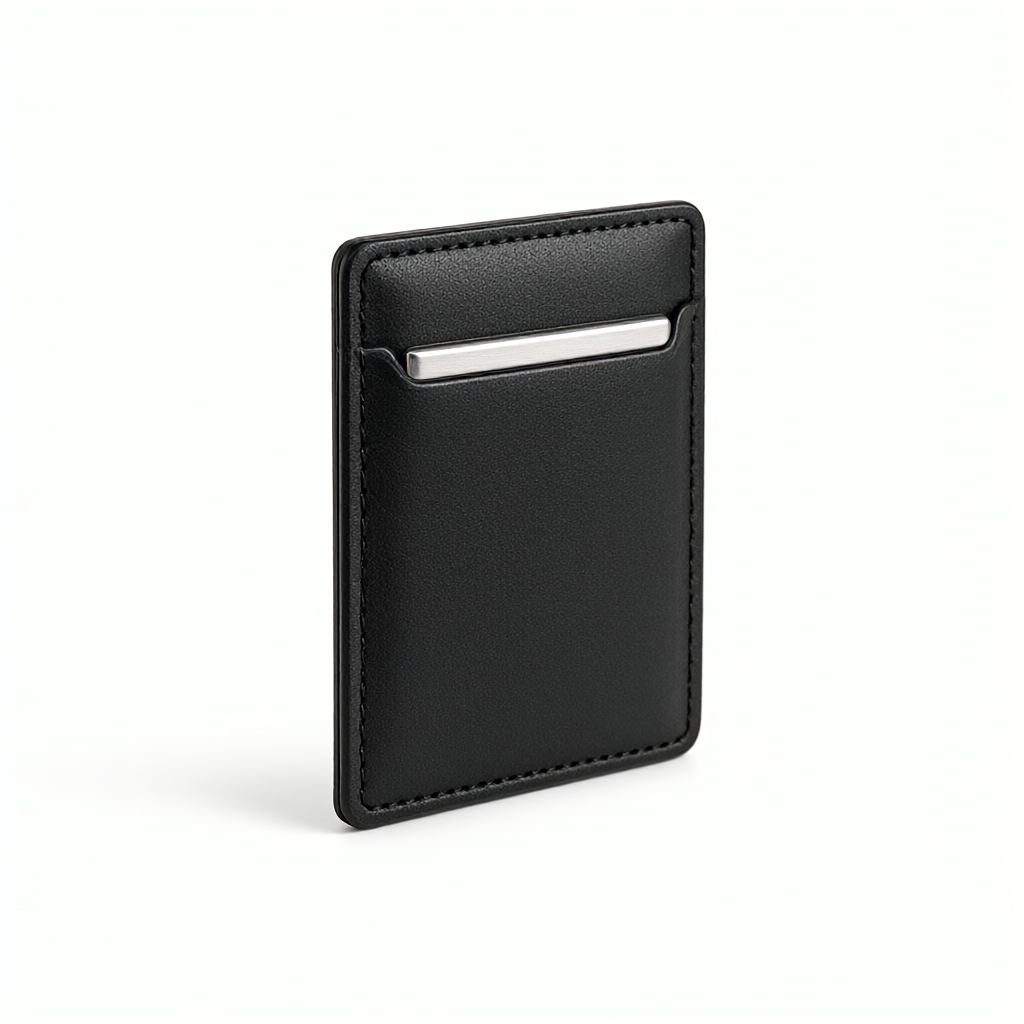
How does bulk pricing work for card holders?
Bulk pricing for men’s card holders follows a tiered structure driven by four main factors: material cost, production volume, level of customization, and packaging requirements. At the lowest tier — typically 100 to 500 units — per-unit costs reflect the full overhead of tooling setup, material procurement, and quality inspection. As volume increases to 1,000 to 3,000 units, manufacturers absorb these fixed costs across more pieces, reducing the per-unit price by 15 to 30 percent. Orders above 5,000 units often qualify for additional concessions, particularly on raw material purchases that can be bought in larger volumes at lower cost.
The base material alone accounts for roughly 30 to 50 percent of the final FOB price. Anodized aluminum is the most cost-efficient option because the raw material is widely available and CNC machining is highly automated. Carbon fiber requires more specialized laminating and curing processes, which raises the baseline. Titanium, while durable and lightweight, involves slower machining cycles and higher raw-material costs, pushing the per-unit price to the upper end of the range.
Customization adds cost at specific stages. Laser engraving a logo on the metal surface adds minimal expense — usually $0.10 to $0.30 per unit — because the process is fast and non-contact. UV printing on colored surfaces or adding multi-color graphics requires additional setup and calibration. Packaging is a separate line item: a custom retail box with insert design and branding typically adds $0.25 to $0.75 per unit depending on material and print complexity.
When evaluating a bulk quotation, always ask for a breakdown that separates unit cost, tooling fees, packaging, and shipping. Some suppliers bundle these together, making it difficult to compare quotes accurately. For a detailed look at how pricing structures vary across related EDC categories, you can also review our guide to billfolds on sale with competitive bulk pricing.
What materials are commonly used in men’s card holders?
The three primary materials in the minimalist card holder segment are aluminum, carbon fiber, and titanium. Each offers distinct trade-offs in weight, durability, aesthetics, and cost.
Aluminum (typically 6061 or 7075 grade) is the most popular choice for entry-level and mid-tier products. It weighs between 25 and 45 grams for a standard 6-card holder, resists corrosion through anodizing, and accepts laser engraving cleanly. The finish options are extensive — black, blue, red, gold, and military-style colors are all standard. Aluminum is ideal for high-volume orders where cost efficiency matters, such as promotional campaigns or retail chain sourcing. However, it is softer than titanium and can show micro-scratches with heavy daily use.
Carbon fiber sits in the mid-to-premium range. It is lighter than aluminum, scratch-resistant, and has a distinctive woven texture that appeals to EDC enthusiasts. The material is created by impregnating carbon threads with resin and curing under heat and pressure. A quality carbon fiber card holder typically weighs 20 to 35 grams and commands a higher price due to the labor-intensive layup process. It is particularly popular with Amazon FBA private-label sellers who need a visually striking product that photographs well.
Titanium (usually grade 2 or grade 5) is the premium option. It is significantly stronger than aluminum, nearly as light, and naturally hypoallergenic. The material develops a patina over time, which some users find desirable. Titanium money clip and card holder combinations are especially common in this tier. The machining time is longer and the material cost is higher, so these products are priced at the top of the market. For more detail on sourcing similar pocket gear, see our money clip sourcing guide for B2B buyers.
A fourth option worth noting is stainless steel, which offers maximum durability but at a weight penalty. It is less common in the slim card holder segment because the added bulk contradicts the front-pocket-friendly design philosophy.
What customization options are available?
Customization in the card holder category spans several dimensions: logo application, surface finish, dimensions, internal layout, and packaging. Understanding what each option entails helps you specify accurately and avoid costly revisions during sampling.
Logo application is the most common request. Laser engraving is the standard method for metal and carbon fiber surfaces — it produces a permanent, precise mark without adding thickness. The engraving depth is typically 0.05 to 0.15 mm, which is visible but does not affect the structural integrity of the wallet. UV printing allows for full-color logos on anodized surfaces but is less durable than engraving and best suited for lower-wear applications.
Surface finish can be customized beyond standard anodized colors. Bead blasting before anodizing creates a matte texture that hides fingerprints. Brushed finishes are achieved through mechanical polishing and are popular for a premium aesthetic. Clear-coating carbon fiber preserves the weave pattern while adding a glossy or satin top layer.
Internal layout is where ODM flexibility matters most. Standard configurations include a single card slot, dual-card slots with a cash strap, or a hybrid design that combines cards and a money clip. Some buyers request additional features such as a coin pocket, an ID window, or an RFID-blocking layer integrated between the outer shell and inner card tray. These modifications require re-engineering the internal mechanism, which adds time to the sampling phase.
Packaging is often overlooked but critical for retail and e-commerce buyers. Custom retail boxes with branded inserts, polybags with hang tags, and blind packaging for wholesale distributors are all common requests. The box design should protect the product during shipping while also functioning as a display piece on retail shelves.
How long does sampling and production take?
Sampling typically takes 5 to 7 business days for standard designs and 10 to 15 days for fully custom layouts that require new tooling or internal mechanism development. During the sample phase, the manufacturer produces a small batch — usually 3 to 5 units — using the actual materials and processes that will be used in mass production. This is the most reliable way to verify fit, finish, and functionality before committing to a large order.
Production lead time depends on order volume and customization depth. A straightforward aluminum card holder in a standard color with simple laser engraving can ship in 15 to 20 days for orders up to 2,000 units. More complex orders — involving custom packaging, multiple finish variations, or non-standard dimensions — may require 25 to 35 days. Rush production is sometimes available at a premium, but it is worth confirming with the supplier before placing the order.
Shipping method is a separate variable. Air freight adds 5 to 7 days but costs significantly more per kilogram. Sea freight is economical for large orders but requires 25 to 40 days depending on origin and destination ports. Many buyers combine both methods — air freight for the initial stock and sea freight for replenishment — to balance speed and cost.
Card Holders: Which Specifications Matter Most?
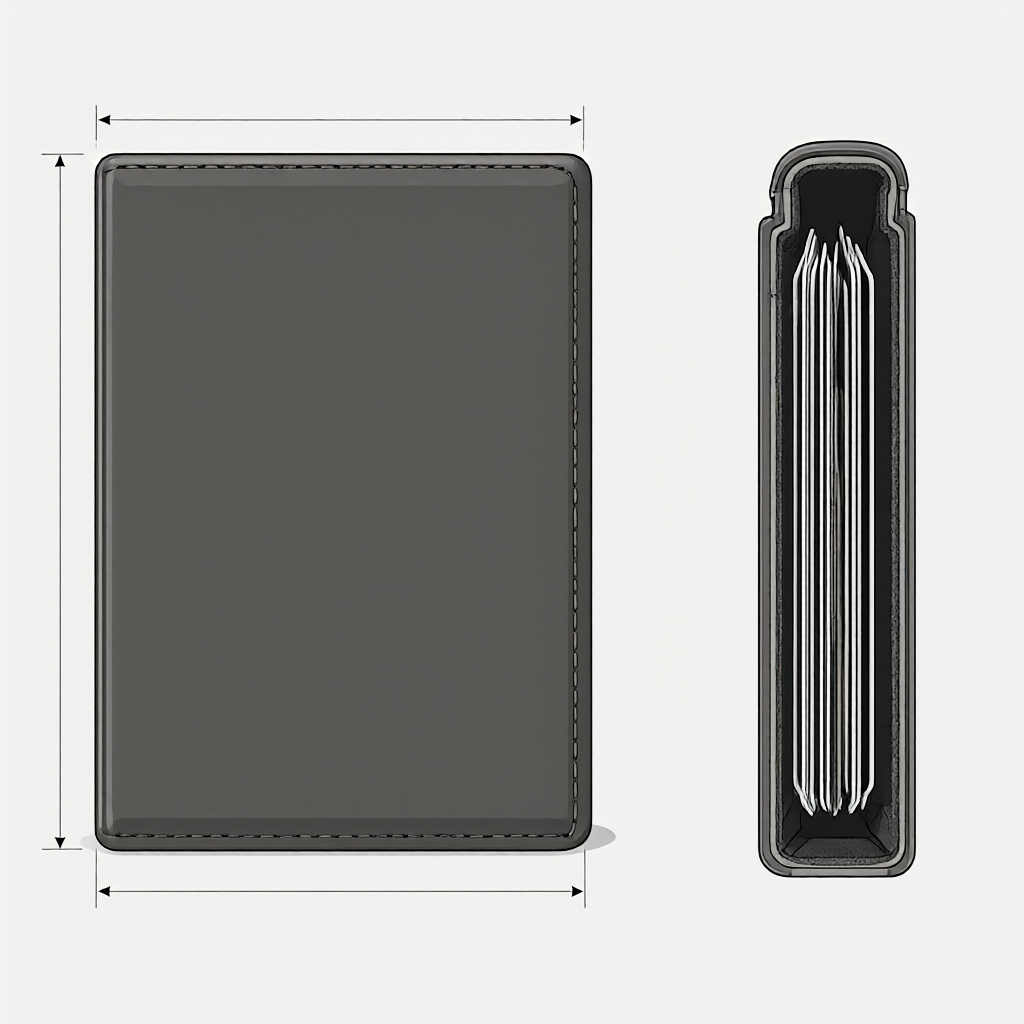
What are the key specs to evaluate when sourcing card holders?
Specifying card holders for a B2B order requires attention to dimensions, capacity, material thickness, and functional features. The following table shows typical specification ranges across the three main material categories.
| Specification | Aluminum | Carbon Fiber | Titanium |
|---|---|---|---|
| Weight (6-card capacity) | 25–45 g | 20–35 g | 30–50 g |
| Material thickness | 1.0–2.0 mm | 0.8–1.5 mm | 1.0–2.0 mm |
| Card capacity | 4–12 cards | 4–10 cards | 4–8 cards |
| Cash retention | Elastic strap or money clip | Elastic strap or money clip | Integrated clip or strap |
| RFID blocking | Optional add-on | Optional add-on | Optional add-on |
| Logo method | Laser engraving, UV print | Laser engraving | Laser engraving |
| Typical MOQ | 300 pcs | 300 pcs | 300 pcs |
For buyers evaluating a card holder mens sale or seasonal promotional pricing, these specification ranges provide the baseline against which quoted prices should be measured. A quotation that looks attractive but falls below the typical material and labor cost for the specified build quality may indicate corners being cut on material grade, finishing, or quality inspection.
Two additional specification areas deserve attention. First, RFID-blocking integration — if your market requires it, confirm whether the blocking material is a separate insert layer or embedded within the wallet structure. The performance of RFID shielding depends on continuous conductive coverage; gaps in the material reduce effectiveness. Second, dimensional tolerance — standard card sizes vary between regions. US-standard credit cards measure 85.60 × 53.98 mm, while EU and Asian variants can differ slightly. Always confirm the target market when specifying internal slot dimensions.
If you have specific dimensions, materials, and order quantities in mind, submit your requirements for a detailed bulk quotation.
Card Holders: Which Standards and Certifications Apply?
What certifications and standards apply to bulk card holder orders?
Quality certifications and regulatory compliance are essential when sourcing card holders for markets with strict import requirements. The following standards are most relevant to B2B buyers in this category.
ISO 9001 is the baseline quality management certification. It confirms that the manufacturer operates under a documented quality management system covering design control, supplier management, production processes, and corrective action. Buyers should request the current certificate and verify its validity through the certifying body.
BSCI (Business Social Compliance Initiative) audit reports are increasingly required by European retail buyers. The audit covers labor practices, working conditions, and environmental management. A BSCI-rated facility indicates that the manufacturer has undergone a third-party social compliance assessment.
REACH and RoHS compliance are regulatory requirements for products sold in the European Economic Area. REACH restricts the use of certain hazardous chemicals, while RoHS limits lead, mercury, and other heavy metals in electronic and metal products. For card holders, the primary concern is the anodizing and plating processes — suppliers should provide test reports confirming compliance for heavy metals and restricted substances.
SGS testing of raw materials is a practical indicator of supply-chain rigor. Reputable manufacturers submit incoming aluminum, titanium, and carbon fiber materials to SGS or equivalent laboratories for composition verification before production begins. This prevents substitutions that could compromise durability or regulatory compliance.
RFID-blocking performance is not governed by a single universal standard, but EN IEC IEC 44 4 and ISO/ IEC 14 44 3 define the technical parameters for proximity card shielding. Buyers should request test data from the supplier rather than accepting claim-only statements.
For buyers interested in broader sourcing guidance, our B2B wallet sourcing guide covers additional sourcing strategies and supplier evaluation criteria.
Card Holders: What Else Should Buyers Consider?
What should you consider before placing a bulk order?
The decision to source card holders in bulk involves several practical considerations that go beyond unit price. The following factors tend to separate successful B2B orders from problematic ones.
Material performance versus market expectation is the most common source of post-order disputes. Aluminum anodized finishes can scratch under heavy keys-and-cash carry. Carbon fiber resists scratches but can delaminate at the edges if the resin bond is poor. Titanium is the most resilient but commands a price premium. Matching material selection to the end-user’s actual carrying habits — not just the marketing story — reduces return rates and negative reviews.
Sample accuracy versus mass production is the second area where buyers should be vigilant. A sample that passes visual and functional inspection does not guarantee consistency across 5,000 units. In-house CNC machining and quality inspection at the factory level are strong indicators that the manufacturer can maintain consistency. Ask about their in-process quality control steps — random sampling during production, final inspection before packing, and packaging drop tests are all good signals.
Custom packaging and regulatory labeling requirements vary by destination market. The United States requires country-of-origin labeling on imported goods. The European Union has additional packaging waste regulations that may require recycled-content labeling or producer responsibility declarations. Confirm these requirements with your logistics provider before finalizing packaging design.
How the industry works — and how we approach it?
As a manufacturer, our approach to bulk card holder sourcing is built around three principles: specification clarity, material traceability, and production transparency.
We operate from a 50,000 square foot facility with in-house CNC machining, laser engraving, UV printing, and aluminum anodizing. This vertical integration means we control the critical steps of production rather than outsourcing them to third parties, which reduces the risk of specification drift between stages. Our MOQ starts at 300 pcs per SKU for full OEM customization (100 pcs trial order available for stock finishes), which allows smaller brands and Amazon FBA sellers to test the market without excessive inventory commitment. Sample lead time is 7 days for standard designs, giving buyers a快速 path from specification to physical evaluation.
We hold ISO 9001 certification and operate under BSCI-audited conditions. All raw materials are REACH and RoHS compliant, and we provide SGS test reports for incoming material verification. For RFID-blocking models, we supply performance test data rather than relying on claims alone.
Customization covers the full range from logo engraving and surface finish selection to internal layout modification and retail packaging design. Whether you are a retail chain sourcing a private-label line, an Amazon seller building a branded EDC product, or a promotional distributor needing corporate-gift-quality units at scale, the specification process starts with your requirements and moves through sample approval before production begins.
What is a men’s card holder and who is it for?
A men’s card holder is a slim, minimalist wallet replacement designed to carry credit cards, IDs, and sometimes cash in a compact front-pocket form factor. Unlike traditional bi-fold wallets, card holders eliminate bulk by using rigid or semi-rigid frames — typically aluminum, carbon fiber, or titanium — with integrated card slots and optional cash retention straps or clips.
The primary buyer segments for bulk card holder orders are:
- Amazon FBA private-label sellers seeking differentiate products with custom branding and packaging.
- EDC (Everyday Carry) brand owners building product lines around outdoor and urban lifestyle gear.
- Promotional product distributors ordering custom-branded items for corporate events and trade shows.
- Corporate gift buyers purchasing engraved or laser-marked units for client appreciation programs.
- Retail chain buyers sourcing wholesale inventory for outdoor, hardware, or lifestyle stores.
The global EDC accessories market was valued at approximately $2.8 billion in 2023 and is projected to grow at a CAGR of 6.5% through 2030, with card holders representing one of the fastest-growing subcategories due to declining cash usage and increasing preference for minimalist carry (Grand View Research, 2024).
RFID-blocking technology and relevant standards
RFID (Radio Frequency Identification) blocking has become a standard feature request from B2B buyers, particularly for the North American and European markets where contactless payment adoption has accelerated. Modern card holders integrate RFID shielding through one of two approaches:
Faraday cage construction uses a continuous conductive metal layer (typically aluminum or stainless steel mesh) sandwiched between the outer shell and inner card tray. This creates a grounded enclosure that attenuates electromagnetic fields in the 13.56 MHz range used by most proximity cards.
Ferromagnetic sheet inserts use thin sheets of mu-metal or iron-nickel alloy laminated inside the wallet body. These absorb and redirect RF signals rather than reflecting them.
Performance standards:
- EN IEC 61326-1 specifies electromagnetic compatibility requirements for RFID-blocking products.
- ISO/IEC 14443 and ISO/IEC 15693 define the operating frequencies and test methods for proximity and identification cards.
- Independent lab testing per ASTM F2503-19 (Standard Test Method for Performance of Materials Used in Defensive Armor) is occasionally requested by U.S. buyers for verification claims.
Buyers should request a test report from an accredited laboratory (SGS, TÜV, or Intertek) showing attenuation of at least 20 dB at 13.56 MHz. Claims without supporting documentation should be treated as unsubstantiated.
Packaging specifications and compliance
Packaging for bulk card holder orders must satisfy both logistics protection and market regulatory requirements. The following specifications are industry norms:
- Retail boxes: Corrugated cardstock, 1200–1500 gsm, with interior foam or paper insert. Cost ranges from $0.25 to $0.75 per unit depending on print complexity and material.
- Polybag with hang tag: Budget option for e-commerce fulfillment. Anti-static polybags are required for products claiming RFID functionality.
- Blister packs: Common for retail shelf display. Requires die-cut tooling (~$300–$800 one-time cost).
- Blind packaging: Plain white boxes for wholesale distributors who apply their own labeling.
Regulatory labeling requirements by destination:
- USA: Country-of-origin marking (FTC Textile Fiber Products Identification Act applies to textiles; for metal wallets, the Custom House Boundary Act requires “Made in China” or source country).
- EU: Packaging Waste Directive 94/62/EC requires recycled-content declaration. REACH SVHC (Substances of Very High Concern) declaration must accompany shipments.
- Australia: Wool标志 labeling if any textile components are present.
All packaging materials should comply with FSC certification (Forest Stewardship Council) where纸board is used, as major retailers increasingly require verified sustainable sourcing.
Supplier evaluation checklist for card holder manufacturers
When evaluating potential suppliers for bulk card holder orders, use the following checklist to identify red flags and verify capability:
| Evaluation Criteria | Green Flag | Red Flag |
|---|---|---|
| MOQ transparency | Clearly stated MOQ (e.g., 300 pcs) with volume tier pricing | Undefined or fluctuating MOQ; vague minimum quantity language |
| Certification documentation | Current ISO 9001, BSCI audit report, REACH/RoHS test certificates available on request | No certificates provided; expired or unverifiable documents |
| Sample lead time | 5–7 business days for standard samples; clear sampling fee policy | No sample program; samples taking 30+ days; no sample fee disclosed |
| Production lead time | 15–35 days stated with volume brackets | Vague timelines (“approximately one month”); no volume-based breakdown |
| Quality control process | In-process inspection, final random AQL sampling, packaging drop tests described | No QC process mentioned; only “we check before shipping” |
| Communication responsiveness | Response within 24 hours; technical questions answered with specifics | Delayed responses; generic replies; unwillingness to share test data |
| Tooling and customization | In-house CNC, laser engraving, UV printing capabilities confirmed | Outsourced production with no visibility into manufacturing process |
| Payment terms | Standard 30% deposit, 70% before shipment; secure payment channels | Unusual terms (100% upfront); requests for personal payment methods |
| References and track record | Client testimonials, export history to stated markets, verifiable case studies | No references; claims of “major brand” partnerships without proof |
| Factory audit access | Virtual or on-site audit available; facility photos and video tour provided | Factory details withheld; only stock photos of equipment |
A supplier scoring below 6 out of 10 on this checklist should be treated as high-risk. Always request a paid sample before committing to a production order.
Procurement decision framework: aluminum vs carbon fiber vs titanium
When selecting materials for a bulk card holder order, use the weighted scoring framework below to compare options against your priority criteria. Assign weights (1–5) based on your market’s priorities, then score each material (1–10) against each criterion.
| Criterion | Weight | Aluminum (6061/7075) | Carbon Fiber | Titanium (Gr2/Gr5) |
|---|---|---|---|---|
| Unit cost at volume | 5 | 9 | 6 | 4 |
| Weight (lighter preferred) | 4 | 6 | 9 | 8 |
| Scratch resistance | 4 | 5 | 9 | 10 |
| Corrosion resistance | 3 | 7 | 8 | 10 |
| Luxury/premium perception | 4 | 5 | 8 | 10 |
| MOQ flexibility | 3 | 9 | 7 | 6 |
| Laser engraving quality | 3 | 9 | 7 | 8 |
| Lead time consistency | 3 | 9 | 7 | 6 |
| Sustainability profile | 2 | 7 | 6 | 8 |
Example calculation: A buyer prioritizing cost (weight 5) and scratch resistance (weight 4) for a promotional product line might score aluminum highest overall. A buyer targeting premium EDC enthusiasts with weight (4) and luxury perception (4) as top priorities would likely select titanium.
How TOP EDC Wallet meets these standards?
As a manufacturer, our approach to card holder production follows the same frameworks outlined above — transparent specifications, documented quality systems, and material-grade traceability. Since 2014, we have operated a 50,000 sq ft facility with in-house CNC machining, laser engraving, and UV printing, producing 500,000+ units monthly for 200+ brands across America, Europe, Australia, and Southeast Asia. Our ISO 9001 certification, BSCI audit, and REACH/RoHS compliance provide the documentation baseline that serious buyers require. We offer low MOQs starts at 300 pcs per SKU with 7-day sample lead times, and every order includes SGS-tested material verification. For detailed specifications on aluminum, carbon fiber, and titanium card holder options, contact our team to discuss your project requirements.
Frequently Asked Questions
What is the typical MOQ for custom men’s card holders?
Most manufacturers, including TOP EDC Wallet, set minimum order quantities at 300 pieces for custom designs. Lower MOQs may be available for stock designs with minor logo modifications.
Can I get RFID-blocking card holders certified to international standards?
Yes. Request test reports from SGS, TÜV, or Intertek verifying attenuation at 13.56 MHz per EN IEC 61326-1. Reputable manufacturers will provide this documentation without hesitation.
How do I verify a supplier’s ISO 9001 and BSCI certifications?
Ask for the certificate number and verify it through the issuing body’s online registry. ISO certificates can be checked via the IAF CERES database; BSCI audit reports are accessible through the ETI (Ethical Trading Initiative) portal.
What’s the difference between OEM and ODM for card holders?
OEM (Original Equipment Manufacturing) means you provide designs and specifications, and the manufacturer produces to your blueprint. ODM (Original Design Manufacturing) means the manufacturer provides existing designs that you customize with your branding. ODM typically allows lower MOQs and faster time-to-market.
Are there restrictions on shipping metal card holders internationally?
Metal card holders are generally not classified as hazardous materials and ship without special restrictions. However, battery-containing products (e.g., smart wallets with NFC chips) may require UN38.3 certification for air freight. Always confirm with your freight forwarder.
How long do anodized aluminum finishes last under daily use?
Type III hard-anodized aluminum (minimum 25 microns thickness per MIL-A-8625 Type III) typically maintains finish integrity for 2–3 years of daily carry. Standard Type II anodizing (10–15 microns) may show wear within 12–18 months. Request anodizing thickness specifications from your supplier.
What packaging options work best for Amazon FBA sellers?
Amazon requires packages to pass without additional overboxing. Single-product polybags with suffocation warnings, retail-ready boxes with FNSKU barcodes, and blind packaging for bundle orders are the most common approaches. Confirm Amazon’s Packaging Support Certification (PSC) requirements before finalizing packaging design.
Card Holders: Where Can You Verify the Data and Sources?
- billfolds on sale with competitive bulk pricing — topedcwallet.com
- money clip sourcing guide for B2B buyers — topedcwallet.com
- submit your requirements for a detailed bulk quotation — topedcwallet.com
- B2B wallet sourcing guide — topedcwallet.com
From article to product
Turning this into a product?
Most of what is written here is the difference between a sample that works and one that does not. We can build either — the useful one costs the same.
Keep reading
More on buying guides
wallet with trigger
How Does a Trigger Wallet Work? What Is the Pop-Up Mechanism? The core of…
Readbest bifold wallet for women
What Is a Bifold Wallet? The term “bifold” refers to the fold: the wallet…
ReadMen’s trifold wallets with zipper compartments vs. bifold
At a Glance The three dominant men’s wallet formats differ in panel count, depth,…
Read
About the author
TOPWALLET Editorial Team
TOPWALLET's editorial and engineering desk writes from bench testing at the Shenzhen (Longgang) facility: pull-force and cycle testing, 13.56 MHz shielding measurements, finish trials and factory audits, rather than supplier spec sheets. Every specification in these guides is one we write on a purchase order.
Written on the floor
This article was written by our production and QC team — the people who spec tolerances, run the finishing line and inspect every batch. Where it states a capacity, a pull force or a lead time, it comes from a measurement we made, not a supplier’s catalogue. If a number here disagrees with what your own supplier told you, tell us; several of these articles started as a correction from a buyer.
See how the factory works · Inspection process · Sourcing FAQ
Turning this into a product?
Most of what is written here is the difference between a sample that works and one that does not. We can build either — the useful one costs the same.