

What defines the best men’s zipper wallet for B2B sourcing? The best men’s zipper wallet combines a certified RFID-blocking Faraday enclosure, a YKK-rated zipper mechanism (5,000–15,000 cycle life), and a material choice matched to the target market — typically CNC-machined aluminum 6061-T6, carbon fiber composite, or titanium GR5. For bulk buyers, the deciding factors are specification transparency (MOQ, lead time, sample policy), verifiable quality certifications (ISO 9001, BSCI, REACH/RoHS), and an OEM/ODM manufacturer with documented production capacity. Below is a technical procurement guide covering materials, RFID standards, sizing tiers, budget brackets, durability benchmarks, and a supplier evaluation checklist.
Men’s Zipper Wallets For B2B Sourcing: What Is the Quick Answer?
What defines the best men’s zipper wallet for bulk procurement?
The best men’s zipper wallet for B2B buyers balances durable construction, functional design, and supplier reliability. It should feature a reliable zipper mechanism, RFID-blocking capability, a material suited to the target market — typically CNC-machined aluminum, carbon fiber, or titanium — and come from a manufacturer with verified quality controls, clear MOQs, and demonstrated OEM/ODM experience. For bulk buyers, the decision hinges on specification clarity, supplier audit readiness, and lead-time consistency rather than marketing claims alone.
A high-quality zipper wallet in this category is fundamentally a compact, privacy-focused EDC organizer. It replaces bulky bifold designs with a slim profile that holds cards, cash, and occasionally keys in a zippered compartment. The B2B buyer’s priority is finding a product that meets their specification sheet and a supplier who can reproduce it consistently at scale.
Men’s Zipper Wallets For B2B Sourcing: How Does It Work in Detail?
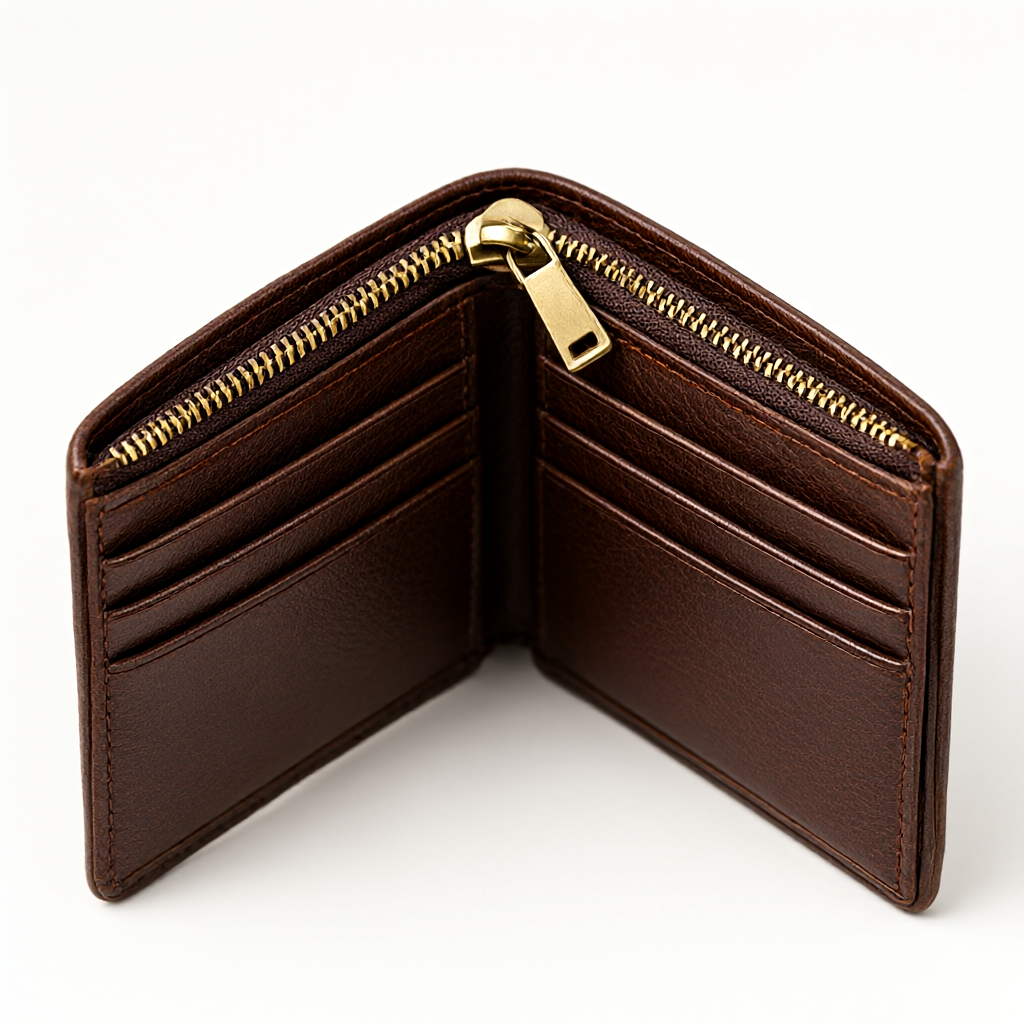
What features define a high-quality men’s zipper wallet?
Several technical attributes separate a durable, market-ready zipper wallet from one that fails in real-world use.
The zipper mechanism itself is the critical component. A quality zipper wallet relies on either a metal-mesh coil zipper or a precision metal-tooth zipper. Metal-tooth zippers offer superior durability under heavy load but add weight. Coil zippers are lighter and more flexible but can separate under tension if the slider quality is poor. Buyers should specify YKK or equivalent-grade hardware and require sample-level stress testing before committing to a bulk order. A failed zipper renders the entire product unusable and generates expensive returns.
RFID-blocking construction is a standard expectation in this category. The best zipper wallet designs integrate a continuous RFID-blocking layer — typically a thin sheet of metal mesh or ferrite-based material — stitched or laminated between the outer shell and inner card slots. This creates a Faraday cage effect around the stored cards. However, effectiveness depends on complete coverage. Partial shielding with gaps at the zipper seam or card insertion slot can allow signals to penetrate. Suppliers should provide test reports or at minimum a clear diagram of the blocking layer’s placement. For deeper guidance on RFID technology and compliance expectations, see our best RFID blocking cards selection criteria guide.
Capacity and organization must align with the intended carry style. A well-designed minimalist EDC zipper wallet typically accommodates 4 to 8 cards plus folded cash. Some tactical variants add a key loop or a small tool compartment. Buyers should define whether their market prioritizes card-heavy organization or cash-plus-keys utility, as this affects internal layout and external dimensions.
Material choice determines weight, durability, and perceived value. Aluminum wallets are lightweight and cost-effective. Carbon fiber variants offer higher rigidity and a premium aesthetic but increase unit cost. Titanium sits at the top of the price hierarchy with exceptional corrosion resistance and strength-to-weight ratio. For a broader discussion on material trade-offs across minimal wallet categories, see the best minimalist wallets for B2B sourcing guide.
How does RFID-blocking work in zipper wallets?
RFID-blocking technology relies on electromagnetic interference. Contactless payment cards and some ID cards emit a low-frequency radio signal when near a reader. A blocking layer made from conductive materials such as aluminum mesh or nickel-iron alloy reflects or absorbs that signal, preventing it from reaching the card’s antenna.
The design challenge is maintaining full signal attenuation without creating shielding gaps. In a zipper wallet, the closure itself can compromise the Faraday enclosure if the zipper teeth are exposed and the blocking layer doesn’t overlap the seam. Quality manufacturers address this by ensuring the blocking material extends beneath the zipper track or by using a full-wrap shield design.
Buyers should request third-party test data rather than relying on verbal claims. The FTC has warned against unsubstantiated RFID-blocking marketing according to the FTC, emphasizing that consumers and businesses should verify blocking effectiveness claims. A credible supplier will provide test results from an independent lab showing signal attenuation across the 13.56 MHz frequency range used by most contactless cards.
What materials are best for a durable zipper wallet?
Material selection directly affects weight, cost, durability, and end-user perception.
CNC-machined aluminum remains the most common choice for mid-tier zipper wallets. It is lightweight, corrosion-resistant when anodized, and cost-effective at volume. Anodized aluminum also accepts laser engraving well, making it ideal for custom branding. Typical wall thickness ranges from 1.5 mm to 3 mm, balancing rigidity against pocket bulk. For insights on aluminum wallet design considerations, refer to our minimalist EDC wallet buying guide.
Carbon fiber composite offers a significantly higher strength-to-weight ratio and a distinctive textured finish. It is more expensive than aluminum but appeals to buyers targeting premium EDC segments. Carbon fiber sheets are typically bonded to an aluminum or stainless steel core for structural integrity, since pure carbon fiber laminates can be brittle under impact.
Titanium provides the highest durability and a naturally hypoallergenic surface. It is the heaviest of the three options and commands the highest material cost, but it resists scratching and corrosion better than aluminum. Titanium zipper wallets occupy a niche within the privacy wallet segment — buyers for corporate gifts and high-end retail often prefer this material.
Leather and hybrid constructions appear in the premium leather zipper wallet category. Genuine full-grain leather ages well but requires conditioning and is less suitable for rugged EDC environments. Bonded leather and PU alternatives are lower cost but lack longevity. For a detailed comparison including leather options, see the best leather wallets for men B2B sourcing guide.
Men’s Zipper Wallets For B2B Sourcing: Which Specifications Matter Most?
| Specification | Typical Range | Industry Standard / Notes |
|---|---|---|
| Outer dimensions | 100–120 mm × 70–85 mm × 8–15 mm | ISO 2859-1 sampling plan for dimension verification |
| Weight | 35–85 g | Aluminum 6061-T6: ~40–55 g. Carbon fiber: ~50–70 g. Titanium GR5: ~70–90 g |
| Card capacity | 4–10 cards | Determined by slot count and material thickness; verify with sample |
| Material | Aluminum 6061-T6 / carbon fiber / titanium GR1 or GR5 | 6061-T6 tensile strength: ≥ 275 MPa; yield strength: ≥ 240 MPa |
| Tensile strength (aluminum) | 275–310 MPa (6061-T6) | Per ASTM B221 — standard specification for extruded aluminum |
| Corrosion resistance (aluminum) | 500+ hrs salt spray (ASTM B117) | Hard anodizing achieves 500–1,000 hr salt-spray resistance; standard anodizing 200–500 hr |
| RFID-blocking | 13.56 MHz attenuation > 20 dB | Request third-party test report per FTC guidelines (ftc.gov) |
| Zipper cycle life | 5,000–15,000 cycles | YKK SR series rated ≥ 10,000 cycles; coil zippers 5,000+ cycles minimum |
| Zipper type | YKK or equivalent coil/metal tooth | Specify color (black, silver, matte) and slider style (auto-lock, double-pull) |
| Surface finish | Anodized, bead-blasted, brushed, polished | Hard anodize thickness: 25–50 µm; color options per Pantone or RAL |
| MOQ | 100–500 pcs | Stock mold items: 300 pcs. Custom opening: 300–500 pcs |
| Sample lead time | 5–7 business days | Includes custom opening and logo placement |
| Production lead time | 15–25 business days | After sample approval and 30% deposit |
| Packaging | Custom retail box or blind pack | Include barcodes, QC stickers, and FBA-compliant labeling on request |
| Shipping compliance | ISTA 3A / ASTM D4169 | Drop-test and vibration-test standards for e-commerce fulfillment |
What are the key specs for bulk zipper wallet procurement?
Specification clarity prevents miscommunication and costly revisions. The following parameters define a professional zipper wallet specification sheet:
| Specification | Typical Range | Notes |
|---|---|---|
| Outer dimensions | 300–120 mm × 70–85 mm × 8–15 mm | Slim variants favor lower thickness; key-loop models run thicker |
| Weight | 35–85 g | Aluminum: ~40–55 g. Carbon fiber: ~50–70 g. Titanium: ~70–90 g |
| Card capacity | 4–10 cards | Determined by slot count and material thickness |
| Material | Aluminum 6061-T6 / carbon fiber / titanium GR1 | Specify alloy grade and surface treatment |
| RFID-blocking | 13.56 MHz attenuation > 20 dB | Request test documentation |
| Zipper type | YKK or equivalent coil/metal tooth | Define color and slider style |
| Surface finish | Anodized, bead-blasted, brushed, or polished | Aluminum requires anodizing for durability |
| MOQ | 300–500 pcs | Lower MOQs available for stock-item customization |
| Sample lead time | 5–7 business days | For custom opening and logo |
| Production lead time | 15–25 business days | After sample approval and deposit |
| Customization | Laser engraving, UV printing, embossing | Minimum laser depth ~0.1 mm for permanence |
For reference on slim profile designs and how they compare to other card holder formats, review the best slim wallets for men sourcing guide.
What are typical MOQs and lead times?
MOQ varies by customization depth. Stock molds for standard aluminum zipper wallets can support MOQs from 300 pcs per SKU. Custom openings — new tooling for unique dimensions or proprietary zipper assemblies — typically require 300 to 500 pieces to amortize setup costs.
Sample lead time for a basic custom design is 5 to 7 business days. Production lead time depends on order volume and complexity. A standard 500-piece run with laser engraving typically ships within 15 to 20 business days. More complex builds involving multiple finishing steps or custom packaging may extend to 25 business days.
Expedites are available at additional cost. Buyers managing Amazon FBA inventory cycles should factor in shipping time — air freight adds 5 to 7 days, ocean freight 25 to 35 days depending on origin and destination.
Men’s Zipper Wallets For B2B Sourcing: Which Standards and Certifications Apply?
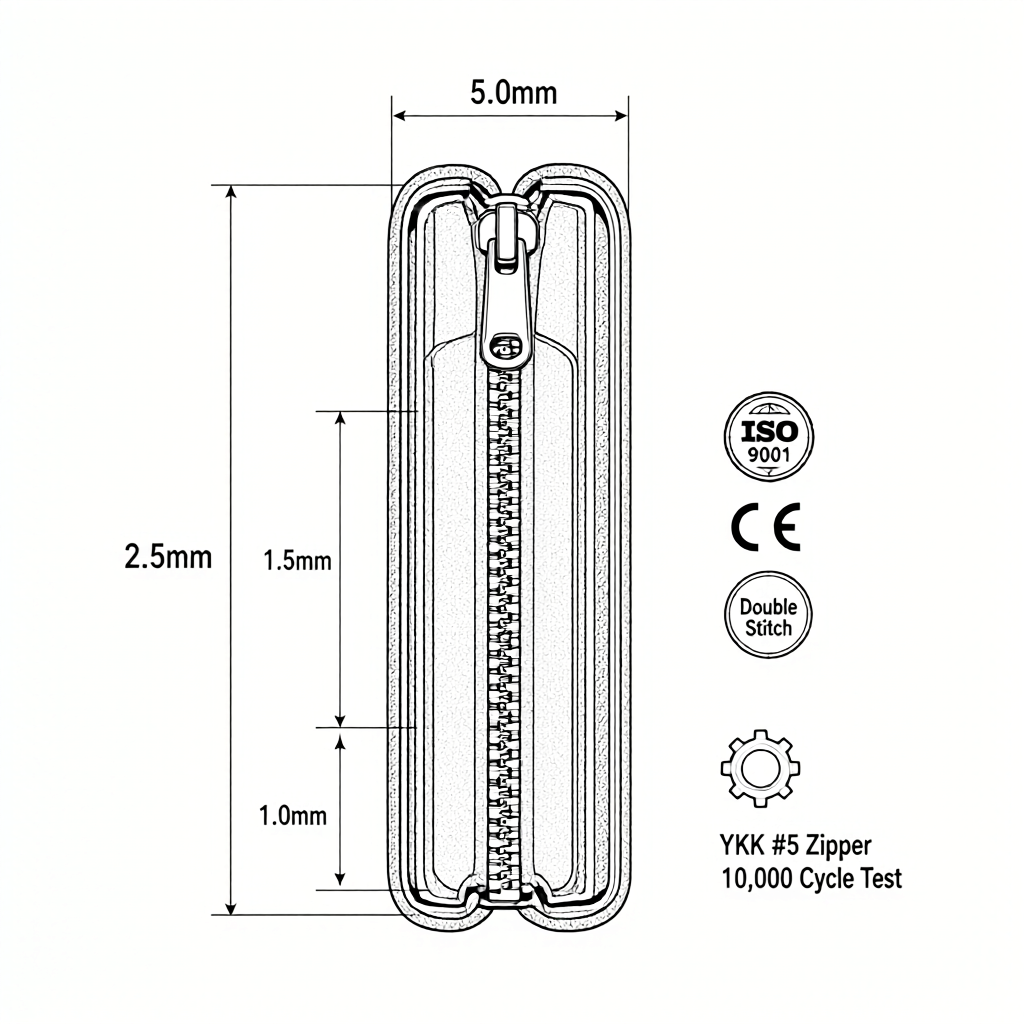
What standards and certifications apply to zipper wallet manufacturing?
Quality management and compliance frameworks provide the foundation for reliable bulk production.
ISO 9001 certification ensures the manufacturer operates a documented quality management system covering design control, incoming material inspection, in-process QC, and final audit. This is the baseline expectation for any B2B supplier handling custom EDC accessories.
BSCI (Business Social Compliance Initiative) auditing addresses labor standards and workplace conditions. Many European buyers require BSCI-compliant facilities as part of their supply chain due diligence.
REACH and RoHS compliance governs chemical restrictions in products sold in the EU. Anodizing processes, adhesives, and metal alloys must comply with restricted substance lists. SGS-tested material certificates should be available upon request.
For material and testing standards relevant to EDC product durability, ASTM International publishes reference standards on metal alloy properties and coating adhesion — see astm.org for applicable specifications.
Men’s Zipper Wallets For B2B Sourcing: What Else Should Buyers Consider?
What should you consider when evaluating zipper wallet suppliers?
Supplier evaluation goes beyond price per unit. The following criteria separate capable manufacturers from risky ones.
Manufacturing capability determines whether a supplier can execute your specification reliably. In-house CNC machining, laser engraving, and anodizing lines indicate vertical integration — the supplier controls critical steps rather than outsourcing them. Verify that the facility handles the full process chain, including quality inspection before shipment.
Quality control documentation should include incoming material certificates, in-process inspection records, and outgoing QC reports. Ask for a sample QC checklist and review whether the supplier tracks defects by category — zipper failures, anodizing defects, laser misalignment, dimension variance.
Sample quality is the strongest predictor of production quality. Evaluate samples for zipper smoothness, alignment of the RFID-blocking layer, consistency of finish, and accuracy of engraved branding. A sample that meets spec gives confidence in batch consistency.
Communication responsiveness during the sampling phase reflects how the supplier will manage production. Delays, vague answers, or refusal to provide technical details during sampling often escalate during bulk production.
Reference projects and export history demonstrate experience with the specific product category. Suppliers with proven track records in EDC wallets and similar pocket gear products reduce execution risk compared to generalist manufacturers.
Selecting a Manufacturer for Your Zipper Wallet Project
Once you have defined your specification — material, capacity, RFID requirements, branding needs, and target price point — the next step is selecting a manufacturer who can deliver consistently.
The right supplier combines technical capability with clear communication and verifiable quality systems. Look for a manufacturer that offers in-house CNC machining, laser engraving, and surface finishing so that every step from raw material to finished product stays under one roof. Low MOQ flexibility and fast sample turnaround reduce your time-to-market, especially for Amazon FBA private label programs and corporate gift orders.
This is how we approach it at TOP EDC Wallet. We’ve been manufacturing minimalist EDC wallets and pocket gear since 2014, and over 13 years of export experience has shaped our process around the things that matter most to B2B buyers — specification accuracy, material traceability, and on-time delivery. Our 50,000 sq ft facility houses CNC machining, laser engraving, UV printing, and aluminum anodizing under one roof, which means fewer handoffs and fewer quality gaps. We hold ISO 9001 certification and operate an audited facility, and our samples ship within 7 days so you can validate quality before committing to volume.
Request a quote for your zipper wallet project — share your opening dimensions, material preference, and target quantity and our team will respond with a detailed FOB quotation and lead time estimate.
Submit your inquiry here if you need guidance on RFID-blocking configurations, material selection, or packaging options before defining your full specification.
For buyers looking at adjacent product categories, our best card holder buying guide for B2B sourcing covers slim card holder options that complement zipper wallet assortments, and our best wallet for B2B buyers procurement guide provides a broader framework for evaluating EDC wallet manufacturers across product types.
Design Considerations for Everyday Carry and Tactical Use
The everyday carry (EDC) wallet is designed around the principle of minimizing bulk while maximizing utility. For tactical and outdoor applications, additional requirements emerge — abrasion resistance, compatibility with MOLLE or plate-carrier pouches, and retention under dynamic movement. A zipper wallet intended for tactical deployment should feature a lockable zipper slider or a dual-pull configuration that resists accidental opening during physical activity. The exterior surface should be bead-blasted or hard-anodized to reduce reflective glare and improve grip when wearing gloves.
For urban EDC use, the priority shifts toward slim profile, quick access, and aesthetic versatility. A well-designed urban zipper wallet sits flush in a front or back pocket without creating a visible bulge, and the zipper pull should be positioned to allow one-handed operation. Buyers targeting different markets should request product samples that reflect end-use conditions — a wallet tested only in a static environment may fail when exposed to the lateral forces encountered during cycling, hiking, or active-duty scenarios.
For additional guidance on how EDC design philosophy influences wallet selection, refer to our best card holder buying guide for B2B sourcing.
Premium Leather Zipper Wallets
Premium leather zipper wallets occupy the upper tier of the market and command higher price points. Full-grain leather — sourced from the outermost layer of the hide — develops a patina over time and resists tearing better than corrected or bonded leather. Vegetable-tanned leather is preferred for its natural finish and aging characteristics, while chrome-tanned leather offers greater water resistance at the expense of environmental profile.
Key considerations when sourcing leather zipper wallets include leather grade verification (request hide origin and tanning method documentation), stitch density (minimum 8–10 stitches per inch for durability), and zipper integration — leather wraps must be reinforced at stress points to prevent seam failure. Premium leather wallets typically target corporate gifting, luxury retail, and high-margin private-label programs rather than volume commodity markets. For a broader material comparison including leather construction trade-offs, see our best leather wallets for men B2B sourcing guide.
Budget Zipper Wallet Options
Entry-level zipper wallets target price-sensitive markets and promotional-channel distribution. These are typically constructed from stamped aluminum (0.8–1.2 mm gauge) with coil-zipper hardware and minimal RFID integration. Expected unit costs at volume can fall below $3–5 FOB depending on specification complexity and order size.
Budget wallets require careful quality oversight — thinner materials are prone to denting, low-grade coil zippers may separate after repeated cycles, and RFID-blocking layers may be incomplete or absent. Buyers in this segment should establish clear acceptance criteria for zipper cycle life, dimension tolerance, and surface finish before approving production samples. The best slim wallets for men sourcing guide provides additional context on how budget constraints affect material and hardware choices.
Durability and Lifespan Expectations
Zipper wallet longevity depends on three factors: hardware endurance, material degradation resistance, and construction integrity. A quality metal-tooth zipper rated for 10,000+ open-close cycles (per YKK durability standards) represents the minimum benchmark for mid-tier products. Coil zippers in the 5,000-cycle range are acceptable for light-use applications but may fail prematurely in heavy-carry scenarios.
Material lifespan expectations by category:
- Anodized aluminum: 5–8 years under normal EDC use; anodized layer prevents corrosion but can wear through at high-friction contact points
- Carbon fiber composite: 8–12+ years; structurally stable with minimal degradation when bonded correctly
- Titanium: 10+ years; naturally forms a passive oxide layer that self-repairs upon surface scoring
- Full-grain leather: Variable; 3–7 years with proper conditioning, longer with light use
ASTM D4169 (Standard Practice for Performance Testing of Shipping Containers and Systems) provides a framework for evaluating how zipper wallets withstand the vibration, compression, and shock conditions encountered in logistics chains — critical for buyers managing FBA or international distribution. Reference astm.org for applicable test protocols.
Brand Comparisons in the Men’s Zipper Wallet Market
The zipper wallet segment includes both established EDC brands and contract-manufactured private-label offerings. Understanding the differentiation helps buyers choose between branded inventory and custom manufacturing.
Established EDC brands (e.g., Ridge, Alcatraz, Herschel) offer recognizable branding, established retail relationships, and consistent quality. However, they typically carry higher per-unit costs, limited customization flexibility, and minimum order quantities that may not suit smaller buyers or private-label programs.
Private-label / contract-manufactured options allow buyers to control material selection, dimensions, branding, and packaging. Contract manufacturers operating under ISO 9001:2015 quality management systems provide specification traceability and audit readiness — critical for buyers supplying regulated retail channels or corporate procurement programs. The trade-off is upfront development time for tooling and sample iterations.
Chinese OEM manufacturers dominate the mid-tier and budget segments, offering CNC-machined aluminum and carbon fiber zipper wallets at competitive FOB prices. Quality varies significantly across suppliers — buyers must verify certifications, request production samples, and review reference projects before committing. Our best wallet for B2B buyers procurement guide provides a broader evaluation framework for comparing manufacturer options.
Procurement Decision Framework: Supplier Evaluation Checklist
When evaluating zipper wallet suppliers, use a weighted decision matrix to compare candidates objectively. The following criteria and weights reflect industry best practices for B2B EDC wallet procurement:
| Criteria | Weight | Evaluation Method |
|---|---|---|
| Manufacturing capability (in-house CNC, engraving, anodizing) | 20% | Facility audit report; equipment list; process flow documentation |
| Quality management system (ISO 9001:2015 certification) | 15% | Valid certificate; scope of certification; audit history |
| Sample quality and specification accuracy | 15% | Physical sample review; dimension verification; finish consistency |
| RFID-blocking test documentation | 10% | Third-party lab report; attenuation data at 13.56 MHz; shielding coverage diagram |
| Lead time consistency | 10% | Historical on-time delivery rate; sample-to-production timeline |
| MOQ flexibility | 8% | Minimum order threshold; tooling amortization terms |
| Communication responsiveness | 7% | Response time during sampling; technical detail availability |
| Price per unit at target volume | 7% | FOB quotation; cost breakdown by material and finishing |
| Export history and reference projects | 5% | Country list; brand references; repeat-order evidence |
| Social compliance (BSCI, REACH/RoHS) | 3% | Audit certificate; chemical compliance documentation |
Total score ≥ 80%: strong candidate for bulk order.
Total score 60–79%: viable with additional due diligence.
Total score < 60%: high-risk supplier; recommend alternative.
Missing Sections to Add
Slim vs. Full-Size Zipper Wallets
Zipper wallets fall into two size categories, each serving different carry preferences and market segments.
Slim zipper wallets measure approximately 100–110 mm × 70–75 mm × 8–12 mm when closed. They hold 4–6 cards and folded bills. Their thin profile makes them suitable for front-pocket EDC and minimalist carry. Slim designs dominate the mid-tier aluminum and carbon fiber segments and are the most common SKU requested by Amazon FBA sellers and private-label programs.
Full-size zipper wallets measure approximately 115–125 mm × 80–90 mm × 12–18 mm. They accommodate 6–10 cards, more cash, and occasionally a key loop or tool slot. These appeal to buyers whose customers prioritize capacity over minimalism. Full-size variants are more common in leather and hybrid constructions.
The sizing decision should align with the target demographic. Market research from EDC communities consistently shows a preference for slim profiles among younger buyers (18–35) and a split preference among older demographics (35+). Buyers entering a new market should consider stocking both tiers rather than committing to a single size.
For a broader comparison of wallet form factors beyond the zipper category, see the best card holder selection guide for B2B sourcing.
Procurement Checklist
Buyer Decision Checklist for Zipper Wallet Procurement
Use this checklist to evaluate potential suppliers before committing to a bulk order. Red-flag responses should prompt further investigation or supplier replacement.
| Evaluation Criterion | Green Flag (Proceed) | Yellow Flag (Investigate) | Red Flag (Avoid) |
|---|---|---|---|
| RFID test reports | Provides independent lab report showing >20 dB attenuation at 13.56 MHz | Claims blocking but cannot produce test documentation | No RFID claim or refuses to discuss testing |
| Zipper specification | Specifies YKK or equivalent brand with published cycle rating | Uses generic “quality zipper” without brand or rating | Cannot identify zipper brand or supplier |
| MOQ transparency | Publishes clear MOQ by customization level | Vague MOQ ranges without explanation | Refuses to state MOQ or pressures for large commitment |
| Sample policy | Offers paid samples with deposit refundable against bulk order | Samples available but no refund policy | No sample process or samples shipped without specification |
| ISO 9001 certification | Provides current ISO 9001:2015 certificate | Claims certification without verifiable documentation | No quality management system |
| BSCI audit | Provides recent BSCI audit report | Audit in progress but no timeline | No social compliance awareness |
| Lead-time consistency | Publishes standard lead times with expedites available | Inconsistent estimates across communication channels | Cannot commit to a timeline |
| Defect rate tracking | Provides QC defect rate data and corrective action process | No formal QC records | No quality control process described |
| Communication responsiveness | Technical questions answered with specifications within 24 hours | Slow responses but eventually provides detail | Ignored questions or evasive answers |
| Material certificates | Provides SGS/REACH/RoHS certificates for all materials | Partial documentation | No material safety documentation |
Men’s Zipper Wallets For B2B Sourcing: How Do We Meet These Standards?
As a manufacturer, our approach to zipper wallet production is built on specification clarity and verifiable quality controls. Our facility holds ISO 9001:2015 certification and operates under BSCI-audited conditions, with all materials tested for REACH and RoHS compliance through SGS.
We source YKK or equivalent-grade zipper hardware and publish cycle-life ratings for every SKU. RFID-blocking designs are engineered with full-wrap shielding and validated through third-party testing at 13.56 MHz. Our in-house CNC machining, laser engraving, and anodizing lines allow us to control critical quality steps internally rather than outsourcing them.
Our MOQ starts at 300 pcs per SKU for full OEM customization (100 pcs trial order available for stock finishes) for stock mold items, with custom openings typically requiring 300–500 pieces. Sample lead time is 7 business days, and standard production runs ship within 15–25 business days after sample approval. We provide full specification sheets, material certificates, and QC checklists before production begins — so you can verify every parameter against your own requirements.
Men’s Zipper Wallets For B2B Sourcing: Where Can You Verify the Data and Sources?
- according to the FTC — www.ftc.gov
- ASTM B221 — www.astm.org
- best RFID blocking cards selection criteria guide — topedcwallet.com
- best minimalist wallets for B2B sourcing guide — topedcwallet.com
- minimalist EDC wallet buying guide — topedcwallet.com
- best leather wallets for men B2B sourcing guide — topedcwallet.com
- Get a Free Quote → — topedcwallet.com
- best slim wallets for men sourcing guide — topedcwallet.com
- best card holder buying guide for B2B sourcing — topedcwallet.com
- best wallet for B2B buyers procurement guide — topedcwallet.com
From article to product
Sourcing minimalist-wallets?
Tell us the format, the quantity and the date you need stock. You get material options, MOQ and a landed-cost range back within one business day.
Keep reading
More on wallet types
Thin Male Wallets: Buying Guide for Slim Minimalist Picks
How to choose a slim wallet for men — thickness thresholds, material trade-offs, capacity…
ReadStashed Wallet: A Minimalist Everyday-Carry Solution
Understand what a stashed wallet is, how minimalist slim wallets work, and what to…
ReadFolding Wallets: Types, Materials & Buying Guide
Learn what makes a folding wallet worth buying, from materials and card capacity to…
Read
About the author
TOPWALLET Editorial Team
TOPWALLET's editorial and engineering desk writes from bench testing at the Shenzhen (Longgang) facility: pull-force and cycle testing, 13.56 MHz shielding measurements, finish trials and factory audits, rather than supplier spec sheets. Every specification in these guides is one we write on a purchase order.
Written on the floor
This article was written by our production and QC team — the people who spec tolerances, run the finishing line and inspect every batch. Where it states a capacity, a pull force or a lead time, it comes from a measurement we made, not a supplier’s catalogue. If a number here disagrees with what your own supplier told you, tell us; several of these articles started as a correction from a buyer.
See how the factory works · Inspection process · Sourcing FAQ
Sourcing minimalist-wallets?
Tell us the format, the quantity and the date you need stock. You get material options, MOQ and a landed-cost range back within one business day.