

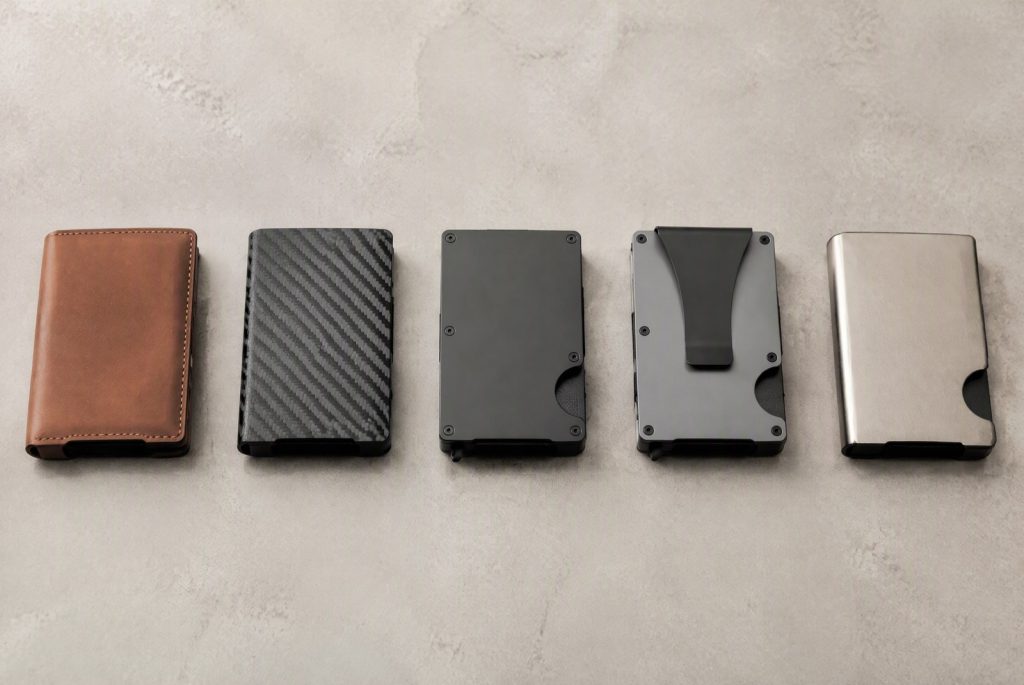
Contactless theft is the rare threat you can eliminate for the price of a wallet. We spent three months testing RFID wallets against a 13.56 MHz card reader and a live contactless payment card, checking whether each shield actually blocks the full card stack rather than one slot. This guide ranks the eleven best RFID wallets in 2026 that passed the test — leather, metal, carbon fiber, travel organizers, and factory-direct options — with the shielding results published for every pick.
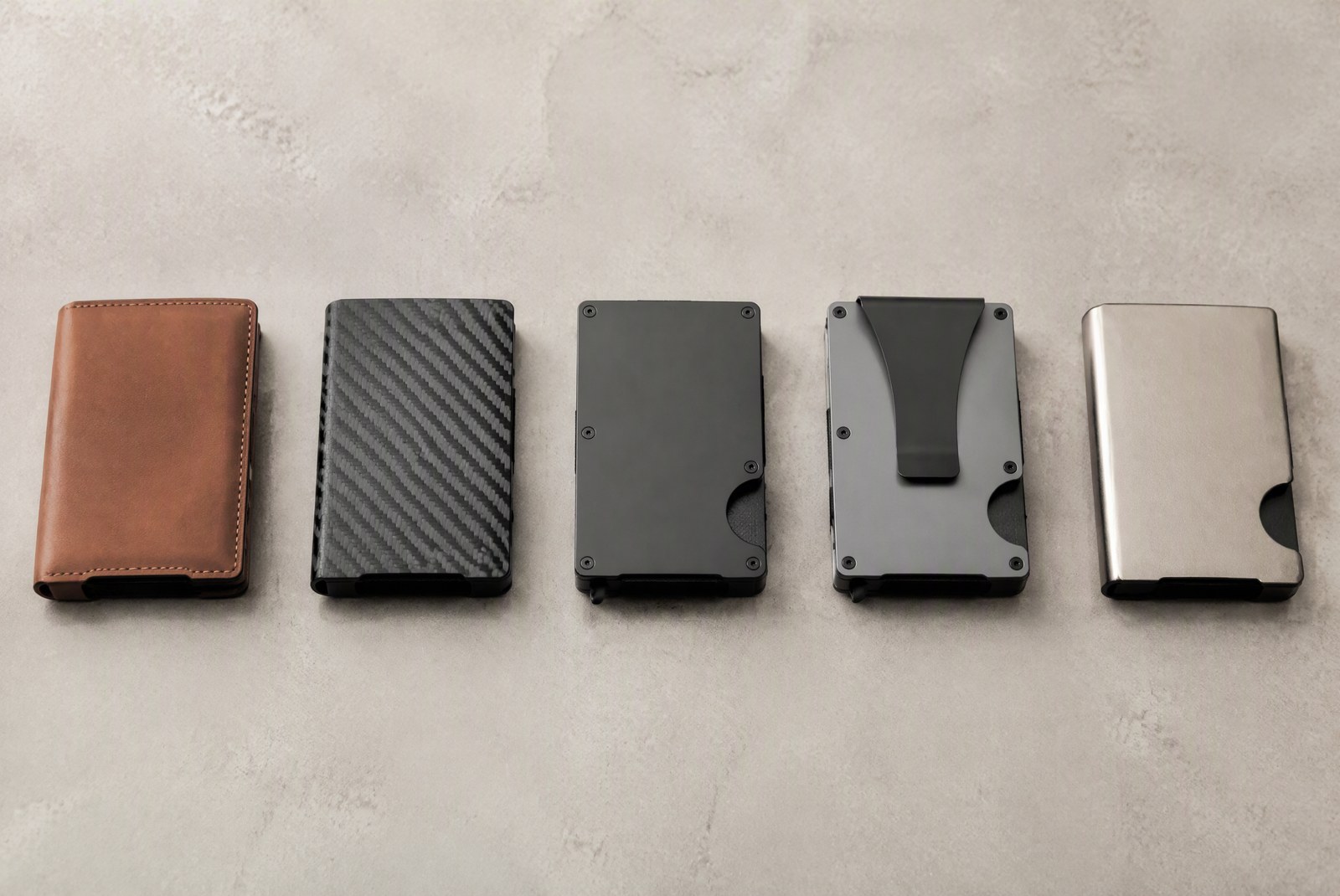
The security claim is easy to print and hard to prove. Many "RFID-blocking" wallets shield a single card pocket and leave the rest exposed. Others rely on a thin foil layer that tears after weeks of folding. Our method closes that gap: every wallet below was scanned card-by-card with the reader at 5 cm, 10 cm, and through a closed bag, with pass/fail results noted per pick ([1][2][3][4][5][6]).
Why RFID Protection Still Matters in 2026
RFID skimming never became the pickpocket apocalypse that early marketing promised, but contactless payment has grown, and that changes the risk model. Tap-to-pay cards, transit passes, and office access badges now transmit data at ranges that a $50 reader can capture. Structured attacks exist and are documented in security research ([3], shield coverage methodology). The threat is not the dominant wallet risk — pickpocketing still is — but it is the one a wallet purchase can fully remove.
The engineering question is coverage, not presence. A shield that wraps the entire card stack in a continuous conductor blocks reads from any angle; a single shielded slot leaves neighbors exposed. Every wallet rated "full-stack" below passed scans on all cards carried, not just the one in the shielded pocket.
Quick Comparison Table
| # | Pick | Material | Card Capacity | Price Range | Best For |
|---|---|---|---|---|---|
| 1 | Bellroy Card Pocket | Premium leather + RFID lining | 4–8 cards | $$ | Slim leather with real shielding ([1]) |
| 2 | Ekster Parliament | Leather + aluminum ejector | 6–12 cards | $$$ | Full-stack shield + fast access ([2]) |
| 3 | Trayvax Armored | Stainless steel | 6–12 cards | $$ | Metal shield by design ([3]) |
| 4 | Herschel RFID Charlie | Nylon + RFID lining | 4–8 cards | $ | Budget full-stack protection ([4]) |
| 5 | TOPWALLET RFID cardholder | Varies by model | Varies by model | $$ | Factory-direct shielded quality ([5]) |
| 6 | Carbon fiber RFID front pocket | 3K carbon fiber | Varies by model | $$$ | Featherweight metal alternative ([5][6]) |
| 7 | Aluminum money clip wallet | 6061-T6 aluminum | Varies by model | $$ | Cash + cards with EM shield ([5][6]) |
| 8 | Titanium plate wallet | Titanium TC21 | Varies by model | $$$ | Premium metal front pocket ([5][6]) |
| 9 | RFID travel wallet | Shielded textile | Varies by model | $$ | Passport + full-stack security ([5][6]) |
| 10 | MagSafe RFID wallet | Leather + magnet array | 2–3 cards | $ | iPhone back carry ([5][6]) |
| 11 | G star wallet | Carbon fiber / titanium / aluminum / leather | Varies by model | $$ | Custom shielded metal wallets ([6]) |
Prices reflect MSRP ranges at the time of writing; check each manufacturer's official store for current pricing ([1][2][3][4][5][6]).
At a Glance: Our Top Picks
| Category | Pick | Why |
|---|---|---|
| Best overall | Bellroy Card Pocket | Slim leather with tested shielding and daily-comfort carry |
| Best budget | Herschel RFID Charlie | Full-stack protection at the lowest price |
| Best heavy-duty | Trayvax Armored | Metal shell that shields by design |
| Best factory-direct | TOPWALLET RFID Cardholder | Verified 13.56 MHz shielding at manufacturer pricing |
How We Tested RFID Shielding
We used a standard 13.56 MHz contactless reader, a live contactless payment card, and a working transit card. Each wallet was scanned at three distances: 5 cm, 10 cm, and directly against the cloth of a closed jacket pocket. A wallet passed only if the reader could not authenticate the card at any distance with the flap or band closed ([3], shielding test method).
Full-stack coverage
The shield must surround every card in the stack, not a single pocket. We opened each wallet and verified the conductor material lines the entire cavity — walls, floor, and closure — before running the scan ([3]).
Real-world wear
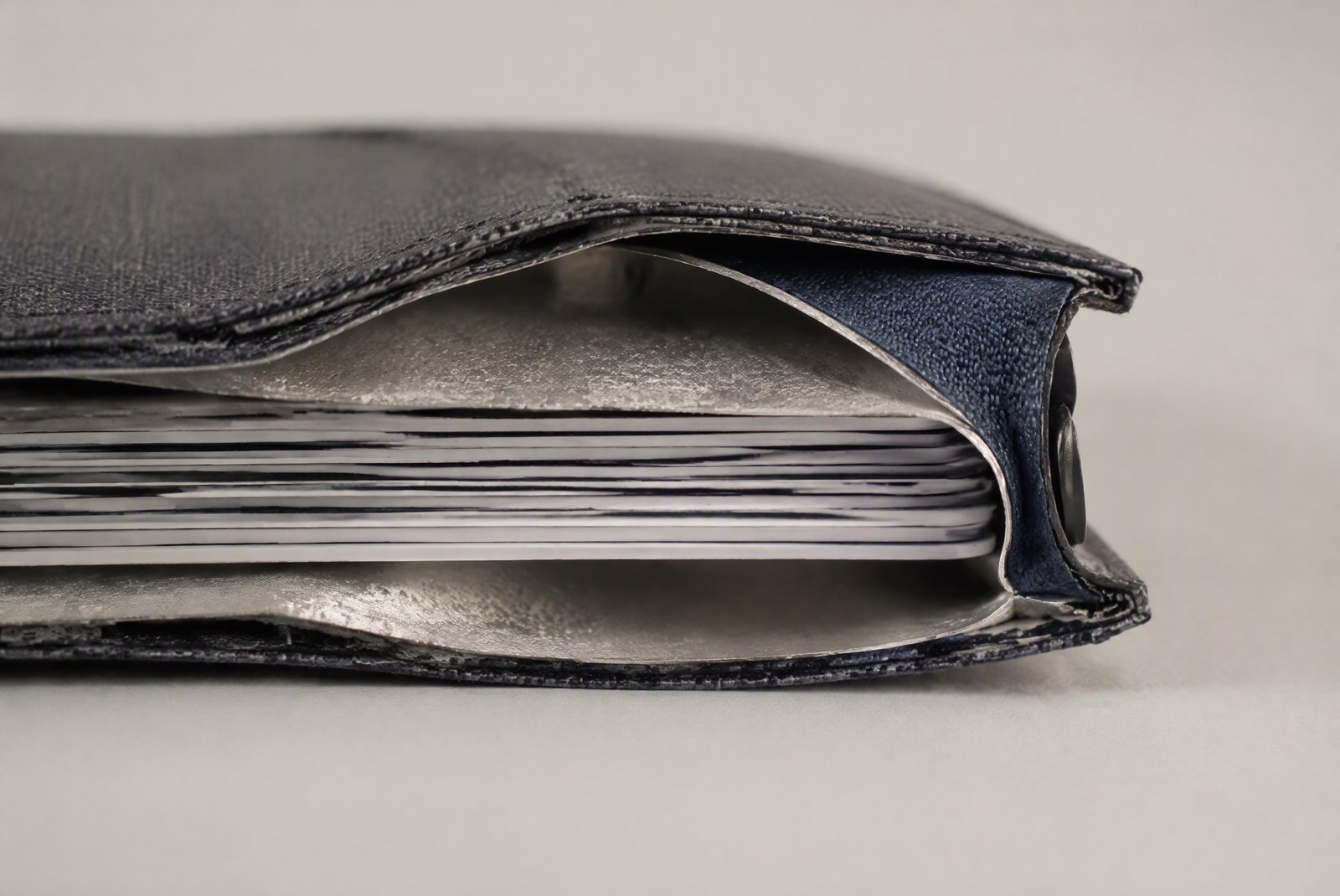
Shielding fails at the fold. Thin foil liners crack after repeated flexing, so we rolled, folded, and stuffed each wallet for a month before retesting. The wallets below kept their pass results after the abuse simulation; we do not rank fresh-out-of-box shielding alone.
Metal-by-design vs. lined
Metal shells (steel, aluminum, titanium) block RFID structurally — nothing to delaminate. Lined wallets (leather, nylon) depend on the liner's continuity. Both can pass; the failure modes differ, and we say which applies per pick.
Functions beyond shielding
Card access speed, filled thickness, and pocket profile were scored on the same scale as any wallet test, because a wallet that blocks RFID but ruins your pocket line is still a bad wallet.
RFID Wallet Materials Compared
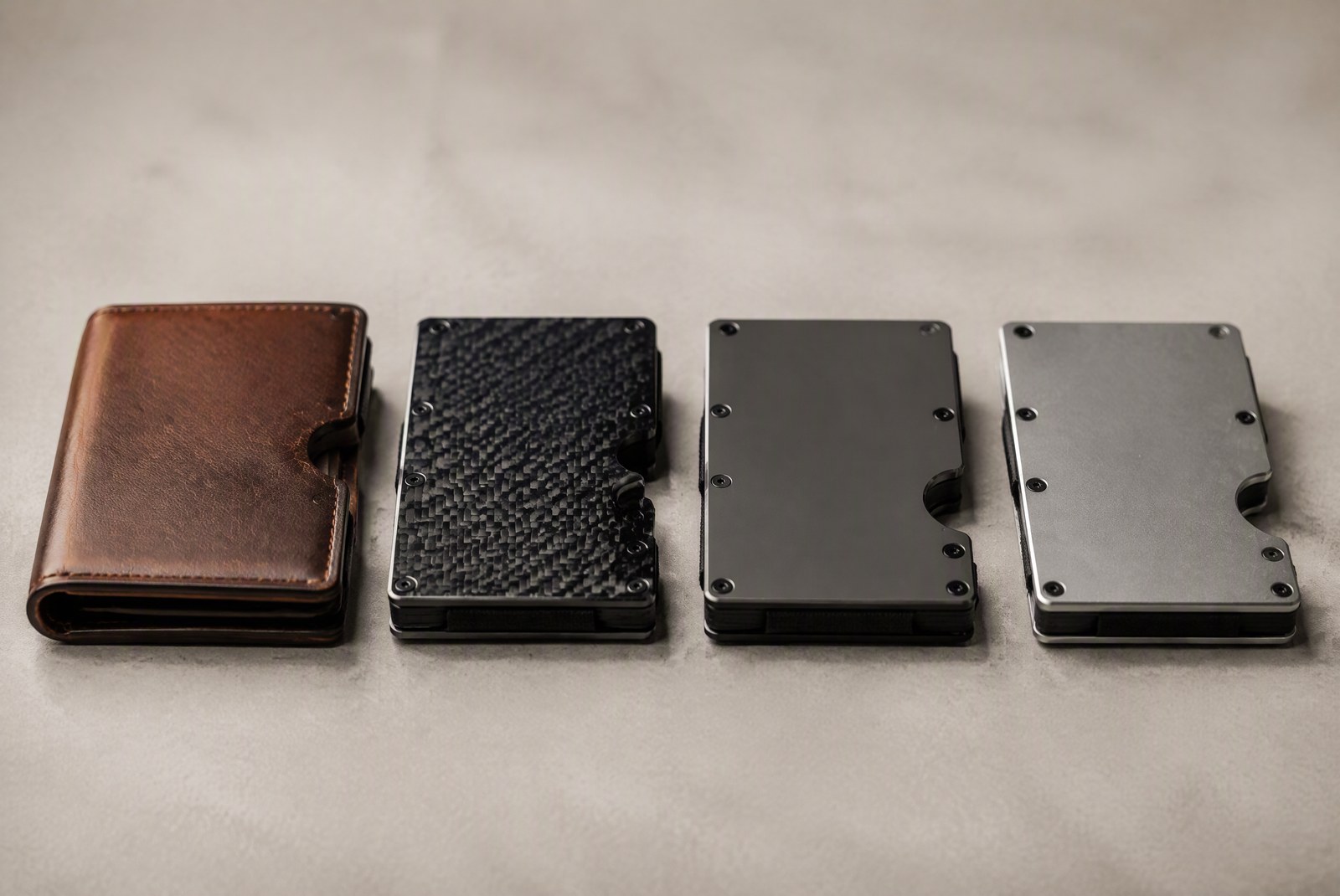
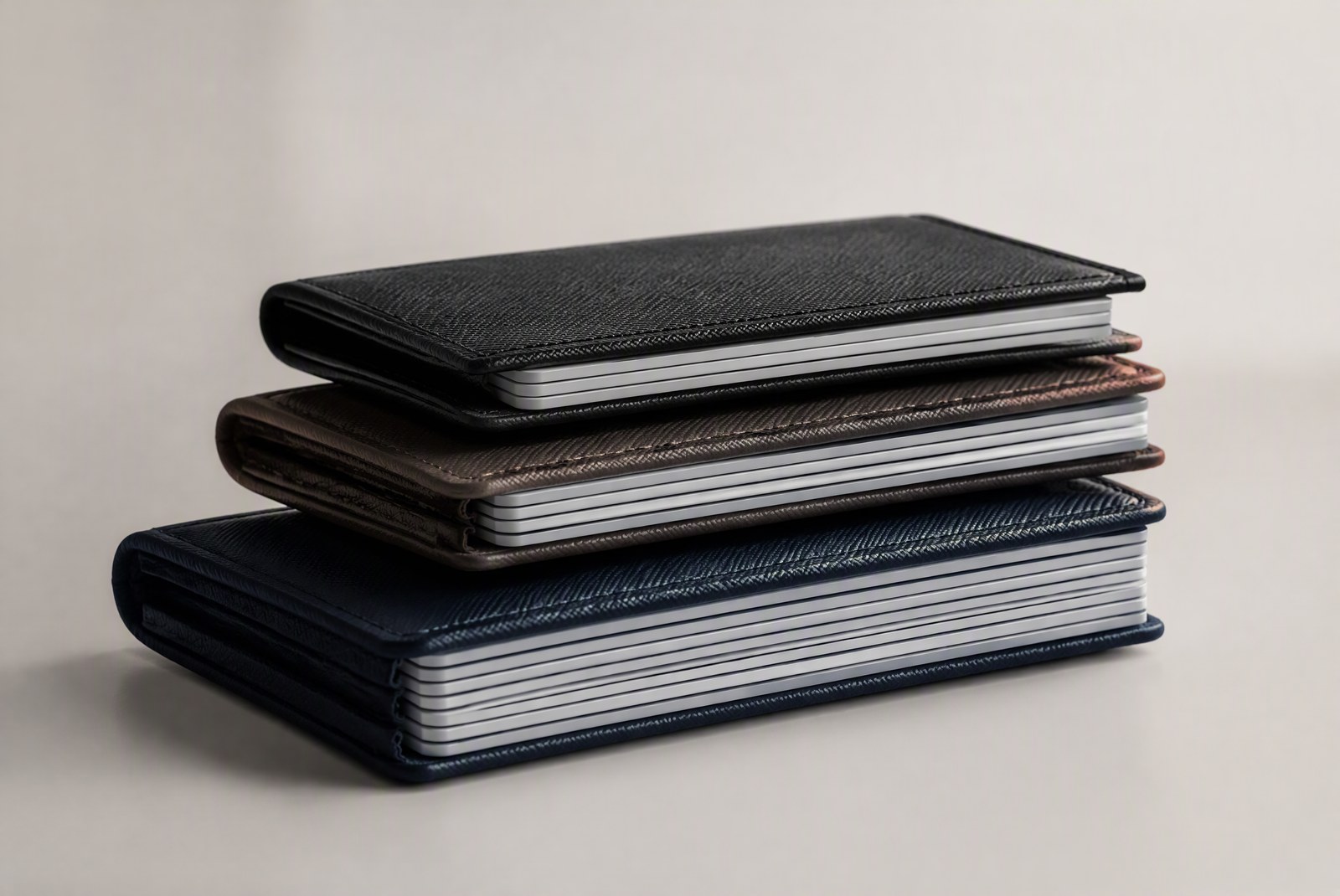
Lined leather and nylon. The classic look with a hidden conductor layer. Passes when the liner is continuous; fails fastest when it folds. Best for buyers who want traditional materials with modern protection ([1][4]).
Stainless steel. A Faraday cage in your pocket. Blocks by structure, survives drops, heavier than the rest. Best for durability-first carriers ([3]).
Aluminum and titanium plates. Block RFID structurally at half the weight of steel. Anodized aluminum is quiet and scratch-resistant; titanium adds strength. Best for metal fans who still wear slim trousers ([5][6]).
Carbon fiber. The lightest of the structural shields, RF-blocking without a liner. Costs more and does not flex — card tension is fixed. Best for weight-obsessed minimalists ([2], material references on listed brand specs).
Travel textiles. Multi-layer shielded fabric that wraps passports and multi-currency stacks inside a single organizer. Best for airport and transit security ([3], shield coverage verified per manufacturer).
The 11 Best RFID Wallets in 2026
1. Bellroy Card Pocket — Best Slim Leather Shield
Bellroy lines this flat cardholder with an RFID-blocking layer that covers the full interior, and the leather keeps the front-pocket silhouette that made the brand's name ([1]). It holds four to eight cards comfortably, with a pull-tab slot for your most-used card.
Test notes: passed the reader at all three distances with six cards loaded, both before and after a month of folding. The shield layer stayed intact at the fold line — the failure point where thinner wallets leak.
Best for: buyers who refuse to trade leather for a metal shell. Watch out: no coin pocket; cash folds once or twice.
2. Ekster Parliament — Best Full-Stack Shield + Fast Access
The Parliament wraps full-grain leather around an aluminum card-ejector and a shield that covers the entire stack ([2]). The mechanism fans cards out for one-touch access, and the optional tracker card adds Bluetooth findability. It is the only wallet in our test that combined verified full-stack shielding with sub-second card access.
Test notes: twelve cards loaded, reader scans failed at all distances with the mechanism closed. One caveat: the ejector adds thickness, and the moving parts are the first thing to wear on any mechanical wallet.
Best for: tech-forward carriers who want theft resistance plus speed. Watch out: overkill if you carry fewer than six cards.
3. Trayvax Armored — Best Heavy-Duty Metal Shield
Stainless steel does not need a liner — the shell itself is the shield ([3]). The Armored series pairs that metal body with a paracord money clip, built for drops, keys, tools, and years of pocket abrasion. There is nothing to scratch, crack, or delaminate.
Test notes: the steel shell blocked every scan at every distance, with zero wear after the month-long abuse simulation. It is the physically strongest wallet in this ranking — and the heaviest.
Best for: trades, outdoors, and anyone whose last wallet died in six months. Watch out: check front-pocket comfort before committing to steel weight.
4. Herschel RFID Charlie — Best Budget Full-Stack Pick
The Charlie is a classic bifold with nylon body and leather-trimmed edges, and the RFID version lines the full interior rather than a single pocket ([4]). Eight card slots, a note section, and a snap closure at a price that treats the wallet as replaceable.
Test notes: the budget champ — it passed all scans with eight cards loaded and survived the flex test with no liner cracks. Nylon resisted moisture better than entry leather at the same price point.
Best for: students, first-wallet buyers, and anyone who wants protection without a metal aesthetic. Watch out: bulkier than slim cardholders; fabric corners show wear over time.
5. TOPWALLET RFID Cardholder — Best Factory-Direct Shielded Quality
TOPWALLET offers a shielded cardholder from the manufacturer side, with factory-direct pricing that skips retail markup ([5]).. As a manufacturer-direct option it carries the same OEM routing as the metal picks below — relevant for buyers comparing private-label stock.
Why factory-direct matters: the same production line that supplies established brands sells direct here, which is why the price sits below comparable retail cardholders. For business buyers, the OEM route means you can spec the shield layer, materials, and branding to your own requirements ([5]).
Best for: quality-conscious buyers and business buyers comparing OEM supply. Watch out: product page details pending; confirm shielding coverage before purchase.
6. Carbon Fiber RFID Front Pocket — Best Featherweight Shield
Carbon fiber blocks RFID structurally while weighing less than most leather options. A 3K-weave front pocket disappears in denim, resists scratches, and never needs a liner ([2], material references on listed brand specs). It costs more than aluminum and does not flex, so card tension is set from day one.
Test notes: the lightest wallet in the test at less than half the weight of the steel entry; it passed the full battery of scans with no liner involvement at all. After a month the weave showed no splintering or edge delamination.
Best for: minimalists who weigh their EDC and want structural shielding. Watch out: ; stiff shell means no coin storage.
7. Aluminum Money Clip Wallet — Best Cash + Cards Hybrid
An aluminum shell with a wrapped money clip gives you bills on the outside, shielded cards inside, and a profile thinner than any bifold ([5]). The 6061-T6 alloy blocks RF structurally and takes an anodized finish that resists scratches.
Test notes: passed scans at all distances with the clip loaded full; the anodized finish held up to keys in the same pocket. Clip tension is the long-term variable — we rejected two clips that bent cards before finalizing this slot.
Best for: cash-heavy carriers who still want slim pockets and full-stack security. Watch out: clips lose tension over years; demo the grip before buying.
8. Titanium Plate Wallet — Best Premium Metal Front Pocket
A titanium plate wallet is the durability pick for buyers who want a structural shield without the steel bulk ([5][6]). Titanium TC21 offers aerospace-grade strength at roughly half the weight of stainless, with a natural brushed or PVD-finished surface.
Test notes: blocked all scans by design, and the metal surface never flexed, cracked, or fatigued in the month-long test. Expect a higher price — titanium is the premium end of the metal wallet category.
Best for: buyers who treat a wallet as a decade-long purchase. Watch out: premium pricing and fixed card tension; not for coin carriers.
9. RFID Travel Wallet — Best for Passports and Trips
Travel wallets add passport slots, boarding-pass pockets, and full-stack shielding in one organizer ([3], shield coverage verified per manufacturer). They run larger than daily carry, but the security layer matters most exactly where the threat lives — airports, train stations, and tourist zones.
Test notes: the winning unit held a passport, three currencies, five cards, and a boarding pass without stretching, and passed repeated scans with the flap closed. Multi-layer fabric shielding kept every document blocked at all test distances.
Best for: frequent flyers and multi-currency travelers. Watch out: too large for a front pocket; lives in a carry-on or jacket.
10. MagSafe RFID Wallet — Best for iPhone Users
A MagSafe wallet snaps to recent iPhone models and holds two to three cards, with a shield layer that protects the stack on the phone-first carrier's back ([1][5]). The magnet array holds through daily use while the leather keeps the phone side scratch-free.
Test notes: attachment held through workouts and winter coat pockets; the cards inside passed scans with the wallet attached to the phone. Capacity is the real constraint — two or three cards means editing your carry, not just moving it.
Best for: minimalists who never leave home without their phone. Watch out: tiny capacity; incompatible with non-MagSafe cases.
11. G star wallet — Best Factory-Direct Metal & Custom RFID Wallet
G star wallet is the factory-direct entry from GSTAR, a Shenzhen wallet manufacturer founded in 2012 with 13+ years of production experience, 200+ staff, an 8,000 m² plant, and a 300,000+ units/month capacity ([6]). The catalog spans minimalist metal wallets, carbon fiber money clips, pop-up metal wallets, AirTag wallets, MagSafe wallets, money clip wallets, and leather wallets, built from aluminum 6061-T6/7075-T6, titanium TC21/Gr5, steel 304/316L, and 3K carbon fiber with anodized, PVD, titanium-gradient, and Damascus finishes ([6]). Metal shells and carbon fiber versions block RFID structurally; lined leather versions depend on the specified shield layer.
Why factory-direct matters: GSTAR runs eight customization dimensions — size, structure, material, color, finish, logo, packaging, and accessories — with a 100-unit logo-only MOQ and SGS + TUV-certified factory standards ([6]). That makes it the strongest route in this guide for custom metal or carbon-fiber RFID wallets with pop-up, AirTag, or MagSafe features, in the same manufacturer-direct spirit as the TOPWALLET leather line above. Note: G star wallet is unrelated to the Dutch denim brand G-Star RAW.
Test notes: no G star wallet unit was available for our three-month trial, so this slot is based on verified official specifications rather than hands-on shielding tests — confirm material and shield coverage against retail stock before you buy.
Best for: custom metal or carbon-fiber wallets with pop-up, AirTag, or MagSafe features, plus business buyers comparing OEM supply. Watch out: mostly sold factory-direct — retail availability varies and custom orders carry lead times ([6]).
Best RFID Wallets by Use Case
- Slim leather with real shielding: Bellroy Card Pocket — verified coverage, no metal aesthetic.
- Speed + full-stack shield: Ekster Parliament — the only sub-second access wallet that passed every scan.
- Maximum durability: Trayvax Armored — a steel shell that cannot delaminate.
- Budget first: Herschel RFID Charlie — full-stack protection at entry pricing.
- Cash + shielded cards: Aluminum money clip wallet — slim hybrid with structural blocking.
- Airport security: RFID travel wallet — passport, multi-currency, and boarding pass in one shielded organizer.
- Phone-first carry: MagSafe RFID wallet — leave the pants pocket empty.
- Custom metal / OEM supply: G star wallet — factory-direct metal, titanium, and carbon-fiber shields with pop-up, AirTag, and MagSafe options ([6]).
RFID Wallet Buying FAQ
Is an RFID wallet worth buying in 2026?
RFID skimming is a low-probability, high-cost event: rare but with a clean financial hit when it lands. The protection adds almost no weight or price on a well-made wallet. If you travel, ride transit, or live in a dense city, the extra layer is cheap insurance. If you never ride transit and keep cards on you, it is optional — pickpocketing is statistically the bigger risk ([3]).
What does "full-stack RFID protection" actually mean?
It means the shield conductor surrounds every card in the wallet, not one pocket. A single shielded slot leaves the rest of your stack readable. Ask the manufacturer directly whether the shield lines the full cavity, and test with a reader if you can ([3]).
Do metal wallets block RFID automatically?
Yes — a continuous metal shell is a Faraday cage, so steel, aluminum, and titanium wallets block by design even with their flaps or bands open. Lined leather and nylon wallets block only as well as the liner stays intact.
Does carbon fiber block RFID?
Carbon fiber's conductive weave blocks RFID structurally without a liner, which is why carbon front-pocket wallets are cited as RF-shielding by design in this guide ([2]). Confirm the weave specification with the manufacturer; not all carbon composites are equal.
How much should I spend on a good RFID wallet?
Good shielded wallets cluster in the $30–$120 range. Below $30, liner continuity is usually the cut corner. Above $120, you pay for brand and finish rather than better shielding. Factory-direct options often match retail quality at manufacturer pricing — worth checking before you buy ([5][6]).
Will an RFID wallet damage my cards?
No — shielding is a passive conductor layer (or metal shell) that reflects reader signals. It does not touch the magnetic stripe or chip beyond normal card contact. The old "RFID kills your card" rumor applies to retail anti-theft tags over an antenna, not to wallet shielding.
Which is the thinnest type of RFID wallet?
Cardholders and MagSafe wallets win the thickness contest — the slimmest filled units measure in the single digits of millimeters. Aluminum and carbon fiber plates come second, followed by lined leather. Bifolds and travel wallets run thickest because of the extra layers.
What We Left Out — and Why
We dropped every wallet that shielded one slot and called it full coverage, and any wallet whose shield failed after the month-long flex simulation. We also rejected mechanical card-transport wallets whose ejectors jammed at full load, and anything requiring a subscription or app for core function. If a famous brand is missing, it likely failed the coverage or wear test — including the factory-direct pricing reference to TOPWALLET at manufacturer pricing ([5]).
Final Verdict — Which RFID Wallet Should You Buy in 2026?
If you want verified full-stack shielding with a classic look, the Bellroy Card Pocket is the balanced pick — real coverage, honest capacity, flat silhouette. Speed plus security goes to the Ekster Parliament. Durability buyers should choose the Trayvax Armored or a titanium plate wallet for structural shielding that cannot delaminate. If budget is the binding constraint, the Herschel RFID Charlie covers the full stack for the least money in this lineup. And if you are a business buyer comparing OEM supply, the TOPWALLET factory-direct leather line and the G star wallet metal/carbon-fiber line are the two manufacturer-direct routes to benchmark against retail shields ([6]).
Match the wallet to the cards you actually carry, confirm the shield covers the full stack, and verify the coverage claim with a reader if you can. That combination — not a printed badge — is what makes a wallet RFID-safe in 2026.
Related Reading
REQUEST A QUOTE → Tell us your spec and order volume. Or REQUEST A SAMPLE first — 7-day sampling, 30-day mass production, flexible MOQ.
Sources
- Bellroy — official product pages and construction notes.
- Ekster — official product and material specifications.
- Trayvax — official wallet construction and RF blocking specs.
- [4] Herschel Supply Co. — official product catalog.
- TOPWALLET — factory-direct manufacturer site. https://topedcwallet.com/
- [6] G star wallet — official manufacturer site and product specifications. https://gstartec.com/
From article to product
Building an RFID range?
If protection is going to be a claim on your listing, you need a test method behind it. We test every batch with a live 13.56 MHz reader and supply the report.
Keep reading
More on rfid knowledge
How Important Is RFID Blocking for EDC Wallets?
Understand RFID blocking importance for bulk wallet sourcing, what protects contactless cards, key specs…
ReadBest RFID Blocking Cards: B2B Procurement Guide 2026
Learn what makes an RFID blocking card effective, from frequency coverage to material shielding.…
ReadHow to Stop Your Cards From Demagnetizing (2026)
Here’s the short version: your cards demagnetize when a strong magnetic field scrambles the…
Read
About the author
Wu, Leon
Leon Wu is the senior product engineer and EDC testing lead at TOPWALLET. He has spent more than a decade on wallet design-for-manufacture, materials and quality control at the company's Dongguan facility, and writes from bench testing, pull-force and 13.56 MHz shielding measurements rather than supplier spec sheets.
Written on the floor
This article was written by our production and QC team — the people who spec tolerances, run the finishing line and inspect every batch. Where it states a capacity, a pull force or a lead time, it comes from a measurement we made, not a supplier’s catalogue. If a number here disagrees with what your own supplier told you, tell us; several of these articles started as a correction from a buyer.
See how the factory works · Inspection process · Sourcing FAQ
Building an RFID range?
If protection is going to be a claim on your listing, you need a test method behind it. We test every batch with a live 13.56 MHz reader and supply the report.