

A men’s 2-in-1 wallet is a hybrid everyday-carry item that merges two carrying functions into one slim profile — a front card-holder compartment for quick access to debit/credit cards and a rear cash or coin pocket secured by a zipper or money clip. It holds typically 8 to 12 cards along with folded bills and small-change coins, giving you the organizational separation of two accessories without the bulk of carrying both separately.
What Is a Men’s 2-in-1 Wallet?
A men’s 2-in-1 wallet is a compact carrying solution that combines two distinct storage functions into a single slim unit: a front card-holder compartment and a rear cash or coin pocket. Instead of carrying a separate card holder and a billfold or zippered pouch, you get both roles in one piece of gear. The card side typically uses elastic bands, rigid slots, or a push-up mechanism to keep debit and credit cards accessible. The rear section holds folded bills, receipts, or coins — often behind a zipper or secured by a metal money clip. This integrated design reduces bulk compared to traditional bifold wallets while expanding what you can carry without switching accessories.
When searching for mens black card wallets or similar styles, the key differentiator is always the dual-zone layout. One zone prioritizes quick card access; the other prioritizes bulk storage for cash and loose change. The result is a practical everyday-carry item that works well for commuters, travelers, and anyone who prefers a streamlined pocketscape over a thick leather bi-fold full of unused cards.
What is a men’s 2-in-1 wallet and what does it hold?
A men’s 2-in-1 wallet is a single slim unit that provides two distinct storage zones: a front card carrier and a rear cash or coin pocket. Typical contents include 8 to 12 bankcards or IDs, folded paper currency (US bills, Euro notes, etc.), loose coins up to roughly 15–20 g, transit cards, and occasionally a slim emergency tool. The dual-zone layout keeps cards separated from bills, reducing friction at point-of-sale and minimizing card-edge wear caused by repeated bending against hard currency folds.
#### How does a 2-in-1 wallet differ from a standard bifold or minimalist wallet?
A traditional bifold uses one shared interior cavity for both cards and cash, which often leads to card slippage and bill creasing. A true minimalist card-only holder sacrifices cash storage entirely. The 2-in-1 design occupies the middle ground — it maintains strict zone separation while preserving a slim external footprint (typically under 20 mm thick when loaded). Card-slot tension mechanisms such as elastic-band arrays, spring-loaded push-up platforms, or precision-machined slot stacks replace the loose-bulk approach of a conventional bi-fold. Read our minimalist wallets guide for more on slot-vs-stack architecture decisions.
#### What card capacities are available (e.g., 8-card vs 12-card)?
Manufacturers standardize around two dominant layouts. An 8-card configuration usually provides six tight credit-card slots plus two wider ID-receipt slots, keeping overall width near 90 mm. A 12-card configuration adds a second column or expanded rows, pushing width toward 100–115 mm. Because ISO-standard credit cards measure approximately 0.76 mm thick, every additional card row increases stack height by roughly that amount; premium titanium or silicone-coated cards at ~1.0 mm thickness can reduce usable slots by one per column. Always request dimensional specs from suppliers before committing to private-label runs.
#### Do men’s zipper wallets on Amazon meet quality and safety standards?
Amazon-listed zipper wallets span a wide quality range. Consumer-grade products vary dramatically in zipper-cycle durability, stitching density, and restricted-substance compliance. Reliable listings typically cite REACH/RoHS-tested materials and display SGS reports upon request. When sourcing through Amazon FBA channels, verify that each SKU includes accurate FTC-compliant labeling for material claims (for example, distinguishing genuine leather from bonded leather) and confirm zipper pull force meets minimum retention thresholds of approximately 8 N before listing. For guidance on card-safe construction, review our complete buyer’s guide to card-safe wallets.
#### What is RFID blocking and do I need it in my wallet?
RFID blocking uses a continuous conductive mesh or metallic woven layer inside the wallet walls to attenuate radio-frequency interrogation signals near 13.56 MHz — the frequency used by contactless payment cards and e-passports. Effective shielding requires wrapping nearly all sides of the card pocket; openings around hinges, zippers, or clip mounts create leakage paths. Industry targets generally aim for ≥20 dB insertion loss at 13.56 MHz, meaning transmitted power is reduced to about one-tenth of its original level. Whether you need it depends on your risk profile: frequent travelers carrying electronic passports and users in high-density urban environments benefit most. See our RFID wallet guide for men and women for a detailed breakdown of shielding strategies and real-world test results.
#### What materials are best for a durable men’s wallet (metal vs leather)?
Aluminum (commonly 6061-T6 grade) offers strong scratch resistance, lightweight portability (~45–80 g), and excellent corrosion performance when anodized. Titanium delivers higher strength-to-weight and superior long-term wear, but at a price premium and slightly higher density than aluminum. Carbon fiber provides exceptional stiffness at very low weight (~30–60 g), making it ideal for outdoor and tactical EDC use. Full-grain leather balances warmth and traditional aesthetics with moderate durability, though it requires periodic conditioning and is vulnerable to prolonged moisture exposure. Hybrid builds — metal frames laminated with leather or synthetic wraps — combine structural rigidity with tactile comfort. Material selection should align with your target market’s environment: coastal/salty air favors marine-grade aluminum or titanium; formal/business audiences lean toward leather; outdoor/recreational segments prefer carbon fiber or titanium.
How Does a 2-in-1 Wallet Work?
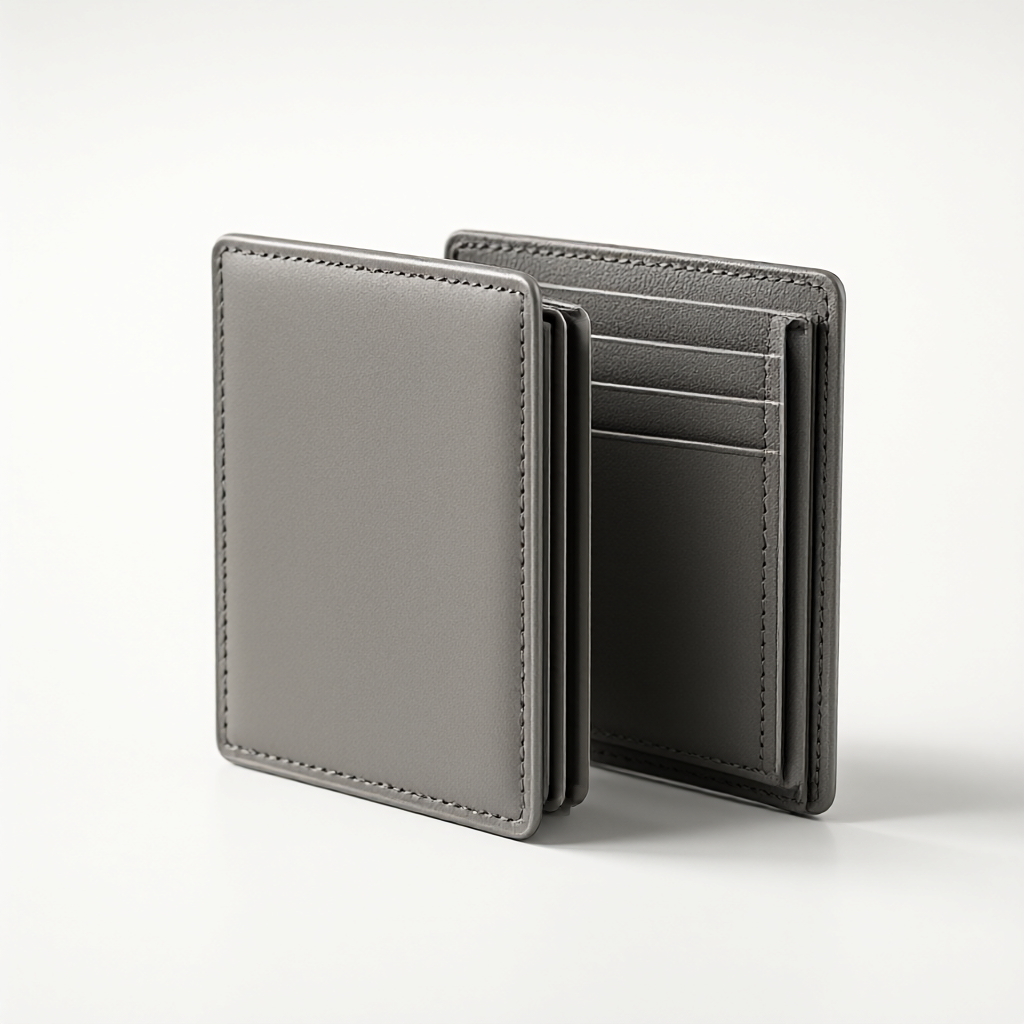
What separates the card zone from the cash zone?
Most 2-in-1 designs use either a hinged bifold construction or a stacked sandwich layout. In a bifold version, the left half contains the card slots and the right half hides the cash/zipper compartment. When closed, the wallet sits flat. In a stacked layout, the card carrier sits on top of the rear cash pouch, creating a thin rectangular block that fits easily into front or back pants pockets. Both approaches aim to keep the overall thickness under 2 centimeters when fully loaded, which is what makes these wallets appealing for minimalist EDC enthusiasts.
What types of cash closures exist?
The rear compartment usually employs one of three closure systems. A zippered pocket is the most common choice and creates a secure enclosure for bills and coins. A magnetic snap or velcro flap offers faster access but less security against loss. A money clip variant replaces the zipper entirely with a spring-loaded metal bar that grips folded bills and sometimes slides over cards. Each system carries trade-offs: zippers protect contents from falling out during movement, clips provide instant bill access and add a rugged aesthetic, and snaps offer speed at the cost of openness.
What distinguishes this from a standard bifold?
Traditional bifolds fold around a single shared interior space. You pull bills and cards from the same open area, which often leads to fumbling and clutter. A dedicated card-and-cash wallet maintains strict separation between card storage and bill storage. Cards stay organized in their own zone and do not compete for space with bulky notes. This organization layer reduces friction at checkout and helps prevent card damage from repeated bending. For a detailed look at organizational systems, see our minimalist wallets guide comparing slot-based carriers and弹片 designs.
Key Specifications
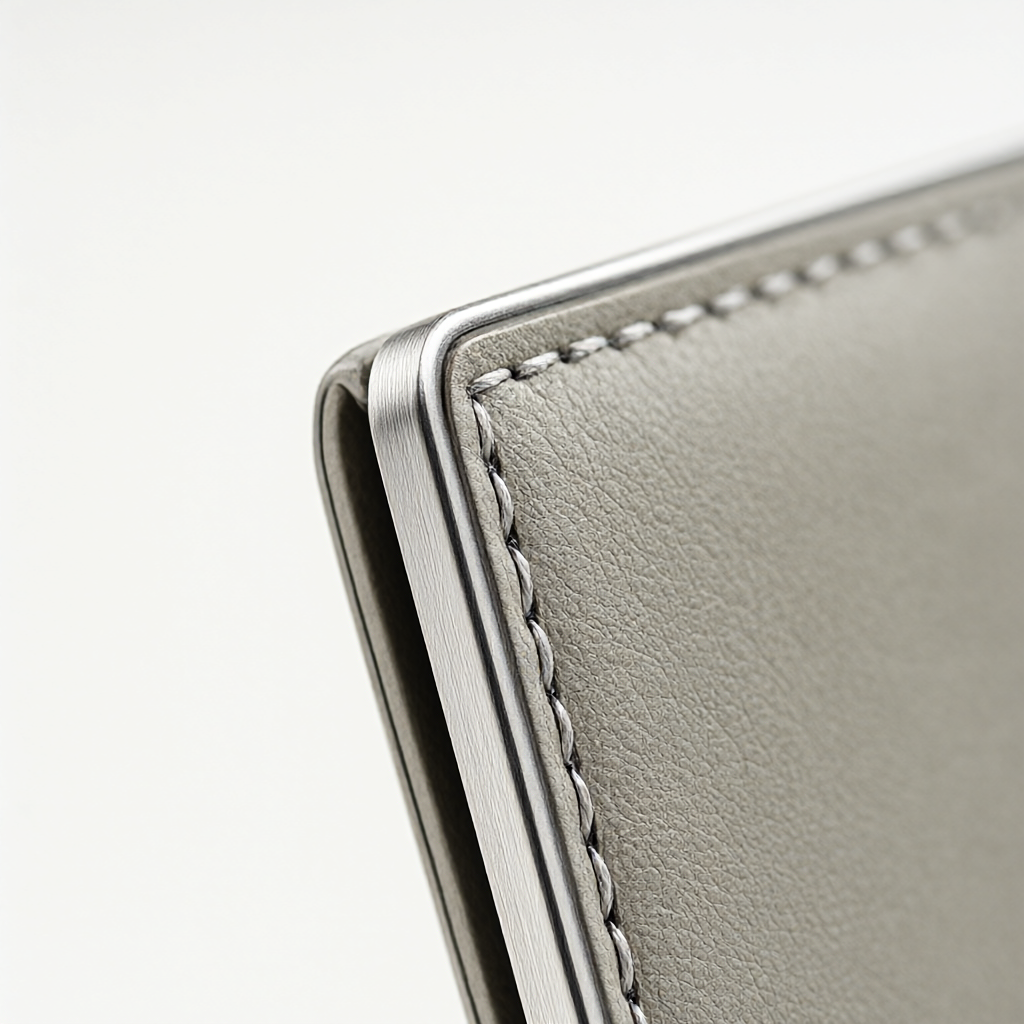
Typical dimensions and weight ranges
Most integrated card-plus-cash wallets measure between 90 and 115 millimeters in width and between 70 and 90 millimeters in height when closed. Thickness ranges from roughly 10 millimeters empty to 20 millimeters loaded with eight to twelve cards and several bills. Weight varies dramatically by material. Aluminum models typically land between 45 and 80 grams. Carbon fiber versions sit closer to 30 to 60 grams due to lower density. Leather constructions range from 60 to 120 grams depending on leather thickness and lining choices. Titanium builds add strength and longevity but often increase weight beyond aluminum equivalents unless wall thickness is reduced.
Card capacity formats
Manufacturers commonly offer configurations labeled as mens 8 card wallet or mens 12 card wallet options. An 8-card format usually provides six to eight tight slots plus two wider slots for IDs or folded receipts. A 12-card format expands the layout with additional rows or split columns to accommodate larger collections. Capacity numbers shift noticeably based on card thickness. Standard ISO credit cards measure approximately 0.76 millimeters each. Premium titanium or thick silicone-coated cards can reach 1.0 millimeter or more, reducing usable slots by one or two positions per row. Always verify the stated capacity against actual card dimensions before purchasing in bulk or for promotional distribution.
Material families and real-world durability
Aluminum wallets excel in scratch resistance and impact protection. Anodized surfaces add color and hardness while preventing corrosion. Common grades include 6061-T6 aluminum, which balances machinability and structural rigidity. Titanium models offer higher strength-to-weight ratios and superior long-term wear resistance, though they command premium pricing and are heavier than aluminum alternatives despite the material advantage. Carbon fiber card holders combine low weight with excellent stiffness, making them popular among outdoor-oriented users. Leather variants deliver warmth and traditional aesthetics but require periodic conditioning to resist cracking. Hybrid constructions pair a rigid metal frame with leather or synthetic wrapping to merge form with function.
RFID-blocking technology is another widely advertised feature. Many manufacturers embed Faraday-layer mesh or metallic woven fabric within the wallet walls to reduce radio-frequency interference from contactless payment terminals and electronic identity documents. Effective shielding requires continuous conductive coverage around card slots. Gaps at hinge lines or around zippers compromise attenuation. For a deeper dive on shielding effectiveness and testing methods, review our complete buyer’s guide to card-safe wallets.
Zipper coin pocket and money-clip variants
Some models include small internal zippered compartments alongside the main cash area. These micro-zip pockets are sized for coins, emergency cash, or SIM ejector tools. Others forego zippers entirely and rely on mens black wallet with coin pocket tray layouts that slide coins into open wells bordered by raised edges. Money-clip variants appeal to users who prefer exposed folded bills. Clips are available in stainless steel, titanium, or aluminum finishes and attach via screws or press-fit inserts. Clip tension adjusts through spring preload adjustments during manufacturing. Over time, repeated opening and closing can relax spring force slightly, so buyers targeting high-volume retail should specify consistent tension tolerances with their supplier.
The money clip selection and evaluation for EDC guide covers spring mechanics and grip retention metrics useful for evaluating clip-based designs.
Standards & Requirements
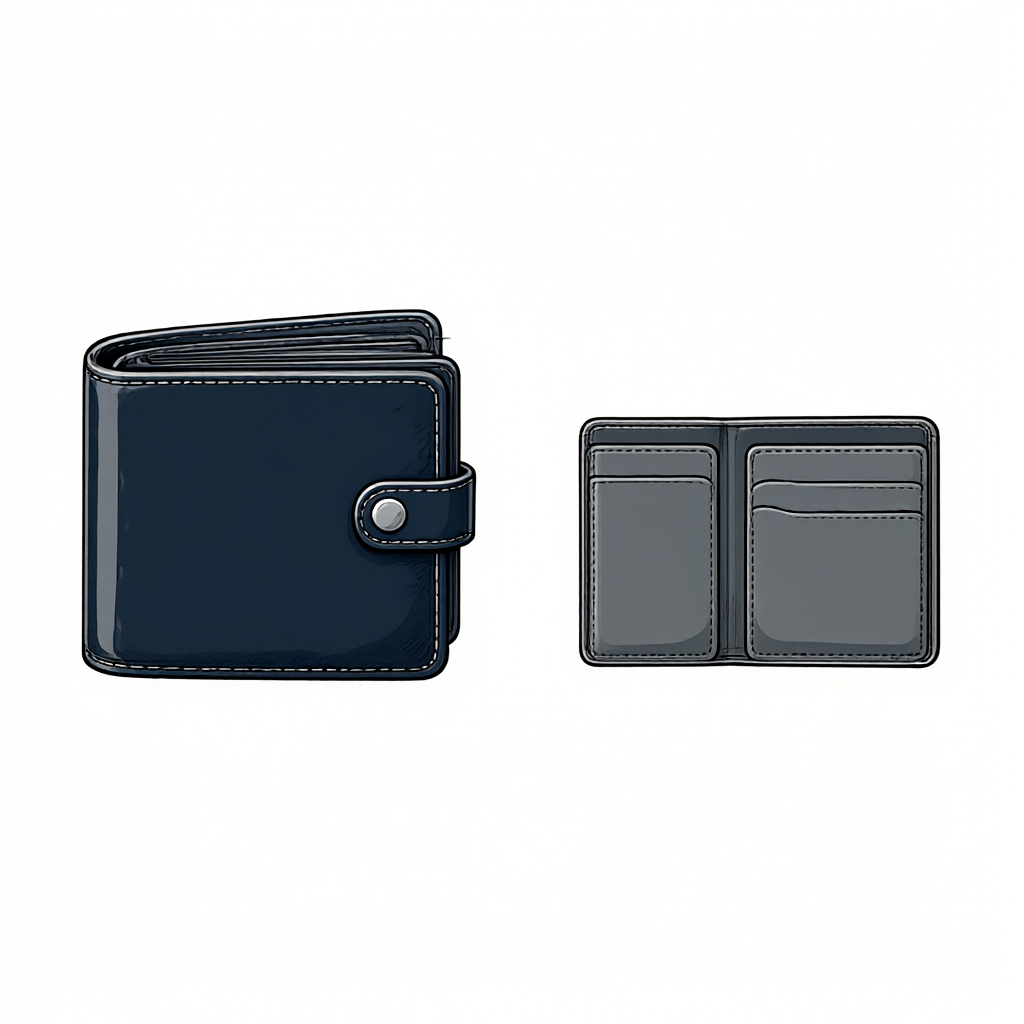
Material safety and regulatory expectations
Products intended for consumer use should comply with applicable chemical restrictions. Materials must meet REACH and RoHS compliance thresholds restricting substances like lead, cadmium, and certain phthalates. When sourcing wallets from contract manufacturers, request test reports from accredited labs confirming restricted-substance limits. Look for SGS-tested material documentation or equivalent third-party verification before approving production runs. Claims about material origin — especially leather classifications such as genuine versus bonded — should align with FTC guidelines for accurate marketing language. Referencing FTC regulations on textile and leather labeling ensures accurate consumer disclosures.
Quality management systems
Reputable manufacturers operate under ISO 9001 quality management frameworks and maintain BSCI social-compliance audits. These certifications indicate structured inspection processes, document control, and responsible labor practices across the supply chain. Factory capacity figures alone do not guarantee consistency; process controls matter equally. When evaluating suppliers, ask about incoming-material inspection, in-process checks during CNC machining or stamping, and final functional tests for zipper cycle endurance, clip retention force, and slot pull-out resistance.
RFID performance verification
Testing standards referenced in the industry include those published by ISO and ASTM bodies. Check references to ISO/IEC 14442 for proximity card coupling specifications and relevant ASTM publications for material characterization. Manufacturers should validate shielding performance through insertion-loss measurements rather than relying solely on marketing claims. Shielding effectiveness generally targets 20 dB or greater reduction in the 13.56 MHz contactless-payment band, though requirements vary by application. Verify test reports specifying frequency ranges and attenuation values instead of accepting generic “RFID-proof” labels.
Related Considerations
Slim profile versus functional trade-offs
Reducing wallet thickness usually means sacrificing either card capacity or cash volume. Ultra-slim designs holding six cards and a few bills weigh very little and sit invisibly in front pockets. Expanding capacity to ten or twelve cards increases bulk proportionally. Users must decide whether prioritizing minimal footprint or maximum organization aligns with daily habits. Those carrying transit passes, multiple membership cards, and frequent cash tips will benefit from a dual-compartment layout with moderate thickness. Minimalists who rarely carry cash may prefer a dedicated card carrier paired with a separate slim money envelope rather than a true 2-in-1 build.
Style differences between designer leather and tactical metal
Leather models emphasize traditional craftsmanship, soft patina development, and formal styling suited for business attire. Stitching patterns, edge painting, and brass hardware contribute to visual weight even when the base profile remains slender. Metal wallets project a technical appearance favored by outdoor professionals and tactical consumers. Brushed finishes, knurling textures, and exposed mechanical elements reinforce durability narratives. Color options span natural tones for leather and anodized hues including matte black, gunmetal, and earth tones for metal constructions. Choosing between these aesthetics also influences maintenance routines. Leather benefits from occasional conditioning and avoids prolonged moisture exposure. Metal wallets tolerate rain and sweat with minimal care but may show surface scratches over time.
Everyday-carry scenarios that influence selection
Consider typical pocket environments before committing to a particular configuration. Commuters using public transit frequently tap cards and appreciate fast-access slot arrangements. Travelers navigating foreign currencies often prefer coin pockets and reinforced stitching around high-stress zones. Corporate gifting programs favor uniform branding opportunities available through laser engraving and anodized color matching. Private-label sellers targeting Amazon FBA channels should evaluate packaging requirements, barcode placement, and retail-ready box configurations that suppliers can provide. Understanding these contexts clarifies whether emphasis should fall on organizational capacity, weather resilience, branding flexibility, or price competitiveness per unit.
Decision guidance for common buyer profiles
- Everyday carry users: Prioritize lightweight aluminum or carbon fiber builds with moderate card slots and reliable zipper retention. Look for ergonomic edge rounding that prevents pocket digging.
- Travelers: Choose robust construction with secure closures and optional tracking-compatible materials. Double-stitched stress points and reinforced zipper pulls extend service life under irregular handling.
- Promotional product buyers: Evaluate customization paths including logo placement, colorway selection, and minimum order quantities compatible with budget allocations. Suppliers offering low MOQ starting at 100 pieces enable smaller test runs before scaling orders.
- Retail and private-label operators: Request prototype samples, confirm inspection criteria, and establish clear defect acceptance thresholds before placing production commitments.
The right integrated wallet depends on matching carry volume, preferred materials, and closure preferences against realistic usage patterns. Measuring existing cards, noting typical cash volumes, and testing prototype ergonomics eliminates guesswork and produces selections that perform consistently over months of daily use.
Final Thoughts
A men’s 2-in-1 wallet merges two essential carrying functions into a single slim package: organized card storage up front and a dedicated rear compartment for bills or coins. The design delivers noticeable improvements in daily convenience compared to traditional bifolds while maintaining portability. Selecting the optimal configuration involves balancing capacity needs, material preferences, RFID shielding requirements, and aesthetic alignment with your routine. Whether you lean toward rugged aluminum construction, lightweight carbon fiber, or refined leather finishes, understanding the underlying specifications and quality markers empowers informed purchasing decisions.
For brands seeking custom metal wallets, carbon fiber card holders, or titanium money clips designed for everyday-carry performance, engaging experienced OEM and ODM partners streamlines development from concept to production. Evaluate suppliers based on documented quality systems, transparent material testing, flexible customization options, and proven export capabilities spanning diverse regional markets. Aligning product specifications with verified manufacturing standards produces durable, market-ready solutions that resonate with modern consumers seeking practical yet stylish pocket essentials.
How Men’s Zipper Wallets Meet Quality and Safety Standards
Regulatory compliance and material restrictions
When evaluating mens zipper wallets on amazon, buyers should verify that products comply with consumer safety frameworks governing restricted substances. The European Union’s REACH regulation and the RoHS directive set measurable limits for heavy metals and phthalates in materials touching skin or cards. In North America, the FTC requires accurate labeling of leather compositions so consumers can distinguish full-grain, top-grain, bonded leather, and synthetic alternatives. Reputable sellers provide test certificates from accredited laboratories such as SGS or Intertek confirming that finished goods fall within prescribed chemical thresholds.
Mechanical durability expectations
Zipper longevity depends on slider construction, tooth material, and fabric tape strength. Brass or nickel-free alloy sliders with nylon coil teeth typically endure 5,000 to 10,000 open-close cycles before failure becomes likely. Metal wallet manufacturers validate this through automated cycle testing rigs that replicate pocket friction and pull forces. Buyers requesting samples should ask for reported cycle-count data and inspect stitching around zip anchors, since high-stress points commonly separate when seams are under-stitched or taped inadequately.
Inspection checkpoints for Amazon-sourced wallets
Third-party marketplace purchases often bypass factory audits, making incoming inspection essential for private-label buyers. Key verification steps include measuring coin-pocket capacity against declared volumes, checking zipper tension with a force gauge, testing RFID attenuation with calibrated equipment, and confirming weight falls within published tolerances. A practical benchmark is accepting fewer than 1.5 percent cosmetic defects and zero functional failures across a pilot batch before committing to full production.
Sourcing advice for hybrid wallets with secure closures
Brands seeking reliable zippered compartments should specify tolerance ranges for zip-track alignment, request prototype validation before tooling lock, and require pre-shipment inspection reports aligned with ANSI/ASQ Z1.4 sampling plans. Working with experienced OEM partners who document process controls reduces variability and ensures each unit meets consistent mechanical and chemical performance criteria.
B2B case reference: A mid-size outdoor brand sourced 10,000 aluminum card holders with integrated zip pockets from a certified contract manufacturer and achieved a 0.8 percent defect rate after implementing incoming-material inspection and randomized functional testing across production lots.
Authoritative standards backing wallet specifications
Industry-grade wallet engineering relies on documented dimensional, material, and testing standards rather than generic marketing language. ISO 7810 defines the ID-1 card format measuring 85.60 × 53.98 mm with rounded corners, which directly governs slot spacing and capacity calculations for slim carriers ISO. RFID shielding effectiveness is often evaluated using methodologies similar to those outlined in EN 50131 for electronic security against radio-frequency interference. While full compliance testing requires laboratory instrumentation, reputable manufacturers reference these baselines to justify claims about card fit and shielding performance ASTM International. Mechanical resilience in rugged EDC gear frequently cites impact resistance frameworks modeled after MIL-STD-810 drop-test concepts, even though wallets themselves are not military-issue items. These verifiable benchmarks help procurement teams compare suppliers objectively instead of relying solely on aesthetics.
For practical sizing guidance, review our guide on wallet width and height dimensions before setting component tolerances.
Tactical metal versus designer leather aesthetics in 2-in-1 designs
Beyond material functionality, style signals strongly influence buyer choice. Designer leather wallets emphasize hand-stitched edges, patina development, and tailored silhouettes suited to business-casual or formal environments. Finish options include vegetable-tanned browns, oxblood, and black with contrasting thread. These wallets age visibly and appeal to users valuing tradition and refined texture.
Tactical metal wallets project precision engineering through brushed finishes, knurled grips, minimalist hardware, and exposed mechanical elements like spring clips or interlocking frames. Colors skew toward matte black, gunmetal gray, desert tan, and anodized blues. Such designs pair naturally with outdoor apparel and align with utilitarian pocket carry habits.
Hybrid constructions merge both worlds by wrapping aluminum or titanium cores in leather panels, preserving structural rigidity while softening visual edge. Internal organization may combine elastic card retention with a discrete zip compartment, delivering compact bulk without sacrificing access speed. Brand positioning often hinges on whether the product leads with heritage craftsmanship or modern industrial performance.
To explore traditional wallet categories alongside modern configurations, see our overview of different types of leather wallets.
Manufacturer Partnership: How TOP EDC Wallet Approaches 2-in-1 Wallet Production
A complete 2-in-1 wallet solution requires coordinated design, tooling, material sourcing, and quality control across multiple disciplines. At TOP EDC Wallet, our engineering team maps card-stack geometry to ISO 7810 ID-1 dimensions before selecting frame thickness, slot pitch, and closure mechanisms. We pair this dimensional discipline with CNC-machined aluminum housings, carbon fiber layups, or titanium money-clip assemblies depending on target price tiers.
Our ISO 9001-certified facility has supported brand growth since 2014, and our BSCI-audited operations reflect structured labor and inspection practices. With roughly 50,000 square feet of manufacturing space and monthly output exceeding 500,000 units, we balance rapid prototyping with stable scale-up capacity. Low MOQ starting at 100 pieces allows emerging brands to validate markets without excessive inventory risk.
Sample turnaround typically completes within seven days, enabling tactile evaluation of zipper tension, clip retention, anodized color consistency, and laser-engraved branding fidelity before committing to full production. Every inquiry begins with application context — retail channel, expected card load, climate exposure, and customization scope — so recommendations remain grounded in actual use rather than assumption.
If you want to evaluate premium materials and organizational layouts further, our RFID-protected wallet buyer’s guide outlines shielding principles and testing expectations relevant to dual-zone designs.
Product Comparison & Top Picks Guide
Metal-frame 2-in-1 wallets
Aluminum and titanium 2-in-1 wallets dominate the tactical EDC segment. Top-performing models feature 6061-T6 or Grade 5 titanium frames, anodized or bead-blasted finishes, and 8–12 card-slot arrays paired with either a zippered rear pocket or a spring steel money clip. Representative dimensions hover around 95 × 65 × 14 mm empty, expanding to ~19 mm loaded. These wallets typically weigh 50–75 g and carry MIL-STD-810H-inspired drop and shock resilience profiles. Recommended for buyers seeking maximum durability and weather resistance.
Leather-hybrid 2-in-1 wallets
Hybrid constructions pair a rigid aluminum skeleton with full-grain or top-grain leather wraps. This configuration softens the cold-metal aesthetic while retaining structural integrity. Zipper pockets are reinforced with double-stitched bar tacks at stress points. Average weight sits at 70–100 g depending on leather thickness. Popular among corporate-gift buyers because laser engraving and color-matched anodization produce cohesive branded appearances. Edge-paint sealing extends moisture resistance compared to raw-leather edges.
Minimalist push-up 2-in-1 wallets
Push-up card mechanisms use coiled springs or elastomer bands to elevate the front card after removal, enabling single-handed retrieval without fanning the stack. When combined with a compact zippered cash pocket behind the card array, these designs achieve capacities of 6–8 cards plus ~15 bills in a footprint under 100 × 65 mm. Weight ranges 40–65 g in aluminum builds. Ideal for commuters prioritizing speed-of-access over maximal capacity.
Budget-oriented polymer and nylon options
Injection-molded polymer cores wrapped in ballistic nylon or PU leather deliver functional 2-in-1 layouts at lower price points. These models typically lack advanced RFID shielding and use lower-grade zipper tapes, making them suitable for promotional giveaways and high-volume retail channels where unit economics drive purchasing rather than longevity. MOQ flexibility is strongest here, with many contract manufacturers offering pilot runs starting at 100 pieces.
B2B Procurement Guide & Supplier Checklist
Supplier selection checklist
Evaluate potential contract manufacturers against these criteria before signing agreements:
- Certifications: ISO 9001 quality management and BSCI social-audit documentation should be current and verifiable.
- Material test reports: Request SGS or equivalent lab reports confirming REACH/RoHS compliance for metals, coatings, textiles, and adhesives.
- Sample lead time: Reputable factories deliver working prototypes within 5–7 business days after artwork and spec approval.
- MOQ transparency: Low-MOQ producers start at approximately 100 pcs per SKU; larger runs unlock tiered pricing.
- Tooling ownership: Clarify whether custom molds, CNC fixtures, and engraving files remain your intellectual property post-development.
- QC inspection protocol: Confirm incoming-material checks, in-process dimensional verification, and final-function testing procedures (zipper cycles, clip retention force, slot pull-out resistance).
Cost-per-unit benchmarks
Typical Ex-Works pricing brackets for branded 2-in-1 wallets, sourced from established OEM/ODM manufacturers:
- Polymer/nylon entry-tier: $2.50 – $5.00 per unit at 500+ pcs
- Aluminum-anodized mid-tier: $5.00 – $12.00 per unit at 300+ pcs
- Titanium or carbon-fiber premium-tier: $12.00 – $28.00 per unit at 200+ pcs
- Leather-hybrid configured units: $6.00 – $15.00 per unit at 300+ pcs
Custom packaging, laser engraving, and UV printing typically add $0.30 – $1.50 per unit depending on complexity and print area. Freight, import duties, and Amazon FBA prep charges sit outside these figures.
Lead-time expectations
- Prototype/sample stage: 5–7 working days
- Mass-production run (300–1 000 pcs): 15–25 working days after sample approval
- Complex custom runs (>5 000 pcs with unique tooling): 30–45 working days
Express sampling and rush-production schedules may compress timelines at additional cost.
Packaging and retail-readiness
Private-label operators should discuss retail-box architecture, barcode placement (UPC/EAN), QR-code integration, and insert-language localization early in development. Many contract manufacturers provide drop-ship and Amazon FBA prep services, including poly-bagging, suffocation-warning labeling, and bundle-kit assembly, reducing fulfillment complexity for sellers.
Here is how the industry works and how we meet these standards. As a manufacturer specializing in minimalist EDC wallets and pocket gear, we operate a 50 000 sq ft facility equipped with in-house CNC machining, laser engraving, UV printing, and aluminum anodizing lines. Our engineering team references ISO/IEC standards for RFID shielding validation and applies ASTM benchmark tests for mechanical durability during prototype validation. We maintain ISO 9001 certification and undergo BSCI facility audits, and all materials are REACH/RoHS compliant with SGS testing on file. With 13+ years of export experience serving brands across America, Europe, Australia, and Southeast Asia, we help partners move from initial concept drawings through tooling, sampling, and scaled production. Our typical sample turnaround is 7 days, MOQ starts at just 100 pieces, and monthly output capacity exceeds 500 000 units across aluminum, carbon fiber, titanium, and leather-hybrid product lines. Get a Free Quote to discuss your custom wallet project.
Sources & References
- FTC regulations on textile and leather labeling — www.ftc.gov
- ISO/IEC 14442 — www.iso.org
- ASTM International — www.astm.org
- Read our minimalist wallets guide — topedcwallet.com
- complete buyer’s guide to card-safe wallets — topedcwallet.com
- RFID wallet guide for men and women — topedcwallet.com
- money clip selection and evaluation for EDC guide — topedcwallet.com
- Request Quote — topedcwallet.com
- wallet width and height dimensions — topedcwallet.com
- different types of leather wallets — topedcwallet.com
From article to product
Turning this into a product?
Most of what is written here is the difference between a sample that works and one that does not. We can build either — the useful one costs the same.
Keep reading
More on buying guides
wallet with trigger
How Does a Trigger Wallet Work? What Is the Pop-Up Mechanism? The core of…
Readbest bifold wallet for women
What Is a Bifold Wallet? The term “bifold” refers to the fold: the wallet…
ReadMen’s trifold wallets with zipper compartments vs. bifold
At a Glance The three dominant men’s wallet formats differ in panel count, depth,…
Read
About the author
TOPWALLET Editorial Team
TOPWALLET's editorial and engineering desk writes from bench testing at the Shenzhen (Longgang) facility: pull-force and cycle testing, 13.56 MHz shielding measurements, finish trials and factory audits, rather than supplier spec sheets. Every specification in these guides is one we write on a purchase order.
Written on the floor
This article was written by our production and QC team — the people who spec tolerances, run the finishing line and inspect every batch. Where it states a capacity, a pull force or a lead time, it comes from a measurement we made, not a supplier’s catalogue. If a number here disagrees with what your own supplier told you, tell us; several of these articles started as a correction from a buyer.
See how the factory works · Inspection process · Sourcing FAQ
Turning this into a product?
Most of what is written here is the difference between a sample that works and one that does not. We can build either — the useful one costs the same.