

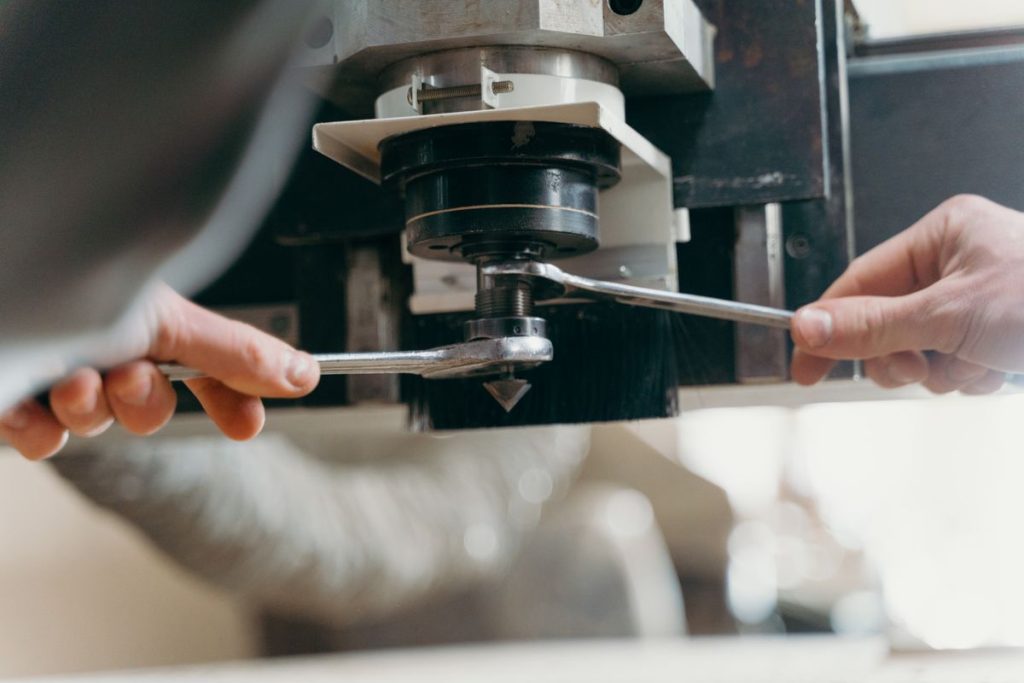
CNC (Computer Numerical Control) machining is the difference between a mass-produced stamped wallet and a precision-machined product. Here is what 120+ CNC stations bring to your wallet programme.
What CNC Does That Stamping Cannot?
Stamping is fast and cheap but limited to 2D shapes. CNC cuts 3D geometry, chamfers, pockets and internal channels. The pop-up ejector mechanism requires CNC — stamped metal cannot achieve the tolerances needed for a smooth cassette action.
Why Tolerance Matters?
A pop-up cassette that tolerates ±0.05mm of misalignment will jam. CNC holds ±0.02mm on critical surfaces. That is why our pop-up mechanisms last 10,000–20,000 actuations.
Our CNC Capability
- 120+ CNC stations (3-axis, 4-axis, 5-axis)
- ±0.02mm tolerance on critical surfaces
- Robotic polishing for consistent finish
- In-house tooling: no outsourcing delays
CNC vs Stamping: When Each Makes Sense
| Factor | CNC machining | Metal stamping |
|---|---|---|
| Geometry | 3D pockets, chamfers, internal channels | Mostly 2D profiles |
| Tolerance | ±0.02 mm on critical surfaces | Looser; springback needs correction |
| Best for | Pop-up cassettes, premium thin wallets | High-volume simple plates |
| Tooling cost | Lower upfront (programming + fixtures) | Higher upfront (stamping dies) |
| Per-unit cost | Higher at very low volume | Lowest at very high volume |
Rule of thumb: if the mechanism has moving parts or the wall is under 1 mm, machine it. If it is a flat plate running into six figures, stamp it.
Tolerance stack: what the number actually means
A drawing that says ±0.05 mm on a card cavity is a statement about one measurement, not about the product. In a two-plate wallet the cavity is formed by both halves, so the clearance the customer experiences is the sum of two machined positions, two finishing layers and the assembly gap. That sum is what binds cards or lets them rattle.
The stack to write down before quoting: machining position (±0.05 mm typical), anodizing growth (10–25 µm per face, 25–50 µm for Type III), assembly clearance (0.05–0.15 mm depending on the fastening), and plating thickness where hardware intrudes. Add them, then compare with the 0.15–0.3 mm band the card standard leaves you. If the sum exceeds the band, the fix is usually geometry or finishing choice, not a tighter machining tolerance that the process cannot hold repeatably.
Cycle time and the cost curve
CNC cost is a two-part curve. Below roughly a thousand units, setup and fixturing dominate: a 5-axis single-setup programme that machines five faces without re-fixturing usually beats a cheaper 3-axis route with three operations, because each re-fixture adds labour and a new tolerance contribution. Above that volume, cycle time dominates and the cheaper per-part route wins on cost.
What moves the crossover: number of faces, number of distinct parts, and whether the same jig serves several SKUs. A programme running one shell in one colour at 3,000 pcs is a straightforward cycle-time game; a programme running five colours in 300-unit lots is a setup game, and paying for 5-axis capability is often the cheaper answer even at the higher hourly rate.
Where machining and finishing collide
- Deburr before anodizing, not after. Burrs left in place get coated, then break away and leave a bare-metal pit that reads as a defect.
- Radii are a finishing decision made in the machine. Type III films crack below roughly 0.3 mm radius, and powder coating needs 0.5 mm on edges; if the model has sharp corners, the machine has to cut the radius in, because polishing cannot add one.
- Polishing removes material after the last measurement. Mirror-grade polishing can shift a surface by a few hundredths of a millimetre, so the final inspection has to happen after finishing, with the cavity gauged on the finished part.
- Masking is a cost line. Every surface that must stay conductive, or stay uncoated for a sliding fit, is labour in the finishing shop and should be visible on the drawing rather than agreed verbally.
FAQ
Q: How does CNC affect unit cost?
A: Higher than stamping at low volumes, but drops quickly at 1,000+ pcs. Tooling is amortised across production.
Q: Can I get CNC machining for custom designs?
A: Yes. Send your CAD files and we quote CNC time per part.
Q: What materials can CNC cut?
A: Aluminium, stainless steel, carbon fibre laminate, brass, copper.
Makes Better Wallets: What Should You Read Next?
From article to product
Sourcing minimalist-wallets?
Tell us the format, the quantity and the date you need stock. You get material options, MOQ and a landed-cost range back within one business day.
Keep reading
More on wallet manufacturing
Sustainable Packaging for Wallet Shipments
Packaging is where sustainability claims are cheapest to make and easiest to disprove. A…
ReadTake-Back and Recycling Programmes for Wallet Brands
A take-back programme is easy to announce and hard to run. Wallets are the…
ReadNickel Release Rules for Wallet Hardware
Nickel release is the one restriction in a wallet that is decided by the…
Read
About the author
TOPWALLET Editorial Team
The TOPWALLET editorial team covers sourcing, pricing and production topics for brand buyers. Every article is reviewed by the production and quality-control team before publishing.
Written on the floor
This article was written by our production and QC team — the people who spec tolerances, run the finishing line and inspect every batch. Where it states a capacity, a pull force or a lead time, it comes from a measurement we made, not a supplier’s catalogue. If a number here disagrees with what your own supplier told you, tell us; several of these articles started as a correction from a buyer.
See how the factory works · Inspection process · Sourcing FAQ
Sourcing minimalist-wallets?
Tell us the format, the quantity and the date you need stock. You get material options, MOQ and a landed-cost range back within one business day.