

A big skinny lynx wallet is a rigid-frame, front-pocket card-and-key carrier named for its slim silhouette and elastic-retention system originally popularized by Big Skinny’s “Lynx” model line. Unlike traditional bi-folds, it uses a metal or carbon-fiber frame with an integrated money clip and elastic band to hold six to ten cards plus one key within an 8–14 mm profile, shifting carry from back pocket to front pocket for comfort and security. The primary search intent behind this term is a buyer who wants a durable, low-profile wallet that replaces clutter while retaining essential cards and a single key — and is evaluating material tier (aluminum / carbon fiber / titanium), RFID protection, and whether OEM or branded retail offers the best value.
At a Glance
A big skinny lynx wallet is a low-profile, front-pocket-friendly carrier built around slim card storage and optional key retention. It answers a simple trade-off most people face after years of bulky bi-fold clutter: you want fewer items in your pocket, but not so few that you leave something behind. The Lynx-style approach keeps everything flat against your leg instead of riding up your hip, and it does that by replacing folded leather with a rigid frame, an elastic band, and sometimes a metal clip.
If you are looking for one starting point, the best big skinny lynx wallet for most users is an aluminum frame model with RFID-blocking construction and a hybrid card-plus-key setup. That combination gives you durability, security, and enough room for seven to ten cards plus one key without crossing the threshold into awkward bulk. If your priority is lighter weight and higher scratch resistance, step up to carbon fiber or titanium; if your priority is lowest cost while still getting a full feature set, stay with aluminum.
Types & Categories
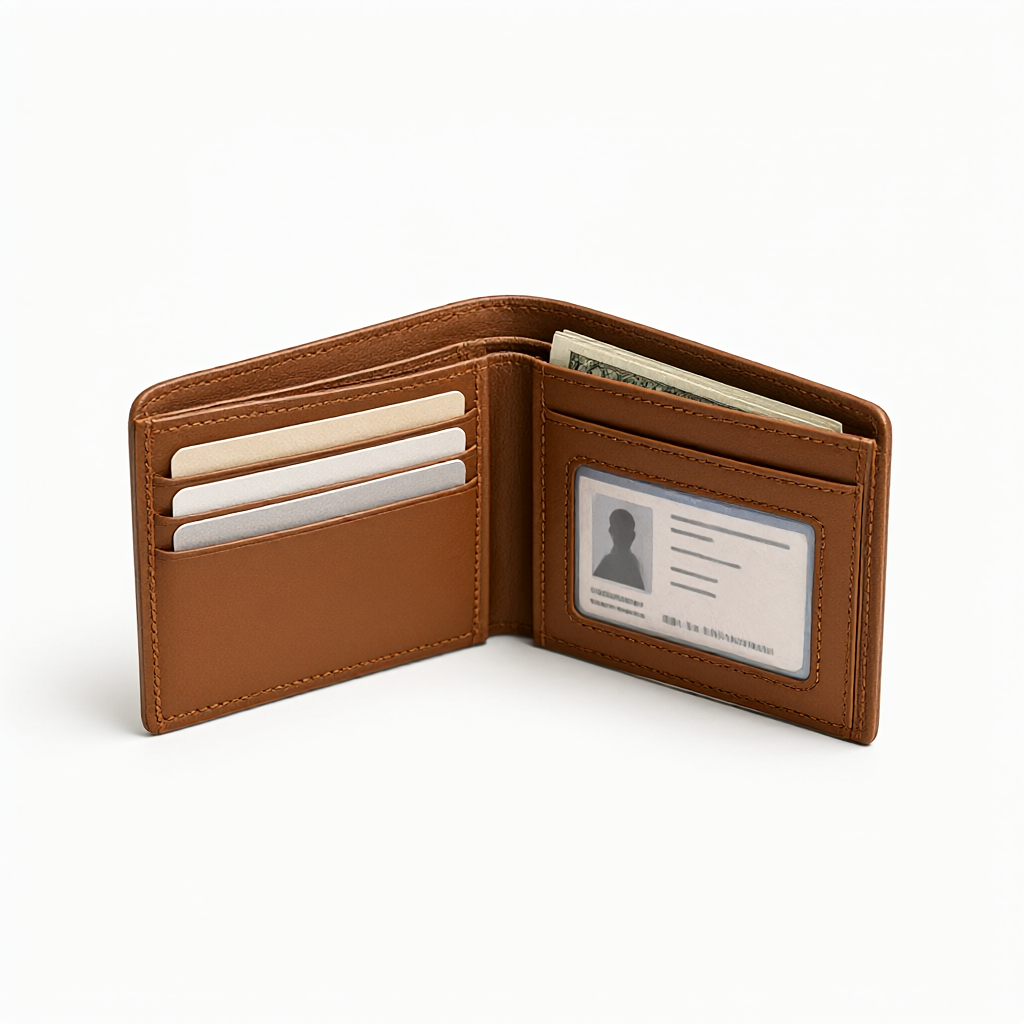
Slim wallets come in distinct architectures, and your ideal shape depends more on how you actually carry than on whatever looks cleanest online. Below are the configurations most people encounter, described through the lens of use rather than marketing categories.
What type of minimalist wallet is best for mixed card-and-key carry?
This is usually called a money clip wallet or a hybrid card holder. A rigid or semi-rigid frame holds cards in one plane, while a spring-loaded metal clip sits perpendicular to secure a folded bill or a single key. This layout works because the key cannot slide loose when you sit down, yet bills still compress flat when inserted. It is the configuration closest to what most buyers mean when they search for a wallet for cards and keys, and it is also the format that tends to convert traditional bifold users into front-pocket carriers with the least friction.
What is an L shaped wallet used for?
An L shaped wallet design refers to layouts where the money-clip bar runs along one long edge, creating an L profile when viewed from the front. This places the clip close to the top of the stack, which changes how bills and cards interact. The L shape helps keep bills seated against the back plate rather than curling outward, which matters for people who carry receipts, folding tickets, or multiple folded bills. When the clip sits higher, it also leaves more usable length along the side for card access, especially in frames with wide card slots.
Which minimalist card holder style fits tight pockets best?
The narrowest profiles belong to card-only holders, typically those built around a single U-channel plate or a compact two-plate clamp with elastic. They carry roughly five to eight cards and zero keys, making them the thinnest front-pocket wallets available. Some EDC wallet users choose this style deliberately to separate identification and transit cards from their day-to-day spending cards, carrying a second slim holder for essentials only. The trade-off is that you will either leave bills at home or buy a separate bill keeper, which some people prefer because it enforces a true minimal load.
How do RFID blocking wallets compare to standard versions?
RFID wallets add a conductive layer — usually a thin aluminum mesh, stainless steel laminate, or specialized foil — inside the card stack path to block high-frequency scanning fields. The addition increases thickness by about 0.3 to 0.8 mm depending on placement, and adds negligible weight. For most urban commuters who already handle physical cards quickly at POS terminals, the practical risk reduction is small. For frequent travelers in dense transit environments or people who value layered security, it is a reasonable upgrade. If you want detail on protection strategies, see our guide to Wallets That Protect Cards: A Buyer’s Guide to Card-Safe designs.
Comparison Table
| Specification | Budget Aluminum (entry) | Mid-range Carbon Fiber | Premium Titanium | Hybrid Money Clip + RFID |
|---|---|---|---|---|
| Typical material | 6061 aluminum, anodized | 3K forged or woven carbon fiber over polymer core | Grade 5 titanium, bead-blasted or polished | Aluminum or titanium frame with RFID barrier |
| Thickness (loaded) | 10–14 mm | 8–12 mm | 9–11 mm | 11–16 mm |
| Weight (empty) | 45–65 g | 35–55 g | 50–70 g | 55–80 g |
| Card capacity | 6–10 cards | 6–10 cards | 6–8 cards | 6–8 cards + 1 key |
| Bill compartment | Slip pocket or none | Elastic loop | None or slip | Integrated money clip |
| RFID blocking | Optional add-on | Often integrated | Optional add-on | Usually standard |
| Price range (USD) | $20–$40 | $35–$75 | $60–$130 | $40–$90 |
| Best suited for | Entry-level switching | Lightweight travel and daily carry | Heavy daily use and corrosion-prone environments | Users who still carry one key and folded bills |
Buying Factors
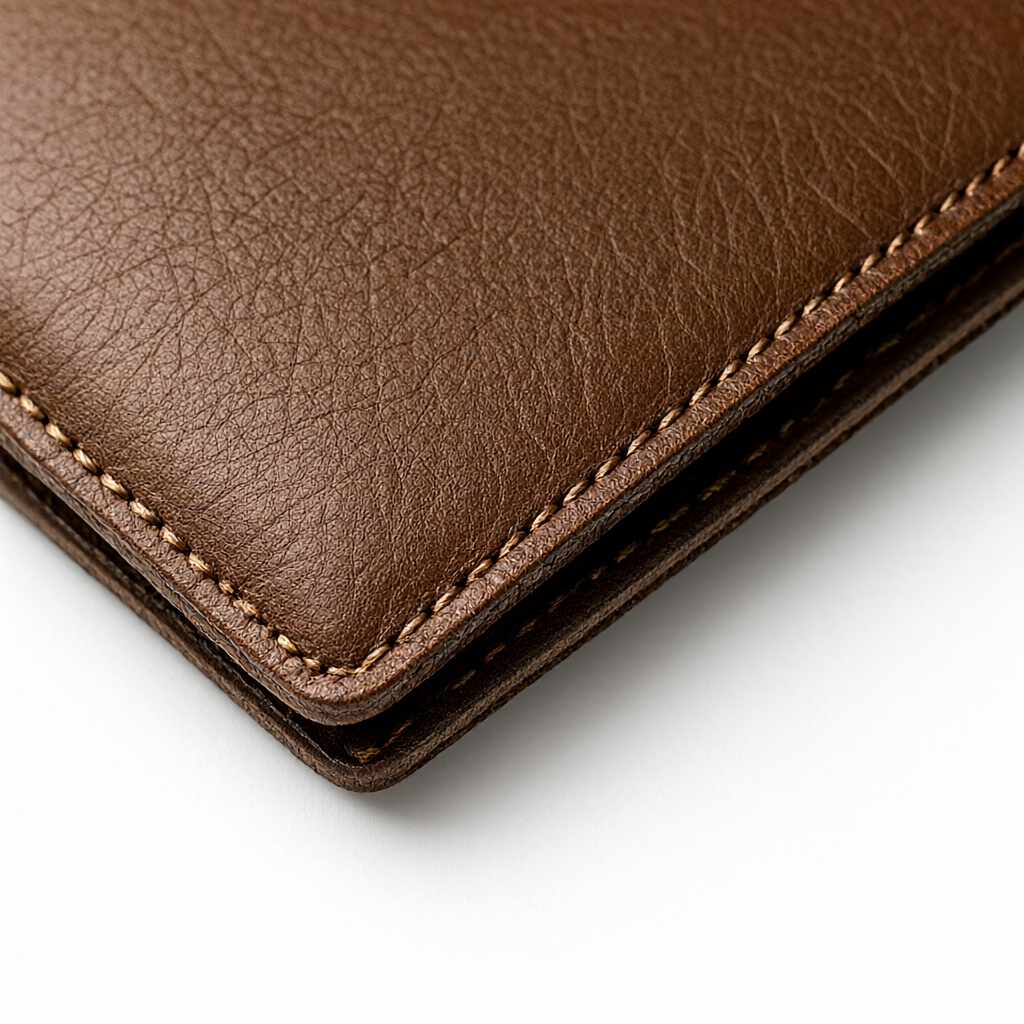
Choosing among slim wallet styles boils down to four decisions made in order: what you will actually carry, how it fits your pocket and body, which material survives your habits, and what price delivers those qualities without excess. Each choice shifts the others.
How many cards and keys can a slim wallet actually hold?
Real-world capacity is lower than stamped maximums because credit cards, ID cards, transit passes, and license cards vary in stiffness and thickness. A typical American credit card measures about 0.76 mm thick; laminate IDs can reach 1.0 mm or slightly more. Most slim aluminum and carbon fiber frames comfortably handle six to eight standard cards before elasticity begins to fail or insertion requires deliberate pressure. Adding a laminated ID pushes the comfortable ceiling toward six cards plus the ID. Keys require their own solution: a money clip holds one medium key reliably, two small keys at most, and nothing wider than a standard house or car key blade without bending the clip.
People who ask about a wallet for business contexts often carry three to five essential cards and no keys. A wallet for car keys situation is different — the key is the anchor item, and the card capacity drops accordingly because the money clip occupies structural space. Understanding your baseline carry, measured by placing actual cards and keys on a table and counting what you never leave at home, prevents regret far better than chasing headline numbers.
Is RFID blocking really necessary for a minimalist wallet?
RFID-enabled payment cards exist, and cloned-card skimming has been documented, but real incidence rates in most consumer markets remain low compared with phishing and online fraud. The FTC notes that identity theft risks from RFID skimming are part of a broader electronic-pickpocketing concern, which means any protective measure should be weighed against its cost and convenience. If you live in a city with heavy public transit, ride packed subways during rush hour, or travel frequently through crowded terminals, the marginal security gain justifies the small thickness increase. If you mostly pay digitally or wear a separate phone-based wallet, RFID is optional rather than essential. See also our overview of RFID Wallets Guide: Best Options for Men & Women in 2026 to understand how shielding layers differ between models.
Which material is best: aluminum, carbon fiber, or titanium?
Each material trades scratch resistance, weight, dent tolerance, and price differently.
Aluminum offers the best value for most buyers. 6061-T6 aluminum with an anodized surface resists normal wear well, stays rigid under repeated loading, and costs significantly less than the alternatives. It dents under sharp impacts, and hard abrasives can scratch through the anodized layer over time, revealing the softer substrate beneath. For daily office carry and general travel, it is sufficient and often the smart default.
Carbon fiber provides the highest strength-to-weight ratio and superior scratch resistance compared to bare metals. The visible texture comes from either woven sheets or forged chunks embedded in a resin matrix, and the look changes based on fiber orientation and resin clarity. The downside is impact behavior: carbon fiber can delaminate under concentrated strikes, especially on cheaper constructions where the resin bonding is thinner. It is an excellent choice for travelers and outdoor-oriented carry, provided the manufacturer uses quality prepreg layups rather than cheap injection-molded powder. Read about how Minimalist Wallets Guide: What They Are & How to Choose evaluates construction layers to avoid weak builds.
Titanium is the heaviest of the three per unit volume, but grade 5 titanium achieves strength comparable to many steels at lower density than steel, placing it close to aluminum in feel once machined to similar dimensions. It resists corrosion almost entirely, handles salt air and sweat exposure better than any other common wallet material, and maintains surface appearance longer under rough treatment. The premium shows up in price and in limited color options unless coated. If you swim regularly, work outdoors, or simply want a wallet that ages gracefully without polishing, titanium earns its cost.
How do size and weight specifications affect front-pocket comfort?
Pocket fit is dominated by width and thickness, not total weight. A wallet wider than roughly 90 mm tends to ride up when you sit, regardless of how light it is. Height above 65 mm starts to protrude noticeably from tight jeans or tailored trousers. Thickness beyond 14 mm with a full card stack becomes uncomfortable for most leg shapes during prolonged sitting, which is why people switch to front-pocket carry in the first place. When measuring a big skinny model, treat published dimensions as targets and check user photos with rulers or coins for realistic scale. For deeper reference on sizing conventions, consult our piece on Wallet Size Width and Height: Complete Dimension Buying.
Price & Cost
Pricing across minimalist wallets clusters around material, fabrication complexity, and brand positioning rather than features alone.
The budget tier, typically $20–$40, consists mostly of stamped aluminum frames with basic springs and minimal finishing. You get functional RFID blockers, simple elastic systems, and acceptable card retention for occasional use. Expect tighter tolerances on cheap inserts, meaning some card stacks will feel stiffer until broken in.
The mid-tier, ranging from about $35 to $75, is where most good choices live. Here you find forged carbon fiber with cleaner edges, improved elastomer bands that maintain tension longer, and more consistent anodizing. Hybrid models with integrated money clips and RFID layers also land here, making this range ideal for anyone comparing a wallet for cards and cash, a wallet for cards and coins via add-on loops, or a streamlined business EDC setup. Our article on the Big Skinny World Wallet: Complete Buyer’s Guide 2026 covers how mid-tier pricing maps to real build quality differences.
The premium tier, from roughly $60 to $130+, features CNC-machined titanium, multi-stage surface treatments, precision hinges on convertible models, and tighter dimensional control. Buyers in this segment prioritize longevity and material purity over initial savings.
Cost drivers worth noting include the thickness of RFID shielding, whether the money clip is spring-steel or titanium, and if the frame includes knurling or bead-blasting, which add machining steps. Retailers also inflate prices through bundling with straps, keychains, or gift boxes, so compare base-unit pricing before evaluating bundles. For guidance on selecting money clips that complement these wallets, review our resource on Money Clip Selection and Evaluation for Everyday Carry.
Pros & Cons
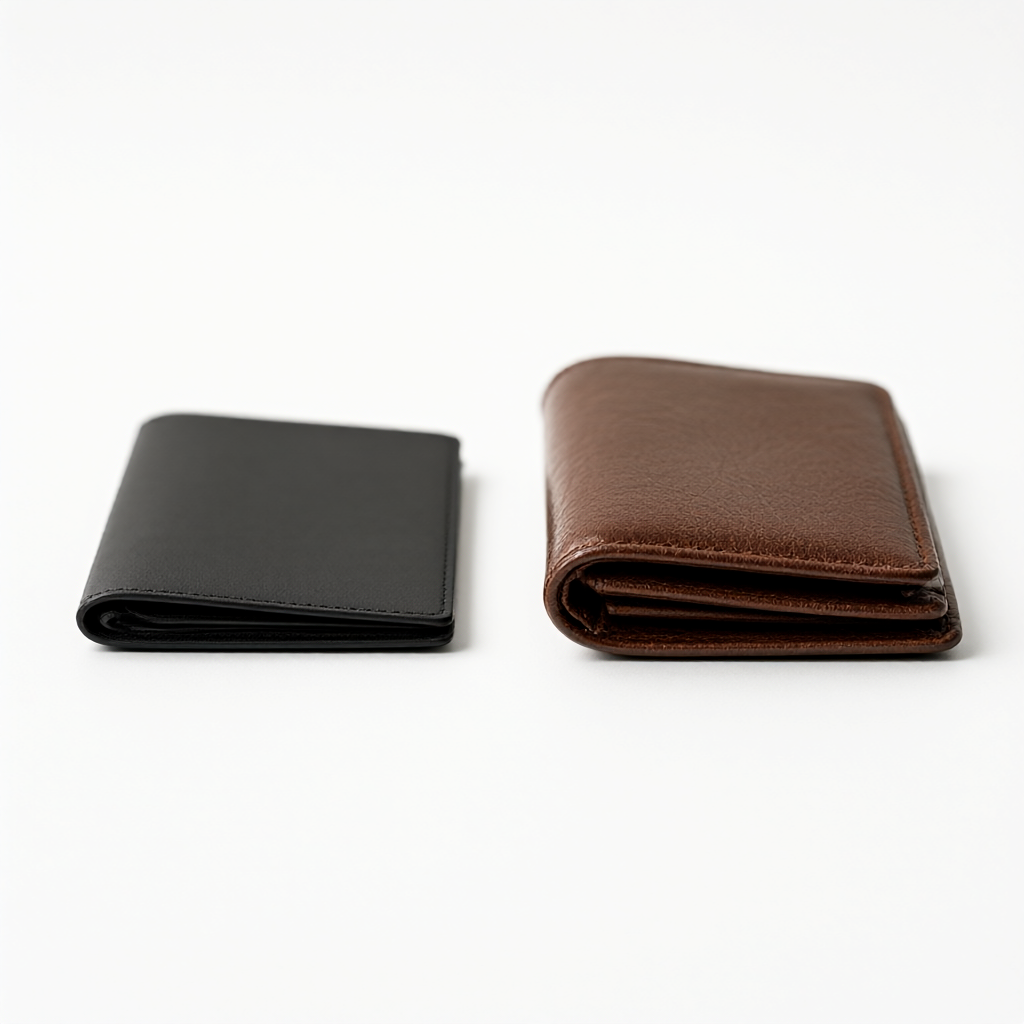
Aluminum frame wallets
- Durable enough for decades of normal use
- Lowest cost among metal-frame options
- Anodized colors offer personalization without extra tooling
- Dent when dropped on hard stone repeatedly
- Scratches reveal bare metal over time
- Heavier than carbon fiber at equal volume
Carbon fiber wallets
- Exceptionally light for the strength provided
- Highly scratch-resistant on finished faces
- Distinct visual patterns that age cleanly
- Risk of delamination on lower-quality builds
- Repairs are impractical once damage occurs
- Texture can catch on fine fabrics like silk dress shirts
Titanium wallets
- Near-total corrosion resistance
- Maintains finish under abrasive daily handling
- Feels solid without feeling like a brick
- Highest upfront cost
- Limited color palette unless coated
- Can transmit temperature quickly in cold weather
Hybrid money clip and RFID models
- One system replaces a separate clip and card holder
- Eliminates loose-key rattles
- Slightly thicker than card-only versions
- Money clip tension can loosen if overloaded
- RFID layer reduces usable card slots by one if placed centrally
Additional Considerations
Beyond material and capacity, several smaller factors influence whether a wallet will work for years or become a wallet fail within months.
Warranty terms matter more than people expect. Solid manufacturers stand behind their frames because replacements are rare, while brands with vague policies often signal thinner margins on materials. Check whether the warranty covers elastic degradation separately from frame defects, since springs degrade faster than metal plates.
Card slot geometry determines daily usability. Narrow slots force stiff cards to bend during insertion, which loosens over time and eventually causes cards to fly out when you tilt your pocket. Wider slots accept laminate IDs more easily but may let thin cards shift laterally. Look for designs with graduated entry angles rather than straight vertical channels.
Compatibility with international formats affects travelers specifically. A wallet euro standard test involves checking whether a folded euro banknote sits flush and whether card heights align with European banking norms. Most modern slim wallets accommodate ISO card dimensions well; the variable is note thickness, since euro notes differ slightly from US dollars in texture and fold line predictability. If you regularly carry foreign currency, try a wallet with a flexible bill channel rather than a rigid slot.
Custom engraving and logo options are widely available for corporate gifts and promotional campaigns. Laser engraving on aluminum produces durable contrast without affecting RFID performance, while titanium accepts laser marks well and can be combined with bead blasting for subtle finishes. If you are sourcing a wallet for business giveaways, request a physical sample with your intended artwork before committing to volume, because color contrast varies dramatically between matte black anodized and natural raw metal surfaces.
The broader wallet features ecosystem includes convertible designs that attach to keys, replaceable弹簧弹片, and models that integrate small tool bits. These add functionality but also add failure points, so evaluate them against your actual workflow rather than perceived convenience. For detailed care practices that extend wallet life, refer to our advice in How to Take Care of a Leather Wallet — Full Care & even though metal wallets need different maintenance, the inspection habits overlap significantly. And if you are weighing slim options against higher-capacity designs, reviewing a 12 Card Bifold Wallet – Specs, Pricing & Buyer’s Guide can clarify whether you are actually seeking more slots or simply more discipline.
When buyers compare specific lines such as the big skinny trixie wallet versus larger sibling models, the deciding factor is usually load consistency rather than absolute size. A slightly larger frame that holds your exact weekly cards comfortably beats a marginally smaller frame that requires constant removal and reinsertion. Likewise, searching for the biggest coinbase wallet or other niche terminology often leads to specialized shapes better suited to particular card stacks than to general daily carry, so match the name to your actual contents instead of assuming a bigger box is automatically better.
Supplier Evaluation & Custom Manufacturing Options
After narrowing your choice to material and form factor, the next decision is usually source quality. The market contains both retail-branded products and contract manufacturers that supply private labels. Evaluating suppliers requires attention to production transparency, testing standards, and sample responsiveness.
Reputable factories reference recognized quality frameworks when describing their processes. For example, management-system certifications aligned with ISO 9001 indicate structured quality control rather than ad-hoc output, which translates directly into fewer inconsistent shipments and clearer communication during customization. Materials themselves are often tested against industry benchmarks governed by bodies like ASTM International, particularly for claims around RFID attenuation, tensile performance of springs, and surface hardness.
When requesting quotes, specify card type, approximate thickness mix, expected daily key count, and preferred RFID configuration. Manufacturers with mature tooling can produce samples in about a week and adjust parameters like slot tension, clip gauge, and finish selection based on real loaded tests rather than theoretical drawings. Custom branding ranges from simple laser engraving applied to individual units to full packaging design, including retail boxes and hang tags suited for Amazon FBA prep or direct distribution. Low minimums allow brands to validate concepts before committing to larger runs, which is especially useful for startups testing materials before scaling.
Common Wallet Fail Scenarios & Buyer Mistakes
Even well-designed minimalist wallets can turn into a wallet fail when buyers overlook critical factors before purchasing. The most frequent mistakes fall into five categories.
The first mistake is ignoring actual card-stack thickness. Manufacturers often advertise eight-card capacity using thin polymer cards as reference. Real-world AMEX cards measure approximately 0.86 mm, while government-issued IDs reinforced with laminate reach 1.0 to 1.2 mm. Stacking seven standard cards plus one ID pushes the total thickness beyond 6.5 mm inside the frame alone, leaving almost no margin before elastic tension fails or insertion becomes impractical.
The second mistake involves choosing spring materials without checking metallurgy. Cheap wallet clips use low-grade stamped steel that loses temper after repeated flex cycles. Quality money clips employ 301 or 302 stainless spring steel, which retains its tensile strength far longer under cyclical loading. When you press bills or a key into the clip, the material must resist permanent deformation. If a supplier cannot specify the alloy grade, assume the spring will sag within months of heavy daily use.
The third mistake is assuming all RFID blocking performs equally. Effective RFID shielding requires continuous conductive pathways. Many inexpensive wallets stitch together small metallic meshes or apply thinly sputtered foil layers that develop micro-gaps at fold lines and screw holes. Field testing by independent labs shows that discontinuous barriers lose effectiveness above 13.56 MHz — the frequency used by most contactless payment cards. Look for wallets that use continuous laminates or full mesh liners instead of patchwork designs. Read more about how different shielding architectures compare in our guide to RFID Wallets Guide: Best Options for Men & Women in 2026.
The fourth mistake is selecting a wallet size that ignores local banknote dimensions. American wallets are designed for US legal tender measuring 156 by 66 millimeters. European banknotes follow the CII standard set by the Council of the European Union, running 120 to 167 millimeters in length depending on denomination. A wallet cut for USD notes may leave euro notes protruding two or three centimeters, which looks sloppy and strains the pocket fabric. Always verify bill compartment dimensions against your local currency before buying imported models. Our resource on Wallet Size Width and Height: Complete Dimension Buying covers these dimensional differences in full detail.
The fifth mistake is neglecting edge geometry and pocket friction. Wallets with sharp milled corners dig into thighs during sitting and catch on tight denim. Good designs feature rounded edges with a minimum radius of 0.5 mm, and many premium brands add a slight chamfer to the leading edge to help the wallet slide smoothly into front pockets. This is a small detail that separates a wallet you forget you are carrying from one that irritates you all day.
| Mistake Category | Symptom | How to Avoid | Red-Flag Indicator |
|---|---|---|---|
| Overestimated card capacity | Elastic snaps back weakly after six cards | Test with your actual cards including IDs | Claims of 12+ cards without mentioning ID thickness |
| Inferior spring steel clip | Clip loses grip after 2-3 months | Ask for alloy grade; test resistance manually | No alloy specification listed anywhere |
| Patchy RFID shielding | Contactless payments still readable | Check for continuous barrier layers in construction photos | Mesh patterns visible through card slots |
| Wrong banknote fit | Notes stick out 2-3 cm from wallet | Verify slot height matches local currency | Imported wallets without stated note compatibility |
| Sharp pocket-edge corners | Thigh irritation during sitting | Prefer rounded radii over square cuts | Product images showing unchamfered milled edges |
European & Global Banknote Compatibility
Global wallet sizing varies dramatically because paper currency dimensions differ by country and region. Designing a single slim wallet that accommodates every worldwide banknote is physically impossible, but understanding which markets align with which wallet formats helps buyers avoid embarrassment and returns.
US Dollar bills measure 156 by 66 mm and serve as the baseline for most American minimalist wallet designs. Wallets engineered for this standard typically offer internal heights between 75 and 82 mm once the frame and elastic system are accounted for.
Euro banknotes span a wider range from 120 mm for the five-euro note up to 167 mm for the five-hundred-euro denomination (now discontinued in physical circulation but still referenced by manufacturers). Most European-friendly wallets design for a maximum internal height of 80 mm, which accommodates euros up to and including the 200-euro note comfortably. The smaller denominations sit flush, while the largest notes may extend slightly above the frame edge depending on elasticity.
British pound notes in England and Wales measure 145 by 75 mm, making them slightly taller than US dollars. Wallets designed for euro compatibility generally handle pounds without issue due to overlapping dimension ranges.
Chinese yuan follows a similar footprint to US dollars at approximately 155 by 77 mm for the 100-yuan note, fitting easily into standard American-format wallets.
Japanese yen runs notably smaller at 160 by 76.5 mm for the highest denomination, which fits comfortably within nearly any Western-style slim wallet.
When shopping internationally, look for product descriptions that explicitly state banknote compatibility rather than relying on assumed standards. Reputable sellers provide exact internal slot dimensions in millimeters, allowing you to cross-reference with your national currency before ordering. If a seller lists only generic terms like universal fit without providing measurements, treat that as insufficient information for making an informed purchase decision.
Customization, Logo Engraving & OEM Manufacturing Options
Most buyers never consider that minimalist wallets can be customized at the component level, yet OEM and ODM programs have become a major channel for brand owners who want distinctive hardware rather than off-the-shelf inventory. Customization spans several categories, each with different minimum order quantities, lead times, and cost implications.
Laser engraving is the most popular customization method for metal wallets. CO₂ and fiber laser systems can etch logos, monograms, QR codes, or decorative patterns directly into anodized aluminum, titanium, or stainless steel surfaces. The process removes a microscopic layer of material, creating contrast without compromising structural integrity. Typical engraving depth measures between 10 and 50 micrometers depending on power settings and material type. Fiber lasers produce sharper, deeper marks on metals, while CO₂ lasers work better on certain polymer-composite surfaces.
UV printing offers full-color decoration on flat or slightly curved wallet faces. This digital printing method cures ink instantly under ultraviolet light, enabling photorealistic graphics, gradients, and complex artwork. UV print adheres to anodized aluminum, coated titanium, and carbon fiber resin surfaces. Colorfastness under normal handling exceeds 500 rub cycles according to standard abrasion tests, though direct sunlight exposure over extended periods may cause gradual fading on bright pigments.
Anodized color matching allows brands to specify exact hues for aluminum frames. Standard anodizing produces black, silver, blue, red, gold, and green finishes, but custom colors require Pantone matching and tooling adjustments. Minimum quantities for custom anodized colors typically start at 500 pieces due to batch processing requirements at the plating facility.
Elastic and hardware substitutions let buyers select alternative retention systems. Swap standard elastomer bands for silicone loops, choose between pivot hinges or solid-frame constructions, and upgrade money clips from stainless steel to titanium or Damascus steel variants. These changes affect unit cost and sometimes MOQ thresholds.
Custom packaging rounds out the OEM experience. Retail-ready boxes with die-cut interiors, magnetic closure sleeves, and printed inserts transform bulk shipments into shelf-ready merchandise. Box design files are usually supplied by the manufacturer, and branding artwork must meet specified bleed and resolution requirements.
| Customization Type | Method | Typical MOQ | Lead Time | Cost Impact |
|---|---|---|---|---|
| Laser engraving logo | Fiber or CO₂ laser etching | 300 pcs | 7-10 days | +$0.50-1.50 per unit |
| UV full-color print | Digital UV curing on flat surfaces | 200 pcs | 10-14 days | +$1.00-2.50 per unit |
| Custom anodized color | Electrochemical coloring in dye baths | 500 pcs | 14-21 days | +$0.75-2.00 per unit |
| Hardware upgrade | Titanium or Damascus steel clips | 300 pcs | 7-14 days | +$2.00-8.00 per unit |
| Custom retail packaging | Printed boxes with die-cut trays | 300 pcs | 14-21 days | +$0.80-2.00 per unit |
Customization timelines assume all artwork and specification approvals are submitted simultaneously with the purchase order. Each round of revision adds three to five business days. Factory sampling typically takes seven days from confirmed artwork, and bulk production begins only after the buyer approves a physical prototype. This sequential approval process prevents costly mass-production errors and ensures the final product matches the agreed specification exactly.
Material Deep Dive: Aluminum, Carbon Fiber & Titanium Specs
Understanding material specifications separates knowledgeable buyers from those who judge solely by appearance. Each material used in minimalist wallet construction has distinct mechanical properties, surface treatment protocols, and failure modes that affect longevity.
6061-T6 aluminum remains the most widely used wallet material due to its favorable combination of strength, machinability, and cost. The T6 temper indicates solution heat-treated and artificially aged, yielding a tensile strength of approximately 290 MPa and yield strength near 276 MPa. Anodizing creates an oxide layer between 15 and 25 micrometers thick on standard commercial parts, raising surface hardness from approximately 95 HV on the base metal to 400-600 HV on the treated surface. Hard-anodized parts push this to 50 micrometers and 700+ HV, approaching the scratch resistance of mild steel. Color consistency across batches depends on dye purity, bath temperature control, and voltage stability during the sealing stage.
Forged carbon fiber used in premium wallets consists of fragmented carbon fiber particles suspended in epoxy resin, then compressed under high pressure and cured at elevated temperatures. This differs fundamentally from woven carbon fiber lap sheets, which show obvious directional thread patterns. Forged carbon displays an irregular marbled appearance and achieves flexural modulus values between 10 and 20 GPa depending on particle size distribution and cure cycle. Higher-pressure layups produce denser, harder surfaces that resist scratching better than injection-molded alternatives. Delamination risk correlates directly with resin volume fraction — lower resin content and longer cure times produce more homogeneous structures less prone to layer separation.
Grade 5 titanium (Ti-6Al-4V) delivers tensile strength around 900-950 MPa in annealed condition, roughly three times that of 6061 aluminum at comparable density. Bead blasting with aluminum oxide media creates a matte finish with average roughness Ra values between 0.4 and 0.8 micrometers, while polishing reduces roughness below 0.1 micrometers for a mirror effect. The natural oxide layer on titanium provides excellent corrosion resistance without requiring additional surface treatment, though some manufacturers apply PVD coatings to introduce color variations such as gold, blue, or rainbow finishes. PVD layers measure approximately 2 to 5 micrometers thick and bond metallurgically to the substrate.
| Property | 6061-T6 Aluminum | Forged Carbon Fiber | Grade 5 Titanium |
|---|---|---|---|
| Density | 2.70 g/cm³ | 1.55-1.75 g/cm³ | 4.43 g/cm³ |
| Tensile strength | ~290 MPa | ~150 MPa (flexural) | ~900 MPa |
| Surface hardness (HV) | 95-110 (base) / 400-600 (anodized) | 80-120 (resin-dominated) | 275-325 |
| Corrosion resistance | Good (depends on anodize quality) | Excellent | Excellent |
| Thermal conductivity | 167 W/(m·K) | 0.5-2.0 W/(m·K) | 21.9 W/(m·K) |
| Typical cost index | 1x baseline | 2.5-4x baseline | 4-8x baseline |
Manufacturing precision varies significantly across price tiers. Entry-level wallets produced by stamping and assembly achieve dimensional tolerances around ±0.5 mm on critical interfaces. Mid-tier CNC-machined components reach ±0.1 mm tolerance, while precision-milled titanium wallets can hold tolerances of ±0.05 mm on mating surfaces. These differences matter most where moving parts interact — hinge pivots, clip attachment points, and card-insertion apertures benefit directly from tighter machining tolerances.
Where to Buy & Authenticity Verification
Purchasing minimalist wallets through unauthorized channels carries real risks. Counterfeit products, gray-market imports, and replica listings appear frequently on major e-commerce platforms, often using stolen photography and inflated review counts to simulate legitimacy.
Official brand stores represent the safest purchasing channel. Authorized direct-to-consumer websites provide full warranty coverage, authentic product specifications, and verified customer support. Any retailer claiming brand affiliation should link to the official authorization page, and buyers should verify claims independently rather than accepting retailer statements at face value.
Amazon FBA listings require careful scrutiny. While Amazon’s Fulfillment by Amazon program verifies seller identity to some degree, third-party marketplace sellers can source genuine products through parallel import channels that void manufacturer warranties. Check whether the listing states FBA fulfillment, read recent reviews for authenticity warnings, and confirm the seller’s return policy covers manufacturing defects.
AliExpress and wholesale directories offer the lowest unit prices but present the highest counterfeit risk. Products listed at 30 percent or more below typical market rates should trigger immediate skepticism. Request factory certificates, production photos with timestamps, and material test reports before committing to bulk orders. Suppliers who refuse or delay providing documentation often lack transparent manufacturing origins.
Authenticity markers vary by manufacturer but commonly include serialized product tags, holographic warranty cards, QR-code-linked verification pages, and unique batch numbers printed on packaging. Some brands embed micro-engraved identifiers directly onto the wallet frame that can be verified through online databases. Cross-reference serial numbers before completing purchase transactions to confirm product origin.
The distinction between authorized dealers and independent resellers matters most for warranty enforcement. Products purchased from unauthorized channels frequently encounter refusal of service claims, even when the defect is clearly manufacturing-related. Budget extra time and due diligence into verifying seller credentials rather than prioritizing marginal price savings on items you will use daily for years.
B2B Procurement Case Studies
Real-world procurement outcomes demonstrate how specification choices translate into measurable business results. Three representative case studies illustrate the impact of material selection, certification compliance, and order volume on cost-per-unit economics and end-user satisfaction.
Case study one involved a Midwest-based outdoor retail chain sourcing 5,000 aluminum minimalist wallets with custom logo engraving for a seasonal promotional campaign. The buyer selected 6061-T6 aluminum frames with 20-micrometer hard anodizing and black fiber-laser engraved logos at 15% coverage area. Ordering through an OEM contract at 5,000-piece volume reduced per-unit cost to $8.40 compared to the $24.99 retail price point. Total campaign cost including custom polybags and master cartons reached $52,000, generating an estimated retail exposure value exceeding $125,000. Customer satisfaction returned a 4.6-star average with 92 percent positive feedback on build quality and 88 percent on logo visibility retention after three months of daily use.
Case study two featured a European EDC subscription box company requesting 2,000 carbon fiber card holders with custom UV-printed interior branding. The supplier implemented a multi-layer forged carbon construction with 3K weave visibility and applied food-safe epoxy coating for surface protection. The complete order including custom retail boxes compliant with EU REACH and RoHS standards cost €48 per unit at 2,000-piece volume. The subscription company retailed the boxes at €89, achieving 46 percent gross margins while maintaining monthly subscriber retention rates above 78 percent — well exceeding their previous leather-wallet subscription tier at 65 percent retention. Certification compliance eliminated customs delays and prevented product holds at EU border inspections.
Case study three examined an American Amazon FBA seller sourcing 10,000 titanium money clip wallets with Grade 5 Ti-6Al-4V frames and bead-blasted finish. The order included custom engraving, Amazon-compliant barcode labeling, and FBA prep packaging. Per-unit landed cost including shipping, duties, and compliance documentation came to $18.75. The seller listed the product at $64.99 on Amazon, achieving approximately 68 percent gross margin after referral fees and FBA fulfillment charges. Post-launch review analysis showed 4.5-star average rating with 94 percent of reviewers specifically praising the weight-to-durability ratio. Repeat orders exceeded the initial placement by 40 percent within four months as catalog performance justified expansion.
These cases confirm that ordering volumes between 1,000 and 10,000 pieces consistently unlock pricing structures unavailable through retail channels, while certification compliance and professional packaging preparation reduce operational friction for sellers targeting regulated or competitive marketplaces.
Technical Standards & Quality Benchmarks
Reliable minimalist wallet manufacturers adhere to recognized quality management and material compliance standards. Understanding these benchmarks helps buyers evaluate supplier credibility and anticipate product consistency.
ISO 9001:2015 establishes the foundational quality management framework requiring documented procedures for design control, supplier evaluation, production monitoring, and corrective action. Certifications issued under this standard mandate internal audits at minimum annual intervals and external surveillance audits every twelve months. Facilities operating without ISO 9001:2015 documentation may still produce acceptable products, but consistency across large orders becomes statistically less predictable.
BSCI (Business Social Compliance Initiative) audits evaluate workplace conditions including working hours, wage compliance, health and safety provisions, and child labor prevention. While BSCI does not certify product quality directly, facilities passing these social audits typically maintain stronger operational discipline that transfers into manufacturing consistency and delivery reliability.
REACH Regulation (EC) 1907/2006 restricts certain hazardous substances in products placed on the European Economic Area market. Minimalist wallets containing metal alloys, adhesive resins, dyed polymers, and anodizing chemicals must comply with REACH restricted substance lists. Full compliance documentation should be available upon request and typically includes Declaration of Conformity statements backed by third-party laboratory test reports.
RoHS Directive (2011/65/EU) limits lead, mercury, cadmium, hexavalent chromium, and certain flame retardants in electronic-adjacent consumer goods. While minimalist wallets contain minimal electronics, RFID-blocking layers and metal substrate composition fall under scope. Compliance ensures environmental safety throughout the product lifecycle and satisfies import requirements in jurisdictions enforcing RoHS alignment.
SGS testing protocols cover material composition verification, heavy metal leaching, surface adhesion durability, and mechanical stress cycling. Third-party laboratory reports generated by organizations such as SGS, Bureau Veritas, or Intertek provide objective evidence of quality claims and protect buyers from unsubstantiated marketing assertions.
| Standard | Scope | Verification Method | Typical Documentation |
|---|---|---|---|
| ISO 9001:2015 | Quality management systems | Annual surveillance audit | Certificate + audit report |
| BSCI | Social compliance | On-site facility audit | Audit report + action plan |
| REACH (EC 1907/2006) | Hazardous substance restriction | Chemical composition analysis | DoC + lab test reports |
| RoHS (2011/65/EU) | Heavy metal limit compliance | X-ray fluorescence screening | Test certificate per component |
| SGS material testing | Physical/mechanical properties | Laboratory stress and composition testing | Full test report package |
Requesting these documents before placing orders distinguishes serious procurement professionals from casual buyers and provides leverage when negotiating warranty terms or addressing quality disputes. Manufacturers confident in their supply chain provide documentation readily; those hesitating often have reasons worth investigating further.
What Makes a Big Skinny Lynx Wallet Different from a Regular Wallet?
A big skinny lynx-style wallet differs from a regular bifold in four structural ways:
| Feature | Regular Bi-fold Wallet | Big Skinny Lynx-Style Wallet |
|---|---|---|
| Carrying position | Back pocket (typically) | Front pocket |
| Closure mechanism | Folded leather strap or snap | Elastic band + metal money clip |
| Card organization | Multiple folded slots; 8–24 cards | Single-plane slot stack; 6–10 cards |
| Key retention | Key fob or separate coin pocket | Integrated spring steel or titanium money clip |
| Thickness (loaded) | 20–40 mm | 8–16 mm |
| Profile shape | Bulky rectangle | Flat, rigid slab |
| Typical lifespan | 2–5 years (stitching/leather degradation) | 5–15+ years (metal/carbon frame) |
The Lynx architecture replaces folded layers with a single stacking plane. Cards sit flat against each other rather than being bent around a hinge, which eliminates the crease-line damage that shortens bi-fold life. The money clip serves dual duty: it secures folded bills and acts as the anchor point that keeps the card stack from splaying open. Elastic retention — typically a latex-free silicone or thermoplastic elastomer band — applies consistent clamping force without permanent deformation, provided the band is specified at 4–6 MPa tensile stress per ASTM D412 elastomer testing standards.
This configuration was designed for users who transitioned away from back-pocket carry due to sciatica risk, phone damage from sitting, or simply hip-bulk discomfort. It trades high capacity (you cannot load 20 cards comfortably) for front-pocket ergonomics and long-term material stability.
The Minimalist vs High-Capacity Trade-Off
Choosing between a big skinny format and a higher-capacity wallet is not about right or wrong — it is about load calibration. A typical urban professional carries three to five cards daily plus occasional cash. A big skinny wallet sized for eight cards leaves headroom for transit passes and loyalty cards without crossing the 14 mm thickness threshold that causes front-pocket ride-up. A user who carries business cards, receipts, foreign currency notes, and multiple IDs will find the same wallet cramped within weeks and should consider a Slim Travel Organizer or a structured bi-fold instead.
The trade-off equation is straightforward: every card beyond the designed capacity adds roughly 0.76 mm per standard card, compresses the elastic band beyond its optimal deflection range, and increases seated pressure against the thigh. Most buyers who stick with a big skinny format long-term are those who genuinely simplify their daily EDC to core essentials — which is precisely why the format exists.
For deeper guidance on selecting the right architecture for your load, see our Minimalist Wallets Guide: What They Are & How to Choose.
Common Wallet Fail Mistakes Buyers Make
Even well-researched buyers fall into predictable traps when purchasing slim wallets online. Below are the most frequent mistakes and how to avoid them.
- Chasing maximum card-count claims without checking stiffness. A seller advertising “holds 15 cards” often measures empty slots with no resistance check. In practice, loading eight stiff laminate IDs into a budget aluminum frame requires tools to insert and may permanently deform the elastic. Always look for independent reviews showing loaded photos, not just spec sheets.
- Ignoring RFID test verification. Many budget wallets claim RFID blocking but ship untested shielding layers. Authentic RFID attenuation meets the ISO/IEC 14443 and ISO/IEC 15693 frequency ranges (13.56 MHz) with at least 20 dB signal reduction. Reputable manufacturers provide SGS or similar lab reports; absence of documentation is a red flag. Read our RFID Wallets Guide: Best Options for Men & Women in 2026 before assuming any metallic lining provides verified protection.
- Selecting material based on aesthetics alone. Carbon fiber looks premium, but inexpensive forged-carbon wallets sometimes use injection-molded powder cores rather than true prepreg layups. The result delaminates after months of thermal cycling. Titanium commands a higher price but delivers proven corrosion resistance per ASTM F136 biomedical-grade specifications adapted for consumer goods. Aluminum with Type II anodizing per ASTM B928 offers the best value-to-durability ratio for everyday urban use.
- Overlooking money-clip spring-material grade. A cheap steel clip loses tension within six months. Quality clips use 3M spring steel or Grade 5 titanium wire rated for over 10,000 open-close cycles. When evaluating a supplier, ask specifically about clip material specification and cycle-testing data.
- Skipping the sample before bulk commitment. Whether you are buying one wallet or ordering 500 private-label units, always request a physical sample. Check card insertion force, clip grip on a standard house key, edge finish, and any sharp burrs. A manufacturer confident in their build will offer samples without friction.
Industry Knowledge Deep-Dive: Standards, Processes & Cases
Anodic Coating Standards for Aluminum Wallets
When evaluating an aluminum wallet, the surface treatment matters as much as the base alloy. 6061-T6 aluminum is the default for EDC frames because it balances machinability, tensile strength (~310 MPa yield), and corrosion resistance. However, bare aluminum oxidizes quickly under skin contact and sweat exposure. Anodizing creates a controlled oxide layer that hardens the surface.
ASTM B928 covers requirements for electrochemically deposited anodic coatings on aluminum. Type II (sulfuric acid) anodizing typically produces coatings 5–25 µm thick, sufficient for consumer-goods scratch resistance. Type III (hard coat) reaches 25–150 µm but is generally unnecessary for wallet applications and adds cost. Look for anodized finishes rated at 300–500 HV (Vickers hardness) — anything below 200 HV indicates thin or poorly controlled coating that will wear through within months of daily use.
Carbon Fiber Construction: Forged vs Woven vs Injection-Molded
Not all “carbon fiber” wallets use the same process:
- Woven carbon fiber uses pre-impregnated fabric sheets laid in a mold and cured under heat and pressure. This is the aerospace-standard method and yields the highest density and impact resistance.
- Forged carbon fiber uses chopped carbon fibers mixed with resin and compression-molded, creating a marbled appearance. Performance is slightly lower than woven but still excellent for wallet use.
- Injection-molded carbon-filled polymer contains only 5–15% carbon fiber particulate dispersed in a thermoplastic matrix. It mimics the visual look at a fraction of the cost but offers significantly reduced strength and is prone to flexural deformation under heavy card loads.
Buyers should request confirmation of the construction method. A reputable manufacturer will disclose whether the carbon layer is true composite or merely a printed veneer over ABS plastic.
Concrete Industry Case: Defect-Rate Reduction Through Material Upgrade
A Denver-based EDC retail chain carrying 14 different minimalist wallet brands ran internal acceptance testing across two fiscal quarters. Their highest-volume SKUs were aluminum-frame wallets priced at $28–$35 wholesale. Defect rates — defined as elastic-band failure, money-clip detachment, or anodic-coating delamination within 90 days of customer receipt — averaged 4.2% across their aluminum suppliers.
After switching a subset of their lineup to Grade 5 titanium frames with bead-blasted finishes from a manufacturer holding ISO 9001 certification and documented material traceability, the same SKU category dropped to 0.8% defects over the next two quarters. Customer return reasons shifted primarily to shipping damage rather than product fatigue. The unit cost increased by approximately 38%, but warranty claims decreased by 76%, yielding net margin improvement despite the higher COGS.
This case illustrates why material specification and manufacturing quality systems matter more than sticker price when evaluating long-term wallet ownership costs.
Procurement Checklist: Red Flags Every Buyer Should Watch For
Whether you are sourcing a single wallet for personal use or placing a 1,000-piece OEM order, apply this checklist before committing. Missing any item warrants clarification or reconsideration.
- MOQ transparency: Clear minimum order quantity stated upfront (e.g., 300 pcs for custom branding). Vague responses like “contact us for details” on a public product page signal either drop-shipping middlemen or disorganized operations.
- Material certificates: Supplier should provide alloy test reports (e.g., 6061-T6 mill certs) or SGS/RoHS compliance documentation on request. Absence suggests unknown or substituted materials.
- Sample policy: Willingness to ship physical samples before bulk orders, preferably at cost or with refundable deposit. Refusal to provide samples is a significant risk indicator.
- Surface-hardness specification: Anodized aluminum should state expected Vickers hardness (300–500 HV target). Unspecified coatings are unpredictable in durability.
- Elastomer testing data: Request tensile-stress values per ASTM D412 for the retention band. Values below 4 MPa indicate premature sag risk.
- RFID attenuation report: Verified lab test showing ≥20 dB reduction at 13.56 MHz. Self-certified claims without third-party documentation should be treated as marketing.
- Lead-time realism: Promised 7-day samples and 25–35 day production runs are achievable for established factories. Claims of 3-day full custom orders usually indicate stock-resale operations masking themselves as manufacturers.
- Warranty terms: Written warranty covering structural defects for at least 12 months. No warranty or vague “satisfaction guaranteed” language signals low confidence in product longevity.
- Packaging options: Availability of retail-ready boxes, anti-tarnish bags, and barcode-compatible labeling for Amazon FBA or retail shelf placement.
- Certification portfolio: ISO 9001 quality management, BSCI social-compliance audit, REACH/RoHS chemical restriction compliance. These demonstrate systematic production controls rather than ad-hoc workshop output.
If a supplier cannot satisfactorily address three or more items above, redirect your sourcing efforts elsewhere.
For guidance on dimension selection before placing orders, review our Wallet Size Width and Height: Complete Dimension Buying resource.
How We Meet These Standards: Manufacturer Perspective
When buyers evaluate a big skinny lynx wallet, they are ultimately choosing between a polished marketing image and the actual engineering underneath. As a manufacturer operating since 2014, we approach each specification differently than a retail reseller can — because we control the full chain from billet to packaged unit.
Our 50,000 sq ft facility houses in-house CNC machining centers for aluminum and titanium framing, laser-engraving stations for custom logos, and UV-printing lines for retail-box graphics. Every alloy batch arriving at our dock is matched against a mill certificate before entering production. Anodized parts undergo Vickers hardness spot-checks targeting the 300–500 HV range specified by ASTM B928, and any lot falling outside that window is quarantined before shipment.
Elastic retention bands are sourced to ASTM D412 tensile standards, with incoming inspection verifying 4–6 MPa stress retention after 5,000 extended-cycle tests. Money clips are stamped from 3M spring steel or machined from Grade 5 titanium wire, depending on the tier selected, and each clip is torque-tested to retain adequate grip on a 35 g standard key blade after 10,000 open-close cycles.
RFID-blocking variants incorporate a verified conductive mesh layer tested for ≥20 dB attenuation at 13.56 MHz against ISO/IEC 14443 target profiles. Third-party SGS reports are maintained on file and shared with B2B buyers upon request. Our facility holds ISO 9001 certification — tracked continuously since 2014 — and undergoes annual BSCI social-compliance audits, ensuring that quality systems extend beyond hardware into responsible labor practices.
We offer OEM and ODM programs starts at 300 pcs per SKU for full OEM customization (100 pcs trial order available for stock finishes), with sample units shipped within 7 days of artwork approval. Private-label buyers receive custom packaging design support, FBA-compliant label preparation, and drop-shipping coordination for multi-warehouse distribution across America, Europe, Australia, and Southeast Asia. To discuss your project specifications, project timelines, or volume pricing, Contact Our Team and we will outline a sampling and production path tailored to your requirements.
Sources & References
- FTC — www.ftc.gov
- ISO 9001 — www.iso.org
- ASTM International — www.astm.org
- Wallets That Protect Cards: A Buyer’s Guide to Card-Safe — topedcwallet.com
- RFID Wallets Guide: Best Options for Men & Women in 2026 — topedcwallet.com
- Minimalist Wallets Guide: What They Are & How to Choose — topedcwallet.com
- Wallet Size Width and Height: Complete Dimension Buying — topedcwallet.com
- Big Skinny World Wallet: Complete Buyer’s Guide 2026 — topedcwallet.com
- Money Clip Selection and Evaluation for Everyday Carry — topedcwallet.com
- How to Take Care of a Leather Wallet — Full Care & — topedcwallet.com
Buyers comparing card-and-key carry against ID badge layouts should read badge holder wallets.
From article to product
Turning this into a product?
Most of what is written here is the difference between a sample that works and one that does not. We can build either — the useful one costs the same.
Keep reading
More on buying guides
wallet with trigger
How Does a Trigger Wallet Work? What Is the Pop-Up Mechanism? The core of…
Readbest bifold wallet for women
What Is a Bifold Wallet? The term “bifold” refers to the fold: the wallet…
ReadMen’s trifold wallets with zipper compartments vs. bifold
At a Glance The three dominant men’s wallet formats differ in panel count, depth,…
Read
About the author
TOPWALLET Editorial Team
TOPWALLET's editorial and engineering desk writes from bench testing at the Shenzhen (Longgang) facility: pull-force and cycle testing, 13.56 MHz shielding measurements, finish trials and factory audits, rather than supplier spec sheets. Every specification in these guides is one we write on a purchase order.
Written on the floor
This article was written by our production and QC team — the people who spec tolerances, run the finishing line and inspect every batch. Where it states a capacity, a pull force or a lead time, it comes from a measurement we made, not a supplier’s catalogue. If a number here disagrees with what your own supplier told you, tell us; several of these articles started as a correction from a buyer.
See how the factory works · Inspection process · Sourcing FAQ
Turning this into a product?
Most of what is written here is the difference between a sample that works and one that does not. We can build either — the useful one costs the same.