

At a Glance
This wallet buying guide splits into two tracks. The digital track answers why use coinbase wallet instead of coinbase by comparing custody models, DeFi connectivity, and account-freeze risk. The physical track walks through card-slot counts, material standards, and size ranges (4-slot to 8-slot configurations) that determine everyday fit. Both tracks converge on one principle: the buyer controls the risk. With a self-custody wallet you control the keys; with a physical wallet you control the material quality and size spec you accept.
What Are the Key Specifications for Wallet Products?
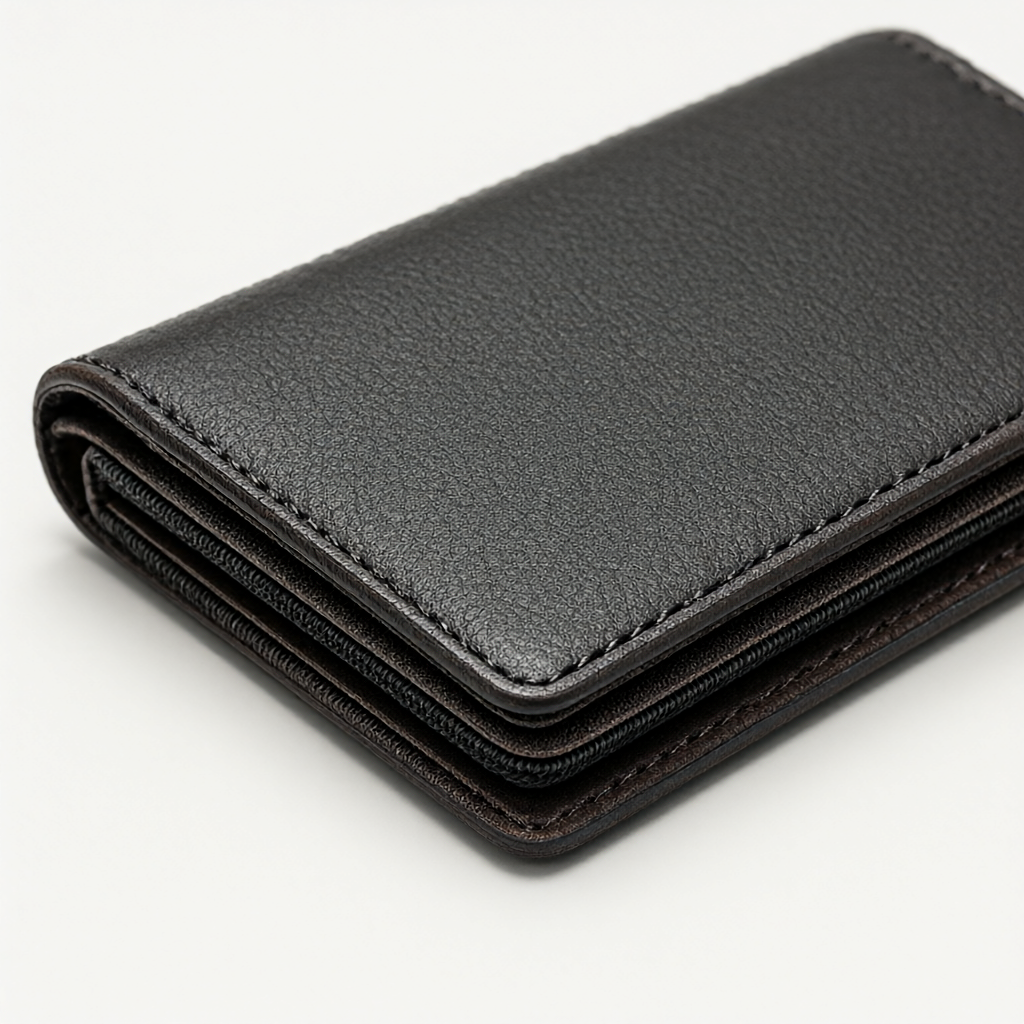
Standard credit and debit cards measure 3.375 × 2.125 in (85.6 × 54 mm) per ISO 7810 ID-1 dimensions. A 4 wallet size typically holds four cards plus a few notes at roughly 4 × 3 in. An 8 card wallet mens or 8 card wallet men’s configuration stacks to about 5/16–7/16 in thick depending on material. A 6 card slot wallet sits in between at roughly 3/8 in thick.
For metal and carbon-fiber EDC options, thickness drops to 1/8–3/16 in because cards are held between rigid plates rather than sewn leather sleeves. Wall thickness in CNC-machined aluminum wallets typically falls in the 1–2 mm range. Material certifications matter: look for ISO 9001 quality-management documentation from the manufacturer and confirm that surface finishes comply with REACH and RoHS material-testing standards. A 6 key holder wallet adds a key-loop module to the card shell, pushing total depth to 3/4 in or more.
Terms Buyers Should Know
| Term | What It Means | Why It Matters When Buying |
|---|---|---|
| Non-custodial wallet | A digital wallet where the user generates and stores the private key | Determines whether you can access funds without a company’s permission |
| Card-slot count | Number of individual card openings in a physical wallet | Sets maximum capacity; 6 vs 8 slots changes thickness by 4–6 mm |
| Anodizing | Electrochemical oxide layer applied to aluminum surfaces | Affects scratch resistance and colour fastness of metal wallets |
| MOQ | Minimum order quantity a manufacturer will accept | Affects unit price; lower MOQ (100 pcs) raises per-unit cost |
Where Is a Self-Custody Wallet Used?
The core question—why use coinbase wallet instead of coinbase—comes down to three practical differences:
Key custody. On the Coinbase exchange, your funds sit in a company-controlled account. If the exchange restricts your region, flags your account, or faces a regulatory freeze, you lose access until they resolve it. Coinbase Wallet generates the key pair on your device; no one else can move the assets.
DeFi and dApp access. Coinbase Wallet connects directly to Ethereum, Polygon, Base, and other chains. You can swap, lend, mint NFTs, and interact with smart contracts without depositing into an exchange first. The custodial exchange requires a buy-sell-sell cycle for each DeFi interaction.
Privacy and onboarding. Opening a Coinbase Wallet requires no KYC. The exchange mandates identity verification before you can trade. If you need to hold a small position or test a dApp without submitting documents, the self-custody wallet is the friction-free path.
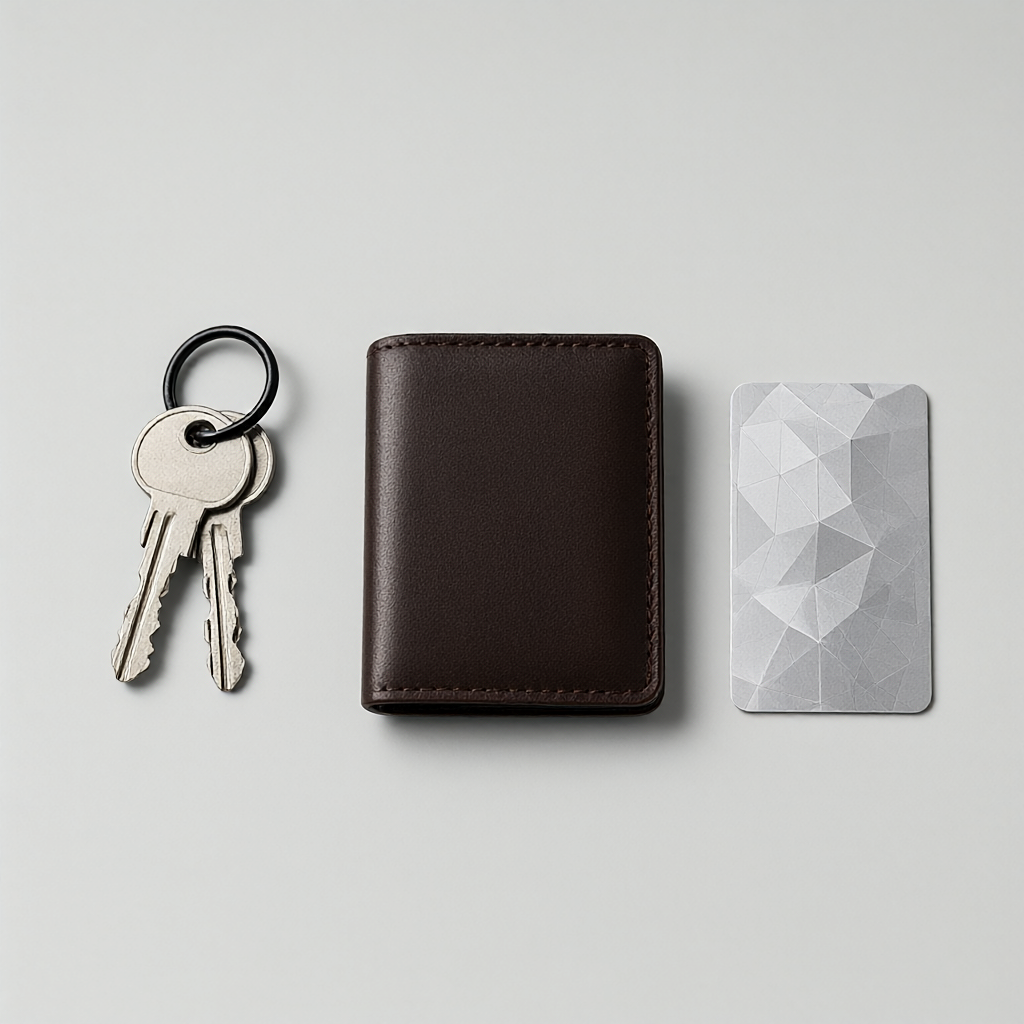
For the physical side, the “where” shifts to daily carry contexts: a 6×4 wallet set size fits a slim-bag or front-pocket routine; an 8 card slot wallet suits users who carry loyalty, transit, and credit cards in one shell. If you pair a metal card holder with a money clip for everyday carry, total pocket depth stays under 1/2 in.
What to Look For When Choosing a Wallet
Digital wallet criteria
- Confirm the wallet supports the chains you actually use (ERC-20, SOL, BTC).
- Check whether seed-backup prompts are clear; a lost 12-word phrase means lost funds with no recovery path.
- Look for built-in swap functionality so you do not need to bridge tokens through a third-party DEX.
Physical wallet criteria
- Material grade. 6061 aluminum is the industry baseline for EDC wallets; carbon-fiber faces add rigidity at lower weight.
- Slot count vs. thickness. An 8 card wallet men’s in leather adds 1/4 in of bulk per card. In aluminum, eight cards fit in a 7 mm slab.
- Finish and corrosion resistance. Anodized colour coats a yellow color wallet or any custom shade; verify the anodizing layer thickness is at least 8 µm for daily scratch tolerance.
- RFID shielding. If you carry a credit card, a metal plate of ≥ 0.5 mm between the card and the exterior blocks 13.56 MHz reads.
How Much Do Wallet Products Cost?
Digital wallets: Coinbase Wallet is free to install and use. Gas fees on supported networks (typically 0.01–0.15 ETH per transaction in 2026) are the main variable. The exchange charges 0.5–1.5 % per spot trade plus withdrawal fees.
Physical EDC wallets (FOB China reference ranges):
| Product type | Typical unit range (FOB) | MOQ |
|---|---|---|
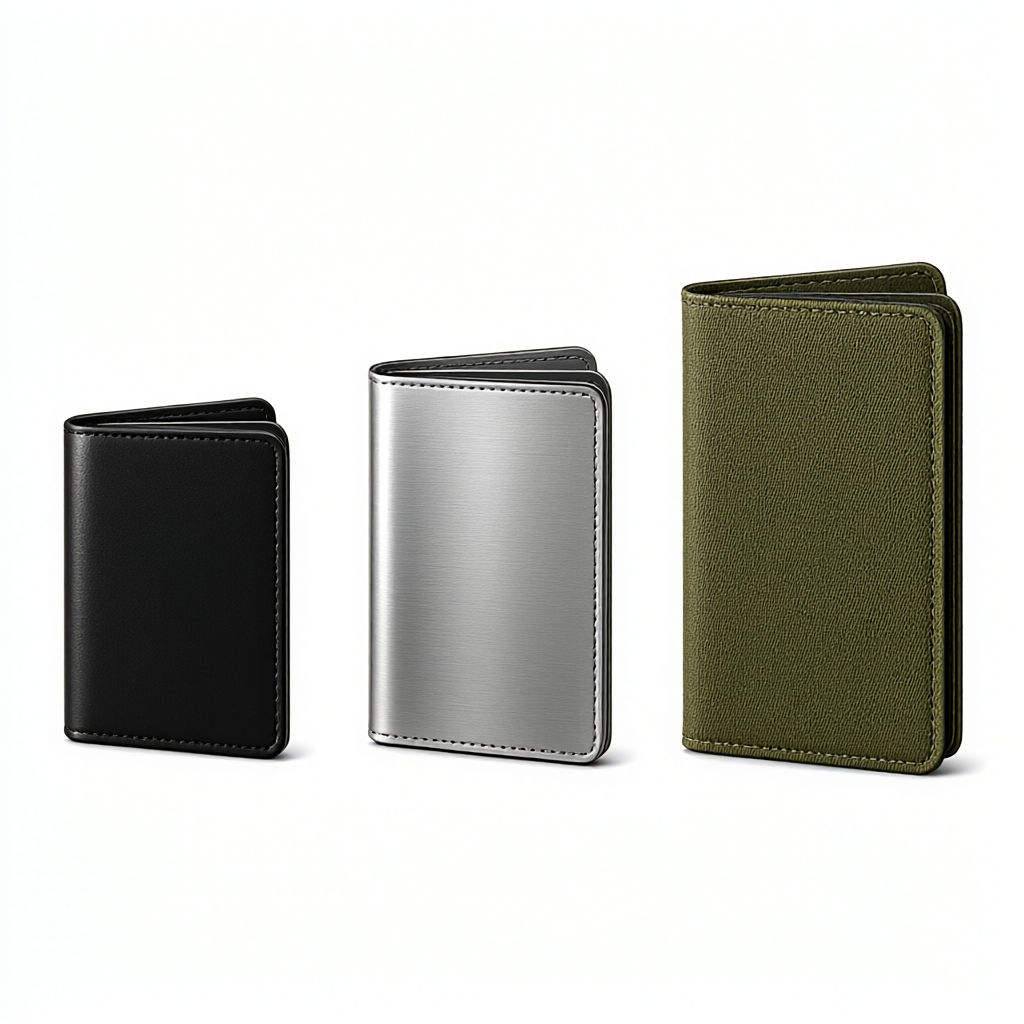
| 4-slot aluminum card holder | $3.50 – $6.00 | 100 pcs |
| 6-card carbon-fiber holder | $7.00 – $12.00 | 100 pcs |
| 8-card men’s leather wallet | $8.00 – $15.00 | 200 pcs |
| 6-key + 4-card combo | $10.00 – $18.00 | 200 pcs |
| Titanium money clip | $14.00 – $28.00 | 100 pcs |
Prices scale inversely with volume; a 5,000-piece run typically drops 15–25 % below the small-batch unit cost.
Additional Information
A few names and configurations surface regularly in buyer queries. The Yateer wallet is a Korean minimalist brand known for 6-slot metal cards; its form factor is the reference point many 6 card slot wallet buyers use when specifying a private-label product. HyperWallet (sometimes cited with “Southwest” in regional reseller listings) positions itself in the ultra-thin segment, 5 mm or less. A yellow colour wallet or yellow color wallet request usually maps to a custom anodize or painted finish; confirm the colour-fastness cycle count (typically 20+ salt-spray tests) before committing to a retail run. An 8 card slot wallet in metal exceeds most slim-bag pockets, so pair it with a front-pocket or crossbody use case.
How do you choose why use coinbase wallet instead of coinbase?
Run this checklist: (1) Do you need DeFi without an intermediary? (2) Can you safely back up a 12-word seed phrase? (3) Is your primary use small, experimental positions where KYC is overkill? If three of three are yes, the non-custody wallet is the better default. If you hold a large portfolio and want regulated insurance (up to $250 k SIPC on the exchange per FTC consumer-protection guidance), keep the exchange for cold-storage of the bulk and use the wallet for active DeFi.
How We Meet These Standards
As a manufacturer focused on minimalist metal and carbon-fiber EDC wallets, our role sits at the physical end of this buying decision. We machine 1–2 mm aluminum and carbon-fiber plates in-house, apply anodized or PVD finishes, and ship to 30+ countries under ISO 9001 process controls.
Our 50,000 sq ft facility handles the full chain: CNC milling, laser engraving, UV printing, and custom retail-box design. Samples turn in 7 days; production MOQ starts at 100 pieces for single-SKU orders.
For brands and Amazon FBA sellers, we support private-label kits—engraved logos, coloured anodizing (including custom yellows, blues, and matte blacks), and drop-ship-ready packaging—so your listing matches the spec sheet on the first print run.
Frequently Asked Questions
What is the main difference between Coinbase Wallet and the Coinbase exchange?
Coinbase Wallet is self-custodial: you hold the keys and interact with dApps directly. The Coinbase exchange is custodial: the company holds your keys, requires KYC, and applies trade/withdrawal fees. You choose the wallet when control and DeFi access matter more than regulated insurance.
Does Coinbase Wallet charge a fee?
The wallet app is free. You pay only on-chain gas fees, which in 2026 range from roughly 0.01 to 0.15 ETH depending on network congestion. No subscription or trading-fee layer sits between you and the smart contract.
What card size does a standard 6×4 wallet set use?
The “6 × 4” label refers to six card slots in a 4-inch-tall shell. Cards follow ISO 7810 ID-1 (85.6 × 54 mm). Total closed thickness for a leather version is about 9 mm; for a metal-plate version, 6–7 mm.
Can I use Coinbase Wallet without completing identity verification?
Yes. The wallet requires no KYC for basic holding and swapping. If you move funds through a regulated on-ramp (bank card, ACH), the on-ramp service triggers its own verification. The wallet itself does not.
What is the smallest practical card-slot count for everyday carry?
Four slots (a 4 wallet size) covers a primary credit card, a secondary debit, a transit card, and one backup. Below four slots, most users re-pull the same card daily and the space savings stop feeling worth the compromise.
Sources & References
- ISO 9001 — www.iso.org
- REACH and RoHS — www.astm.org
- FTC consumer-protection guidance — www.ftc.gov
- money clip for everyday carry — topedcwallet.com
- Get a Free Quote → — topedcwallet.com
From article to product
Turning this into a product?
Most of what is written here is the difference between a sample that works and one that does not. We can build either — the useful one costs the same.
Keep reading
More on buying guides
wallet with trigger
How Does a Trigger Wallet Work? What Is the Pop-Up Mechanism? The core of…
Readbest bifold wallet for women
What Is a Bifold Wallet? The term “bifold” refers to the fold: the wallet…
ReadMen’s trifold wallets with zipper compartments vs. bifold
At a Glance The three dominant men’s wallet formats differ in panel count, depth,…
Read
About the author
TOPWALLET Editorial Team
TOPWALLET's editorial and engineering desk writes from bench testing at the Shenzhen (Longgang) facility: pull-force and cycle testing, 13.56 MHz shielding measurements, finish trials and factory audits, rather than supplier spec sheets. Every specification in these guides is one we write on a purchase order.
Written on the floor
This article was written by our production and QC team — the people who spec tolerances, run the finishing line and inspect every batch. Where it states a capacity, a pull force or a lead time, it comes from a measurement we made, not a supplier’s catalogue. If a number here disagrees with what your own supplier told you, tell us; several of these articles started as a correction from a buyer.
See how the factory works · Inspection process · Sourcing FAQ
Turning this into a product?
Most of what is written here is the difference between a sample that works and one that does not. We can build either — the useful one costs the same.