

What is slim wallets for men?
Slim wallets for men are low-profile pocket organizers designed to carry a minimal number of cards and cash without adding bulk to the front or back pocket. Unlike traditional bi-fold wallets, they typically hold 4–12 cards, a few bills, and occasionally a coin or two, while maintaining a thickness that fits comfortably in tight trouser pockets, jacket lining, or uniform pockets.
The primary value proposition is pocket comfort and profile reduction — buyers choose slim wallets when they want to eliminate the “walrus” effect of a stuffed bi-fold or reduce strain on the lower back caused by heavy front-pocket carry. For B2B procurement, slim wallets represent a fast-growing segment in the EDC (Everyday Carry) category, with demand driven by minimalist lifestyle trends, outdoor enthusiasts, and corporate gifting buyers looking for practical, modern accessories.
These wallets are constructed from a range of materials — including aluminum, carbon fiber, titanium, genuine leather, and synthetic polymers — each offering different trade-offs in weight, durability, and cost. The slim wallet format is not a single product but a category of configurations, ranging from rigid card holders and money clips to expandable accordion-style organizers.
Slim Wallets For Men: How Does It Work in Detail?
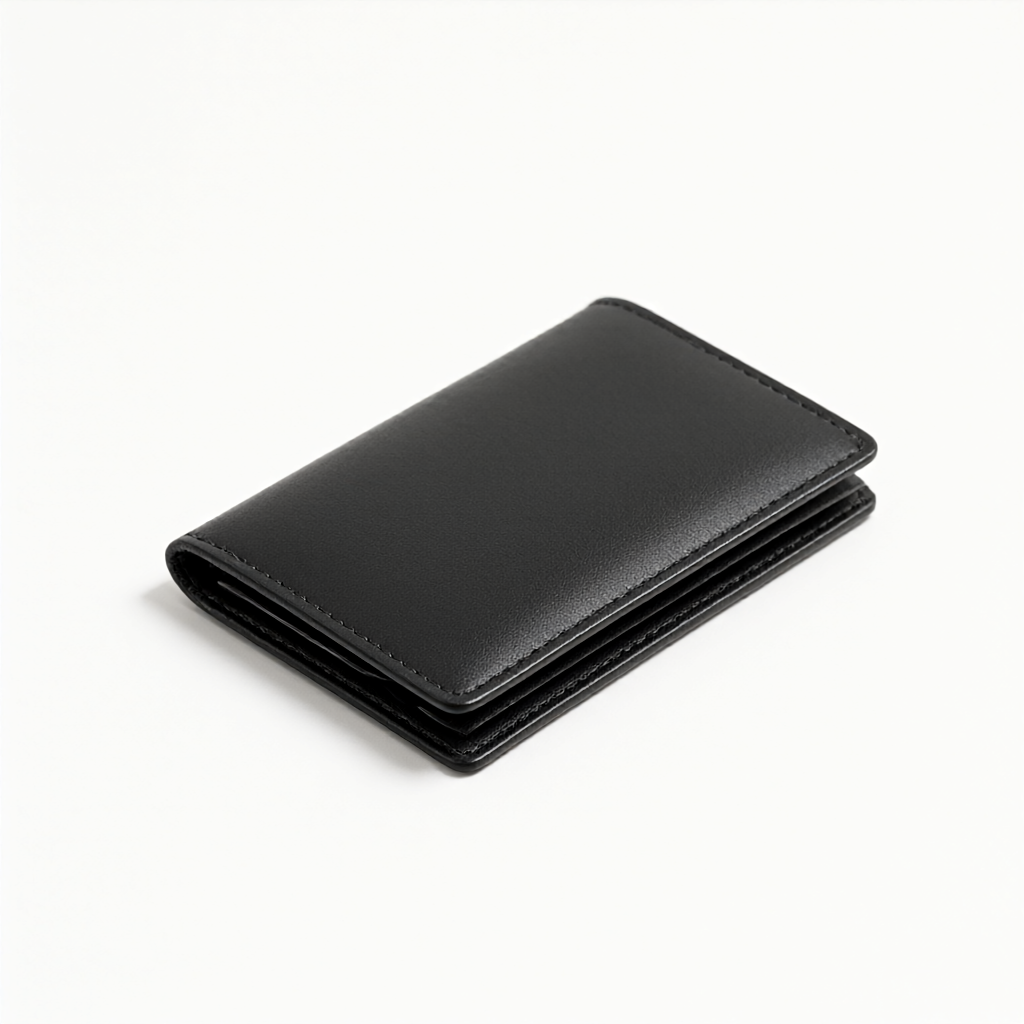
How do slim wallets reduce pocket bulk?
Traditional bi-fold wallets often measure 4–5 inches in width when folded, creating a thick, rectangular lump in the front pocket. Slim wallets typically measure 3.0–3.5 inches in width and 2.0–2.5 inches in height, with a flat profile ranging from 0.25 to 0.75 inches thick depending on card capacity. This reduction in dimensions directly translates to less fabric stretch, reduced pocket sag, and improved comfort during extended wear — a factor particularly relevant for professionals who sit at desks all day or wear fitted clothing.
Why does material choice matter for slim wallets?
Material selection determines the wallet’s weight, durability, aesthetic, and production cost. Each material serves a different use case and price tier:
- Aluminum: Lightweight, corrosion-resistant, and compatible with CNC machining for precise tolerances. Often anodized for color and scratch resistance. Typical thickness: 0.5–0.75 mm.
- Carbon fiber: Extremely lightweight and rigid, with a distinctive woven texture. Higher material cost but premium perceived value.
- Titanium: Premium-tier material offering excellent strength-to-weight ratio and natural hypoallergenic properties. Most expensive option.
- Leather: Traditional feel with a natural break-in period. Full-grain and top-grain leathers offer the best longevity; bonded or genuine leather (in the FTC sense) may crack or peel over time.
- Synthetic polymers (e.g., nylon, Polycarbonate): Cost-effective, water-resistant, and suitable for high-volume production runs.
Material choice also affects manufacturing complexity. Metal wallets require CNC cutting, bending, and surface finishing, while leather wallets involve cutting, edge painting, and stitching or riveting.
How many cards can a slim wallet realistically hold?
A slim wallet’s capacity depends on its design architecture. Rigid card holders (solid metal or carbon fiber plates with elastic bands or spring-loaded slots) typically hold 4–8 cards. Accordion-style expandable wallets can compress to hold 4 cards or expand to accommodate 10–12. Money clip combinations usually hold 4–6 cards alongside rolled bills.
For B2B buyers specifying products for private label, it is critical to define the target card count during the prototype phase. A wallet that flexes open under load or ejects cards unpredictably will generate returns and negative reviews. Capacity testing should involve loading the wallet with a full stack of standard ISO 7810 ID-1 size cards (85.6 × 54.0 mm, 0.76 mm thickness) and evaluating retention, ejection force, and long-term spring memory.
Slim Wallets For Men: Which Specifications Matter Most?
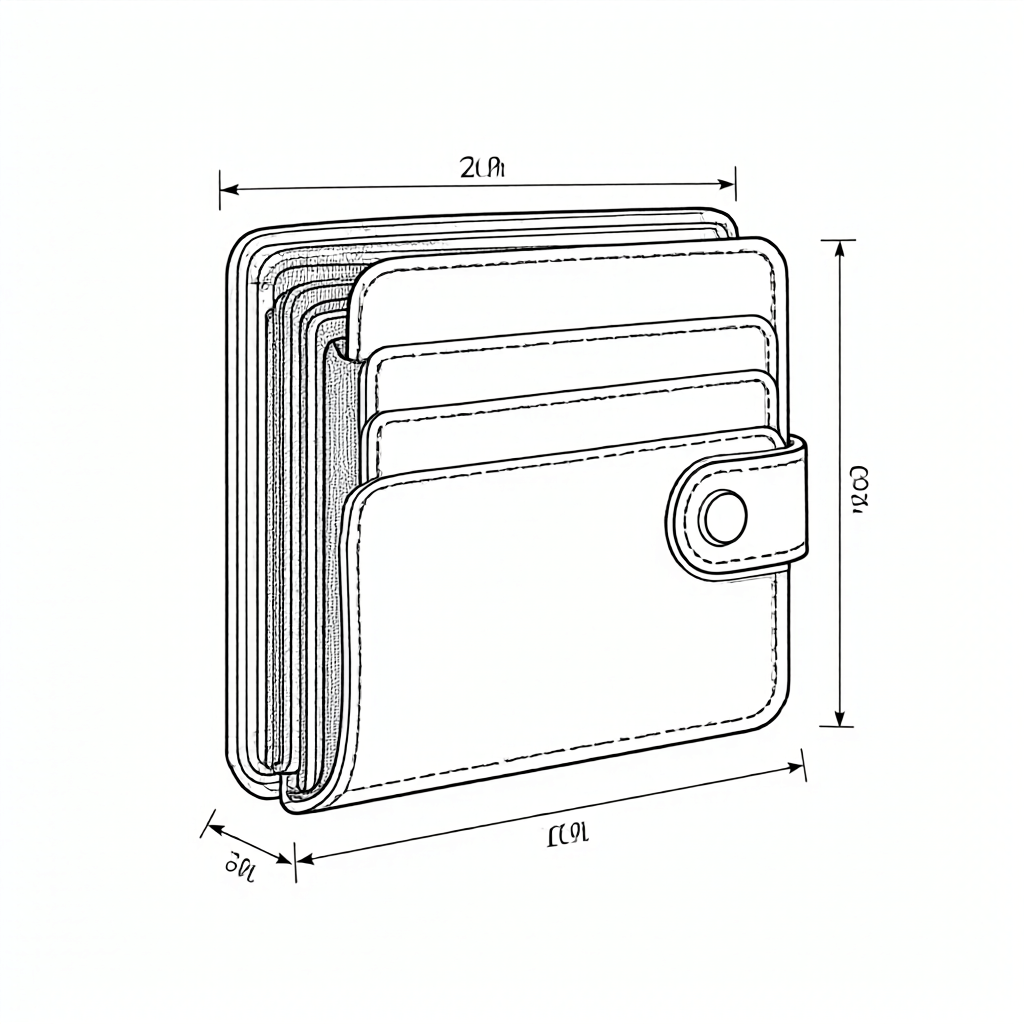
What are the key specs for slim wallets for men?
When evaluating or specifying slim wallets for procurement, the following technical parameters define quality and fit for purpose:
| Specification | Typical Range | Notes |
|---|---|---|
| Overall Width | 3.0 – 3.5 in (76 – 89 mm) | Must fit standard front pockets |
| Overall Height | 2.0 – 2.5 in (51 – 64 mm) | Card length compatibility |
| Thickness (empty) | 0.25 – 0.50 in (6 – 13 mm) | Varies by material and construction |
| Thickness (loaded, 8 cards) | 0.50 – 0.85 in (13 – 22 mm) | Critical for pocket comfort |
| Weight (aluminum) | 1.5 – 2.5 oz (42 – 71 g) | Carbon fiber lighter; titanium heaviest |
| Card Capacity | 4 – 12 cards | Depends on architecture |
| Bill Compartment | Yes / No | Some models are card-only |
| RFID Blocking | Optional | Requires embedded shielding layer |
| Material Options | Aluminum, Carbon Fiber, Titanium, Leather, Synthetic | Determines cost tier |
These specifications are interdependent. For example, adding an RFID-blocking layer increases thickness by approximately 0.5 mm and adds marginal weight. Similarly, a leather wallet may start thinner than a metal one but compresses and conforms over time, changing the loaded profile. Buyers should request real-world measurements — not just manufacturer datasheet numbers — because tolerances vary between factories and batches.
What determines the production cost of slim wallets?
Several variables drive unit cost in OEM manufacturing:
- Material cost: Titanium is 3–5× the cost of aluminum per unit weight. Carbon fiber pre-preg sheets carry a premium over standard fiberglass.
- Manufacturing process: CNC-machined aluminum wallets require multi-axis machining and secondary anodizing. Laser-cut carbon fiber is faster but requires edge sealing. Leather wallets involve manual assembly steps that scale poorly with volume.
- Surface finishing: Anodizing, PVD coating, laser engraving, and UV printing each add process steps and cost. Complex colorways or multi-material constructions increase complexity.
- MOQ and tooling: Custom molds or dies (e.g., for leather cutting or metal stamping) have upfront costs amortized over order quantity. Lower MOQ orders carry a higher per-unit price.
- Packaging: Retail-ready packaging with custom inserts, branding, and barcodes adds cost per unit but reduces downstream fulfillment labor for the buyer.
For a typical 500-unit order of an aluminum RFID-blocking slim wallet with laser engraving and retail packaging, the FOB price range generally falls between $4.50 and $8.50 per unit depending on specification complexity. Leather and titanium variants command higher prices.
Slim Wallets For Men: Which Standards and Certifications Apply?
What standards apply to slim wallets for men?
While slim wallets are consumer accessories rather than regulated products, several standards and compliance requirements affect B2B sourcing, particularly for international trade:
RFID-blocking performance: If a wallet claims RFID protection, it should meet or exceed the shielding effectiveness specified in ASTM F5429 for radio frequency identification device security. Buyers should request test reports from independent laboratories such as SGS or Intertek. Beware of suppliers making vague “RFID-safe” claims without test data — some cheap aluminum wallets claim blocking but leave gaps at the edges that defeat the purpose.
Material safety and chemical compliance:
- REACH (EU): Restricts hazardous substances in products sold in the European Economic Area. Metals and coatings must comply with Annex XVII restrictions on nickel release, cadmium, and lead.
- RoHS (EU): Applies to electrical and electronic equipment; relevant if the wallet incorporates any active components (rare in passive slim wallets but applicable to smart wallets with integrated trackers).
- CPSIA (US): If the wallet is marketed toward children or contains small detachable parts, it may fall under Consumer Product Safety Improvement Act requirements.
- Proposition 65 (California): Requires warning labels if products contain certain chemicals above safe harbor levels. Leather processing chemicals and metal plating solutions are common triggers.
Leather classification (FTC guidelines): In the United States, the Federal Trade Commission regulates leather labeling. Terms like “genuine leather” have specific legal meanings — “bonded leather” is not considered genuine leather, and “real leather” is a misleading term. Buyers should ensure supplier documentation accurately reflects the leather grade: full-grain (highest quality, natural grain intact), top-grain (sanded and finished), split leather (lower layer, often coated), and bonded leather (reconstituted fibers, lowest quality).
Quality management systems: Reputable manufacturers operate under ISO 9001 certification, which ensures consistent production processes, documented quality controls, and traceability. Social compliance certifications such as BSCI (Business Social Compliance Initiative) are important for buyers in Europe who require ethical supply chain verification.
Slim Wallets For Men: What Else Should Buyers Consider?
What should you consider when sourcing slim wallets for B2B?
Sourcing slim wallets as a private-label buyer involves decisions that go beyond unit price. The following factors determine long-term success in the market:
1. Prototype and sampling: Always request physical samples before committing to a production order. Evaluate the sample for card retention, ease of access, edge finish quality, and overall build. Test the sample under real-world conditions — carry it in your pocket for a week, load it with your actual cards and cash, and assess whether it meets your expectations. A 7-day sample turnaround from a responsive manufacturer allows rapid iteration.
2. Material consistency and variability: Natural materials like leather exhibit grain variation, color lot differences, and minor imperfections that are inherent to the material. Metal and carbon fiber offer more consistency. Specify acceptable tolerance ranges for color, texture, and dimensions in your purchase order to avoid disputes during inspection.
3. Brand positioning and price tier: Slim wallets occupy different market segments. Budget-oriented wallets (under $15 retail) typically use aluminum or synthetic materials with simpler construction. Mid-tier wallets ($15–$40) often feature carbon fiber, better leather, or titanium accents. Premium wallets ($40+) may incorporate hand-stitched leather, precious metal finishes, or complex multi-material designs. Your target retail price should drive material and specification choices.
4. Packaging and unboxing experience: For DTC and Amazon FBA sellers, packaging is a critical differentiator. Custom retail boxes with interior inserts protect the product during shipping and create a premium unboxing experience. Consider whether you need gift-ready packaging, minimalist mailer boxes, or bulk poly bags for wholesale distribution.
5. Lead times and inventory planning: Production lead times vary by material and complexity. CNC-machined metal wallets typically require 15–25 days for mass production after sample approval. Leather wallets may take longer due to manual assembly steps. Factor in shipping time (sea freight: 30–45 days; air freight: 5–7 days) when planning inventory replenishment.
6. After-sales support and defect rates: Establish clear quality acceptance criteria — such as AQL (Acceptable Quality Level) sampling plans — before shipment. Define responsibility for defective units and replacement policies. A reputable OEM partner will stand behind their work and offer solutions for production defects rather than leaving the buyer to absorb losses.
7. Scalability and flexibility: As your brand grows, your sourcing partner should be able to scale production without compromising quality. Manufacturers with in-house capabilities — CNC machining, laser engraving, anodizing, and assembly — can manage design changes and volume fluctuations more effectively than trading companies that subcontract every step.
How does TOP EDC Wallet approach slim wallet manufacturing?
As a manufacturer with 13+ years of export experience serving brands across America, Europe, Australia, and Southeast Asia, our approach to slim wallet production is grounded in balancing design precision with cost-efficient manufacturing. We operate from a 50,000 sq ft facility with in-house CNC machining, laser engraving, UV printing, and aluminum anodizing — allowing us to control quality at every stage from raw material to finished product.
Our process begins with understanding your target market and price point. We help you select the right material — whether that’s 6061 aluminum for a lightweight mid-tier option, carbon fiber for a premium durable finish, or full-grain leather for a classic aesthetic. We then develop prototypes using your specifications, including card capacity, dimensions, and any custom branding such as laser engraving or embossing.
With an MOQ starting at just 300 pieces, we accommodate brands of all sizes — from emerging EDC labels to established Amazon FBA sellers and promotional product distributors. Our 7-day sample lead time means you can evaluate and iterate quickly before committing to bulk production. We also handle custom packaging design, retail box preparation, and Amazon FBA labeling and prep services, reducing the logistical burden on our partners.
Every wallet we produce is manufactured in an ISO 9001-certified and BSCI-audited facility, with materials tested to REACH and RoHS compliance standards. We provide SGS test reports for RFID-blocking performance and material safety upon request.
If you are developing a custom slim wallet line or evaluating suppliers for private-label production, Contact Our Team to discuss your specifications and receive a detailed quote.
Slim Wallets For Men: Where Can You Verify the Data and Sources?
- ASTM F5429 — www.astm.org
- ISO 9001 — www.iso.org
- Contact Our Team — topedcwallet.com
From article to product
Choosing a material for a range?
Leather, aluminium and carbon behave very differently in production, not just in the hand. Send us the spec and we will tell you what it costs to make at your volume.
Keep reading
More on wallet materials
Vegetable Tanned Leather for Wallet Programmes
“Vegetable tanned” is a marketing phrase with a technical meaning, and the two do…
ReadRecycled Aluminium in Wallet Shells: Verifiable Claims
“Recycled aluminium” is a claim about provenance, and the wallet shell in your hand…
ReadFashion Zipper Men’s Wallets Leather Short Design Guide
Learn how to choose a short zipper leather wallet for men — full grain…
Read
About the author
TOPWALLET Editorial Team
TOPWALLET's editorial and engineering desk writes from bench testing at the Shenzhen (Longgang) facility: pull-force and cycle testing, 13.56 MHz shielding measurements, finish trials and factory audits, rather than supplier spec sheets. Every specification in these guides is one we write on a purchase order.
Written on the floor
This article was written by our production and QC team — the people who spec tolerances, run the finishing line and inspect every batch. Where it states a capacity, a pull force or a lead time, it comes from a measurement we made, not a supplier’s catalogue. If a number here disagrees with what your own supplier told you, tell us; several of these articles started as a correction from a buyer.
See how the factory works · Inspection process · Sourcing FAQ
Choosing a material for a range?
Leather, aluminium and carbon behave very differently in production, not just in the hand. Send us the spec and we will tell you what it costs to make at your volume.