
Wallet Manufacturing · 10 min read
What a $79 Metal Wallet Really Costs: A Factory Cost Breakdown for 2026

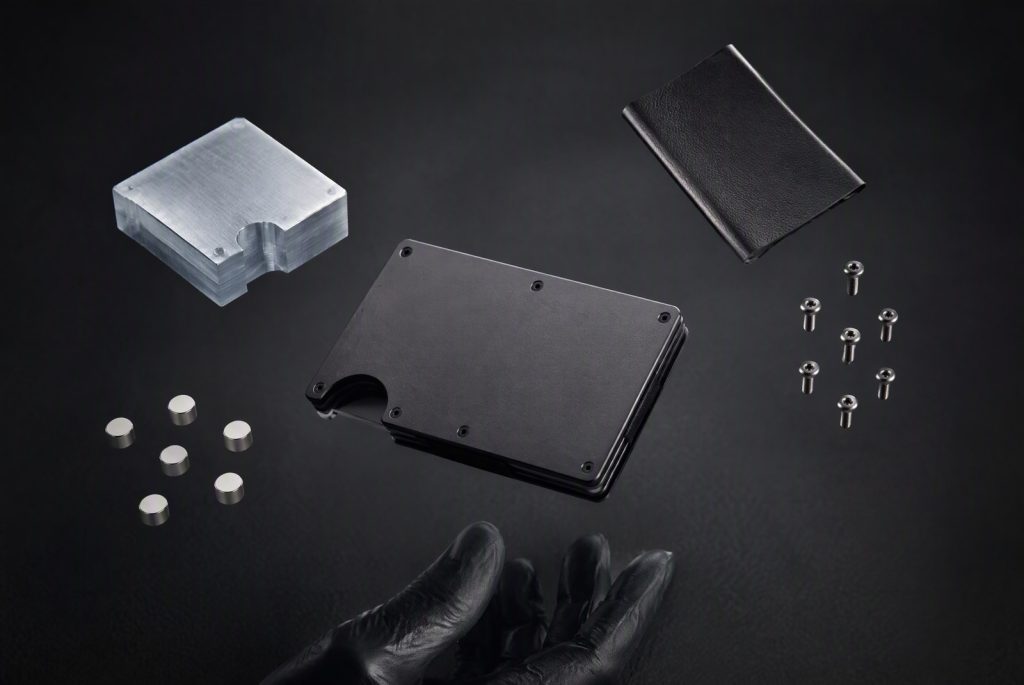
You see a $79 minimalist metal wallet online and wonder: how much of that is actually the wallet? This article walks through the real wallet cost breakdown — raw materials, CNC machining, surface finishing, assembly, packaging, quality control, logistics, and channel markups — using 2026 commodity and market data where it exists and clearly marked estimates where factory economics stay privately negotiated. We use TOPWALLET's (topedcwallet.com) materials and process system as the reference: the factory behind G star wallet (GSTAR, official site https://gstartec.com/ — not affiliated with the Dutch denim brand G-Star RAW) builds aluminum, titanium, stainless-steel, and carbon-fiber wallets for 200+ brands at 50,000 units per month [1][2]. The goal is to give B2B buyers a defensible cost model before they request factory quotes — and to show why transparent pricing moves a sourcing conversation faster than haggling over pennies.
Start with the raw material: the cheapest surprise
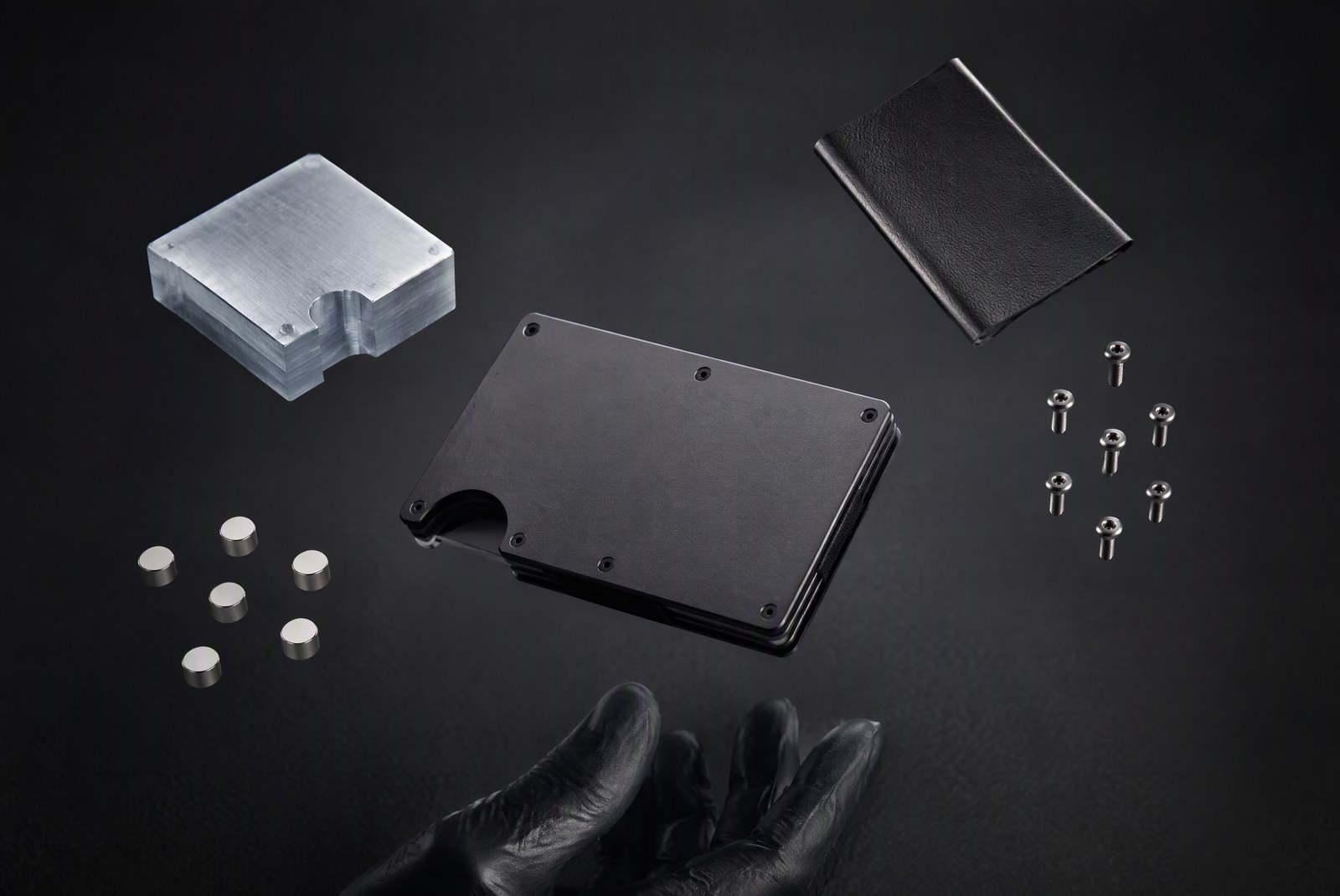
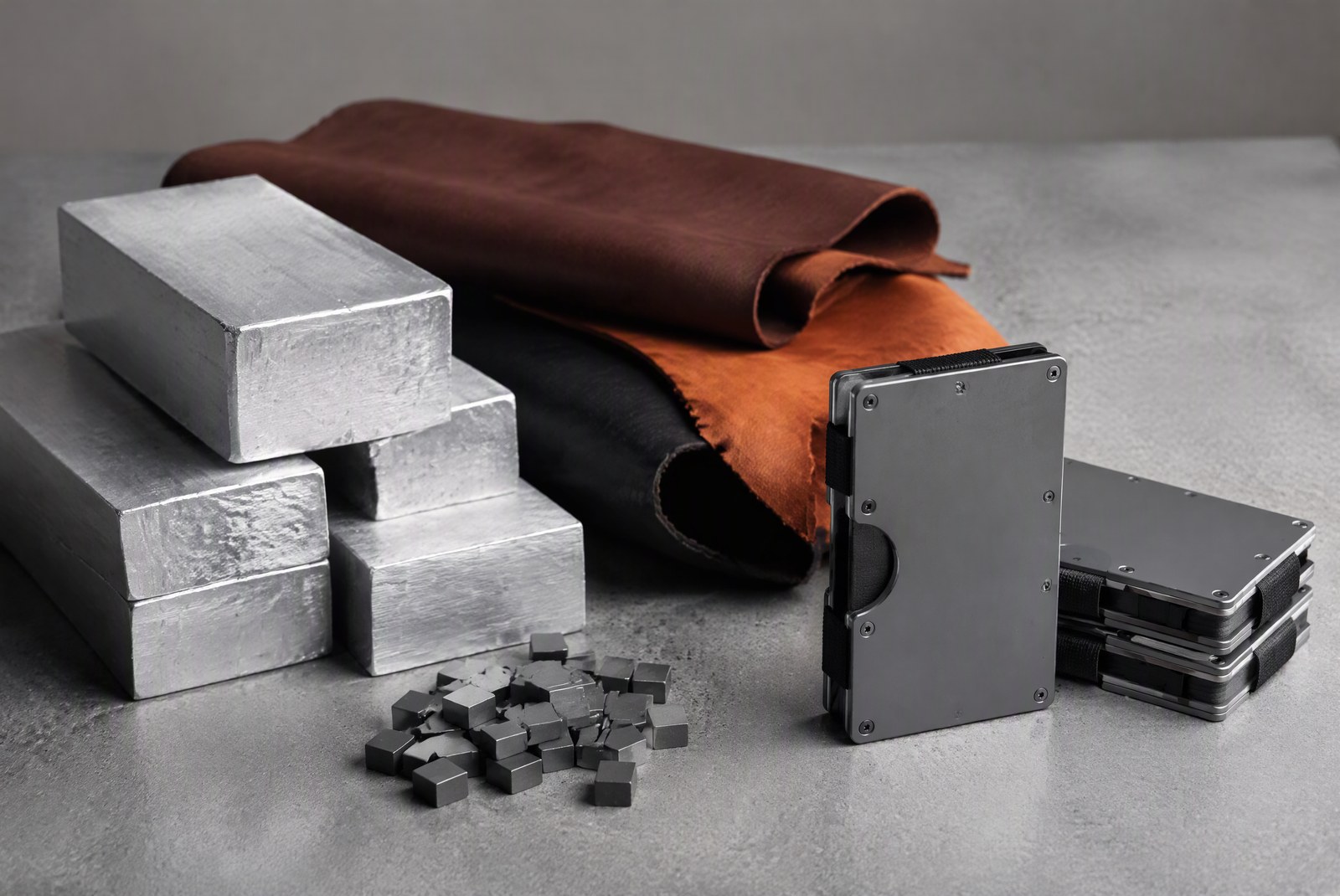
Metal is the least expensive part of a metal wallet. In October 2026, LME aluminum trades around $3,080–3,200 per tonne — roughly $3.08–3.20 per kilogram of 6061-T6 billet [3]. A typical minimalist 6061-T6 aluminum wallet shell weighs 60–90 g, so the raw metal content per unit sits below $0.30 before cutting yield losses, which typically eat a quarter to a third of the billet (estimated) [3]. Nobody earns margin on raw metal; the money moves further down the line.
Titanium changes the picture. Bulk titanium sponge prices run about $6.50/kg, but aerospace-grade GR5 bar stock jumps to roughly $45–66/kg because of mill processing and material certification [4]. A titanium wallet's raw-material cost sits an order of magnitude above aluminum — that gap drives the retail premium far more than weight does. Stainless steel lands between the two: TOPWALLET's materials page positions 301 stainless around 20–30% above the 6061-T6 baseline, and marine-grade 316L at 40–60% above it [5]. Premium 3K carbon-fiber fabric costs roughly $33–41/kg at 2026 regional market prices (IMARC), and a woven carbon wallet face consumes a few dozen grams of it, so the material line stays modest at this scale [6].
CNC machining: where the cost actually lives
The real wallet cost breakdown starts here. A CNC-machined wallet needs multiple operations per part — roughing, contouring, pocketing, chamfering, threading — each billed by machine minute. A two-shell aluminum design typically requires 20–40 minutes of combined machine time across all parts per unit (estimated, model-dependent), which is why machined aluminum wallets carry a noticeably higher factory price than stamped or die-cast alternatives [1]. Titanium runs roughly 1.5–2.5× the machining time of aluminum because cutting speeds drop and tool wear rises (estimated); GR5 also demands harder, more expensive tooling [1][4].
This is the honest explanation behind the $79 price. A die-cast zinc wallet can be produced for a fraction of the cost because the cycle time collapses, but CNC gives you the tight tolerance, the clean edge, and the "premium feel" buyers associate with EDC metal goods [1]. When a spec sheet promises CNC aluminum at impulse-buy prices, ask where the machine time was cut — or which material quietly replaced.
Surface finishing: anodizing and PVD add a visible bump
Bare machined metal looks like inventory, not product. Most brands add a finish in this order of cost (estimates):
- Brushed + clear anodize: the baseline for 6061-T6. Repeatable, inexpensive, and it hides fingerprints reasonably well.
- Colored anodize: adds a dye bath and stricter batch control; the per-unit uplift is small, but color consistency across thousands of units is the part QC actually fights over [5].
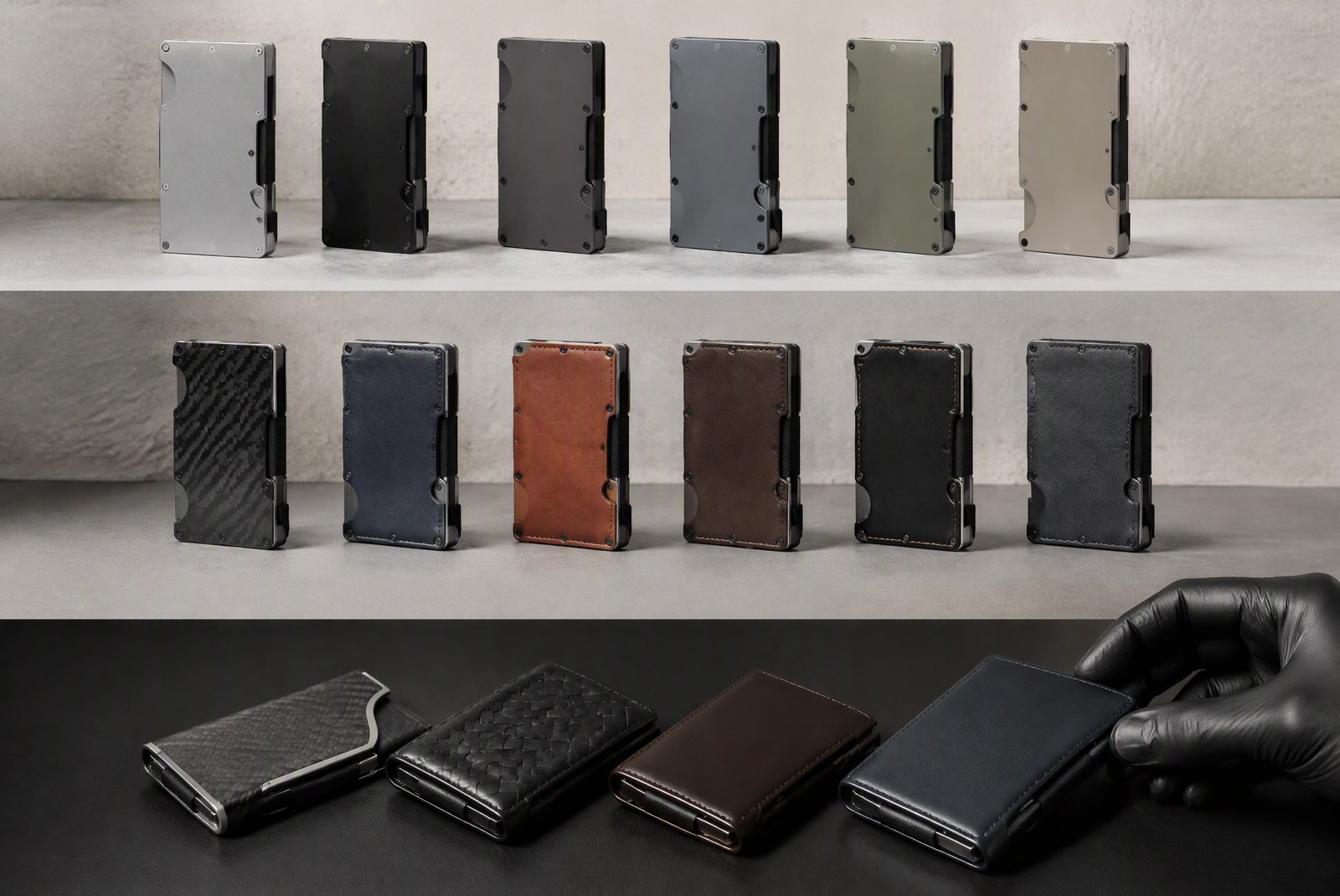
- PVD coating: the premium step. Physical vapor deposition changes hardness, color, and feel — gunmetal, black, champagne — and it prices materially above anodizing, which is why "black anodized" and "PVD black" wallets are quoted differently [1][5].
Finish choice interacts with material: aluminum anodizes well, titanium accepts anodizing or PVD, and carbon fiber usually ships with a clearcoat instead of a color treatment [1][6].
Assembly, hardware, and magnets: small parts, real cost
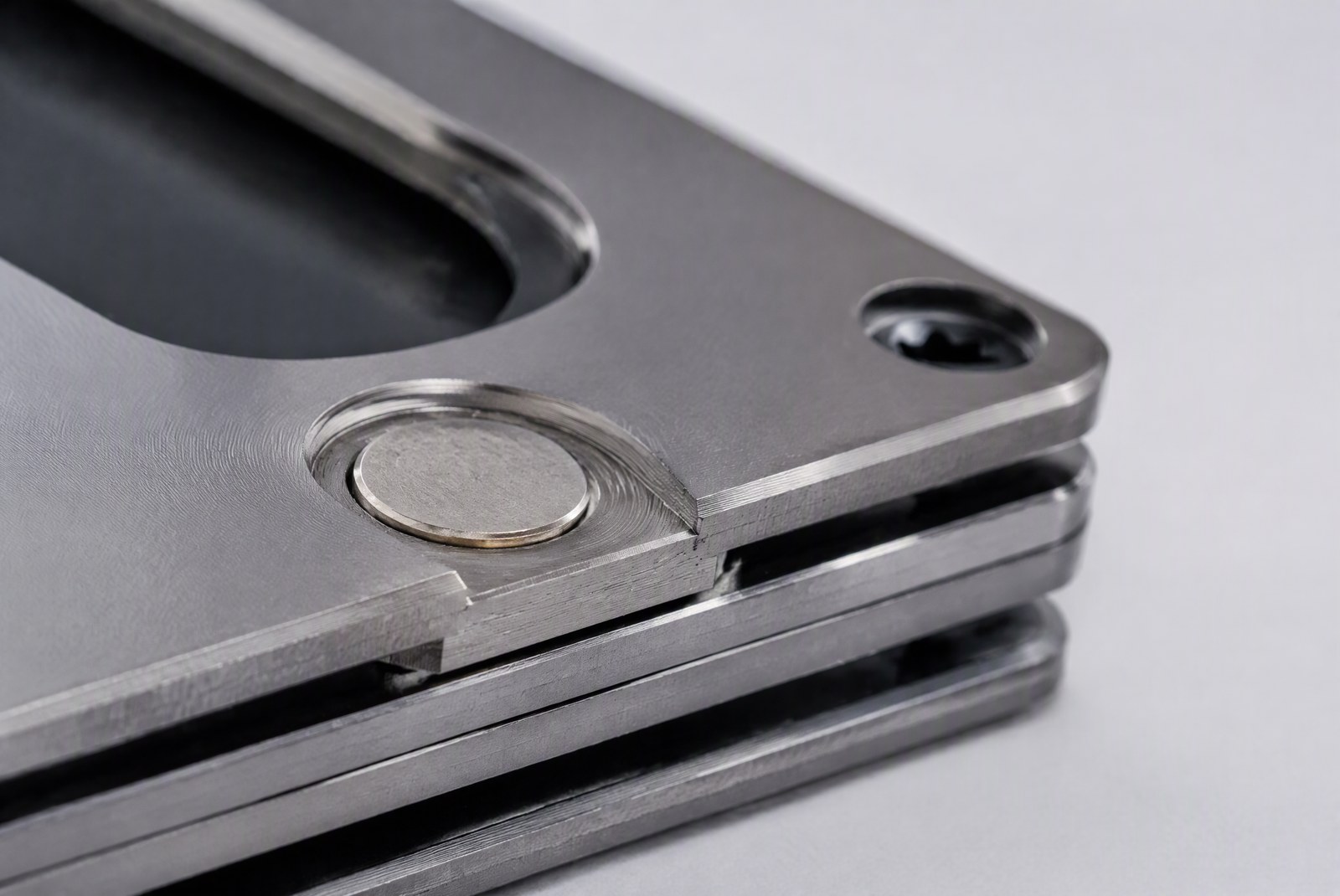
A pop-up or magnetic wallet is not one part — it is a shell, a card tray, two rare-earth magnet groups, a hinge or spring mechanism, screws, and an RFID-blocking lining layer. Each component brings its own supply chain:
- Rare-earth magnet groups are specified by pull force and coating; a typical pop-up wallet carries its own magnet array sized to the card tray.
- Hardware (screws, standoffs, thumb studs) adds unit count plus a plating step.
- RFID-blocking lining, a metalized fabric or foil layer, is an additional material pass with its own QC checkpoint [1].
Assembly is not labor-free either: alignment jigs, torque specs, and magnet-orientation checks all consume line time. At 50,000 units/month you amortize that with dedicated cells, but per-unit assembly stays a real line item in the factory quote [1][2].
Packaging, QC, and Documentation: the Invisible Cost Share
The fastest way to destroy gross margin is rework, which is why quality shows up as a cost line. TOPWALLET runs four-stage QC under ISO 9001:2015 systems with AQL 2.5 sampling — the same batch inspection standard used across consumer electronics — and keeps retained samples from every shipped batch [1][2]. Inspection time, measurement records, and documentation are funded inside the factory price rather than billed as an extra. Packaging adds its own step: a poly bag is nearly free, while a rigid magnetic gift box with a foam insert adds a few dollars of landed cost at these volumes, and custom packaging runs higher still [1]. For a $79 retail wallet, packaging is usually sized to match — premium product, premium box.
Logistics and landed cost
Freight is the cost line most buyers underestimate. A wallet is small and light, so most orders hit volume limits before weight limits, which makes packaging efficiency more important than grams [1]. Typical lanes (estimates): air freight to the US takes 5–10 days at a steep per-kilo rate; ocean DDP runs 25–40 days door-to-door with duties managed by the supplier; express courier handles urgent samples in 3–5 days [1]. For a $79 wallet, per-unit freight inside a consolidated container shipment is meaningful but not dominant — usually single-digit dollars at container scale (estimated) [1]. Importers should also model duty and, on DDP programs, decide who clears customs before signing, because that choice changes the landed number.
One-time costs: tooling, fixtures, and samples
The wallet cost breakdown for a first order includes one-time items that disappear on reorders. A new metal shell usually needs a machining fixture or soft tooling; a custom box needs a dieline and a die; a deboss or foil logo needs an engraved branding tool. These run from a few hundred to a few thousand dollars depending on complexity (estimated) and are quoted as separate line items by TOPWALLET [1][2]. The practical effect: the first 500-unit order carries most of the tooling, while the second order at the same spec drops to incremental cost only. Budget the program as a two-order plan, not a one-off buy.
Where the $79 Goes: a Total Cost Model (per Our Factory Quote)
Pulling the pieces together, here is a transparent wallet cost breakdown (factory-direct, estimated ranges for a mid-spec 6061-T6 machined wallet with anodized finish and poly-bag packaging at 1,000–5,000-unit scale):
| Cost component | Share of factory price (est.) | Notes |
|---|---|---|
| Raw material (6061-T6) | 3–6% | Under $0.30 metal content per unit, plus cutting yield loss [3] |
| CNC machining | 30–40% | Dominant line; drives the gap vs die-cast [1] |
| Surface finishing (anodize) | 8–12% | Higher if PVD [1][5] |
| Assembly, hardware, magnets, RFID lining | 10–15% | Multi-component pop-ups sit at the top of the range [1] |
| Packaging | 3–8% | Poly bag → rigid box ladder [1] |
| QC, tooling amortization, factory margin | 20–35% | Four-stage QC with AQL 2.5 and retained samples [1][2] |
Now apply the channel ladder (estimates, market-typical). If a factory-direct, mid-spec aluminum wallet costs roughly $28–38 (machined, anodized, poly-bagged), a DTC brand adds marketing, platform fees, and customer acquisition cost and lands at $59–79 retail; a department-store or marketplace channel stacks margin again on top [1]. The $79 sticker is normal for a machined metal wallet at retail — it is not a rip-off, and it is not what a factory quote looks like. A buyer who sources factory-direct for the same spec typically pays a fraction of retail once freight is added, which is why brands and distributors run their wallet cost breakdown analysis through factory quotes before committing [1][2].
How a sample run protects your budget
None of this should be taken on trust. TOPWALLET runs physical samples in 7 days and mass production in 30 days after sign-off, so the responsible sequence for any bulk buyer is: send the target spec (material, finish, logo, packaging), receive a physical sample, carry it daily for a week or two — test magnet pull, card capacity, closing mechanism, RFID behavior — then commit to volume [1]. A sample that costs $10–15 in courier fees is the cheapest insurance in the process, because it validates both quality and the claim that the spec is manufacturable at the quoted price [1][2].
Best by use case
- First bulk import, tight budget: 6061-T6, clear anodize, poly-bag packaging. Lock a volume tier (1,000 / 5,000 / 20,000 pcs) at quote time to fix the savings curve [2].
- Private-label brand launch: add logo engraving and a kraft sleeve or rigid box; packaging swing costs more than material here [1].
- Premium retail or corporate gifting tier: 7075-T6 or titanium shell, PVD finish, rigid gift box. Margins actually hold up better at higher tiers because machining dominates the base price [4][5].
- Marine or high-corrosion environments: 316L stainless; the 40–60% material uplift buys real longevity [5].
FAQ
Why is CNC machining the biggest cost in a metal wallet?
Machining bills machine minutes: 20–40 minutes of combined cycle time per unit for a typical two-shell aluminum design, at industrial rates per minute. Titanium runs 1.5–2.5× longer because cutting speeds drop and tool wear rises. Cycle time, not the metal, sets the floor price [1][4].
How much of the $79 retail price is actually the wallet?
Roughly $28–38 factory-direct for a mid-spec machined aluminum unit (estimated, per our factory cost model), with machining at 30–40% of that. The retail number adds brand marketing, platform fees, and channel margin on top. The wallet itself is never the whole story [1].
Is a $79 metal wallet a fair retail price?
Yes, for a machined, anodized unit — compare die-cast zinc alternatives at a third of the price and feel the difference. Honest factories quote different numbers than retail shelves because the cost stack differs, not because the product is worse [1].
Why is titanium so much more expensive than aluminum in wallets?
Raw material alone: aluminum ~$3.08/kg vs GR5 titanium bar stock at roughly $45–66/kg — a 15–20× gap — plus slower machining. A cheap "titanium" wallet is almost certainly not titanium [3][4].
What does QC add to the factory price?
Four-stage inspection with AQL 2.5 sampling and retained batch samples is funded inside the factory price. It prevents rework and returns, which is cheaper than fixing them late; ISO 9001:2015 systems keep the process repeatable [1][2].
Do I order samples before bulk, and how fast?
Yes — physical samples take 7 days, production runs 30 days after sign-off [1]. Sample shipping is billed at courier cost; the sample validates material, finish, mechanism, and packaging before you commit volume [1].
Related Reading
REQUEST A QUOTE → Tell us your spec and order volume. Or REQUEST A SAMPLE first — 7-day sampling, 30-day mass production, flexible MOQ.
Sources
- TOPWALLET — Official site: production capacity, sampling (7 days) and mass-production (30 days) lead times, four-stage QC, AQL 2.5, ISO 9001:2015, materials, packaging and manufacturing process. https://topedcwallet.com/
[2] G star wallet (GSTAR) — Official factory site: 15 years of production experience, 200+ brand partners, 50,000 units/month capacity, OEM/ODM/private-label programs. https://gstartec.com/
[3] Trading Economics — Aluminium (LME) spot price, October 2026.
[4] HonTitan — Titanium price guide (2026): sponge titanium and aerospace-grade GR5 bar-stock pricing.
[5] TOPWALLET — Materials page: relative cost positioning of 6061-T6, 7075-T6, 301 and 316L stainless steel. https://topedcwallet.com/knowledge/manufacturing/materials/
[6] IMARC (via Article Realm) — Carbon fibre price report, 2026 Q2: regional per-kg pricing for industrial-grade carbon fiber.
—
REQUEST A SAMPLE → https://topedcwallet.com/contact/?inquiry=sample
Related: Materials & cost positioning · Manufacturing process · Quality control
From article to product
Sourcing minimalist-wallets?
Tell us the format, the quantity and the date you need stock. You get material options, MOQ and a landed-cost range back within one business day.
Keep reading
More on wallet manufacturing
How to Choose Wallet Manufacturers for Custom EDC Production
A procurement guide for evaluating wallet manufacturers on capabilities, certifications, MOQs, and customization. Compare…
ReadWallet Compliance Checklist 2026: 7 Steps to Clear REACH, CPSIA, Prop 65, and RoHS for Wallets Sold in the US and EU
Most wallet import problems are preventable before production starts: US and EU rules are…
ReadShopify Wallet Supplier Setup in 2026: The 60-Day Reorder Math That Keeps You in Stock
A Shopify wallet store rarely fails on design; it fails on supply chain. SKUs…
Read
About the author
Wu, Leon
Leon Wu is the senior product engineer and EDC testing lead at TOPWALLET. He has spent more than a decade on wallet design-for-manufacture, materials and quality control at the company's Dongguan facility, and writes from bench testing, pull-force and 13.56 MHz shielding measurements rather than supplier spec sheets.
Written on the floor
This article was written by our production and QC team — the people who spec tolerances, run the finishing line and inspect every batch. Where it states a capacity, a pull force or a lead time, it comes from a measurement we made, not a supplier’s catalogue. If a number here disagrees with what your own supplier told you, tell us; several of these articles started as a correction from a buyer.
See how the factory works · Inspection process · Sourcing FAQ
Sourcing minimalist-wallets?
Tell us the format, the quantity and the date you need stock. You get material options, MOQ and a landed-cost range back within one business day.