

What Makes a Money Clip the Best Option?
A money clip is a minimalist front-pocket wallet that combines a card holder — typically a slim metal or carbon-fiber body with internal card slots — and an integrated clip designed to secure folded bills between its jaws. The “best” money clip depends on what you are prioritizing: capacity versus thinness, durability versus weight, or retention security versus one-handed bill access.
For B2B buyers and private-label brand owners, the best money clip is the one that hits the right balance between bill retention force, card capacity, and cost-per-unit at your target volume. A clip that is too aggressive will pinch and fatigue your users; one that is too loose will drop bills mid-carry. That middle ground — roughly 6 to 10 pounds of closing force with an adjustable or self-equalizing spring — is where most quality money clips sit today.
The market has shifted away from traditional bifold and trifold wallets toward cash clip wallets, tactical money clips, and front pocket money holders. This shift is driven by urban commuters, frequent travelers, and the EDC community who carry fewer cards and rely more on digital payment, but still need a small reserve of bills for places that don’t accept cards. Your choice of material — titanium, aluminum, or carbon fiber — and clip mechanism will determine whether your product lands in the budget, mid-range, or premium tier of that market.
How Does a Money Clip Work — Design and Materials Explained
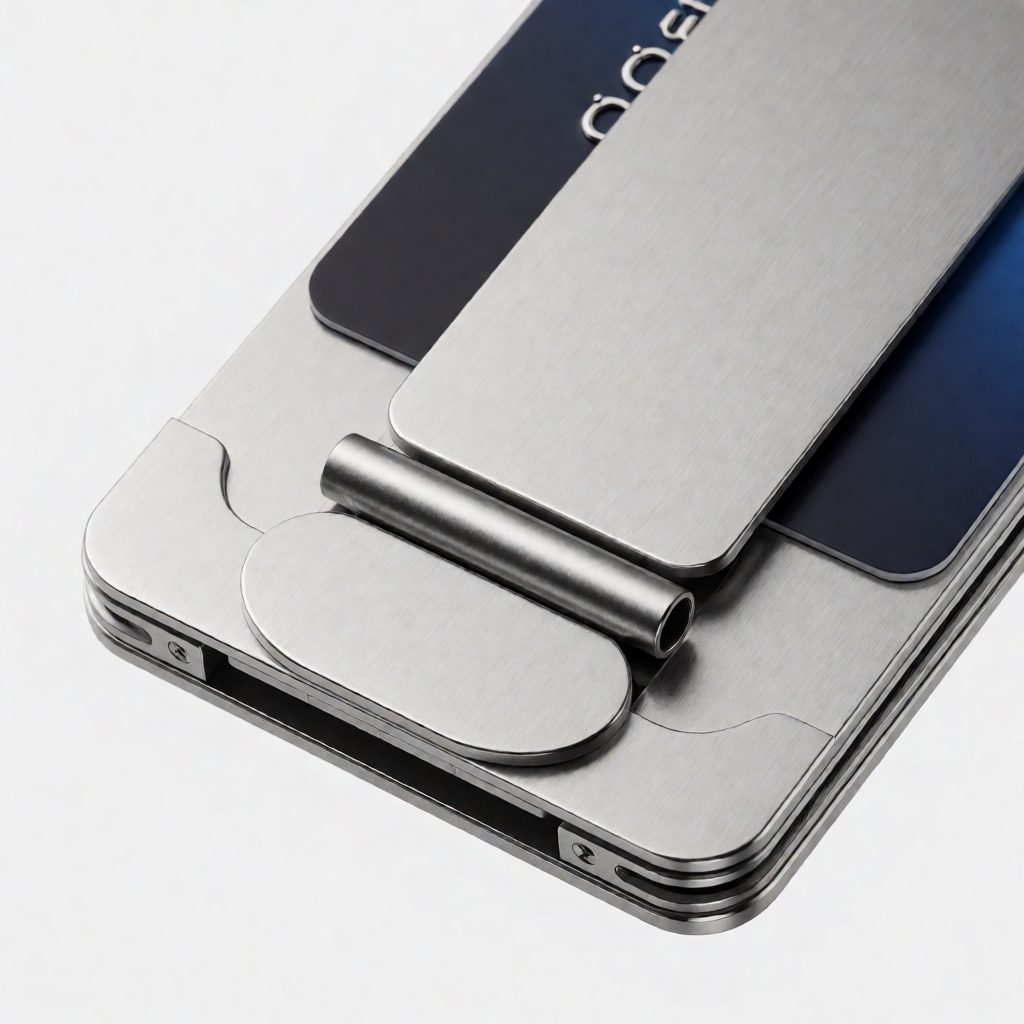
Clip mechanisms
Money clips use one of four basic mechanical approaches:
Spring-loaded tension clip — A coiled stainless-steel spring provides the primary closing force. This is the most common mechanism in mid-range and premium money clip wallets. It offers consistent retention across a range of bill thicknesses and does not degrade quickly over thousands of cycles if properly specified. The trade-off is that very thick stacks of bills can overcome the spring force and slip out.
Friction clamp — Two plates press against each other through a set screw or threaded post, with no spring involved. These are simple and durable but require the user to adjust the clamp manually when carrying different volumes of cash. Most budget-tier clips use this approach.
Magnetic clip — Rare-earth magnets inside a metal housing hold the bills. These offer a satisfying one-handed open-and-close experience but provide weaker retention than spring systems. They are popular in fashion-forward designs but carry a higher risk of bills falling out if the clip is dropped face-down.
Magnetic-spring hybrid — A magnet assists initial alignment and closing, while a spring provides the actual retention force. This combines the convenience of magnetic snap-close with the security of spring tension. More premium products adopt this design.
When sourcing cash clip wallets or pocket organizers with clips, ask your manufacturer which mechanism they use and whether the spring rate is adjustable or fixed. Fixed-spring clips are cheaper to produce; adjustable ones give your end user more flexibility but add assembly complexity.
Material options and trade-offs
Titanium — Grade 2 or Grade 5 (Ti-6Al-4V) titanium offers the best strength-to-weight ratio of any common money-clip material. It is approximately 45% lighter than steel of the same strength, naturally corrosion-resistant, and hypoallergenic. The downside is cost: titanium billet and CNC machining time are significantly more expensive than aluminum. Titanium also takes anodic color well — blue, black, gold, and purple anodizing are standard finishes — but the base material cost keeps titanium money clips in the premium tier regardless of finishing choices.
Aluminum — 6061-T6 aluminum is the workhorse of the EDC wallet industry. It is lightweight, CNC-machiinable, and anodizes beautifully. Aluminum clips typically weigh 15–30 grams for a full card-holder-and-clip assembly, compared with 40–70 grams for titanium equivalents. The main weakness is surface durability: anodized aluminum scratches more easily than titanium or stainless steel, and hard anodizing (Type III) improves wear resistance but adds cost. For budget and mid-range brands, aluminum remains the most cost-effective material. See our guide on good wallets for guys for a broader look at how material selection affects end-user experience.
Carbon fiber — Genuine woven carbon fiber (epoxy-resin cured under heat and pressure) is lighter than aluminum and remarkably scratch-resistant on the surface. However, the raw material cost is high and machining requires diamond-coated or specialized tooling. Carbon fiber clips are mostly found in the premium segment. Some manufacturers offer aluminum cores with carbon-fiber inlays — a compromise that reduces cost while maintaining the aesthetic. For a deeper dive on materials, consult our minimalist wallet materials guide.
Stainless steel — Used less often as a primary clip material due to weight, but common in spring components and internal frame inserts. Full stainless-steel money clips exist in the rugged/tactical segment and appeal to buyers who prioritize durability over thinness.
Leather — Leather-accented money clips typically use a leather strap or leather-lined jaws rather than a full leather body. These are fashionable but degrade faster than metal or carbon-fiber alternatives, especially with frequent wet-dry cycling. For dedicated leather-wallet analysis, see our leather wallet procurement guide.
Key Specifications — Card Capacity, Retention Force, and Weight
The specifications that matter most for a quality slim wallet with money clip are:
Card capacity — Most money clips hold 6 to 12 cards in their internal slot system. A single-row card holder with 6–8 slots is standard; dual-row or accordion configurations can reach 12 but add 2–4 mm of thickness. Buyers should specify whether cards are held by friction-fit slots, a elastic band, or a removable card tray. Elastic bands lose tension over time; friction slots are simpler but can trap cards if the stack is too full.
Bill retention force — Measured in pounds or newtons at the clip jaws. A well-specified clip should hold 8 to 12 pounds of pulling force on a standard stack of 4–6 bills before slipping. This range covers typical daily carry without requiring the user to fold bills more than once. Clips rated below 6 pounds risk dropping cash; above 14 pounds become difficult to open one-handed and may crease bills.
Bill capacity — Real-world tests with current US currency show that a standard money clip holds 4 to 8 bills comfortably before retention begins to fail. Worn, bent, or torn bills reduce effective capacity significantly — a clip that holds 6 crisp bills may only secure 3 or 4 worn ones. The fold pattern matters: a single fold (half-fold) is the standard for money clips; tri-fold bills are too thick for most clip mechanisms and will compromise retention. When evaluating titanium money clip, aluminum money clip, or carbon fiber money clip designs, insist on physical bill tests with both new and circulated notes.
Weight — A full aluminum money clip assembly typically weighs 25–45 grams. Titanium versions are 40–70 grams. Carbon fiber sits in the 20–35 gram range depending on core material. These numbers affect pocket feel and shipping weight per unit — both relevant for Amazon FBA resellers calculating fulfillment costs.
Overall dimensions — Standard money clip body width is 65–75 mm, height 100–110 mm (with clip extended), and thickness 8–14 mm depending on card capacity and clip style. Tactical money clips often run thicker (12–14 mm) to accommodate larger springs or hybrid mechanisms. For sizing decisions, refer to our best wallet for B2B buyers procurement guide.
Standards & Quality Requirements — What to Look for in a Money Clip
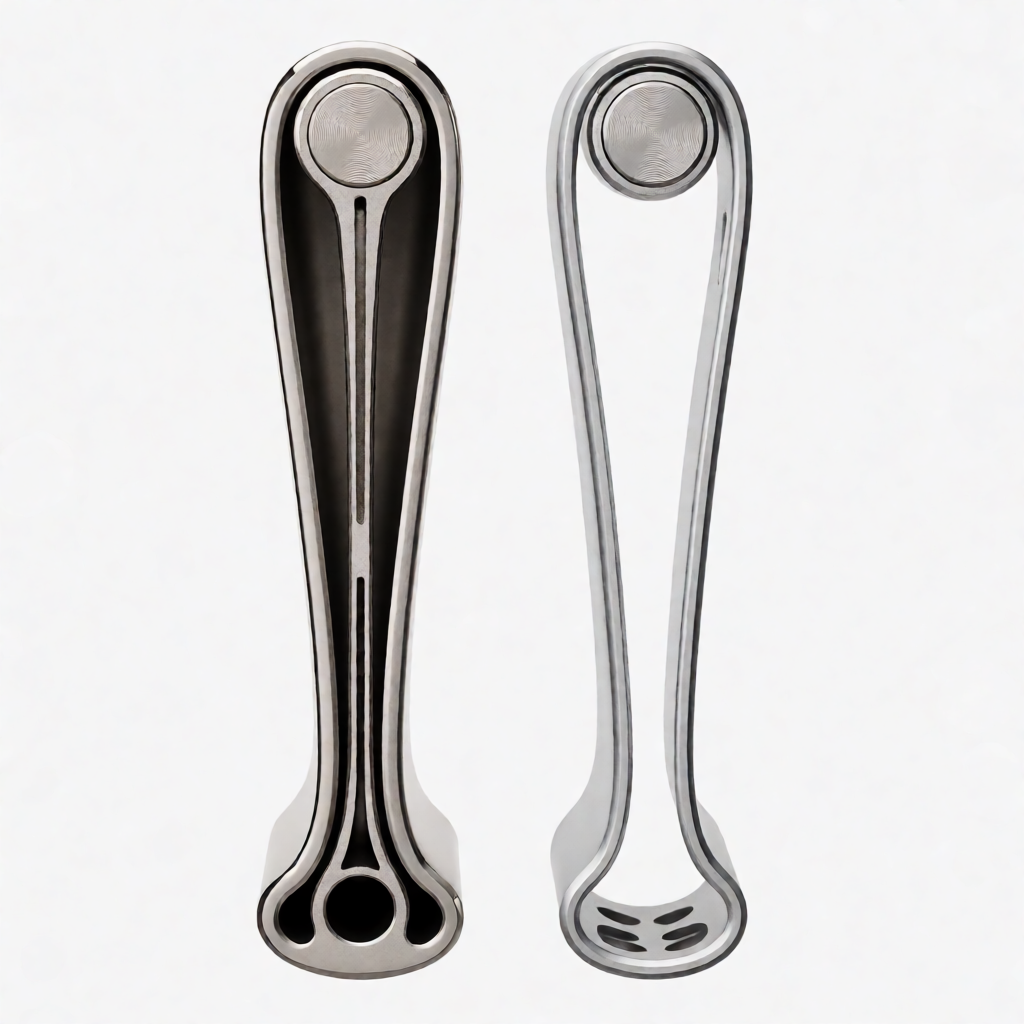
Quality money clip manufacturing involves several technical checkpoints:
Spring specification — The clip spring should be made from music wire (ASTM A228) or stainless music wire (ASTM A313), with a specified free length and solid height. Ask the manufacturer for spring rate (N/mm) and cycle life data — a good spring should sustain 5,000+ open-close cycles without noticeable force degradation.
Surface finish — Anodized aluminum should meet MIL-A-8625 Type II for standard finish or Type III (hard coat) for wear resistance. Titanium is typically bead-blasted or polished, then optionally anodized. Surface hardness for hard-anodized aluminum should exceed 500 HV; for titanium anodizing, color consistency across batches is the main quality concern.
RFID-blocking integration — RFID-blocking money clips incorporate a conductive layer (usually aluminum foil or mesh laminated between the body plates) that creates a Faraday cage around the card slots. Effectiveness varies by design and frequency band. For detailed selection criteria on RFID-blocking products, see our RFID blocking cards guide. Relevant standards include ISO/IEC 14443 for proximity cards and ISO/IEC 15693 for vicinity cards. Reputable manufacturers will provide third-party test reports showing attenuation of at least 20 dB at 13.56 MHz — the standard contactless payment frequency.
Dimensional tolerance — CNC-machined aluminum and titanium bodies should hold tolerances of ±0.1 mm on critical mating surfaces and ±0.2 mm on overall dimensions. Excessive play between the clip plate and body causes rattling and perceived cheapness.
Material certifications — For export to the EU and US market, materials should be REACH compliant and RoHS compliant. SGS testing reports for heavy metals (lead, cadmium, hexavalent chromium) in plating and anodizing are standard documentation. BSCI audit coverage for the manufacturing facility is increasingly required by European retail buyers.
Clip retention verification — Each production batch should be sampled for bill-retention force using a simple pull-test rig. Acceptance criteria: ≥8 lbf on a 4-bill stack, ≥6 lbf on a 6-bill stack with mixed-condition bills. This is the specification that most separates quality money clips from discount imports.
Related Considerations — Customization, Sourcing, and Branding Options
Customization is where money clip sourcing diverges from off-the-shelf buying. The options available to brand owners and Amazon FBA resellers include:
Laser engraving — Fiber laser engraving on aluminum and titanium is the most common branding method for money clips. It produces permanent, high-contrast marks suitable for logos, monograms, and decorative patterns. Engraving depth on aluminum anodized surfaces is typically 0.02–0.05 mm, visible but not structural. For deeper engraving that removes the anodized layer entirely, a higher power setting is used, creating a contrasting matte mark against the polished or anodized background.
Anodizing color — Aluminum money clips can be anodized in virtually any RAL or Pantone-matched color. Standard colors include black, silver (natural), blue, and rose gold. Titanium can be anodized to produce rainbow colors through interference effects at different voltage settings — blue at approximately 20V, purple at 30V, gold at 40V. Color consistency across batches is the main quality challenge; suppliers with in-house anodizing capacity can hold tighter tolerances than those outsourcing this step.
Private-label packaging — Retail-ready packaging for money clips typically includes a rigid card backing, a clear PVC window, and a hang tab for retail display. For Amazon FBA resellers, polybag packaging with barcode labels is standard. Custom box design — including insert trays, tissue wrapping, and instruction cards — adds $0.15–$0.50 per unit depending on complexity and order quantity. See our best minimal wallets for B2B sourcing guide for packaging comparisons.
MOQ and lead time — For OEM money clips, typical MOQ starts at 100–500 pieces per design for standard aluminum configurations. Titanium and carbon fiber configurations often carry higher MOQ due to material cost and processing time. Sample lead time for a new design is typically 7–14 days; bulk production follows at 25–40 days depending on volume and finishing complexity.
Cost drivers — The primary cost variables for a custom metal wallet are: material (aluminum vs. titanium vs. carbon fiber), clip mechanism type, number of card slots, anodizing color complexity, and order quantity. A basic aluminum money clip with 6-card capacity and black anodizing starts at a significantly lower FOB price than a titanium version with magnetic-spring hybrid mechanism and custom engraving.
For comprehensive decision frameworks on minimal wallets and card holders, also review our best card holder selection guide and best slim wallets for men.
How We Build Our Money Clips — Standards in Practice
The money clip market spans from sub-$5 import clips with weak friction clamps to $60+ titanium designs with hybrid magnetic-spring mechanisms. Most private-label EDC brands and Amazon FBA resellers position their products in the mid-range — where material quality, clip retention, and finish consistency matter enough to justify a $15–$35 retail price, but where cost structure still allows healthy margins.
As a manufacturer, our approach to this segment starts with a spring-loaded tension clip using music wire rated for 5,000+ cycles, paired with 6061-T6 aluminum or Grade 2 titanium bodies that hold ±0.1 mm tolerance on the clip plate interface. Bill retention is verified at ≥8 lbf on a 4-bill stack before any batch ships. Anodized surfaces meet MIL-A-8625 Type II standards, and all materials carry REACH and RoHS compliance documentation. For brands that need RFID-blocking, we integrate a Faraday-layer card slot option with third-party test reports confirming ≥20 dB attenuation at 13.56 MHz.
Customization covers the full spectrum — fiber laser engraving for logos and patterns, anodized color matching to your brand palette, and private-label packaging from retail card-and-window displays to Amazon FBA polybags. Our MOQ starts at 100 pieces per design, samples ship within 7 days, and bulk production runs 25–40 days depending on configuration. Get a Free Quote
We have been building minimalist EDC wallets and pocket gear for over 13 years, serving private-label brands, Amazon sellers, and retail chain buyers across North America, Europe, Australia, and Southeast Asia. If you are evaluating money clip configurations for your next product launch — whether that is a titanium upgrade line or a cost-optimized aluminum volume run — Contact Our Team to discuss your opening sizes and target specs.
Sources & References
- good wallets for guys — topedcwallet.com
- minimalist wallet materials guide — topedcwallet.com
- leather wallet procurement guide — topedcwallet.com
- best wallet for B2B buyers — topedcwallet.com
- RFID blocking cards guide — topedcwallet.com
- best minimal wallets for B2B sourcing — topedcwallet.com
- best card holder selection guide — topedcwallet.com
- best slim wallets for men — topedcwallet.com
- Get a Free Quote — topedcwallet.com
From article to product
Turning this into a product?
Most of what is written here is the difference between a sample that works and one that does not. We can build either — the useful one costs the same.
Keep reading
More on buying guides
Best Men’s Card Wallet: B2B Buyer’s Selection Guide 2026
Compare materials, RFID specs, and certifications for men's card wallets. Get procurement-ready guidance on…
ReadBest Bifold Wallets for Bulk Orders — B2B Procurement Guide
Compare materials, specs, certifications, and customization options for bulk bifold wallet sourcing. Learn what…
ReadSale Wallets Women — Bulk Sourcing Guide for Buyers
Find what women's wallets are selling well in bulk — materials, RFID specs, certifications,…
Read
About the author
Wu, Leon
Leon Wu is the senior product engineer and EDC testing lead at TOPWALLET. He has spent more than a decade on wallet design-for-manufacture, materials and quality control at the company's Dongguan facility, and writes from bench testing, pull-force and 13.56 MHz shielding measurements rather than supplier spec sheets.
Written on the floor
This article was written by our production and QC team — the people who spec tolerances, run the finishing line and inspect every batch. Where it states a capacity, a pull force or a lead time, it comes from a measurement we made, not a supplier’s catalogue. If a number here disagrees with what your own supplier told you, tell us; several of these articles started as a correction from a buyer.
See how the factory works · Inspection process · Sourcing FAQ
Turning this into a product?
Most of what is written here is the difference between a sample that works and one that does not. We can build either — the useful one costs the same.