

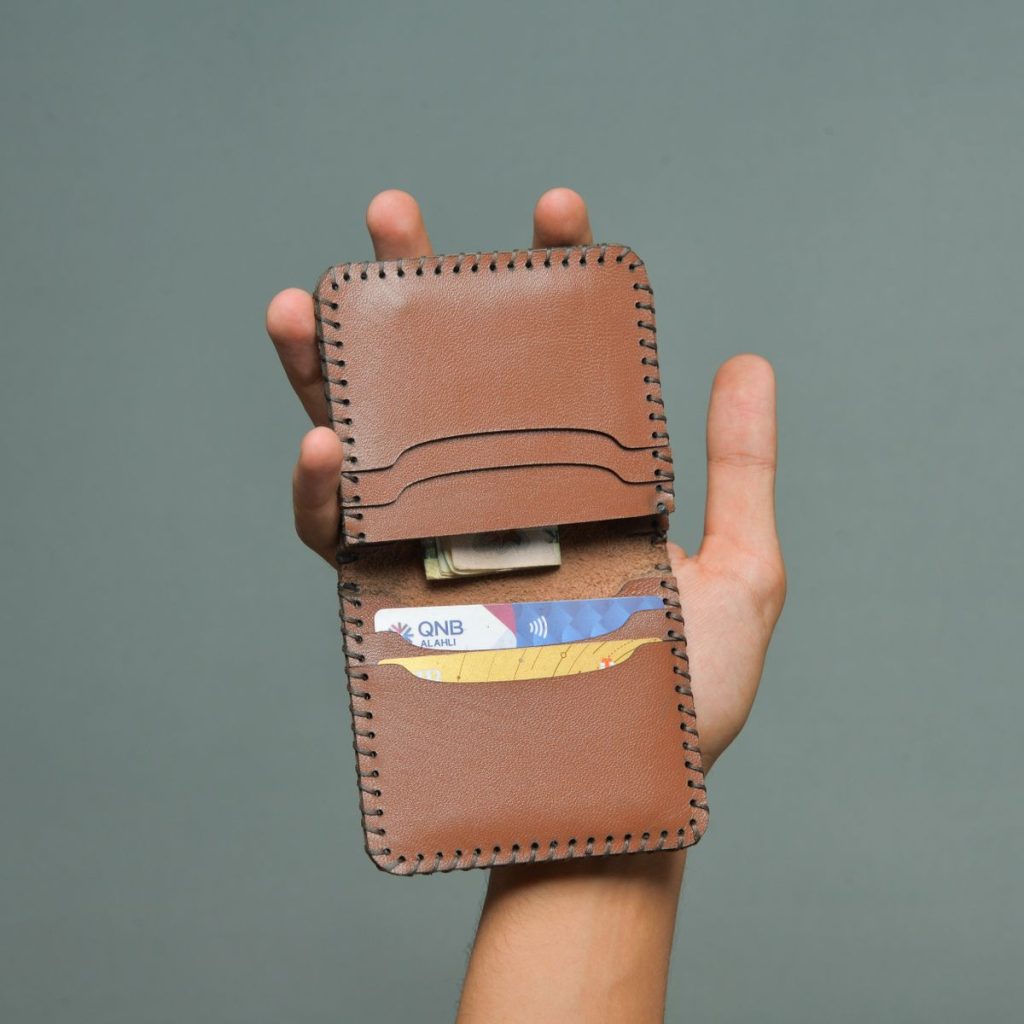
Most wallet guides ask one question, “minimalist or classic?” and call it a day. The real decision is a bundle of trade-offs, and the right answer depends on how you carry money, cards, and paperwork in an ordinary week. Seven criteria actually move the decision: carry position, the capacity you genuinely need, material and climate, RFID exposure, size and pocket fit, style versus function, and whether you can verify the quality behind the price. This guide walks through each one in the order it matters, then gives you a checklist you can run quickly in a store.
Quick Decision Table
| If you… | Start with | Why |
|---|---|---|
| Carry front pocket, 2–6 cards, no cash | Card holder or slim metal wallet | Thinnest, lightest carry |
| Carry 4–8 cards plus a few notes | Slim bifold or minimalist wallet | Best width-to-capacity balance |
| Carry 10+ cards, receipts, coins | Structured bifold or long wallet | Organisation over minimalism |
| Travel with passport and two currencies | Travel wallet or zip wallet | Compartmentalised and secure |
| Need RFID shielding verified | Shielded slim or metal wallet | Testable 13.56 MHz protection |
Start With How You Actually Carry
Front pocket, back pocket, or bag changes everything. Front-pocket carriers should prioritize a thin profile and low weight, because every millimeter and gram is felt all day. Back-pocket carriers can tolerate more structure, but years of sitting on thick leather or rigid metal has consequences. Bag carriers have the most freedom, yet a wallet in a bag is also the one most likely to be lost or stolen.
Also count how many places money lives in your week. If cards already sit in a phone case and cash is occasional, a money clip or slim card holder outperforms any traditional wallet. If you juggle a license, payment cards, receipts, and folded bills, you need organized pockets rather than simply less stuff. The wallet types guide breaks down these structural families, so the rest of this checklist has a clear field to run on.
Capacity: Cards and Cash
The honest test is a deck audit: empty your pockets and count the cards you actually used in the last month, not the ones you might need someday. That number, plus whether you carry cash, should set your capacity target rather than the other way around.
Be realistic about cash. Cash carriers need space for folded bills and sometimes coins; if you live mostly cashless, a tall bill slot is wasted thickness. Whatever capacity you choose, leave one slot of headroom: a wallet loaded to its limit stresses stitching and stretches leather at the edges.
Material and Weather Tolerance
Material is the first filter for climate. Full-grain leather is the classic choice, patinaing and softening for years, but it absorbs humidity and needs care in wet seasons. Metal wallets shrug off rain and heat but feel cold in winter, and uncoated alloys tarnish in humid air. Coated and synthetic options trade feel and durability for lower cost and easy maintenance.
Think about your actual environment rather than the brochure: coastal humidity, gym bags, summer sweat, beach days. If water and UV are constant companions, lean toward anodized metal or treated leather; if you live in a dry climate, raw leather’s temperament becomes a feature instead of a flaw.
RF Exposure and Security Needs
RFID skimming is real but rare; far more common is casual theft, a card grabbed from an open bag or an unzipped pocket in a crowd. Still, if you ride transit daily, travel internationally, or simply want one less thing to think about, a shielding layer removes an entire category of worry.
Two notes on how shielding works. First, it targets the 13.56 MHz band used by contactless cards, and reputable makers verify it at that frequency on a test bench. Second, shielding is only useful when it surrounds the cards consistently; a partial or decorative layer is marketing, while a tested full enclosure is engineering.
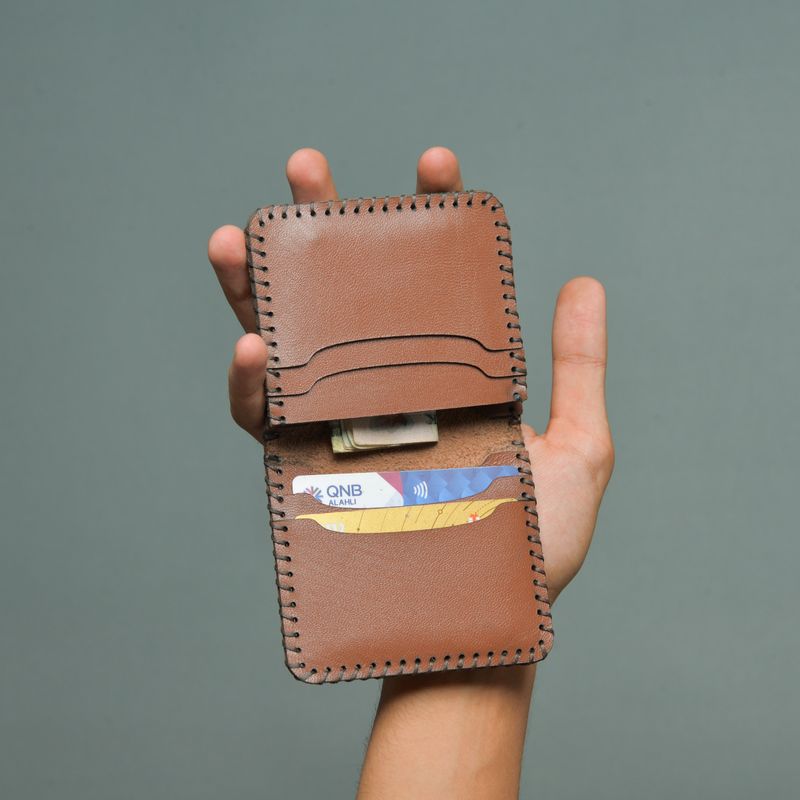
Size, Pocket Fit, and Style Trade-Offs
Size is where good intentions die. A wallet that feels perfect in the hand can imprint through suit trousers or chafe against a jean seam. Measure against the pockets you actually wear: front pocket depth, whether a coin pocket exists, and how you sit with the wallet in place.
Style versus function is the only criterion with no right answer. A visible wallet says something about you: traditional leather says classic, anodized metal says technical, a minimal card case says deliberate. Decide whether the wallet is part of the outfit or just a container, then buy for that role.
A Quick Decision Checklist
Run through these seven rows in order; each one eliminates at least one option from the table.
| Question | What to look for |
|---|---|
| Where will it ride? | Front pocket: thin and light. Back pocket or bag: structure and capacity matter more. |
| How many cards per month? | Match the deck audit, then add one slot of headroom. |
| Cash or cashless? | Cash carriers need a real bill slot; others can drop it entirely. |
| What is your climate? | Wet and humid: sealed finishes or metal. Dry: natural leather is fine. |
| Transit and travel? | Frequent: choose verified RFID shielding, not decorative layers. |
| Who is the audience for the look? | Professional uniforms, or personal expression: pick the material that matches. |
| Can you verify quality? | Ask for tannery, process, inspection standard, and sample lead times. |
The last row deserves emphasis. Anyone can claim premium materials, but fewer can name the tannery or the inspection standard. For B2B buyers especially, documents beat adjectives: an inspection level, a certification, and a stated process predict quality better than any finish alone. Compare constructions side by side in the wallet collection, and use the buying guides to stress-test your own assumptions before committing.
FAQ
How to choose men’s wallets?
1) Count your cards, 2) choose fold style, 3) pick material, 4) add RFID if you carry contactless daily.
How to choose a wallet?
Match to your card count: 2–10 slim, 8–12 bifold, 12+ trifold. Then choose your pocket preference.
How to choose a wallet for a man?
Slim aluminum for tech-focused carry, full-grain leather for professional settings, bifold for daily all-around.
How to choose a good wallet?
Full-grain leather or CNC aluminum, 4–8 cards, slim profile, RFID if you need it.
How many cards should a wallet hold?
There is no universal number; it depends on what you actually use monthly. Run the deck audit described above and add one slot of headroom. A slim wallet that fits four essential cards is a better buy than a twelve-slot organizer you fill with cards you never use.
Is a metal or leather wallet better?
Neither is objectively better; they optimize different things. Leather patinas, flexes, and repairs well but needs care in wet climates. Metal resists weather and is harder to pickpocket but is heavier, colder in winter, and can scratch other items in the same pocket. Match the material to your climate, carry position, and maintenance appetite.
Do I really need RFID blocking?
For most people, no: skimming exists but is uncommon, and card fraud is far likelier online or through theft of the physical card. Buy a shielded wallet when you ride transit daily, travel through crowds, or simply want the reassurance. Otherwise spend the same money on build quality instead.
What is the most common wallet mistake?
Buying for the person you think you should be rather than the way you actually carry. Oversized wallets bought for future use get carried half-empty, while rigid minimalist pieces fail people who genuinely need receipts and cash. Audit your real carry first, then choose the smallest honest size.
How much should I spend on a wallet?
Enough to buy verified quality: named materials, real stitching or machining, and a documented process. Budget models usually fail at the seams and edges first. The sensible middle ground is a mid-tier wallet from a manufacturer that can prove its process, rather than a cheap lookalike or an inflated label.
Can a wallet be too slim?
Yes. Ultra-slim designs sometimes compromise ergonomics: tightly stacked cards are hard to slide, and cash gets folded awkwardly. Slim is a feature only when removing a card is still one smooth motion. Test the wallet loaded with your real contents, never empty, before committing.
Related reading
From article to product
Turning this into a product?
Most of what is written here is the difference between a sample that works and one that does not. We can build either — the useful one costs the same.
Keep reading
More on buying guides
Best Men’s Card Wallet: B2B Buyer’s Selection Guide 2026
Compare materials, RFID specs, and certifications for men's card wallets. Get procurement-ready guidance on…
ReadBest Bifold Wallets for Bulk Orders — B2B Procurement Guide
Compare materials, specs, certifications, and customization options for bulk bifold wallet sourcing. Learn what…
ReadSale Wallets Women — Bulk Sourcing Guide for Buyers
Find what women's wallets are selling well in bulk — materials, RFID specs, certifications,…
Read
About the author
Wu, Leon
Leon Wu is the senior product engineer and EDC testing lead at TOPWALLET. He has spent more than a decade on wallet design-for-manufacture, materials and quality control at the company's Dongguan facility, and writes from bench testing, pull-force and 13.56 MHz shielding measurements rather than supplier spec sheets.
Written on the floor
This article was written by our production and QC team — the people who spec tolerances, run the finishing line and inspect every batch. Where it states a capacity, a pull force or a lead time, it comes from a measurement we made, not a supplier’s catalogue. If a number here disagrees with what your own supplier told you, tell us; several of these articles started as a correction from a buyer.
See how the factory works · Inspection process · Sourcing FAQ
Turning this into a product?
Most of what is written here is the difference between a sample that works and one that does not. We can build either — the useful one costs the same.