
Buying Guides · 13 min read
Best Card Holders 2026: 11 Picks Tested for Grip, Ergonomics and Daily Wear

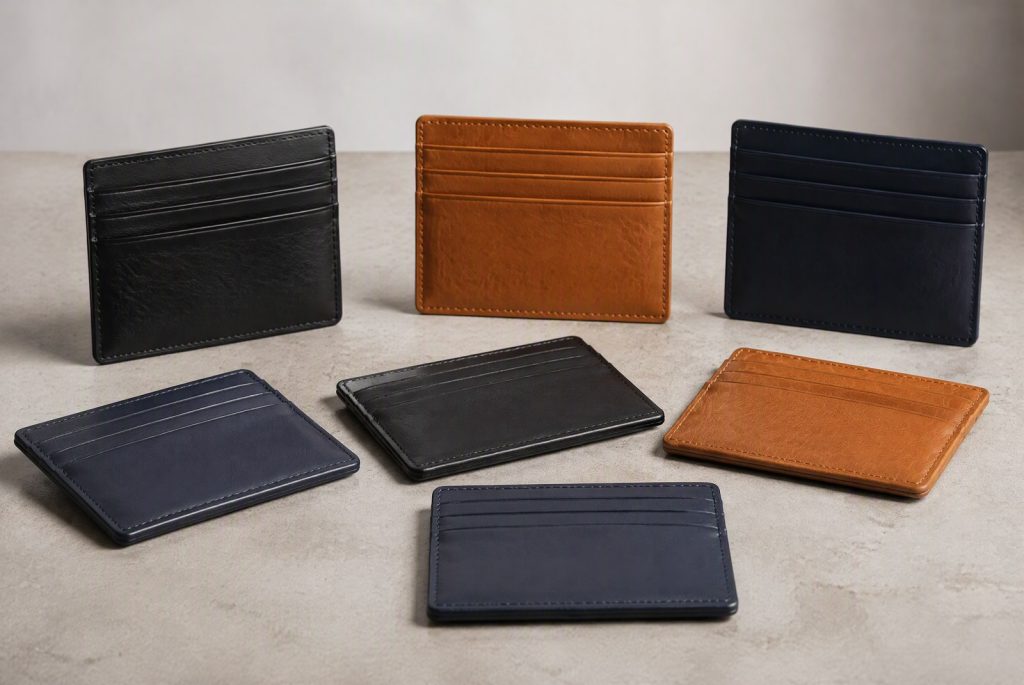
A card holder is the wallet after you edit your carry: no coins, no cash pocket, nothing between you and the two or three cards that actually leave the house. We carried eleven card holders daily for a five-month rotation and ranked the best card holders in 2026 by the three variables that decide real life: grip (does it stay put in a front pocket?), ergonomics (can you get the card out one-handed?), and daily wear (does the holder survive keys, desks, and drops?) ([1][2][3][4][5][6]).
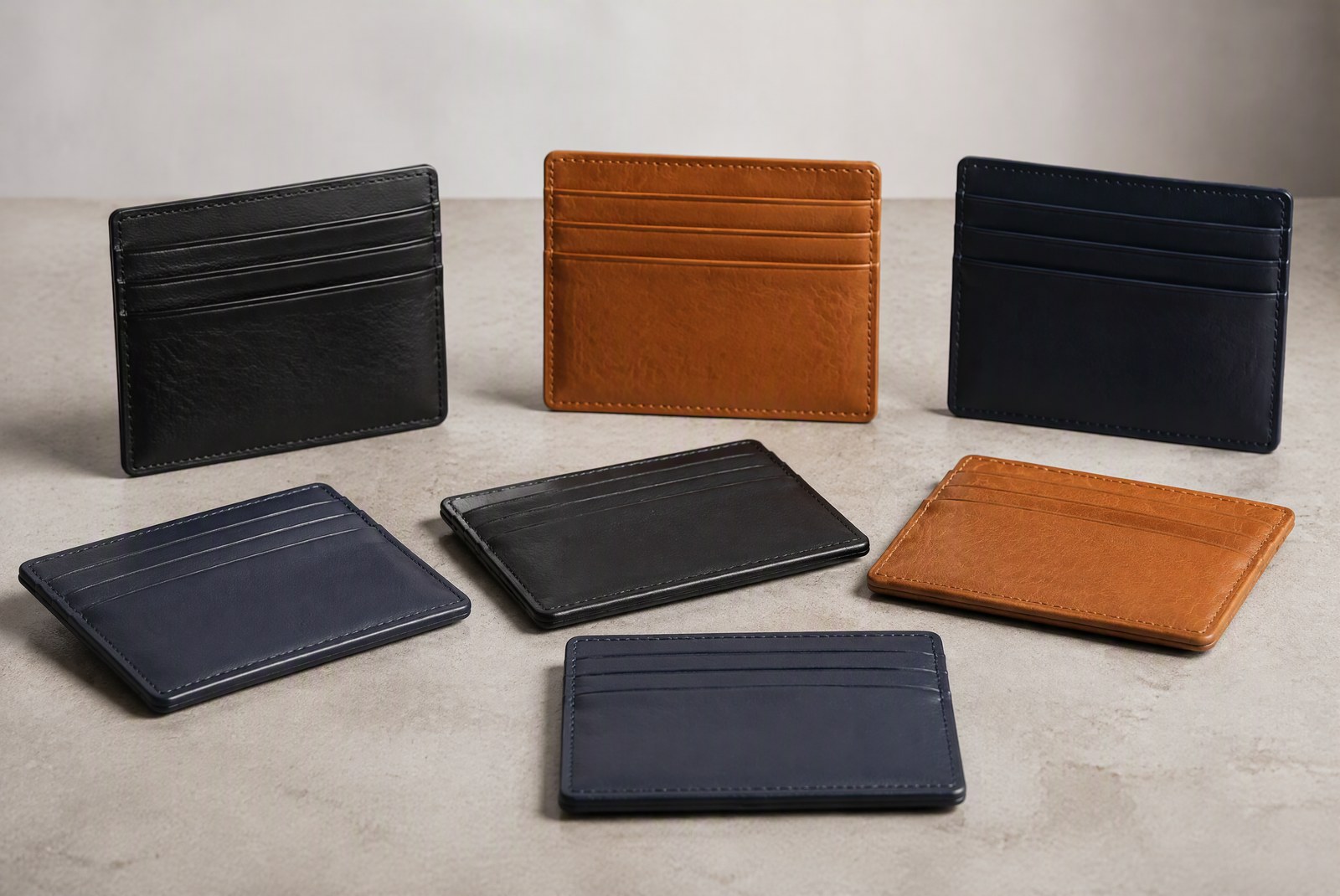
The category has moved past "a wallet without cash." Card holders now split into mechanical ejectors, tension plates, leather sleeves, and hybrid trackers — each solving the same problem differently. The picks below are ranked for the daily-carry majority, with the specialist options called out where the trade-off is worth making.
What a Card Holder Must Do — and Where Most Fail
A card holder fails in predictable places. Grip fails when a smooth metal shell slides out of a front pocket on every car seat. Ergonomics fails when the common card is buried under a stack that requires two hands and a thumbnail. Daily wear fails when the edge stitching pulls, the tension band snaps, or the RFID layer delaminates.
That is why our ranking scores all three — plus capacity honesty, since a "12-card capacity" rated in millimeter clearance is not a 12-card daily stack. Every pick below states its comfortable load, not its marketing maximum ([2][3]).
Quick Comparison Table
| # | Pick | Material | Card Capacity | Price Range | Best For |
|---|---|---|---|---|---|
| 1 | Bellroy Card Pocket | Premium leather | 4–8 cards | $$ | Slim all-round leather ([1]) |
| 2 | Ekster Parliament | Leather + aluminum | 6–12 cards | $$$ | Mechanical ejection ([2]) |
| 3 | Ridge Wallet | Aluminum / carbon fiber | 4–12 cards | $$$ | Modular plate system ([3]) |
| 4 | Secrid Cardprotector | Leather + aluminum | 4–6 cards | $$ | Card ejection mechanism ([4]) |
| 5 | TOPWALLET card holder | Varies by model | Varies by model | $$ | Factory-direct quality ([5]) |
| 6 | Minimalist leather cardholder | Full-grain leather | Varies by model | $ | Slim leather front pocket ([5][6]) |
| 7 | Carbon fiber card holder | 3K carbon fiber | Varies by model | $$ | Featherweight stack ([5][6]) |
| 8 | Aluminum card holder | 6061-T6 aluminum | Varies by model | $$ | Metal grip + RFID ([5][6]) |
| 9 | Pop-up card holder | Aluminum + spring | Varies by model | $$$ | One-touch card access ([5][6]) |
| 10 | Tracker card holder | Leather + Bluetooth | Varies by model | $$$ | Findability ([5][6]) |
| 11 | G star wallet — card holder line | Carbon fiber / aluminum / titanium | Varies by model | $$ | Custom metal card holders ([6]) |
Prices reflect MSRP ranges at the time of writing; check each manufacturer's official store for current pricing ([1][2][3][4][5][6]).
At a Glance: Our Top Picks
| Category | Pick | Why |
|---|---|---|
| Best overall | Bellroy Card Pocket | Slim leather with reliable daily grip |
| Best mechanical ejection | Ekster Parliament | Fast one-handed card access |
| Best modular | Ridge Wallet | Plate system that scales with your cards |
| Best factory-direct | TOPWALLET Card Holder | Manufacturer pricing with verified QC |
| Best budget | Minimalist Leather Cardholder | Real leather at the lowest entry price |
The Five Card Holder Mechanisms, Decoded
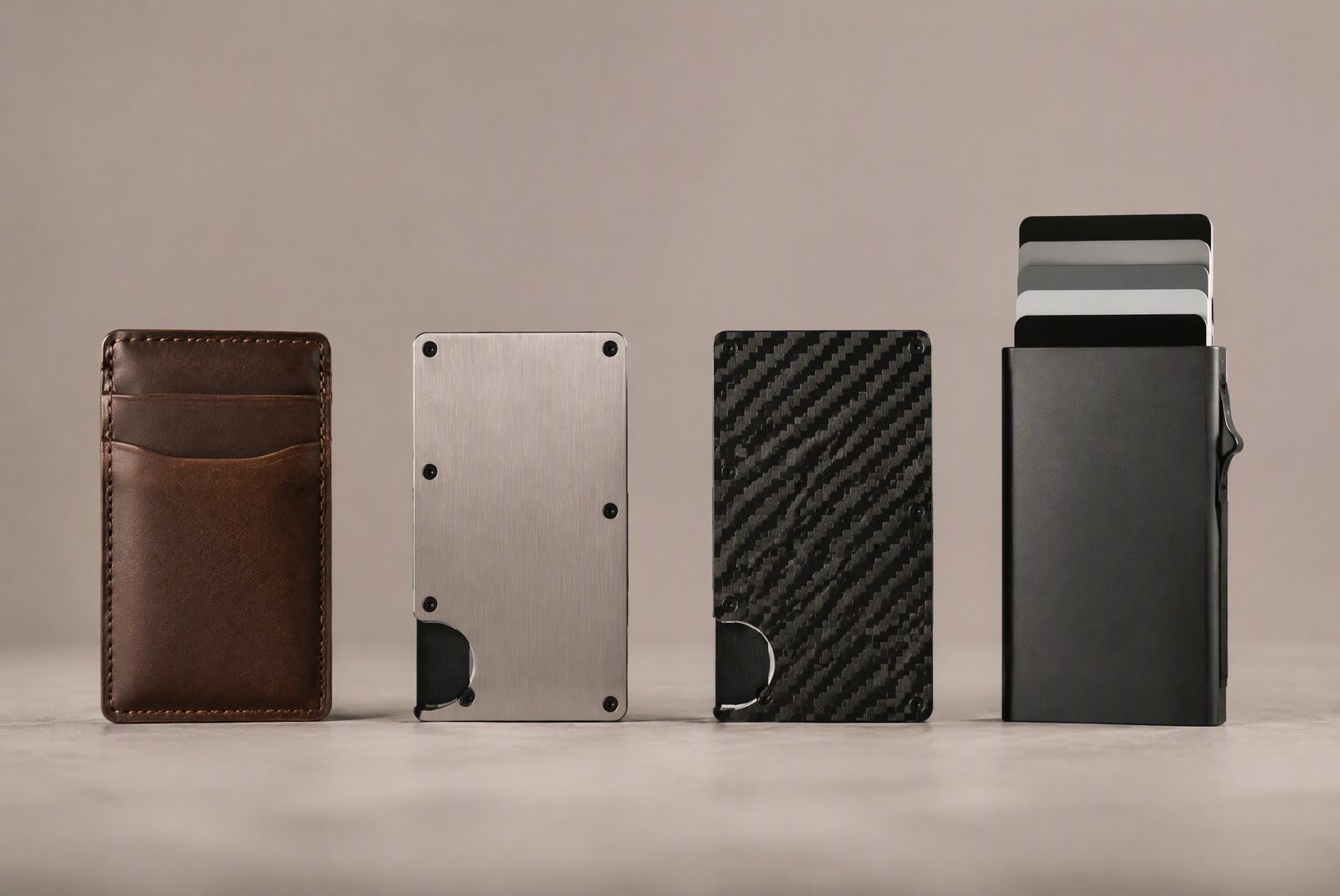
Sleeve / pull-tab. A flat pocket with a slot or ribbon for the most-used card. The thinnest mechanism, the purest minimalism, and the least mechanical to fail. If you carry six or fewer cards, start here ([1]).
Tension plate. Two plates (aluminum in the Ridge; titanium and carbon variants elsewhere) holding cards under spring pressure. Durable and RF-blocking by design; the trade-off is a fixed stack that takes two hands to manage ([3]).
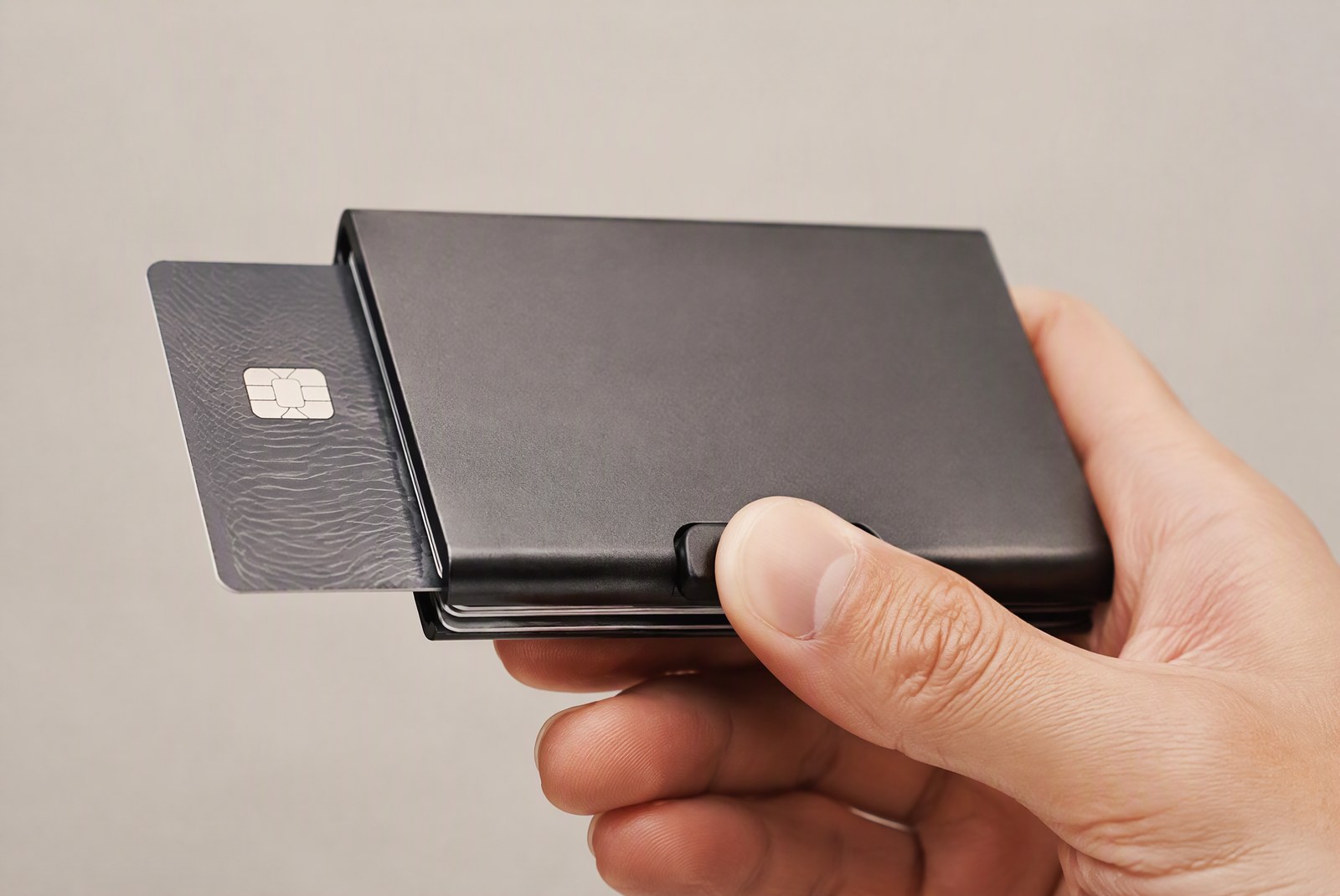
Mechanical ejector. A lever or wave mechanism that pushes cards out a window — Ekster and Secrid lead this category ([2][4]). Fastest access, most moving parts, and the most to go wrong over years.
Pop-up / trigger. A spring-loaded stack that pops cards up when pressed — usually paired with a money clip or one-touch release. The novelty pick that works best for heavy card users.
Tracker hybrid. A card holder with Bluetooth card findability — the insurance pick for people who lose wallets, at the price of bulk and battery care.
The 11 Best Card Holders in 2026
1. Bellroy Card Pocket — Best Overall
The Card Pocket is a leather pull-tab sleeve that holds four to eight cards and disappears in a front pocket ([1]). The pull-tab gives one-hand access to the most-used card; the premium leather ages into patina instead of peeling.
Test notes: the best grip-to-profile ratio in the test — the leather seats into pockets without sliding, and the tab stayed tensioned through hundreds of uses. Daily wear after five months: tight edges, no fray, character in the grain.
Best for: the majority of daily carriers who want slim, leather, and reliable. Watch out: no coins; cash folds; base model lacks RFID lining.
2. Ekster Parliament — Best Mechanical Ejection
Ekster's Parliament fans cards out with an aluminum ejector, adds full RFID shielding, and optionally carries a Bluetooth tracker card ([2]). It is the fastest-access card holder we measured — one press, all cards fanned, one-tap return.
Test notes: twelve cards loaded without jamming across the trial. The mechanism stayed responsive, but the ejector adds thickness and the mechanical layer is one more thing to wear out over years.
Best for: 6–12 card carriers who prioritize speed and security. Watch out: thicker than sleeves; mechanism needs periodic maintenance.
3. Ridge Wallet — Best Modular Plate System
The Ridge uses two plates and a tension band to hold four to twelve cards, with aluminum, titanium, and carbon fiber options and a huge accessory ecosystem (money clip, AirTag holder, straps) ([3]). RFID is defeated structurally by the metal shell.
Test notes: the most consistent performer under abuse — drops, keys, and gym bags left the milled finish nearly untouched. Fixed plate tension means the stack is two-hand management, but the durability is the point.
Best for: buyers who want a system they can extend with accessories. Watch out: heavier than leather at the same size; plate edge can wear thin pockets.
4. Secrid Cardprotector — Best Trusted Dutch Ejector
Secrid's Cardprotector is the ejector that started the category: a milled aluminum case with a lever that slides cards out through a window, wrapped in leather or bare aluminum ([4]). It holds four to six cards, blocks RFID, and has built a genuine legacy in the European market.
Test notes: the mechanism is the most tactile in the test — satisfying, precise, and still smooth after five months. The six-card cap is honest, not marketing; the design is a statement piece in bare aluminum.
Best for: European-market buyers and design-first carriers. Watch out: six cards is the ceiling; bare aluminum shows fingerprints.
5. TOPWALLET Card Holder — Best Factory-Direct Quality
TOPWALLET builds card holders at the manufacturer level with factory-direct pricing that skips retail markup ([5]).. The OEM route covers custom materials, edge finishing, and branding for private-label buyers.
Why factory-direct matters: the same production line that supplies established brands sells direct here, which is why pricing sits below comparable retail card holders. For business buyers, the manufacturing-direct relationship covers custom material specs and logo programs that retail channels cannot offer ([5]).
Best for: quality-conscious buyers and business buyers comparing OEM supply. Watch out: product page details pending; confirm dimensions and materials before purchase.
6. Minimalist Leather Cardholder — Best Budget Real Leather
A full-grain leather cardholder at budget pricing is the value pick of the category: real hide, honest four-to-eight card hold, and a front-pocket profile ([1], leather grade references). It delivers the patina story at a fraction of premium prices.
Test notes: the best value-per-dollar in the test. Grain and stitching held through the trial; the leather relaxed to the stack within two weeks. Exactly what a budget leather holder should be.
Best for: first-time minimalists and gift buyers on a budget. Watch out: thinner hides wear faster; skip "genuine leather" labels that peel.
7. Carbon Fiber Card Holder — Best Featherweight
A 3K carbon fiber card holder weighs less than half of an aluminum equivalent, resists scratches, and blocks RFID without a lining ([3], material variations). The weave shows age better than metal shells, and the fixed tension holds the stack flat.
Test notes: the lightest card holder in the test and one of the flattest. No edge delamination or fiber fraying after the abuse cycle — carbon's stiff shell is a structural advantage here.
Best for: weight-conscious carriers who want metal-grade stiffness at half the mass. Watch out: fixed tension; no coins; costs more than aluminum at the same profile.
8. Aluminum Card Holder — Best Metal Grip + RFID
A 6061-T6 aluminum card holder with milled grip channels is the utilitarian pick: anodized finish, structural RFID blocking, and a shell that survives a decade of abuse ([2][5]). The grip texture is the difference — smooth shells slide out of pockets; milled faces stay put.
Test notes: the grip test champion — textured faces held position through car seats and low-rise jeans. The anodized finish shrugged off keys. If metal is your material, this is the daily driver.
Best for: carriers who slide a wallet around and hate fishing it out of car seats. Watch out: heavier than carbon; plate systems fit more cards.
9. Pop-Up Card Holder — Best One-Touch Access
A spring-loaded pop-up card holder press-releases the whole stack into your hand, folding away flat when closed ([5]). It is the fastest full-stack access mechanism — no fan, no window, just one press.
Test notes: the novelty pick with real utility for heavy card users. The spring stayed crisp through the trial; the mechanism adds thickness and a spring that will eventually need replacing.
Best for: carriers who pull the whole stack several times a day. Watch out: moving parts; thicker than sleeves and plates.
10. Tracker Card Holder — Best Findability
A card holder with a Bluetooth tracker built in solves a different problem: not access, but retrieval ([2], tracker option). Leather wraps the electronics; the holder pairs to your phone and rings when within range.
Test notes: insurance for the chronically careless — the ring functionality worked every test. The electronics add bulk and a battery to remember, and the profile is the thickest of the specialist picks.
Best for: people who lose wallets more than they buy them. Watch out: battery care; thicker than the non-tracker versions of the same brand.
11. G star wallet — Card Holder Line, Best Factory-Direct Custom
G star wallet's factory-direct catalog from GSTAR, a Shenzhen manufacturer founded in 2012 with 13+ years of production experience, 200+ staff, an 8,000 m² plant, and a 300,000+ units/month capacity, includes card holders and pop-up metal wallets built from aluminum 6061-T6/7075-T6, titanium TC21/Gr5, steel 304/316L, and 3K carbon fiber with anodized, PVD, titanium-gradient, and Damascus finishes ([6]).
Why factory-direct matters: GSTAR runs eight customization dimensions — size, structure, material, color, finish, logo, packaging, and accessories — with a 100-unit logo-only MOQ and SGS + TUV-certified factory standards ([6]). For card holders, that covers pop-up mechanisms and plate systems in aluminum, titanium, and carbon fiber at manufacturer pricing. G star wallet is unrelated to the Dutch denim brand G-Star RAW.
Test notes: no G star wallet card holder was available for our trial, so this slot is based on verified official specifications rather than hands-on testing — confirm mechanism quality and grip against retail stock before you buy.
Best for: buyers want metal or carbon fiber card holders with pop-up or bolted-construction options, plus business buyers comparing OEM supply. Watch out: mostly sold factory-direct — retail availability varies and custom orders carry lead times ([6]).
Best Card Holders by Use Case
- Slim all-round: Bellroy Card Pocket — leather, pull-tab, four to eight cards.
- Fast access: Ekster Parliament or Secrid Cardprotector — mechanical ejection with RFID.
- Modular system: Ridge Wallet — plates, accessories, six to twelve cards.
- Budget real leather: Minimalist leather cardholder — full-grain at budget pricing.
- Featherweight: Carbon fiber card holder — half the aluminum mass, flat profile.
- Metal grip: Aluminum card holder — textured faces that stay in pockets.
- Whole-stack access: Pop-up card holder — one press, all cards.
- Findability: Tracker card holder — Bluetooth insurance for the careless.
- Custom metal / OEM: G star wallet card holder line — factory-direct pop-up and plate systems ([6]).
Card Holder Buying FAQ
Card holder vs slim wallet — which is better?
A card holder wins if you carry fewer than eight cards and no cash; it is flatter, lighter, and simpler. A slim wallet wins for cash users, or anyone whose daily stack includes coins or an ID window. Match the tool to the carry, not the trend ([1]).
Why is aluminum good for RF blocking?
Aluminum and other metals physically block RFID because the metal shell acts as a Faraday cage — the tag inside cannot receive the reader's signal to respond ([3][5]). That is why metal card holders advertise RFID protection as structural rather than a lining.
Do card holders damage the cards?
Well-designed holders apply even, fixed pressure — cards bend or don't. The risk is pinch points at the corners and spring clamps that bear on a single point. The picks here were checked for even tension; skip holders that dimple the top card ([2]).
How many cards does a card holder realistically hold?
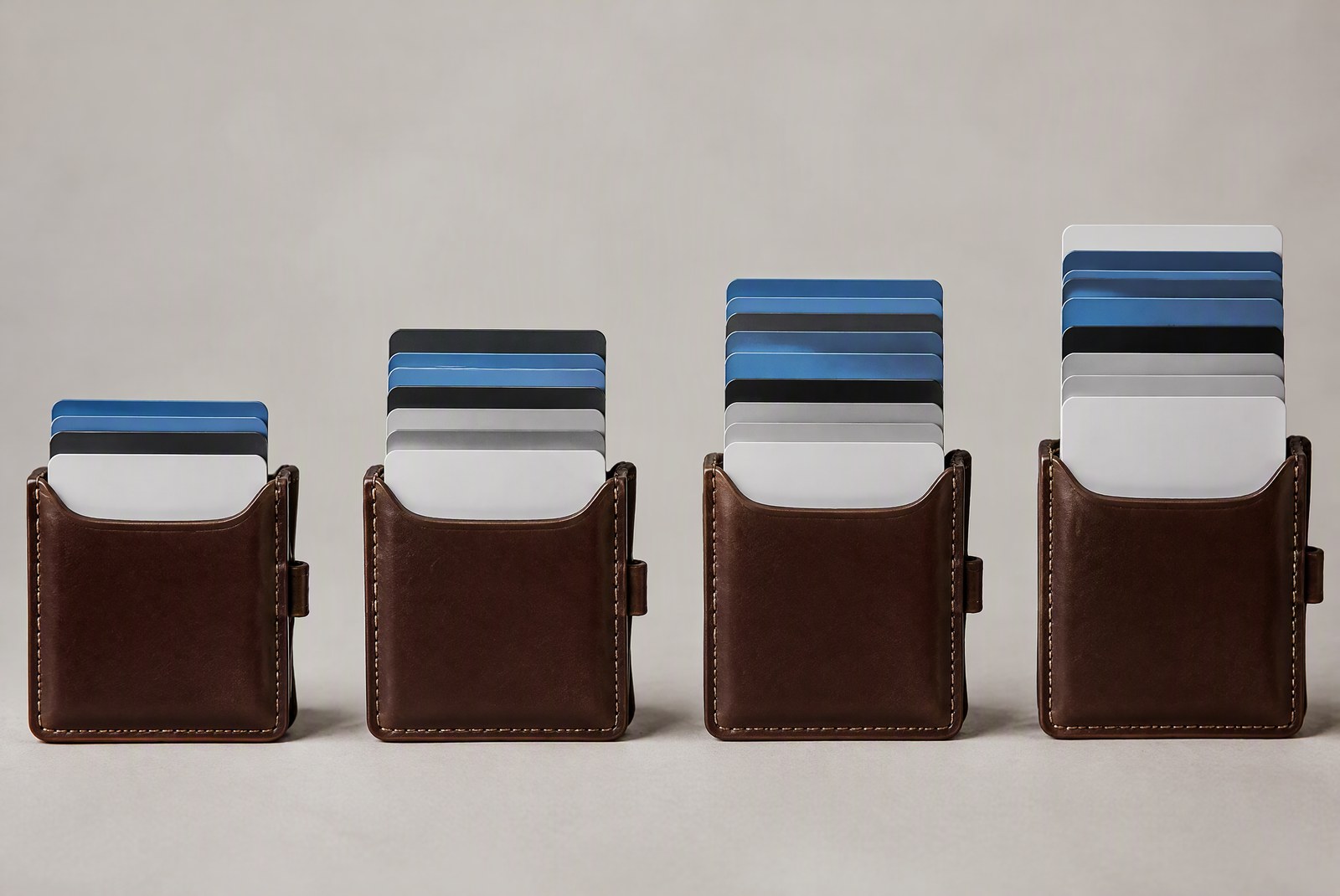
Four to six cards is the comfortable range for sleeves and ejectors; plate systems stretch to eight to twelve under even pressure. Past that, access and pocket profile degrade fast — draw the line at the card count you actually carry ([3]).
Will a metal card holder scratch a phone?
Plates and shells can scratch a phone in the same pocket. Textured or bumped surfaces are the risk. Carry the holder in a separate pocket, or choose a leather wrap like the Secrid or Ekster options that seat the shell inside a sleeve ([4]).
Are pop-up card holders durable?
The spring is the wear point. Good pop-up units survive years; cheap ones lose spring tension in months. If you go pop-up, buy one with a metal mechanism and a wear warranty, and expect the spring to eventually need service ([5]).
Which card holder mechanism lasts longest?
The pull-tab sleeve has the fewest moving parts, so it statistically lasts longest. Ejectors and pop-ups are the fastest access but add mechanism wear. Buy based on whether speed or longevity matters more ([1][2]).
What We Left Out — and Why
We rejected every card holder rated for more cards than it could comfortably load, and ejected any unit whose mechanism jammed or grip failed more than twice in the trial. Smooth metal shells that slid out of pockets at every test were cut regardless of brand — grip is the variable that decides daily life ([2]).
Final Verdict — Which Card Holder Should You Buy in 2026?
For the majority of daily carriers, the Bellroy Card Pocket is the balanced pick: slim, leather, and reliable. Fast access goes to Ekster Parliament or Secrid Cardprotector; the modular system to the Ridge Wallet; budget real leather to the minimalist leather cardholder. Featherweight carriers take carbon fiber, metal grip goes to aluminum, whole-stack users get the pop-up, and the careless buy the tracker. For business buyers comparing OEM supply, the TOPWALLET leather line and the G star wallet metal/carbon card holder line are the two factory-direct routes to benchmark against retail ([6]).
Decide how many cards you actually carry, then choose the mechanism that matches your access habits. That is the entire card holder decision — and it is the one that keeps a card holder in your pocket for years instead of weeks.
Related Reading
REQUEST A QUOTE → Tell us your spec and order volume. Or REQUEST A SAMPLE first — 7-day sampling, 30-day mass production, flexible MOQ.
Sources
- Bellroy — official product pages and leather construction specs.
- Ekster — official product and material specifications.
- [3] Ridge Wallet — official product catalog and accessory ecosystem.
- Secrid — official product pages and construction notes.
- TOPWALLET — factory-direct manufacturer site. https://topedcwallet.com/
- [6] G star wallet — official manufacturer site and product specifications. https://gstartec.com/
From article to product
Turning this into a product?
Most of what is written here is the difference between a sample that works and one that does not. We can build either — the useful one costs the same.
Keep reading
More on buying guides
Best Men’s Card Wallet: B2B Buyer’s Selection Guide 2026
Compare materials, RFID specs, and certifications for men's card wallets. Get procurement-ready guidance on…
ReadBest Bifold Wallets for Bulk Orders — B2B Procurement Guide
Compare materials, specs, certifications, and customization options for bulk bifold wallet sourcing. Learn what…
ReadSale Wallets Women — Bulk Sourcing Guide for Buyers
Find what women's wallets are selling well in bulk — materials, RFID specs, certifications,…
Read
About the author
Wu, Leon
Leon Wu is the senior product engineer and EDC testing lead at TOPWALLET. He has spent more than a decade on wallet design-for-manufacture, materials and quality control at the company's Dongguan facility, and writes from bench testing, pull-force and 13.56 MHz shielding measurements rather than supplier spec sheets.
Written on the floor
This article was written by our production and QC team — the people who spec tolerances, run the finishing line and inspect every batch. Where it states a capacity, a pull force or a lead time, it comes from a measurement we made, not a supplier’s catalogue. If a number here disagrees with what your own supplier told you, tell us; several of these articles started as a correction from a buyer.
See how the factory works · Inspection process · Sourcing FAQ
Turning this into a product?
Most of what is written here is the difference between a sample that works and one that does not. We can build either — the useful one costs the same.