

Small Leather Goods: What Is the Quick Answer?
Designer small leather goods refers to compact, premium-branded carrying accessories—including wallets, card holders, money clips, and pocket organizers—manufactured for B2B buyers through private label or OEM programs. These products span traditional leather constructions as well as metal, carbon fiber, and composite materials engineered to match or exceed conventional quality benchmarks. For buyers evaluating supplier options, the decisive factors are material specification clarity, verifiable certification coverage, realistic MOQ and lead-time targets, and a manufacturer’s ability to execute custom tooling and branding within a defined quality framework.
For a deeper look at how slim and minimalist wallet categories compare across materials and use cases, see this materials and features comparison covering the same procurement decision space.
Small Leather Goods: How Does It Work in Detail?
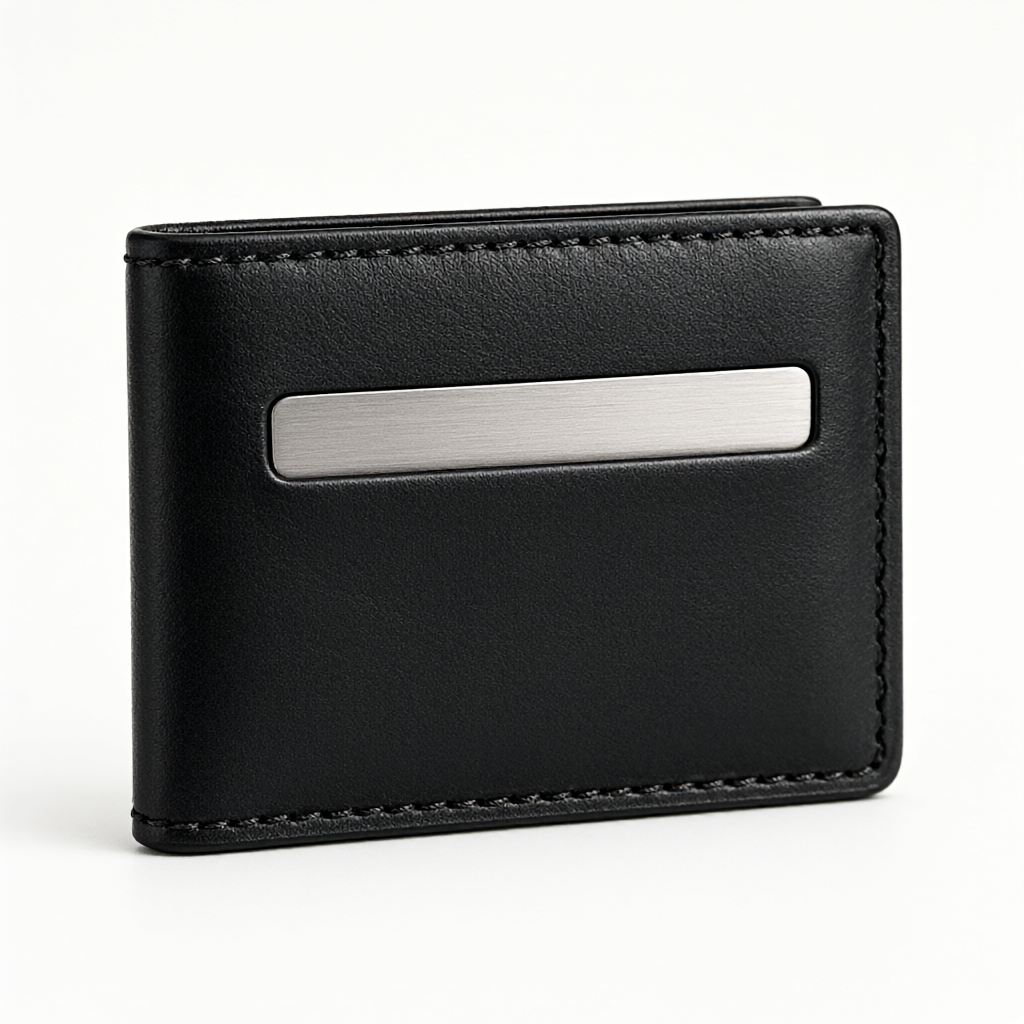
What counts as designer small leather goods?
In B2B terms, the category encompasses any small-format carrying accessory sold under a premium or designer label, regardless of whether the outer shell is actually leather. The core product families are:
- Minimalist wallets — slim single-stack or hinged designs intended for reduced-pocket carry
- Card holders — fixed-slot or tension-based arrangements optimized for card access
- Money clips — spring or magnetic closures retaining folded currency alongside cards
- Pocket organizers — multi-compartment modules combining card slots, cash retention, and occasionally coin storage
Buyers in this segment usually operate as private-label brand owners, Amazon FBA sellers, corporate promotional gift buyers, or retail chain procurement teams. The common thread is not the raw material but the expectation of consistent tolerances, refined surface finishes, branded engraving or debossing quality, and packaging suitable for direct-to-consumer distribution.
Are non-leather materials viable at designer quality?
Yes, and in several commercial contexts they are preferable. Metal and composite constructions have shifted materially because they solve problems that full-grain or top-grain leather cannot address in high-volume EDC scenarios:
| Material class | Typical advantages | Typical trade-offs |
|---|---|---|
| Aluminum (anodized) | Lightweight, scratch-resistant, CNC-machined tolerances, cost-effective at volume | Lower tactile warmth; can dent under sharp impact |
| Carbon fiber | High stiffness-to-weight ratio, aggressive aesthetic, durable surface | Higher unit cost; limited color palette without coating |
| Titanium | Corrosion resistance, premium perception, very strong | Expensive raw stock; more difficult to machine at scale |
| Full-grain / top-grain leather | Traditional luxury perception, develops patina, flexible | Variable hide quality, shrink/swell sensitivity, higher defect rate |
| Synthetic/PU alternatives | Lowest cost, uniform appearance | Shorter wear life, lower premium perception |
Material selection should follow the end-user scenario rather than aesthetics alone. An outdoor-focused EDC line often benefits from aluminum or carbon fiber, whereas a formal-gift program may require leather messaging. For guidance tailored to specific product formats, review our best card holder buying guide for B2B sourcing and our minimal wallet selection guide.
How do manufacturing processes differ by material?
Small leather goods require different process chains depending on the substrate, but the procurement-relevant capabilities cluster around five areas:
- CNC machining — Used for aluminum, titanium, and sometimes carbon-fiber-faced blanks. Controls thickness tolerance, hole positioning, and edge radii. Buyers should verify whether the factory machines in-house or outsources rough parts.
- Laser engraving / UV printing — Primary methods for logo application on metal and composite surfaces. Depth, contrast, and edge definition differentiate quality tiers.
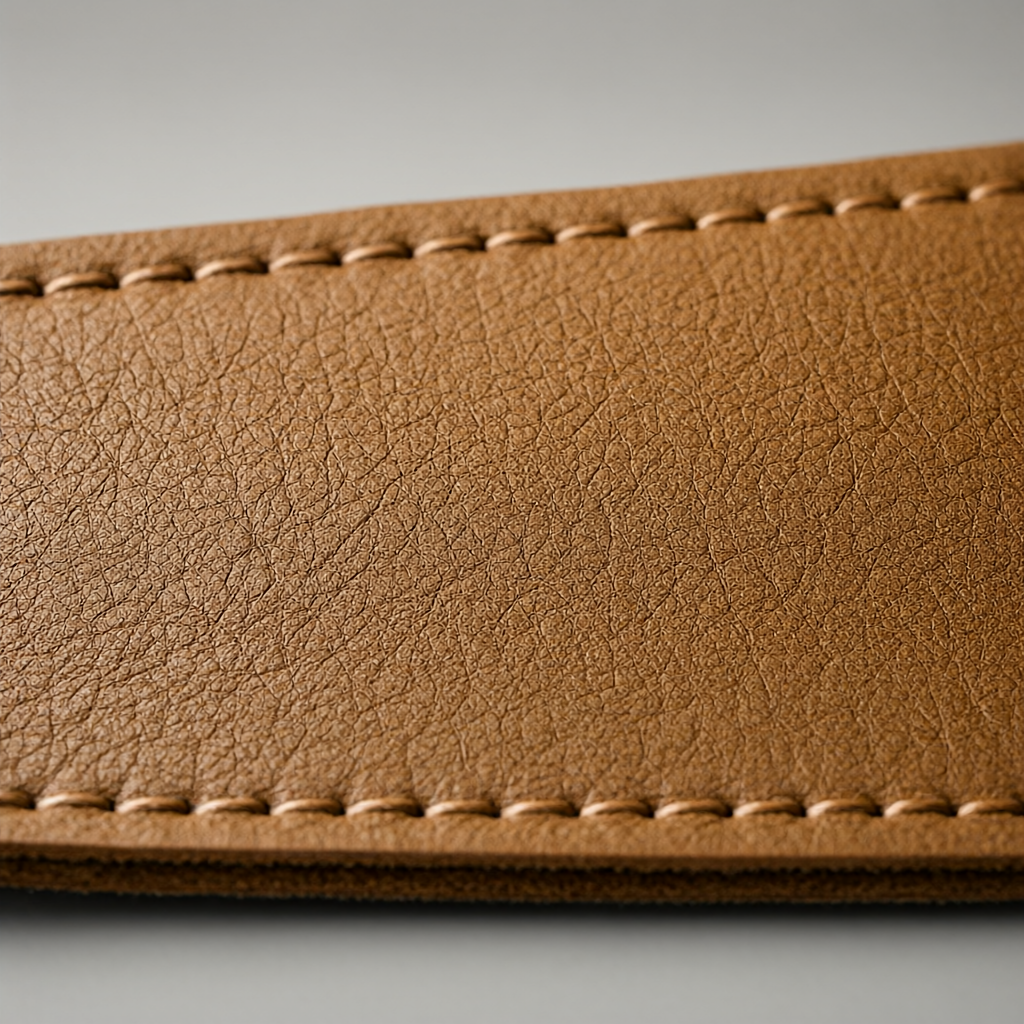
- Leather cutting and stitching — Die-cut or waterjet blanking followed by hand or automated stitching. Stitch density, thread type, and edge paint or burnishing determine longevity.
- Surface finishing — Anodizing for aluminum, polishing or bead-blasting for metal, oiling or waxing for leather. Finish consistency across batches is where many sourcing failures appear.
- Assembly and packaging — Spring mechanism installation, rivet setting, and retail-box configuration. Drop-shipping and Amazon FBA prep require specific labeling and polybag standards.
Understanding these steps helps buyers ask targeted questions during supplier audits instead of relying on generic capability statements.
Small Leather Goods: Which Specifications Matter Most?
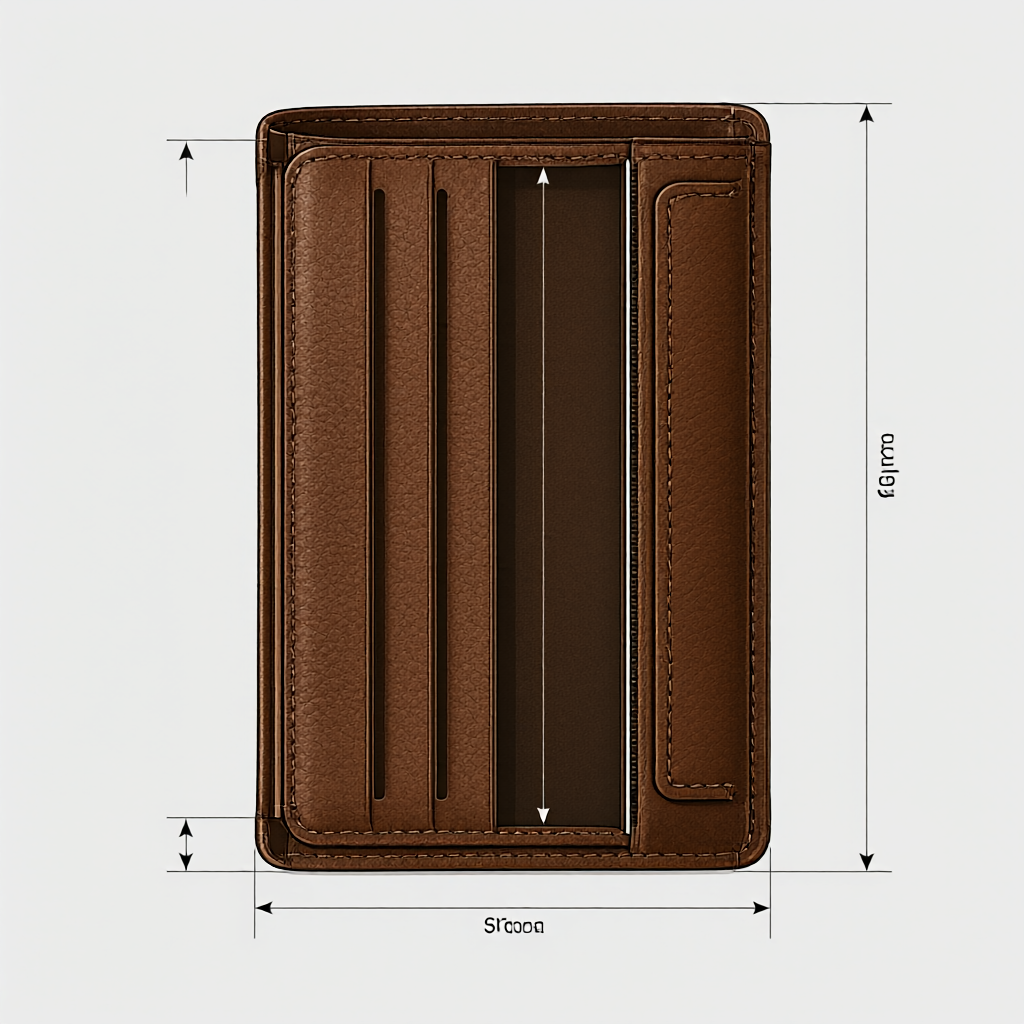
What typical spec ranges look like in this category?
Specifications vary by material and design complexity. The ranges below reflect common industry baselines; actual targets depend on the product architecture and end-use requirement.
- Overall thickness: 8 mm to 16 mm for metal wallets; 6 mm to 12 mm for card holders and money clips
- Weight per unit: ~25 g to 80 g depending on material and capacity
- Card capacity: 4 to 12 slots for standard card holders; 1 to 3 bills for money-clip hybrids
- Tolerance on critical features: ±0.15 mm to ±0.3 mm for machined interfaces
- Surface hardness (anodized aluminum): typically 300 HV to 500 HV depending on process
- RFID-blocking attenuation: commonly rated to block 13.56 MHz near-field signals; independent verification is recommended when claiming compliance
For a detailed breakdown of slim and minimal wallet considerations relevant to B2B procurement decisions, see the procurement guide here.
What affects quoted prices?
Unit economics shift with material choice, batch size, tooling complexity, and branding scope. A practical starting framework:
- MOQ: Many manufacturers accept initial orders from roughly 300 pieces for standard stock architectures, with price breakpoints tightening at 500, 1,000, and 5,000 units.
- Sample lead time: Typically around one week for approved design templates; longer when custom tooling or new material coatings are required.
- Production lead time: Often two to six weeks after artwork and pre-production samples are confirmed, scaled by volume and finishing steps.
- Tooling costs: Non-recurring engineering charges apply mainly for custom dies, molds, or proprietary mechanism jigs.
Exact figures depend on the Bill of Materials, decoration method, packaging complexity, and destination logistics. Requesting a structured RFQ with specified material, quantity tier, and decoration details produces the most comparable quotations.
Small Leather Goods: Which Standards and Certifications Apply?
Which certifications and compliance frameworks matter?
Procurement decisions in this space generally rest on four compliance layers:
- Quality management: ISO 9001 certification indicates a documented QMS covering process control, documentation, and corrective action. It is a baseline expectation rather than a product guarantee.
- Social compliance: BSCI or equivalent audit coverage matters when brands face retailer or marketplace due-diligence requirements.
- Chemical and material restrictions: REACH and RoHS compliance are standard expectations for European-bound products, governing restricted substances in plating, adhesives, and coatings.
- Product-specific testing: SGS or equivalent laboratory verification is commonly requested for material composition, heavy-metal limits, and RFID performance claims.
While there is no single consumer-product standard that covers all wallet-type goods, materials suppliers and finished-part testing should reference recognized frameworks. Where material test methods are relevant, consult ASTM International standards for guidance on mechanical and chemical testing protocols applicable to metals, polymers, and coated substrates.
For RFID-blocking applications, buyers should additionally review guidance on RFID-blocking card selection and procurement criteria, since shielding performance depends on construction geometry and frequency target.
What quality checkpoints should be verified before production approval?
A practical pre-shipment and pre-production inspection plan for this category includes:
- Dimensional verification — Thickness, width, height, and slot spacing against the approved drawing. Check both master samples and first-article pieces from the production run.
- Surface finish audit — Anodize color consistency, laser engrave depth and contrast, leather edge paint uniformity, and absence of scratches or contamination.
- Mechanical function testing — Hinge cycle tests for flip-style wallets, clip tension retention for money clips, and card-insert/remove force consistency.
- Branding registration — Logo placement coordinates, depth/contrast thresholds, and alignment symmetry across multiple units.
- Materials confirmation — Mill certificates or material test reports for metal alloys, hide grade documentation for leather lots, and RoHS/REACH test summaries for coatings and adhesives.
- Packaging and labeling — Retail box dimensions, barcode placement, FBA compliance labels, and damage-resistance validation for anticipated shipping conditions.
Inspections performed at raw-material intake, inline during assembly, and prior to packing reduce the risk of late-stage rework and customer returns.
Small Leather Goods: What Else Should Buyers Consider?
How do private-label and OEM sourcing models differ?
The distinction shapes risk allocation, IP ownership, and timeline predictability:
- Private-label (brand owner initiates): The buyer provides design intent, branding assets, and packaging specs. The manufacturer executes tooling, sourcing, and assembly. This model suits companies with established product vision and marketing infrastructure but requires clear specification sign-off to avoid iteration loops.
- ODM (manufacturer proposes): The supplier offers existing architectures that can be modified with branding and minor feature changes. This model reduces time-to-market and NRE cost but limits differentiation unless the supplier allows meaningful customization of mechanism, finish, or form factor.
- Hybrid approaches: Many programs begin with an ODM base and layer proprietary modifications—custom engraving patterns, unique spring rates, or distinct packaging—into later production phases.
The right path depends on brand maturity, desired differentiation depth, and acceptable development lead time. For men’s minimalist EDC wallets specifically, procurement considerations overlap heavily with general EDC durability and usability standards; this guide addresses those evaluation criteria.
What pitfalls should buyers anticipate?
Common sourcing issues in this category include:
- Material substitution drift — Suppliers shifting to a thinner gauge or alternate alloy without notification. Contractual specification lock and incoming material verification prevent this.
- Inconsistent branding output — Engrave depth variance or misregistration caused by inadequate fixturing. Require a signed golden sample before full-run release.
- Hidden tooling and setup costs — Quotations that omit die creation, UV-mask setup, or packaging mold charges. Request a fully itemized quotation with NRE separated from per-unit pricing.
- Lead-time overpromising — Aggressive timelines that ignore finishing cure cycles, quality holds, or container loading constraints. Build buffer into launch schedules.
- Insufficient testing of claimed features — RFID-blocking performance, water resistance, and drop-test resilience are frequently asserted without third-party validation. Define test methods and pass/fail criteria upfront.
A disciplined RFQ package, sample validation gate, and balanced inspection plan resolve most of these risks before they reach the factory floor.
How should the supplier evaluation process be structured?
A pragmatic sequence follows this order:
- Capability screening — Confirm relevant material expertise, in-house machining where needed, and export market familiarity. A manufacturer serving 30+ countries and holding ISO 9001 and BSCI certification provides a credible starting point.
- Sample evaluation — Review physical samples for finish, mechanism function, branding fidelity, and packaging integrity. Compare samples against the signed specification pack.
- Factory audit — Verify process control, traceability records, incoming material inspection, and finished-goods QA gates. In-house capacity across machining, finishing, and assembly reduces handoff risk.
- Pilot run — Execute a small production batch to confirm yield, lead time, and defect rates before committing to full-volume orders.
- Scale-up agreement — Establish ongoing QC criteria, complaint-resolution SLAs, and annual audit scheduling.
For ongoing reference, our slim wallet buying resource summarizes selection variables useful during the supplier-screening phase.
Manufacturer Context
After evaluating materials, standards, and process readiness, the next question is which manufacturer can translate specifications into consistent production. At TOP EDC Wallet, we approach designer small leather goods sourcing through the same discipline outlined above: defined specifications, controlled finishing, verified branding registration, and inspection-ready documentation.
Our facility operates as an ISO 9001-certified and BSCI-audited manufacturer with more than 13 years of export experience across America, Europe, Australia, and Southeast Asia. We run in-house CNC machining, laser engraving, UV printing, aluminum anodizing, and assembly lines under one roof, which reduces handoff delays and keeps dimensional control tighter during prototype-to-production transitions. minimum order quantity of 300 pcs per SKU for full OEM customization (100 pcs trial order available for stock finishes), with sample turnaround typically within seven days once specs are locked. All materials are tested against REACH and RoHS restrictions, and SGs testing is available on request.
If your program involves hybrid material construction, custom engagement机制, or branded retail packaging, contact our team to discuss your opening sizes and decoration requirements. For structured pricing and delivery windows aligned to your volume tiers, you can also submit your inquiry and receive a comparative quotation based on your exactBill of Materials.
Completing the Truncated Section
defined specification packs, documented quality gates, and iterative sample validation. That disciplined workflow—spanning material selection, prototyping, pilot runs, and shipment inspection—is designed so buyers receive products that match their signed spec packs, not just a pretty render. Our facility operates under ISO 9001:2015 documentation controls [^1], holds BSCI audit coverage, and sources REACH/RoHS–compliant materials verified through SGS testing [^2]. If you want to explore our full catalog of minimalist wallets, carbon fiber card holders, titanium money clips, and custom laser-engraved accessories, visit our contact page or reach out directly to Jerry Lee at sales@gstartec.com.
[^1]: ISO 9001:2015 specifies requirements for a quality management system, focusing on process consistency and continual improvement. See
[^2]: REACH (EC No 1907/2006) and RoHS (2011/65/EU) govern restricted substances in Europe; SGS provides third-party compliance verification reports. Material data sheets should be requested prior to order confirmation.
How MOQ and Lead Time Work in Practice?
Minimum order quantities and production lead times are the two most negotiated variables in EDC wallet procurement. Understanding the levers behind each helps buyers set realistic launch timelines and budget correctly.
MOQ drivers
MOQ is not arbitrary—it reflects setup economics:
- Standard architectures — Factory inventory of common blank forms allows low MOQs starting around 300 pieces per design because no new tooling is required.
- Custom tooling — Proprietary mechanisms, unique hinge geometries, or bespoke packaging molds typically push initial orders to 500–1,000 pieces to amortize NRE costs across sufficient volume.
- Material procurement — Specialty alloys, pre-anodized stock, or premium leather lots may carry minimum purchase thresholds that influence achievable MOQ per SKU.
- Finish complexity — Multi-step surface treatments (e.g., anodizing plus laser engraving plus assembly) increase touch-time and may raise effective MOQ.
Request a tiered quotation showing price at 100, 500, 1,000, and 5,000 units so the cost-volume curve is transparent.
Lead-time architecture
Realistic lead times follow this sequence:
| Phase | Typical duration | Dependencies |
|---|---|---|
| RFQ review & quoting | 1–3 business days | Complete spec package provided |
| Sample development | 5–10 business days | Artwork approval, material availability |
| Pilot run | 7–14 business days | Sample sign-off, raw material in stock |
| Full production | 14–30 business days | Order size, finishing steps, container loading |
| Shipping / FBA prep | 7–21 business days (sea) / 3–7 (air) | Logistics method, destination customs |
A streamlined program using existing blanks with custom branding can move from RFQ to shipment in roughly 3–5 weeks. Fully custom programs with new tooling should plan for 6–10 weeks from contract signing to delivery. Always build a 10–15% buffer into your launch schedule for unforeseen rework or certification delays.
Customization and Private-Label Workflow
Private labeling involves more than stamping a logo. A complete branded product requires coordination across multiple functional areas:
Branding options available
- Laser engraving — Precision marking on metal and carbon fiber surfaces; depths range from 0.02 mm to 0.1 mm depending on power settings. Ideal for logos, serial numbers, and decorative patterns.
- UV printing — Full-color graphics on flat or slightly curved substrates; suitable for intricate artwork and photographic reproduction.
- Debossing / embossing — Traditional leather techniques creating raised or recessed logos without ink; requires a steel die (~$150–$400 one-time cost).
- Hardware etching — Engraving on metal plates attached to the wallet body (e.g., brushed aluminum nameplates).
- Packaging design — Retail boxes, hang tags, polybags, and inserts can carry brand colors, barcodes, and regulatory text.
From concept to shelf: the typical workflow
- Specification packet — Buyer submits CAD files, Pantone colors, material preferences, and target pricing.
- Feasibility review — Manufacturer evaluates whether the design is manufacturable within target cost and timeline.
- Sample creation — Physical samples produced within 7 business days for standard architectures; longer for fully custom builds.
- Sample revision cycle — One to three revision rounds are typical before golden-sample approval.
- Tooling fabrication — Custom dies, jigs, or fixtures if needed.
- Pilot production — Small batch (typically 50–200 pcs) validates inline quality and yield.
- Golden sample sign-off — Both parties approve a reference unit that defines accept/reject criteria.
- Mass production — Full order executed against the approved baseline.
- Pre-shipment inspection — AQL-based sampling per ANSI/ASQ Z1.4 standards [^3].
- Shipping and FBA compliance — Pack-out, labeling, and documentation prepared per buyer instructions.
[^3]: ANSI/ASQ Z1.4 (withdrawn but widely adopted; superseded by ISO 2859-1) provides AQL sampling procedures used globally in consumer-goods quality inspection. Source:
Quality Checkpoints Buyers Must Inspect
Beyond the general checklist, certain checkpoints deserve special attention in EDC wallet sourcing:
Critical control points
- Dimensional audit on first-article pieces — Verify thickness, width, height, and slot geometry against the engineering drawing using calipers or CMM. Tolerance bands should be ±0.15 mm to ±0.3 mm for machined features.
- Surface finish measurement — Anodized layer thickness should meet specified micron ranges (typically 10–25 µm for architectural-grade, 25–50 µm for wear-critical applications). Visual color matching against approved lab dip cards prevents batch-to-batch variance.
- Mechanical function cycles — Hinge and clip mechanisms should pass 500–1,000 cycle tests without degradation. Card-insert/remove force should remain consistent.
- Branding registration check — Logo position tolerance should be ±1.0 mm from drawing datum. Engrave depth must meet contrast specifications visible to the naked eye at normal viewing distance.
- RFID shielding verification — For wallets claiming RFID-blocking performance, request a third-party test report measuring attenuation at 13.56 MHz (ISO 14443 frequency). Attenuation of ≥20 dB is generally considered effective near-field blocking.
- Chemical compliance documentation — RoHS heavy-metal limits (Pb, Cd, Hg, Cr⁶⁺, PBBs, PBDEs) and REACH SVHC list compliance should be confirmed via SGS or equivalent lab reports per batch lot.
- Packaging drop test — Retail boxes should survive a 3-foot drop test onto plywood without product damage. Internal packaging should prevent scratching during transit.
AQL sampling guidance
| Inspection level | Sample size (N=500–1,000) | Major defect AQL | Minor defect AQL |
|---|---|---|---|
| General II | 50 pcs | 2.5% | 4.0% |
| General III | 80 pcs | 1.5% | 2.5% |
Define reject criteria in writing before production starts. Verbal agreements create ambiguity during disputes.
Procurement Decision Framework: Weighted Supplier Evaluation Checklist
Evaluating potential manufacturers requires a structured scoring model rather than anecdotal impressions. The following framework assigns weights to criteria ranked by procurement impact:
| Criterion | Weight (%) | Score (1–5) | Weighted Score |
|---|---|---|---|
| Quality management system certification (ISO 9001) | 15% | ||
| Relevant material expertise & in-house capability | 15% | ||
| Sample quality & responsiveness | 15% | ||
| Unit pricing at target volume tiers | 12% | ||
| Lead-time realism & communication cadence | 10% | ||
| Social compliance (BSCI or equivalent) | 8% | ||
| Chemical/material compliance documentation (REACH/RoHS) | 8% | ||
| Tooling/NRE transparency | 7% | ||
| Export market experience & reference brands | 7% | ||
| Packaging & logistics support (FBA prep, drop shipping) | 5% | ||
| Flexibility for customization requests | 5% | ||
| Payment terms & risk allocation | 3% | ||
| Total | 100% |
Score each supplier against this matrix. A weighted total above 3.5 out of 5 indicates a strong candidate; below 3.0 suggests significant risk. Revisit scores after sample evaluation and factory audit phases, as early impressions often shift.
Industry Case Study: Defect Rate Reduction Through Structured QC Gates
An Amazon FBA seller sourcing minimalist aluminum wallets experienced a 12.4% return rate due to inconsistent laser engrave depth and hinge misalignment across three sequential orders. After switching to a manufacturer employing structured in-process QC:
- Incoming material inspection — Mill certificates verified for every aluminum billet lot; alloy composition confirmed to 6061-T6 specification.
- Inline dimensional checks — First-article and hourly gauge checks reduced thickness drift from ±0.5 mm to ±0.15 mm.
- Golden-sample lock — Signed reference units for engrave depth and hinge feel eliminated subjective interpretation.
- Pre-shipment AQL inspection — Level II sampling with 2.5% major defect limit caught outliers before container loading.
Results over six months:
| Metric | Before | After | Improvement |
|---|---|---|---|
| Return rate | 12.4% | 2.1% | −83% |
| Average defect rate per batch | 8.7% | 1.8% | −79% |
| Customer rating (5-pt scale) | 3.6 | 4.4 | +22% |
| Cost of poor quality (returns + replacements) | $18,400/batch | $3,200/batch | −83% |
The improvement was driven primarily by process discipline, not superior materials. Manufacturers who document every QC gate and require buyer sign-off at sample approval tend to produce more consistent output across batches.
Summary: Choosing the Right Sourcing Partner
Designer small leather goods procurement succeeds when buyers prioritize specification clarity, verifiable certification, realistic timeline planning, and structured quality gates over lowest unit price alone. The evaluation framework above, combined with attentive milestone monitoring, reduces sourcing risk significantly.
At TOP EDC Wallet, we apply this same structured approach to every program—we begin with a complete specification packet, provide samples within seven days for standard architectures, maintain ISO 9001:2015 quality controls across a 50,000 sq ft in-house facility, and support low MOQs starts at 300 pcs per SKU so emerging brands can validate demand before scaling. Our export network spans 200+ brands across North America, Europe, Australia, and Southeast Asia, and all materials carry REACH/RoHS compliance with SGS-verified test reports.
Small Leather Goods: Where Can You Verify the Data and Sources?
- ASTM International standards — www.astm.org
- this materials and features comparison — topedcwallet.com
- our best card holder buying guide for B2B sourcing — topedcwallet.com
- our minimal wallet selection guide — topedcwallet.com
- the procurement guide here — topedcwallet.com
- guidance on RFID-blocking card selection and procurement criteria — topedcwallet.com
- this guide addresses those evaluation criteria — topedcwallet.com
- our slim wallet buying resource — topedcwallet.com
- contact our team — topedcwallet.com
From article to product
Turning this into a product?
Most of what is written here is the difference between a sample that works and one that does not. We can build either — the useful one costs the same.
Keep reading
More on buying guides
wallet with trigger
How Does a Trigger Wallet Work? What Is the Pop-Up Mechanism? The core of…
Readbest bifold wallet for women
What Is a Bifold Wallet? The term “bifold” refers to the fold: the wallet…
ReadMen’s trifold wallets with zipper compartments vs. bifold
At a Glance The three dominant men’s wallet formats differ in panel count, depth,…
Read
About the author
TOPWALLET Editorial Team
TOPWALLET's editorial and engineering desk writes from bench testing at the Shenzhen (Longgang) facility: pull-force and cycle testing, 13.56 MHz shielding measurements, finish trials and factory audits, rather than supplier spec sheets. Every specification in these guides is one we write on a purchase order.
Written on the floor
This article was written by our production and QC team — the people who spec tolerances, run the finishing line and inspect every batch. Where it states a capacity, a pull force or a lead time, it comes from a measurement we made, not a supplier’s catalogue. If a number here disagrees with what your own supplier told you, tell us; several of these articles started as a correction from a buyer.
See how the factory works · Inspection process · Sourcing FAQ
Turning this into a product?
Most of what is written here is the difference between a sample that works and one that does not. We can build either — the useful one costs the same.