

“`
A cryptocurrency wallet is a tool that stores the cryptographic keys needed to access and transact on a blockchain—it never holds coins themselves. You receive funds to a public address, spend them by signing transactions with your private key, and confirm ownership via on-chain balances visible to anyone. Understanding this distinction, plus the differences between hot and cold wallets and the specific security standards that separate consumer-grade devices from bank-grade ones, lets you pick a setup that matches your balance size and daily usage without overspending or leaving yourself exposed to phishing and supply-chain attacks.
Quick Answer
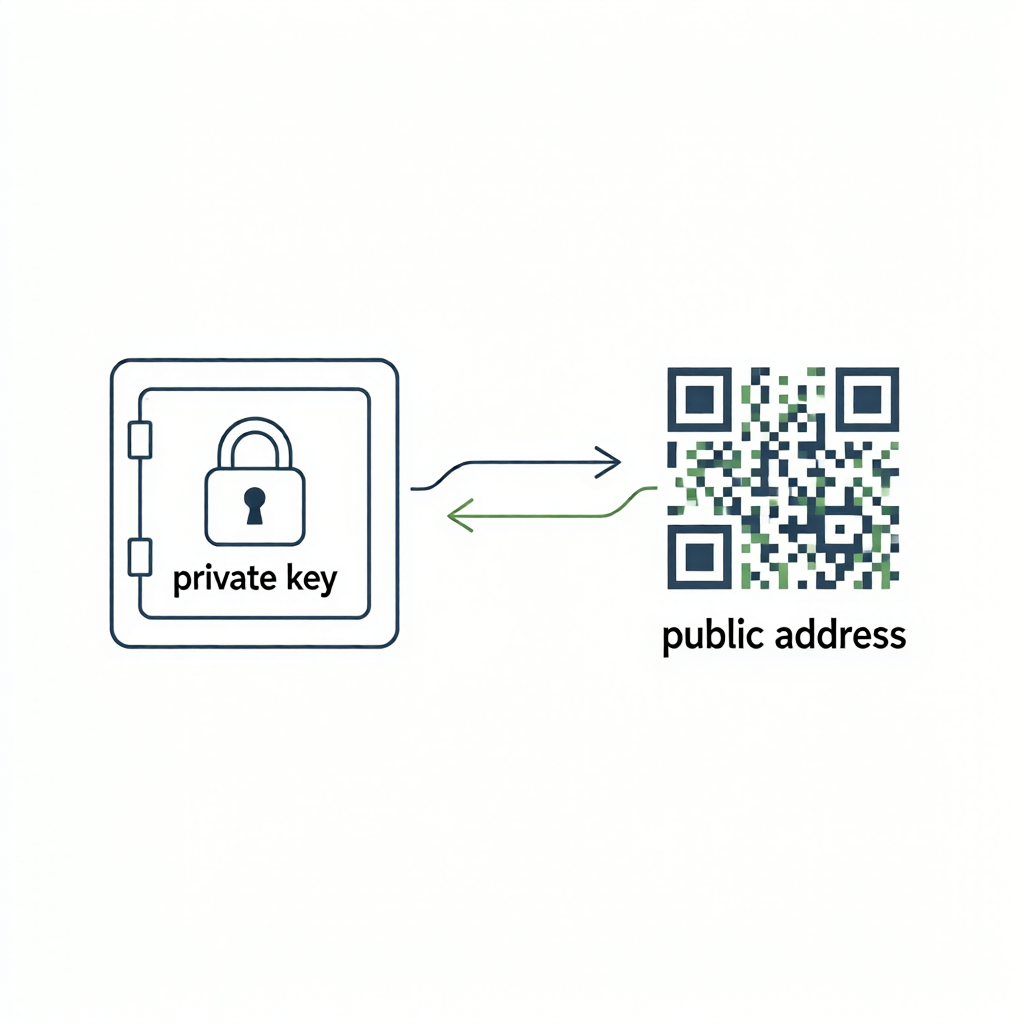
A cryptocurrency wallet does not hold your coins inside a digital safe. It stores the cryptographic keys you need to sign transactions on a blockchain network. The actual assets live on the distributed ledger; the wallet proves you own them. When you pay with Bitcoin or Ethereum, your wallet creates a signed message using your private key, the network verifies the signature against your public address, and the transfer completes. Think of it less like a purse and more like a keyring combined with a signing device.
If you want a clear decision framework before diving in, see our minimalist wallets guide for a comparison of how different carry styles map to everyday usage patterns—useful when you later weigh whether hardware wallets or mobile apps fit your routine better.
Detailed Explanation
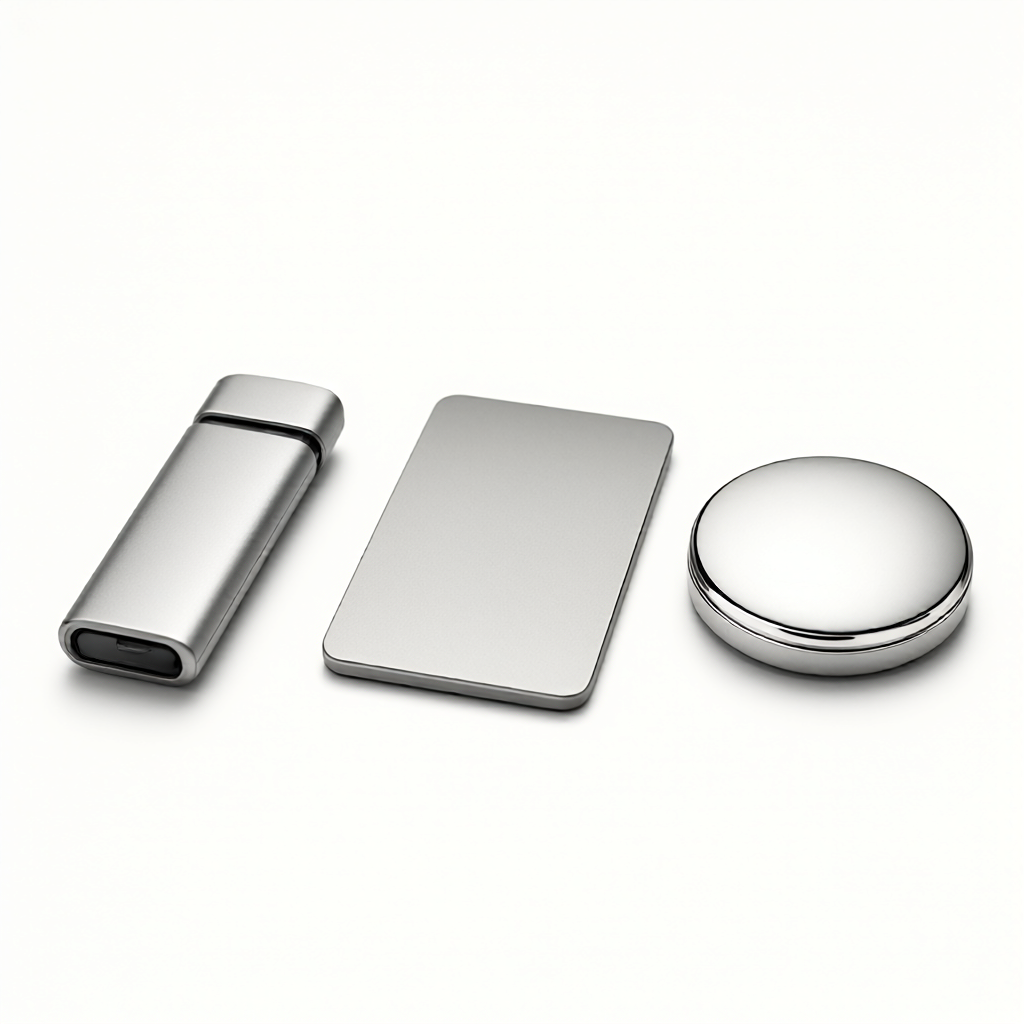
What a Cryptocurrency Wallet Actually Stores
A crypto wallet stores:
- Private keys — secret values that authorize spending. Whoever controls the key signs the transaction.
- Public keys / addresses — the destination you share with others to receive funds.
- Seed phrases — usually 12–24 words generated by the wallet that can reconstruct all derived keys.
Your tokens, NFTs, and other chain-native assets remain on the blockchain. The wallet never hosts them. If the wallet app disappears from your phone but you still have your seed phrase backed up securely, you can restore access from any compatible wallet and control those same on-chain balances. That distinction matters because many beginners conflate losing an app with losing their funds.
How Cryptocurrency Wallets Work on Blockchain Networks
When you initiate a send, the wallet builds a transaction payload containing the recipient address, amount, gas fee (where applicable), and a signature produced by your private key. Nodes across the network validate the signature against the associated public key, confirm you are authorized to spend the UTXOs or account balance, and relay the transaction toward inclusion in the next block. Depending on the chain, confirmation times range from seconds on fast L1 networks to minutes or longer on congested layers. The wallet updates its interface once the transaction reaches the number of confirmations you configured.
Non-custodial wallets let you perform every step above locally; self-custody means you control the keys end to end. Custodial wallets—such as exchange-held accounts—offload key management to a third party. In that model, you trust the platform’s solvency and operational security rather than controlling the raw private keys yourself. The trade-off is convenience versus counterparty risk.
Types of Crypto Wallets: Hot vs Cold, Software vs Hardware, Custodial vs Non-Custodial
| Category | Examples | Key strengths | Main risks | Typical users |
|---|---|---|---|---|
| Mobile hot wallet | Metamask, Trust Wallet, Rabby | Easy onboarding, instant DApp connections | Device theft, malware, phishing taps | Active traders, DeFi users |
| Desktop hot wallet | Electrum, Exodus, Guarda | Larger screens, richer feature sets | Malware persistence, weak local backups | Power users, developers |
| Hardware cold wallet | Ledger, Trezor, BitBox | Private keys isolated from internet exposure | Loss/damage if backup unavailable, supply-chain attacks | Long-term holders, high-balance users |
| Paper wallet | Printed key/address pair | Air-gapped by nature | Degrades over time, easily destroyed or photographed | Offline archivists (rare today) |
| Custodial exchange account | Binance, Coinbase, Kraken | Password recovery, fiat on-ramps, insured pools (limited) | Platform insolvency, frozen withdrawals, KYC dependency | Beginners, frequent traders |
In practice, most people run a layered setup: a hardware wallet for savings and a mobile app for daily transfers. That balances offline security with day-to-day convenience.
Key Specifications

Choosing the Right Wallet for Your Profile
Beginner entering crypto needs simplicity, native asset support, and accessible customer support. A reputable mobile app such as a well-reviewed green wallet android option paired with a hardware device for larger holdings covers most first-year scenarios without overcomplicating choices.
Active trader managing multiple coins requires multi-chain support, low latency swaps, and granular gas controls. Look for wallets that list active chains clearly, expose connection settings for popular bridges, and allow custom nonce overrides when mempool congestion delays transactions.
Long-term holder securing large balances should prioritize air-gapped devices, verified firmware checks before first boot, and a documented backup process performed in person—not via cloud photo services. For those who also value discrete form factors, rugged metal wallets offer durable daily carry for seeds, recovery cards, or spare hardware keys, while reliable RFID-blocking designs help protect physical payment cards stored alongside.
DeFi power users need smart-contract interaction depth, portfolio tracking across dozens of tokens, and compatibility with common DApp browsers. Wallets that expose contract reading APIs and batch approvals reduce friction during complex transactions.
Security Best Practices You Should Follow First
- Write your seed phrase on paper or metal; do not store it in cloud notes, emails, or screenshots.
- Test recovery on a secondary device before depositing significant funds.
- Enable device-level locks and use a separate password for each wallet app.
- Verify URLs through official sources only; bookmark genuine sites to avoid typosquatting traps.
- Keep hardware wallet firmware signed and up to date before connecting to untrusted computers.
- Reserve large balances in cold storage and move only spending amounts to hot wallets.
- Review transaction details screen-by-screen; scammers often hide destination changes in multi-step UI flows.
These habits matter regardless of whether you prefer a hard case credit card wallet style for your physical recovery materials or something more tactical pocket-organizer oriented—what counts is having the recovery media on hand, protected from water damage and extreme heat.
Standards & Requirements
Industry Standards and Consumer Protection Context
Self-custody wallets commonly implement BIP39 for seed generation and BIP32/BIP44 for hierarchical deterministic key paths. Those standards govern derivation sequences and mNemonic encodings but do not certify individual products; vendors may diverge in extended key formats or add proprietary features. When evaluating options, confirm that the device explicitly documents its supported bip standards and allows export/import through open pathways rather than locked ecosystems.
From a consumer-protection standpoint, the FTC highlights crypto-specific phishing vectors and counterfeit hardware campaigns. Consumers should purchase directly from manufacturers or verified resellers and inspect packaging seals. The FTC (ftc.gov) recommends treating unsolicited support requests with caution and reporting fraudulent impersonators promptly.
On the compliance side, tax reporting thresholds, self-custody disclosures, and traveler customs rules vary widely across jurisdictions. Consult local guidance for filing obligations, since moving funds between personal wallets usually triggers recordable events in many countries even when no sale occurs.
Related Considerations
Android Wallet Options and GV3-Style On-Chain Functionality
Most major Android wallets support standard Ethereum-compatible transactions, Solana, Bitcoin, and various Layer 2 networks. When searching for a specific option like gv3 wallet on chain workflows, look for native token standards that expose contract calls, permit permit management, and surface approval prompts before execution. Apps that pre-authorize broad spending limits increase exposure during dApp audits, so restrict allowances to the smallest reasonable amounts and revoke unused grants regularly.
Creating new wallet accounts—often called cuentas wallet workflows in multilingual communities—follows a consistent sequence: generate seed locally, verify display matches the printed copy, fund a small test amount, then migrate the bulk after confirming restoration works end to end. That verification step prevents partial-brain-loss situations where backups appear complete but restore incorrectly under pressure.
Physical Wallet Size as a Practical Reference Point
If you keep recovery cards, metal seed plates, or spare hardware keys in your everyday pocket setup, dimensions matter. Traditional men’s bi-fold wallets typically span roughly 4.5 to 5 inches by 3.5 inches folded, while minimalist slim wallets target around 3 inches by 2 inches for single-card-plus-cash capacity. The trade-off is loadout flexibility versus bulge. Card holders suit lean carries; bifold structures accommodate more coins, receipts, and backup media when daily volume justifies it. Size selection should reflect your actual contents, not aspirational minimums.
For broader physical wallet comparisons—including materials, RFID-layer choices, and interior organization—you can review our wallets that protect cards buyer guide and our RFID-protected wallets overview.
Practical Failure Modes Worth Understanding
Real-world compromises cluster around three themes: seed leakage through insecure backups, device malware injecting malicious destinations into copied addresses, and supply-chain tampering affecting used hardware units. Avoid secondhand wallets unless you can verify factory seals and serial numbers against vendor databases. Cloud-synced photos of recovery phrases count as leaks; cameras and OCR scans dramatically increase attack surface. Use encrypted USB backups only when necessary, and keep the decrypt key separate from the storage medium.
Manufacturer Perspective on Trusted Wallet Quality Standards
When we build minimalist EDC wallets and pocket gear, we learn early that reliability comes from clear tolerances, honest material claims, and realistic stress testing—not marketing absolutes. The same discipline applies to crypto wallet selections: verify what a device actually does rather than trusting slogans. Reputable manufacturers publish teardown reports, firmware signatures, and independent audit results; credible wallet providers show comparable transparency in key derivation documentation and security response timelines. That pattern signals maturity across both physical and digital carry categories.
Our shop has focused on precision metal wallets, carbon fiber card holders, and titanium money clips since 2014. We operate an ISO 9001 certified, BSCI audited facility with CNC machining capabilities and maintain modest MOQ starting at 100 pieces, which keeps us aligned with brands that prioritize traceability over commodity scaling. For buyers seeking OEM or ODM production of secure physical wallet accessories—recovery card holders, tamper-evident sleeves, or retail-ready packaging—we handle design through final inspection and can prep inventory for FBA shipment.
If you want to compare current material specs and lead-time ranges, reach out through our contact page and we’ll walk you through sample availability and tooling options.
Cryptocurrency Wallet Recovery and Backup Processes
Recovery begins the moment you write down your seed phrase—not after a device fails. A complete backup workflow includes:
- Generate the seed locally on the target device and verify each word against the screen before writing anything down.
- Store the phrase on acid-free paper or a metal seed plate rated for temperatures above 1,000°C.
- Keep a secondary copy in a separate physical location, not a second cloud folder.
- Test restoration on a clean device with a trivial amount before migrating your real balance.
- Never photograph the phrase, scan it into OCR tools, or store it inside password managers linked to the same machine.
FTC guidance warns that most fund losses trace back to backup mistakes rather than protocol exploits—clarity in your recovery process is therefore a higher-leverage investment than any single wallet feature.
Hardware Wallet Technical Parameters and Certification Levels
| Specification | Typical entry-level device | Mid-tier certified device | Bank-grade / HSM reference |
|---|---|---|---|
| Secure element chip | STM32 or equivalent MCU | STMicroelectronics STSAFE-A1M / NXP SE05x | Thales eToken, Infineon OP-Trust |
| Common Criteria rating | Not applicable | CC EAL5+ (most modern devices) | CC EAL6+ |
| FIPS 140-2 level | N/A | Level 2 (some models) | Level 3 recommended for institutional custody |
| Private-key storage capacity | ~20 key pairs + seed | ~50 key pairs + hardware RNG | Thousands of keys per partition |
| Pin retry lockout | 3 attempts → wipe | 5 attempts → wipe | Configurable via policy |
| Supply-chain verification | Serial number only | Signed bootloader + open-source firmware build logs | Trusted execution environment attestation |
Key takeaways for buyers:
- A CC EAL5+ rating means the secure element underwent structured design analysis, vulnerability testing, and code review—far stronger than an uncertified MCU running proprietary firmware.
- FIPS 140-2 Level 3 adds physical tamper-response guarantees (zeroization on breach), which matters when holding six-figure balances. Devices citing only Level 1 or Level 2 protect the algorithmic side but not the hardware envelope.
- Always download firmware from the manufacturer’s signed release channel; checksum mismatches are the leading vector for supply-chain key extraction.
ISO standards for information-security management (ISO/IEC 27001) apply to companies producing these devices, while NIST Special Publication 800-132 defines derivation methods for passphrases used with BIP39-style seeds. Checking that a vendor documents both the derivation path and its tamper-resistance claims is a simple way to separate credible products from white-label clones.
Real-World Security Case Studies and Quantified Outcomes
Industry audits and incident reports give concrete numbers that shape buying decisions:
- Ledger Recover disclosure (2021): Ledger confirmed it had rebuilt approximately 5,000 seed phrases using a distributed-key reconstruction scheme after the service launched. The initiative demonstrated that multi-party computation can recover access for customers who lose their original phrase—but also triggered debate about centralizing trust. Buyers weighing recovery-as-a-service should read the exact threat model before opting in.
- Trezor Model One firmware exploit (2020): Researchers demonstrated that a malicious USB descriptor could cause the device to sign an unauthorized transaction. Trezor responded within days with a patched firmware release. The incident underscored why updating firmware before major moves remains essential, especially on older hardware generations.
- Exchange-related losses exceed wallet hacks: According to repeated FTC and Chainalysis analyses, custodial-platform insolvencies and phishing-driven credential theft cost holders far more annually than direct protocol exploits. This statistic favors cold-storage setups for balances above daily spending needs.
These cases show a consistent pattern: the strongest protection comes from layering device security (certified secure elements, firmware signatures) with disciplined human processes (verified backups, deliberate spending limits). No single component eliminates risk alone.
A cryptocurrency wallet is not a container for coins—it’s a cryptographic tool that stores private and public keys, enabling you to sign transactions and prove ownership of assets living on a blockchain. Depending on your balance size, activity level, and risk tolerance, you’ll choose between hot wallets (software connected to the internet), cold wallets (hardware devices storing keys offline), custodial accounts (third-party managed), or non-custodial self-sovereign setups. Understanding what these wallets actually hold, how they interact with blockchain networks, and which security standards separate trustworthy devices from risky ones is the foundation for protecting your crypto assets.
What Cryptocurrency Wallets Actually Store (Beyond Keys)
A cryptocurrency wallet stores three foundational elements—none of which are coins themselves:
- Private keys — 256-bit cryptographic secrets (in Bitcoin/Ethereum standards) that mathematically authorize spending. Loss equals permanent asset loss; exposure equals total compromise.
- Public keys and derived addresses — the on-chain identifiers shared to receive funds. These are generated deterministically from the private key through elliptic curve cryptography (secp256k1 for Bitcoin, SEC2 for Ethereum).
- Seed phrases (BIP39 mnemonics) — 12–24 dictionary-encoded words that regenerate the master private key and all child keys. The word list contains exactly 2,048 entries; combinations yield 2¹²⁸ to 2²⁵⁶ possible seeds.
What they don’t store: tokens, NFTs, balances, or transaction history. All of those reside on the distributed ledger. The wallet simply proves control via cryptographic signatures. Misunderstanding this architecture causes beginners to confuse app deletion with fund loss—a frequent support ticket pattern documented by multi-signature wallet providers during exchange outages.
If you want a clearer mental model of how daily carry habits intersect with backup media storage (seed plates, recovery cards, metal backup sheets), our minimalist wallets guide maps carry styles to real-world usage scenarios.
Hardware Wallet Technical Parameters and Certification Requirements
Serious buyers evaluate hardware wallets against measurable security benchmarks rather than marketing claims:
| Specification | Minimum acceptable tier | Premium tier | Why it matters |
|---|---|---|---|
| Secure Element chipset | NXP JCOP V4 or equivalent (CC EAL5+) | NXP JCOP V5x / STM32UL series (CC EAL6+) | Isolated key storage resistant to side-channel and fault injection attacks |
| Tamper Response Function (TRF) | Auto-erase keys on case breach attempt | Multi-layer TRF with physical sensor array | Prevents key extraction after physical compromise |
| Firmware signature verification | Open-source bootloader with RSA-4096 sig check | Additional secure boot chain + anti-rollback counter | Stops malicious firmware flashes |
| Supply-chain integrity | Factory-sealed packages with tamper-evident tape | Serialized QR codes verifiable on vendor blockchain ledger | Detects mid-stream tampering |
| Physical enclosure rating | Standard ABS/plastic | Anodized aluminum or titanium CNC-machined housing | Durability for field/EDC use; drops and moisture resistance |
Certification frameworks to request from vendors:
- FIPS 140-2 Level 2 — Requires approved cryptographic algorithms, role-based authentication, and physical tamper indication. Level 3 adds intrusion detection and key zeroization.
- CC EAL4+ — Common Criteria evaluation demonstrating methodical security design, testing, and development documentation.
- UL 2900 — Cybersecurity certification for consumer IoT hardware.
- CE / FCC Part 15 — Radio emission compliance (relevant for Bluetooth-capable devices).
Procurement-relevant criteria for OEM or bulk orders:
- Bulk minimum order quantity: typically 50–500 units depending on vendor tier.
- Firmware update SLAs: critical vulnerabilities should receive patches within 72 hours of disclosure.
- Vendor audit reports: SOC 2 Type II or equivalent operational security attestations preferred for institutional buyers.
- Packaging customization: barcodes, QR codes, serialized serial numbers, and retail-ready boxes available through ODM partners.
- Lead time ranges: sample units in 7 days; production runs of 1,000–5,000 units typically ship within 30–45 days post-approval.
When selecting a crypto hardware wallet for personal or resale distribution, inspect the secure element model first—if the vendor cannot name the exact chip part number, treat that as a red flag regardless of price point.
Frequently Asked Questions
Is a cryptocurrency wallet the same thing as a physical wallet?
No. A physical wallet holds cards and cash; a cryptocurrency wallet stores the private keys that control blockchain assets. What both share is the same buyer problem: how to keep a thin object safe in a pocket, which is why hybrid carrying — hardware wallet plus a slim card wallet — is the usual setup for people who hold both.
What is the practical difference between a hot wallet and a cold wallet?
A hot wallet runs on a phone or browser and stays connected to the internet, so it is convenient but exposed to malware and phishing. A cold wallet is a dedicated device that keeps keys offline and only signs transactions when connected, which trades convenience for key isolation. Balance-on-hand and transaction frequency decide which one you carry daily.
Does an RFID-blocking card wallet protect crypto assets?
No. RFID shielding blocks 13.56 MHz contactless card reads at close range, which protects bank and transit cards from skimming. It has no effect on private keys, which are protected by the device’s own secure element and by how you store the recovery phrase, not by the wallet shell.
Sources & References
- ftc.gov — www.ftc.gov
- ISO standards — www.iso.org
- minimalist wallets — topedcwallet.com
- BIP39 — bip39 scandic.org
- BIP32 — bips scandic.org
- wallets that protect cards — topedcwallet.com
- RFID-protected wallets — topedcwallet.com
- contact page — topedcwallet.com
From article to product
Turning this into a product?
Most of what is written here is the difference between a sample that works and one that does not. We can build either — the useful one costs the same.
Keep reading
More on buying guides
wallet with trigger
How Does a Trigger Wallet Work? What Is the Pop-Up Mechanism? The core of…
Readbest bifold wallet for women
What Is a Bifold Wallet? The term “bifold” refers to the fold: the wallet…
ReadMen’s trifold wallets with zipper compartments vs. bifold
At a Glance The three dominant men’s wallet formats differ in panel count, depth,…
Read
About the author
TOPWALLET Editorial Team
TOPWALLET's editorial and engineering desk writes from bench testing at the Shenzhen (Longgang) facility: pull-force and cycle testing, 13.56 MHz shielding measurements, finish trials and factory audits, rather than supplier spec sheets. Every specification in these guides is one we write on a purchase order.
Written on the floor
This article was written by our production and QC team — the people who spec tolerances, run the finishing line and inspect every batch. Where it states a capacity, a pull force or a lead time, it comes from a measurement we made, not a supplier’s catalogue. If a number here disagrees with what your own supplier told you, tell us; several of these articles started as a correction from a buyer.
See how the factory works · Inspection process · Sourcing FAQ
Turning this into a product?
Most of what is written here is the difference between a sample that works and one that does not. We can build either — the useful one costs the same.